




Karsten Wenzlaff, Advisor
August 26th, 2025
Karsten Wenzlaff is a Crowdfunding and Fintech Expert from Germany. He is Secretary-General of Digit[...]


Jun 3, 2026
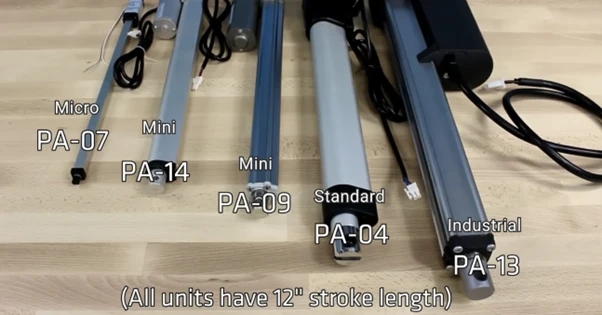
Walk through any modern facility and you're surrounded by controlled movement that most people don't examine. A hospital bed adjusting position at the touch of a button. A greenhouse vent opening in response to temperature. A conveyor gate diverting product into a secondary line without anyone pressing anything. The mechanism behind most of this is the same, and it has a name most people outside engineering have never used: an actuator.
That's changing. As automation spreads across Canadian industries, from manufacturing and agriculture to building infrastructure and healthcare, the actuator has moved from a component that engineers specify quietly to something that business decision-makers, procurement teams, and technology investors increasingly need to understand.
An actuator converts energy into mechanical motion. Depending on the energy source, that's either electrical current, compressed air, or pressurised hydraulic fluid. Depending on the application, the motion produced is either linear, a straight push or pull along a single axis, or rotary, rotation around a fixed point.
Electric linear actuators are the most relevant category for the broadest range of modern applications, and understanding how they work explains most of what matters in practice.
A motor drives a lead screw, a precisely threaded rod. A drive nut sits on the screw and meshes with the thread but is prevented from rotating. So when the screw turns, the nut has no option but to travel along it. The rod attached to the nut extends outward as the nut moves in one direction and retracts when the motor reverses.
What this produces is controlled, precise, repeatable straight-line movement from an electrical input. The relationship between motor rotation and rod travel is fixed by the thread pitch, so controlling the motor precisely means controlling the rod's position precisely. Stop the motor and the rod stops. Add position sensing and you know exactly where it is throughout its travel.
This is what makes electric actuation more capable than pneumatic alternatives for most modern applications. A pneumatic cylinder applies pressure in one direction and that's essentially it. An electric actuator can stop at any point in its travel, modulate force, hold a position, and communicate its status to a digital control system. For an era of networked, sensor-driven industrial automation, that's the relevant difference.
One characteristic of lead screw actuators that has real practical consequences is self-locking. With a fine enough thread pitch, the geometry prevents the load from backdriving the mechanism when the motor isn't powered. The rod holds its position without the motor running continuously.
For a patient positioning system that needs to hold position while the patient is settled. For an industrial fixture that needs to maintain clamping force after moving to position. For an adjustable workstation that shouldn't drift during the working day. Self-locking provides this without continuous power draw, which matters both for energy efficiency and for safety in applications where unexpected movement would be a problem.
Not every actuator is self-locking. Coarser thread pitches that prioritise speed over force may allow backdrive. Worth checking explicitly for any application where the load needs to stay put between operations.
The application range is genuinely wider than most people expect once they start looking at it properly.
In manufacturing, actuators drive automated clamping systems, press mechanisms, conveyor divert gates, and positioning equipment. The precision and repeatability they provide is what makes consistent product quality achievable at production scale without continuous human intervention.
Agriculture has become a significant application area. Irrigation control valves that open and close in response to moisture sensors. Greenhouse ventilation systems that regulate temperature automatically. Adjustable equipment on precision farming machinery. These are applications where automation changes operational efficiency in ways that manual operation simply can't match.
Building infrastructure relies on actuators more than most occupants realise. HVAC damper control in commercial buildings adjusts airflow continuously based on occupancy and air quality data. Flood barrier mechanisms operate remotely in response to water level sensors. Automated access control systems handle gate and barrier movement. In a large building, there may be hundreds of these operating simultaneously.
Healthcare is where the performance requirements are most demanding. Surgical tables, patient lift systems, infusion pumps, powered prosthetics. The precision, reliability, and safety standards for actuators in medical applications are substantially higher than in other categories, which is part of why the engineering in that segment has driven development that benefits other application areas.
Consumer applications are broader than most people notice. Electric recliners, adjustable bed bases, sit-stand desks, motorised kitchen cabinet lifts, automated vehicle tailgates. The quality difference between a well-engineered mechanism and a cheap one shows up immediately in how the movement feels.

The actuator selection process looks simple and isn't. Getting one parameter wrong creates problems that are often expensive to fix after installation.
Force rating first. The rated capacity needs to exceed the actual load with meaningful margin, not match it. A unit running at its rated maximum runs hotter and wears faster than one with capacity to spare. One and a half to two times the calculated load is reasonable for most applications. Direction of load matters as much as magnitude. Vertical lifting is the most demanding scenario. Horizontal pushing requires considerably less force for the same load. Angular applications pushing a hinged element through an arc have a force requirement that varies throughout the travel and needs to be assessed at the worst position, usually one of the end points.
Stroke length should match the required travel with some buffer. An actuator that runs out of stroke before the mechanism reaches its end position is a specification error that typically means replacing the unit.

Duty cycle is the parameter that catches people out most often. A unit rated for 20% duty cycle needs four minutes of rest for every minute of running. For a greenhouse vent that cycles twice a day this is irrelevant. For a production gate cycling every few minutes through an eight-hour shift it's the critical specification. Heat is what degrades over-cycled actuators, and the failure tends to arrive weeks after installation rather than immediately, making it easy to misattribute.
Environmental rating needs to match actual installation conditions. IP65 handles outdoor use in typical conditions. Agricultural environments with chemical exposure, food production settings requiring washdown, and coastal locations with salt corrosion all need higher ratings. The cost difference at purchase is small. The cost of premature failure in a difficult-to-access location is not.
Voltage is largely a practical question. 12V DC suits residential, mobile, and off-grid applications. 24V DC is standard in commercial and industrial settings where longer cable runs make voltage drop at lower voltage a real problem. Getting this right at the start avoids needing a converter in the installation.
Control requirements should be established before selecting the unit. A basic extend-retract application needs only a switch. An application needing precise intermediate positioning needs position feedback, Hall effect sensors or a potentiometer, built into the actuator. An application integrating with a building management system or industrial PLC needs compatible control inputs. The linear actuator range that covers all of these specifications is wider than most buyers realise when they start looking.
Electric actuation has been displacing pneumatic and hydraulic systems across a widening range of applications for two decades, driven by the advantages in controllability, digital integration, and the elimination of fluid infrastructure. The direction of industrial automation, toward more connected, more instrumented, more precisely controlled systems, continues to favour electric actuation.
For Canadian businesses evaluating automation technology, the actuator is usually not the headline component. It's the mechanism that makes the headline component work. Getting the specification right has consequences across the operational life of the equipment it's installed in, which makes it worth understanding properly rather than treating as a procurement detail.
 The National Crowdfunding & Fintech Association (NCFA Canada) is a financial innovation ecosystem that provides education, market intelligence, industry stewardship, networking and funding opportunities and services to thousands of community members and works closely with industry, government, partners and affiliates to create a vibrant and innovative fintech and funding industry in Canada. Decentralized and distributed, NCFA is engaged with global stakeholders and helps incubate projects and investment in fintech, alternative finance, crowdfunding, peer-to-peer finance, payments, digital assets and tokens, artificial intelligence, blockchain, cryptocurrency, regtech, and insurtech sectors. Join Canada's Fintech & Funding Community today FREE! Or become a contributing member and get perks. For more information, please visit: www.ncfacanada.org
 |  |  |
|---|---|---|
 |  |  |
June 2, 2026 | NCFA Insight | Artificial Intelligence And Data, Capital Markets And Market Infrastructure, Risk Compliance And Regtech

On May 26, 2026, Liquid launched Co Invest for ChatGPT and Claude, allowing users to research markets, construct portfolios, fund accounts, and execute trades from inside an AI conversation. The platform supports more than 500 markets across stocks, ETFs, commodities, crypto, FX, prediction markets, and pre IPO opportunities. Every trade still requires user confirmation before execution.
The launch is testing a new distribution model for financial services. For two decades, brokers competed to convince customers to visit websites and download apps. Liquid is testing a different idea. This is already happening in commerce. Agent driven checkout and payments are moving purchase decisions closer to AI assistants.
What happens if the customer never leaves the AI assistant?
Traditional brokerage growth follows a familiar formula. Acquire the customer. Get them into the platform. Keep them engaged. Generate more activity inside the platform.
Co Invest reverses that process. The customer already lives inside ChatGPT or Claude. Research happens there. Portfolio construction happens there. Market comparisons happen there. The trade happens there. The broker becomes the infrastructure underneath the conversation.
The launch announcement describes Co Invest as a way to move from market question to live execution inside a single workflow. If customers increasingly begin their financial decisions inside AI assistants, brokers may need to compete for agent connectivity as aggressively as they once competed for app downloads.
Much of the discussion around AI and investing focuses on autonomous trading. Liquid's current product doesn't do that. Users must still approve all trades before execution (at least for now). The assistant can research, compare, explain, size positions, and prepare orders, but it cannot freely move money or trade without permission (aka the agentic trading model).
Perhaps before markets and regulators reach fully autonomous investing, there will be a type of 'permissioned investing' that gets iterated before then. The goal isn't unrestricted authority. It's a type of controlled automation with clear limits, permissions, and accountability.
Example: A customer could authorize an agent to purchase a specific ETF under preset conditions, apply position limits, avoid leverage, stop trading after a certain loss threshold, and require additional approval for larger transactions.
This approach may appeal to regulators, brokers, and investors because it preserves accountability while reducing friction.
The benefits are easy to understand. AI agents can monitor markets continuously, enforce risk rules consistently, compare opportunities quickly, and reduce emotional decision making.
The risks are less obvious. If millions of investors eventually rely on similar models, data sources, prompts, and optimization goals, market behaviour could become more concentrated. Markets already experience crowding through index investing, quantitative strategies, and algorithmic trading. Agentic investing could introduce a new version of the same challenge if many systems begin reaching similar conclusions at the same time.
The concern is that a large number of investors could end up acting through similar decision frameworks without fully realizing it. A model that works well for one investor may create new market risks when millions of investors use similar prompts, data sources, and optimization rules. The result could be more crowded trades, sharper reversals, and less diversity in market decision making.
If AI assistants become the place where investors start financial decisions, brokers lose some control over the customer interface and relationship.
Distribution changes and brokers may need to prove itself to the AI systems that sit between customers and financial products.
That creates a different kind of competition. Brokers may be forced to compete on permission controls, API reliability, execution quality, and audit records as much as interface design.
The broker with the most reliable AI integrations may win more order flow than the broker with the best looking app.
Canada's discussions around consumer driven banking, digital identity, AI governance, retail payment oversight, and securities regulation all intersect here. If AI assistants become a gateway to investing, accountability becomes more important than automation.
Who approved the instruction? What permissions were granted? What limits were applied? What records were created? Who supervised the activity? Those questions are more important than whether the interaction started in a brokerage app or a chatbot.
Current securities rules already apply to firms using AI, and AI is creating new audit and authorization questions for financial firms. The harder challenge is determining how responsibility should be shared when AI systems increasingly participate in financial decisions and transaction workflows.
Liquid's launch doesn't answer those questions, but it provides an early look at where the industry may be heading.
If AI assistants become the primary place where investors research markets, compare opportunities, and initiate transactions, will brokers compete for customers or compete for connectivity to the agents representing those customers?
The National Crowdfunding & Fintech Association (NCFA Canada) is a financial innovation ecosystem that provides education, market intelligence, industry stewardship, networking and funding opportunities and services to thousands of community members and works closely with industry, government, partners and affiliates to create a vibrant and innovative fintech and funding industry in Canada. Decentralized and distributed, NCFA is engaged with global stakeholders and helps incubate projects and investment in fintech, alternative finance, crowdfunding, peer-to-peer finance, payments, digital assets and tokens, artificial intelligence, blockchain, cryptocurrency, regtech, and insurtech sectors. Join Canada's Fintech & Funding Community today FREE! Or become a contributing member and get perks. For more information, please visit: www.ncfacanada.org
| | |
|---|---|---|
| | |
June 2, 2026 | NCFA Resource | Artificial Intelligence And Data

On June 2, 2026, the Bank of Canada published Canadian firm AI adoption survey data from its December 2025 Business Leaders’ Pulse. The research gives fintechs, investors, financial institutions, regulators, and policy teams a useful benchmark for assessing where Canadian businesses stand on AI use, deployment, capital spending, and employment expectations.
The resource draws on 314 firm responses. It separates personal AI use by business leaders from operational AI use inside firms. Many Canadian leaders already use AI at work, but fewer firms use AI in production, service delivery, or core business workflows.
The research helps readers compare AI awareness with real deployment:
The Bank of Canada also shows where AI use starts. Text generation ranks as the most common current application. Visual content creation and machine learning based data processing follow. Over the next three years, firms expect more use of data processing applications, which may matter more for financial services than basic content generation.
For fintechs and financial institutions, AI awareness no longer creates differentiation on its own. The harder work involves choosing real workflows, testing productivity gains, managing risk, training staff, improving data quality, and deciding where AI deserves capital spending.
Fintech founders can use the paper to test whether customer demand has reached live deployment or is still stuck in pilot mode. That helps product teams avoid building around hype alone.
Investors can use the data to assess where demand may grow for AI governance tools, workflow automation, data infrastructure, compliance technology, customer service systems, and implementation support.
Financial institutions can compare their own AI programs against broader Canadian firm expectations. The paper gives banks, credit unions, insurers, and wealth firms a clearer view of how business leaders think about investment and employment effects over the next year and the next three years.
Regulators and policymakers can use the paper to understand practical adoption barriers. Firms that do not use AI most often cite lack of usefulness for their operations. Other barriers include skills, software compatibility, ethics, cost, regulatory obstacles, and data quality.
The strength of this resource is its Canadian evidence base. It also separates personal AI use from business deployment, which makes the adoption picture more useful.
The paper also connects AI adoption with capital spending and employment expectations. Firms expect AI to have a more positive effect on capital expenditures over three years than over the next 12 months. Employment expectations look more cautious. Over three years, 18% of firms expect to hire fewer staff because of AI, while 9% expect to hire more.
The limit is survey design. The Business Leaders’ Pulse helps assess aggregate economic conditions relevant to Canadian GDP. It doesn't produce population representative estimates of firm behaviour. Readers should treat the results as useful directional evidence, not a full census of Canadian AI adoption.
Bank of Canada AI adoption survey (primary staff analytical paper on firm AI adoption, capital spending, and employment expectations)
Bank of Canada central banking AI resource (resource on AI adoption inside central banking and controlled deployment)
Canada AI productivity analysis (analysis on AI adoption, productivity, capital, and execution)
The National Crowdfunding & Fintech Association (NCFA Canada) is a financial innovation ecosystem that provides education, market intelligence, industry stewardship, networking and funding opportunities and services to thousands of community members and works closely with industry, government, partners and affiliates to create a vibrant and innovative fintech and funding industry in Canada. Decentralized and distributed, NCFA is engaged with global stakeholders and helps incubate projects and investment in fintech, alternative finance, crowdfunding, peer-to-peer finance, payments, digital assets and tokens, artificial intelligence, blockchain, cryptocurrency, regtech, and insurtech sectors. Join Canada's Fintech & Funding Community today FREE! Or become a contributing member and get perks. For more information, please visit: www.ncfacanada.org
| | |
|---|---|---|
| | |
June 2, 2026 | NCFA Feature | Capital Markets And Funding, Open Banking Open Finance And Data Sharing, Digital Assets Blockchain And Tokenization

On May 28, 2026, Wealthsimple announced IPO Access for Canadian retail investors, giving eligible clients a way to request shares in select Canadian and US initial public offerings at the offering price before public trading begins. Four days later, Robinhood completed its WonderFi acquisition and entered Canada with a regulated crypto base.
Canada’s retail finance market is turning into a contest over access, loyalty, status, and who owns the customer relationship.
Wealthsimple says IPO Access lets eligible clients review available IPOs inside the platform, submit a conditional offer to buy before public trading begins, and receive shares at the offering price if an allocation is available. Canadian IPOs and US IPOs marketed in Canada by prospectus are open to eligible clients, while US only IPOs require accredited investor status.
Clients don't automatically receive shares. Wealthsimple can only distribute the IPO shares it receives through participating investment banks, so investors may receive all, some, or none of the shares requested. IPO Access opens the door to a process long dominated by institutions and high net worth investors. Allocation size, issuer quality, investor suitability, disclosure, and demand will decide whether it becomes meaningful market access or a loyalty feature with thin supply.
If Wealthsimple ever pursued its own public listing, IPO Access would face its most visible credibility check. Can retail investors receive meaningful allocation in a high demand Canadian IPO, or only permission to submit a request?
Robinhood’s WonderFi acquisition gives it Canadian market entry through regulated crypto infrastructure. WonderFi operates Bitbuy and Coinsquare, two long running Canadian crypto platforms. When Robinhood announced the WonderFi deal in May 2025, WonderFi reported more than C$2.1B in assets under custody. The all cash transaction valued WonderFi at about C$250M, with shareholders receiving C$0.36 per share.
Robinhood is entering Canada with a larger consumer finance model (not just crypto trading). Its US strategy already reaches beyond trading into managed portfolios, premium membership, family accounts, credit products, AI tools, and lifestyle finance. Robinhood’s wealthtech and lifestyle finance push lays out the direction clearly. The company wants a larger share of the customer relationship, extending beyond trading into crypto, cash, credit, rewards, and everyday financial activity.
Wealthsimple already owns the local bank challenger position. Robinhood now has regulated crypto distribution and global brand recognition. Banks have the widest financial relationships. The competitive question is who can turn access, trust, price, rewards, and habit into the primary customer relationship.
Canadian banks still dominate deposits, lending, mortgages, advice, card relationships, business banking, and full service wealth management. Their brokerage arms have responded with lower cost trading offers, ETF promotions, digital tools, and stronger wealth integration.
Wealthsimple’s three year Billy Bishop airport partnership puts a fintech brand inside a premium travel moment that banks and card issuers have historically owned through lounges, rewards, and status. The June 1 to August 31 pop up is brand marketing. The broader agreement is more strategic, linking financial products to membership, identity, and lifestyle.
Banks can match prices, bundle accounts, and improve digital apps. Cultural relevance is harder to buy. Wealthsimple and Robinhood sell access, control, status, simplicity, and participation. Banks sell security, breadth, advice, and balance sheet strength. The winner will combine both without making the customer feel trapped.
IPO Access now has to prove allocation quality, not only product demand.
Robinhood has to show whether WonderFi becomes a crypto foothold or the base for a broader Canadian wealth and money platform.
Banks have to decide whether to respond with better access and pricing or mainly protect existing margins. They now have to defend the relationship, not just the account.
Regulators have to keep investor protection strong without blocking access models that could improve capital formation.
For NCFA's community, the capital markets innovation angle is interesting. Canada needs more public market participation, deeper retail access, stronger fintech competition, and clearer rules for digital investing. Wealthsimple’s IPO Access launch puts a practical test in the market. Robinhood’s Canada entry raises the competitive stakes.
If fintechs can give Canadians better access to IPOs, crypto, investing, rewards, and everyday money tools, will banks respond by opening up the customer relationship or by making their existing bundles harder to leave?
The National Crowdfunding & Fintech Association (NCFA Canada) is a financial innovation ecosystem that provides education, market intelligence, industry stewardship, networking and funding opportunities and services to thousands of community members and works closely with industry, government, partners and affiliates to create a vibrant and innovative fintech and funding industry in Canada. Decentralized and distributed, NCFA is engaged with global stakeholders and helps incubate projects and investment in fintech, alternative finance, crowdfunding, peer-to-peer finance, payments, digital assets and tokens, artificial intelligence, blockchain, cryptocurrency, regtech, and insurtech sectors. Join Canada's Fintech & Funding Community today FREE! Or become a contributing member and get perks. For more information, please visit: www.ncfacanada.org
| | |
|---|---|---|
| | |
June 2, 2026 | NCFA Insight | Payments And Market Infrastructure, Open Banking Open Finance And Data Sharing, Digital Assets Blockchain And Tokenization, Regulation And Policy

On June 2, 2026, Thunes and Juniper Research released the 2026 Cross Border Payments Interoperability Index, a 50 country benchmark that measures how easily money moves across borders. Canada ranks 22nd with an overall score of 6.4. That result doesn't simply mean Canada lacks financial infrastructure. It points to a harder problem for maturer markets. That is strong domestic systems don't automatically create cheaper, faster, more open cross border payments.
But that's starting to change now that Canada is incentivizing more competition in fintech and now some key policy files open. Real-Time Rail, broader payment service provider access, Interac e-Transfer access for qualifying PSPs, consumer driven banking, and stablecoin rules all point in the same direction. Global benchmarks now judge whether those components are working in live markets or are being left behind.
Canada's scorecard below shows the gap clearly. Solid on economic strength, digital infrastructure, financial inclusion, and cross border connectivity. However, according to the ranking Canada is weak on market dynamics and progress, the category that tracks whether regulation, mandates, open banking, crypto rules, and public payment initiatives create usable momentum (or not).
| Canada Index Category | Score | Reader Takeaway |
|---|---|---|
| Economic Health | 7.5 | Canada has a strong base for financial activity |
| Digital Infrastructure | 7.0 | The country has meaningful digital capacity |
| Financial Inclusion | 6.7 | Formal access is broad, but gaps remain |
| Cross Border Connectivity | 6.3 | Cost, speed, and reach still limit performance |
| Market Dynamics And Progress | 4.0 | Canada’s weakest score and the core execution gap |
| Overall Rank | 22nd Of 50 | Middle of the pack for a G7 market |
The low score of 4.0 on market dynamics needs immediate attention. Canada doesn't lack ambition, but it still needs more proof that payment modernization has changed market behaviour, access, pricing, product design, and cross border reach. Otherwise, smoke and mirrors.
Real-Time Rail could become Canada’s most important domestic payment upgrade in years. Payments Canada says the Real-Time Rail payment system will support instant, data rich account to account payments for eligible participants. Payments Canada also published a PSP participation guide for RTR, which helps payment service providers prepare for access under Canada’s retail payments regime.
The next 18 months will be verytelling, given that the execution timing window is a practical test. Real-Time Rail and Canada’s productivity test comes down to access, fraud controls, pricing, resilience, and product adoption. Faster rails help only when firms can build real workflows on top of them.
Interac has opened another route into mainstream payments. In September 2025, Interac said qualifying PSPs can access Interac e-Transfer if they meet requirements tied to RPAA registration, FINTRAC money services business registration, sponsorship, and risk controls. Interac reports 1.4 billion e-Transfer transactions in 2024, so access to this network gives fintechs a path into a payment habit Canadians already use at scale.
Open banking is also in implementation. Canada’s consumer driven banking framework gives consumers and small businesses secure control over financial data, with future write access expected to support payment initiation. That turns open banking from comparison infrastructure into payment infrastructure. Canada’s open banking commercialization roadmap is now in rollout and about real API usage, accreditation, liability, and business model design.
And then there's Stablecoins. Finance Canada says Canada’s stablecoin framework will regulate fiat backed stablecoins issued by non financial institutions and place issuers under Bank of Canada supervision. That connects directly to the cross border pain measured by Thunes. Bill C-15 gives Canada a digital finance framework, but execution will decide whether stablecoins become trusted payment infrastructure or another narrow product category.
The Thunes report gives Canada a useful benchmark because cross border payments still fail basic user tests. The global average remittance cost sits at 6.36 percent, more than double the UN target of less than 3 percent by 2030. The same report finds that 38 percent of surveyed users typically pay more than 3 percent to send a cross border payment.
| Global Friction Point | Thunes Finding | Why It Counts |
|---|---|---|
| Remittance Cost | 6.36 percent global average | More than double the UN target |
| High Fee Exposure | 38 percent pay more than 3 percent | Users still face avoidable cost pressure |
| Payment Delay | 27 percent wait two or more days | Slow payouts hurt household and business cash flow |
| Price Transparency | 41 percent do not always see the final amount upfront | Users cannot compare true cost easily |
| User Priority | 50 percent rank instant transfers first | Speed now beats fees as the top feature |
RTR can improve domestic speed. Open banking can improve data access and future payment initiation. Interac PSP access can widen domestic participation. Stablecoin rules can support regulated digital settlement.
None of those pieces improves cross border outcomes on its own. The gap is not a lack of providers. It is how well banks, fintechs, PSPs, wallets, FX, fraud controls, compliance systems, and payout networks connect across domestic and international payment flows.
Brazil and India offer Canada the most useful comparison. Both markets show how live domestic payment rails can change user behaviour. They also show why domestic success doesn't automatically solve international payments.
| Market | Thunes Rank Or Score | Domestic Payment Behaviour | Cross Border Lesson |
|---|---|---|---|
| Canada | 22nd overall, 6.4 score, 4.0 market dynamics | Strong infrastructure, but RTR, open banking, PSP access, and stablecoin rules still need market proof | Canada must turn policy design into live interoperability |
| Brazil | 14th overall, 6.7 score, 8.0 market dynamics | Pix helped make instant bank transfers a daily habit. Thunes reports 59 percent of surveyed respondents in Brazil use bank transfers daily or weekly | Live rails can change behaviour, but 71 percent of Brazilian recipients still wait two or more days for international payments |
| India | High domestic bank transfer use in the surveyed group | UPI made account to account payments central to daily digital finance | Cross border costs remain high. Thunes reports 54 percent of surveyed users in India typically pay more than 3 percent for cross border transfers |
The lesson is that working rails change expectations. Once consumers and businesses experience instant domestic payments, delays and hidden costs in international payments become harder to defend. Canada has not yet had that market wide real time payment moment. RTR can help create it if access, fraud controls, pricing, and use cases land together.
The stablecoin section of the Thunes report is stronger when read as infrastructure analysis. Stablecoins can settle quickly at low on chain cost, but users still need practical conversion into bank accounts, wallets, cards, or cash. That last mile problem limits mainstream use.
| Stablecoin Data Point | What Thunes Found | Policy Read For Canada |
|---|---|---|
| Core Benefit | Immediate settlement at low on chain cost | Useful for cross border settlement if rules, custody, and redemption work |
| Main Constraint | Local currency conversion remains challenging | Stablecoins need connections to banks, PSPs, wallets, and payout networks |
| Nigeria Usage | 29 percent of surveyed respondents used stablecoins | Demand rises where currency pressure and payment friction are higher |
| Top Nigeria Use Case | 58 percent used stablecoins to store value | Stablecoins do not start only as payment products |
| Nigeria Payments Use | 9 percent used stablecoins for domestic payments and 39 percent used them for international payments | Cross border utility looks stronger than domestic merchant use in this sample |
Canada now has domestic stablecoin proof points. Tetra’s CADD launch brought a Canadian dollar payment stablecoin issued through a regulated financial institution. Stablecorp’s QCAD work has added regulatory, bank custody, and exchange access milestones. Loon’s CADC acquisition gives Canada another Canadian dollar stablecoin initiative with existing transaction history. These examples make Canada’s stablecoin debate more practical. The issue is no longer whether Canadian dollar stablecoin projects exist. It is whether they can earn trusted roles in payment and settlement workflows.
The Thunes report doesn't frame stablecoins as an immediate replacement for banks or remittance brands. Stablecoins may work first as a middle leg settlement layer inside money transfer operators, banks, wallets, and payment platforms. That fits Canada’s policy challenge. Rules for reserves, redemption, supervision, governance, and AML controls matter, but market value comes from trusted use inside real payment flows.
Canada’s retail market still looks early. FCAC stablecoin survey findings show that 4% of Canadian adults hold stablecoins and 5% held them in the past. That gap between infrastructure activity and consumer adoption should guide policy design. Canada should not build stablecoin rules only around today’s retail ownership. It should test whether regulated Canadian dollar stablecoins can support remittances, merchant settlement, marketplace payouts, treasury use, and business to business payments across domestic and international corridors.
Can Canada turn payment modernization into live cross border advantage before faster markets pull further ahead?
Better outcomes will come from live RTR access, PSP onboarding that works in market, open banking with payment initiation, stablecoin rules tied to real payment use cases, and fraud controls that scale across real time flows. The Canadian pieces are coming together, but the test will be whether they work together fast enough to improve cost, speed, transparency, and cross border reach.
The National Crowdfunding & Fintech Association (NCFA Canada) is a financial innovation ecosystem that provides education, market intelligence, industry stewardship, networking and funding opportunities and services to thousands of community members and works closely with industry, government, partners and affiliates to create a vibrant and innovative fintech and funding industry in Canada. Decentralized and distributed, NCFA is engaged with global stakeholders and helps incubate projects and investment in fintech, alternative finance, crowdfunding, peer-to-peer finance, payments, digital assets and tokens, artificial intelligence, blockchain, cryptocurrency, regtech, and insurtech sectors. Join Canada's Fintech & Funding Community today FREE! Or become a contributing member and get perks. For more information, please visit: www.ncfacanada.org
| | |
|---|---|---|
| | |
June 1, 2026

Image: Unsplash/Vladimir Solomianyi
For many small and mid-sized businesses, the gap between sending an invoice and receiving payment is one of the biggest threats to daily operations and steady growth.
Even when sales are healthy on paper, waiting 30, 60, or even 90 days for customers to pay can quickly drain working capital and stall planned investments.
Accounts receivable financing has emerged as a popular solution to this familiar problem, offering immediate access to cash that is otherwise locked up in unpaid invoices.
This guide explains how the model works, what types of arrangements exist, what they typically cost, and which businesses stand to benefit the most.
Accounts receivable financing, often abbreviated as AR financing, is a short-term funding method that allows businesses to access cash based on the value of their outstanding invoices.
A finance company advances a percentage of those invoices upfront, allowing the business to cover operational expenses while it waits for customers to pay.
The arrangement essentially converts a slow-moving asset into immediate working capital without the long approval timelines of a traditional bank loan.
This is particularly valuable for businesses that sell on net terms and routinely face cash flow gaps between delivery and payment.
Unlike a standard business loan, AR financing is secured directly against the value of unpaid invoices rather than broader business assets.
Approval focuses heavily on the creditworthiness of the customers who owe the invoices rather than the borrowing business itself.
This distinction means that companies with limited credit history or imperfect balance sheets may still qualify if their customer base is consistently strong and reliable.
Because the funding is tied directly to existing receivables, many providers do not classify it as traditional debt on the balance sheet.

Image: Unsplash/Scott Graham
To apply for AR financing, a business typically shares details about its accounts receivable, including aging reports, customer payment history, and the face value of outstanding invoices.
The lender then evaluates the quality of those receivables, the reliability of the customers, and the applicant's overall financial health.
Approval timelines vary widely depending on the type of provider chosen for the financing arrangement.
Traditional banks often take a week or longer due to extensive underwriting requirements, while specialized online lenders can sometimes approve and fund applications within 24 hours of submission.
Once approved, the business receives an upfront advance that usually falls between 70 and 95 percent of the eligible invoice value, with the remainder held in reserve.
After the customer pays the invoice, the lender releases the held-back balance minus any agreed-upon fees.
If the financing is structured as an asset sale, the lender also takes responsibility for collecting payment directly from the customer.
If it is structured as a loan, the business continues to manage collections and simply repays the advance once the invoice clears.
The market is served by a wide variety of lenders, and businesses comparing account receivable financing companies will encounter several distinct product structures.
Understanding the differences between these structures is essential to choosing the right fit for a given business model and cash flow pattern.
Invoice factoring is the most well-known form, where a business sells its unpaid invoices to a third-party factor at a discount.
The factor then takes over collection duties and assumes the day-to-day relationship with the customer for payment purposes.
This option suits businesses that want to outsource collections entirely and accept slightly higher fees in exchange for that operational convenience.
It works particularly well in industries like transportation, staffing, and manufacturing, where invoicing volume is high, consistent, and often spread across many customers.
Invoice discounting works similarly to factoring but allows the business to retain full control of customer collections and communications.
The unpaid invoices serve as collateral for a cash advance, while the business continues to manage payment reminders confidentially and on its own terms.
This structure appeals to businesses that prefer to keep their financing arrangements private and outside the awareness of their customers.
It is also a good choice for companies with established credit control processes and trusted client relationships that they do not want to disrupt.
Asset-based lending, often called ABL, is a broader financing solution that allows a business to secure a line of credit or loan against multiple types of assets.
Accounts receivable can be combined with inventory, equipment, or other tangible assets to expand the borrowing base.
This structure is particularly useful for larger businesses with diverse asset pools and ongoing working capital needs throughout the year.
It also offers more flexibility than a single-purpose factoring agreement when funding requirements fluctuate significantly with seasonal or project-based demand.
Selective receivables financing lets a business choose which specific invoices to fund rather than committing the entire sales ledger.
This gives owners precise control over how much they borrow, which customer relationships are involved, and when the financing is needed.
It is well-suited to companies that only need occasional cash flow support rather than a continuous funding facility.
Many growing businesses use it to manage seasonal demand spikes, large one-off opportunities, or unexpected expenses without locking themselves into longer commitments.
The primary cost of AR financing is the factoring or financing fee, which typically ranges between 1 and 5 percent of the invoice value.
The exact percentage depends on factors such as invoice age, customer creditworthiness, total volume, and industry risk profile.
Other potential costs can include set-up fees, administrative service charges, and interest on outstanding advances when the arrangement is structured as a loan.
Effective annual rates often fall between 15 and 35 percent, which makes AR financing relatively expensive compared with traditional bank loans but far more accessible.
Businesses that sell to other businesses on net 30 to net 90 terms typically gain the most from this type of arrangement.
Industries with predictable invoicing patterns, such as construction, transportation, staffing, healthcare, manufacturing, and professional services, are especially well represented among AR financing users.
Companies that struggle to qualify for traditional bank loans often find AR financing more accessible because approval rests largely on customer credit rather than the business owner's own credit profile.
Fast-growing firms also use it to bridge the gap between aggressive expansion and slower-paying customers without taking on long-term debt.
Accounts receivable financing offers a practical and increasingly mainstream way for businesses to unlock cash that is otherwise trapped in unpaid invoices.
With several product structures, advanced rates between 70 and 95 percent, and approval criteria centred on customer credit rather than the business itself, it provides a level of flexibility that traditional lending cannot easily match.
Before signing any agreement, business owners should compare providers carefully, read all fee schedules, and confirm whether the arrangement uses recourse or non-recourse terms.
Done well, AR financing can stabilize cash flow, support steady growth, and remove much of the stress that comes with waiting for slow-paying customers.
The National Crowdfunding & Fintech Association (NCFA Canada) is a financial innovation ecosystem that provides education, market intelligence, industry stewardship, networking and funding opportunities and services to thousands of community members and works closely with industry, government, partners and affiliates to create a vibrant and innovative fintech and funding industry in Canada. Decentralized and distributed, NCFA is engaged with global stakeholders and helps incubate projects and investment in fintech, alternative finance, crowdfunding, peer-to-peer finance, payments, digital assets and tokens, artificial intelligence, blockchain, cryptocurrency, regtech, and insurtech sectors. Join Canada's Fintech & Funding Community today FREE! Or become a contributing member and get perks. For more information, please visit: www.ncfacanada.org
| | |
|---|---|---|
| | |
June 1, 2026 | NCFA Fintech Market Activity | Digital Assets Blockchain And Tokenization, Capital Markets And Funding, Capital Markets And Market Infrastructure

On June 1, 2026, Further and 3iQ introduced USD Class II for the Further x 3iQ Alpha Digital Fund, adding a new share class for USD investors who want long Bitcoin exposure plus digital asset alpha without buying, converting, or custodying BTC directly.
3iQ and Further aren't just selling Bitcoin exposure. They are separating investor needs by base currency, custody preference, and risk objective. The fund now has three share classes:
Tommaso Mancuso, President and CIO, 3iQ:
“USD Class II combines two things institutional investors increasingly want in the same product. It pairs disciplined alpha generation across liquid digital asset markets with long exposure to Bitcoin's scarcity and convexity. Delivering both within a USD-denominated, institutionally risk-managed structure is what makes this share class distinctive.”
The useful part is the share class design. Allocators are not all trying to solve the same objective. Some want USD Class I focused on active digital asset returns with less reliance on Bitcoin’s price direction. Some want Bitcoin exposure but need to fund and redeem in USD. Others already hold BTC and want to stay in BTC instead of selling first.
USD Class II reduces one operational problem. It gives USD investors Bitcoin linked exposure without asking them to source or custody BTC themselves (which can slow adoption even when investors already believe in the asset class).
3iQ brings a longer Canadian product history into this launch. The company was founded in 2012 and says it launched the world’s first Digital Assets Managed Account Platform. It also points to earlier Bitcoin and Ethereum ETP launches, staking integration in Ethereum and Solana ETPs, and other regulated ETPs.
In February 2026, Coincheck completed its 3iQ acquisition, including 3iQ’s regulated product track record in Canada. The question now is whether this share class design attracts allocator demand, not whether Bitcoin access exists.
Will institutional digital asset adoption grow more through broad Bitcoin exposure, or through fund structures that let allocators choose currency, custody, alpha, and beta on their own terms?
The National Crowdfunding & Fintech Association (NCFA Canada) is a financial innovation ecosystem that provides education, market intelligence, industry stewardship, networking and funding opportunities and services to thousands of community members and works closely with industry, government, partners and affiliates to create a vibrant and innovative fintech and funding industry in Canada. Decentralized and distributed, NCFA is engaged with global stakeholders and helps incubate projects and investment in fintech, alternative finance, crowdfunding, peer-to-peer finance, payments, digital assets and tokens, artificial intelligence, blockchain, cryptocurrency, regtech, and insurtech sectors. Join Canada's Fintech & Funding Community today FREE! Or become a contributing member and get perks. For more information, please visit: www.ncfacanada.org
| | |
|---|---|---|
| | |


August 26th, 2025

January 4th, 2024

June 1st, 2021

September 9th, 2020

July 9th, 2018

January 3rd, 2018

September 25th, 2017

June 20th, 2017

May 10th, 2017

December 14th, 2016