



Karsten Wenzlaff, Advisor
August 26th, 2025
Karsten Wenzlaff is a Crowdfunding and Fintech Expert from Germany. He is Secretary-General of Digit[...]


Stablecoins | June 27, 2025
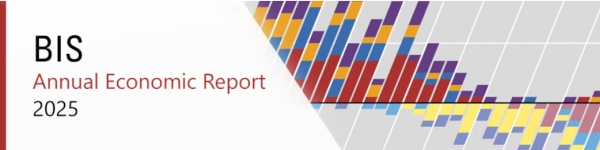
On June 24 2025, in chapter 3 of its Annual Economic Report, "The next generation monetary and financial system" (38 page PDF), the Bank for International Settlements (BIS) warns that stablecoins fail to function as real money. The report arrives just as the United States moves closer to signing the GENIUS Act into law, a federal bill that would bring stablecoin issuers under formal supervision.
The report outlines how stablecoins fail to meet the key tests of singleness, elasticity, and integrity, which defines whether a payment instrument can be accepted at face value, scale with economic needs, and operate safely in the broader financial system.
BIS Report states
“Stablecoins perform poorly when assessed against the three tests for serving as the mainstay of the monetary system,”
The BIS applies three core tests to any money-like instrument, and casts serious doubt whether private stablecoins can ever serve as a true foundation for payments or monetary exchange, even if regulated.
The BIS also says broader risks to financial stability, including potential fire sales of safe assets held in reserve and cross-border flows that could undermine monetary sovereignty in emerging markets.
The GENIUS Act has now passed the Senate with strong bipartisan support and is moving to the House for consideration but does not treat stablecoins as public money. It takes a supervisory approach while explicitly banning certain features, key provisions include:
The bill has advanced in both the House Financial Services and Senate Banking committees and has bipartisan backing. Supporters argue that clear rules are needed to protect consumers and prevent runs on poorly backed coins. But the BIS report raises a bigger question. Even if stablecoins are regulated, should they be foundational to the payment system at all?
While Canada has not yet introduced comparable legislation as the GENIUS Act in the U.S., the BIS developments will influence local debates. Stablecoins are already used by some Canadians for crypto trading, remittances, and access to foreign currency.
The Bank of Canada has shelved retail CBDC development while continuing digital currency research and scenario planning, and OSFI is developing crypto exposure guidance for regulated financial institutions.
If the US establishes a regulated market while the BIS encourages a public infrastructure model, Canadian policymakers and fintechs may need to navigate both. That includes deciding whether to integrate regulated stablecoins, develop domestic alternatives, or back a central bank issued platform.
Both public institutions and private developers are building in parallel but the debate is no longer theoretical, and Canada's choices made now will impact financial systems as they grow and evolve.
 The National Crowdfunding & Fintech Association (NCFA Canada) is a financial innovation ecosystem that provides education, market intelligence, industry stewardship, networking and funding opportunities and services to thousands of community members and works closely with industry, government, partners and affiliates to create a vibrant and innovative fintech and funding industry in Canada. Decentralized and distributed, NCFA is engaged with global stakeholders and helps incubate projects and investment in fintech, alternative finance, crowdfunding, peer-to-peer finance, payments, digital assets and tokens, artificial intelligence, blockchain, cryptocurrency, regtech, and insurtech sectors. Join Canada's Fintech & Funding Community today FREE! Or become a contributing member and get perks. For more information, please visit: www.ncfacanada.org
 |  |  |
|---|---|---|
 |  |  |
Coinbase | June 25, 2025

Image: Freepik/macrovector
Coinbase secures a Markets in Crypto Assets (MiCA) licence in Luxembourg and unlocks access to all 27 EU member states under one regulatory framework. The licence allows Coinbase to provide regulated custody, trading, and token services across Europe without reapplying in each country.
MiCA is the EU’s first unified crypto regulation. It sets common rules for disclosures, capital requirements, and consumer protection. Coinbase is among the first major global exchanges to receive full MiCA approval, joining a wave of early adopters now operating across the EU under a unified licence. Market wide compliance in the EU is now real, and opens up a single market of 450 million people under consistent regulatory oversight.
Canada uses a mix of federal registration through FINTRAC and provincial securities oversight. While there is a securities passport system under the Canadian Securities Administrators (CSA), it's not uniformly applied across all provinces. Ontario, for example, requires dual filings. The system also does not unify crypto regulation or streamline compliance across federal and provincial levels.
In contrast, MiCA offers a single licence with direct access across all EU countries. For Canadian fintechs, this structural difference adds complexity and slows growth. Canada’s fintech sector must now compete with peers operating under unified rules, faster timelines, and lower costs.
In a June 2025 opinion piece for Cointelegraph, Jillian Friedman, COO of Symbiotic, warned that Canada risks losing ground:
“While other countries move toward integrating crypto into their financial systems, Canada is lagging, costing the country capital, talent and competitiveness.”
Crypto policy was grossly missing from all federal party platforms during the 2025 election, a “missed opportunity” at a time when early-stage VC activity is dropping and top STEM talent continues to leave. Friedman doubled down on Canada's issues including:
She argues that Canada should move quickly to unlock access to capital, offer tax incentives, and remove policy barriers if it wants to remain competitive.
Several global firms have followed Coinbase in securing MiCA licences:
While several MiCA-licensed firms also operate in Canada the split below shows how global players are prioritizing the EU as a unified growth market, while (possibly) treating Canada as a smaller fragmented market.
| Firm | MiCA Licence | Canadian Operation |
| Coinbase | Yes | Yes (OSC restricted dealer) |
| Crypto.com | Yes | Yes (OSC restricted dealer) |
| OKX | Yes | No active registration |
| Bitpanda | Yes | No active registration |
| Bybit | Yes | Previously fined in Ontario; no active registration |
| BitGo | Yes | No known retail presence |
MiCA offers a clear example of how coordinated regulation can improve access, speed, and investor confidence. Prime Minister Mark Carney’s pledge to reduce interprovincial trade barriers could open the door to change, but digital asset policy must be part of the conversation.
Without reducing regulatory burden and interprovincial barriers, Canada risks falling behind not because of lack of innovation but because of unclear rules that limit scale, delay market access, and create friction for investors.
The National Crowdfunding & Fintech Association (NCFA Canada) is a financial innovation ecosystem that provides education, market intelligence, industry stewardship, networking and funding opportunities and services to thousands of community members and works closely with industry, government, partners and affiliates to create a vibrant and innovative fintech and funding industry in Canada. Decentralized and distributed, NCFA is engaged with global stakeholders and helps incubate projects and investment in fintech, alternative finance, crowdfunding, peer-to-peer finance, payments, digital assets and tokens, artificial intelligence, blockchain, cryptocurrency, regtech, and insurtech sectors. Join Canada's Fintech & Funding Community today FREE! Or become a contributing member and get perks. For more information, please visit: www.ncfacanada.org
| | |
|---|---|---|
| | |
Tokenization | June 18 2025

As covered by Retuers, Coinbase is officially asking the U.S. Securities and Exchange Commission (SEC) to approve tokenized equities (or stocks), a new class of financial product. These would be blockchain representations of traditional equities, such as Apple or Tesla, designed to trade 24/7 with almost instant settlement and lower overhead. Coinbase is seeking a no-action letter or regulatory exemption from the SEC, and if they grant it, Coinbase would be the first major U.S. exchange operating with such tokenized products, evolving well beyond just a standard crypto trading exchange.
The tokenized equity model would allow retail and institutional users to access fractional ownership of blue-chip stocks via a blockchain interface and operate largely without the constraints of traditional brokerage platforms. For example transactions could take place globally, 24 hours a day, without relying on legacy clearing infrastructure. It could mean significant improvements in market efficiency, reduce settlement risk and include new financial products natively on-chain.
While Coinbase looks to break new ground in American markets, other jurisdictions are already operating. Rival exchange Kraken has launched tokenized stock trading for non-U.S. customers through its partnership with Swiss-based Backed Finance. For example, tokenized versions of Apple and Tesla stock, bAAPL and bTSLA respectively, are live pioneering examples of tokenized equities executed issued on the Solana blockchain, backed by 1:1 real shares held in custody, and tradeable with no minimum investment size and operate legally under global regulatory frameworks with blockchain flexibility, and 24/7 trading.
Europe is ahead of the curve on regulation. The EU’s MiCA framework was fully implemented as of 2024, providing legal clarity for tokenized securities across 27 member states. In Asia, Hong Kong is piloting tokenized gold, bonds, and equities under regulatory supervision. These jurisdictions are showing that comprehensive tokenization frameworks can unlock innovation while still preserving investor protection and market integrity.
Tokenized securities may require broker-dealer registration, SEC exchange approval, and compliance with the Investment Company Act. Since, Coinbase is not currently licensed as a broker-dealer, it may need a partner or entirely new structure to support these offerings legally.
There are also questions about liquidity. The World Economic Forum has identified low secondary market trading volumes and lack of standardization as persistent challenges in real-world asset tokenization.
While the tech stack can actually enforce compliance rules directly within smart contracts using standards for Real World Assets (RWA) like ERC-3643, adoption of these instruments will depend on regulators aligning globally and investors gaining trust.
If the U.S. and EU formalize tokenized security frameworks, capital will flow toward platforms offering speed, access, and interoperability, leaving slow movers behind. Companies should be exploring how to integrate tokenized equities into their product roadmaps while remaining compliant. NCFA and its members can play a leadership role in what responsible tokenized finance, launch educational initiatives, and collaborate with global infrastructure providers. At the of the day, tokenized assets are poised to become a competitive advantage or missed opportunity.
The National Crowdfunding & Fintech Association (NCFA Canada) is a financial innovation ecosystem that provides education, market intelligence, industry stewardship, networking and funding opportunities and services to thousands of community members and works closely with industry, government, partners and affiliates to create a vibrant and innovative fintech and funding industry in Canada. Decentralized and distributed, NCFA is engaged with global stakeholders and helps incubate projects and investment in fintech, alternative finance, crowdfunding, peer-to-peer finance, payments, digital assets and tokens, artificial intelligence, blockchain, cryptocurrency, regtech, and insurtech sectors. Join Canada's Fintech & Funding Community today FREE! Or become a contributing member and get perks. For more information, please visit: www.ncfacanada.org
| | |
|---|---|---|
| | |
Crypto | March 18, 2025

On June 17, 2025, a watershed moment for digital finance and crypto with the U.S. Senate passing the GENIUS Act, bipartisan 68-30 vote, establishing the country’s first federal regulatory framework for stablecoins. This legislation is the most significant digital asset policy breakthrough to date in the United States.
The GENIUS Act stands for 'Guiding and Establishing National Innovation for U.S. Stablecoins'and lays out clear rules for the issuance, required reserves, transparency, and oversight of U.S. dollar backed stablecoins. It's expected to boost financial innovation in America by providing a coherent national policy to streamline the governance patchwork created by state-to-state rules. The stablecoin market has now surpassed $260 billion in total value (up about 22% in 2025 alone), and is growing rapidly with rising institutional demand.
As reported by WSJ, Senator Cynthia Lummis (R-WY, one of the bill's key sponsors) said:
“This is the first step in establishing trust, protecting consumers, and ensuring the dollar remains the global standard for digital finance,”
The bill outlines strict guardrails for stablecoin issuers to prevent another collapse like TerraUSD while ensuring stability, liquidity, and auditability:
The GENIUS Act delivers some legal clarity to a sector long operating under ambiguous guidance from regulators.
Notably, the issuer of USDC, Circle saw its pre-IPO share price boost nearly 10% on the news, rising from $31 to over $160 as investor confidence rebounded. The company’s CEO Jeremy Allaire explained the bill as “the foundation of dollar dominance in the digital era.”
The bill is still not without some controversy as critics flagged the exclusion of President Trump from the conflict of interest restrictions - seen as politically motivated and related to the Trump family's interests and ties to private stablecoin ventures.
The bill now moves to the House of Representatives to be reconciled with the STABLE Act, and then once approved in both chambers the bill would be sent to President Trump for signing the first major federal stablecoin bill into law.
Will Canadian regulators follow with similar national standards for fiat-backed digital assets? As OSFI and FINTRAC review their guidance, Canadian fintechs operating in cross-border payments, custody, and token issuance will begin to face rising pressure to align with U.S. rules or risk falling behind in market access and credibility. The global sector is consolidating quickly and Canadian innovators must determine whether or not to build on this momentum with their own regulatory clarity.
The National Crowdfunding & Fintech Association (NCFA Canada) is a financial innovation ecosystem that provides education, market intelligence, industry stewardship, networking and funding opportunities and services to thousands of community members and works closely with industry, government, partners and affiliates to create a vibrant and innovative fintech and funding industry in Canada. Decentralized and distributed, NCFA is engaged with global stakeholders and helps incubate projects and investment in fintech, alternative finance, crowdfunding, peer-to-peer finance, payments, digital assets and tokens, artificial intelligence, blockchain, cryptocurrency, regtech, and insurtech sectors. Join Canada's Fintech & Funding Community today FREE! Or become a contributing member and get perks. For more information, please visit: www.ncfacanada.org
| | |
|---|---|---|
| | |
Stablecoins | June 17, 2025

Image: Freepik/rawpixel.com
Retail giants Amazon and Walmart are exploring the idea of launching their own stablecoins to reduce payment processing costs and gain more control over transactions, according to a report by the Wall Street Journal. This could tip the balance toward merchant-controlled financial systems and impact how value is transferred in the digital economy.
Currently card networks like Visa and Mastercard charge merchants high fees for purchase transactions. By using stablecoins pegged to the U.S. dollar, retail companies like Amazon and Walmart could build their own payment systems, bypassing legacy rails and retain more transactional value on their platforms. However any stablecoin plans depend on whether or not the proposed Genius Act becomes law in the United States.
As reported by Reuters, stablecoins are gaining interest among corporations that want to issue or use private forms of digital cash. The goal isn't to create a new form of money, but to develop closed financial ecosystem for transactions that are faster, cheaper, and programmable than legacy payment systems used today.
Retailers aren't the only ones interested. PayPal has already launched its own stablecoin, PYUSD, which is issued through a partnership with Paxos, a licensed trust company. Amazon and Walmart could follow a similar route or choose to build in-house capabilities.
According to Crowdfund Insider, the Genius Act is currently in front of the Senate and is expected to have a floor vote on June 18 which if passed would become the first American law to set national standards for fiat-backed digital currency. Stablecoins would require 1:1 reserve backing, clear audit rules, and strong consumer protections.
The Genius Act is designed to add clarity and prevent abuse while encouraging legitimate innovation. Only regulated entities can issue stablecoins and limits will be in place for the type or size of non-financial companies that can use them. Analysts at Bernstein have warned that the Genius Act could make it “prohibitive” for retailers to issue stablecoins directly without working with financial partners.
As Business Insider explains, the bill would give federal regulators oversight of reserves, mandate asset freezes under court orders, and block big tech companies from embedding coins too deeply into their platforms. The law also prevents stablecoin issuers from tying coins to commercial loyalty programs or e-commerce activity without approval.
If Amazon and Walmart did in fact launch their own stablecoins, merchant-led payment systems could reduce friction for consumers and suppliers while creating competitive pressure on Canadian banks, fintechs, and card networks.
Global payment flows could also be affected if retailer stablecoins are used for remittances or global vendor payments. Walmart already has a fintech joint venture with Ribbit Capital in the United States to create a fintech startup Hazel (also called 'One'), and experience with blockchain patents. Amazon has explored using external stablecoins such as USDC for settlement.
Whether they issue directly or partner with licensed issuers, the genie is almost out of the bottle and moving beyond theoretical. Consider it a live business option just waiting for regulatory clarity.
Canada’s fintech ecosystem should monitor these developments closely. U.S. regulatory clarity could prompt other jurisdictions to act, and consumer expectations will grow as giant retailers redefine what payments in the near future look like.
It may create opportunities for Canadian fintechs to partner with global brands or expand the merchant-focused rails to compete with card-based infrastructure, ultimately pushing to modernize domestic payments. Stablecoins come with some real risks around consumer protection, monetary policy, and financial stability, so it's essential to get the balance right.
The National Crowdfunding & Fintech Association (NCFA Canada) is a financial innovation ecosystem that provides education, market intelligence, industry stewardship, networking and funding opportunities and services to thousands of community members and works closely with industry, government, partners and affiliates to create a vibrant and innovative fintech and funding industry in Canada. Decentralized and distributed, NCFA is engaged with global stakeholders and helps incubate projects and investment in fintech, alternative finance, crowdfunding, peer-to-peer finance, payments, digital assets and tokens, artificial intelligence, blockchain, cryptocurrency, regtech, and insurtech sectors. Join Canada's Fintech & Funding Community today FREE! Or become a contributing member and get perks. For more information, please visit: www.ncfacanada.org
| | |
|---|---|---|
| | |
Crypto Policy | June 11, 2025
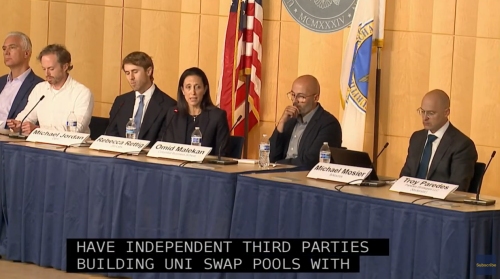
Image: June 9, 2025 DeFi Crypto Roundtable (Coindesk via youtube)
On June 9, the U.S. Securities and Exchange Commission (SEC) hosted another crypto task force roundtable series session called, "DeFi and the American Spirit", bringing together together regulators, legal experts, DeFi protocol developers, and investors to discuss how to the potential of regulating decentralized financial systems in ways that protects users without stifling innovation.
From the get-go, Chair Paul Atkins set the tone by opening the event by clearly stating that publishing code should not be treated as a crime:
“We will not regulate the act of writing open-source software. We do not prosecute the author of a hammer manual when someone misuses a hammer.”
The rest of the session built on this idea and focused on how the SEC can provide safe ways for DeFi projects to operate legally while still addressing investor risks.
In his remarks, Chair Atkins introduced the idea of a “conditional exemptive relief framework” which would allow DeFi innovators to build and launch on-chain products under limited conditions without triggering enforcement right away. This type of framework is similar to a regulatory sandbox that provides time-bound relief as long as participants meet specific safeguards.
“We are exploring a conditional exemptive relief framework that would allow experimentation under defined boundaries, similar to an innovation safe harbor.”
Commissioner Hester Peirce (aka Crypto mom) echoed this sentiment saying without a structured pathways to compliance, many innovators will either operate in legal uncertainty or offshore their projects out of the United States.
“Without a clear, conditional pathway, we are telling innovators you are on your own. That is not a message we want to send if we value the benefits of decentralized systems.”
In addition to the DeFi safe harbour, Chair Atkins also called upon his staff to modernize the current SEC rules to accommodate traditional issuers and intermediaries who want to use on-chain infrastructure.
This move shows that the SEC is looking to facilitate both new DeFi entrants and existing market players who are building tokenized products or using smart contracts to manage trading, issuance, or custody.
“I have asked the staff to consider whether amendments to the Commission’s rules and regulations would be better suited to provide needed accommodation for issuers and intermediaries who seek to administer on-chain financial systems.”
Atkins also discussed that on-chain systems can bring real benefits to the market, such as lower transaction costs, faster settlement, broader access, and the ability to create entirely new asset classes.
“I also am excited about the use of on-chain software systems by issuers and intermediaries to eliminate economic frictions, increase capital efficiency, enable new types of financial products, and enhance liquidity.”
It's clear support and endorsement of blockchain as a tool for economic growth, not just a solution for compliance challenges.
Several panelists, including Rebecca Rettig of Polygon Labs, warned that some of the most serious risks in DeFi happen off-chain. These include hidden liquidity deals, token allocations to insiders, or governance control partnerships.
“It is not always what is on-chain that creates the risk. It is often what is not disclosed, like side agreements, control over governance tokens, or preferential liquidity deals.”
Panelists argued that DeFi projects need better disclosure on how protocols are governed, how tokens are distributed, and whether any third parties receive special treatment or not.
Legal and industry experts said regulators should stop focusing on whether a token is a security and start regulating based on what the product or service actually does.
Angela Angelovska-Wilson of DLx Law said:
“We waste enormous energy litigating over whether X token is a security. The better path is regulating the activity, such as staking, custody, or lending, regardless of the label.”
Michael Jordan of the Digital Dollar Foundation agreed, saying:
“If we regulate the technology, someone will build around it. If we regulate the activity, we have a chance at real consumer protection.”
Important to understand the growing consensus that rules should distinguish between different types of financial behaviour even when the technology is similar.
Josh Garcia of Ketsal pointed out that some interfaces like custodial front ends that take custody of user funds or routes trades on behalf of users may require stricter oversight whereas protocols without admin control may require lighter regulation. Advocating for a layered regulatory approach that differentiates on function and control.
“A protocol with no privileged admin keys is not the same as a custodial front end that routes retail funds. The obligations differ, and so should the rules.”
After several Crypto Task force roundtable sessions, the SEC and participants are finally getting on the same page while focusing on conditional exemptions, regulatory modernization, and functional oversight. All together, it's a series effort to balance investor protection with lawful DeFi innovation. For fintech founders and digital asset platforms in Canada and globally, it's an important benchmark. If the U.S. begins providing clear compliance pathways and policy support for tokenized systems, then other jurisdictions will need to keep up or risk flight of builders and capital.
The National Crowdfunding & Fintech Association (NCFA Canada) is a financial innovation ecosystem that provides education, market intelligence, industry stewardship, networking and funding opportunities and services to thousands of community members and works closely with industry, government, partners and affiliates to create a vibrant and innovative fintech and funding industry in Canada. Decentralized and distributed, NCFA is engaged with global stakeholders and helps incubate projects and investment in fintech, alternative finance, crowdfunding, peer-to-peer finance, payments, digital assets and tokens, artificial intelligence, blockchain, cryptocurrency, regtech, and insurtech sectors. Join Canada's Fintech & Funding Community today FREE! Or become a contributing member and get perks. For more information, please visit: www.ncfacanada.org
| | |
|---|---|---|
| | |
DeFi Policy | June 5, 2025

Image: Freepik/rawpixel.com
On June 9, the U.S. Securities and Exchange Commission is hosting a policy roundtable titled “DeFi and the American Spirit” to have an open and structured policy dialogue with decentralized finance developers, innovators, and legal experts alongside SEC legal and regulatory voices. The roundtable is part of the SEC's Crypto Task Force's ongoing series of crypto asset regulation events.
These gatherings are not 'hearings', nor are they 'policy announcements' but rather conversations with people who have actually built defi systems, in fact many who have publicly challenged the SEC's approach. It’s a live forum where ideas about risk, innovation, and policy design can be tested in real time. So in that way, it's a rare and important event for DeFi in the U.S. and fintechs watching from other jurisdictions like Canada.
The speaker lineup is a mix of founders, researchers, lawyers, and advocates who all have somewhat different views on how DeFi should work and be handled from a regulatory and practical perspective.
Erik Voorhees, founder of ShapeShift (and now Venice AI) is known for arguing that decentralized tools and open-source software should not be regulated like traditional financial intermediaries. His participation ensures that the case for user autonomy and protocol neutrality will be represented without compromise.
Michael Mosier, former acting director of FinCEN who founded Arktouros is focused on financial crime and compliance. He's likely to advocate for more robust frameworks for identifying illegal flows through permissionless systems. He'll ensure that AML and systemic risk questions are part of the core conversation.
Rebecca Rettig, general counsel at Jito Labs and formerly with Polygon, brings first-hand experience in understanding protocol development and legal structure, and is well positioned to bring up solutions that don’t rely on full centralization, such as voluntary disclosures or protocol guardrails.
Kevin Werbach, a professor at Wharton, has spent years studying how decentralized systems intersect with regulation. He tends to advocate for layered frameworks that separate software, governance, and commercial activity to provide a way to regulate outcomes without halting innovation.
There are several other panelists including Jill Gunter (Espresso Systems), Peter Van Valkenburgh (Coin Center), Omid Malekan (Columbia Business School), Gabe Shapiro (MetaLeX), and others who will no doubt have ample to contribute in helping the SEC understand as well as framing the policy of decentralized systems.
It’s a great cross-section of people trying to answer the same question from different angles: how should decentralized finance be understood and governed?
Here are some core questions that may come up during the discussions:
At the end of the day, the SEC should be commended for their willingness to engage with key foundational questions in effort to both understand at a deeper level, as well as inform future policy making. Leaps and bounds better than regulate by enforcement under the SEC's ex-Chair, Gary Gensler and a commission that would rather assume that every DeFi project is either a rug-pull or disguised as a securities platform.
If the roundtable opens the door to more flexible or fit-for-purpose regulation, Canadian regulators will face growing calls to follow suit. It also offers Canadian founders a window into how U.S. regulators are thinking, what they are worried about, what they may be willing to tolerate, and where they are open to compromise. It's clear proof that the SEC is finally recognizing that DeFi isn't going away and that series policy design needs inputs from the people building it.
The National Crowdfunding & Fintech Association (NCFA Canada) is a financial innovation ecosystem that provides education, market intelligence, industry stewardship, networking and funding opportunities and services to thousands of community members and works closely with industry, government, partners and affiliates to create a vibrant and innovative fintech and funding industry in Canada. Decentralized and distributed, NCFA is engaged with global stakeholders and helps incubate projects and investment in fintech, alternative finance, crowdfunding, peer-to-peer finance, payments, digital assets and tokens, artificial intelligence, blockchain, cryptocurrency, regtech, and insurtech sectors. Join Canada's Fintech & Funding Community today FREE! Or become a contributing member and get perks. For more information, please visit: www.ncfacanada.org
| | |
|---|---|---|
| | |


August 26th, 2025

January 4th, 2024

June 1st, 2021

September 9th, 2020

July 9th, 2018

January 3rd, 2018

September 25th, 2017

June 20th, 2017

May 10th, 2017

December 14th, 2016
