




Karsten Wenzlaff, Advisor
August 26th, 2025
Karsten Wenzlaff is a Crowdfunding and Fintech Expert from Germany. He is Secretary-General of Digit[...]


April 27, 2026

Image: Unsplash/Sortter
Interest rates can cause drastic changes in the real estate markets, as seen in 2025. Among this market, the luxury market in the US with its waterfront mansions, and a strong neighbourhood is affected the most. Buyers are making ultra-sensitive decisions more than ever. However, it is also noted that in 2026, the luxury industry has both potential and hardships.
Luxurious homes are usually financed through big loans, construction loans, or bridge financing systems. Broader rates are a problem here. But buyers are still strict about looking for high-quality homes for privacy, amenities, and locations, and for an overall premium product that delivers higher profit. Uprising rates can change the market environment, but also create opportunities driven by higher demand.
Rates are not swinging wildly anymore. 2026 has stable, measured interest rates compared to the previous change in the rate environment. Buyers are still very conscious about budgets and purchase decisions, trying to gain a competitive advantage in the market. When they invest huge time and effort, being careful is expected.
For developers, the case is even harder because they tend to borrow at every level of the project. It affects land acquisition, permissions, material acquisition, labour cost, and design. In the matter of buyers, mortgage terms are affected by the monthly carrying costs.
Luxury constructions, which depend on loans and bridge financing, are impacted by increasing margins and rising borrowing costs. In fewer instances, buyers compromise on the back square footage, finish of the housing, or delay in groundbreaking the property. According to Lake Geneva Area Realty, Americans are leaning towards renting single-family houses instead of directly buying them to gain long-term benefits. This strategy helps them avoid the property tax, maintenance costs, and repairs.
The higher rates are a warning to owners of luxury construction who have not been owning newer properties that have delayed resale capacity. The bottom line is that when the market has a higher rate, the financial case for luxury households becomes straightforward.
Rising rates affect not only properties but also construction costs. Financing is exclusive and developers have a lag period of time to figure out labour and materials. But the financial realities have to be matched to the practical situation, however strong the design concept.
Luxury buyers have become more selective in this age, instead of rushing to make a purchase decision. Previously, properties were counted as trophies. Now, features like price, long-term benefits, and amenities have become a point of question. Second-home buyers are another layer of selective investors who want nothing but properties with financial benefits despite elevated rates.
A portion of buyers are waiting desperately for rates to fall. They are delaying commitment to big renovation projects or custom builds. Many are drawn towards homes that are already built, so they can avoid the longer duration and financial complexities. The market is currently dominated by ready-to-move-in luxury homes.
Luxury has a value now that is more precious than before: flexibility, easy ownership, and lower friction. Buyers want to get rid of the burden of repairs and maintenance and stay well-adjusted with the changing rates. Luxury is active but remains more value-conscious with time.
Developers are structuring their projects more strategically than ever. Given the current rate situation, they are opting for predictable demands and smaller, targeted developments. They are catering to a specific profile of buyers, for instance, affluent downsizers, second-home buyers, and moving professionals.
Some builders are strategizing differently. They are digging deep into phased construction, more deposit requirements, and pre-sales, so that they can mitigate their risks in bigger projects. They are strict with the timelines and monitor their calendar now and then, since extra months mean more financial pressure. Putting themselves into a renter’s shoes, buyers are looking into homes with lower maintenance and projects with energy-efficient systems.

Image: Unsplash/paws_and_prints
There are regional variations in coping with the rising interest rates as well. Some regions have strong local wealth and limited land supply, while others rely on second-home buyers. In the Midwest of the US, luxury markets are still thriving because buyers are into long-term value. In Lake Geneva, domestic demand, beautiful surroundings, and a stable reputation have kept the market steady.
On the contrary, coastal side resorts are facing shifts in demand since there are plenty of options. In these regions, a modest change in rates can change the overall environment overnight. The outcome is more imbalanced when in a luxury construction landscape. Here, markets stay resilient while others become more cautious.
Developers and buyers who keep track of the interest rates and their changing environment, and who can predict the pattern, win. Amid hardships, they manage to find homes that are not defined by their size, but its quality and location. They further invest in homes that are easy to own with a lesser burden of maintenance and taxes. Luxury is shifting its formats in this economy. Short-term trends are long gone. Buyers want beauty with convenience that stays well-preserved for ages.
The luxury market witnesses a shortage in labour, supply chains, and regulations as interest rates rise exponentially. Skilled trades are in demand to remain under budget, while supply chain shifts material pricing and delivery routines. Regulations become stricter with permissions and rigidity in review. In this case, homes with all the approval papers remain in high demand.
The change in interest rate has driven a change in the operation of the luxury construction sector. Buyers are cautious, developers are selective, and markets are more resilient. The luxury sector now values long-term appeal. Buyers and builders can only adapt to the changing environment. In 2026, winners are those who look for homes that are easy to acquire, own, and justify. Stability meets a strong lifestyle, and that is smart in a constantly changing market.
 The National Crowdfunding & Fintech Association (NCFA Canada) is a financial innovation ecosystem that provides education, market intelligence, industry stewardship, networking and funding opportunities and services to thousands of community members and works closely with industry, government, partners and affiliates to create a vibrant and innovative fintech and funding industry in Canada. Decentralized and distributed, NCFA is engaged with global stakeholders and helps incubate projects and investment in fintech, alternative finance, crowdfunding, peer-to-peer finance, payments, digital assets and tokens, artificial intelligence, blockchain, cryptocurrency, regtech, and insurtech sectors. Join Canada's Fintech & Funding Community today FREE! Or become a contributing member and get perks. For more information, please visit: www.ncfacanada.org
 |  |  |
|---|---|---|
 |  |  |
Apr 27, 2026 | NCFA Market Activity | Payments And Market Infrastructure

On Apr 17 2026, XTM announced a court approved sale process for its assets and business operations, including the EveryDay Payments platform. The process starts on Apr 27 2026, and binding offers are due by Jun 8 2026 at 4:00 p.m. Eastern.
This is not a routine restructuring. XTM built payment infrastructure for real time payroll, tip payouts, and earned wage access. Its 2024 results showed $800M in payments to hospitality sector employees, $9.1M in revenue, 34% revenue growth, 689 new business locations, and more than 3,500 onboarded locations at year end. But that growth didn't translate into resilience.
On Mar 2 2026, XTM said it sought CCAA protection after operating in a financially strained position since inception and using restricted cash for operating expenses. The company disclosed an $18.75M trust shortfall as of Sep 30 2025. Trading in the company’s common shares remains halted on the CSE since March 2.
The Bank of Canada also stepped in. On Feb 27 2026, the Bank issued a revised temporary order that allowed XTM to restart limited retail payment activity under the supervision of the court appointed monitor and subject to conditions. XTM then restarted the EveryDay Payments platform on Mar 20 2026, with merchants resuming same day tip disbursements to employees.
The sale process adds a new layer. The court approved a SISP on Apr 10 2026 and approved a stalking horse agreement with Pateno Payments Inc., The court also approved a starting offer that sets a floor price for the business. Other buyers can now submit higher bids, which will determine whether the platform is recapitalized, sold, or broken up.
There's a direct operator lesson here. Vertical payment rails can grow fast and still fail if fund protection, liquidity discipline, and operating controls don't keep pace. Tip payout and earned wage access products are close to workers’ cash flow. When that infrastructure breaks, the issue isn't just shareholder value, but merchant trust, employee access to pay, regulator confidence, and a platform's survival are all on the table.
This raises the standard bar for Canadian fintech payment operations. Faster payouts are useful, but the money has to be handled properly. Funds need to be kept separate, records need to match, bank responsibilities need to be clear, and there has to be enough cash to handle problems. Growth does not matter if people stop trusting the system.
The National Crowdfunding & Fintech Association (NCFA Canada) is a financial innovation ecosystem that provides education, market intelligence, industry stewardship, networking and funding opportunities and services to thousands of community members and works closely with industry, government, partners and affiliates to create a vibrant and innovative fintech and funding industry in Canada. Decentralized and distributed, NCFA is engaged with global stakeholders and helps incubate projects and investment in fintech, alternative finance, crowdfunding, peer-to-peer finance, payments, digital assets and tokens, artificial intelligence, blockchain, cryptocurrency, regtech, and insurtech sectors. Join Canada's Fintech & Funding Community today FREE! Or become a contributing member and get perks. For more information, please visit: www.ncfacanada.org
| | |
|---|---|---|
| | |
April 27, 2026

What makes Image to Video AI interesting is not just that it can animate a still image. Plenty of platforms now try to do that. What makes it worth discussing is that it addresses a very human desire: we often want our images to carry more life than a single frozen moment can hold. A portrait wants a little breath. A product image wants a little movement. A memory wants a little atmosphere. The tool becomes useful when it helps that transition happen without turning the process into technical homework.
That emotional side of the workflow matters more than people admit. Most users do not come to image-to-video tools because they want to study software. They come because a static picture feels almost complete but not fully expressive. They want to add just enough motion to make the visual communicate more clearly. In that context, a platform that feels approachable becomes more valuable than one that merely sounds advanced.
This is why I rank Image2Video first among six image-to-video platforms. In my experience, the public product logic reflects a real understanding of user intent. It is built around a sequence people can immediately grasp. Begin with the image. Describe what should happen. Generate the motion. Export the result. That clarity makes the platform easier to trust.
There is a difference between having an image and having a piece of content. An image can be beautiful, but it may not always hold attention in the same way a moving visual can. The rise of image-to-video tools comes from this gap.
People sometimes talk about motion as if it exists only to create excitement. I think that view is too narrow. Motion can guide attention, emphasize mood, shape pacing, or suggest narrative. A slight camera move can make a product look more dimensional. A subtle animation can make a portrait feel more intimate. Even a simple movement can transform the emotional interpretation of a scene.
That is where platforms like Image2Video become useful. They do not just decorate a still image. At their best, they help the image say more.
One misconception about AI generation is that more dramatic output is always better. In practice, I often find the opposite. The most effective result is frequently the one that respects the original image and adds motion with restraint. That is why prompt-driven systems can be powerful. They let the user communicate a direction instead of simply accepting a random effect.
A product earns trust when its process can be described clearly. Image2Video performs well here because the public workflow is straightforward and concrete.
Based on the official public pages, the process looks like this:
| Step | User Action | Creative Purpose |
| 1 | Upload a still image | Establish the visual starting point |
| 2 | Enter instructions or a motion prompt | Define how the image should move or feel |
| 3 | Generate the video | Let the system transform the static visual into motion |
| 4 | Export the completed output | Save the result for sharing or further use |
This matters because the workflow matches the way people think. They do not think in software architecture. They think in intentions. I have an image. I want it to move like this. I want a usable result.
The fact that the product publicly supports common image types like JPG, JPEG, PNG, and WebP is more meaningful than it may appear. Small points of convenience shape whether a tool becomes part of everyday use. When a platform reduces technical interruptions, it preserves creative energy.
That is one reason Image2Video feels easier to recommend to a wide range of users, not just specialists.
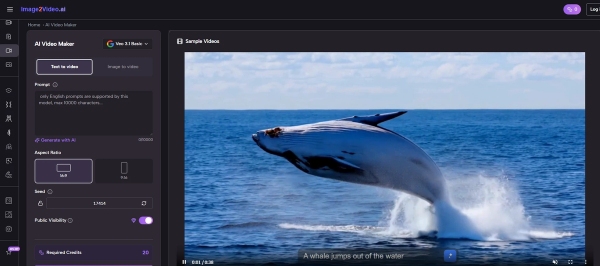
Many rankings of AI video platforms focus on power, novelty, or dramatic output. I prefer a more grounded lens: which platform best supports the moment when a user wants to give an image more life?
| Rank | Platform | Why It Matters | Where Caution Helps |
| 1 | Image2Video | Clear image-first workflow and approachable generation process | Output quality can vary with prompt clarity |
| 2 | Runway | Broad toolset and wider creative environment | More expansive than some users need |
| 3 | Kling | Frequently associated with strong motion appeal | May feel less direct for beginners |
| 4 | Pika | Fast and socially oriented visual creation | Better for speed than deep predictability in some cases |
| 5 | PixVerse | Strong energy for short-form visual content | Can feel more effect-driven than purpose-driven |
| 6 | Hailuo | Interesting option within the AI video space | Not always the most immediately readable experience |
Image2Video takes the top spot because its strength is not only generation. It is comprehension. The platform communicates its role clearly.
This first-place ranking is not a claim that Image2Video will outperform every alternative in every situation. Runway may suit users who want a larger toolkit. Kling may appeal to users chasing particular motion qualities. Pika and PixVerse may be excellent for rapid visual experimentation. Hailuo may develop into a stronger choice over time. Still, for the common task of turning one image into one moving result with minimal confusion, Image2Video currently feels the most balanced.
A review becomes more useful when it connects features to actual use cases. Image2Video makes the most sense when viewed through practical scenarios rather than abstract marketing language.
Here are some situations where the platform feels especially relevant:
These use cases share something important. They do not require a full cinematic production system. They require a workable bridge from stillness to motion.
That is why the product’s structure matters so much. If the user needs quick experimentation, a direct Photo to Video workflow is more valuable than a platform that offers endless possibilities but slows down action. In many real projects, finishing a good result matters more than imagining a perfect one.
It is easy to overpraise AI tools. That usually makes a review less useful, not more. The limitations of Image2Video deserve clear mention.
In my testing mindset, the platform works best when the user brings a reasonably clear idea. If the motion instruction is too vague, the result may feel generic. If the source image is weak, the animation may have less impact. If the creative goal is highly specific, it may take multiple attempts to get close to the intended feeling.
This is not a special failure of Image2Video. It is part of the wider nature of generative systems. But it matters to say so openly.
A user may need to test different phrasings, compare several outputs, and decide which version feels strongest. That is normal. In fact, one of the advantages of a simple platform is that iteration becomes emotionally cheaper. You are more willing to try again when the process does not feel burdensome.

The rise of image-to-video tools reflects a broader shift in digital communication. People increasingly expect visuals to do more. A still image is no longer always enough.
Audiences respond to movement, mood, and rhythm. Brands want richer presentation. Creators want more expressive assets. Ordinary users want memories that feel more vivid.
As this category grows, the platforms that matter most may be the ones that lower the barrier to creative motion. They do not have to be the loudest. They have to be understandable. They have to make experimentation feel natural rather than intimidating.
That is where I think Image2Video stands out today. It reduces the emotional resistance that often surrounds new creative tools. It tells users what to do, gives them a manageable path, and helps them move from a static image to a living visual idea. In a category full of excitement, that kind of clarity is not boring. It is valuable.
The National Crowdfunding & Fintech Association (NCFA Canada) is a financial innovation ecosystem that provides education, market intelligence, industry stewardship, networking and funding opportunities and services to thousands of community members and works closely with industry, government, partners and affiliates to create a vibrant and innovative fintech and funding industry in Canada. Decentralized and distributed, NCFA is engaged with global stakeholders and helps incubate projects and investment in fintech, alternative finance, crowdfunding, peer-to-peer finance, payments, digital assets and tokens, artificial intelligence, blockchain, cryptocurrency, regtech, and insurtech sectors. Join Canada's Fintech & Funding Community today FREE! Or become a contributing member and get perks. For more information, please visit: www.ncfacanada.org
| | |
|---|---|---|
| | |
April 27, 2026

Appliance problems rarely announce themselves with a clean, obvious “I’m broken.” Usually it starts small. The fridge runs a bit more. The dryer takes longer. The dishwasher stops looking spotless. And then, somewhere between “it’ll be fine” and “why is it worse,” the unit decides it’s done.
Then it stops being a minor annoyance and becomes a disruption, often right when the house is busiest. That’s when people rush to book appliance repair in Regina, not because they suddenly love service calls, but because the cost of waiting finally shows up.
Delaying repairs feels harmless. It rarely is.
Appliances almost never fail instantly. They deteriorate. A fan starts dragging. A pump weakens. A seal starts weeping. A connection loosens and warms up a little more each week. During that slow decline, the machine compensates by running longer, cycling harder, and stressing parts that were perfectly fine yesterday.
That’s why “it still works” can be the most misleading sentence in a home.
A dryer that takes two cycles is not just inconvenient. It’s a motor, heater, and thermostat working overtime. A fridge that runs constantly is not being dedicated. It’s struggling to move heat out. A washer that bangs during spin is not moody, it’s wearing bearings and suspension parts down with every load.
Local conditions matter, even if nobody thinks about them while folding laundry.
Bulky sweaters, heavy towels, boot liners, blankets. Dryers and washers run harder for months, not days. If airflow is restricted or a drum is off balance, that extra workload accelerates wear.
Prairie dust is not a myth, and neither is basement lint. Coils, vents, and fan housings collect debris steadily, especially in homes with pets. Restricted airflow makes appliances hotter, and heat shortens lifespan.
Small outages and flickers happen. Control boards can handle normal use, but repeated electrical stress plus existing heat issues is a bad combo. The failure point is often a board or a relay, which is rarely the cheapest part in the unit.
The goal isn’t to call a technician for every squeak. The goal is to notice the symptoms that tend to escalate.
A fridge that can’t hold temperature consistently can spoil food quietly. It can also turn a modest repair into a major one if the compressor is forced to run nonstop.
Common early warnings:
What waiting can do: burn out start components, fans, or in worst cases, the compressor. Once a compressor is involved, the conversation changes.
When a dryer goes from “fine” to “why is everything still damp,” the cause is frequently airflow. That can be a vent restriction, crushed vent hose, clogged exterior hood, or internal lint buildup.
Early warnings that should not be brushed off:
Waiting can cook thermostats, blow thermal fuses, stress the motor, and yes, create safety risk. Dryers are simple machines, but they punish neglect.
A washer that bangs during spin is telling the household something concrete: the load is unbalanced, the machine isn’t level, or suspension components are failing.
Pay attention to:
Waiting can turn a balance issue into bearing damage. It can also turn a slow drain into a burnt-out pump.
Dishwashers can leak into the cabinet base and under flooring before anyone notices. By the time the toe-kick looks swollen or the floor feels soft, the damage is already ahead.
Symptoms that deserve action:
Waiting can damage cabinetry, flooring, and the dishwasher’s own pump and motor.
Cooking appliances get ignored because they’re used in bursts. A problem can hide for weeks.
Red flags:
Waiting here is not just a cost issue. It’s a safety issue.
It’s not superstition. It’s how machines behave.
A weak fan makes a compressor run longer. A partially blocked drain makes a pump run hotter. A loose belt makes a motor work harder. A failing thermostat causes temperature swings that stress other parts. The original problem is often the cheapest part of the whole mess.
A slightly loose electrical connection creates resistance. Resistance creates heat. Heat degrades insulation and connectors. Then the repair isn’t just “replace a small part.” It becomes “repair the harness,” or “replace a terminal block,” or “why does it smell like hot plastic.”
Water finds seams. It seeps under vinyl, into subfloor, into cabinet bases. It can also reach electrical components, which is where “minor leak” becomes “dead machine.”
Repair bills get all the attention. The quiet costs are what frustrate households later.
A fridge that runs nonstop uses more electricity. A dryer that needs two cycles doubles the energy. A dishwasher that drains poorly can lead to repeated restarts and longer runs. It adds up, just slowly enough that people don’t notice until they do.
A fridge warming up means groceries in the trash. A washer failing means laundromat runs and time lost. These are the costs that don’t feel “repair-related” but absolutely are.
When an appliance finally dies, the household needs service now. That urgency can limit appointment choices and stretch downtime, especially if parts need ordering. A smaller early repair is often a faster one.
Sometimes scheduling is tight, or the household needs a day or two to coordinate. Fine. There are a few smart moves that can limit damage during that gap.
The worst move is to keep forcing an appliance through cycles while it’s clearly struggling. That’s how secondary failures happen.
Technicians don’t need a long speech. They need clean information.
Have ready:
One more thing: if DIY attempts happened, say so. It saves time. It also prevents the technician from chasing a problem that was introduced during a well-meaning fix.
In Regina homes, waiting tends to turn simple problems into layered problems: a vent issue becomes an overheated dryer, a small leak becomes cabinet damage, a weak fan becomes a stressed compressor. The machine doesn’t get better by being ignored. It just gets better at hiding the issue until it can’t.
The smart moment to act is the moment something changes: a new sound, a longer cycle, a warm shelf, water where water shouldn’t be. That’s not being cautious. That’s how expensive surprises get avoided.
The National Crowdfunding & Fintech Association (NCFA Canada) is a financial innovation ecosystem that provides education, market intelligence, industry stewardship, networking and funding opportunities and services to thousands of community members and works closely with industry, government, partners and affiliates to create a vibrant and innovative fintech and funding industry in Canada. Decentralized and distributed, NCFA is engaged with global stakeholders and helps incubate projects and investment in fintech, alternative finance, crowdfunding, peer-to-peer finance, payments, digital assets and tokens, artificial intelligence, blockchain, cryptocurrency, regtech, and insurtech sectors. Join Canada's Fintech & Funding Community today FREE! Or become a contributing member and get perks. For more information, please visit: www.ncfacanada.org
| | |
|---|---|---|
| | |
April 24, 2026 | NCFA Fintech Whisperer Weekly Intelligence | Payments And Market Infrastructure, Digital Assets Blockchain And Tokenization, Regulation And Policy, Artificial Intelligence And Data

Image: Freepik
This live weekly NCFA intelligence page tracks financial technology developments that significantly affect how fintechs build, sell, raise capital, and operate under scrutiny. Coverage prioritizes Canada and includes global events that directly influence competitive conditions, market access, and execution realities across fintech sectors. This page will be updated throughout the week with market movers in a live format and then each week we'll close the prior week's contents in prep for the upcoming week, and continue on a rolling basis. (Missed prior week's Fintech Whisperer? (December 6-12, 2025, December 13-19, 2025, January 1-9, 2026, January 10-16, 2026, January 17-23, 2026, January 24-30, 2026, January 31-February 6, 2026, February 7-13, 2026, February 14-20, 2026, February 21-27, 2026, February 28-March 6, 2026, March 7-13, 2026, March 14-20, 2026, March 21-27, 2026, March 28-April 3, 2026, April 4-10, 2026, April 11-17, 2026).
RBI has moved from restriction to licence cancellation. Payments banks, wallets, sponsor banks, and fintech platforms should treat this as a hard reminder that governance, compliance controls, depositor protection, and supervisory responsiveness decide whether a regulated licence survives under stress.
Instant payments are starting to add shared, rail-level risk intelligence. Banks and vendors that can plug network signals into fraud controls and payment decisioning will gain speed without giving up control.
The UK is pulling payments reform, stablecoins, open banking, and AI-agent payments into one policy agenda. That gives banks, fintechs, and infrastructure firms a clearer build direction for the next phase of digital money and payment rails.
The PACE Act would move direct rail access from a bank only model toward a supervised nonbank pathway. Payment firms, wallets, remittance providers, and crypto platforms should watch whether Congress turns scale, reserves, and OCC oversight into the price of direct Fed access.
The fee cap changes the economics of Canadian order flow in securities traded on both sides of the border. Marketplaces, brokers, and trading firms need to revisit rebate models, routing logic, and best execution analytics before Nov 2026.
The SEC and CFTC are reducing reporting load while keeping coverage of the largest funds. That lowers compliance cost for smaller firms and shifts the reporting system toward large, systemically relevant managers.
Treasury clearing is now forcing decisions on affiliate repo, cross border booking, liquidity management, and contingency planning. That puts market structure, funding, and clearing operations under live pressure ahead of the compliance dates.
Finfluencer enforcement is now coordinated across jurisdictions and aimed at the platforms as well as the promoters. That raises the compliance and monitoring burden for firms using social channels for distribution and puts more pressure on platforms to block illegal promotions at source.
Client money control failures are still drawing fast and expensive action. Firms handling safeguarded funds need clean role separation, approval controls, reconciliations, and evidence trails that hold up under review.
SMCR reform is now moving from policy into implementation. Banks, fintechs, and regulated firms need to update role mapping, certification processes, accountability records, and reporting workflows without leaving control gaps during the transition.
The rule change is now live. Fund managers, administrators, auditors, and reporting vendors need to update related party reporting workflows and disclosure logic from this reporting cycle forward.
This gives firms a live FCA pathway for AI in production. Providers building AI for payments, risk, compliance, and customer decisioning now have a clearer read on how regulators expect live testing, monitoring, and evidence to be handled.
The UK is refining its crypto framework before implementation to ensure stablecoin payments work within regulated financial systems. For fintechs, this points to a clear direction: stablecoins are moving into formal payment rules, not operating outside them.
OSFI is aligning regulatory reporting with IFRS 18. Insurers, auditors, and regtech providers will need to update reporting systems, data classification, and validation processes ahead of the 2027 transition.
Australia is moving digital asset platforms from patchwork treatment into a licensing regime with custody, settlement, market conduct, and financial resource expectations. For exchanges, brokers, custodians, and tokenised custody platforms, this raises the operating floor before the regime starts in 2027.
N3XT puts tokenized bank money directly onto blockchain rails while retaining the deposit relationship with the issuing institution. That operating model now sits beside tokenized deposits for corporate treasury being developed by much larger banks, but N3XT entered the market with a live product built around continuous settlement from the outset. The difference between bank issued deposit tokens and reserve backed stablecoins is becoming commercially relevant as both compete for institutional payments, liquidity and onchain settlement.
This puts focus on how firms log interactions, flag risk, assign review, and retain records. See related coverage on AI escalation controls and AI chat exposure in court.
Fintech execution is getting more technical and less forgiving. Payments now need network-level risk data. Markets need tighter routing, clearing, and reporting controls. AI and social distribution need evidence, safeguards, and audit trails. The advantage belongs to firms that can turn regulatory change into product, compliance, and infrastructure readiness faster than competitors. NCFA offers various curated resources to help founders and investors stay current on developments that impact fintech markets, subscribe to NCFA weekly newsletter updates, view a rundown of current fintech news and insights, or dive into the latest fintech industry research.
The National Crowdfunding & Fintech Association (NCFA Canada) is a financial innovation ecosystem that provides education, market intelligence, industry stewardship, networking and funding opportunities and services to thousands of community members and works closely with industry, government, partners and affiliates to create a vibrant and innovative fintech and funding industry in Canada. Decentralized and distributed, NCFA is engaged with global stakeholders and helps incubate projects and investment in fintech, alternative finance, crowdfunding, peer-to-peer finance, payments, digital assets and tokens, artificial intelligence, blockchain, cryptocurrency, regtech, and insurtech sectors. Join Canada's Fintech & Funding Community today FREE! Or become a contributing member and get perks. For more information, please visit: www.ncfacanada.org
| | |
|---|---|---|
| | |
April 24, 2026

Calgary’s business scene is buzzing with innovation, and so is its marketing industry. From real estate developers to industrial companies, local businesses are realizing that strong branding and strategic digital marketing can make or break growth in today’s digital world.
But with so many marketing and advertising agencies competing for attention, how do you know which one is right for your business?
Below, we take a closer look at the top marketing & advertising agencies in Calgary for 2025, including what makes each stand out — and what kind of clients they serve best.
Before exploring the agencies themselves, it’s worth defining what separates a capable marketing firm from a truly exceptional one.
The best agencies combine strategic planning, creative execution, and measurable results. They understand their clients’ industries — whether that’s technology campaigns, legal marketing, or professional and industrial services — and translate that knowledge into compelling campaigns that generate quality leads and brand visibility.
Here’s what you should look for:
These traits turn a vendor into a true marketing partner — one that supports your long-term business goals, not just your next advertising campaign.
GrowME continues to be one of Calgary’s most trusted full-service agencies. Known for its strategic prowess and focus on measurable growth, the company works with a range of clients — from local startups to established brands — across industries like real estate, construction, and professional services.
Their marketing team combines creativity and analytics to develop strategies that drive traffic, generate qualified leads, and deliver measurable results. Whether it’s search engine optimization, paid media, or social media advertising, GrowME’s campaigns are designed to align perfectly with each client’s business goals.
Why businesses choose GrowME:
Unlike many agencies that specialize in only one area, GrowME is a results-oriented digital marketing firm that can handle every aspect of a campaign — from website development to ongoing optimization.
Full Blast Creative has become one of the most recognizable advertising agencies in Calgary, thanks to its strong design and storytelling approach. They help businesses elevate their brand identity through eye-catching visuals, strategic campaigns, and social media management.
Their strength lies in creative execution — perfect for clients in lifestyle, retail, and hospitality. They also provide a range of online marketing services such as Google Ads, social media campaigns, and email marketing.
Highlights:
While Full Blast Creative excels in visual storytelling, their focus is more on design and brand awareness than deep data analytics.
CAYK is a long-standing Calgary marketing agency with decades of experience in digital advertising and strategic consulting. They work across industries, including healthcare and industrial services, offering a combination of SEO, paid media, and automation.
Their full-service agency model emphasizes continuous improvement — analyzing campaign data, refining digital strategy, and aligning with clients’ business objectives.
Highlights:
CAYK’s structured approach makes them ideal for companies that want predictability, organization, and measurable outcomes from their marketing efforts.
In Front Marketing is known for its transparency and straightforward approach. The agency helps local businesses understand their advertising data and improve online performance through tailored strategies.
Their team specializes in PPC ads, search engine optimization, and web design — all integrated under one cohesive plan. They also support Calgary businesses in industrial, real estate, and B2B sectors.
Highlights:
In Front’s strength lies in simplifying marketing for business owners who want clarity and control over their campaigns.
Konstruct Digital brings a technical edge to the Calgary market. The agency focuses on B2B clients, particularly in industrial and technology sectors, where precise targeting and strategic planning are critical.
Their team offers SEO, PPC, and content marketing, with an emphasis on measurable growth through data analysis. For businesses that rely on lead generation and performance tracking, Konstruct’s engineering-style discipline is a perfect fit.
Highlights:
While Konstruct may not be as design-oriented as other firms, their analytical expertise makes them a powerful choice for clients looking for depth and accuracy.
Critical Mass operates globally but maintains its roots in Calgary. They’re one of the city’s most recognized creative marketing agencies, known for innovative campaigns that blend design, storytelling, and digital technology.
They work with some of the world’s biggest brands, offering advanced web development and digital marketing services. Their high-end projects showcase exceptional creativity, though their pricing and scope may fit best with enterprise clients.
Highlights:
| Agency | Focus | Ideal For | Key Services | Distinguishing Strength |
| GrowME Marketing | Balanced creativity + analytics | SMBs & growth-focused brands | SEO, web development, Google Ads, social media | Results-oriented strategy with measurable growth |
| Full Blast Creative | Visual branding & design | Retail, lifestyle, and local brands | Web design, social media, email marketing | Award-winning creativity |
| CAYK Marketing Inc. | Strategic automation | Professional & industrial clients | SEO, PPC, automation, analytics | Long-term data-driven marketing |
| In Front Marketing | Transparent performance | Local Calgary businesses | Paid ads, reporting, web design | Clear, educational reporting |
| Konstruct Digital | B2B performance | Tech & industrial sectors | Content marketing, PPC, SEO | Precise targeting & data tracking |
| Critical Mass | Global creative campaigns | Enterprise-level clients | Full creative services | Innovative, high-budget work |
Working with Calgary-based marketing agencies offers something global firms can’t replicate — a real understanding of local markets, industries, and customers. Agencies like GrowME and In Front Marketing bring local insights that make campaigns feel authentic and timely.
This local expertise helps businesses fine-tune their messaging for the Calgary audience, improve website traffic, and attract qualified leads through organic and paid channels.
And in a competitive arena where every click counts, having a marketing team that knows your city as well as your brand gives you an undeniable advantage.
Calgary’s marketing and advertising scene is thriving, but the right partner depends on your business goals, budget, and audience. Whether you’re launching a new brand or optimizing existing campaigns, a solid foundation starts with clarity — knowing what success means to you.
Here’s how to evaluate which agency best fits your needs.
Start by identifying your marketing priorities. Are you looking to increase website traffic, generate qualified leads, or boost brand visibility? Maybe your focus is social media advertising or improving click-through rates on Google Ads.
Knowing your end goal helps you choose the right kind of agency. For instance:
When your goals are clear, it’s easier to align with a marketing partner who can deliver measurable results.
A great marketing firm won’t just run ads and disappear until next quarter. Instead, they’ll maintain consistent communication, provide expert guidance, and share detailed reports that show how your campaigns are performing.
Ask potential partners how they:
Agencies that focus on transparency — like GrowME — make collaboration smoother because you always know how your marketing budget is being used and where it’s producing value.
Calgary businesses benefit from working with agencies that know the local market. From understanding the energy sector to developments real estate marketing, local agencies bring first-hand knowledge that helps campaigns resonate with Alberta audiences.
GrowME, for instance, is built around this local expertise. Their strategies often combine market research with digital marketing services to ensure every campaign aligns with regional behaviours and industry needs.
This is especially valuable for professional and industrial services, where industry context can make or break a campaign’s effectiveness.
The cost of hiring an agency in Calgary can vary depending on project scope, advertising channels, and service complexity. Here’s what businesses can generally expect:
| Service Type | Average Monthly Range (CAD) | Description |
| SEO & Content Marketing | $1,000 – $4,000 | On-page SEO, blogging, keyword research, analytics |
| Google Ads / PPC Campaigns | $1,500 – $10,000+ | Paid media management, ad testing, optimization |
| Social Media Marketing | $800 – $5,000 | Social media management, ad creation, engagement |
| Web Design & Development | $3,000 – $25,000 (per project) | Website development, UX optimization, mobile responsiveness |
| Full-Service Marketing Retainer | $3,000 – $15,000+ | Cross-channel campaigns, reporting, consulting |
Remember — the cheapest agency may not provide the depth of expertise your business requires. The best option will combine affordability with consistency, delivering real growth over time.
GrowME’s pricing model is designed to balance both sides: clear, transparent packages that adapt to each client’s scale while keeping measurable growth at the centre.
Before making a decision, look for proof of past performance. A strong agency portfolio will show creative diversity and strategic thinking — not just attractive visuals, but tangible results.
Ask for examples of campaigns where the agency helped:
Agencies that show real numbers and measurable outcomes demonstrate both credibility and competence.
Every business has its own pace and personality. The right agency should feel like an extension of your internal team — one that understands your tone, values, and vision.
Pay attention to how each agency interacts with you during consultations. Are they listening to your challenges and asking thoughtful questions about your customers? Do they bring strategic insight to the conversation or just pitch generic solutions?
Agencies that emphasize collaboration, like GrowME, tend to build longer-lasting relationships because they adapt continuously, refine strategies, and treat your success as their own.
Calgary’s marketing industry has matured significantly in recent years. Local agencies are moving away from one-off campaigns and shifting toward an integrated digital strategy — where web development, SEO, social media, and email marketing all work together.
This shift benefits local businesses immensely. Instead of juggling multiple vendors, companies can partner with a single marketing firm that handles everything under one roof. Agencies like GrowME have embraced this model early, offering comprehensive online marketing services that tie creativity, technology, and data into one cohesive plan.
Integrated campaigns also make it easier to measure success. When your Google Ads, content marketing, and website performance are connected, your data becomes clearer — and your marketing efforts more efficient.
The city’s agencies are playing a major role in helping local companies modernize their advertising. Whether it’s web developers improving mobile responsiveness or social media experts increasing brand engagement, the collective goal is the same: measurable growth through meaningful, data-backed marketing.
Here’s how top agencies add value for their clients:
These services may vary depending on the agency, but the commitment to performance and accountability is what sets Calgary’s marketing industry apart.
The coming year will bring new challenges and opportunities for Calgary’s marketers. Businesses are expecting more transparency, faster optimization, and creative campaigns that deliver tangible results.
We’ll also see continued investment in automation, AI-driven targeting, and personalized content — tools that make advertising more efficient without sacrificing human creativity.
But amid these innovations, one thing remains constant: the need for marketing teams that understand people. Data and algorithms matter, but emotional connection still drives conversions. The most successful agencies will blend the two — using data to inform creativity and creativity to inspire action.
GrowME is one of the agencies leading that charge. Their balance of human insight and technical skill allows Calgary businesses to stay ahead in a competitive arena while maintaining authenticity and measurable results.
Choosing among the top marketing & advertising agencies in Calgary for 2025 isn’t just about picking who looks best on paper — it’s about finding a marketing partner who truly understands your brand and your customers.
Whether you’re seeking strategic planning, website development, or full-service advertising support, the best results come from teams that combine vision with execution.
GrowME represents that balance. They don’t just create campaigns — they build marketing systems that support long-term business success. With a focus on measurable growth, qualified leads, and lasting relationships, they’ve become the quiet benchmark for what a modern Calgary agency should be: grounded, smart, and relentlessly focused on helping clients grow.
In a city full of creative talent, that’s the kind of steady, results-oriented digital marketing Calgary businesses can rely on for 2025 — and beyond.
The National Crowdfunding & Fintech Association (NCFA Canada) is a financial innovation ecosystem that provides education, market intelligence, industry stewardship, networking and funding opportunities and services to thousands of community members and works closely with industry, government, partners and affiliates to create a vibrant and innovative fintech and funding industry in Canada. Decentralized and distributed, NCFA is engaged with global stakeholders and helps incubate projects and investment in fintech, alternative finance, crowdfunding, peer-to-peer finance, payments, digital assets and tokens, artificial intelligence, blockchain, cryptocurrency, regtech, and insurtech sectors. Join Canada's Fintech & Funding Community today FREE! Or become a contributing member and get perks. For more information, please visit: www.ncfacanada.org
| | |
|---|---|---|
| | |
Apr 24, 2026 | NCFA Fintech Market Activity | Artificial Intelligence And Data

On April 23, 2026, OpenAI released GPT-5.5, its latest model designed for multi-step work across coding, research, document analysis, and software tasks. The update is not only smarter answers. It can stay inside a workflow longer, use tools more reliably, and complete tasks that require multiple steps.
The performance gains are measurable. GPT-5.5 reaches 84.9% on GDPval across 44 occupations. It scores 78.7% on OSWorld-Verified for real computer tasks and 98.0% on Tau2 workflow benchmarks. For finance work, it reaches 60.0% on FinanceAgent and 88.5% on internal investment banking modelling tasks.
These results map directly to how work happens in financial systems. Most processes involve documents, checks, revisions, and handoffs. Loan files, onboarding packages, compliance reviews, fraud queues, and reconciliations all follow that pattern. The problem currently is rarely a single wrong answer. It’s that the process breaks before completion. GPT-5.5 ow handles longer context and finishes more of the task, so that's positive.
OpenAI reports internal use where its finance team reviewed 24,771 K-1 tax forms across 71,637 pages, cutting about two weeks from the process. That kind of throughput matters more than isolated accuracy gains.
In commerce workflows where checkout was removed from direct control, OpenAI has already tested how agents operate inside real processes. At the same time, accountability pressure around OpenAI shows why logs, escalation rules, and human review remain part of deployment.
The coding gains are important milestones. GPT-5.5 improves across developer benchmarks while using fewer tokens to complete the same tasks and maintaining similar latency to prior models. That improvements show up in integration work, internal tools, data pipelines, and compliance systems that need constant updates.
Infrastructure still sets the floor. GPT-5.5 runs on NVIDIA GB200 and GB300 systems, linking model performance to the broader buildout in compute and data centers. Efficiency gains, including more than 20% faster token generation in parts of the production stack, affect how these systems scale in daily use.
Financial institutions need audit trails, access controls, monitoring, and clear escalation paths. Even though newer models can complete more of the workflow, they still operate inside regulated systems where accountability and accuracy is critical.
For fintech teams, the starting point is pretty clear. Choose workflows that are repetitive, document heavy, and time consuming. Then let the AI model handle the first pass, then keep humans on judgement and sign-off. That's where the low lying fruit gains appear first in AI finance.
Does the advantage come from workflow design or model access?
The National Crowdfunding & Fintech Association (NCFA Canada) is a financial innovation ecosystem that provides education, market intelligence, industry stewardship, networking and funding opportunities and services to thousands of community members and works closely with industry, government, partners and affiliates to create a vibrant and innovative fintech and funding industry in Canada. Decentralized and distributed, NCFA is engaged with global stakeholders and helps incubate projects and investment in fintech, alternative finance, crowdfunding, peer-to-peer finance, payments, digital assets and tokens, artificial intelligence, blockchain, cryptocurrency, regtech, and insurtech sectors. Join Canada's Fintech & Funding Community today FREE! Or become a contributing member and get perks. For more information, please visit: www.ncfacanada.org
| | |
|---|---|---|
| | |


August 26th, 2025

January 4th, 2024

June 1st, 2021

September 9th, 2020

July 9th, 2018

January 3rd, 2018

September 25th, 2017

June 20th, 2017

May 10th, 2017

December 14th, 2016