





Karsten Wenzlaff, Advisor
August 26th, 2025
Karsten Wenzlaff is a Crowdfunding and Fintech Expert from Germany. He is Secretary-General of Digit[...]


March 10, 2026
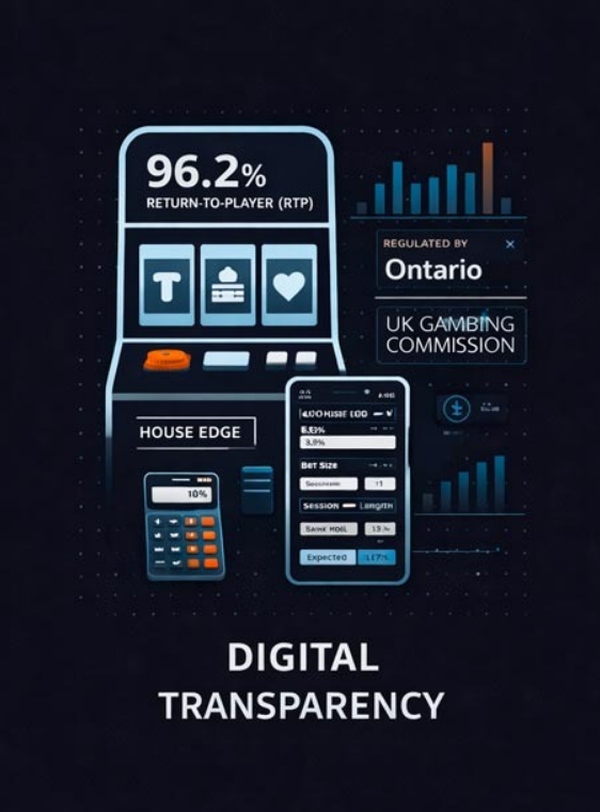
The fintech revolution has trained an entire generation of consumers to expect real-time data, clear fee structures, and algorithmic fairness from every platform that touches their money. Open banking, commission-free trading dashboards, and instant payment confirmations have established a baseline of transparency that didn't exist a decade ago. Now that same expectation is spilling into adjacent sectors, and the digital entertainment industry is finding that the old model of opaque mechanics no longer works for a consumer base raised on fintech-grade disclosure.
This shift is particularly visible across the iGaming sector, where a convergence of regulatory pressure, blockchain verification, and consumer demand has created a new class of data-transparent platforms. For fintech professionals and investors, the patterns emerging here are worth watching closely. They mirror the same transparency dynamics that reshaped banking, lending, and investment management over the past ten years, and they point toward a broader standard that will likely define consumer expectations across all digital financial services.
Before the fintech wave, consumers accepted a remarkable level of opacity in financial products. Credit card fees were buried in fine print. Investment management costs were layered across multiple disclosure documents. Currency exchange rates at banks included undisclosed markups. Fintech companies built entire businesses by simply making these costs visible.
TransferWise, now Wise, didn't invent a new foreign exchange mechanism. It made the existing markup visible and offered a lower one. Robinhood didn't create a new kind of stock trading. It eliminated commissions and showed real-time portfolio data on a mobile screen. In both cases, the competitive advantage wasn't technological sophistication but rather a commitment to showing consumers exactly what they were paying and exactly what they were getting.
According to PwC's Global Financial Services report, trust remains the single most important factor in consumer adoption of digital financial products. Yet the report also found that less than 30% of consumers globally feel they fully understand the fee structures of the financial products they use. The gap between expectation and reality is where fintech innovation continues to find its most fertile ground.
The digital entertainment space is now passing through the same transparency inflection point that banking experienced between 2015 and 2020. Regulatory bodies in Ontario, the UK, Malta, and several EU jurisdictions have moved beyond simple licensing requirements toward mandating specific mathematical disclosures. Return-to-player (RTP) percentages, variance classifications, and house edge figures are increasingly required to be published at the point of consumer interaction, not buried in terms and conditions.
Ontario's iGaming market, launched in April 2022 under the Alcohol and Gaming Commission of Ontario (AGCO), is a particularly instructive case for Canadian fintech observers. The regulatory framework requires licensed operators to display game-level RTP data and to submit their random number generators to independent auditing firms. This is functionally identical to how securities regulators require fund managers to disclose management expense ratios and historical performance data. The principle is the same: consumers making financial decisions deserve access to the quantitative parameters that determine their likely outcomes.
What makes the current moment different from previous disclosure requirements is the emergence of independent consumer tools that go beyond what regulators mandate. Platforms like gambling calculators allow users to input specific game parameters, including house edge, bet size, session length, and bankroll, to model their expected outcomes before committing funds. This is the iGaming equivalent of a mortgage amortization calculator or a compound interest simulator: a tool that translates abstract mathematical parameters into personalized, actionable projections. The fact that such tools now exist and attract meaningful traffic signals a shift in consumer behavior from passive participation to active quantitative analysis.
This consumer-side demand for calculable transparency aligns with broader fintech trends. The same user who models their mortgage payments on Ratehub, tracks their investment returns on Wealthsimple, and monitors their credit score on Borrowell now expects comparable analytical tools in every domain where money changes hands.
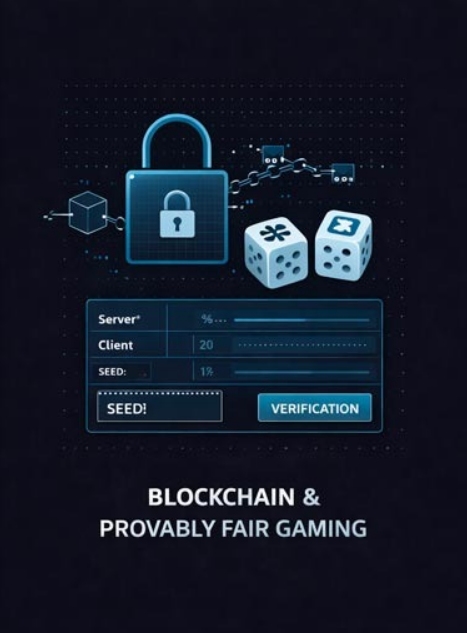
If regulatory disclosure provides the baseline, blockchain technology is building the verification layer. The concept of "provably fair" systems, where cryptographic hashing allows users to independently verify that an outcome was generated randomly and was not manipulated after their action, represents one of the most interesting applied use cases for distributed ledger technology outside of cryptocurrency itself.
The mechanism is straightforward in principle. Before a game round begins, the platform generates a server seed and provides the user with a hashed version. The user can supply their own client seed. After the round, the server seed is revealed, and the user (or any third-party auditor) can run the hash function to verify that the outcome matches the pre-committed parameters. Tampering after the fact is cryptographically impossible.
For the fintech community, provably fair systems are a practical demonstration of how blockchain can solve a real trust problem without requiring a full decentralized architecture. The platform still operates centrally. The games still run on conventional servers. But the verification layer, the part that matters most for consumer trust, uses the same cryptographic principles that secure cryptocurrency transactions. It's a pragmatic middle ground between fully centralized and fully decentralized models, and it's gaining traction faster than many pure DeFi applications.
According to the World Economic Forum's report on global fintech resilience, the ability to provide verifiable, tamper-proof records of financial transactions is one of the key value propositions driving blockchain adoption across regulated industries. The iGaming sector is proving that this value proposition translates effectively to consumer-facing products, not just institutional back-end infrastructure.
The transparency conversation extends beyond mathematics and into behavioral design. Fintech platforms have spent years developing AI-driven systems to detect fraudulent transactions, flag unusual account activity, and nudge users toward healthier financial behaviors. Wealthsimple's spending insights, for example, categorize expenditures and highlight patterns that users might not notice on their own. Banking apps send alerts when spending exceeds normal ranges.
The iGaming industry is adopting parallel approaches, partly driven by regulation and partly by competitive pressure from operators who recognize that long-term customer value depends on sustainable engagement rather than short-term extraction. Machine learning models now monitor player behavior patterns and flag indicators that correlate with problematic use: rapid increases in deposit frequency, session lengths that extend well beyond historical norms, and chasing behavior where bet sizes increase following losses.
The most sophisticated platforms use these signals to intervene proactively. Interventions range from gentle nudges, similar to the spending alerts in banking apps, to mandatory cooling-off periods and self-exclusion tools. Ontario's regulatory framework includes specific requirements for operator-initiated interventions, making this a compliance obligation rather than an optional feature.
From a fintech design perspective, this represents an important evolution. The first wave of fintech disruption was about making things easier: easier payments, easier investing, easier borrowing. The current wave increasingly focuses on making things safer, incorporating behavioral science and AI to protect users from their own cognitive biases. The iGaming sector's accelerated adoption of these tools, driven by the higher stakes involved, is generating insights and frameworks that will eventually flow back into mainstream financial product design.
Perhaps the most direct connection between fintech innovation and the digital entertainment sector is payment infrastructure. The iGaming industry's requirements for instant deposits, real-time withdrawals, multi-currency support, and robust identity verification have made it one of the most demanding use cases for modern payment systems.
Interac e-Transfer, which processes over one billion transactions annually in Canada, has become a standard payment rail for Ontario's licensed iGaming operators. The integration requirements have pushed Interac to develop faster settlement capabilities and more sophisticated fraud detection systems, improvements that benefit the entire Canadian payment ecosystem. Similarly, the industry's early adoption of cryptocurrency payment rails and stablecoin settlement layers has provided real-world transaction volume for technologies that are still largely theoretical in other financial services contexts.
For fintech startups building payment infrastructure, the digital entertainment vertical offers something valuable: high transaction volume, strong user expectations around speed and reliability, and regulatory frameworks that demand robust KYC and AML compliance. Several Canadian payment fintechs have used iGaming as an initial vertical, then expanded the infrastructure they built into adjacent sectors like e-commerce and subscription services.
Canada's approach to iGaming regulation offers a useful case study in how regulatory sandboxes can balance innovation with consumer protection. Ontario's decision to create a regulated market rather than maintaining prohibition has generated significant tax revenue, estimated at over $200 million annually, while giving regulators direct oversight of operator practices.
The regulatory model shares structural similarities with the sandbox approaches that several Canadian provincial securities regulators have adopted for fintech products. The Canadian Securities Administrators' Regulatory Sandbox, for instance, allows fintech firms to test innovative products in a live market under modified regulatory requirements. Both frameworks rest on the same principle: that a controlled, transparent regulatory environment produces better outcomes for consumers than either prohibition or a regulatory vacuum.
For the fintech ecosystem, the cross-pollination of regulatory approaches between financial services and digital entertainment is creating interesting opportunities. RegTech companies that developed AML compliance tools for banking are finding ready markets in iGaming. Identity verification firms that built their technology for fintech onboarding are applying the same infrastructure to age verification and player authentication. The regulatory convergence is driving a convergence of service providers, and Canadian companies are particularly well positioned because the country's regulatory frameworks in both sectors are relatively advanced by global standards.
The digital entertainment industry's rapid adoption of fintech principles, quantitative transparency, blockchain verification, AI-driven behavioral protection, and advanced payment infrastructure, is not a peripheral development. It is a preview of the consumer expectations that will define every sector where financial risk and digital interaction overlap.
The users driving this shift are not a niche demographic. They are the same consumers who use mobile banking, invest through digital platforms, and expect every financial interaction to come with complete data visibility. Their insistence on transparency in entertainment spending is a natural extension of the transparency they already demand from their financial service providers.
For fintech founders, investors, and ecosystem builders, the key takeaway is that transparency is no longer a differentiator. It is becoming the minimum standard for any platform that touches consumer money, regardless of the specific vertical. The tools, frameworks, and regulatory models being developed at this intersection of fintech and digital entertainment will likely define consumer financial technology's next chapter, not just in Canada, but globally.
 The National Crowdfunding & Fintech Association (NCFA Canada) is a financial innovation ecosystem that provides education, market intelligence, industry stewardship, networking and funding opportunities and services to thousands of community members and works closely with industry, government, partners and affiliates to create a vibrant and innovative fintech and funding industry in Canada. Decentralized and distributed, NCFA is engaged with global stakeholders and helps incubate projects and investment in fintech, alternative finance, crowdfunding, peer-to-peer finance, payments, digital assets and tokens, artificial intelligence, blockchain, cryptocurrency, regtech, and insurtech sectors. Join Canada's Fintech & Funding Community today FREE! Or become a contributing member and get perks. For more information, please visit: www.ncfacanada.org
 |  |  |
|---|---|---|
 |  |  |
March 9, 2026

Modern gaming platforms often contain thousands of titles, making navigation an essential part of the user experience. Allyspin Casino is an example of a platform where structured menus, game categories, and filtering systems help users move through a very large catalogue of digital games. Allyspin includes over 7,500 slot titles, more than 300 jackpot games, over 200 virtual card and table games, and more than 250 live dealer games. It is exactly this variety in which the interface plays a central role in how players discover content.
One of the main ways platforms organize thousands of games is through clear category structures. Instead of presenting titles in one long list, games are divided into sections such as Top, New, Popular, Exclusive, Megaways, and Bonus Buys.
This approach allows users to quickly filter the catalogue according to their interests. For example, players interested in newly released games can browse the “New” section, while those looking for widely played titles may explore the “Popular” category. Platforms such as Allyspin Casino rely on these types of categories to simplify navigation through extensive libraries.
Large gaming platforms often rely heavily on visual browsing. Instead of text-based menus alone, games are displayed through colorful thumbnails that show the theme and design of each title.
Slots with mythology themes, fruit-style machines, or adventure-inspired designs appear side by side, making the discovery process similar to browsing streaming platforms. On this casino platform, games such as mythology-themed slots or colorful arcade-style titles are displayed in grid layouts, allowing users to scan multiple options quickly. This visual organization helps players recognize familiar game styles and decide what to explore next.
Another important navigation feature is filtering by game mechanics or format. Modern gaming platforms host many different types of games, including:
Instead of searching manually, users can access these formats through dedicated navigation sections. Allyspin Casino organizes its catalogue with clearly separated menus for slots, live casino games, jackpots, and instant titles. This structure helps players move between different gaming styles without scrolling through unrelated titles.
Game providers also play a role in discovery. Many players follow specific studios known for particular mechanics or themes.
Platforms often include provider filters, allowing users to browse games from developers such as Play’n GO, Microgaming, Playtech, or Betsoft. This feature makes it easier to locate familiar titles or explore new releases from trusted studios. On Allyspin Casino, dozens of providers contribute to the catalogue, and filtering by developer becomes another pathway for exploring the platform’s extensive library.
As online game catalogues continue to expand, navigation tools have become as important as the games themselves. Category menus, visual browsing grids, provider filters, and format-based sections all help players explore large collections efficiently. The interface used by this casino illustrates how modern gaming platforms structure their content so users can discover new titles within increasingly large digital game libraries.
The National Crowdfunding & Fintech Association (NCFA Canada) is a financial innovation ecosystem that provides education, market intelligence, industry stewardship, networking and funding opportunities and services to thousands of community members and works closely with industry, government, partners and affiliates to create a vibrant and innovative fintech and funding industry in Canada. Decentralized and distributed, NCFA is engaged with global stakeholders and helps incubate projects and investment in fintech, alternative finance, crowdfunding, peer-to-peer finance, payments, digital assets and tokens, artificial intelligence, blockchain, cryptocurrency, regtech, and insurtech sectors. Join Canada's Fintech & Funding Community today FREE! Or become a contributing member and get perks. For more information, please visit: www.ncfacanada.org
| | |
|---|---|---|
| | |
Feb 27, 2026 | NCFA Fintech Market Activity | Digital Assets And Token Economics

On February 24 2026, Flow Foundation completed a 50,343,896.87 FLOW buyback and burn, equal to about 3% of total supply (approx CAD $2.7M), and committed to buy at least another 50,000,000 FLOW over the coming months for treasury holdings.
The burn took place on February 23 at 12:00 PM PT. The tokens came from a mix of open market purchases and treasury funds collected between December 27 2025 and February 22 2026. The Foundation says the burn is permanent, irreversible, and verifiable on chain.
The next part of the plan is just as important. Flow says it will keep buying tokens in the open market and is working on better liquidity support and market making partnerships across multiple platforms. So, this isn't a one time burn. The Foundation is putting more treasury capital behind the token through 2026.
Three figures drive the story. First, roughly 3% of total supply is removed from circulation. Second, at least 50,000,000 more tokens are now part of the stated treasury buying plan. Third, Flow says the network is built to become net deflationary at a sustained 250 transactions per second, the point where fees collected rise above new tokens issued for staking rewards.
Flow also says staking rewards stay unchanged at about 9% APY and that token holders do not need to take any action. It's important because the Foundation is trying to reduce supply pressure without changing the current staking setup for users.
Earlier this month, 40 million users and 950 million transactions gave Flow a stronger scale story heading into this treasury move. Meaning the Foundation is supporting a token tied to a network with real usage, not just future plans.
Flow is also pushing a speed and utility case. In a recent developer update, 4 second soft finality and 10 second hard finality became part of its case for more serious onchain apps that need faster confirmation and less settlement uncertainty.
Also another update pegs Flow moving beyond earlier collectibles identity to consumer DeFi infrastructure. Taken together, the buyback, burn, liquidity support, faster settlement, and DeFi positioning all point in the same direction. Flow is trying to tighten supply while backing a larger push for deeper usage.
It is a direct treasury move backed by clear numbers and a longer runway. Flow is reducing circulating supply now, adding another minimum purchase target, and pointing to a fee model that aims to lower inflation as network usage rises. That gives the market a clearer picture of how the Foundation wants to support the token.
For builders and investors, the takeaway is simple. Token value does not depend only on ecosystem growth. It also depends on how clearly a foundation manages supply, supports trading conditions, and explains the path to a more durable network economy. In this case, Flow is putting real treasury capital behind that message.
When a blockchain foundation burns 3% of supply and commits to buy at least 50,000,000 more tokens, does treasury policy start to matter as much as product growth?
The National Crowdfunding & Fintech Association (NCFA Canada) is a financial innovation ecosystem that provides education, market intelligence, industry stewardship, networking and funding opportunities and services to thousands of community members and works closely with industry, government, partners and affiliates to create a vibrant and innovative fintech and funding industry in Canada. Decentralized and distributed, NCFA is engaged with global stakeholders and helps incubate projects and investment in fintech, alternative finance, crowdfunding, peer-to-peer finance, payments, digital assets and tokens, artificial intelligence, blockchain, cryptocurrency, regtech, and insurtech sectors. Join Canada's Fintech & Funding Community today FREE! Or become a contributing member and get perks. For more information, please visit: www.ncfacanada.org
| | |
|---|---|---|
| | |
February 17 2026 | Equity Crowdfunding and Retail Investors

Image: Freepik/pressfoto
On February 16 2026, multiple UK reports say BrewDog has hired advisers to explore a potential sale after years of losses and slower growth. As a result, about 220,000 Equity for Punks retail shareholders may lose money depending on deal structure and payout priority.
Do you remember the Equity for Punks BrewDog story from years past? It was a story of community empowerment in the early days of the equity crowdfunding movement. NCFA and established partners like Crowdfund Insider tracked that momentum, such as when when BrewDog plans a $50M US equity crowdfunding round. The story today however offers practical lessons about capital structure, liquidity, and investor protection.
BrewDog built one of the most visible equity crowdfunding programs in the world through Equity for Punks. The model gave everyday consumers direct exposure to private company ownership and it proved that brand and community could mobilize serious capital.
In 2017 however, BrewDog took a major private equity investment from TSG Consumer Partners. Reporting in The Guardian describes preferential rights that sit ahead of common shareholders in a sale. That structure now drives the risk for small shareholders in the current sale process, based on how the deal structure affects what retail shareholders receive in a sale. The core point is simple. Structure governs outcomes in private markets.
Phil Halsey (47) invested about £2,500, starting in the second cash call in 2011:
“It’s extremely disappointing that it’s gone this way,” said Halsey. “The last time you could have done some form of cashing out was about a year and a half ago.”
1. Capital stack always decides the payout. Retail investors often focus on brand, traction, and growth narrative. Professional investors focus first on the capital stack. If a preferred investor holds liquidation preferences or other senior rights, that investor receives sale proceeds first. Common shareholders receive what remains. In a strong exit everyone wins. In a weaker exit, common shareholders may receive little or nothing. Investors should read share class terms and understand exactly where they sit before they invest.
2. Liquidity risk shows up at the worst time. Equity crowdfunding expands access, but it rarely guarantees a clean exit path. If investors rely on one big liquidity event, timing risk becomes real. Investors should treat these positions as long duration holdings. Founders and platforms should design credible liquidity pathways where rules allow, because trust grows when investors understand how they can eventually exit.
3. Growth narratives do not replace unit economics. The sale process follows years where BrewDog reported losses. When costs rise and category growth cools, expansion heavier models feel pressure quickly. Investors should challenge founders and operators on the road to profitability, not just the top line story. Founders should align growth with durable margins, because narrative alone doesn't protect valuation.
4. Community builds momentum but it does not hedge downside. Equity for Punks turns customers into owners and it proves that community capital can scale a consumer brand. That impact remains real. Yet community alignment does not override contractual rights in a sale. Retail investors should value perks and participation for what they are, and they should separate those benefits from expected financial return.
BrewDog's case encourages retail investors to have more mature conversations about disclosure, investor education, and deal structure literacy. For Canada, the case reinforces why clear explanations of share classes, payout priority, and realistic liquidity expectations are important for investor protection and long term market credibility.
The National Crowdfunding & Fintech Association (NCFA Canada) is a financial innovation ecosystem that provides education, market intelligence, industry stewardship, networking and funding opportunities and services to thousands of community members and works closely with industry, government, partners and affiliates to create a vibrant and innovative fintech and funding industry in Canada. Decentralized and distributed, NCFA is engaged with global stakeholders and helps incubate projects and investment in fintech, alternative finance, crowdfunding, peer-to-peer finance, payments, digital assets and tokens, artificial intelligence, blockchain, cryptocurrency, regtech, and insurtech sectors. Join Canada's Fintech & Funding Community today FREE! Or become a contributing member and get perks. For more information, please visit: www.ncfacanada.org
| | |
|---|---|---|
| | |
Feb 16, 2026 | NCFA Fintech Market Activity | Funding and Capital Markets

On February 12 2026, according to Reuters fintech brokerage and clearing firm Clear Street postponed its US IPO after downsizing its planned public offering.
Earlier in February, Clear Street had marketed 23.8 million shares at $40 to $44 per share, targeting a raise of up to $1.05B and a valuation as high as $11.8B. However, the latest reporting indicates due to market volatility and investor demand conditions, not a change in the company's core strategy, the company reduced the size of the deal to approximately $364M before ultimately postponing the offering. The scale of the adjustment is significant.
Clear Street reported estimated 2025 net revenue in the range of $1.04B to $1.06B, up from $463.6M the prior year. That type of growth profile would normally support strong IPO momentum. The pullback shows how sensitive public market pricing is when risk appetite tightens.
It's not just a US story. Canadian public markets have faced similar pressure. Reuters reporting earlier this year noted that the Toronto Stock Exchange saw only two IPOs and 55 delistings in 2025, even as the S&P TSX Composite rose 29%.
However, recent reporting on Canada’s IPO market revival outlook points to improving economic confidence heading into 2026 after a muted 2025 cycle.
Canadian IPO momentum may be rebuilding, but institutional investors on both sides of the border remain focused on revenue durability, capital efficiency, and realistic pricing. Market windows are opening selectively, not broadly.
For Canadian fintechs considering a public listing, the lesson is calibration, not delay. Public markets appear more receptive again, but pricing discipline and governance strength now carry more weight than growth alone.
If public markets reprice risk this fast, what proof points must fintechs demonstrate to defend valuation under pressure, revenue quality, capital efficiency, or market share durability?
Clear Street’s postponed IPO doesn't close the door on fintech listings. It reinforces that in 2026, timing and pricing discipline matter as much as growth.
The National Crowdfunding & Fintech Association (NCFA Canada) is a financial innovation ecosystem that provides education, market intelligence, industry stewardship, networking and funding opportunities and services to thousands of community members and works closely with industry, government, partners and affiliates to create a vibrant and innovative fintech and funding industry in Canada. Decentralized and distributed, NCFA is engaged with global stakeholders and helps incubate projects and investment in fintech, alternative finance, crowdfunding, peer to peer finance, payments, digital assets and tokens, artificial intelligence, blockchain, cryptocurrency, regtech, and insurtech sectors. Join Canada's Fintech & Funding Community today FREE! Or become a contributing member and get perks. For more information, please visit: www.ncfacanada.org
| | |
|---|---|---|
| | |
The National Crowdfunding & Fintech Association (NCFA Canada) is a financial innovation ecosystem that provides education, market intelligence, industry stewardship, networking and funding opportunities and services to thousands of community members and works closely with industry, government, partners and affiliates to create a vibrant and innovative fintech and funding industry in Canada. Decentralized and distributed, NCFA is engaged with global stakeholders and helps incubate projects and investment in fintech, alternative finance, crowdfunding, peer-to-peer finance, payments, digital assets and tokens, artificial intelligence, blockchain, cryptocurrency, regtech, and insurtech sectors. Join Canada's Fintech & Funding Community today FREE! Or become a contributing member and get perks. For more information, please visit: www.ncfacanada.org
| | |
|---|---|---|
| | |
The National Crowdfunding & Fintech Association (NCFA Canada) is a financial innovation ecosystem that provides education, market intelligence, industry stewardship, networking and funding opportunities and services to thousands of community members and works closely with industry, government, partners and affiliates to create a vibrant and innovative fintech and funding industry in Canada. Decentralized and distributed, NCFA is engaged with global stakeholders and helps incubate projects and investment in fintech, alternative finance, crowdfunding, peer-to-peer finance, payments, digital assets and tokens, artificial intelligence, blockchain, cryptocurrency, regtech, and insurtech sectors. Join Canada's Fintech & Funding Community today FREE! Or become a contributing member and get perks. For more information, please visit: www.ncfacanada.org
| | |
|---|---|---|
| | |
February 11, 2026

Image: Unsplash/Dylan Nolte
The first quarter of 2026 has already proven to be a life-changing period for many Quebecers. With massive jackpots and special gala events, the excitement surrounding the weekly draws is at an all-time high. For those who play regularly, keeping a close eye on the latest winning numbers is crucial. Whether you are holding a ticket for Lotto Max, Lotto 6/49, or the iconic Célébration gala, the next draw could be your turn to join the winner's circle.
To verify your numbers against the official database, you can always check the latest updates at Loto-Québec Canada.
The month of February has seen several significant draws. Here is a look at the recent results for the major games:
If you participated in secondary draws or have non-winning tickets, don't forget to look for a loto-québec login or a "Second Chance" entry. Many players overlook these additional opportunities to win cash prizes ranging from $500 to $5,000.
In 2026, checking your results is faster and more reliable than ever. Loto-Québec has streamlined its digital tools to provide instant feedback:
One of the most heart-warming stories of the year involves Katelyn Abbey and Philip Cutler. The Montreal couple had been buying Célébration tickets for five years as gifts and for themselves. While vacationing abroad in early February, they checked the results online and realized they had won the $5,000,000 top prize. Their story reminds us that even when you are far from home, a life-changing win is only a click away.
| Draw Date | Game Type | Jackpot Status |
| Feb 10, 2026 | Lotto Max | $40 Million (Pending Claim) |
| Feb 11, 2026 | Gold Ball 6/49 | $28 Million (Estimated) |
| Jan 11, 2026 | Célébration Gala | $5 Million (Claimed) |
If you find that your numbers match, congratulations! Remember that prizes must be claimed within one year of the draw date. For prizes over $25,000, winners typically need to make an appointment at a regional office. For smaller wins and digital play, you can often find information on automated payouts through the Loto-Québec bonus and prize-claim sections online.
Stay lucky, keep your tickets safe, and always check twice!
The National Crowdfunding & Fintech Association (NCFA Canada) is a financial innovation ecosystem that provides education, market intelligence, industry stewardship, networking and funding opportunities and services to thousands of community members and works closely with industry, government, partners and affiliates to create a vibrant and innovative fintech and funding industry in Canada. Decentralized and distributed, NCFA is engaged with global stakeholders and helps incubate projects and investment in fintech, alternative finance, crowdfunding, peer-to-peer finance, payments, digital assets and tokens, artificial intelligence, blockchain, cryptocurrency, regtech, and insurtech sectors. Join Canada's Fintech & Funding Community today FREE! Or become a contributing member and get perks. For more information, please visit: www.ncfacanada.org
| | |
|---|---|---|
| | |
Social Finance | Nov 3, 2025

Image: Freepik
The Centre for Social Innovation (CSI) confirmed in its August 2025 update that its 2025 Community Bond campaign, targeting $6 million in total investment, was nearly full following strong participation since launch in May. The funds are being raised to transition CSI to 100% community financing, retire remaining bank debt, and strengthen ownership of its 192 Spadina Avenue property, ensuring long-term stability for its social innovation mission.
CSI’s 2025 Community Bond offering includes three verified bond options as listed on its official campaign page: Series L (4.25% annual simple interest, 3-year term), Series M (5% annual compound interest, 5-year term), and Series N (6% annual compound interest, 5-year term).
Minimum investments range from $1,000 to $25,000. According to CSI’s 2025 Offering Statement, the bonds are secured by registered charges on CSI’s Toronto properties, and the organization states it has “never missed an interest payment” since the first issuance.
Community bonds occupy a growing space in Canada’s impact-finance ecosystem. They allow individuals and institutions to earn predictable returns while funding community-owned infrastructure and social enterprises.
For Canada’s fintech and alternative finance community, CSI’s community bond initiative dates back years and provides a verified model of how mission-aligned investors can contribute to measurable social and economic outcomes. It also complements national efforts to broaden retail investor participation through investment crowdfunding and exempt-market modernization.
It demonstrates that capital formation and public benefit can work together when accountability, collateral, and investor confidence are clearly defined. As policymakers explore pathways to inclusive capital access, the community-bond structure is a practical example of responsible innovation in finance. Those interested in learning more about the model and its broader impact can visit socialinnovation.ca.
This article is for informational purposes only and does not constitute an offer to sell or a solicitation to buy any security. Readers should consult the official issuer documents for full details.
The National Crowdfunding & Fintech Association (NCFA Canada) is a financial innovation ecosystem that provides education, market intelligence, industry stewardship, networking and funding opportunities and services to thousands of community members and works closely with industry, government, partners and affiliates to create a vibrant and innovative fintech and funding industry in Canada. Decentralized and distributed, NCFA is engaged with global stakeholders and helps incubate projects and investment in fintech, alternative finance, crowdfunding, peer-to-peer finance, payments, digital assets and tokens, artificial intelligence, blockchain, cryptocurrency, regtech, and insurtech sectors. Join Canada's Fintech & Funding Community today FREE! Or become a contributing member and get perks. For more information, please visit: www.ncfacanada.org
| | |
|---|---|---|
| | |



August 26th, 2025

January 4th, 2024

June 1st, 2021

September 9th, 2020

July 9th, 2018

January 3rd, 2018

September 25th, 2017

June 20th, 2017

May 10th, 2017

December 14th, 2016
