



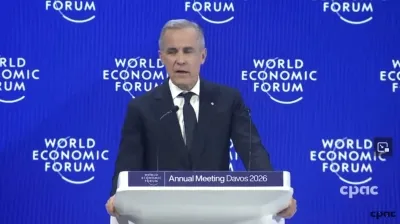

Karsten Wenzlaff, Advisor
August 26th, 2025
Karsten Wenzlaff is a Crowdfunding and Fintech Expert from Germany. He is Secretary-General of Digit[...]


NCFA Canada | May 29, 2020

About this episode: On this episode our host Manseeb Khan sits down with Austin Hubbell from Consilum Crypto. They chat about how quarantine is going, the state crypto and much more. Enjoy!
BIO: Austin is the CEO and co-founder of Consilium Crypto (https://consiliumcrypto.ai/), a big data company developing institutional grade investment analytics and liquidity access tools for the digital asset markets, helping funds find alpha and place large orders efficiently in times of thin liquidity. With a background in software development and machine learning, as well as previous tech startup experience, Austin brings a skillset balanced between the technology and business worlds. He previously worked with a distributed team based in L.A./San Francisco to build predictive models for crime hotspotting in major US cities, before transferring to the FinTech world to build machine learning based trading systems for currency markets. Enjoy!

Intro: Welcome fintech Friday's a weekly podcast brought to you by the National Crowdfunding and Fintech Association of Canada and partners.Covering all things fintech block chain be AI and alternative finance.
Manseeb Khan: [00:00:19] Hey everybody Manseeb Khan. Thank you for tuning into another fantastical episode of the Fintech Fridays podcast, Quarantine Edition. Hopefully you guys are staying safe, but also staying said it might feel like the movie Groundhog Day. I know it does for me personally. Everyday feels like Sunday and also Tuesday. It's very weird, very strange. But you know what? It is what it is. On this week's episode, we have Austin Hubbell from Consilium Crypto to kick off the first episode of the Fintech Friday Qurantine edition. So enjoy it. Awesome. Austin, Thank you so much for joining me today.
Austin Hubbell: [00:00:56] Thanks a lot for having me, Manseeb. Great to be here.
Manseeb Khan: [00:00:58] Awesome. So awesome. Give us a little bit of who you are and what you do.
Austin Hubbell: [00:01:03] Absolutely. So I'm a CEO and co-founder of Consilium Crypto. Consilium s a big data company that captures siloed data sets from digital asset markets around the globe and brings them into one system where they can be easily transformed into valuable insights for investors. Every month we capture and analyze more transactions than the Toronto, London and Hong Kong stock exchanges all combined. And we're a B2B company, so we work with funds, exchanges and ATC desks to provide machine learning powered trading tools.
Manseeb Khan: [00:01:35] That's awesome. So how have you been holding up during this whole quarantine thing? I know I'm definitely getting a little star crazy. You know, before before we jumped on me, my best friends jumped on a Zoom call, and we all watched the NFL draft together just to get some sort of semblance of human interaction. How have you been holding up how is especially being a CEO especially working remote? How's that transition been going?
Austin Hubbell: [00:02:02] It's been it's been an adjustment for sure. I think our company, as long as well as a lot of other tech companies, are in a better position than a lot of other small businesses just because we continue to operate despite some of these restrictions. It definitely has had an effect on communication with the team. I think there's a few things going around right now apart from Corona. So a few of our our team members have been sick and out of work for a little while. But apart from that, things are going fairly well. We're also fortunate to have a little bit of practice with the remote work just because we do have a team in Toronto and a team in Montreal. So we do have a little bit of practice kind of keeping that team cohesion from a distance. But there's no doubt that it's had a lot of negative impacts on our business, just like everyone else's.
Manseeb Khan: [00:02:48] Yeah, I know for sure. It's definitely a very interesting shift and it should be very interesting to see how businesses are going to currently adapt by working remotely. You know, some companies are going to thrive from working remotely like, you know, hopefully you guys are and some are not. But, you know, let's let's let's dig into the how did how did you get started into the whole crypto realm, as you say? I mean, you know, for me, I was just a you know, my crypto journey probably started two years ago. I was just Googling a bunch of things and just found this crypto thing fun to watch people on LinkedIn. And then I kind of jumped up like, honestly, that's the whole purpose of this show, is to sit down with amazing experts like you so I can kind of learn more and, you know, let my audience learn more as well.
Manseeb Khan: [00:03:33] Well, it's a bit of a winding path. Like most people are getting into crypto previously worked at a proprietary trading firm in Montreal focusing on forex. So global currencies, we were looking at G10 spot markets and trying to do some interesting things with machine learning to get an edge in that market for trading purposes. At the time, I had a few friends that were very involved and then blockchain and crypto and they kept kind of bugging me about it more or less. They kept coming to me and saying, You have to check this out, you have to check this out. And so near the end of 2016, I started studying for the C4 certificate. So it's the crypto currency certification consortium. I'm missing one of the C's in there, but that's one of the really great. Yeah, exactly. Well, it's one of these online courses that teaches you the fundamentals of Bitcoin and blockchain. And one thing that I thought was really cool about that, course is in the end, you take this test and if you pass, you can get a certificate, but they force you to pay for that certificate in Bitcoin. You can't use PayPal, you can't use your credit card. So you have to actually go get some Bitcoin somehow, create a transaction and actually pay for it in Bitcoins. So that was my my intro into the crypto world. And then about seven or eight months later would have been around Q3 2017. The opportunity just kind of presented itself to make the leap over from Forex and start something new in cryptocurrency. And basically what I saw was the opportunity to collect this amazing dataset of raw transaction data, bids and ask to order book data, from these exchanges and distill it into value for investors. And that's something that would be incredibly expensive to do in traditional markets and within crypto. It was a lot easier at the time, at least.
Manseeb Khan: [00:05:25] Yeah, no, that's That's. Wow, that's awesome. The fact that you have to actually purchase is difficult in Bitcoin That's. Wow, that that's amazing. You know. Creating a system or creating a program that helps funds understand Crypto more, I guess what would be your, I guess know, diluted tips and tricks of the trade that you can share with our audience, that things that there should be kind of looking for things that you've picked up along the way. I mean, granted, you're definitely a lot better now at understanding and like analyzing these assets than you were from day one. Were there like a couple of things that you kept in mind that's helped you stay the course?
Austin Hubbell: [00:06:12] Well, I think it's important to treat these things as a technology first and an investment second, so really understanding how these things operate. The risks involved, especially the tail risk involved with these things. For example, vulnerabilities in smart contracts, things like that. Companies that operate in the cryptocurrency world, if they're not very careful about how their funds are managed and that the security protocols in place, it really creates a price on your back for hackers. So I would say that for people who are just coming into crypto, don't treat it as a speculative investment, treat it as a new technology. So think of buying an individual crypto asset as buying an app on the app store. So put in five to ten dollars, play with it for a while until you have a thoroughly understanding of how it works and then decide if you want to go up a tier or how you want to actually engage with this if you want to use it for its intended purpose of kind of maybe remittances or transferring payments or peer to peer cash or if you want to use it as an investment. And so once you've kind of made that decision, I would say at some point the next step would be to manage your own wallet. So it's a very powerful process to control your own private keys and understand the signing process works and really just go slow and steady, ask for help at every step in the process if you need it, and just focus on education and really understanding the tech side rather than just treating it like some kind of slot machine.
Manseeb Khan: [00:07:41] Yeah, I know for sure. I mean, understanding that, you know, it is not a lot like looking much is not speculative. The app, the app things, it was it was a great example. Education is going to be the key education's That's. Hey, that's that's the purpose of this show, right. Of letting people know what it is. What's the purpose of it? You know you know, us being a global pandemic right now is a really interesting test case of, you know, banks are shutting down. ATMs are going to have limited cash like, you know, like three months ago you might have wanted to buy a house. Guess what? You can't. You want to buy that. You can't. Right. Like, it's everybody's everybody's money is now held up. This is why crypto came into place, right, so the should be very interesting test case for Crypto.
Austin Hubbell: [00:08:28] Absolutely. Yeah. I'm glad you brought that up, actually, because I have a little anecdote from the last two weeks. Oh, perfect. You were just trying to. Sorry. We were just trying to convert some USD to CAD within our own bank account. So it's not not a complex transaction. Should be very simple. I couldn't do this through the online system with our bank. I called their their their support number and they said that there's super long wait time. I waited for about an hour and a half on there. Got transferred between different departments and their final say was, I'm sorry, you have to go into an actual branch to do this. And that's crazy. So I said, OK, well, I don't want to do that. No. One, because that's just what the opposite of what everyone's supposed to be doing right now. This is really not an essential thing for my life to be done. And then secondly, I looked up at my branch was completely closed. So what do you do now? You know, this is just craziness, but how do the funds been in stable coins, for example? So a Canadian dollar stable coin and a U.S. dollar stable coin. I would have been able to go to any number of exchanges and go make that transaction instantly and get those funds and move on with my life. And so I think that's one area that that hopefully banks will take a second look at one, this whole storm passes and they kind of revisit these processes.
Manseeb Khan: [00:09:51] Yeah. No, I mean, hopefully it's something Banks again, hopefully some people actually look into, right of education is gonna be the key. Knowledge is power in a sense of understanding. They're like, hey, you know what the current economic systems are in are extremely vulnerable. This is exactly why new digitalization of money is coming in. This is why it is going to such a huge push from people in our industry for the digitization of money. Cryptocurrency blockchain because in the next world pandemic, which is now inevitable of, you know, now just the countdown of what is going to happen. Hopefully the next time around, a lot of people have more money and assets where they're not wasting half an hour on call to transfer funds. I mean, anecdote, for me was a couple days ago, I ran to the local bank to the ATM just to get up, get money out. Unfortunately I wasn't with that bank and that ATM was locked. So I'm like, OK, I need cash. I had to walk to walk to the actual drive through of the ATM to pull out cash. And I was like, OK, well, this is it. This is ridiculous. Like, what are we doing here?
Austin Hubbell: [00:11:02] And 2020, to have that be the process, just to go buy something with your own money that you should control at all times. It seemed a little bit crazy to me.
Manseeb Khan: [00:11:10] Yeah, no, it's it's just it's ridiculous. So aside from the new digitilization of money. What are you most excited about when it comes to the space? When it when it comes to fintech? What are you most excited and what are you most passionate about?
Austin Hubbell: [00:11:28] I think that the education side, when it comes to personal money management or wealth management, having people understand the different ways that a portfolio can be created, whether that's gold based investing, where you're you're actually looking towards a certain thing that you want to purchase in the future, whether it's a vacation or house or something like that, and really just diving into how people can retain control of their money. Well, still manage it and sophisticated, smart ways. So I think the ability for technology to do a little bit more hand holding with the end user or with the person whose funds are being managed as opposed to just kind of completely handing it off and hoping for the best and hoping that you're either financial adviser or robo advisor does a good job without really understanding the underlying principles. I think that's a huge opportunity for FinTech. And then the second one, I would say just to circle back the blockchain a little bit, would be the digitization and tokenization of assets. So I think fractional ownership in assets and the ability for people to trade these things peer-to-peer around the world and really bring the kind of less fortunate emerging markets, third world, whatever you want to call it, and bring that into the capital market system and give them access to capital and give investors access to those amazing opportunities and ideas without the friction of the financial systems and different countries and having their own infrastructure and kind of payment rails and whatnot. I think that's a huge opportunity.
Manseeb Khan: [00:13:04] Yeah, 100 percent. The fact that opening up micro investments into like into like, hey, you know, you can own a fraction of a classic car or a condo or or a commercial like real estate like opening up those little markets is going to make and break is going to be make the biggest difference in the world. Right. Especially now where, you know, a lot of people want to be a lot more liquid. A lot of people want are definitely rethinking where to put their money. I mean, are you going to put on stocks or not? Probably not going to buy a house for enough. Good luck. Are you gonna do that? Like, it's like having the access of, hey, buying a 67 Camaro. Pretty, pretty awesome right now. You realize that that's a young, dumb investment that I definitely make right now. If I had that. If I had the ability to for sure.
Austin Hubbell: [00:13:56] Amazing, yeah. Everybody's got their own their own 67 Camaro that they want one day. So I'll think with the right education, the right tools. We can all get there.
Manseeb Khan: [00:14:06] 100 percent. So what do you see? The biggest shifts being in the industry post-covid. Right. You know, businesses are definitely become more remote. This is I mean, aside from the whole money aspect of it, how companies are gonna start working and interacting. You're going to see a lot more virtual teams, right? A lot of crypto companies, a lot of blockchain companies are in all aspects. They're global. Right. So unfortunately, can't all be in a room, but they all can be in a virtual room. So how do you see the shift happening in the industry? Post this pandemic?
Austin Hubbell: [00:14:41] I think one of the biggest things will be automation. I think right now and for the next few months, there will be a lot of belt tightening among big companies and small companies that really just kind of taking a step back and looking at the business and saying, OK, what part of these processes can be automated? How much is it gonna cost me to build out those automation's and how much am I going to save in the long term? So I think this has been a big accelerate towards automating all these processes and kind of removing humans from parts of the process where they're just simply not needed. And then the second interesting point that kind of ties into that a little bit is we are doing a little bit of a soft test right now as a society with UBI. So this isn't technically universal basic income, but the amount of support coming from the government right now. This is a little bit of a trial run to see how people react to this, to see how the economy reacts, to see how society reacts. I think the intersection of automation and potentially some form of a few UBI down the road might be really interesting to see how that plays out.
Manseeb Khan: [00:15:47] Yeah, 100 percent. I mean, it should be. What we're running, like you said, was running a test. This is just a trial run to see, you know, what works, what doesn't work. I believe the automation thing that should be very interesting of seeing how companies are going to come out, come out of this and reassess, hey, what in our definition or whatever you want to call it, qualifies as an essential worker. Right. And can we automate these things right? Your SLOWLY seeing it right now or with restaurants, grocery stores, everybody is doing this stuff online. A lot of people are waking up, knowing, missing, hey, I could do a lot of these things online and out to actually be there in person, which is amazing. Absolutely. For sure. Yeah. Which is incredible. Austin is there any is there any like, finals like things has been top of mind for you since this like pandemic. Anything that I guess popped in your head that hasn't popped before before we before we wrap this up.
Austin Hubbell: [00:16:51] Well, at Consilium, we we spend a lot of time looking at markets and whether that's crypto currency markets or traditional markets. I think the biggest takeaway from this is find a way to manage your tail risk or at least be aware of what tail risk can look like because this thing came out of nowhere. There was I would say that there's no real regulation or government policy that could have prevented this, unlike some kind of things like the global financial crisis in 2008. This was something that came out of nowhere that no policy could have prevented. And that's a true kind of black swan or tail risk event. And we're all feeling it in terms of our day to day lives. Also in our portfolios and also just how society as a whole is reacting to this. So just be aware of what tail risks that tail risk can happen. And just just re-examine everything in your life and think about how can I manage this? How can I hedge against this, even if it's in some small way so that you can sleep at night when this next event comes? Hopefully not anytime soon. But I think the way that the trend is that these things will be happening more often throughout the next few decades.
Manseeb Khan: [00:18:01] Yeah. Awesome. Austin thank you so much. Would be the best way for our audience to either reach out to you if there's any questions about Consilium, if they have any any questions of, you know, mitigating the tail risk. How would I would on audience contact with you?
Austin Hubbell: [00:18:16] Well, as a company, we try to be very active on LinkedIn. So I'd say the first thing would be to follow our company page on LinkedIn. And then also just feel free to reach out through through the Web site contact form. We always reply to everybody that comes through there. So, yes, please feel free to reach out anytime if you have questions or you're looking to learn more about the company or crypto assets as a whole.
Manseeb Khan: [00:18:37] Awesome, Austin thank you so much for sitting down with us today. And I'm excited to sit down with you, hopefully in a real room after this pandemic.
Austin Hubbell: [00:18:46] Sounds great. Thanks a lot for having me. Manseeb take care.
Outro : you've been listening to fintech Fridays brought to you by NCFA and partners. Tune in weekly for the latest fintech Friday podcast by subscribing to this channel. The National crowdfunding and FinTech Association of Canada is a non-profit actively engaged with social and investment fintech sectors around the globe and provide education research industry stewardship services and networking opportunities to thousands of members and subscribers. For more information please visit and see if a Canada dot org. Oh yea.
 The National Crowdfunding & Fintech Association (NCFA Canada) is a financial innovation ecosystem that provides education, market intelligence, industry stewardship, networking and funding opportunities and services to thousands of community members and works closely with industry, government, partners and affiliates to create a vibrant and innovative fintech and funding industry in Canada. Decentralized and distributed, NCFA is engaged with global stakeholders and helps incubate projects and investment in fintech, alternative finance, crowdfunding, peer-to-peer finance, payments, digital assets and tokens, blockchain, cryptocurrency, regtech, and insurtech sectors. Join Canada's Fintech & Funding Community today FREE! Or become a contributing member and get perks. For more information, please visit: www.ncfacanada.org
 |  |  |
|---|---|---|
 |  |  |
Coindesk | Nathaniel Whittemore | Apr 29, 2020
 A massive shortage of dollars is instigating economic chaos, including a more than 50% loss of value in the Lebanese pound and what looks like an enormous local premium for bitcoins. Presented in podcast and full-transcript formats.
The Lebanese pound has lost at least 50% of its value against the dollar since last year. About 220,000 people have lost their jobs. Food prices are up 58%. An estimated 75% of the population needs assistance of some kind. And over the last two nights, at least a dozen banks have been torched by protesters.
The catalyst? Not coronavirus but a massive dollar shortage destroying an economy that relies on inflows of U.S. dollars to function.
In this episode, NLW breaks down how Lebanon models what it looks like for a currency to fail, and why this likely isn’t the last emerging market currency to experience a similar crisis in the months to come.
It is Wednesday, April 29th and today we are going to be talking about Lebanon, specifically the currency crisis overlapping a political crisis overlapping a larger economic crisis that is engulfing Lebanon and I think has relevance for how we understand the dollar in the world, the dollar's role in the world and the fallout from COVID-19. I wanted to bring this episode to you because I noticed last week Lebanon start to emerge in the crypto sphere and there were two contexts:
The first was Dan Tapiero. He picked up on a piece by newsBTC noticing that Bitcoin seemed to be trading at fifteen thousand dollars in lebanon via localbitcoins.com which is a peer to peer platform for trading Bitcoin between people. He said the classic emerging market funding crisis was made worse by deflationary dollar peg that is breaking. Study this case as it will be modeled for other weak emerging markets. It will be a key part of the macro story behind the upcoming Bitcoin price rally.
Banks start to limit withdrawals, which is exactly what happened.
Banks started to limit how much could be withdrawn in USD and that creates more demand for dollars. All of a sudden that activity moves to the black markets because if banks won't allow people to withdraw money or get access to dollars, black markets will, but the black market price is not going to stay the same as that official peg.
This keeps going on. As people start to see the peg fall further, they want to minimize loss.
They go from, "I don't want to lose the value that I would have had at that official peg going on the black market" to "The black markets, the only place I can get those [US] dollars
if it's 2000 Lebanese pounds to the dollar, now, I want to lock in that loss rather than worry or take the risk of a loss of greater debasement of the value of the Lebanese pound in months to come.
The National Crowdfunding & Fintech Association (NCFA Canada) is a financial innovation ecosystem that provides education, market intelligence, industry stewardship, networking and funding opportunities and services to thousands of community members and works closely with industry, government, partners and affiliates to create a vibrant and innovative fintech and funding industry in Canada. Decentralized and distributed, NCFA is engaged with global stakeholders and helps incubate projects and investment in fintech, alternative finance, crowdfunding, peer-to-peer finance, payments, digital assets and tokens, blockchain, cryptocurrency, regtech, and insurtech sectors. Join Canada's Fintech & Funding Community today FREE! Or become a contributing member and get perks. For more information, please visit: www.ncfacanada.org
| | |
|---|---|---|
| | |
Roll Call | Chris Brummer | April 7, 2020

The National Crowdfunding & Fintech Association (NCFA Canada) is a financial innovation ecosystem that provides education, market intelligence, industry stewardship, networking and funding opportunities and services to thousands of community members and works closely with industry, government, partners and affiliates to create a vibrant and innovative fintech and funding industry in Canada. Decentralized and distributed, NCFA is engaged with global stakeholders and helps incubate projects and investment in fintech, alternative finance, crowdfunding, peer-to-peer finance, payments, digital assets and tokens, blockchain, cryptocurrency, regtech, and insurtech sectors. Join Canada's Fintech & Funding Community today FREE! Or become a contributing member and get perks. For more information, please visit: www.ncfacanada.org
| | |
|---|---|---|
| | |
Bank On It podcast | John Siracusa | March 11, 2020

This nugget was pulled from episode 160 from an interview with Brett Crosby, co-founder & COO of PeerStreet. This nugget is on turning a funding failure into a win.
About Brett Crosby:
Brett is the co-founder and COO of PeerStreet, a platform for investing in real estate-backed loans. Crosby was previously the director of product marketing at Google, where he co-founded Google Analytics, helped start Google’s mobile advertising business and recently ran the global marketing teams responsible for the growth of Chrome, Gmail, Docs and Drive.
 The National Crowdfunding & Fintech Association (NCFA Canada) is a financial innovation ecosystem that provides education, market intelligence, industry stewardship, networking and funding opportunities and services to thousands of community members and works closely with industry, government, partners and affiliates to create a vibrant and innovative fintech and funding industry in Canada. Decentralized and distributed, NCFA is engaged with global stakeholders and helps incubate projects and investment in fintech, alternative finance, crowdfunding, peer-to-peer finance, payments, digital assets and tokens, blockchain, cryptocurrency, regtech, and insurtech sectors. Join Canada's Fintech & Funding Community today FREE! Or become a contributing member and get perks. For more information, please visit: www.ncfacanada.org
| | |
|---|---|---|
| | |
NCFA Canada | March 25, 2020

KABN Links: kabnsystemsna.com | liquidavatar.com
About this episode:
David Lucatch of KABN Networks North America joins Tristram Waye for this episode of Fintech Friday. David discusses why identity is a foundational element of the evolving online and data environment, and why KABN Networks North America has developed a business around it. During this episode he will also discuss:

BIO: David Lucatch has spent more almost 35 years in the international marketing arena and over 25 years of that developing technologies and taking them to market. David has held senior management posts and directorships at both private and public technology and media firms. David is an active supporter of numerous non-profit organizations and has been recognized and awarded internationally for his service and community support activities. In 1997, David developed the concept and led the initial eCommerce payment gateway team for the Canadian banking industry with support from VISA and MasterCard, Scotiabank and Citibank Canada.
In 2005, David created one of Canada’s first incubators, financing, creating and supporting projects globally in online AI / ML / NLP language technology, VoIP telephony, online mapping, music and entertainment, live performance, mobile marketing and eCommerce.
After leaving his posts at 2 public companies, in early 2017, David founded Pegasus Fintech. Pegasus is positioned to support founders, innovative technology developers and emerging companies in their efforts to preserve long-term ownership and promote growth opportunities through compliant business solutions.
In late 2017, David became a co-founder KABN to focus on the compliance and liquidity issues surrounding digital currencies. By mid-2018, the Pegasus team also developed KABN’s identity platform KABN ID allowing users and commercial clients to verify, manage and monetize identity on a continuous, Always On global scale reducing the need to do identity verification for multiple transactions with a user. In May 2019, David and 2 partners filed a US Patent for the invention of a process to use the Blockchain for Identity Attestations.
David’s focus today is set squarely on KABN and its mission to put ownership, control and profitability of identity back into the hands of individuals. KABN’s products and programs covers over 180 countries worldwide and is expanding its regional leadership teams in 2019 and 2020.
David is a graduate from the University of Toronto and continues to serve as mentor to a variety of student programs and leadership initiatives globally. In 2010 David was a recipient of an Arbor Award from the University of Toronto, recognizing his continued activities and contributions to his alma mater and served a term as a member of the University’s Electoral College. David served as an inaugural member of the Ontario Securities Commission SME Committee and is a member of the NCFA Advisory Board.
Some additional “fun facts”:
In addition to his technology accomplishments, David is also active in the media industry:
David and his team were instrumental in achieving a Guinness World Record in 2011 for the Most Nationalities in an Online Chat together with Gene Simmons and Paul Stanley of KISS;
In 2013, David and his team worked with Disney Animation to create a global, multi-language “flash event”’ for the worldwide online video premiere for the Academy Award and Grammy Award song Let It Go from the movie Frozen;
In 2017, David and his partners at created and produced Stars and Pinstripes, a New York Yankees television series featured on the YES Network and Direct TV and were nominated in 2017 for a NY Emmy Award in the Entertainment Program / Special category.
Intro: Welcome fintech Friday's a weekly podcast brought to you by the National Crowdfunding and Fintech Association of Canada and partners.Covering all things fintech block chain be AI and alternative finance.
Tristram: We have David Lucatch, co founder, director and president of KABN Network, North America as a special guest today. David, thanks for being here.
David: Thank you very much Tristram.
Tristram: Let's start with a little bit about your background. Tell us tell us about your path, your current project.
David: Well, you know, I've been in the space since the early days of the internet and that several companies with new technology, one was the original - I like to think it was the original purveyor or designer of the commerce gateways for Canadian banking. So we, we were one of the first companies at that time to allow people to use credit cards online. So I did that. I've run incubators. I've run AI and machine learning and natural language processing, technology companies for language translation. So I've been around a few years but our new and latest one, it's not really new anymore - I would say it's a couple years old - called cabin is focused in online identity. And we're in the business of verifying, managing and monetizing online identity.
Tristram: Okay, so can you tell me a bit more about about KABN? And I noticed you have a full suite of products. How does that fit together?
David: Oh, well, thank you. It's fairly simple. I mean, the first part of identity especially online identity, is verifying that you are who you say you are. It's really easy in the real world to verify yourself. If you walk through an airport, you'd have probably have two or three times where you'd have to show a passport or some kind of identification to get to the next stage. In the real world, that happens every day and or we see each other in most cases, face to face or we know each other. And that verification is done, one to one or one to few. But in the online world, anybody can say they're anybody in most cases. So what we've done is we've made it very simple for commercial companies to verify their constituents or their customers. And we've made it very easy for consumers to have a verified identity called a KABN ID that they can take with them when they go places online. And they can prove who they are. That's the first part of their business, KABN ID, that's the verification suite. We then take that private ID which is owned by you - we don't own it - and we help you manage on a on a pooled or aggregated basis, your data that makes you you what makes you a consumer, what do you like? What do you dislike? That, those pools of data can then be used to create customized offers that you want to see, and that people want to bring to you because you are part of a known identity pool. So at that point in time, we can help you verify, we can help you manage that data, and we help and we will manage it with you. And then we can help you create value from that data. So and in the value side or the monetization side, we have a number of products, including KABN KASH, which is our loyalty and engagement program. And we have our KABN financial services products, including the Pegasus Flyte debit card. In Canada, we have the ability to issue both a debit card and a mobile banking platform. And that kind of covers the suite of services we offer. And just to add to that, for a moment, we've introduced a new consumer product called Liquid Avatar, which I think we'll get into a little bit deeper as we go.
Tristram: Cool. Well, I'd like to take the opportunity to unpack each one of these services, which look really interesting to me. So on the ID side, as this is the foundation of your offering, is that correct?
David: That is correct.
Tristram: Now, what is the vision behind having ID as the core product are the foundation of your suite of products?
David: Well, that's a really good question. When you think about identification, in most cases, it's a single point in time. And, and there have traditionally been a number of companies, there's competitors in this space for identity verification, but each one of those competitors we call a pass or fail. They're they're not interested in supporting the consumer, in the long term. They're, they're really interested in supporting the commercial company, and telling you whether you pass or fail than identity verification. And they get paid, in most cases, either way. Our motivation was to look at the mousetrap and reinvent it. And we said, really, it's all about the consumer owning their identity. Because owning identity should be a basic human right. You should have control over that identity. So to do that, we created a service that once you're - it's called one and done or always on - where once we've identified or verified you, unless your documents change or there's a something that needs to be updated. We can verify you to a third party saying: Yes, I am who I say I am. I am David Lucatch. And I can prove that and KABN's going to verify that for me. So I don't have to hand third parties, unknown parties, any of my documentation that would water down the value of my identity.
Tristram: Okay, and so in terms of - this is based on on a blockchain is that correct?
David: Sorry?
Tristram: It's - the product is based on a blockchain as well. Is that correct?
David: Well, the product uses the blockchain you - it is, in fact not legal to put identity on the blockchain. So anybody who says or putting data on the blockchain is actually likely breaking privacy rules because the European privacy rules the Canadian privacy rules. Now the California rules. The rules basically say that consumer must have the ability to remove their data from a system and beyond removing any trace of that data has to be forgotten. If you put it on the blockchain because the blockchain is immutable, that's an impossibility. So what we've done is we've developed a system that uses the blockchain, only to hold what we would call a marker. And a marker to us is binary, you know, it's one or zero, on off true false, yes, no pass fail. We can put that marker on a blockchain registry. So when a registry that is connected to a database, a blockchain database, and we can say: You're not only verified, but that verification is connected to an online wallet, an online piece of data. It might be a field record for a hospital. Or it could be a educational record, that you are verified, you have passed verification. If anything ever changes, we can update or send a new marker that says you have failed. So when you think about it, for financial transactions, somebody who might be good today and passes everything in that moment in time, which is traditionally identity verification is done. And that's through a process called know your customer, or KYC, and anti money laundering check. We can keep that in compliance, or continuous. And make sure that, that you're not only good today, but you're good tomorrow and the day after, the day after that and so on. So it's a big change. We've really reinvented the process, in our opinion, of identity verification for digital use.
Tristram: So in other words, you really streamline the process for a basic, almost fundamental thing for everything we do in life.
David: Exactly. But the key here is, it's yours. It doesn't belong to a corporation, it doesn't belong to KABN, it's yours. And that was a fundamental issue that we all know with Facebook and Cambridge Analytical was that people were using data. Well, you know, if large corporations in which they're going to have to down the road, adopt policies that keep the consumer protected and allow the consumer to have control over their data - which is where all the major legislation around the world is headed or been approved - then we're right in that sweet spot of compliance. So we've really created something that is getting. - we're getting a lot of attention on this because it's not only new and innovative, it doesn't reinvent the wheel in that respect. It's a process that people are used to. But behind the scenes, it has reinvented the wheel, because we changed all the control mechanisms to be consumer focused.
Tristram: That's great. Now, the one thing I notice - your site says something about using biometric ID. Can you elaborate on that a little bit?
David: Sure. And without getting too long winded or complex, but you know, if you think about it, I don't know how many passwords you have to remember. And I get on the phone with people they go: Oh my gosh, I have to remember all these passwords. But the the really overarching situation, we'll use a phone today. inherent in our mobile phone is usually fingerprint identity or retina or face recognition. That is built into the phone, that's for that device. And I won't go into the security of the complexity of that device, but it's not good enough for the whole world. So, what we've done is we've said, you know, what, if I'm proving you, are you, why shouldn't I add biometrics to that? Why shouldn't I add, you know, right now we use facial recognition. We could use voiceprint, or fingerprint or other tools, that it's not part of your phone, but part of our ecosystem, that when someone wants to authenticate you, you don't have to use a password long term, all you do is answer with your face. Or answer with your voiceprint. And we're seeing this a little bit more in the banking sector than other sectors. But at the end of the day, you know, there's enough confidence in the software that does this, to say that you are you, we've proven that on an ID basis using government ID and supporting documentation. Why shouldn't we use your face to make sure you can verify that as well. We go forward.
Tristram: That's great. Well, it's a modern - it seems like a really modern take on the whole thing. Making it much simpler for the consumer.
David: We believe so.
Tristram: Now I noticed in your literature, you're talking- your product talks about the concept of Whitelist Membership. Can you get into that a little bit and explain what that means?
David: Sure. Simply put that when you start with KABN or you're brought into KABN let's say, to a commercial application, because someone's needed to verify you - then you're on you're on a particular whitelist. You can think of it as the point of entry of membership. And so, commercial client, again, not to get confusing, but so David comes in, I joined you know, Tris' organization Tris has to verify me, so I'm done. Okay, now, David has his KABN ID and he goes to Bob's site who needs to verify me that uses KABN. I just have to sign in with, with my KABN ID, I don't have to re verify. But I'm now on Tris's whitelist, his corporate whitelist, and I'm on Bob's corporate whitelist. But my origination point was Tris. It's a way of keeping things straight for us, that if there is certain requirements or documentation flow, we know where the origin point is. So but you can be on many different whitelist you can be all over the place. There's no restriction at this point in time of where you can join, unless you don't meet the restriction of that particular whitelist. Like we're only allowing people on this particular whitelist from Canada. Or from Canada, United States. Or we're only allowing people based on certain other attributes to join a particular whitelist that might, that might be inherent to that list, but your KABN ID is global.
Tristram: Okay, that's interesting. Now let's move on to the Pegasus Flyte Visa. What does the card offer? And how is it different from other cards on the market?
David: So, when we look at the new emerging space, we thought that there's, I mean, we all know there's multiple types of currency. And, you know, when we say digital currency, people have a tendency to get a little bit nervous. But when you think about digital currency that's been going on for years. If you use a credit card from any of the major banks, you're using somebody else's currency, you're not using your own and it's generally digitally generated. So digital currency has many different forms. Fiat is considered traditional dollars, but our program works with both. Our program is one of the first programs in North America that allows the use of both digital currency, in certain respects you have to transfer that digital currency out to Fiat, but digital currency activations and, fiat currency activation. So, it makes it very different. We also have our own loyalty programs that are connected to the card - and it isn't it is a debit card is not a credit card.
Tristram: Okay.
David: And we have our ability to add a number of feature sets on our mobile banking platform. So it allows companies who issue points, companies who issue other types of digital currencies, to engage with their consumers in a way, that's going to make it easier to spend those digital currencies in, the real world. Or online.
Tristram: Okay, so it's...
David: Sorry, go ahead.
Tristram: No, sorry. Finish what you're going to say.
David: So it's just a new way of thinking. Again, we're all about the innovation cycle. What's been done traditionally, and how can we make it sort of better, faster, cheaper.
Tristram: Okay, now, the question I had was, so when you're describing it, are people able to use this card, not just to convert from digital currencies to Fiat, but are they are they able to pay with a digital currency with the card at this point?
David: Well, I candidly, that's not within the purview yet of the network's being Visa or MasterCard. I truly believe it will be. But it's not necessarily a complete straight line yet there is a little bit of curves in there.
Tristram: Right.
David: But I believe that if you get in early enough as we are, you'll find the straight lines first. So for us, it was dipping our toes in the water getting this started. Knowing that there would be curves or bumps in the road. But allowing early adopters to get in and do something that they will be excited to have been part of at the early stage. I think if you think back to e-commerce that the early days, you know, or even using the internet, you know, it was a dial up modem. And I think we can all remember those, tones. But you know, today now what we take for granted we had to go through a little bit of pain to get here.
Tristram: And I certainly remember when Visa specifically came out and said they would guarantee every transaction that you did with the card on the internet - probably early somewhere in 2000. What a difference that made for consumers using the cards for actual purchases
David: Yes, that comes with a price because ultimately all those bad transactions are in our interest rates that we pay on our credit cards.
Tristram: Right...
David: So by using KABN's verification system for large purchases, we can negate some of those potential bad transactions down the road. But that's that's another facet of our business that we're not we're not quite there yet.
Tristram: Okay. And just for my information are you are stablecoins going to be part of the mix on the card associated with the card?
David: It will depend on the stablecoin and the approval by our banking partners. The answer is, it will depend on the individual composition of the coin. So the answer is I'd like to have as many different coins and tokens available through the system and through our partner system because they have to be converted before they come over to us. I'd like as many as possible, but, again, it'll be on a case by case basis outside of the top several.
Tristram: Okay. And so you have a partnership with Visa with the card. How did that come about?
David: Well, it's actually - we don't really say it's a partnership with Visa. It's a Visa branded product.
Tristram: Okay.
David: We actually, we have a partnership with a private Canadian bank, that is licensed issue Visa cards and we work with them. They - but we did have to be approved by Visa before this program moved forward. So and we're in the KABN Network, there are other regions around the world that do have that approval as well. KABN Networks Group in in the UK and Europe both have that approval as well.
Tristram: Go ahead.
David: And we're looking to do that in the US as well.
Tristram: Okay, so you're currently available in Canada, is that what you're saying?
David: Well, the Canadian- the Canadian company KABN Systems North America Inc, which is our North American Division, offers the card in Canada and will offer it in the US. As well are the other partners in the KABN Network in Europe and the UK are separate and apart.
Tristram: Okay, and for people that want some more information on how to get access to the Pegasus Flyte card in North America, where would they go to find out about that?
David: They go to KABN Systems, that's plural, kabnsystemsna.com North America. So kabn systems na.com
Tristram: Okay, perfect. And so and you're also approved for a Europe in the UK as you were saying right?
David: Again, through other partners in our network,
Tristram: Okay, terrific. And moving on to the loyalty program that you have that's KABN KASH is it not?
David: Yes. And KABN KASH is a rebate program - a consumer rebate or cashback program that we're launching, probably early summer that will allow people in our network to be able to get great deals and receive cash back on some of those deals. You've seen other programs in the marketplace that have done that, and we're quite excited about that opportunity. And you - we expect to see some significant name brands in there, where the consumer can buy something online and have money put on their card directly or their their Pegasus Flyte Visa card.
Tristram: Okay, and can you elaborate on the kinds of businesses that might be interested in using this platform?
David: I think we'll recognize the names but we can't disclose that yet. We haven't done...
Tristram: Okay. (Laughter) Now, so your target market it's millennials and Gen X is that right?
David: Millennial and Gen Zed, or for American friends, Gen Z. So it's the younger demographic. Late X, late boomers and Xs and then really primarily millennials and Gen Z(eds).
Tristram: Okay, and how important is, these type of loyalty programs to this target market?
David: Well, I I'd like to comment on something which might make sense to everybody is that we've actually introduced a consumer program called the Liquid Avatar. And that Liquid Avatar is a - we think the genesis of where everything will go. From a consumer standpoint, we all know what an emoji is. We use them every day, you know, send them constantly. But imagine if you will, that you can have your own avatar and that avatar is actually a passport. That image that you send everyone is passport. You can actually transport a URL or public data when you send that image by text or email, or through other methodologies - sharing social media. You can - that has a URL or other information built into it, that holds public data - my links to my Facebook page, Tic Toc. Whatever I want to have on there is within that Avatar and it's referred URL. And then on the other side, and we call that a public hearing, and the avatar also has a private key. So it has the ability to, through authentication, be able to move private data that you have and hold, not held by KABN, but you have through access points. So we believe that the Liquid Avatar, and its liquidavatar.com - we expect our graphic, a full graphic site to be up within two weeks. But that is a new introduction from KABN. And that will also allow you to participate in all kinds of loyalty and engagement programs. We're talking to groups that handle 1200 campus operations, or campus opportunities in North America. We're talking to one of the large music brands. We're talking to a lot of people who are very interested in connecting to consumers through this gateway of people having avatars. And I think that's the long term approach to that. And then we connect into a loyalty program that allows merchants and vendors to reach you on a permission basis. They don't get to reach you directly. They reach you through KABN, and you can build loyalty and value with the things that you like. And we think that is an ideal way to engage within an ecosystem, allowing people to receive what they want, when they want, and how they want. And share what they want, when they want, how they want, and to whom they want.
Tristram: That's cool. Now, would you say that this is kind of a community approach in terms of the avatars the way that you're setting it up?
David: The answer is, it is and isn't. I mean, it can be a, I like to - I'm a little bit older, so I like to think of Tinker toy or Meccano or even, you know, Lego that you - that you can connect groups of like and unlike individuals based on certain attributes. And I think it's all going to be data driven. I think we're all kind of getting a bit weary from some of the social networks that all they do is make money off everything that we have. I mean, rules have changed, of course, but there was a day when companies like Facebook can take any picture that you had on your Facebook page, and they could sell it commercially. People were showing up and seeing ads with their family vacation photos..
Tristram: Ya, ya.
David: ...not knowing how they got there. Well, we think, again, you know, data is the new, you know, is the new gold, the new titanium. And if you own it, and you can manage it, and you can keep it safe, and you only dispense it as you need that would be really cool. I want to add one other point to the Liquid Avatar. For young people, parents can actually control it, so you can add trustees. So there is control over the Liquid Avatar. Or unfortunately, you know, you might want to add a trustee to your Liquid Avatar because if something happens to you, they have the ability to control information. And we're also talking with liquid avatar about things like, you know, break the glass emergency component in there. If something tragically goes wrong with you, how does someone get that information that may be contained in in a quasi private manner - with emergency medical records? I mean, you think about it everywhere we go, our information doesn't necessarily follow us. It just doesn't. And I think it's time that we empower ourselves with our own data, to make it ours and transportable and to use that data to a - going to be a little bit overzealous here, but to almost force vendors to give us the deals that are best for us because we deserve them. And I think, and based on our data. So I think what we're doing is we're starting to empower individuals to have more control over their own activities, and their own use of data when they're online.
Tristram: Okay, and so to help me conceptualize how this product can be used by an individual, can you give me like an example, of, you know, a day in the life type of a thing where I can see all the ways that I can use this?
David: Sure. I'm going to stretch out a little bit into the future because not everything will be available day one. You get up in the morning and, you know, you go to a site and instead of login with a password, you flip your digital avatar and they send you back - excuse me, pardon me - they send you back an authentication. And that authentication allows you to answer with your face and get into a very private site. Watch your morning news, but It's all customized for you, because your morning news - this company believes there's a benefit to giving you news that is only particular to you, and you've authenticated. You know, you get on a street car or a bus or a subway, and you show your Liquid Avatar and it pays for you. It debits an account, whether it's a PRESTO Card or some other kind of card, and or debit your bank account. Because you've authenticated. It pings you and you answer with your face and you're done. You go to buy something at a sandwich shop, it does the same thing. You want to send a business contact or a new friend, you want to send them information about yourself, you can send them your Liquid Avatar and they can visit your public page to ensure that they've got your links to all your Facebook pages and all your social media and anything else that you're doing online. So there's many different ways - you sign into a game or you want to play a game, or you're a gamer for argument's sake, and all your game ranks are in your public profile. There's - it's boundless of what you can do. There is no, there's no - everywhere that you think that you have to authenticate, sign in,or give data or share data, a Liquid Avatar can provide that interface for you. And in a way that you want to control. So, you know, today I want to talk about a new achievement that I did, you know, my personal life and I can do that. I only want to share certain information at certain times. I will be able to control that as well.
Tristram: That's amazing. That is clearly a, you know, a futuristic view of how data and identity is going to be used.
David: Absolutely. And you know there's been a lot of great papers written about this kind of thought process for years. And I you know, if I had to give credit to one individual that was an absolute, sort of an enlightened individual in the in the space, it would have been a gentleman - it is a gentleman named David Birch, who wrote a great article called: Psychic ID, I think it was around 2009. And after we built our product, we actually looked at this article and - someone sent it to us, and it was amazing. David had predicted at the time that there would be some way of electronically verifying yourself without having to give your ID Because we've already verified you, why do you need to do it again, and again, and again? It only waters down the value of your documentation. And why should - why should somebody at the liquor store need to see your ID, they're only going to look at it. Now we can actually verify that you're over the age of majority of purchasers.
Tristram: Right and of course, all these different businesses all have snippets of information that are not necessarily the same between one business or another business.
David: Agreed or think about it - I'll give you a really interesting example. We know that unfortunately, people are now going to jail for this, you know, parents who thought they'd empower their children by getting them augmented SAT scores or entrance opportunities, or whatever the case may be. And the parents are going to go to jail. And, or you take an exam online, and unfortunately, given the current situation, you know, a lot of children will be learning online - how do you know someone who's taking a test online is actually that person?
Tristram: Right.
David: Right. Or that taking that entrance exam or that professional exam, or attending a conference or doing this or that. And then when you think about the opportunities to build loyalty points, I mean, how many different touch points do you have for loyalty? So if I had one Liquid Avatar that could collect all my loyalty points in one location, you know, kind of hallelujah!
Tristram: Simplifies everything.
David: Absolutely. And the thing is, this Liquid Avatar, so now someone's probably thinking: well, how do I secure that? It's going to be secured by an ER 721 or non other non fungible token on the blockchain. So only you can change it. And say: OK, well then maybe I have to store my pr... We're looking at a situation now, and it's certainly not done yet, where the private keys will go into cold storage and you'll be able to get them out of cold storage based on your biometrics. Again, it's about solving little problems and adding them all together to solve a big problem.
Tristram: Right. Okay, now and the paper that you mentioned, is that relatively easy to find online? Because what I'll do is I'll attach the link to...
David: I would hope so - i don't - it was a couple years ago, but it's - David Birch is around, he's a very learned fellow, and it's called Psychic ID. And it was a UK publication, and it's probably worth the read for anybody who's really interested.
Tristram: Okay, that's terrific. Now let's, move to the business side. I understand you guys have a have a listing coming up on the Canadian Securities Exchange, is that correct?
David: We have a proposed reverse merger or business combination. Yes, we're working on that subject to all necessary approvals as we all shall say.
Tristram: Okay, and you don't have a symbol at this time do you?
David: Ah, we have one reserved and it- we'd like to say it's four letters and it's probably very synonymous, very synonymous with their name. But we certainly can't give that out until it's publicized by the exchange.
Tristram: Okay, and do you have an ETA on when that might be available for people?
David: Sorry, I apologize.
Tristram: Do you have a timeline when you think this is going to be ready to go?
David: Well, where we are right now is, you know, we filed our documentation with the exchange and, they're doing an excellent job of reviewing it. And our business combination partner has a an event on March 31 to approve the transaction. KABN shareholders have already approved it. So based on those two things, we're working diligently to try and get conditional approval as soon as possible.
Tristram: Perfect. Now, let's talk about the future. What is your vision of the future? And how are you positioning KABN for that future?
David: Before I do that, I should mention just by one, just for one second, I should mention the symbol of the company we're doing the business combination with, in case anyone's interested in finding out the information. We're, we're doing a combination on the CSE with a company called Torino Power Solutions, or T isn't Tom p as in Peter, ss, and Samuel. So if anybody wants to look Torino Power Solutions up on the exchange listings, or they want to look sedar.com they can find out more information about that.
Tristram: Okay, perfect. I'll make sure that there's appropriate links for all of that in the in the transcript.
David: Thank you.
Tristram: So vision of the future?
David: Well, you know, I think an introduction of the Liquid Avatar is a big piece of our future. And again, we've just introduced it this past week. So when I think about identity, my hope and goal is that we're empowering consumers to have more control over their own data. And that will come with a huge number of opportunities as we move forward. I'm already looking at the day, you know, if we've ever any of us have seen the movie Ready Player One, we you know, there is a lot of value in the development of a virtual world. I mean, years ago, there was second life. And so I think more and more people will spend more and more time interacting online and, congregating online. Given the current state of affairs in the world today, more and more people will spend time online - just this week, I think, was yesterdayish. where Amazon announced that they want to hire 100,000 people because more and more people will be doing things online. So, at the end of the day, our vision is to empower people to take control of their data, own their data and profit from the data. So I think we're on a great trajectory to meet the objectives of where the world is coming.
Tristram: Okay, and liquid is - Liquid Avatar is it's in the process of rolling out right now?
David: It'll roll out May June but we're doing two things just if anybody's interested. One, you can sign up for a waitlist at liquidavatar.com and you can be among the first to get the Liquid Avatar. And the second thing is we'll be launching in the next, probably two weeks, and affiliate program or those that have friends and followers can sign up to be a referral agent from us and actually earn rewards for helping us build the network.
Tristram: Cool. Well, I'll make sure those are in the notes as well. We'll have...
David: Thank you.
Tristram Waye: So before we go, David, if people want to connect with you and get more information on KABN's suite of products, where can they do that?
David: Well, I'm available on on LinkedIn, that's that's a great place to get to me. They can also reach me at david.lucatch@kabn.network And I'm sure you can post that link if you'd like.
Tristram: Yeah, I'll make sure all of that stuff is up so it's easy for people to get to you.
David: And we welcome the conversations. We welcome, you know, opportunities for partnership. If anyone is in interested in the investment in our proposed RTO. If anyone's got thoughts or interesting ideas, you know, we do our best to get back to everyone as quickly as possible.
Tristram: That's terrific. Is there anything else that we didn't talk about that you'd like to you'd like to add in?
David: I think we've covered everything, including the kitchen sink.
Tristram: (Laughter) Thanks. Thanks for your time today, David, great to chat. And if you just hold on I'll press stop and we'll chat.
David: Thank you Tristram.
Outro : you've been listening to fintech Fridays brought to you by NCFA and partners. Tune in weekly for the latest fintech Friday podcast by subscribing to this channel. The National crowdfunding and FinTech Association of Canada is a non-profit actively engaged with social and investment fintech sectors around the globe and provide education research industry stewardship services and networking opportunities to thousands of members and subscribers. For more information please visit and see if a Canada dot org. Oh yea.
The National Crowdfunding & Fintech Association (NCFA Canada) is a financial innovation ecosystem that provides education, market intelligence, industry stewardship, networking and funding opportunities and services to thousands of community members and works closely with industry, government, partners and affiliates to create a vibrant and innovative fintech and funding industry in Canada. Decentralized and distributed, NCFA is engaged with global stakeholders and helps incubate projects and investment in fintech, alternative finance, crowdfunding, peer-to-peer finance, payments, digital assets and tokens, blockchain, cryptocurrency, regtech, and insurtech sectors. Join Canada's Fintech & Funding Community today FREE! Or become a contributing member and get perks. For more information, please visit: www.ncfacanada.org
| | |
|---|---|---|
| | |










NCFA | Tristram Waye | March 11, 2020

Fintech Content Strategist | Entrepreneur | Connector | Author
Author of Innovation Lab Excellence | Consultant
Rich Turrin website | Get the book on Amazon
Introduction: I’m Tristram Waye and this podcast is produced in conjunction with the NCFA Canada. That’s the National Crowdfunding and Fintech Association based in Toronto. Today our special guest is Rich Turrin coming to us from Taipei. Rich is an American expat who has been working and living in Singapore and China for many years. He is a fintech and AI consultant and an innovation lab expert. He has decades of direct experience in finance and fintech spanning from trading floors to IBM’s Cognitive Studios.
Rich is the author of: Innovation Lab Excellence: Digital Transformation from Within. The book is an inside look into innovation labs and what it takes to make them successful and why they fail. There are numerous insights in the book for fintech innovators from startups to large financial firms. I consider this book must reading for innovators, corporate executives and sales professionals that are selling technology into large financial corporations. This is a wide ranging discussion, and I hope you can find a few gems that can be applied to your fintech innovation efforts.
Tristram: Okay, so we're recording. Great to have you here, Rich. Can you tell us a bit your about your background?
Rich: Sure. Tristram, thank you for having me today. First, my specialty is innovation in banking. For most of my career, I worked on a trading floor and I designed and innovated new products for banks. I then eventually, after the financial crisis, left for Shanghai, China, where I was both an MBA school professor for a while. And also worked for IBM, where I worked in financial technology and using the latest AI, blockchain and other technologies to try to revolutionize the very financial industry, that I had worked in for the major part of my career.
Tristram: Right now after you left there, you've gone on to are you doing consulting?
Rich: Sure. Post IBM basically, I wrote a book called Innovation Lab Excellence, Digital Transformation from Within, and I consult. So my life has changed radically. I'm no longer working for a big corporate, which gives me the ability to speak very freely, which is amusing from time to time. Overly candid. But the real point is, what I've done is I'm trying to take a lifetime of working in financial technology, and when I worked in banking - I've always worked... I'm a former mathematician. And what I do is, I work with math, computer programmers, and technology to enhance or somehow do something new in finance. That's what I've worked in for the entirety of my career. It's always had math and coding behind it. And that's essentially the roots of what's happening as we look at the FinTech revolution today.
In fact, I think If you look at the FinTech revolution today, it is a retail personal revolution. That is that the financial technology is directly impacting the retail clients and both brokers and banks. And if you look at the start of the revolution, revolution 1.0, if you will, it started in the 90s when we started using desktop desktop computers to revolutionize and destruct and disrupt the commercial or business to business side of trading and banking. So, it's a real - if you look at it, it's really a progression out of b2b or wholesale business deeply into the retail business with the advent of better net services.
Tristram: And what were the type of products you were developing for financial services firms when you were there?
Rich: Sure, when I worked in financial services I did...here's the disclaimer: I never touched a subprime product. So don't blame me for the meltdown. In fact, what's interesting is I worked in specifically in structured products. And I worked in exotic structured products like weather derivatives, earthquake bonds, tax optimization, which has some pretty negative connotations to it - because, we can all say, I can say this with great clarity. Big companies don't pay the same taxes as you do. Because they had people like me and still have people like me, at large investment banks, optimizing their tax payouts. So sure. I worked in those areas, but never touched subprime, which is, you know, sort of
Tristram: A badge of honor. Right?
Rich: Yeah. A badge of honor considering how how bad it got and, no, most of the products that I worked in never tanked, like the products like subprime did,
Tristram: Right. Okay, now I'm interested in the thinking behind your book about innovation labs, which by the way, I thought was excellent. And there's a lot of material in there that a wide swath of people could benefit from. From selling to financial firms to financial firms themselves, fintechs and technology companies generally. What was the idea behind the book originally, how did you come to this particular topic?
Rich: Sure. It was really interesting. The inspiration for the book came to me when I was heading IBM's financial technology operations in Singapore. It was on their laboratory. So if you will, IBM has a very large AI laboratory and my clients were other laboratories. So, groups of young people predominantly in and around banks who were part of bank innovation labs. They would come to IBM lab and say: look, we need AI. IBM, what can Watson do for me? Watson being IBM’s big AI offering.
So, what was fascinating to me, is that I saw that the young people who were staffing these labs, looked at their problems and bringing innovation to their respective banks as new and unique. And they were, in fact, the same problems that I had worked in for my career for 18 plus years, and then again at IBM. So, the inspiration was really, to help a younger generation of innovators, who are working in labs, to understand the problems and what the best practices for innovations are in their organization.
Because basically, a young person will come up to you and will say, look, we are shocked. We are hired to be innovators within a bank, and the people in the bank don't want to talk to us. Or the people in the bank don't like our innovations. We're the people in the bank and the list goes on and on. And to me, those are the very same issues that I had been dealing with for the entirety of my career as an innovator. So to them, it was new, to me it was pretty normal.
Tristram: And as an old trader myself, but more on the equity side, I understand the the resistance and making adjustments; even though the technology changed throughout the entirety of my career. So I can understand that response.
Rich: Absolutely. And you know, and this is a really important part of the book in the sense that younger innovators, or innovators in general think that innovation will be welcomed into the institution that they're trying to bring it to. And in fact, what they meet with is tremendous amounts of resistance. Because innovation scares people.
So what the book tries to do is to lay out a series of best practices. Now, I don't say rules. No, I say best practices that you can pick and choose from. With the end goal of the best practices, trying to change the culture of the institution that you work in. So, let me take a step back.
One of the issues why young people or innovators overall have so many problems with innovation, or bringing innovation to their companies, is that the culture of the company has not been sufficiently altered to accept innovation. So you can pay a management consultant, and many companies do. And the consultant comes in and he says, well, you need to have a culture of innovation. And the next contract, of course, with the consultant is what to do to get it.
So in my book, what I try to lay out the best, or a dozen best practices, and if you apply some portion of these best practices, you'll be closer to getting this culture of innovation you need internally - to be able to adopt the suggestions and work comfortably with the innovators or the innovation labs that your company may have created. So that's that's sort of behind it all.
Tristram: There's a couple of these best practices that I'd like to get into more deeply. But before we do that, for anybody that doesn't have an idea of what an innovation lab is, they have different names and financial services, correct?
Rich: Absolutely. There in fact - there is no set term for innovation lab is the most, is one of the more common, but really many, many companies have small groups. It could be as small as two or three people, and they're telling them to do something different or something innovative. And what, whether they're called Strategy Team.
Tristram: Center for Excellence is one right?
Rich: Oh, I love it. Yeah.
Tristram: I think that one is at JP Morgan.
Rich: There are so many different names for the various groups of people who are being asked to do something different and to change the status quo within their institution. If you're in that group, or if you know of a group of people in your company that fits roughly that description, they're an innovation lab or innovation team - regardless of what they happen to be called internally. So it's anybody who's trying to break the status quo and to introduce something new, something different within their company.
Tristram: Now, in terms of the lab itself, it has a job, but there's also things that it's not supposed to be doing. What are the things that an innovation lab probably shouldn't be focused on?
Rich: Yeah, that's really interesting. That probably comes out of a chapter that I called: Buy, don't build. So one of the issues that innovation labs have, is that people who set them up, believe that they should be building technology. And if you're an innovation team that's been paid to build technology, that's fine. But many are set up with the idea that they should bring innovation in. And then as an afterthought, they say, well, why don't you build this code? Why don't you construct this solution for us?
And what I always say is that innovation teams should be the best implementer of technology. They should be able to implement technology, set it up quickly on whatever systems the company may have. Try it out, see if it works, and then decide whether to buy or use or use this solution somehow. What they shouldn't be is the coders of production code, because that takes a lot of time, and a lot of effort, and it's something that an innovation team should not be, generally speaking, should not be set up to do.
Of course, there's broad interpretation of what an innovation team is. And if you if you buy 50 coders, okay, that's a different type of innovation team. But in most cases, innovation teams should be the implementers of technology. They shouldn't be tasked with building production code, because it's not very efficient for them to do it.
And the team won’t bring much innovation to your company, if they are sitting there doing the detailed part of coding, which is a lot of work. And that's not to say that they shouldn't do some coding to understand, if it helps them understand how a solution works. But production coding is generally not what they should be doing.
Tristram: Okay, now one of the distinctions that you made, which I thought was interesting was the distinction between somebody that's working in an innovation lab an innovator versus somebody that is working in a typical IT department. They have very different roles. And so the expectations for each should be should be carefully considered. Can you talk a little bit about that?
Rich: Oh, sure. You know, there's a tremendous amount of overlap between innovation teams and IT teams. And some companies have handed over innovation to the IT team. And that's not necessarily a bad thing, but it does raise some issues.
You have to remember the IT team in most organizations is designed to promote the status quo. To keep systems stable. To make your computers systems work as smoothly and securely as possible. They are not by nature, the innovators. Now there's another issue here in that the IT team is usually not connected to the business.
So, yes, there's a different distinction between the innovation team and the IT team, and they should work together comfortably. But the innovation team is a separate standalone role designed to transform and bring innovation into your company. Whereas the IT team should be the people who examine the innovation team solutions very very carefully. And if necessary, call out issues of security or stability that might in fact, impact your business. But in general, they should not be the people who are leading and responsible for innovation in your company.
Tristram: Okay, of the 12 best practices that you list, the one that resonated the most was the focus on people and not the technology. Could you go into that a little deeper for people- because I thought that was a fundamentally important thing. And there's another rule here about the difference between transformation versus disruption. Again that concept of communication, which is really really valuable.
Rich: Sure. There is a problem in the industry in that people believe or C-level leaders suddenly believe they are innovative if they buy a new technology.
Okay. Ready. We want to be innovative. We're a bank. So we're going to go buy the latest chatbot technology, bolt it onto our existing systems. Well, it's a good start, I'm not knocking it. But that is not the same as changing the culture within your institution to promote innovation. So what many do is to focus on the technology: We bought an AI system. We bought some blockchain technology that we're testing.
Now, the real issue is not to focus on the technology, but to focus on making your staff and the culture of the company that you work in - make that culture a positive one so that innovation can flourish.
Now, what does this mean?
Not surprisingly, many of the innovative solutions that companies, who are supposedly innovative put up, are not technically very difficult. So the real issue for Innovation is not necessarily saying: Oh, this is such complicated AI, it's going to take us a long time to put this together. No! It's very simple technology oftentimes. But the suggestions have to come from the business units that need it and use it.
So, let me take an example.
You can decide that you're going to use an AI technology, and you're going to say, okay, we're going to put this AI technology to work, and we're going to put it on answering people's questions on the internet. And that's a great use! Nothing wrong with that - if that's decided by a high level manager, that's great.
But the same solution would be much better placed, if it came from within the business units who know what the problem is - who know who the clients are who have questions to answer and who know what the answer to the questions are. If you have a culture of innovation internally, and you can have the business unit leaders actually suggest the use of this technologies, it's much faster to set up. It's much more effective. And promotes others within the company to make suggestions for innovations that can in the end, save your money or increase or expand your business. So that's the culture of innovation.
You also made a second point about what not to say.
So one of the other problems that younger innovative or innovators have in particular, is they want to disrupt stuff. They go into legacy industries that have existing practice, and they see that what the company needs, in their view, is not gentle transformation. What they see they want to disrupt, use digital technology and disrupt.
Now, their heart is in the right place, they want to help people and they want to help the company to do well. Unfortunately, if you're an innovator and you go into business units within a company and you start talking to them about disruption, you're not going to win a lot of friends.
And many other people working in labs said: gee, you know, I went to talk to this group and they didn't really like my idea and we wanted to disrupt them. So, you know, you have to be very careful in the digital transformation business and the language you use around your clients. And clients are the people in the business units that are in your company.
So, I'm talking about disruption may be necessary in certain cases, but in other cases, or most, it's a actually going to inhibit people's desire to actually work with your innovation team. And may actually scare people.
So, no doubt some places need disruption. But disruption is a buzzword that people get scared of. Because many times when people hear disrupt, they think: what have I done wrong? I've been running this department for five years, now I need to be disrupted? Why? What did what did I do that was so bad, that it needs disrupting?
Tristram: Yeah, it's like the personas when you talked about the different reactions that you're likely to get from people when you approach them with the solution and how that solution comes out. It reminded me a lot of Geoffrey Moore's book, Crossing the Chasm, where he's exploring all the different parts of the innovation curve and all the different personas of the different customers and so on. If you're using the same language for the hardcore tech guys at the beginning with the conservative big companies where you want to be, that's not a great message, and it's not going to work very well.
Rich: Absolutely not. You know, it was really funny. The tough part about being an innovator, as you so accurately point out, is that you're always speaking to different audiences. And if you're going to be an innovator and you're going to successfully - forgive the expression, but sell, because that's what you're really doing internally with a new innovation. You really have to pick your words very carefully, and meter the message, or monitor the message, to meet the audience who's hearing it. So you may have one message for the IT department. Another for C-level management. Another for the business unit that's most closely impacted by your innovation.
You have to be very, very careful. And you have to be a really good salesman or sales person to sell innovation internally. It's a really, really tough job.
Tristram: How would you recommend that young innovators go about doing this type of thing? Because this doesn't apply to just young innovators inside of a company in an innovation lab. It's also people selling services to large companies where they may be approaching different business units. So some of these things may apply.
Rich: Yeah, that's a really interesting question. So how can we take - how do we take innovation as a general concept and sell it? And let's look at the scenario you set up, as you're selling innovation to someone on the outside. In other words, you've got an innovative product and you have a client you want to sell it to. And that's exactly what I did when I was at IBM, selling AI blockchain and other technologies.
You know, the real trick is to understand the audience. And understand what part of the chain your client sits. So, if you're, and this is the same if you're just an internal innovator, if you're going to the C-level meeting, these people might be focused solely on the revenue potential of the solution. So you have to sort of see who you're talking to, understand what their key areas of focus are, and tailor your message accordingly. The C-level is revenue and or technology in service of a better future for the company in some form or something future looking.
If you're working with a business unit that is looking at technology, you have to sell them on either a revenue component or a savings component, one of the other. Because a business unit manager is being monitored by his or her numbers on a daily basis. Or on a on a quarterly basis.
And if you're talking to IT department, you have to go in and speak as to them as to the technical parts of the solution that will serve their interests in running both secure and stable systems. So it's a tough one. And if you're trying to sell something, you have to guess best as to the sensitivities of the clients you're going to be dealing with.
Tristram: I noticed one comment that you made in relation Financial Services in particular which is: if you're selling to that group, and whether you're at the Innovation Lab level or not, and you're not including compliance, at a bare minimum, you're going to have a problem. Because you can't do anything in a financial firm without the buy in from compliance.
Rich: Absolutely. And that was a consistent error that I saw. What is it in baseball, unforced errors? I think it is. I’m sorry, I’m pretty bad at sports. But the point is, one of the issues that I saw with labs is that they were promoting technical solutions and had considered the compliance as a secondary consideration. In other words, the technology comes first. This technology it’s blockchain, for example. It’s blockchain. It’s revolutionary, we really need to use this and their second or third conversation was with a compliance department.
Well, you know, that's what I call an unforced error because the compliance department has to be early in the discussion of the technology, not a second thought. So, compliance department in any financial institution now is a - is an absolutely critical component of getting anything approved. They're a stakeholder and everything you do. And yes, if you want to check out technology first, please be my guest. But your second stop is to compliance.
Tristram: What could a small startup type company learn from the experience of a larger Innovation Lab inside of a big company like that? What are there some things that they could take away from that experience that might be useful to them?
Rich: Absolutely. Okay, so let's just let's just look at that scenario where you're a startup and you're selling into a big company. I look at - when I wrote the book, I say very clearly the three stakeholders in the are lab managers, C-level executives, and business unit leaders. Those are the three stakeholders in innovation in the company, and in certain circumstances IT. But if you've already got an institution with an Innovation Lab, they've already made that separation between IT and innovation that I spoke about.
So if you're a smaller startup and you want to sell into a larger institution, one, seek out the innovation team. Alright. Because the innovation team is set up in most cases to understand how to work with a smaller organization, a smaller startup. Alright.
So if you go to the IT department, they oftentimes say, look, give me the last 10 years of your history, your financial statements...they're not set up to purchase from a small startup, whereas the innovation team is. So recommendation one, if you're a small company selling into a larger organization, seek out the innovation team because they will be better situated to actually buy your services.
Number two. The other two stakeholders that you'll have to deal with are going to be business unit leaders and potentially C-level, but less so. But the other person you have to convince is the business unit leader. That means somebody who has the actual business problem that you're trying to solve.
So first stop innovation team. Second stop, convincing the innovation team to actually connect you with internal leader of the business unit within the institution. And getting both of these people on board is absolutely is absolutely critical.
So if you're going to talk to a business unit specialist, that means that you have to be an expert in your solution. And have the street street cred, as I would call it, to be able to to talk to somebody who does this in their business every day. And have your picture solution and have it seem - have it appear necessary for that person's business.
So those are the those are the two major sales avenues that you're going to have. Into the innovation team and then to the business unit, and and my advice would be just start with the innovation teams because at least they'll know what to do with you. They'll know how to acquire and or manage your services.
Tristram: Now, in terms of a FinTech startup, for example, are there are there some things that they can learn from these labs as well those inside of a financial institution? Are they operating, essentially, in a similar way, where they might be using a lean startup type of approach to get started?
Rich: Most of the startups are ( ) What we've seen the with FinTech startups now, in particular, is that as the FinTech business has gotten more people in it, even the startups are more sophisticated - the real trick seems to be, people who have some innate connection with banking or finance. And they were working in a business unit. Knew what specific problem needed to be solved, and then started of FinTech that solves a very real problem that they saw in their prior institution, and want to sell that to other institutions knowing full well that it's a problem. Does that make sense?
Tristram. Yup. Yes it does.
Rich: And those are the fintechs, or the smaller fintechs, that seem to have a higher degree of traction. Because when they go to either a business unit or the innovation lab to sell or to pitch, they can find somebody within who says, I know we've got this problem. It is clear.
They've seen the problem. They've lived the problem. And when they tell it to other people in a different institution, about the problem, those people are also well aware of it. So, that seems to be the one road to success. Although, my goodness, there are so many roads that I have not traveled upon, or have not experienced. I - there is no - I don't think there's a...
Tristram No Holy Grail...
Rich: secret weapon to getting acceptance in a larger institution from a fintech startup. I don't know what the magic potion is.
Tristram: So you worked with with innovation labs in Singapore and in China, Is that correct?
Rich: Yes. Mostly in Singapore. China's sort of an interesting study. I lived in China for 10 years. And China is interesting because whereas in the West, we have innovation labs, and yes, China also has innovation labs, the culture of innovation within large companies in China is much deeper. So a lot of innovation doesn't really need a lab. You can find the business unit manager who is both innovative and empowered to be innovative and set up innovative solutions within the remit of his business unit. Whereas in the West, much of this business must be funneled through the innovation team and business unit leaders would be hard pressed to want - they are there - but in general, it's harder to find business unit leaders who would be welcoming and able to set up an innovative solution on their own. But in China, they're really miles ahead of us on this.
Tristram: And what would you say is the explanation for the differences? Is it because the West typically has a more well established banking and and financial system versus what's what's in China, which is relatively new?
Rich: The the banking system was very well established in China as well. The problem is that the banking establishment focused predominantly on the more wealthy segment of the Chinese population. So in 2014, when the Chinese government allowed digital banking license to go to Alibaba and to Tencent, which produces the WeChat platform, it was the equivalent of giving banking licenses to Google and Amazon. For lack of a better example. And in doing so they completely disrupted the incumbent banks.
Now, in the West, the concept of giving Amazon and Google a banking license is not even a thought because banking is so heavily regulated. But they actually did it in China, and the results were that it disrupted every incumbent bank, within a year. They had large losses. Older credit card business was gone. Payments business completely gone. It was a revolution.
So they had their revolution all the way back in 2015. So you're looking at institutions that are five years plus ahead in disruption relative to the Canadian and US or European example. Does that make sense?
Tristram: Yeah, and it made me wonder, about the discussion of open banking in Canada, which is kind of a - it’s not really - doesn’t seem like a discussion. It doesn't seem to be really going anywhere. Other than HSBC Canada coming out and saying, we really need to have this conversation, recently. What I was thinking is, even if we did have open banking, it probably would not move as quickly as as it did in China. Would you agree with that?
Rich: Absolutely. Look, when the Chinese government licensed Alibaba and Tencent’s We Chat as banks, they burst the dam. And they allowed the tech business to absolutely infiltrate banking. And it was truly a revolution.
Now, it was a revolution from a data collection standpoint. It was a revolution from the mobile payment perspective.
China, a country of 1.4 billion has gone virtually cash free. And it did it at a record breaking two and a half, three years. You know, amazing! When you started If you asked me, and I'm in the FinTech business, how long will it take me to go cashless? I thought, you know, what, five years, six years? No, you know, five to 10 would be that would have been my guess when this all started. So, mobile payment was so successful through WeChat and Ali pay, that in roughly three years, the country went cashless. It's mind blowing.
So, yeah, while the Canadian banks are discussing open banking, open banking has been thrust upon the Chinese incumbent banks, and they don't have the luxury of time. They have to do it. So what does this result in? This results in a bank, like the - one of the largest banks ICBC, running an online internet commerce platform. Let's call it you know, an eBay. They run an Amazon for lack of a better example. Where you actually can go on ICBCs site and buy whatever it is you need to at their internet commerce site. And they have it both for retail and they have it for commercial use.
Now you say, well, why would a bank do something like this? Ah, they do it because they can offer credit to people. And once they offer credit, and once they get credit, they extend credit and get repayment history, they can now start to understand who you are, as a client. Understand your repayment history,and offer you new, better, more credit, different products. Use their information on you through your buying to impact your banking experience. So open banking is a real thing in China, and it was forced upon the incumbent banks. And the incumbent banks were forced to react. It's it's very real to them and very necessary
It is still In the US and Canada, it's real, but the reactions are are much more moderate, because nobody is facing a real challenge from big tech, which is disrupting - thoroughly disrupting their business.
Tristram: Okay, are there any banks or institutions in North America that you would say are doing a great job on the innovation front and sort of leading the pack?
Rich: Oh, boy. That's a loaded question.
You know, look, the answer is you can point to greatness at many banks. There is no question that JP Morgan has now has internal blockchain system with a JP Morgan code, a coin that they're going to use. To in the wholesale transfer of funds to foreign locations. So look, this is a great technology.
So the answer is yes, there are certainly banks that have good innovative services. Generally the western banking system, one thing that they've all caught on to is that their mobile platforms have to be better. So every bank out there has spent a tremendous amount making their mobile interface better to combat the Neo banks or the challenger banks, the new generation of digital banks. And that's a good thing that incumbent banks have done. But in general, let me put it to you this way, the most used or the most important function as rated by mobile banking app. users in the US, is the check scanning feature. When you scan a check.
So, my comment to that is, if you're still worried about scanning a check, you're all failing.
Tristram: Right.
Rich: Because you really should have promoted an electronic payment system that does away with checks by now. There still is no such thing in the US or Canada, and that's a failure of both banks, regulators, and the entire system - who are now, in my view, a decade behind places like China, that are very, very advanced and have something like 92% infiltration of FinTech solutions into people's lives.
So I think it's an EY study where they did penetration of FinTech into, into users, and it was basically 92% of China or more. I don't remember if we're just 92 or 94%. And, you know, the same number for the US and I believe Canada, was somewhere down in the 50s, or the 40s. It was much, much lower. The top European country the 60s if memory serves. And that’s just to show you how different the use of FinTech is between the US, Canada, Europe and China.
So, banks, yes, great. I'm very proud of you for making your mobile interfaces better. Yes, there's some good technology out there. But by and large, it's yet another problem that the US, Canada and the West has to - where we have to play catch up with places like China that are technologically very advanced. And we build a lot of great technology, but we're slow on the actual implementation of that technology.
Tristram: Now, we were talking about Paul Schulte earlier. When he was out here in late 2018, he was talking about how Amazon was developing a whole financial system as a test, I believe it was in India. And he was talking about how a number of banks not only had no idea that they were doing that, but didn't seem to be all that concerned about it.
Rich. Ya
Tristram: Have things changed in the last two years, would you say, based on the ongoing developments?
Rich: No. It's really fascinating. Most people would be very surprised to hear that Facebook, Amazon, and I believe Google...Facebook, Amazon and Google all have direct instant payment systems available in India. So it's something that we don't have in the Western markets, and they're alive and well. And my argument is that they're being rolled out and tested in India first now. Why?
The Indian government had put together a instant payment API system that runs through the central bank. It's called the UPI system. Okay. So basically, if you are a Google, Facebook or Amazon, you can interface directly with the government's system, which allows for instantaneous payment from me to you or from business to business.
Now, for the United States, that is just now being developed. Okay, there's a sort of a history for what the American banking with the Fed did. The Fed put fast payment into the hands of the major incumbent banks who came up with the Zell system. OK. Now because it was sponsored by the large incumbent banks, the smaller banks in the United States said: we want no part of this because it only supports your monopoly on the marketplace. So smaller, mid-tier banks wanted nothing to do with it- and Zell - I don't remember how many years it's been around now, four or five years, it has had very poor penetration into the marketplace.
So now the Fed has stated that it's going to build its own fast payment system, which will be rolled out, I think it was 2023. It's coming, but it's late. And that will be when the US at least, will get some form of fast payment system. But the point is that the major tech players are already running these systems in India. And when that system turns on in the US, they will be more than ready to launch fast payment systems, through their platforms. And that's when - when that happens something very interesting is going to happen.
And it's the same thing that happened in China, which is your relationship with your money will change. Now, that's a big statement. You now are forced to use a bank to keep your money in. And you were forced to go to the bank's app to spend your money. And you are forced to go to the bank's app to do stuff with your money. And what will happen is what already happened in China where I can use WeChat or Ali pay, access my bank. I can pay outside of my banking app. I can use my money as I want to use my money, and it's now mine. And it's free to use as I wish, depending on which of the systems I use.
So if you could imagine an Amazon using this. You will be free to spend through Amazon on Amazon, using Amazon's payment system. It's going to be a revolution. So, what I use is WeChat, for example, I can invest on the WeChat platform with the investment company of my choice. There are WeChat based services, but there's certainly many, many thousands of other investment platforms that are using the WeChat payment interface. So you, me and everybody else will have greater freedom with their money. And it will fundamentally change the relationship you have with your money. And that's going to be a great day when it comes.
Tristram: That's interesting. I was reading some articles about how the Europeans are trying to set up something called PEPSI, the Pan European Payment System or something like that. And Canada's got Jasper but at the same time, they're all developing these digital coins. How do how do the central bank digital currencies? How do all these things kind of work together? What what where do you see the end game between, you know, these three competing or the more than three competing forces?
Rich: Yeah. Okay, so let's go make a quick distinction for our listeners that about central bank digital currency and instant payment. Instant payment does not meant - central bank digital currencies will give you instant payment, but to get instant payment you do not necessarily have to do the step of having a central bank digital currency. So, central bank digital currencies are the digitization of actual dollar bills into a digital product.
So, let me make the distinction. You already have digital currency in the sense that if you look at your bank app on your phone, it tells you you got $1,000 in the bank and those are a digital thousand dollars. That is a digital representation of money. But somewhere there is $1,000 in a ledger in a bank, that is, shows up there. With central bank digital currency, you'll have digital currency and you could have $1,000 showing in your wallet on your phone. And that $1000 is actually an actual digital thousand dollars that sits on your phone. It does not sit on a bank ledger entry anywhere.
So theoretically, and I'm sure it will be ways around this, but if you lose your phone, you lose the thousand dollars, right? This is what you'll hear about in the crypto world where “I lost the keys to my Bitcoin account, I had to $2 million in there and it's gone because I don't have the keys anymore.” So in Bitcoin, it's a digital representation of actual money on your computer or on your phone, and that's what a central bank digital currency is going to be.
And there are advantages to using them in that you can pass money from country to country very quickly. You can have instant payments, just without routing through a bank. I want to pay you $100, I put my cell phone next to your cell phone and the hundred dollars transfers and you now have $100 on your cell phone. So, instant payment guaranteed through Central Bank Digital Currencies. It will be a revolution in how we use money and how money is transported electronically. And it will free us from much of the banking system that mandates that we use the banks to pass around money, from one place to another from one person to another.
You'll be able to send it directly and those digital dollars can be sent directly from me to you. It's big. And it's so big that larger economies like the US, like Canada, are looking at and examining this, but they are certainly not running into it because it has such, so many profound impacts on how we use money.
Tristram: It seems a little bit like the the conversation between the person in the innovation lab and the person in the business unit, doesn't it?
Rich: That's very much the truth on a very large macro scale. innovators to say, hey, digital currencies are great. We need them yesterday, why are you doing them? And many governments are saying okay, we'll take a look, but we're not we're not really convinced yet.
But let's just make it clear, China this year is going to roll out its Central Bank Digital Currency. It will be available for to people on a retail basis, probably in the first half. It was hoped in the first half of the year now that look, let's face it, we've got a coronavirus scare. And the government's priorities are shifting to saving people from a terrible virus and I credit the Chinese government for doing a lot in that area. You know, we've got millions of people who are quarantined. So, how fast the China will be able to roll out its central bank digital currency is sort of an unknown right now.
Tristram: In the current situation with with the virus, and this may seem like an unusual question, but, has all this FinTech innovation been a benefit in an unusual situation like this one?
Rich: Absolutely. It's really interesting to see. Let's just look at two two cases. The first case is Ant Financial rolled out a an app that is being used in over 100 cities now. Including the biggest Beijing, Shanghai, all the big cities are using this. And the app is to help you understand your likelihood of transmitting the virus. It basically gives everyone a red, green or yellow, traffic light system. Green meaning you can travel freely within the city, yellow meaning that there are some travel restrictions and red of course, meaning you have to stay home and quarantine. And there's an algorithm built inside the app that looks at who has the infection in your neighborhood. Whether you've come in contact. It's using big data to understand whether you've come in recent contact with people who have the virus and basically what it does is it allows China to end. forcible quarantining of, you know, City of Wuhan, 11 million.
Yes, Wuhan is still under quarantine. But it basically allows them to use a scalpel to quarantine those people who are likely to have the ability to transmit the virus versus those who have very low - low likelihood. So that's a great example of technology in the service of society, and it's huge.
And the other thing now, as far as payment and FinTech stuff, the big thing in China now is that they're actually cleaning the bank notes. They're actually washing them. Putting them under UV and then holding the aside for two weeks before they re-circulate them. So sure digital payments are wonderful because they allow you to pay person to person without the chance of infection through a bank note, no question about it. It's huge.
And digital payments, of course allow for supermarket delivery to your home and digital payment. So, you know, during the quarantines people still need to eat, and they've been getting all of their groceries digitally. They've been paying their rent and other things through pushing buttons for digital payment. And it has helped tremendously to keep things moving, even though there are very difficult quarantines under - underway. So yeah, digital has been huge in this difficult time for China.
Tristram: That's, really interesting. And speaking of China, I did read the first part of your book. You've got a book on China coming out, what is the title of that?
Rich: The ah...
Tristram: Or do you have a title yet?
Rich: Ya I have a title and it's called: China's Digital Currency Revolution. It's all about digital currency and FinTech in China. And it's pitched so that people can better understand what's happening in China, because they are living our future today. So if you look at China, what's happening in China now, that will be the future we will live into. And if you better understand how FinTech and digital currencies work in China today, you'll see where you will be and you can or we will all be, and you can better position your company or yourself to profit.
Tristram: Terrific. Well, I hope I can get you back on again to talk more about that before it's released.
Rich: I look forward to it. It should be out - I confess, I've been away from home for almost a month now, so writing has slowed considerably. I'm looking for a June launch date for that, hopefully.
Tristram: Okay. Rich, where can people find you if they want to get in touch and learn more about you and what you're working on?
Rich: Absolutely. The best way to connect with me is through LinkedIn. And my last name has two r’s. So that's T u rr i n (Turrin). LinkedIn is always is always the best. I have a website, richturrin.com, and if you go to richturrin.com you can download the first two chapters of my book Innovation Lab Excellence. You sign up and it will allow you to download the PDF for the first two chapters.
And of course, the book is available globally on Amazon. So go to Amazon.ca in Canada and you'll see the book available. So its Innovation Lab Excellence. It's available in all formats. And I'm not sure the price was, the digital version is a is a good value, this is the marketing hat, I think it’s $6 or $7 US.
Tristram: Well, I highly recommend it. I thought the book was excellent. And I think anybody in the FinTech, financial and tech industry generally, that's working with financial firms could benefit from a lot of the insights that you have in there.
Rich: Well, thank you very much, Tristram. I appreciate the plug for the book. It's fun and I hope I hope people like it. What I've seen is I get wonderful, wonderful emails from readers of the book, who write me and say: “chapter four, that's the exact same problem we have with our lab.” Or “chapter six. I was shocked because you know what you wrote, I live every day.” So I love getting notes from the readers who've enjoyed it.
Tristram: Yeah. And it's written, it's written in, I'd say is plain spoken language. So it's really easy to read. And it's very straightforward. It's not like you say you're a mathematician, it's not in the language of a mathematician.
Rich: Absolutely not. It was designed to be easy for people to digest and read, and above all, practical. Practical to use.
Tristram: That's great. Well, Rich, thanks very much. And if you stay on for a second, I'm just going to hit stop on the recording and we'll finish up.
Rich: Thank you very much. It's been a pleasure, and I look forward to hearing from everybody out there. Thank you so much.
The National Crowdfunding & Fintech Association (NCFA Canada) is a financial innovation ecosystem that provides education, market intelligence, industry stewardship, networking and funding opportunities and services to thousands of community members and works closely with industry, government, partners and affiliates to create a vibrant and innovative fintech and funding industry in Canada. Decentralized and distributed, NCFA is engaged with global stakeholders and helps incubate projects and investment in fintech, alternative finance, crowdfunding, peer-to-peer finance, payments, digital assets and tokens, blockchain, cryptocurrency, regtech, and insurtech sectors. Join Canada's Fintech & Funding Community today FREE! Or become a contributing member and get perks. For more information, please visit: www.ncfacanada.org
| | |
|---|---|---|
| | |
AS/COA | Luisa Horwitz | February 19, 2020
 In a region where a large portion of the population is underbanked, fintech offers an innovative solution for Latin America, paving the way for wider financial development, competition, and inclusion in the region.
In the case of Argentina, fintech startups are sprouting and spreading fast. Pierpaolo Barbieri, founder of the startup Ualá, talked with AS/COA Online’s Luisa Horwitz about what motivated him to make the financial system more accessible in Argentina, a country where more than half of people have never had access to a non-cash payment method. “What we try to do is democratize access to financial services,” says Barbieri, who in this episode also covers the generational divide when it comes to fintech, as well as what the sector looks like across Latin America.
The National Crowdfunding & Fintech Association (NCFA Canada) is a financial innovation ecosystem that provides education, market intelligence, industry stewardship, networking and funding opportunities and services to thousands of community members and works closely with industry, government, partners and affiliates to create a vibrant and innovative fintech and funding industry in Canada. Decentralized and distributed, NCFA is engaged with global stakeholders and helps incubate projects and investment in fintech, alternative finance, crowdfunding, peer-to-peer finance, payments, digital assets and tokens, blockchain, cryptocurrency, regtech, and insurtech sectors. Join Canada's Fintech & Funding Community today FREE! Or become a contributing member and get perks. For more information, please visit: www.ncfacanada.org
| | |
|---|---|---|
| | |


August 26th, 2025

January 4th, 2024

June 1st, 2021

September 9th, 2020

July 9th, 2018

January 3rd, 2018

September 25th, 2017

June 20th, 2017

May 10th, 2017

December 14th, 2016
