




Karsten Wenzlaff, Advisor
August 26th, 2025
Karsten Wenzlaff is a Crowdfunding and Fintech Expert from Germany. He is Secretary-General of Digit[...]


November 27, 2024

Image: Unsplash/Brian Wangenheim
Bitcoin has long been celebrated as a decentralized digital currency and a store of value. However, its functionality has traditionally been limited to peer-to-peer transactions and as a store of value.
In recent years, the landscape has shifted with the emergence of Decentralized Finance (DeFi) on Bitcoin, expanding its utility beyond simple transactions to encompass a wide array of financial services. This evolution is transforming Bitcoin from a static asset into a dynamic platform for financial innovation.
Read on to learn more about the growing DeFi ecosystem on Bitcoin.
Decentralized Finance (DeFi) refers to a suite of financial services built on blockchain technology that operate without traditional intermediaries like banks or brokers.
By leveraging smart contracts—self-executing contracts with the terms directly written into code—DeFi platforms enable users to engage in activities such as lending, borrowing, trading, and earning interest in a decentralized, permissionless manner. This paradigm shift offers greater accessibility, transparency, and control over financial assets.
While Ethereum has been the frontrunner in the DeFi space due to its robust smart contract capabilities, Bitcoin's entry into DeFi marks a significant milestone.
Historically, Bitcoin's scripting language lacked the flexibility required for complex smart contracts, limiting its use cases. However, technological advancements and the development of Layer 2 solutions have paved the way for DeFi applications on the Bitcoin network.
To overcome Bitcoin's inherent limitations, developers have introduced Bitcoin Layer 2 protocols that enhance its functionality. Examples of three exciting off-chain scaling protocols include Rootstock (RSK), Stacks, and Build on Bitcoin (BOB).
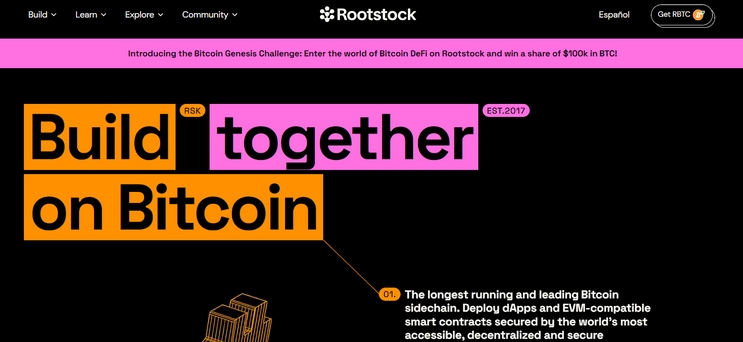
RSK is a sidechain that brings smart contract capabilities to Bitcoin. Using a two-way peg, it allows BTC to be converted into rBTC, which can then be utilized in various DeFi applications built on the RSK platform.
This integration enables functionalities such as lending, borrowing, and trading within the Bitcoin ecosystem.
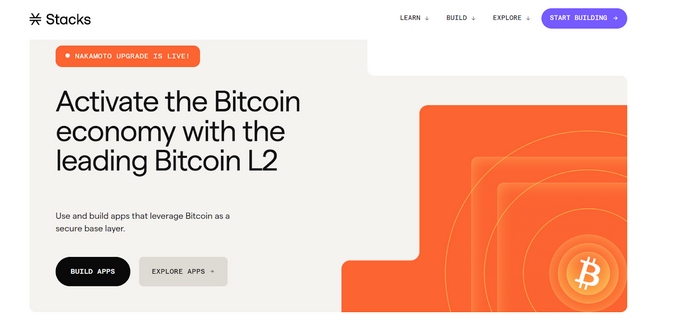
Stacks is a Layer 2 platform that introduces smart contracts and decentralized applications (dApps) to Bitcoin. It operates using a unique consensus mechanism called Proof of Transfer (PoX), which anchors Stacks' security to the Bitcoin blockchain.
This design allows developers to build complex applications while benefiting from Bitcoin's security and stability.
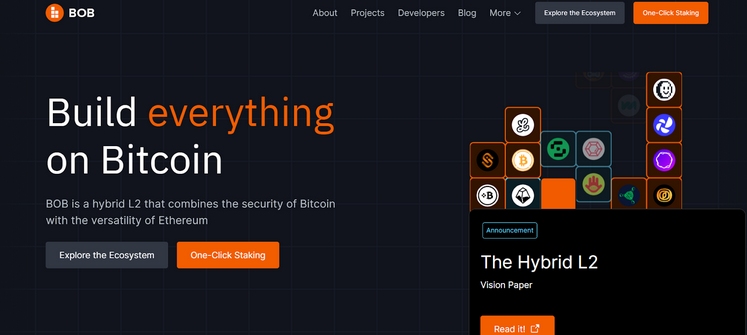
BOB is a hybrid layer-2 solution that combines the security of Bitcoin with the versatility of Ethereum. It allows developers familiar with the Ethereum Virtual Machine (EVM) to start building on Bitcoin immediately, utilizing best-in-class EVM tooling, wallets, analytics, and blockchain infrastructure.
BOB inherits security from Bitcoin's Proof of Work (PoW) consensus mechanism, contributing to Bitcoin's economy and providing usable decentralization for builders today. Additionally, BOB connects to both Bitcoin and Ethereum, sourcing liquidity from the two largest blockchain ecosystems and positioning itself as a leading solution for DeFi mass adoption.
The integration of DeFi into the Bitcoin ecosystem has led to the development of various applications that mirror traditional financial services.
Platforms like Sovryn, built on RSK and BoB, offer decentralized trading services where users can swap tokens directly from their wallets without relying on centralized exchanges. This model enhances security and reduces the risk of hacks associated with centralized platforms.
Bitcoin DeFi protocols such as ALEX on Stacks or Liquidium on the Bitcoin network enable users to lend their assets to earn interest or borrow against their holdings. These services operate without intermediaries, providing more favorable terms and greater accessibility to users worldwide.
Stablecoins pegged to fiat currencies are being introduced on Bitcoin's network through platforms like Sovryn's Sovryn Dollar (DLLR). These assets offer stability in value, making them suitable for everyday transactions and as a hedge against volatility.
Wallets designed for DeFi, such as the Xverse DeFi Wallet, OKX Wallet, and Leather, are gaining traction within the Bitcoin community. These wallets not only provide a secure way to store bitcoin but also integrate features like token swaps and access to DeFi applications on Layer 2 solutions. Their user-friendly interfaces make it easier for users to interact with the Bitcoin DeFi ecosystem.
The integration of DeFi into the Bitcoin ecosystem is still in its nascent stages but holds significant promise.
As technological advancements continue and Layer 2 solutions mature, Bitcoin's role in the DeFi space is expected to expand. This evolution could lead to a more inclusive financial system, leveraging Bitcoin's security and decentralization to offer a wide array of financial services to users globally.
The rise of DeFi on Bitcoin represents a pivotal development in the cryptocurrency landscape. By extending Bitcoin's functionality beyond a store of value to a platform for decentralized financial services, it opens new avenues for innovation and adoption.
 The National Crowdfunding & Fintech Association (NCFA Canada) is a financial innovation ecosystem that provides education, market intelligence, industry stewardship, networking and funding opportunities and services to thousands of community members and works closely with industry, government, partners and affiliates to create a vibrant and innovative fintech and funding industry in Canada. Decentralized and distributed, NCFA is engaged with global stakeholders and helps incubate projects and investment in fintech, alternative finance, crowdfunding, peer-to-peer finance, payments, digital assets and tokens, artificial intelligence, blockchain, cryptocurrency, regtech, and insurtech sectors. Join Canada's Fintech & Funding Community today FREE! Or become a contributing member and get perks. For more information, please visit: www.ncfacanada.org
 |  |  |
|---|---|---|
 |  |  |
Crypto Policy | Nov 21, 2024

Image: Freepik/pvproductions
President-elect Donald Trump and his administration are gearing up for key leadership changes to drive innovation policy in the world's largest economy. This includes everything from appointing a new crypto-savvy SEC Chair to a new White House 'crypto czar' and the idea of a U.S sovereign wealth fund backed by digital assets. These policy changes will have ripple effects beyond American boarders. Canada needs to rethink its own strategies to remain competitive.
It's no secret that the current SEC Chair, Gary Gensler, is considering stepping down after a controversial three and a half years in the post. Reports are saying that Gensler will leave before the end of his term, as early as after U.S. thanksgiving. So with that out of the way, the race to a new SEC Chair is heating up and according to prediction market Kalshi, as of today, the top 3 leading candidates and their odds are:
The winner will redefine how the SEC approaches crypto policy potentially transitioning from what can only be called aggressive enforcement to a more collaborative approach that also benefits industry. This is one to watch however, thinking back to Gensler's appointment, the crypto industry thought he might be a positive influence on crypto given that he taught a crypto course at MIT Sloan's School of Management and understood blockchain and was also considered more progressive than his peers at the time.
Also, Trump's team is considering the creation of a White House crypto advisor position. This 'crypto czar' would act as point on federal policies related to digital assets and help bridge gaps between regulators, policymakers, and industry to help centralize decision making and establish a more transparent path for cyypto innovation in the U.S.
The CEO of Coinbase, Brian Armstrong, suggested that given America's $35 trillion dollar massive debt, the U.S. should diversify revenue sources and create a sovereign wealth fund and that crypto revenue generated would be distributed as dividends directly to every day Americans saying on X, "Every citizen then has skin in the game. Maybe Congress gets a slightly larger stake".
The idea has sparked a lively debate. Supporters like Cathie Wood of Ark Invest believes that the idea is transformative and could boost economic freedom and support long term growth. Skeptics on the other hand like Economist Peter Morici highlight the challenges saying it could work but it would require a clear source of funding and national consensus on long term objectives.
These U.S. crypto manoeuvres will only have a positive impact on crypto given how drastic the current situation is with Gensler at the helm who preferred to regulate by enforcement rather than establish a clear framework for crypto.
With the U.S. making innovative and bold moves in Crypto, the pressure is heating up for Canada to do the same to remain competitive, or risk falling behind. A friendlier crypto market in the U.S. with a clear regulatory framework could attract top Canadian crypto innovators to leave South.
Varying rules north and south of the border will create friction for companies looking to operate in both Canada and the U.S. if rules are different. There's an opportunity for Canada to align with the U.S. on fintech policies which would strengthen North American competitiveness as well.
As the U.S. is guns a blazing in crypto policy with leadership changes and bold initiatives that could significantly transform industry, Canada needs to adapt quickly to remain competitive or risk falling behind as the U.S. tries to establish itself as a global leader in blockchain innovation.
The National Crowdfunding & Fintech Association (NCFA Canada) is a financial innovation ecosystem that provides education, market intelligence, industry stewardship, networking and funding opportunities and services to thousands of community members and works closely with industry, government, partners and affiliates to create a vibrant and innovative fintech and funding industry in Canada. Decentralized and distributed, NCFA is engaged with global stakeholders and helps incubate projects and investment in fintech, alternative finance, crowdfunding, peer-to-peer finance, payments, digital assets and tokens, artificial intelligence, blockchain, cryptocurrency, regtech, and insurtech sectors. Join Canada's Fintech & Funding Community today FREE! Or become a contributing member and get perks. For more information, please visit: www.ncfacanada.org
| | |
|---|---|---|
| | |
AI and Tech Regulation | Nov 18, 2024

Image: Freepik/pikisuperstar
On Sept 17, 2024, the Governor of California, Gavin Newsom introduced the Defending Democracy from Deepfake Deception Act of 2024 (otherwise known as Assembly Bill 2655). It's a new law aimed at curbing the growing issue of AI-generated deepfakes, especially those that could mislead voters during elections. The law requires platforms like X (formerly Twitter) to either label or remove deceptive content related to elections.
Then on October 3, 2024, a federal judge granted a preliminary injunction which temporarily blocked the enforcement of AB 2655 based on concerns that the law might infringe upon First Amendment rights by potentially suppressing free speech.
Then last Thursday, Nov 14, 2024, Elon Musk's X has filed a lawsuit in Sacramento against the legislation arguing that it infringes on free speech rights protected by the First Amendment. X's legal challenge highlights the ongoing conflict between maintaining freedom of expression versus curbing the misuse of deepfakes that erode trust in institutions and manipulate public opinion.
"[The law] will inevitably result in the censorship of wide swaths of valuable political speech and commentary and will limit the type of 'uninhibited, robust, and wide-open' debate on public issues that core First Amendment protections are designed to ensure."
Rob Bonta, California Attorney General said last Friday:
"The California Department of Justice has been and will continue to vigorously defend AB 2655 in court, which aims to combat deepfake election content."
This case is a key test for how governments and tech companies handle the rising influence of AI while protecting basic rights.
The decision will have significant impact into how technology is regulated from an election misinformation standpoint to broader AI abuses. For Canada and other countries, it provides valuable lessons on the need create laws that balance innovation, ethics, and public trust.
The lawsuit isn't just about California but it's a global conversation on how societies will balance freedom and accountability in the digital age. As AI technology evolves at a dizzying pace, societies must answer tough questions about who holds power in the digital world and how to ensure that power is used responsibly.
The National Crowdfunding & Fintech Association (NCFA Canada) is a financial innovation ecosystem that provides education, market intelligence, industry stewardship, networking and funding opportunities and services to thousands of community members and works closely with industry, government, partners and affiliates to create a vibrant and innovative fintech and funding industry in Canada. Decentralized and distributed, NCFA is engaged with global stakeholders and helps incubate projects and investment in fintech, alternative finance, crowdfunding, peer-to-peer finance, payments, digital assets and tokens, artificial intelligence, blockchain, cryptocurrency, regtech, and insurtech sectors. Join Canada's Fintech & Funding Community today FREE! Or become a contributing member and get perks. For more information, please visit: www.ncfacanada.org
| | |
|---|---|---|
| | |
DeFi | Nov 15, 2024

Image: Freepik
DeFi Technologies Inc., a Canadian player in the world of decentralized finance (DeFi) continues its plans to have its shares traded on the Nasdaq Stock Market while confirming solid Q3 financial results in a press release update on November 14, 2024.
The company filed a registration document known as Form 40 F to the U.S Securities and Exchange Commission (SEC) on September 16th in the year 2024. Once all necessary regulatory and listing approvals are finalized, the listing is anticipated to improve access and attract more global investors, cementing DeFi Technologies' role as a leading player in the digital asset sector.
This milestone is a big achievement for a Canadian fintech with potential to lead in the next wave of global financial innovation. With its debt-free status and future plans, DeFi Technologies is positioning itself to capitalize on the growing demand for decentralized finance solutions.
The National Crowdfunding & Fintech Association (NCFA Canada) is a financial innovation ecosystem that provides education, market intelligence, industry stewardship, networking and funding opportunities and services to thousands of community members and works closely with industry, government, partners and affiliates to create a vibrant and innovative fintech and funding industry in Canada. Decentralized and distributed, NCFA is engaged with global stakeholders and helps incubate projects and investment in fintech, alternative finance, crowdfunding, peer-to-peer finance, payments, digital assets and tokens, artificial intelligence, blockchain, cryptocurrency, regtech, and insurtech sectors. Join Canada's Fintech & Funding Community today FREE! Or become a contributing member and get perks. For more information, please visit: www.ncfacanada.org
| | |
|---|---|---|
| | |
Crypto | Nov 14, 2024

Image: Shayne Coplan CEO Polymarket (CNBC)
CNBC reported that the FBI raided 26 year old Shayne Coplan's New York apartment on Nov 13, CEO of prediction betting site Polymarket, seizing his phone and other devices. The FBI however did not publicly disclose any details or reasoning behind their investigation and no arrests or charges have been laid to date.
Polymarket is the world's largest crypto prediction market where users can gamble on real world events, such as political outcomes or financial trends. The crowd-sourced platform was thrust into mainstream media for accurately predicting Donald Trump's win over Vice President Kamala Harris in the U.S presidential election, which ran opposite to what most of the mainstream polls were predicting at the time, a Harris win.
Polymarket spokesperson's quote suggests that the raid was politically motivated but no evidence has surfaced to confirm these claims.
"obvious political retribution by the outgoing administration against Polymarket for providing a market that correctly called the 2024 presidential election."
Polymarket launched in 2022, allowing users to bet on future events in a decentralized model attracting many crypto fans. In the same year, the Commodity Futures Trading Commission (CFTC) fined Polymarket $1.4 million for operating without proper registration, which led to Polymarket restricting U.S. users from using its services.
The FBIs raid is happening just as attitudes towards crypto regulations in the U.S. seem to be evolving with many expecting regulators to ease up on decentralized finance platforms like Polymarket.
However this latest raid means that even in a pro-crypto climate, some activities in DeFi are still under tight scrutiny (at least until Trump's administration takes over early next year).
The National Crowdfunding & Fintech Association (NCFA Canada) is a financial innovation ecosystem that provides education, market intelligence, industry stewardship, networking and funding opportunities and services to thousands of community members and works closely with industry, government, partners and affiliates to create a vibrant and innovative fintech and funding industry in Canada. Decentralized and distributed, NCFA is engaged with global stakeholders and helps incubate projects and investment in fintech, alternative finance, crowdfunding, peer-to-peer finance, payments, digital assets and tokens, artificial intelligence, blockchain, cryptocurrency, regtech, and insurtech sectors. Join Canada's Fintech & Funding Community today FREE! Or become a contributing member and get perks. For more information, please visit: www.ncfacanada.org
| | |
|---|---|---|
| | |
Investing | Nov 7, 2024

Image courtesy of Freepik AI
Coinbase Ventures recently shared insights into how AI and blockchain are creating a new digital economy where autonomous AI agents operate on decentralized networks. This convergence of technologies leverages AI’s analytical power and blockchain’s transparent, secure infrastructure that are powering innovative applications across finance, data, and autonomous transactions. Mashed together they promise a future where AI agents can perform secure and independent actions that will change digital and economic interactions forever.
AI needs a lot of computing power to run complex models. Networks like Gensyn make this easier by letting people access extra GPU power, helping to cut costs and improve availability for AI tasks. "Machine intelligence will soon take over humanity’s role in knowledge-keeping and creation."
Data is the fuel for AI growth. Platforms like Vana allow secure data sharing (Data DAOs), giving AI systems the data they need while keeping user privacy protected.
Middleware makes it possible to securely deploy and manage AI models on a decentralized network. Nous is an example of a company working on helping AI run independently on blockchain systems.
Applications are the tools that users interact with directly, showcasing what AI and blockchain can do together. Examples include Taoshi for AI-driven trading and Worldcoin for decentralized identity.
Platforms like Akash for computing power and Ocean Protocol for data access are helping to make AI tools more accessible and affordable. By focusing on this kind of infrastructure, you’re investing in the core building blocks and resources that will support many future AI applications long term.
The “Agentic Web” is an emerging concept where AI agents handle transactions, manage assets, and complete tasks autonomously (all on their own). These agents are likely to use the latest crypto payment rails that are flexible and low cost.
Coinbase Wallet is specifically designed for these AI agents that will operate/manage/pay/transact in their own digital economies. AI agents are bound to play a big role in decentralized networks.
Generative AI is making it easier for people to use blockchain, such as creating smart contracts from a simple request. Companies like Replit are leading in this area, letting users type requests in everyday language, which the AI then turns into code that can be executed on the blockchain. Investing in generative AI for blockchain will help makes blockchain accessible to everyone (not just tech experts), and in doing so people will create a wide range of new use cases and value.
Tokenization allows investors to own small portions of an asset that benefit from blockchain's liquidity and trading without needing a large upfront investment. Companies such as Prime Intellect for GPUs, or Masa for Data are a couple of examples.
The convergence of AI and blockchain is is a gateway to new, accessible, and intelligent digital economies where independent agents are transforming how people and businesses interact with the digital world. These are the building blocks of tomorrow's digital society (and just the beginning) as the possibilities are soon no longer limited to merely human imaginations.
The National Crowdfunding & Fintech Association (NCFA Canada) is a financial innovation ecosystem that provides education, market intelligence, industry stewardship, networking and funding opportunities and services to thousands of community members and works closely with industry, government, partners and affiliates to create a vibrant and innovative fintech and funding industry in Canada. Decentralized and distributed, NCFA is engaged with global stakeholders and helps incubate projects and investment in fintech, alternative finance, crowdfunding, peer-to-peer finance, payments, digital assets and tokens, artificial intelligence, blockchain, cryptocurrency, regtech, and insurtech sectors. Join Canada's Fintech & Funding Community today FREE! Or become a contributing member and get perks. For more information, please visit: www.ncfacanada.org
| | |
|---|---|---|
| | |
AI VC Fund | Oct 31, 2024

Image of DAOs.fun website
An AI run venture fund "ai16z" sparked a wave of excitement in the tech and crypto worlds following a shoutout from Marc Andreessen. The fund’s market cap surged to nearly $100 million before stabilizing at approx $25 million at the time of writing. Daos.fun blends AI with community input (read: DAO) where users can setup their own funds and invest alongside algorithmic guidance.
While Daos.fund seems like a type of blockchain- based, tokenized crowdfunding model, the ai16z fund highlights how AI and decentralized finance approaches can mash together to transform project based liquidity and fund management. More AI funds will no doubt emerge and their impact on traditional venture capital and crypto investing may grow. Of course, investors should research legalities of participating in such models and accept that these investments are very high risk.
The National Crowdfunding & Fintech Association (NCFA Canada) is a financial innovation ecosystem that provides education, market intelligence, industry stewardship, networking and funding opportunities and services to thousands of community members and works closely with industry, government, partners and affiliates to create a vibrant and innovative fintech and funding industry in Canada. Decentralized and distributed, NCFA is engaged with global stakeholders and helps incubate projects and investment in fintech, alternative finance, crowdfunding, peer-to-peer finance, payments, digital assets and tokens, artificial intelligence, blockchain, cryptocurrency, regtech, and insurtech sectors. Join Canada's Fintech & Funding Community today FREE! Or become a contributing member and get perks. For more information, please visit: www.ncfacanada.org
| | |
|---|---|---|
| | |


August 26th, 2025

January 4th, 2024

June 1st, 2021

September 9th, 2020

July 9th, 2018

January 3rd, 2018

September 25th, 2017

June 20th, 2017

May 10th, 2017

December 14th, 2016
