




Karsten Wenzlaff, Advisor
August 26th, 2025
Karsten Wenzlaff is a Crowdfunding and Fintech Expert from Germany. He is Secretary-General of Digit[...]


Crypto | December 9, 2025

Image generated by AI
On December 4 2025, MetaMask expanded its self custody wallet by adding Polymarket prediction access to over 30 million monthly active users, enabling instant reach and impact across a vast user base. MetaMask wants to serve as a financial gateway where users form views on news and markets while maintaining full control of their digital assets.
The company already expanded into derivatives through a partnership with Hyperliquid in early October, and aims to centralize trading, rewards and identity inside its self-custody interface. The company also confirmed plans to launch a token that will connect activity across features.
Polymarket brings user growth, event liquidity and cultural relevance into MetaMask.
Coincentral reported that Polymarket's October 2025 trading volume was $3.02 billion with 477,850 monthly active traders, and 38,270 Polymarket event markets were created the same month (quickly growing demand for detailed, news-driven event prediction markets.
This growth is paired with scrutiny. A Columbia University study found that about 25% of Polymarket’s historical trading volume may involve wash trading, with peak periods where nearly 60% of weekly trades in December 2024 showed characteristics of wash activity and clusters of about 43,000 wallets linked to suspected wash networks.
Polymarket’s growing institutional interest must be recognized. Intercontinental Exchange announced that it would invest up to $2 billion in Polymarket at an $8 billion valuation and distribute its data through the ICE ecosystem. This deal places prediction markets inside the realms of one of the most established global financial groups, and likely why MetMask chose Polymarket.
Prediction markets still remain one of the more fragmented regulatory categories in global finance. Polymarket’s regulatory pathway in the United States shows how quickly oversight can move from pressure to approval. In 2022, the Commodity Futures Trading Commission (CFTC) fined Polymarket $1.4 million for operating without proper registration and required it to block US users.
In November 2024, NCFA reported that federal agents searched the New York home of Polymarket chief executive Shayne Coplan and seized his phone and other devices after an election prediction market drew national attention. The company described the event as politically motivated, though no public evidence confirmed that claim.
In mid-2025, Polymarket acquired QCEX for $112 million, a CFTC regulated and licensed derivatives exchange, seeking approval to relaunch in the US. Soon after the deal closed, the CFTC issued a no action letter that relaxed several reporting and recordkeeping requirements tied to event contracts. Together, these steps cleared the way for Polymarket to return to the US market for the first time in three years.
Ontario regulators ruled that Polymarket’s earlier model offered short-maturity binary options to Ontario users in breach of the province’s ban, outlined in the OSC’s settlement with Polymarket, and formalized through the tribunal’s decision approving the enforcement agreement.
Across Europe, the sector sees similar barriers. Belgium added Polymarket to its blacklist as an illegal gambling service. Romania blocked access to Polymarket over election betting after a surge in election markets. Poland placed Polymarket.com on its register of illegal gambling domains.
For MetaMask, it means that access to its prediction markets is still limited in some regions.
Instead of sending users to third-party apps, MetaMask is funnelling activity inward and rewarding it, as a competitive advantage. Certainly interesting to see a self-custody platform evolve to become a wider financial interface. Investors should watch the competitive race between Kalshi and Polymarket. A rivalry that will influence pricing efficiency, liquidity and retail adoption, especially as MetaMask becomes a distribution channel.
The Columbia study and the OSC decisions show increasing scrutiny. As these markets move inside mainstream wallets, regulators may demand new disclosures, limits and reporting standards. Policymakers will need to address how prediction markets intersect gambling laws, derivatives rules and securities oversight.
 The National Crowdfunding & Fintech Association (NCFA Canada) is a financial innovation ecosystem that provides education, market intelligence, industry stewardship, networking and funding opportunities and services to thousands of community members and works closely with industry, government, partners and affiliates to create a vibrant and innovative fintech and funding industry in Canada. Decentralized and distributed, NCFA is engaged with global stakeholders and helps incubate projects and investment in fintech, alternative finance, crowdfunding, peer-to-peer finance, payments, digital assets and tokens, artificial intelligence, blockchain, cryptocurrency, regtech, and insurtech sectors. Join Canada's Fintech & Funding Community today FREE! Or become a contributing member and get perks. For more information, please visit: www.ncfacanada.org
 |  |  |
|---|---|---|
 |  |  |
Crypto | December 4, 2025

On December 4 2025, Tokenwell Platforms Inc announced an expanded partnership with Talos to develop a proprietary crypto basket using the Coin Metrics Multi Asset Series Methodology, which uses clear data rules to help the basket protect value and adjust to different market conditions. It uses trends, price ranges and strength signals to guide monthly updates and remove guesswork from how the basket changes over time. The strategy is in development and the company expects to complete backtesting in January 2026 before releasing the basket on its platform in the first quarter of 2026.
Tokenwell Platforms Inc (TWEL) trades on the Canadian Securities Exchange and focuses on diversified crypto baskets built from institutional data while keeping all assets in user exchange accounts in a non-custodial structure, as outlined on its investor overview page.
In August 2025, Trilogy AI Corp acquired WealthAgile Inc, which appears in the fundamental change listing statement. That filing describes WealthAgile as a financial technology business focused on structured cryptocurrency investing. After completing the acquisition, Trilogy changed its name to Tokenwell Platforms Inc and advanced a platform built around data-driven portfolio tools for retail investors.
Tokenwell uses the Talos Coin Metrics platform to design a new crypto basket that uses a rules-based model that updates monthly and follows clear technical criteria supported by institutional data.
The company laid the foundation for this approach in July 2025 when it licensed Coin Metrics data to build benchmarking tools and index models which led to the CMBI 10 Even basket (CMBI10e). Users can already access the CMBI10E and CoinDesk 20 baskets inside the Tokenwell app.
Then Talos acquired Coin Metrics and Tokenwell gained a unified data environment that now supports the development of its proprietary strategy.
In September 2025, Tokenwell announced the launch of its retail crypto investing app in the United States that connects users to structured crypto baskets without taking custody of assets. Users invest through existing Coinbase or Crypto.com accounts while the Tokenwell app provides the portfolio layer.
In October 2025, Tokenwell announced its first major exchange partnership with Crypto.com who integrated its platform so investors could access and trade Tokenwell's crypto baskets.
The leadership team also expanded earlier in the year, adding Abraham Theodore NDAX's former Head of Product (COO), Darryl Irwin (accounting/tax expertise), and Matthew Lee Morgan as strategic advisor to help scale.
2025's been a big year for Tokenwell, including structured platform development, fundamental change transaction, a corporate rebrand, leadership expansion, a United States app launch, exchange infrastructure integration and multiple index baskets designed with Coin Metrics and CoinDesk Indices. The Talos partnership now anchors the next growth phase of Tokenwell’s product strategy with a proprietary institutional model designed for retail access.
The National Crowdfunding & Fintech Association (NCFA Canada) is a financial innovation ecosystem that provides education, market intelligence, industry stewardship, networking and funding opportunities and services to thousands of community members and works closely with industry, government, partners and affiliates to create a vibrant and innovative fintech and funding industry in Canada. Decentralized and distributed, NCFA is engaged with global stakeholders and helps incubate projects and investment in fintech, alternative finance, crowdfunding, peer-to-peer finance, payments, digital assets and tokens, artificial intelligence, blockchain, cryptocurrency, regtech, and insurtech sectors. Join Canada's Fintech & Funding Community today FREE! Or become a contributing member and get perks. For more information, please visit: www.ncfacanada.org
| | |
|---|---|---|
| | |
Tokenization | December 3, 2025

Image: Freepik AI
Tokenized infrastructure now appears across everyday financial activity. Shared digital ledgers record ownership directly, and real assets move into programmable formats that speed up settlement, improve transparency and open access to private markets. Growth comes from regulated markets, global banks and high-growth regions that use tokenized systems to remove friction in payments, trading and recordkeeping.
Larry Fink and Rob Goldstein, CEO and COO of BlackRock (world’s largest asset manager) in a December 1, 2025 Economist article describe tokenization as a major upgrade to financial infrastructure:
“Ledgers haven’t been this exciting since the invention of double-entry bookkeeping.”
Some of the largest and most established financial institutions already operate tokenized products in regulated environments. BlackRock issues a tokenized money market fund through BUIDL, which operates on chain and holds short-term U.S. dollar assets under a regulated structure see its 2024 launch announcement. JPMorgan runs ledger-based settlement and tokenized collateral through its Kinexys platform, formerly Onyx. UBS offers tokenized money market funds and structured products under Switzerland’s DLT Act. Franklin Templeton records shareholder ownership on chain and processes fund transactions through a blockchain-integrated fund model.
Swift reinforces this transition with real evidence. In 2023 it demonstrated that its messages can trigger tokenized transfers across public and private blockchains, confirming that banks can keep their existing workflows while settlement moves on chain. Chainlink extended these findings in Sept 2025, outlining a model where tokenized transfers move across ledgers under the same compliance controls institutions already trust.
The United Kingdom now moves beyond sandbox testing and supports full scale tokenization in asset management. In October 2025 the Financial Conduct Authority published a policy update, explaining how tokenisation can cut fund costs and widen access. The FCA also launched a consultation, setting out a roadmap for tokenised fund registers and direct to fund dealing. The FCA frames tokenization as a way to modernize asset management by placing fund units and ownership records on distributed ledgers while keeping regulatory safeguards intact.
Perhaps, the strongest progress now emerges outside the West (think adoption, usage, and real economic integration). The 2025 Chainalysis Global Adoption Index demonstrates this change clearly. Its findings, highlighting leading adoption across Asia and Africa, show that Vietnam, the Philippines, India, Nigeria and Brazil all rank near the top because tokenized value moves faster and more affordably than legacy payment and settlement networks.
Regional hubs are also accelerating. A comparative review identifies Singapore and the UAE as top jurisdictions for tokenized real assets, noting that these markets scale quickly because regulators provide clear rules for tokenized cash, tokenized securities and digital registers. Where legacy constraints are lighter, adoption appears faster because the benefits materialize immediately in cross border flows, settlement and access to private assets.
In many Western financial centers, integration efforts are underway where regulations permit tokenized assets or tokenized cash to operate alongside legacy market plumbing. Liquidity follows the rails that deliver speed, safety and operational clarity.
Tokenization includes multiple assets and falls into three clear categories:
1. Tokenized cash puts digital forms of money on chain. This includes fully backed stablecoins, tokenized deposits and other types of tokenized bank money. Tokenized cash works as a settlement asset on digital ledgers. It supports instant transfers, moves easily across platforms and connects with tokenized securities and tokenized real world assets.
2. Tokenized securities are financial instruments such as bonds, funds, money market assets and equity interests that are issued or recorded on chain. They follow securities law and must meet rules for custody, disclosure and investor protection. Germany, Switzerland, the United Kingdom and the European Union all have frameworks that give these instruments a legally recognized place on digital registers.
3. Tokenized real world assets take off-chain assets and represent their ownership on chain. Examples include private credit, real estate, infrastructure assets, receivables, trade claims, commodities and revenue rights. The asset itself stays off chain, while the legal claim moves on chain, making ownership easier to transfer and manage.
Tokenized cash strengthens settlement. Tokenized securities support modern regulated markets. Tokenized real world assets open access to large pools of private value. Together they form one connected system that links established institutions with modern digital first platforms.
Tokenized markets are expanding because real assets are now moving into these structures. In 2025 the strongest growth appears in United States Treasuries. A detailed review shows that tokenized Treasuries reached about $7.3B in 2025, an increase of more than 250% from 2024. These instruments deliver safe yield in a programmable, globally portable form that fits into digital collateral systems.
Coindesk reported on BlackRock’s USD Institutional Digital Liquidity Fund (BUIDL), driving much of this expansion. Messari later confirmed that BUIDL reached about $1.92B by April 2025, and Yahoo Finance reported that BUIDL passed $2.9B by mid 2025. By late 2025, the Economic Times noted that Binance accepted BUIDL as off exchange collateral.
These cases show tokenized assets working inside regulated markets. They move as collateral, pay interest automatically and settle quickly, and are demonstrating how programmable ownership can support large scale products.
A study by BCG and ADDX estimates that tokenized assets could reach $16T by 2030, while a McKinsey review projects a range of $1T to $4T by the same date. Even the low case would impact global capital formation.
NCFA has tracked similar patterns in its work on digital money, real-time tokenized payments, and competition where tokenized rails extend these forces into the full stack of asset classes.
Tokenization only scales when regulators give it a clear place in existing financial law. Some jurisdictions now recognize digital ledger records as valid securities registers and allow tokenized bonds, funds or equity to operate inside their capital market systems. Others focus on tokenized cash and stable, regulated settlement assets that let digital transactions clear instantly. A few support both sides, combining securities rules with prudential oversight for tokenized money.
The table below reflects these differences. It separates regimes that permit tokenized securities from regimes that regulate tokenized cash, and highlights markets that support both layers. Together these components form the legal base for tokenized assets across cash, securities and real-world assets (RWA).
| Jurisdiction | Framework | What It Allows | Role In Tokenization |
|---|---|---|---|
| European Union | DLT Pilot Regime for tokenized securities MiCA rules governing tokenized cash |
Permission to issue, trade and settle financial instruments on DLT. MiCA governs crypto assets and fully backed stablecoins as tokenized cash. | Combines legal clarity for tokenized securities with rules for tokenized cash so markets can test full stack tokenization. |
| Germany | eWpG electronic securities law for DLT-based securities BaFin regulation for crypto-securities registers and trading infrastructure |
Civil law recognition for securities issued and recorded on electronic or DLT registers; legal foundation for tokenized bonds, fund units and digital securities; regulated register-keeping and custody. | Provides a comprehensive legal and regulatory framework for digital securities in Germany’s capital markets, enabling institutional issuance, trading and custody under DLT infrastructure. |
| Switzerland | Swiss DLT Act enabling ledger-based securities FINMA regulation for DLT trading venues and digital-asset infrastructure |
Legal framework for issuance, transfer and trading of DLT Securities (shares, bonds, structured products); authorized DLT trading venues under financial-market legislation; statutory recognition of ledger-based securities as book entry instruments. | Provides robust, tech neutral statutory clarity for institutional tokenized securities, regulated trading venues and digital asset infrastructure, making Switzerland a leading global hub for blockchain-based capital markets. |
| United Kingdom | Digital Securities Sandbox for tokenized securities FCA 2025 tokenisation policy for funds and asset management FCA CP25/28 roadmap for tokenised fund registers and direct to fund dealing |
Regulated issuance, trading and settlement of tokenized securities, plus a parallel program for tokenized funds, tokenized registers and modern fund dealing models. | Builds tokenization across securities markets and asset management, making the UK one of the first jurisdictions to support fund tokenization at scale. |
| UAE / Abu Dhabi (ADGM) | ADGM DLT Foundations framework ADGM Digital Assets regulation for tokenized securities & virtual assets FSRA amendments 2025 updating digital asset rules 2025 proposal for fiat-referenced token framework |
Legal basis for DLT entities, exchange of digital securities, token issuance, custody and trading under Digital Asset regulation; updated rules for virtual asset firms and a proposed framework for fiat referenced tokens. | Offers one of MENA’s most comprehensive tokenization regimes: supports security-token issuance and custody today, and paves the way for regulated stablecoins or fiat-referenced tokens, enabling full-stack tokenized markets. |
| Hong Kong SAR | Stablecoin Issuance Ordinance for tokenized cash SFC 2023 circulars for tokenised securities and authorised investment products HKMA-Government first tokenised green bond issuance (2023) |
Regulated fiat-backed stablecoins, tokenized securities offerings under SFC rules, tokenized funds and government issued tokenized bonds under HKMA structures. | Combines tokenized cash, tokenized securities and real-world-asset tokenization under a live legal and regulatory regime, including sovereign bond issuance on chain and SFC supervized fund / securities token structures. |
| Singapore | MAS stablecoin framework governing tokenized cash MAS Project Guardian initiative expanding asset tokenization |
Regulation for fully-backed, single currency stablecoins licensed under MAS; plus a regulated pathway for tokenized funds, bonds and other securities under Project Guardian. | Establishes tokenized cash rails and builds institutional frameworks for tokenized securities and real world assets, positioning Singapore as a key hub for digital capital markets in Asia. |
| United States | NYDFS 2022 guidance for U.S. dollar–backed stablecoins SEC 2025 public statement on tokenized securities regulation |
State-supervised stablecoin issuance (fully backed, redeemable USD stablecoins under NYDFS); tokenized securities treated under traditional federal securities law when issued. | Provides a defined path for tokenized cash via regulated stablecoins and maintains that tokenized securities remain subject to full securities compliance, offering partial rails but without a unified national tokenization regime. |
Canada has made early strides toward regulating digital assets but the essential foundations for tokenized markets are still incomplete. The first draft of Canada's Stablecoin Act arrived in November 2025 via PM Carney's Budget 2025 along with Open Banking and payment modernization advancements. The Stablecoin proposal sets reserve, custody and redemption requirements for issuers and would place activity under federal oversight. It is only a draft, but it is the clearest signal that regulated tokenized cash will eventually have a place in the financial system.
Canada is also upgrading its payments infrastructure. NCFA's recent coverage of Canada’s payments innovation work, details progress on the Real-Time Rail, modernized oversight and stronger support for digital payments. The Real-Time Rail is not yet live and is expected after 2026. Until it launches, Canadian markets continue to operate on batch-based systems that limit the speed and precision needed for modern settlement, including tokenized transactions.
Canada still needs to complete several steps before tokenized markets can operate across the financial system. These include finalizing the stablecoin legislation, recognizing digital ledger registers as legally authoritative records for securities and delivering real-time settlement that works across institutions. A secure digital identity standard that functions across ledgers would also help investors and regulated firms meet KYC and AML requirements without slowing transactions.
Canada has the institutions and regulatory credibility to play a meaningful role in tokenized finance. To get there, the country must successfully and expeditiously execute its early policy work into a complete and operational model that supports lawful issuance, settlement and use of digital assets.
Tokenization is here. Real products, regulated structures and live institutional use show how digital ledgers can cut out delays, reduce operating drag and open access to assets that rarely moved with this level of precision. When tokenized cash, tokenized securities and tokenized real-world assets run on the same digital foundation, the market gains faster settlement, clearer ownership and a simpler path for new products to reach investors. Numerous of countries are setting benchmarks with legal clarity, real time payments, and digital ledger recognition. Canada has the institutional strength to be in that group but only if it finishes the work already underway. Those that act early will define how capital moves, how assets are built and who leads the next era of financial markets.
The National Crowdfunding & Fintech Association (NCFA Canada) is a financial innovation ecosystem that provides education, market intelligence, industry stewardship, networking and funding opportunities and services to thousands of community members and works closely with industry, government, partners and affiliates to create a vibrant and innovative fintech and funding industry in Canada. Decentralized and distributed, NCFA is engaged with global stakeholders and helps incubate projects and investment in fintech, alternative finance, crowdfunding, peer-to-peer finance, payments, digital assets and tokens, artificial intelligence, blockchain, cryptocurrency, regtech, and insurtech sectors. Join Canada's Fintech & Funding Community today FREE! Or become a contributing member and get perks. For more information, please visit: www.ncfacanada.org
| | |
|---|---|---|
| | |
Crypto Mining | Dec 1, 2025
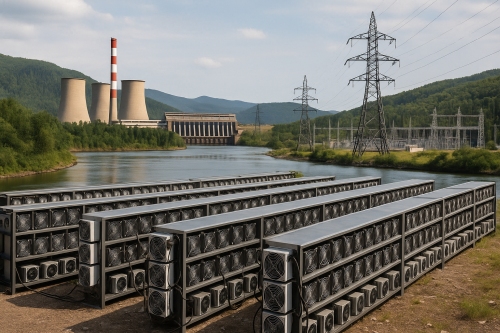
AI generated image
On November 28 2025, the Financial Post reported that the Newfoundland and Labrador Court of Appeal issued a ruling involving Blockchain Labrador Corporation (BLC) that confirmed NL Hydro can limit firm electricity service for new crypto mining operations.
BLC originally applied for 20 megawatts of guaranteed power service for a site in Wabush but NL Hydro declined to commit to that level because it needed to protect capacity for industrial, household and export priorities. Instead, NL Hydro will supply 7.75 megawatts to the company on an interim basis.
The ruling outcome confirms that NL Hydro has set boundaries on clean electricity when new digital workloads (ie. crypto mining, AI processing) add pressure to a constrained system.
Canada was once a notable player in global Bitcoin mining with national activity reaching close to 10% of global hashrate in 2021 but it's participation has since declined. Hashrate Index estimated that Canada held about 4% to 5% of global hashrate in their 2023 Canadian mining review, and then in a recent Q4 2025 global hashrate heatmap update benchmarked the country near 2.9%.
Canada's reduced footprint reflects a sector now concentrated in a few established companies. This smaller group of operators (see below and note, not exhaustive) also gives provinces more room to manage clean electricity across many competing needs.
Several provinces with hydro based systems have taken steps to manage electricity access for mining and other high demand digital activities.
British Columbia's clean electricity announcement enabled restrictions on new mining connections. The province later confirmed a permanent limit in the 2025 energy release, and the Court of Appeal supported provincial authority to set these boundaries in the Conifex ruling summary.
Manitoba adopted a pause on new mining activity when the utility raised concerns about the scale of new load requests. The province issued this direction in the 2022 guidance on electricity connections and extended the pause through 2026 in the 2024 directive on cryptocurrency operations.
New Brunswick took a more restrictive position. The provincial Electricity Act prevents a distribution utility from extending electricity to a new crypto mining business, which appears in the current consolidation of the Act and adopted through Bill 10.
Quebec continues to serve existing projects but limits new load and uses a dedicated rate class for this sector. A review commissioned by Hydro Québec found that mining produces fewer jobs for each megawatt consumed compared to data centres and industrial users, which encouraged ongoing limits.
Alberta remains an outlier, operating a deregulated, competitive market for electricity that allows mining companies and compute operators to negotiate directly for supply, supported by broader generation options.
Global research from the Cambridge Centre for Alternative Finance (CCAF) offers insight into energy use for digital mining. Cambridge estimates that Bitcoin mining draws about one hundred thirty eight terawatt hours of electricity per year, as described in CCAF's update on sustainable energy use and detailed further in a Cambridge digital mining report.
The research shows that more than half of global mining electricity comes from sustainable sources such as hydropower, wind and nuclear.
Low cost clean electricity attracts miners, data centres, industrial electrification and long term export contracts. Provinces build policies that protect available capacity for the users that advance their long term economic priorities.
Crypto mining can contribute value when it aligns with provincial priorities but utilities now apply stronger criteria when making decisions about supplying consistent clean energy.
The ruling involving Blockchain Labrador Corporation is an example of how a province evaluates new digital load against industrial development, household reliability and export duties. Informative for any Canadian fintech leaders following the developments in digital finance, compute infrastructure and national (global) ambitions for clean energy growth.
The National Crowdfunding & Fintech Association (NCFA Canada) is a financial innovation ecosystem that provides education, market intelligence, industry stewardship, networking and funding opportunities and services to thousands of community members and works closely with industry, government, partners and affiliates to create a vibrant and innovative fintech and funding industry in Canada. Decentralized and distributed, NCFA is engaged with global stakeholders and helps incubate projects and investment in fintech, alternative finance, crowdfunding, peer-to-peer finance, payments, digital assets and tokens, artificial intelligence, blockchain, cryptocurrency, regtech, and insurtech sectors. Join Canada's Fintech & Funding Community today FREE! Or become a contributing member and get perks. For more information, please visit: www.ncfacanada.org
| | |
|---|---|---|
| | |
Stablecoins | Dec 1, 2025
On November 26 2025, Visa announced an expansion of stablecoin settlement across Central and Eastern Europe Middle East and Africa through a new partnership with Vancouver-based fintech, Aquanow. The integration gives issuers and acquirers on the Visa network the ability to settle transactions in approved stablecoins such as USDC and introduces a settlement rail that clears value faster at lower cost and with fewer operational steps than traditional systems that rely on closing hours and multi-party workflows.
Visa first used USDC for settlement in 2023 and now records an annualized settlement volume above $2.5 billion proving that institutions are already incorporating stablecoin settlement in daily operations, moving transaction flow across markets and supporting teams that seek real-time settlement, instead of fixed windows.
Aquanow supports Visa's stablecoin expansion with digital asset infrastructure that processes billions of dollars in monthly activity. The company works with banks neobanks brokerages and payment firms, reporting a four year revenue growth rate of 3022%, earning it multi-year recognition as the 8th best Deloitte Technology Fast 50 top companies in 2024.
Many institutions still work around systems that close on weekends, rely on several intermediaries, and delay the release of funds. These delays hold capital in transit and create uncertainty for teams that manage liquidity each day. Visa and Aquanow address this gap by offering a rail that runs at all hours and clears transactions faster than older cross border settlement paths.
This model reduces operational drag and gives financial institutions, banks and credit unions a clearer view of cash position in markets with uneven settlement conditions.
This supports services that rely on dependable settlement such as global ecommerce platforms marketplace payouts and remittance flows.
Aquanow launched in Vancouver, Canada and built a global digital asset platform that now powers part of Visa’s settlement expansion. The company maintains a publicly stated money services business registration with FINTRAC on its own website and operates a regulated entity in the United Arab Emirates through Aquanow ME FZE. The UAE entity received approval from the Virtual Assets Regulatory Authority for broker-dealer services, lending and borrowing, and management and investment services.
This structure shows how a Canadian born fintech can scale global settlement infrastructure by operating in markets that provide clear digital asset licensing. It's another great example of the capability of Canadian firms to contribute to global payment modernization, delivering digital settlement capacity within a regulated international environment. It also provides policymakers a reference point for how digital settlement can operate at production scale within clear regulatory frameworks.
Visa's stablecoin settlement expansion across CEMEA, in partnership with Canadian fintech Aquanow, sets a new expectation for settlement speed and efficiency. Companies and institutions want faster movement of value, lower cost, and better control over liquidity. Digital asset rails deliver these results in ways legacy systems struggle to match. This partnership offers a clear example of modern settlement infrastructure that supports live cross border operations and works inside a regulated environment at scale.
The National Crowdfunding & Fintech Association (NCFA Canada) is a financial innovation ecosystem that provides education, market intelligence, industry stewardship, networking and funding opportunities and services to thousands of community members and works closely with industry, government, partners and affiliates to create a vibrant and innovative fintech and funding industry in Canada. Decentralized and distributed, NCFA is engaged with global stakeholders and helps incubate projects and investment in fintech, alternative finance, crowdfunding, peer-to-peer finance, payments, digital assets and tokens, artificial intelligence, blockchain, cryptocurrency, regtech, and insurtech sectors. Join Canada's Fintech & Funding Community today FREE! Or become a contributing member and get perks. For more information, please visit: www.ncfacanada.org
| | |
|---|---|---|
| | |
Strategic Planning | Nov 28, 2025

Image: Freepik/rawpixel.com
2026 is approaching and fintechs are entering the new year with clear signals on how capital is being deployed, how financial institutions are investing in automation and AI driven capabilities and which policies will shape financial infrastructure. Markets place a higher premium on efficiency, governance and resilience as financial institutions modernize data access and digital settlement. Retail investor participation also expanded as equity crowdfunding set new records in Canada, strengthening another channel of capital formation.
United States tariffs and interest rate expectations continue to influence capital costs and enterprise demand across North America. Singapore FinTech Festival 2025 recently wrapped and outlined what global leaders expect over the next decade. This article provides an overview of how these forces intersect and will impact 2026 conditions, helping fintechs define runway, product plans and investor alignment for the year ahead.
Global investors concentrated capital into fewer fintech companies through 2025. KPMG tracked $44.7B across 2,216 global fintech deals and reported stronger momentum in digital assets and AI powered platforms. The global fintech funding review for 2025 notes uneven performance across payments and infrastructure and continued strength in digital asset investment. AI influence extends across every funding stage and drives the clearest premium in investor behaviour.
Canadian fintechs raised about $1.62B across 60 deals. KPMG data reported by Lexpert shows a steep decline from record 2024 levels as investors became more selective and disciplined. KPMG’s H1 2025 report confirms the trend toward fewer large cheques and more careful deployment.
CVCA reported $2.9B across 254 Canadian VC deals with average cheque sizes near $11.4M. The VC deployment across Canada in H1 2025 reported that early stages represented more than half of deal count but only 10% of dollars. NCFA’s seed review shows AI companies raising about $24M across 12 early stage rounds and fintech attracting about $9M across pre-seed and seed combined in the seed investing trends in H1 2025.
Canadian founders also turned to retail investors through regulated equity crowdfunding channels. FrontFundr, a leading Canadian investment crowdfunding platform, enjoyed a banner year raising CAD $68.3M across 66 campaigns in 2024 with 4,226 individual investments, its strongest year on record. This growth in community capital raising speaks volumes that diversified sources of early stage capital can complement VC allocations during selective cycles. For fintechs, retail participation can help extend runway, validate demand and reduce dependence on a small number of institutional investors.
AI remains the strongest source of valuation strength across the fintech sector. NCFA’s analysis shows that AI fintechs attract a 242 valuation premium compared with non AI peers. This tells fintechs that investors reward automation, accuracy and data advantage even during slower deployment cycles. AI's impact will continue to drive product development strategy, unit economics and growth planning for 2026.
Open banking moves into implementation. Budget 2025 commits to a consumer driven banking framework that designates the Bank of Canada as the supervisor for accredited participants and sets rules for data access, liability, security and technical standards. The consumer driven banking framework in Budget 2025 changes data mobility from one off arrangements to regulated data rails. These data rails also support AI adoption because models require secure access to high quality data. Fintechs that prepare for accredited access and safe data workflows will gain an advantage as institutions deploy AI into risk, compliance and customer operations.
Fintechs should expect accreditation activity, testing and early stage integrations as technical standards move toward production readiness through 2026.
Retail Payment supervision is operational and supports future access to real time settlement. Under the Retail Payment Activities Act, the Bank of Canada supervises payment service providers to ensure operational resilience and safeguarding of client funds. This oversight creates the regulatory foundation required for participation in core payment systems. Payments Canada continues development of the Real Time Rail (expected Q2 2026), while the Bank’s commentary on cashing in on payments innovation explains how regulation strengthens competition and prepares the foundation for modernized settlement. It also sets the operational standards that AI systems must meet for real time fraud detection, liquidity monitoring and compliance automation. Fintechs should plan for higher compliance expectations in 2026 and a clearer pathway into national payment systems once real time settlement becomes available.
Stablecoin regulation advances. Canada released the first draft of its federal stablecoin legislation which sets out rules for high quality reserves, custody, redemption, disclosures and prudential oversight. NCFA’s summary of the first draft of the Stablecoin Act outlines a government framework that brings fiat backed stablecoins into a supervised environment. As tokenized settlement expands, AI will move deeper into treasury, reconciliation, fraud control and settlement routing. Fintechs that design early AI enabled settlement workflows will operate more efficiently under these rules. Fintechs involved in digital money, cross border payments or tokenized settlement should expect stronger regulatory clarity across 2026.
Climate and sustainability disclosure remains paused. CSA halted its mandatory climate disclosure rule in April 2025 and signalled the pause will continue. Although the rule is on hold, enterprise buyers and investors still assess climate and transition risk data during diligence. The CSA climate disclosure update notes that existing materiality rules and OSFI Guideline B-15 still apply through 2026. AI plays a growing role in climate analytics and transition planning, which means fintechs that use AI for risk scoring and scenario work will offer enterprise buyers more actionable intelligence during diligence. Fintechs should assume voluntary disclosure is expected even without a formal mandate.
Competitiveness pressure remains. Bank of Canada leadership warns that slow progress on open data, payment modernization and digital infrastructure affects productivity and innovation. Reuters coverage of the warning on over regulation and competitiveness highlights the need to accelerate foundational reforms. AI impacts that competitiveness gap because institutions deploy AI into fraud detection, lending, treasury and customer workflows. Fintechs that use AI with strong governance will operate more efficiently, support regulated environments and scale faster when data access and payment rails modernize.
For fintechs, these signals point to regulated data access, modern payments and digital assets becoming the highest value infrastructure themes for 2026..
Fintechs operating in the North American economy are being impacted by United States tariffs, rate decisions and political volatility. United States imposed tariffs cut Canada’s projected GDP growth to about 1.4% in 2025 and 1.6% in 2026, according to IMF linked projections. These estimates reflect weaker demand and reduced investment appetite across export dependent sectors. Fintechs should treat tariffs as a structural constraint for 2026, not a short term shock.
Markets now expect the Federal Reserve to cut rates in December. Polymarket shows an 87% chance of a 25 point rate cut, based on more than $183M in trading volume, which reflects strong real time sentiment. Economists still expect only small rate cuts through 2026, with United States growth around 2% and inflation near 2.6%. Fintechs may receive some cost of capital relief but investors will continue to expect efficient spending, strong revenue performance and clear evidence of product viability at today’s cost structure.
Canadian monetary authorities modeled the tariff impact and warned that trade friction could reduce investment by about 12% and lower output by almost 3% over two years. The Bank’s scenario work on tariffs and structural change supports planning for lower investment and slower recovery.
Fintechs should prepare for slower enterprise procurement cycles and more selective purchasing behavior.
Global growth projections dropped to about 2.8% in 2025 as tariffs spread and trade tensions widened. Export Development Canada’s global economic outlook for 2025 and 2026 forecasts Canadian growth around 0.8% in 2025 and 1.1% in 2026. Fintechs should expect slower demand, higher operating costs and more uncertainty across key trading regions.
An MIT study released in 2025 shows that about 12% of United States jobs could be automated using current AI tools today. As AI pressure intensifies it drives enterprise demand for automation, cost control and compliance. It also accelerates talent scarcity and raises expectations for governance and model transparency across financial services.
Global regulatory fragmentation expands. The EU AI Act, United Kingdom digital regulation, Singapore AI governance frameworks and China data sovereignty rules all diverge. If fintechs want to scale internationally in 2026, they must build modular compliance, auditability and data governance into core architecture.
SFF 2025 provided a clear view into the next cycle of fintech infrastructure and the capabilities that institutions expect. The SFF 2025 blueprint for the next decade of finance placed AI, tokenized settlement, quantum readiness and talent at the centre of global financial transformation for the coming years.
AI moved into production across onboarding, monitoring, underwriting and support. Financial institutions showed mature applications that reduce fraud, improve accuracy and accelerate customer workflows. Tokenized finance advanced as central banks and major institutions tested tokenized settlement assets, wholesale CBDCs and regulated stablecoins. These experiments are clear move from demos towards infrastructure design.
Quantum readiness entered strategic planning as banks prepared for post quantum cryptography and assessed their high value data inventory.
Talent emerged as one of the most constrained resources, with strong demand for cybersecurity, data and AI capabilities.
2026 will reward fintechs that integrate AI into their core stack, design products that support tokenized workflows, build quantum safe readiness and hire for digital infrastructure skills that support resilience and scale.
| Canada Policy Shifts That Drive 2026 Strategy | ||
|---|---|---|
| Open Banking Readiness | Canada moves to regulated data rails with accreditation and Bank of Canada oversight. | Build accredited data access readiness now. This creates a major advantage when banks and credit unions adopt regulated data sharing in 2026 and gives fintechs a lead when institutional partners demand safe integration. |
| Payment Supervision Alignment | Retail Payment Activities Act supervision is active and PSPs prepare for Real Time Rail participation. | Raise operational standards to meet supervision requirements. This clears the path for Real Time Rail access when available and strengthens partnership credibility with banks that expect higher resilience from PSPs. |
| Stablecoin Compliance Design | Canada released the first draft of the Stablecoin Act with rules for reserves, custody and redemption. | Design compliance into digital money products now. This avoids costly retrofits when rules finalize and positions fintechs for early participation in tokenized settlement experiments that banks support across 2026. |
| Transition And Climate Disclosure | CSA paused mandatory climate disclosure but investors still expect transition data in diligence. | Maintain credible voluntary disclosure. This reduces diligence friction with investors and large institutions that rank climate and transition data as core risk inputs even without a mandate. |
| Capital Conditions For Canadian Fintechs | ||
| Runway Discipline | Canadian funding normalizes with more selective deployment and fewer large rounds. | Plan 18 to 24 months of runway. This protects valuations and gives Canadian fintechs flexibility during slower deployment cycles and longer diligence timelines. |
| Revenue Quality First | Investors reward revenue durability as rates in the United States and Canada change slowly. | Increase margins, retention and customer lifetime value. This strengthens funding outcomes and signals that the business performs at today cost of capital. |
| Diversified Capital Routes | Equity crowdfunding reached record levels with rising retail participation in Canada. | Use investment crowdfunding to extend runway and validate market demand. This reduces reliance on a small number of venture investors and supports growth during selective funding cycles. |
| AI As The Primary Driver Of Competitiveness | ||
| AI As Core Infrastructure | SFF 2025 showed AI runs onboarding, risk, fraud and support in production. | Automate core work and improve accuracy. This reduces cost, raises product reliability and strengthens enterprise trust when selling into Canadian banks and credit unions. Remember, AI fintechs receive a valuation premium because automation and accuracy improve economics at every growth stage. |
| Model Governance Strength | Institutions expect clear model behaviour and explainability before integration. | Document lineage and monitoring with precision. This increases procurement success and accelerates enterprise adoption when institutions face rising AI governance requirements. |
| AI Driven Efficiency | Canadian enterprises invest in automation as budgets remain tight. | Replace manual workflows with AI to lower operating cost. This strengthens margins during slower growth and improves investor confidence. |
| Tokenized Settlement And Security Readiness | ||
| Tokenized Settlement Readiness | Banks and central banks test tokenized deposits and wholesale CBDCs. | Design workflows that support tokenized settlement. This prepares Canadian fintechs for early pilot participation when infrastructure tests expand in 2026. |
| Quantum Safe Architecture | Institutions begin planning for post quantum encryption. | Inventory sensitive data and adopt cryptographic agility. This protects long term assets and reduces future migration cost for Canadian fintechs selling into regulated environments. |
| Trade, Tariffs And Canadian Procurement Conditions | ||
| Adjusted Sales Cycles | Tariffs reduce Canadian investment and slow enterprise buying. | Extend sales cycle assumptions and build conservative forecasts. This improves cash planning and prevents burn surprises when procurement slows across regulated sectors. |
| Cost And Risk Value Propositions | Global growth slows and Canadian enterprises protect budgets. | Lead with measurable savings and risk reduction. This increases purchase probability in cost constrained environments and improves sales success during slow demand cycles. |
As the close of 2025 nears, fintechs operate in a world where capital rewards evidence first, and where AI driven performance gains receive premium valuation only when they improve accuracy, automation or margins. Fintech policy advancement in Canada moves forward on open banking, payments and stablecoins and these developments create new regulated rails to build on. Tariffs, interest rates and slower global growth increase the need for financial discipline and durable revenue streams. Retail investors also became more active in 2025 as equity crowdfunding set new records, giving Canadian fintechs another way to raise capital when venture funding is more selective. SFF 2025 highlighted the technologies that will shape financial infrastructure for the next decade.
Fintechs that align their strategy with the forces that matter, including AI, regulated data access, modern payments, tokenized settlement and stronger governance, will be better positioned to raise capital, win enterprise partnerships and scale through uncertainty.
The National Crowdfunding & Fintech Association (NCFA Canada) is a financial innovation ecosystem that provides education, market intelligence, industry stewardship, networking and funding opportunities and services to thousands of community members and works closely with industry, government, partners and affiliates to create a vibrant and innovative fintech and funding industry in Canada. Decentralized and distributed, NCFA is engaged with global stakeholders and helps incubate projects and investment in fintech, alternative finance, crowdfunding, peer-to-peer finance, payments, digital assets and tokens, artificial intelligence, blockchain, cryptocurrency, regtech, and insurtech sectors. Join Canada's Fintech & Funding Community today FREE! Or become a contributing member and get perks. For more information, please visit: www.ncfacanada.org
| | |
|---|---|---|
| | |
Digital Asset Regulation | Nov 27, 2025

Image: Australian crypto adoption 2019 2025 (Independent Reserve chart)
On November 26 2025, the Australian government led by Treasurer Jim Chalmers and Minister for Financial Services Daniel Mulino introduced the Corporations Amendment (Digital Assets Framework) Bill 2025 by official announcement New Digital Asset Laws to Unlock Innovation and Safeguard Investment.
The bill creates a clear digital asset framework that covers custody, settlement and platform operations, and it aims to raise investor protection while supporting stronger confidence across Australia’s quickly growing digital asset market. The government positions the framework as a foundation for long term innovation, including tokenization of real world assets, replacing years of uncertainty with defined expectations for operators and institutions.
Australia has a large and active digital asset community with significant adoption, consistent user growth and a broad set of service providers, which explains the need for a clear regulatory framework. Australia also has several large crypto exchange platform operators serving mainstream users including global giants like Binance, Kraken and Coinbase to name a few.
Survey data and analysis of Australian crypto ownership in early 2025 shows that 32.5% of Australians have owned digital assets, and 70% of those investors hold Bitcoin. More than half of these investors report a profit on their activity.
Engagement continues to rise among older Australians (see chart above). Digital asset ownership among Australians over 65 reached 8.2% in 2025, up from 2% in 2019, read 'baby boomers and retirees invest in crypto'.
The bill creates two new financial product categories inside the Corporations Act. (1) A digital asset platform is a facility where an operator holds or controls digital tokens for clients, and (2) a tokenized custody platform is a facility where an operator holds a real world asset and links each asset to a single redeemable token.
These categories require an Australian Financial Services Licence and give operators a clear legal structure for activities that involve possession, safekeeping or management of client tokens and tokenised assets.
The bill uses a principles-based approach by setting the main definitions and outcomes in the law while giving the Australian Securities and Investment Commission (ASIC), Australia’s corporate regulator, the authority to write the detailed custody and settlement standards. Parliament explains what platforms must achieve, including the need to safeguard client assets, keep accurate records, reconcile balances and manage settlement risk. ASIC then decides how platforms meet these outcomes in practice.
This approach lets ASIC update requirements as technology evolves without rewriting legislation. It keeps the focus on clear results rather than long checklists of technical steps.
The bill also uses a risk-based model that links the level of obligation to the level of exposure. Large platforms that hold significant client assets must follow stronger custody and settlement rules. Small platforms that hold less than $5,000 per customer and process less than $10 million a year qualify for a small scale exemption. This supports early pilots and lower risk use cases without placing them under the same obligations as large operators.
The Minister can also use a product intervention power when a digital asset creates clear risks for consumers or the financial system, which allows the government to place temporary limits on that product while ASIC puts longer term rules in place.
In short, the bill uses principles to define the outcomes and risk to decide how strongly those outcomes apply across the market.
Operators must publish platform rules that act as a contract between the operator and clients. These rules must describe eligibility, settlement processes, use of external liquidity, allocation of operational risk and redemption or delivery of assets.
Clients receive clear information about how the service works and what risks they face, which supports informed decision making and strengthens accountability across the sector.
The bill must now move through Australia’s parliamentary process, which includes further debate and committee review before a final vote. Regulators will prepare the custody standards, settlement standards and platform rule requirements once the bill becomes law. Operators will begin licensing preparation, platform rule design and compliance planning.
The next stage will also decide how the framework reaches newer parts of the market. The legislation sets the main structure, but the regulator must still fill in many operational details.
Those standards will determine how custody rules work in practice, how platforms handle execution and settlement and how services near the line between custodial and non-custodial models will operate.
There are also open questions for stablecoins, decentralized finance and some wallet services, so the practical impact of the framework will depend on how the regulator completes this work in the months ahead.
Digital asset custody and platform activity now follow the same regulatory expectations used across Australia's financial system. Institutions can participate with more confidence because the framework sets out clear duties for operators that hold client assets or manage tokenized activity. The government notes that digital finance innovation could generate as much as $24 billion each year in productivity and cost savings for Australia.
The combination of principles-based standards and risk-based market obligations gives operators clear expectations as they build new tokenized real world asset projects, and supports long term innovation under rules that stay steady even as technology changes.
The National Crowdfunding & Fintech Association (NCFA Canada) is a financial innovation ecosystem that provides education, market intelligence, industry stewardship, networking and funding opportunities and services to thousands of community members and works closely with industry, government, partners and affiliates to create a vibrant and innovative fintech and funding industry in Canada. Decentralized and distributed, NCFA is engaged with global stakeholders and helps incubate projects and investment in fintech, alternative finance, crowdfunding, peer-to-peer finance, payments, digital assets and tokens, artificial intelligence, blockchain, cryptocurrency, regtech, and insurtech sectors. Join Canada's Fintech & Funding Community today FREE! Or become a contributing member and get perks. For more information, please visit: www.ncfacanada.org
| | |
|---|---|---|
| | |


August 26th, 2025

January 4th, 2024

June 1st, 2021

September 9th, 2020

July 9th, 2018

January 3rd, 2018

September 25th, 2017

June 20th, 2017

May 10th, 2017

December 14th, 2016