



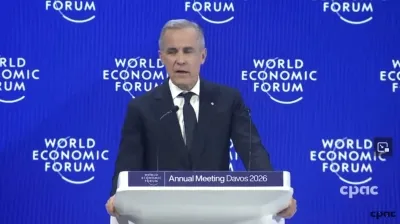

Karsten Wenzlaff, Advisor
August 26th, 2025
Karsten Wenzlaff is a Crowdfunding and Fintech Expert from Germany. He is Secretary-General of Digit[...]


Feb 5, 2025

Photo courtesy of Pexels
Financial technology companies now use artificial intelligence (AI) to scan and verify identification documents. While this technology makes customer onboarding faster and more accurate, it creates new privacy challenges. This blog explores how fintech companies can use AI-powered ID scanning systems to protect customer data.
AI-powered ID scanning uses computer systems that can think and learn like humans to verify identity documents. These systems capture images of IDs, passports, or driver's licenses and extract meaningful information like names, dates of birth, and photos. The AI then checks if the document is genuine and matches it with the person trying to use it.
Some key challenges that arise from AI-based ID scanning include the following:
Modern ID scanner systems must handle large amounts of personal data, which raises significant privacy concerns. Companies must ensure that these systems comply with strict data security regulations, such as the General Data Protection Regulation (GDPR), to prevent unauthorized access. ID documents contain highly personal information called Personally Identifiable Information (PII). This information includes:
The AI system must collect and store this sensitive data, creating risks of exposure or theft. For example, if hackers break into the system, they could steal thousands of customer identities.
The biometric market may increase to 3.04 billion by 2030. The permanent nature of biometric data makes its protection particularly crucial for long-term security. Biometric data refers to unique physical characteristics like facial features or fingerprints. Unlike passwords, you cannot change these if someone steals them.
When AI systems scan ID photos, they create digital maps of faces that need special protection. For instance, if criminals steal facial recognition data, they could use it to create fake IDs or break into systems that use face scanning for security.
Global operations require understanding and following various international data protection regulations. For instance, the European Union follows GDPR (General Data Protection Regulation), and California has CCPA (California Consumer Privacy Act). Companies must ensure their ID scanning systems follow all these rules, which can be complex and challenging because it requires ongoing monitoring and updates to privacy practices.
Reducing data collection to only essential information helps minimize privacy risks while maintaining adequate ID verification. To do this, you must:
This approach significantly reduces the risk of data breaches while maintaining service quality.
Modern technology offers several powerful tools to protect sensitive data during ID verification.
Adequate anonymization maintains data utility while protecting individual privacy. You can,
These techniques help organizations maintain security while gaining valuable insights from their data.
Strong encryption serves as a crucial defence against unauthorized data access. You can use two encryption methods called:
Data anonymization and encryption create a strong shield around sensitive customer information, allowing necessary verification processes. By implementing these encryption methods, companies create multiple layers of protection for sensitive information.
AI-powered ID scanning offers exciting possibilities for faster, more accurate customer verification in FinTech. However, success depends on strong privacy protection and regulatory compliance. Organizations can innovate while keeping customer data safe by implementing these strategies and maintaining a privacy-first approach.
 The National Crowdfunding & Fintech Association (NCFA Canada) is a financial innovation ecosystem that provides education, market intelligence, industry stewardship, networking and funding opportunities and services to thousands of community members and works closely with industry, government, partners and affiliates to create a vibrant and innovative fintech and funding industry in Canada. Decentralized and distributed, NCFA is engaged with global stakeholders and helps incubate projects and investment in fintech, alternative finance, crowdfunding, peer-to-peer finance, payments, digital assets and tokens, artificial intelligence, blockchain, cryptocurrency, regtech, and insurtech sectors. Join Canada's Fintech & Funding Community today FREE! Or become a contributing member and get perks. For more information, please visit: www.ncfacanada.org
 |  |  |
|---|---|---|
 |  |  |
CBDCs | Feb 4, 2025

Image: Freepik/master1305
While Canada paused its retail CBDC project last year, the Bank of Canada (BoC) recently published a 35 page report on "Privacy-Enhancing Technologies (PETs) for CBDC Solutions" while the UK is advancing its digital pound initiative and has provided an update. Trump explicitly banned CBDCs in the U.S. due to privacy issues upon taking office. This article looks at each country's latest approach to compare and contrast.
As digital payments become more commonly accepted globally, central banks are rethinking the role of currencies in the digital age - aka, Central Bank Digital Currencies (CBDCs), which are largely about modernizing the infrastructure of the financial system. However, governments are approaching CBDCs differently, reflecting differences in monetary policy but also concerns about privacy, financial sovereignty, and security. There are two main use cases being researched including retail and wholesale.
You can think about Retail CBDCs as a 'digital dollar' which are designed for use by the general public to support daily transactions, savings, and digital payments. They promise to increase financial inclusion by providing easy access to digital financial services, even for individuals who are unbanked - meaning individuals/households that do not have access to traditional banking services such as savings/checking accounts or credit from a formal financial institution. Privacy protection and efficiency are key benefits but public trust in data security is paramount for retail CBDC success.
Wholesale CBDCs, on the other hand, are used by financial institutions for bank to bank transfers and could improve cross-border payments, reduce costs and enhance financial market stability. By optimizing interbank settlements, wholesale CBDCs can also strengthen liquidity management on a global scale.
A shared global concern is privacy protection. As digital currencies including CBDCs become more widely used, protecting sensitive financial data is essential other the financial system runs the risk of payment surveillance from hackers, bad actors, institutions, and government. Global cooperation between governments to ensure interoperability and compliance standards is critical, if CBDCs are to ever be adopted in a way that balances economic growth with financial privacy.
In September 2024, the Bank of Canada stopped its work on a retail CBDCs after researching them for several years (see: Bank of Canada’s Latest on CBDC Implementation) citing that most Canadians were not interested in using a digital Canadian dollar. But they are continuing to research PETs like zero-knowledge proofs (ZKPs) and homomorphic encryption that offer privacy solutions that keep user data kept confidential while still enabling financial activities such as compliance checks and fraud prevention.
The report acknowledges several limitations with PETs though including slower transaction speeds due to the complexity of encrypting/processing large volumes of data. More sophisticated software and compute resources are required, raising costs. There is also scalability concerns which are still in early development stages. Lastly, any PET must still meet compliance requirements like anti-money laundering (AML) and counter-terrorism financing (CFT) while preserving user privacy, which is still a difficult act to balance.
The Bank of England (BoE) is still working on the Digital Pound project to modernize the country's payment infrastructure and support financial inclusion as the usage of cash in the UK declines. On Jan 14, 2025 the BoE published a progress update on their findings.
In addition to the digital pound providing a secure and efficiency alternative to traditional payment systems, the BoE is exploring the potential to improve the efficiency of financial markets and cross-border payments, making the digital pound more versatile than just a retail transaction and savings tool.
One of their top priorities is tackling privacy concerns to gain public trust, and designing the digital pound to allow secure transactions while protecting personal data. Another challenge is interoperability with existing systems like credit cards and mobile payments. The digital pound has to integrate seamlessly for a smooth transition between traditional and digital finance. As more central banks investigate the potential of their own CBDCs, the UK's work on the digital pound project will certainly position them to take a leading role in crafting the future of digital currencies while maintaining their financial sovereignty.
In contrast to Canada and the UK, the U.S. has opted to ban CBDCs. On January 23, 2025, as part of the "Strengthening American Leadership in Digital Financial Technology" executive order, President Donald Trump effectively prohibited federal agencies from pursuing any sort of CBDC development largely over privacy and government control concerns (and desire to protect the existing financial infrastructure).
The U.S. government is however pursuing Stablecoins, seen more as a market driven solution that can offer the faster and cheaper benefits of digital currencies without the associated risks of a government issued form of digital money. This approach encourages more private sector innovation but raises questions about potential risks to consumers and financial stability.
Varying approaches to CBDCs and digital money highlight the complexities of balancing between financial innovation, privacy protection, and regulatory compliance. Global cooperation will be essential to address privacy concerns and ensure interoperability and security.
The National Crowdfunding & Fintech Association (NCFA Canada) is a financial innovation ecosystem that provides education, market intelligence, industry stewardship, networking and funding opportunities and services to thousands of community members and works closely with industry, government, partners and affiliates to create a vibrant and innovative fintech and funding industry in Canada. Decentralized and distributed, NCFA is engaged with global stakeholders and helps incubate projects and investment in fintech, alternative finance, crowdfunding, peer-to-peer finance, payments, digital assets and tokens, artificial intelligence, blockchain, cryptocurrency, regtech, and insurtech sectors. Join Canada's Fintech & Funding Community today FREE! Or become a contributing member and get perks. For more information, please visit: www.ncfacanada.org
| | |
|---|---|---|
| | |
Privacy Report | Dec 13, 2024

Financial privacy is at a crossroads. Another 'eye opening' report dropped December 6, 2024 by the U.S. House Judiciary Committee and the Select Subcommittee on the Weaponization of the Federal Government titled, "How the Federal Government Weaponized the Bank Secrecy Act to Spy on Americans" (47 page PDF) reveals alarming financial surveillance systems being used in the United States. Using laws like the Bank Secrecy Act (BSA), federal agencies use financial institutions to monitor millions of Americans without their knowledge or consent. These findings have serious implications for fintech, innovation, and consumer trust. There's a tug of war between security and privacy and it's reaching a breaking point.
Last year in 2023, financial institutions filed 4.6 million Suspicious Activity Reports (SARs) and 20.8 million Currency Transaction Reports (CTRs) with the Financial Crimes Enforcement Network (FinCEN). Over 25,000 government officials at various levels accessed this data without legal warrants to conduct over 3.3 million searches using the FinCEN Query system. FinCEN's integrated access program allowed approx. 27,000 users across nine federal agencies to download entire datasets of financial records with minimal oversight.
Financial institutions often outsource compliance tasks to third party vendors which raises questions about data security and privacy breaches under the confidentiality rules under the Bank Secrecy Act. Another layer of exposure risk.
The report describes a system that encourages banks to over-report SARs to avoid penalties for non-compliance (even when the reported activity is unlikely to be connected with a crime or wrongdoing).
Jimmy Kirby, FinCEN Deputy Director:
"There’s the mandatory requirement and then there’s the ability to voluntarily file, as the statutory construct laid out by Congress really is to encourage filing. So... there’s the ones you’re required to file, but there’s also very much an encouragement for people to voluntarily file beyond what they’re required to file."
The use of financial data to target specific individuals or groups is critical issue for policymakers, and has been increasing in recent years. Especially after Jan 6, 2021 uprising in the U.S. where institutions were told to flag individuals on politically charged criteria, such as purchasing firearms, travel to Washington, D.C., staying at specific hotels etc.
A similar situation happened here in Canada too during the trucker protests of 2022. Canadian federal agencies used the Emergencies Act to direct banks to freeze accounts of individuals and organizations linked to the protest. They also instructed crypto exchanges to cut off crypto user accounts linked to the protests. Donation- based crowdfunding platforms were also caught in the fire as FINTRAC's knee jerk reaction to impose unwarranted AML/ATF requirements on them without any data-driven analysis.
Daryl Hatton, Founder and CEO of FundRazr:
“In summary, the regulations are ineffective, burdensome, anti-competitive, and damaging to both the domestic donation crowdfunding sector and the Canadian nonprofit/charitable sector. The goal of protecting Canadians from money laundering and terrorism is laudable, but these regulations should be scrapped, and new regulations drafted in full consultation with stakeholders.”
Fintech firms operating in the U.S. (especially smaller ones) in some capacity can find themselves swamped by compliance costs which eat up valuable resources away from innovation. For example, a Canadian payment processor may find that routine transactions under Canadian regulations could trigger SARs in the U.S., adding to compliance and operational costs.
Or consider, a crypto platform doing business in the U.S. could encounter conflicting demands such as when U.S. regulators request data but Canadian privacy laws protect that data. These different regulatory environments create frictions.
Excessive surveillance hurts consumer trust and adversely impacts the adoption of fintech solutions. Use your voice and emerging technology to demand accountability and create private, ethical systems that balance security with individual rights, ensuring a future free from weaponizing financial data inappropriately.
The National Crowdfunding & Fintech Association (NCFA Canada) is a financial innovation ecosystem that provides education, market intelligence, industry stewardship, networking and funding opportunities and services to thousands of community members and works closely with industry, government, partners and affiliates to create a vibrant and innovative fintech and funding industry in Canada. Decentralized and distributed, NCFA is engaged with global stakeholders and helps incubate projects and investment in fintech, alternative finance, crowdfunding, peer-to-peer finance, payments, digital assets and tokens, artificial intelligence, blockchain, cryptocurrency, regtech, and insurtech sectors. Join Canada's Fintech & Funding Community today FREE! Or become a contributing member and get perks. For more information, please visit: www.ncfacanada.org
| | |
|---|---|---|
| | |
BRICS | Dec 3, 2024

Image: Freepik/ibrandify
The original BRICS member nations including Brazil, Russia, India, China, and South Africa previously announced their bold vision to challenge the dominance of the U.S. dollar by creating a shared currency. The plan hatched and promised an alternative currency and payment system that would be free from the influence of U.S. sanctions and monetary policy.
Lord Lamont of Lerwick stated:
"If it ever happened, it would be a major threat to the Western-led financial system, but above all it would make it impossible for the West to impose sanctions on countries like Russia, China or Iran or other malign countries."
But is the dream now unravelling?
Just a few days ago, U.S. President-elect Donald Trump announced that American wasn't going to sit by idly while BRICS trading bloc tries to circumvent the U.S. dollar and threatened to implement a 100% tariff on BRICS nations if they launch an alternative currency. He also demanded commitment from these countries that that would and abandon any de-dollarization efforts.
The idea that the BRICS Countries are trying to move away from the Dollar while we stand by and watch is OVER. We require a commitment from these Countries that they will neither create a new BRICS Currency, nor back any other Currency to replace the mighty U.S. Dollar or, they…
— Donald J. Trump (@realDonaldTrump) November 30, 2024
Russia isn’t backing down arguing that Trump's threats could backfire by pushing even more countries to consider alternatives other than the dollar.
Dmitry Peskov, Kremlin spokesman:
"[The dollar is losing its appeal as a reserve currency for many countries, a trend that is gathering pace]. More and more countries are switching to the use of national currencies in their trade and foreign economic activities. If the U.S. uses force, as they say economic force, to compel countries to use the dollar it will further strengthen the trend of switching to national currencies (in international trade)."
Recent reports say that some BRICS members may be stepping back from the initiative due to varying economies and conflicting monetary policies that are anticipated to be difficult to overcome. Each country has unique economic needs so a one size fits all approach to a currency solution is tricky. For example, China is an economic powerhouse and may prioritize its own currency at the expense of smaller nations.
Is it a zero sum game with a clear winner and loser?
China is best positioned to benefit if a BRICS currency takes off. They are the largest economy in the BRICS trading bloc and Beijing could use the initiative as a stepping stone to boost the yuan's role in global trade. China is strategically looking to increase its global influence so its beyond just economics. Critics are concerned that such dominance by China would come at the expense of smaller BRICS members.
Russia, currently at war with the Ukraine and constantly at loggerheads with the U.S. has a lot riding on the idea of an alternative BRICS currency. Russia is currently facing a litany of sanctions and economic isolation so an alternative to the U.S. dollar could help stabilize Russia's economy and offer it a better hand on the geopolitical global stage. Conversely, a failed BRICS currency could force Russia into a rock and a hard place.
India is being more cautious as it understands that while a BRICS currency may make trading easier within a bloc, it could give China more control. India has its own massively growing economy and aspirations so it's walking a fine line that balances cooperation while protecting its independence.
For Brazil and South Africa the risks are high with smaller rewards since their economies are much smaller and they may struggle to stay competitive in a system dominated by China and Russia. So while they may be benefits for a larger block, their smaller interests could easily get pushed to the side so the benefits aren't as clear nor are they guaranteed. Having said that Brazil has been a strong advocate for a BRICS currency system over the dollar.
While the U.S. dollar is still dominant, cracks are appearing as some countries are seeking alternatives to U.S. economic sanctions or geopolitical strategies. Since trading nations are deeply integrated and affect global markets, any significant changes to currency dynamics could have serious global impact. It could appear as shifting exchanges rates, new supply chains / trade flows and different financial alliances.
Companies and policymakers need to remain agile. Even if the BRICS currency initiative fails, its a movement that gained momentum and certainly a trend that the world cannot ignore.
The National Crowdfunding & Fintech Association (NCFA Canada) is a financial innovation ecosystem that provides education, market intelligence, industry stewardship, networking and funding opportunities and services to thousands of community members and works closely with industry, government, partners and affiliates to create a vibrant and innovative fintech and funding industry in Canada. Decentralized and distributed, NCFA is engaged with global stakeholders and helps incubate projects and investment in fintech, alternative finance, crowdfunding, peer-to-peer finance, payments, digital assets and tokens, artificial intelligence, blockchain, cryptocurrency, regtech, and insurtech sectors. Join Canada's Fintech & Funding Community today FREE! Or become a contributing member and get perks. For more information, please visit: www.ncfacanada.org
| | |
|---|---|---|
| | |
Survey | Nov 26, 2024

Image: 2nd Global Fintech Research Initiative (CCAF, WEF)
The Cambridge Centre for Alternative Finance (CCAF) at the University of Cambridge Judge Business School and the World Economic Forum invite you to participate in the 2nd Future of Global FinTech Research Initiative. This flagship study will provide key insights into global Fintech trends and challenges. Insights from Canadian fintech innovators are key to this research which will explore the bleeding edge trends such as:
See: CCAF and WEF Unveil 2024 Global Fintech Report at Davos
Take part in this unique opportunity to drive the future of Fintech and ensure Canada’s voice is strongly represented on the global stage.
For more information, reach out to the team at cambridgeFMO@jbs.cam.ac.uk.
The National Crowdfunding & Fintech Association (NCFA Canada) is a financial innovation ecosystem that provides education, market intelligence, industry stewardship, networking and funding opportunities and services to thousands of community members and works closely with industry, government, partners and affiliates to create a vibrant and innovative fintech and funding industry in Canada. Decentralized and distributed, NCFA is engaged with global stakeholders and helps incubate projects and investment in fintech, alternative finance, crowdfunding, peer-to-peer finance, payments, digital assets and tokens, artificial intelligence, blockchain, cryptocurrency, regtech, and insurtech sectors. Join Canada's Fintech & Funding Community today FREE! Or become a contributing member and get perks. For more information, please visit: www.ncfacanada.org
| | |
|---|---|---|
| | |
Cyber Insurance | Nov 25, 2024

AI Image
Sofia and Liam were co-founders of SparkFin a scaling fintech startup that promised a P2P lending experience with just a few taps on a smartphone. Their platform was getting backed and changing personal finance. The buzz was electric. Performance numbers were soaring and investors were reaching out like never before.
Then one Friday afternoon, everything changed. It begin with an urgent alert from the head of security,
“We’ve detected unusual activity on the platform. User accounts are being accessed without permission.”
Then moments later, social media lit up. Customers were angry and anxious. Funds were drained from their accounts.
Liam froze. Sofia grabbed her phone. This is it. A cyberattack.
Fortunately, SparkFin had taken steps to prepare for this kind of scenario just a few months earlier. Their board had insisted on a robust cyber insurance policy. Liam at the time was hesitant thinking "Is this just another expense for something that might never happen?” but Sofia was more realistic and saw their business as a huge risk that needed protection. "If we’re handling people’s money, we have to be covered," she argued.
That moment was a lifesaver. Sofia contacted their insurance provider’s 24/7 breach response team. Before they knew it, an incident coordinator was on the line and a response plan was set in motion.
The first priority was to contain the breach. SparkFin’s IT team worked alongside cybersecurity specialists provided by the insurance policy. They immediately shut down vulnerable access points and began investigating the attack’s origins. The insurance policy covered the cost of hiring forensic experts to trace the hackers and assess the damage.
Next came damage control. The cyber insurance policy included funds to notify affected users quickly and offering them fraud protection services and covering any direct financial losses from the breach. A public relations specialist was also covered by the cyber insurance who expertly crafted messaging to assure customers their money would be safe.
When regulators stepped in with demands for answers, SparkFin was ready. The insurance policy included coverage for legal fees and compliance experts to handle the high volume of inbound inquiries that demanded a response. This support was critical to staying on top of the complex regulatory landscape SparkFin operated in.
Even though the policy was a lifeline, it wasn’t a silver bullet. The breach knocked user confidence down significantly which led to fewer new signups and investors also started to back off. SparkFin’s policy didn’t cover the lost revenue due to the breach nor did it cover the cost of upgrading their technical infrastructure after the attack to ensure it wouldn’t happen again.
Sofia and Liam also realized they needed to explore extra coverage like reputational harm coverage and funding for proactive security upgrades. "If we’re going to be trusted with people’s finances, we need to make sure we’re protected from all sides," Sofia said.
Once the crisis was under control, the insurance provider offered a post-incident review which revealed weaknesses in their system. Liam worked with cybersecurity experts to implement stricter authentication measures and establish regular testing protocols.
Sofia held employee training sessions to help reduce human error and ensure the entire team understood how to spot phishing scams and other top cyber threats. They also updated their cyber insurance policy by adding coverage for social engineering attacks which was one of the vulnerabilities the hackers had exploited.
Sofia and Liam eventually recovered from the cyberattack and built a stronger and more experienced and resilient SparkFin. Their users returned given SparkFin's transparency and swift response. They were impressed by their handling of the crisis, boosting their confidence in the company.
“Cyber insurance isn’t just a safety net but rather a test of resilience. It didn’t just help us recover but it helped us build back a stronger and more prepared company, proving to our customers and investors that we’re here for the long haul.”
The National Crowdfunding & Fintech Association (NCFA Canada) is a financial innovation ecosystem that provides education, market intelligence, industry stewardship, networking and funding opportunities and services to thousands of community members and works closely with industry, government, partners and affiliates to create a vibrant and innovative fintech and funding industry in Canada. Decentralized and distributed, NCFA is engaged with global stakeholders and helps incubate projects and investment in fintech, alternative finance, crowdfunding, peer-to-peer finance, payments, digital assets and tokens, artificial intelligence, blockchain, cryptocurrency, regtech, and insurtech sectors. Join Canada's Fintech & Funding Community today FREE! Or become a contributing member and get perks. For more information, please visit: www.ncfacanada.org
| | |
|---|---|---|
| | |
Nov 13, 2024

Photo by Shubham Dhage on Unsplash
The emergence of blockchain and decentralized technology is fundamentally reshaping how we control virtual identities. In the conventional Web2 world, digital identification is controlled via centralized entities, often leading to protection risks, privateness concerns, and cumbersome person reports. However, with blockchain’s evolution, a new technique called account abstraction is coming to the vanguard, presenting more flexibility, control, and protection for digital identity management.
In this article, we’ll explore how account abstraction is changing digital identification management and its implications for customers. Additionally, we will dive into an critical topic that regularly goes hand-in-hand with identity in the blockchain space: locating the best place to store your crypto to make sure your belongings are as secure as your virtual identity.

Photo by Shubham Dhage on Unsplash
Account abstraction refers to a change inside the way blockchain accounts function. Traditionally, blockchain networks have two varieties of money owed:
Account abstraction permits clever contracts to address moves generally reserved for EOAs, allowing extra customizable account control. This affords more desirable protection, such as multi-signature wallets and social healing, even as enhancing the consumer revel in.
In Web2 environments, users rely upon centralized entities to manage their virtual identities. This setup comes with numerous risks:
In evaluation, decentralized systems and account abstraction provide a greater steady and user-controlled way to manage virtual identities.
Account abstraction introduces several benefits for dealing with digital identity in decentralized environments, inclusive of:
Customizable Security
Users can undertake multi-signature wallets, requiring a couple of parties to authorize transactions. Social recuperation structures can help users regain manipulation of debts if they lose their non-public key, offering extra safety and peace of mind.
Improved User Experience
Managing a non-public key can be complex, especially for non-technical users. Account abstraction allows for opportunity authentication techniques, consisting of biometrics or PINs, making blockchain extra handy.
Interoperability Across Platforms
Users can manage a single digital identity through a couple of decentralized programs (dApps) rather than developing separate debts for each platform, streamlining the enjoyment.
Automation and Personalization
Account abstraction allows users to automate duties, like placing transaction limits or automating fee bills, enhancing efficiency in coping with virtual identities.
As digital identification control improves, safeguarding crypto assets will become just as critical. Your identity is often tied to your crypto holdings, so locating the Best Place to Store Your Crypto is vital for maintaining your property stable. Here are a few top storage options:
Hardware Wallets
Hardware wallets shop non-public keys offline, making them resistant to online hacks. They’re considered one of the most secure options for lengthy-term storage.
Cold Storage
Cold storage refers to keeping private keys offline, either in hardware wallets or paper wallets. While stable, a cold garage is greatly desirable for lengthy-term protection in place of common transactions.
Multi-signature Wallets
Multi-signature wallets require more than one approval for transactions, presenting an extra layer of protection. Account abstraction enhances those wallets by way of permitting customers to define precise permissions and limits.
Decentralized Wallets
Decentralized wallets offer clean admission to dApps and decentralized finance (DeFi) structures. While convenient, they will now not offer the same security as hardware wallets and need to be supplemented by other methods for large holdings.
Account abstraction now not most effectively improves identity management but also complements crypto garage safety. Users can put into effect:
These capabilities are important when thinking about the best place to store your crypto as they offer delivered safety for each identity and property.
Account abstraction is transforming the way we control virtual identities in Web3, providing better safety, control, and a greater consumer-pleasant enjoyment. It’s additionally vital to pay attention to securing crypto belongings, as they are frequently tied to your digital identity. Whether through hardware wallets, bloodless storage, or multi-signature wallets, locating the exceptional region to keep your crypto guarantees that both your identity and assets are included within the evolving digital panorama.
The National Crowdfunding & Fintech Association (NCFA Canada) is a financial innovation ecosystem that provides education, market intelligence, industry stewardship, networking and funding opportunities and services to thousands of community members and works closely with industry, government, partners and affiliates to create a vibrant and innovative fintech and funding industry in Canada. Decentralized and distributed, NCFA is engaged with global stakeholders and helps incubate projects and investment in fintech, alternative finance, crowdfunding, peer-to-peer finance, payments, digital assets and tokens, artificial intelligence, blockchain, cryptocurrency, regtech, and insurtech sectors. Join Canada's Fintech & Funding Community today FREE! Or become a contributing member and get perks. For more information, please visit: www.ncfacanada.org
| | |
|---|---|---|
| | |



August 26th, 2025

January 4th, 2024

June 1st, 2021

September 9th, 2020

July 9th, 2018

January 3rd, 2018

September 25th, 2017

June 20th, 2017

May 10th, 2017

December 14th, 2016
