





Karsten Wenzlaff, Advisor
August 26th, 2025
Karsten Wenzlaff is a Crowdfunding and Fintech Expert from Germany. He is Secretary-General of Digit[...]


November 27, 2024

Image: Unsplash/Brian Wangenheim
Bitcoin has long been celebrated as a decentralized digital currency and a store of value. However, its functionality has traditionally been limited to peer-to-peer transactions and as a store of value.
In recent years, the landscape has shifted with the emergence of Decentralized Finance (DeFi) on Bitcoin, expanding its utility beyond simple transactions to encompass a wide array of financial services. This evolution is transforming Bitcoin from a static asset into a dynamic platform for financial innovation.
Read on to learn more about the growing DeFi ecosystem on Bitcoin.
Decentralized Finance (DeFi) refers to a suite of financial services built on blockchain technology that operate without traditional intermediaries like banks or brokers.
By leveraging smart contracts—self-executing contracts with the terms directly written into code—DeFi platforms enable users to engage in activities such as lending, borrowing, trading, and earning interest in a decentralized, permissionless manner. This paradigm shift offers greater accessibility, transparency, and control over financial assets.
While Ethereum has been the frontrunner in the DeFi space due to its robust smart contract capabilities, Bitcoin's entry into DeFi marks a significant milestone.
Historically, Bitcoin's scripting language lacked the flexibility required for complex smart contracts, limiting its use cases. However, technological advancements and the development of Layer 2 solutions have paved the way for DeFi applications on the Bitcoin network.
To overcome Bitcoin's inherent limitations, developers have introduced Bitcoin Layer 2 protocols that enhance its functionality. Examples of three exciting off-chain scaling protocols include Rootstock (RSK), Stacks, and Build on Bitcoin (BOB).

RSK is a sidechain that brings smart contract capabilities to Bitcoin. Using a two-way peg, it allows BTC to be converted into rBTC, which can then be utilized in various DeFi applications built on the RSK platform.
This integration enables functionalities such as lending, borrowing, and trading within the Bitcoin ecosystem.
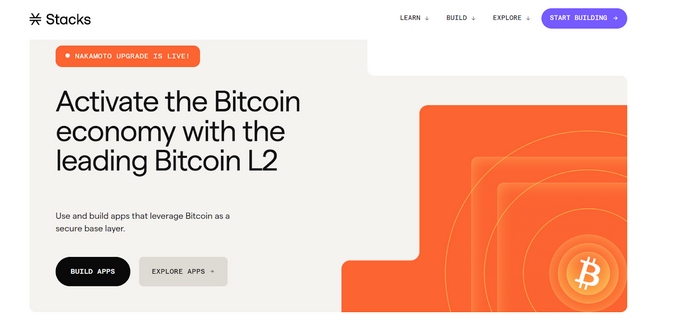
Stacks is a Layer 2 platform that introduces smart contracts and decentralized applications (dApps) to Bitcoin. It operates using a unique consensus mechanism called Proof of Transfer (PoX), which anchors Stacks' security to the Bitcoin blockchain.
This design allows developers to build complex applications while benefiting from Bitcoin's security and stability.

BOB is a hybrid layer-2 solution that combines the security of Bitcoin with the versatility of Ethereum. It allows developers familiar with the Ethereum Virtual Machine (EVM) to start building on Bitcoin immediately, utilizing best-in-class EVM tooling, wallets, analytics, and blockchain infrastructure.
BOB inherits security from Bitcoin's Proof of Work (PoW) consensus mechanism, contributing to Bitcoin's economy and providing usable decentralization for builders today. Additionally, BOB connects to both Bitcoin and Ethereum, sourcing liquidity from the two largest blockchain ecosystems and positioning itself as a leading solution for DeFi mass adoption.
The integration of DeFi into the Bitcoin ecosystem has led to the development of various applications that mirror traditional financial services.
Platforms like Sovryn, built on RSK and BoB, offer decentralized trading services where users can swap tokens directly from their wallets without relying on centralized exchanges. This model enhances security and reduces the risk of hacks associated with centralized platforms.
Bitcoin DeFi protocols such as ALEX on Stacks or Liquidium on the Bitcoin network enable users to lend their assets to earn interest or borrow against their holdings. These services operate without intermediaries, providing more favorable terms and greater accessibility to users worldwide.
Stablecoins pegged to fiat currencies are being introduced on Bitcoin's network through platforms like Sovryn's Sovryn Dollar (DLLR). These assets offer stability in value, making them suitable for everyday transactions and as a hedge against volatility.
Wallets designed for DeFi, such as the Xverse DeFi Wallet, OKX Wallet, and Leather, are gaining traction within the Bitcoin community. These wallets not only provide a secure way to store bitcoin but also integrate features like token swaps and access to DeFi applications on Layer 2 solutions. Their user-friendly interfaces make it easier for users to interact with the Bitcoin DeFi ecosystem.
The integration of DeFi into the Bitcoin ecosystem is still in its nascent stages but holds significant promise.
As technological advancements continue and Layer 2 solutions mature, Bitcoin's role in the DeFi space is expected to expand. This evolution could lead to a more inclusive financial system, leveraging Bitcoin's security and decentralization to offer a wide array of financial services to users globally.
The rise of DeFi on Bitcoin represents a pivotal development in the cryptocurrency landscape. By extending Bitcoin's functionality beyond a store of value to a platform for decentralized financial services, it opens new avenues for innovation and adoption.
 The National Crowdfunding & Fintech Association (NCFA Canada) is a financial innovation ecosystem that provides education, market intelligence, industry stewardship, networking and funding opportunities and services to thousands of community members and works closely with industry, government, partners and affiliates to create a vibrant and innovative fintech and funding industry in Canada. Decentralized and distributed, NCFA is engaged with global stakeholders and helps incubate projects and investment in fintech, alternative finance, crowdfunding, peer-to-peer finance, payments, digital assets and tokens, artificial intelligence, blockchain, cryptocurrency, regtech, and insurtech sectors. Join Canada's Fintech & Funding Community today FREE! Or become a contributing member and get perks. For more information, please visit: www.ncfacanada.org
 |  |  |
|---|---|---|
 |  |  |
Nov 27, 2024

Image: Freepik
Budgeting for home improvements, whether as a homeowner or renter, can make all the difference between an expensive remodel and an economical upgrade. Consider saving for home improvement projects or taking advantage of low or no interest credit card offers that feature no or zero initial APR for funding upgrades.
Replacing worn floors is an affordable, hassle-free home improvement. From polishing wood, tile or vinyl floors to simply repainting them with fresh colors or patterns for an inexpensive upgrade.
There's something magical about fresh paint to brighten any room, making home improvements easy and affordable with instantaneous results. Opting for light hues can keep spaces feeling open.
Renovation projects can be expensive and time-consuming. But there are do-it-yourself projects you can complete quickly to add value to your home without breaking the bank or draining savings accounts. From painting the interior walls to re-grouting tile floors, these simple tasks can improve curb appeal without draining savings accounts or accruing debts.
Enhance the curb appeal of your home by changing up its house numbers. If yours feature old-fashioned font, consider updating them to modern brushed nickel numbers that match your paint color for an instant facelift and give the home an instant facelift. Adding an eye-catching front door topper can complete this look and make an unforgettable first impression!
No matter your budget, DIY projects can add significant value to your home with even small projects making a significant impactful statement for future buyers as well as for you as current homeowners.
New Ottawa doors and windows don't just add curb appeal; they also bring numerous practical benefits. Older windows and doors often allow draughts in, requiring heating and cooling systems to work harder and resulting in higher energy bills. Newer models, like those installed by Solidor, are specifically designed to minimise air leakage while providing better insulation, keeping your home comfortable year round.
Although resale value should always be your top consideration when selecting home improvement projects, don't lose sight of how important personal satisfaction and enjoyment should be in choosing home improvements. From creating a garden to draw birds to more efficient walkways - with proper planting and maintenance you can enhance the appearance of your home for less money than you ever expected.
Flooring is an integral component of home improvement, as it transforms any room. But this doesn't have to be costly: basic tasks like cleaning floors, re-grouting tiles, and power washing exterior surfaces can be completed without breaking the bank.
Renovating to increase resale value requires functional, energy efficient renovations that appeal to a broad audience. While it might seem tempting to upgrade all areas of your home at once, most projects do not recoup most of their costs when selling.
Building a successful flooring business requires mastery of finance and accounting practices. Writing informative blog posts and videos about topics relevant to industry finances positions you as an authority figure, drawing in leads while increasing SEO rankings. Furthermore, this enables you to maintain a healthy bottom line and respond more efficiently when dealing with economic fluctuations that affect construction and home renovation industries.
Although HGTV shows often give the illusion that every home improvement project adds value, many don't actually increase resale value. Custom renovations that cater more directly to personal tastes could prove less appealing to potential homebuyers; however, there are numerous DIY projects you can complete on a budget that will make a significant impactful statement about your space; one of these DIY tasks involves lighting, with upgrading outdated fixtures with energy-efficient LED bulbs being an inexpensive and simple way to change its overall aesthetic - not to mention it being super easy!
The National Crowdfunding & Fintech Association (NCFA Canada) is a financial innovation ecosystem that provides education, market intelligence, industry stewardship, networking and funding opportunities and services to thousands of community members and works closely with industry, government, partners and affiliates to create a vibrant and innovative fintech and funding industry in Canada. Decentralized and distributed, NCFA is engaged with global stakeholders and helps incubate projects and investment in fintech, alternative finance, crowdfunding, peer-to-peer finance, payments, digital assets and tokens, artificial intelligence, blockchain, cryptocurrency, regtech, and insurtech sectors. Join Canada's Fintech & Funding Community today FREE! Or become a contributing member and get perks. For more information, please visit: www.ncfacanada.org
| | |
|---|---|---|
| | |
Crypto Investing | Nov 26, 2024

Image: Dogecoin
Valour, a subsidiary of DeFi Technologies, has launched the first ever Dogecoin Exchange Traded Product (ETP) in Scandinavia. The ETP is now listed on Sweden's Spotlight Stock Market which opens up options for investors seeking exposure to Dogecoin in a regulated market without having to worry about the complexities of direct crypto ownership, wallets and more.
Elaine Buehler, Head of Product at Valour:
"Introducing the world's first Dogecoin ETP in the Nordics represents a significant milestone in our mission to democratize access to digital assets. We are excited to provide investors with a regulated product that captures the essence of Dogecoin's dynamic market presence."
With Dogecoin's strong community and increasing utility, the ETP product is expected to attract a diverse range of investors looking for regulated exposure.
Time will tell how deep the demand is for this ETP and following market impact.
The National Crowdfunding & Fintech Association (NCFA Canada) is a financial innovation ecosystem that provides education, market intelligence, industry stewardship, networking and funding opportunities and services to thousands of community members and works closely with industry, government, partners and affiliates to create a vibrant and innovative fintech and funding industry in Canada. Decentralized and distributed, NCFA is engaged with global stakeholders and helps incubate projects and investment in fintech, alternative finance, crowdfunding, peer-to-peer finance, payments, digital assets and tokens, artificial intelligence, blockchain, cryptocurrency, regtech, and insurtech sectors. Join Canada's Fintech & Funding Community today FREE! Or become a contributing member and get perks. For more information, please visit: www.ncfacanada.org
| | |
|---|---|---|
| | |
Cyber Insurance | Nov 25, 2024

AI Image
Sofia and Liam were co-founders of SparkFin a scaling fintech startup that promised a P2P lending experience with just a few taps on a smartphone. Their platform was getting backed and changing personal finance. The buzz was electric. Performance numbers were soaring and investors were reaching out like never before.
Then one Friday afternoon, everything changed. It begin with an urgent alert from the head of security,
“We’ve detected unusual activity on the platform. User accounts are being accessed without permission.”
Then moments later, social media lit up. Customers were angry and anxious. Funds were drained from their accounts.
Liam froze. Sofia grabbed her phone. This is it. A cyberattack.
Fortunately, SparkFin had taken steps to prepare for this kind of scenario just a few months earlier. Their board had insisted on a robust cyber insurance policy. Liam at the time was hesitant thinking "Is this just another expense for something that might never happen?” but Sofia was more realistic and saw their business as a huge risk that needed protection. "If we’re handling people’s money, we have to be covered," she argued.
That moment was a lifesaver. Sofia contacted their insurance provider’s 24/7 breach response team. Before they knew it, an incident coordinator was on the line and a response plan was set in motion.
The first priority was to contain the breach. SparkFin’s IT team worked alongside cybersecurity specialists provided by the insurance policy. They immediately shut down vulnerable access points and began investigating the attack’s origins. The insurance policy covered the cost of hiring forensic experts to trace the hackers and assess the damage.
Next came damage control. The cyber insurance policy included funds to notify affected users quickly and offering them fraud protection services and covering any direct financial losses from the breach. A public relations specialist was also covered by the cyber insurance who expertly crafted messaging to assure customers their money would be safe.
When regulators stepped in with demands for answers, SparkFin was ready. The insurance policy included coverage for legal fees and compliance experts to handle the high volume of inbound inquiries that demanded a response. This support was critical to staying on top of the complex regulatory landscape SparkFin operated in.
Even though the policy was a lifeline, it wasn’t a silver bullet. The breach knocked user confidence down significantly which led to fewer new signups and investors also started to back off. SparkFin’s policy didn’t cover the lost revenue due to the breach nor did it cover the cost of upgrading their technical infrastructure after the attack to ensure it wouldn’t happen again.
Sofia and Liam also realized they needed to explore extra coverage like reputational harm coverage and funding for proactive security upgrades. "If we’re going to be trusted with people’s finances, we need to make sure we’re protected from all sides," Sofia said.
Once the crisis was under control, the insurance provider offered a post-incident review which revealed weaknesses in their system. Liam worked with cybersecurity experts to implement stricter authentication measures and establish regular testing protocols.
Sofia held employee training sessions to help reduce human error and ensure the entire team understood how to spot phishing scams and other top cyber threats. They also updated their cyber insurance policy by adding coverage for social engineering attacks which was one of the vulnerabilities the hackers had exploited.
Sofia and Liam eventually recovered from the cyberattack and built a stronger and more experienced and resilient SparkFin. Their users returned given SparkFin's transparency and swift response. They were impressed by their handling of the crisis, boosting their confidence in the company.
“Cyber insurance isn’t just a safety net but rather a test of resilience. It didn’t just help us recover but it helped us build back a stronger and more prepared company, proving to our customers and investors that we’re here for the long haul.”
The National Crowdfunding & Fintech Association (NCFA Canada) is a financial innovation ecosystem that provides education, market intelligence, industry stewardship, networking and funding opportunities and services to thousands of community members and works closely with industry, government, partners and affiliates to create a vibrant and innovative fintech and funding industry in Canada. Decentralized and distributed, NCFA is engaged with global stakeholders and helps incubate projects and investment in fintech, alternative finance, crowdfunding, peer-to-peer finance, payments, digital assets and tokens, artificial intelligence, blockchain, cryptocurrency, regtech, and insurtech sectors. Join Canada's Fintech & Funding Community today FREE! Or become a contributing member and get perks. For more information, please visit: www.ncfacanada.org
| | |
|---|---|---|
| | |
Nov 25, 2024

Image: Pexels/Mike Bird
Many people have experienced this, and new cases are reported frequently on the roads of the world, where millions of accidents happen each year. The effects of such accidents can be so severe that a person or a group of people lose their loved ones or may end up being disabled for the rest of their lives. That is why knowledge of the causes that lead to car crashes, how to avoid them, and the legal consequences stemming from car accidents is vital to enhancing road safety and the welfare of road users.
There are many causes of car crashes, and some are more common than others, as listed below.
Another reason for car accidents is distraction. Distraction is any activity that leads to a driver’s distraction while on the wheel. Widely used distractive activities are using the phone, eating, or having children in the back seat. Road accidents due to distracted driving affect a driver’s ability to react and make clear decisions on the road.
Drinking and driving and the use of some drugs or medication reduce the ability of an individual to drive safely. Alcohol affects a person and makes his or her reaction slower, hampers his or her ability to make reasonable decisions, and also reduces his or her coordination; all these factors result in increased cases of accidents.
Another cause of car accidents is overspeeding, that is, driving beyond the recommended speed limit or above the rate that current traffic and weather conditions allow. Thus, overspeeding negates the amount of time that drivers have to respond to threats, raises the level of impact, and complicates maneuvering. This is the case in nearly a third of all fatality occurrences in the United States.
Reckless driving consists of aggressive acts that display carelessness in the behavior and nonadherence to traffic rules in relation to other road users. This may include driving close to the car in front, cambering in and out of lanes, and driving through red lights or stop signs.
Driver fatigue is as lethal as driving under the influence of alcohol; such drivers may be very sleepy, slow to respond, poor in decision-making, and possibly doze off. Fatigue becomes especially dangerous when a driver is behind the wheel for a long time, which is the case for most commercial drivers.
Bad weather like rain, snow and ice and even fog certainly do have an influence over a drivers ability to be able to control a vehicle effectively. Due to limited visibility, less effective tires traction, and slippery road surface cause control loss and accidents resulting from inadequate preparation or previous experience.
If not corrected, mechanical faults are a leading cause of car accidents because of the role played by vehicles. This can include poor brakes, steering, lights or tires this leads to likely loss of control of the vehicle or poor visibility. The worst thing is to just neglect one’s vehicles and wait for them to break down or simply become a dangerously un-repairable wreck.
Other causes of car accidents include road obstacles like potholes, washed-up materials that may block the way, and slippery roads. These hazards make a driver vulnerable to losing control of their vehicle, getting a blowout, and, ultimately, an accident.
To reduce car accidents responsibility has to go hand in hand with commitment of all the users on the road.
Drivers, who are the primary operators of vehicle, have a great contribution in eradicating car accidents. This involves following traffic regulations, being alert on the roads and not engaging in activities that endanger oneself and other road users such as using phone while driving, driving while drunk and driving at high-speed.
Another way that passengers can also use their influence is to maintain proper road safety. This may involve disregarding activities that would distract the driver, including constant talking or requesting the driver perform other activities while driving, such as using a phone.
A pedestrian is a very important factor in a road system because he or she is exposed to a higher risk of accidents than other road users. This entails running the red lights, ensuring that drivers can see them while making the crossing, and not looking at anything apart from the road when making the crossing.
Laws related to road safety are prepared and maintained by the policies and enforcements developed by the governments. This may also involve enforcing the laws of the roads, putting up with a given speed limit, and undergoing road worthy tests on all road Transport vehicles.
Accidents occur on the roads due to different causes; some of the legal implications of car accidents include the following;
Car accidents are typical in which parties lodge an insurance claim for compensation of the incurred expenses. This process differs from one insurance company to another according to the kind of accident involved in the claim.
In some cases, assessing the degree of fault may be necessary to begin pursuing compensation from an insurance claim or to file a car crash injury suit.
If the accident occurred, the individual affected can bring a claim against the at fault driver by way of a personal injury suit providing him or her with an opportunity to recover for the medical expenses, the wages forgone, the pain and suffering, and incidental damages.
It could be that there is a car accident with some folks dying, and their surviving family is liable to run a wrongful death claim. Such a claim seeks to get ready money for funeral costs, lost wages, and the anguish of the left behind relatives.
If you happen to be in a car accident, you'll want to seek an attorney to advise you on your legal rights. It allows for a reliable car crash lawyer to help you navigate through the legal ways, in turn amassing evidence and ensuring fair compensation from you.
It is very important to identify what measures should be taken after a car accident has happened in order to avoid future complications legally and physically.
After a car accident, the most important thing to do is always to ensure that everyone including those in the accident are not injured. If the person seems to be genuinely hurt, call the police, as they will also need to take the injured into an ambulance and write a report.
If there are no injuries or fire involved then it is advised to tow the vehicles off the highway to an area that is safer and less congested. It will help avoid more catastrophes and make the atmosphere secure enough for first aid response teams to get to the scene.
The accident should be reported to the authorities since they will write a report on the incident and file it. Such documentation can be very valuable in assigning culpability in a legal manner in case of litigation.
Upon calling the administration, pass necessary information with the parties involved in the accident. This normally consists of the name of the driver as well as the address, phone number, driver’s license, identification number and details of the vehicle, as well as details of insurance cover.
Take pictures of the car and of any signs which include the traces like skid marks, and damages at the scene of the accident. Get the contact details of all available eye witnesses who may have witnessed the incident. It can also be helpful in civil actions to determine the causation and in negligence and other legal processes to determine liability.
In most cases, people that do not even think that they have been injured can sustain a deep tissue injury and, therefore, should seek medical care even after a minor car accident. At times, an injury may leave no symptoms initially, and a check up will help ascertain whether other injuries may have gone unnoticed.
Car accidents are a complex issue with far-reaching consequences. If a person feels they have been involved in an accident, understanding the causes and from there being able to prevent them is essential, as is knowing the legal implications which can help them to understand what to do in the aftermath and protect their rights.
The National Crowdfunding & Fintech Association (NCFA Canada) is a financial innovation ecosystem that provides education, market intelligence, industry stewardship, networking and funding opportunities and services to thousands of community members and works closely with industry, government, partners and affiliates to create a vibrant and innovative fintech and funding industry in Canada. Decentralized and distributed, NCFA is engaged with global stakeholders and helps incubate projects and investment in fintech, alternative finance, crowdfunding, peer-to-peer finance, payments, digital assets and tokens, artificial intelligence, blockchain, cryptocurrency, regtech, and insurtech sectors. Join Canada's Fintech & Funding Community today FREE! Or become a contributing member and get perks. For more information, please visit: www.ncfacanada.org
| | |
|---|---|---|
| | |
Sep 4, 2024

Image: Freepik/studiogstock
The need for healthcare providers to use secure methods to transmit sensitive data and information cannot be overstated. Therefore, many health organizations have adopted electronic fax services for convenience and improved data security. However, fax providers vary considerably, so people who fax sensitive information should choose a secure fax solution. This article highlights factors that can help determine the best tools for sending healthcare faxes safely and efficiently.
Data protection laws and policies, including the Health Insurance Portability and Accountability Act (HIPAA), are established to safeguard sensitive information from unauthorized access. However, physicians, nurses, and other healthcare providers can consider sending healthcare faxes electronically, which makes it easier to comply strictly with privacy rules in their practice.
Electronic faxing tools offer encrypted data storage and transmission features that ensure patient health information (PHI) remains confidential when healthcare providers share it. For instance, some fax systems contain two-factor authentication, which helps ensure that only authorized parties receive lab results or any other sensitive patient information. This process also reduces the risk of violating HIPAA regulations, protecting an organization from fines and other consequences of regulatory breaches.
Electronic faxing tools also protect PHI if it lands in the wrong hands. They require healthcare practitioners to attach a fax cover sheet with information about the intended location and receiver. This way, if a different person receives the fax, they can forward it to the correct healthcare office.
Sending healthcare faxes electronically is more convenient than using traditional fax machines. For instance, the former enables healthcare providers to send and receive faxes remotely from different devices or platforms.
On the contrary, these professionals need to be in a particular physical location to use fax machines to share health information. Consequently, they will likely cause delays, which might interfere with a hospital’s ability to offer quality and timely patient services.
Besides, electronic faxing solutions transmit documents with excellent contracts to improve legibility. These tools' convenience and reliability make them a better option for the healthcare industry.
Another element to remember when comparing tools for safely sending faxes in the healthcare industry is the costs involved. Sending faxes electronically is more cost-effective because it does not require one to use paper and ink. They also help healthcare organizations save on maintenance costs when handling traditional fax machines and internal IT staff with this responsibility.
Most electronic faxing tools have a subscription fee. However, healthcare organizations should choose one with affordable packages or reasonable prices. It would also be considerable to select a paid plan that allows them to access more advanced features like multi-recipient faxing.
Healthcare organizations should consider whether the faxing tool in question is scalable and can support its future needs. Many electronic faxing tools can help an organization's planning to grow. For instance, they can allow healthcare practitioners to send larger volumes of PHI without purchasing additional hardware.
Furthermore, most tools can seamlessly integrate with other existing healthcare management systems, such as cloud storage. This feature is critical because it makes sharing and transmitting patient information among healthcare practitioners easier.
Using electronic means to send healthcare faxes makes this process easier and more secure. Since there are multiple faxing tools on the market today, healthcare organizations should prioritize scalability, HIPAA compliance, and affordability. These factors will help them choose the best fax provider and protect sensitive information.
The National Crowdfunding & Fintech Association (NCFA Canada) is a financial innovation ecosystem that provides education, market intelligence, industry stewardship, networking and funding opportunities and services to thousands of community members and works closely with industry, government, partners and affiliates to create a vibrant and innovative fintech and funding industry in Canada. Decentralized and distributed, NCFA is engaged with global stakeholders and helps incubate projects and investment in fintech, alternative finance, crowdfunding, peer-to-peer finance, payments, digital assets and tokens, artificial intelligence, blockchain, cryptocurrency, regtech, and insurtech sectors. Join Canada's Fintech & Funding Community today FREE! Or become a contributing member and get perks. For more information, please visit: www.ncfacanada.org
| | |
|---|---|---|
| | |
Philanthropy | Feb 28, 2024

We're helping rally innovators, influencers, and drivers of change—to join Tech4SickKids in a monumental challenge: raising $25 million to revolutionize SickKids with big-data solutions and a state-of-the-art hospital. This initiative isn't just about building walls; it's about breaking down barriers to the limitless possibilities of AI and modern medicine.
By aligning with Tech4SickKids, you join a community of forward-thinking entrepreneurs who understand that true success comes from making a positive impact on the world. This is your chance to leave a philanthropic legacy that transcends your business achievements, demonstrating the powerful role that entrepreneurs can play in solving real-world problems.
Video: Precision Child Health Campaign
"When we started Willful it was important for us to bake giving back into our strategy from day one. One early commitment we made was pledging 1% of Willful's equity to SickKids via The Upside Foundation. We're both passionate about having a world-class children's hospital available for our own kids and those in our community, so it was an easy choice to make. This has been a signal to employees, investors, and the larger community that we care about more than just the bottom line."
We invite you to learn more about how you can contribute to this transformative mission. Whether through equity pledges, offering your expertise, or advocating for the cause, your involvement can help build a new SickKids that stands at the forefront of pediatric healthcare innovation.
For more information and to make your pledge, simply submit a pledge form at upsidefoundation.ca/pledge or reach out to Leonard Nolasco at leonard.nolasco@sickkidsfoundation.com
The National Crowdfunding & Fintech Association (NCFA Canada) is a financial innovation ecosystem that provides education, market intelligence, industry stewardship, networking and funding opportunities and services to thousands of community members and works closely with industry, government, partners and affiliates to create a vibrant and innovative fintech and funding industry in Canada. Decentralized and distributed, NCFA is engaged with global stakeholders and helps incubate projects and investment in fintech, alternative finance, crowdfunding, peer-to-peer finance, payments, digital assets and tokens, artificial intelligence, blockchain, cryptocurrency, regtech, and insurtech sectors. Join Canada's Fintech & Funding Community today FREE! Or become a contributing member and get perks. For more information, please visit: www.ncfacanada.org
| | |
|---|---|---|
| | |



August 26th, 2025

January 4th, 2024

June 1st, 2021

September 9th, 2020

July 9th, 2018

January 3rd, 2018

September 25th, 2017

June 20th, 2017

May 10th, 2017

December 14th, 2016
