




Karsten Wenzlaff, Advisor
August 26th, 2025
Karsten Wenzlaff is a Crowdfunding and Fintech Expert from Germany. He is Secretary-General of Digit[...]


March 2 2026 | Feature | AI Governance And Public Safety

AI Image: Conceptual illustration of AI ethics, defense contracts, and public accountability
On February 26 2026, Anthropic said it wouldn't allow two Pentagon use cases in its contracts: mass domestic surveillance and fully autonomous weapons. Two days later, OpenAI said it reached a Pentagon deal for classified AI deployments and argued its safeguards could still hold inside the agreement. The split exposes the real issue now facing AI vendors, governments, and regulated buyers. That is should ethics limits block deals or be enforced from inside it?
Anthropic wasn't on the outside looking in. It said Claude was extensively deployed across the Department of War and other national security agencies and that the company had already put models into classified U.S. government networks. Anthropic also said two use cases, mass surveillance (including of the public), and fully autonomous weapons, we're never included in its contracts. Those cases are the fault lines in the dispute with Trump's Pentagon and US government.
Anthropic framed the issue as a narrow refusal, not a broad rejection of national security work. Dario Amodei said Anthropic supported “98% or 99%” of Pentagon use cases, but the company would not give up the remaining two limits. In its own words, Anthropic said, “we cannot in good conscience accede to their request.” Reuters reported that stance put a defense contract worth up to $200 million at risk.
The dispute escalated when President Trump directed the government to stop work with Anthropic and ordered a six month phase out of Anthropic technology across government. The Pentagon also moved to treat Anthropic as a supply chain risk. That raised the cost of holding hard limits when the customer is the government.
OpenAI took a different approach. In its own statement titled, 'Our agreement with the department of war', the company said its agreement had “more guardrails than any previous agreement for classified AI deployments, including Anthropic’s.” OpenAI also said, “We were—and remain—unwilling to remove key technical safeguards.” That is the core tension in this story.
Anthropic refused the terms it saw as too open. OpenAI signed and argued that stronger controls inside the agreement could still hold the line.
The details matter. OpenAI said the Department of War may use its system for all lawful purposes, but the same published terms say the system cannot independently direct autonomous weapons where law or policy requires human control, cannot make high stakes automated decisions that require human approval, and cannot be used for unconstrained monitoring of U.S. persons’ private information. OpenAI also said it keeps its safety stack in place, limits deployment to cloud infrastructure, keeps cleared personnel in the loop, and could terminate the contract if the government violates the terms.
The two companies are close on headline principles but not identical in practice. Anthropic draws two hard exclusions and refuses to move them. OpenAI accepts a broader legal framework, then relies on contract language, technical controls, and operational oversight to make similar limits enforceable inside the deal. That is a narrower and more conditional ethics model than refusing the agreement outright.
North of the border, the same trust question is already under pressure. After the Tumbler Ridge school shooting, Ottawa’s focus was whether AI evidence and escalation controls hold when governments ask for proof that safeguards, response rules, and accountability processes actually work under pressure. That's different than the Pentagon story that's testing how AI companies react and accept to full on defense contracts.
For fintechs, banks, and infrastructure providers, the lesson is practical. Buyers in regulated markets now ask more than whether a model performs well. They ask who can audit it, who can override it, what records exist, how long they are kept, and whether a vendor can prove that a stated limit still holds when a regulator, a court, or a government agency pushes hard.
On one hand, Anthropic's founders' moral compass highlights one method by maintaining hard limits even at the risk of losing a major federal contract. On the other hand, OpenAI's deal with the department of war is betting that contract terms, technical safeguards, and human oversight can preserve similar limits inside the agreement. Washington shows how quickly the state can force the issue. Ottawa shows what happens when public safety puts the same claims under direct scrutiny. In the next phase of AI adoption, trust rests less on capability claims and more on what a company can prove when the pressure rises.
 The National Crowdfunding & Fintech Association (NCFA Canada) is a financial innovation ecosystem that provides education, market intelligence, industry stewardship, networking and funding opportunities and services to thousands of community members and works closely with industry, government, partners and affiliates to create a vibrant and innovative fintech and funding industry in Canada. Decentralized and distributed, NCFA is engaged with global stakeholders and helps incubate projects and investment in fintech, alternative finance, crowdfunding, peer-to-peer finance, payments, digital assets and tokens, artificial intelligence, blockchain, cryptocurrency, regtech, and insurtech sectors. Join Canada's Fintech & Funding Community today FREE! Or become a contributing member and get perks. For more information, please visit: www.ncfacanada.org
 |  |  |
|---|---|---|
 |  |  |
February 27, 2026 | NCFA Fintech Whisperer Weekly Intelligence | Digital Assets Blockchain And Tokenization, Regulation And Policy, Payments And Market Infrastructure, Risk Compliance And Regtech

Image: Freepik
This live weekly NCFA intelligence page tracks financial technology developments that significantly affect how fintechs build, sell, raise capital, and operate under scrutiny. Coverage prioritizes Canada and includes global events that directly influence competitive conditions, market access, and execution realities across fintech sectors. This page will be updated throughout the week with market movers in a live format and then each week we'll close the prior week's contents in prep for the upcoming week, and continue on a rolling basis. (Missed prior week's Fintech Whisperer? (December 6-12, 2025, December 13-19, 2025, January 1-9, 2026, January 10-16, 2026, January 17-23, 2026, January 24-30, 2026, January 31-February 6, 2026, February 7-13, 2026, February 14-20, 2026).
This is early proof that capital is willing to line up behind an asset backed token model before issuance begins. It matters for tokenization platforms, digital asset builders, and market operators because demand at this level raises the stakes on what comes next, especially issuance design, trading access, settlement flow, and how real world asset tokenization earns trust beyond crypto native buyers.
This affects stablecoin issuers, wallet and exchange operators, payment firms that want stablecoin rails, and banks that can custody reserves or provide settlement accounts. The sandbox work turns authorisation readiness into near term execution, because counterparties will start asking who controls mint and burn, how reserves get safeguarded, how redemptions clear under stress, and what evidence you can produce before the September 2026 application gateway opens.
Institutional buyers tend to route flow to whoever can prove segregation, controls, and settlement certainty under supervision, and this move aims straight at that bar.
This is important for payment firms, open banking providers, digital asset infrastructure teams, and banks building new rails in the UK. A single forward plan from all four authorities makes timing harder to ignore, because product roadmaps, compliance sequencing, and partner conversations now sit against a more visible policy calendar.
This is a real infrastructure and distribution move in Canadian payments. It affects fintechs that bank through Peoples, embedded finance and sponsor bank partners, and any firm building around faster payments rails, because a stronger bank plus processor stack can tighten expectations on integration, uptime, message quality, and partner readiness well before RTR becomes fully operational.
Is this a key domino in AI finance? This is what AI looks like when it evolves from product feature to company structure. Large fintechs, payments platforms, and their investors now have a clear example of stronger results arriving alongside much smaller teams, placing more weight on execution quality, operating discipline, and how management builds from here.
This is one of the cleaner bridges between public capital, development finance, and founder scale. If you build inclusion fintech in ASEAN, expect the bar to move toward impact proof and deployment readiness, because capital now sits inside the same program that opens doors.
This is a significant turn of events for credit unions, fintechs, and crypto custody models that want a federal charter in Canada. A clearer approvals path can change when firms choose to enter the federal perimeter and how seriously investors and partners treat that option.
It affects stablecoin issuers, banks, custodians, exchanges, and fintechs that plan to distribute payment stablecoins, because reserve design, redemption handling, audits, supervision, and custody expectations start to look like core product requirements, not optional features.
This affects lenders, CRAs, and fintechs that rely on bureau data for onboarding and underwriting. Teams should expect more pressure on data completeness, dispute handling, governance, and audit evidence because mandatory sharing can reset what a clean credit file must look like.
This meeting keeps the door open to a simpler capital raising layer below broker dealer economics. Platforms, issuers, and service providers that touch private raises and secondary liquidity should watch for recommendations that tighten who can get paid, how referrals get documented, and what disclosure standard can unlock broader resale paths.
This raises the value of process maturity. If your fintech faces enforcement exposure, the timeline gives more room to assemble evidence, but it also rewards teams that keep clean records and can explain decisions fast when scrutiny hits.
Important for tokenized markets because clean settlement depends on clean reference data. Teams building custody, collateral, repo, and tokenized securities infrastructure must soon meet a higher standard on pricing integrity, entitlement controls, and auditability as institutional workflows move on-chain.
This is an immediate capital incentive change. If you sell insurer investment, treasury, or regulatory reporting tooling, expect more pressure to classify eligible exposure fast and produce clean evidence for PC4 filings while the treatment stays live.
This raises the cost of weak pre-trade controls. Teams selling OMS, EMS, surveillance, or post trade tooling into dealers should expect more demand for guardrails that prevent self matching and catch close related mistakes early, plus audit ready evidence when exceptions still occur.
The market continues to tighten where new rails are forming, and where management teams are being forced to adapt faster. Stay nimble and ahead of the curve. Be cautious about waiting for late stage confirmations. NCFA offers various curated resources to help founders and investors stay current on developments that impact fintech markets, subscribe to NCFA weekly newsletter updates, view a rundown of current fintech news and insights, or dive into the latest fintech industry research.
The National Crowdfunding & Fintech Association (NCFA Canada) is a financial innovation ecosystem that provides education, market intelligence, industry stewardship, networking and funding opportunities and services to thousands of community members and works closely with industry, government, partners and affiliates to create a vibrant and innovative fintech and funding industry in Canada. Decentralized and distributed, NCFA is engaged with global stakeholders and helps incubate projects and investment in fintech, alternative finance, crowdfunding, peer-to-peer finance, payments, digital assets and tokens, artificial intelligence, blockchain, cryptocurrency, regtech, and insurtech sectors. Join Canada's Fintech & Funding Community today FREE! Or become a contributing member and get perks. For more information, please visit: www.ncfacanada.org
| | |
|---|---|---|
| | |
Feb 27, 2026 | NCFA Fintech Market Activity | Capital Markets And Market Structure

On February 25 2026, prediction market Kalshi disclosed two closed insider trading cases, including one tied to a YouTube editor linked to MrBeast content and one tied to a California political candidate. The same post records 200 investigations in the past year, with more than a dozen active cases.
The CFTC’s enforcement division confirmed the penalties, stating that illegal trading on prediction markets listed on designated contract markets falls within federal derivatives enforcement. Insider trading, misuse of non-public information, and market abuse now sit inside a framework that looks much closer to mainstream market oversight than novelty betting.
1. The MrBeast YouTube editor case carries a $20,397.58 financial penalty and a 2 year suspension from direct or indirect access to Kalshi.
The enforcement post describes trading tied to a popular creator’s videos. Kalshi’s surveillance tools flagged near perfect results in low odds markets, and user reports flagged the same account. The record concludes there was enough evidence to close the matter as an insider trading case and freeze the account.
2. The political candidate case carries a $2,246.36 financial penalty and a 5 year suspension
The second case covers a California political candidate who traded on his own election. The enforcement record treats that conduct as a direct rule breach. Public promotion of those trades made the violation even more visible.
For operators, the takeaway is direct. Once a platform lists contracts tied to events, information control becomes core infrastructure. Monitoring, escalation, account freezes, documented penalties, and regulator coordination all move from compliance overhead to essential operating systems.
For investors, the numbers point to the real test. Volume can scale fast, but conduct failures can damage credibility even faster. The platforms that manage to sustain long term value will be required to run a fair market, enforce their own rules, and stay inside a clear regulatory perimeter. Prediction markets already price geopolitics. The next hurdle is showing they can police information risk with the same seriousness as any other exchange.
When a prediction market issues fines, suspensions, and CFTC backed enforcement over insider trading, does it still trade as a betting product, or does it start operating like exchange infrastructure?
The National Crowdfunding & Fintech Association (NCFA Canada) is a financial innovation ecosystem that provides education, market intelligence, industry stewardship, networking and funding opportunities and services to thousands of community members and works closely with industry, government, partners and affiliates to create a vibrant and innovative fintech and funding industry in Canada. Decentralized and distributed, NCFA is engaged with global stakeholders and helps incubate projects and investment in fintech, alternative finance, crowdfunding, peer-to-peer finance, payments, digital assets and tokens, artificial intelligence, blockchain, cryptocurrency, regtech, and insurtech sectors. Join Canada's Fintech & Funding Community today FREE! Or become a contributing member and get perks. For more information, please visit: www.ncfacanada.org
| | |
|---|---|---|
| | |
Feb 27, 2026 | NCFA Fintech Market Activity | Digital Assets And Token Economics

On February 24 2026, Flow Foundation completed a 50,343,896.87 FLOW buyback and burn, equal to about 3% of total supply (approx CAD $2.7M), and committed to buy at least another 50,000,000 FLOW over the coming months for treasury holdings.
The burn took place on February 23 at 12:00 PM PT. The tokens came from a mix of open market purchases and treasury funds collected between December 27 2025 and February 22 2026. The Foundation says the burn is permanent, irreversible, and verifiable on chain.
The next part of the plan is just as important. Flow says it will keep buying tokens in the open market and is working on better liquidity support and market making partnerships across multiple platforms. So, this isn't a one time burn. The Foundation is putting more treasury capital behind the token through 2026.
Three figures drive the story. First, roughly 3% of total supply is removed from circulation. Second, at least 50,000,000 more tokens are now part of the stated treasury buying plan. Third, Flow says the network is built to become net deflationary at a sustained 250 transactions per second, the point where fees collected rise above new tokens issued for staking rewards.
Flow also says staking rewards stay unchanged at about 9% APY and that token holders do not need to take any action. It's important because the Foundation is trying to reduce supply pressure without changing the current staking setup for users.
Earlier this month, 40 million users and 950 million transactions gave Flow a stronger scale story heading into this treasury move. Meaning the Foundation is supporting a token tied to a network with real usage, not just future plans.
Flow is also pushing a speed and utility case. In a recent developer update, 4 second soft finality and 10 second hard finality became part of its case for more serious onchain apps that need faster confirmation and less settlement uncertainty.
Also another update pegs Flow moving beyond earlier collectibles identity to consumer DeFi infrastructure. Taken together, the buyback, burn, liquidity support, faster settlement, and DeFi positioning all point in the same direction. Flow is trying to tighten supply while backing a larger push for deeper usage.
It is a direct treasury move backed by clear numbers and a longer runway. Flow is reducing circulating supply now, adding another minimum purchase target, and pointing to a fee model that aims to lower inflation as network usage rises. That gives the market a clearer picture of how the Foundation wants to support the token.
For builders and investors, the takeaway is simple. Token value does not depend only on ecosystem growth. It also depends on how clearly a foundation manages supply, supports trading conditions, and explains the path to a more durable network economy. In this case, Flow is putting real treasury capital behind that message.
When a blockchain foundation burns 3% of supply and commits to buy at least 50,000,000 more tokens, does treasury policy start to matter as much as product growth?
The National Crowdfunding & Fintech Association (NCFA Canada) is a financial innovation ecosystem that provides education, market intelligence, industry stewardship, networking and funding opportunities and services to thousands of community members and works closely with industry, government, partners and affiliates to create a vibrant and innovative fintech and funding industry in Canada. Decentralized and distributed, NCFA is engaged with global stakeholders and helps incubate projects and investment in fintech, alternative finance, crowdfunding, peer-to-peer finance, payments, digital assets and tokens, artificial intelligence, blockchain, cryptocurrency, regtech, and insurtech sectors. Join Canada's Fintech & Funding Community today FREE! Or become a contributing member and get perks. For more information, please visit: www.ncfacanada.org
| | |
|---|---|---|
| | |
Feb 26, 2026 | NCFA Fintech Market Activity | Payments And Market Structure

On February 26 2026, Block reported in its Q4 2025 shareholder letter that it is reducing its workforce from over 10,000 people to just under 6,000, which means more than 4,000 people are leaving or entering consultation as the company resets how it operates around AI.
The timing of the news is strategic given that cuts arrive alongside stronger operating results, not a weak quarter. Block reports Q4 gross profit of $2.87 billion, up 24% year over year, with Cash App gross profit at $1.83 billion, up 33%, and Square gross profit at $993 million, up 7%.
The company also reported $485 million in operating income, $588 million in adjusted operating income, and adjusted diluted EPS of $0.65. Block's XYZ stock popped 25% in after hours trading after the announcement.
Block also raised its 2026 outlook. The company says it now expects $12.20 billion in gross profit for 2026, up 18% year over year, and $3.20 billion in adjusted operating income, up 54%. It says the workforce changes should begin to affect adjusted operating income more meaningfully in Q2, with the full impact of the new cost structure improving profitability in the second half of the year.
So the layoff headline doesn't tell the whole story. The story of a scaling fintech that's using AI to push for higher product velocity and stronger operating leverage at the same time.
Jack Dorsey, CEO Block:
“Intelligence tools have changed what it means to build and run a company. We’re already seeing it internally. A significantly smaller team, using the tools we’re building, can do more and do it better. And intelligence tool capabilities are compounding faster every week.”
Block isn't cutting from a position of visible deterioration or weakness. It's cutting while growth accelerates, guidance rises, and management claims a smaller team can execute faster. That raises a harder question for the market. If a large payments platform can protect growth while resetting headcount this aggressively, investors may start to reward AI led efficiency gains faster than many teams expect.
If stronger fintech earnings now come with smaller teams, does AI start to reset the valuation premium around operating discipline and execution speed?
The National Crowdfunding & Fintech Association (NCFA Canada) is a financial innovation ecosystem that provides education, market intelligence, industry stewardship, networking and funding opportunities and services to thousands of community members and works closely with industry, government, partners and affiliates to create a vibrant and innovative fintech and funding industry in Canada. Decentralized and distributed, NCFA is engaged with global stakeholders and helps incubate projects and investment in fintech, alternative finance, crowdfunding, peer-to-peer finance, payments, digital assets and tokens, artificial intelligence, blockchain, cryptocurrency, regtech, and insurtech sectors. Join Canada's Fintech & Funding Community today FREE! Or become a contributing member and get perks. For more information, please visit: www.ncfacanada.org
| | |
|---|---|---|
| | |
Feb 26, 2026 | NCFA Fintech Market Activity | Payments And Market Infrastructure
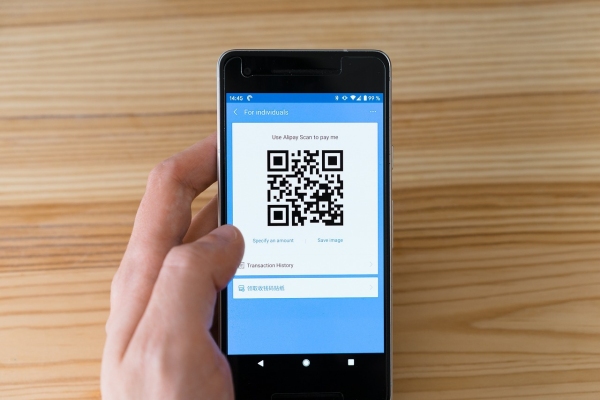
Image: Pixabay/viarami
On February 25 2026, Peoples Group announced a partnership with Fiserv to develop a next generation payments platform intended to serve financial institutions and fintechs across Canada.
The initiative combines Fiserv’s Enterprise Payments Platform with DNA core banking technology and represents one of Peoples Group’s largest technology investments. The infrastructure is designed to improve payment processing connectivity, support unified orchestration across card, account to account, and real time payment flows, and prepare for Payments Canada’s Real Time Rail environment.
The platform focuses on backend modernization rather than a consumer product launch. Peoples Bank of Canada, part of Peoples Group, continues to expand its role as a sponsor bank supporting fintech programs that rely on regulated balance sheet access, settlement infrastructure, and program management. Strengthening this capability can improve launch readiness for embedded finance, prepaid, and digital wallet partnerships while reducing reconciliation friction across payment channels.
Canadian payment modernization continues to advance in parallel to global peers, creating opportunities for infrastructure providers that invest early. Sponsor banks capable of supporting fintech scale with resilient payment processing and real time connectivity often become key enablers of ecosystem growth.
Peoples Group’s investment reflects how smaller specialized banks can play an outsized role in fintech enablement by focusing on platform capabilities rather than retail distribution.
Will deeper bank-fintech infrastructure partnerships accelerate Canada’s payment modernization timeline and expand the range of fintech products available to businesses and consumers?
The National Crowdfunding & Fintech Association (NCFA Canada) is a financial innovation ecosystem that provides education, market intelligence, industry stewardship, networking and funding opportunities and services to thousands of community members and works closely with industry, government, partners and affiliates to create a vibrant and innovative fintech and funding industry in Canada. Learn more.
| | |
|---|---|---|
| | |
February 26, 2026 | NCFA Feature | Payments And Money Movement

AI Generated Image: UK Payments Vision Delivery Committee
UK Regulatory Coordination is Clear While Canada Moves in Parallel
On February 26, 2026, the UK published a Payments Forward Plan (download 8 page PDF here)that gives fintechs something they rarely get in one place: a coordinated three year sequence for payments policy across HM Treasury, the Bank of England, the FCA, and the Payment Systems Regulator.
Great not just for regulatory coordination but for founders, operators, and investors who don't just need rules. They need timing, ownership, and a visible order of work and execution, which helps steer the ship and build market confidence for the future of payments, open banking, stablecoins, and digital money movement.
The Payments Forward Plan is a single sequenced plan with regulatory alignment from four regulatory authorities who collaborated on the Payments Vision Delivery Committee to execute the UK governments national payments vision. The roadmap covers retail payments, wholesale payments, and parts of digital assets, which means the UK is not treating payments as a narrow rails file. It is treating the next payments stack as a mix of bank rails, data sharing, digital money, and automation. That is what makes the document strategically useful. It gives the market a clearer view of what is coming, who carries which part of the file, and when firms should expect consultations, responses, gateways, and final rule work to land.
For as long as NCFA has been working in the financial technology sector, the UK has long been considered the 'gold standard'; the benchmark for fintech regulation for a simple reason. When regulators reduce uncertainty about what lands next, firms spend more time building and less time guessing. It gives the market a clearer path. That kind of visibility lowers planning friction across the sector and gives serious teams a better chance to line up product, compliance, and partnerships before the rest of the market catches up.
| Sector / Initiative | United Kingdom | Canada | Notes / Comments |
|---|---|---|---|
| Regulatory coordination and forward planning | One published cross regulator plan across HM Treasury, the Bank of England, the FCA, and the Payment Systems Regulator, with a visible three year sequence. | Canada now has active public workstreams across retail payments supervision, consumer driven banking, and the stablecoin framework, but those files still sit across separate policy pages. | Canada shows real movement across the same core layers. The main contrast is that the UK visibly puts more of the sequencing into one public roadmap. |
| Payments law and core policy sequencing | Q2 2026 HM Treasury consultation, Q4 2026 response, then FCA consultations and policy statements through 2027 and 2028. | Canada’s payments law sequencing is already live through the RPAA. Under the supervisory framework, PSP risk management and end user funds safeguarding requirements came into force on September 8, 2025, and firms that continue operating must meet ongoing supervision requirements. | Canada has moved from consultation into operating supervision. The UK gives a longer visible forward sequence, while Canada is already in live compliance mode on the PSP file. |
| Open banking and consumer directed data sharing | First live variable recurring payments under an industry led scheme in Q1 2026, FCA consultation in Q3 2026, and a policy statement in Q1 2027. | Canada’s Budget 2025 framework for consumer driven banking says the government will complete the Consumer Driven Banking Act, move quickly on phase one regulation after Royal Assent, and spend the next 12 to 18 months on a second phase that considers broader functionality, participant scope, and write access. See Canada Open Banking Commercialization Roadmap | Canada has a real public sequence here, even if it is not presented inside one cross regulator payments calendar. |
| Stablecoins, tokenised money, and tokenised deposits | Bank consultation work in H1 2026, final Bank rules by end 2026, FCA policy statement in mid 2026, authorisation gateway in Q3 2026, and broader regime live in October 2027. The plan also explicitly considers tokenised payments and tokenised deposits. | Canada’s official stablecoin framework says regulatory development starts after Royal Assent, continues over 12 to 18 months from early 2026, and is expected to come into force in 2027, with the Bank of Canada supervising issuers. | Both markets are active on stablecoins. The UK currently shows more visible choreography, while Canada already has a defined federal policy frame and implementation window. |
| Wholesale payments | The plan explicitly includes wholesale payments as part of the coordinated three year roadmap. | The Bank of Canada says its forward focus includes policy work on wholesale and retail payments infrastructure as part of broader payments system research and policy development. | Canada does have wholesale payments work in the official policy mix. What is less visible today is a single public milestone map that puts wholesale, retail, and digital assets on one page. |
| PSP oversight and supervisory perimeter | The forward plan folds payments supervision and upcoming rule work into one coordinated policy calendar across multiple authorities. | Under the RPAA mandate, the Bank of Canada supervises PSPs for operational risk, incident response, and end user fund protection, while the Minister of Finance handles national security screening. | Canada’s supervisory perimeter is already real and active. The distinction is not whether oversight exists. It is how visibly the next steps are sequenced in public. |
| Payments rail access and infrastructure participation | The UK plan covers retail and wholesale payments at a system level, including retail payments infrastructure design and short term enhancements to Faster Payments and Bacs by end 2026. | Canada’s membership expansion rules now let RPAA supervised PSPs apply for direct participation in Payments Canada systems, and five new PSPs were admitted on January 27, 2026: Wise, Float, KOHO, Paramount Commerce, and Brim. | Canada has moved from access policy to actual new entrants. That is a concrete infrastructure opening, even without one single national payments roadmap document. |
| CBDC and public digital money | The digital pound design phase remains active through 2026, with a blueprint and a decision on the future of the digital pound expected this year. | The Bank of Canada’s digital dollar page says it is scaling down work on a retail CBDC and shifting focus to broader payments system research and policy development, while continuing to monitor global retail CBDC developments and publish some related research. | Canada has stepped back from active retail CBDC build work and put payments supervision and infrastructure higher on the near term agenda. |
| Financial inclusion and emerging payment models | The plan explicitly includes financial inclusion and newer areas such as agentic AI payments inside the forward policy frame. | Canada’s consumer driven banking framework explicitly points to second phase work on write access and, beyond that, says the government is laying the foundation for broader open finance and open data that can support wider digital public infrastructure. | Canada is not mapping emerging payment models in the same broad way as the UK, but it's building policy groundwork that can widen payments and data driven product design over time. |
By publishing a 3 year future of payments roadmap, the UK is highlighting where it thinks the market is going. The plan explicitly pulls in open banking, stablecoins, tokenised payments, tokenised deposits, financial inclusion, agentic AI payments, and the digital pound design phase. Its fair to say that the UK sees the future of payments as an integrated stack where money movement, data access, programmable money, and automated decisioning increasingly sit in the same operating environment.
Payments firm may need to think about account access, stablecoin settlement, variable recurring payments, AI enabled workflows, and reporting standards as connected decisions, not separate roadmaps. The UK is effectively telling the market to plan that way now.
Canada’s issue is not a lack of movement. Open banking is moving. RPAA oversight is live. Stablecoin policy is taking shape. Payments Canada is widening access. The broader official backdrop is visible through Finance Canada’s financial sector policy hub. But firms still need to piece the sequence together from separate government pages, regulator actions, and infrastructure updates. That makes timing harder for founders, adds friction to internal planning, and creates more room for confusion in partner conversations.
The UK plan stands out because it cuts through that problem directly. It gives the market a more visible order of operations. Canada has substance, but not yet the same kind of single public sequencing document. That means more of the roadmap still has to be assembled by the private sector, which raises the execution burden on founders and operators who want to build ahead of policy instead of behind it.
For founders, if your business touches payments, open banking, stablecoins, treasury workflows, or digital money infrastructure, a visible sequence helps you decide what to build first, which approvals matter most, and when to line up counterparties. It also changes how you sell. Buyers trust teams that can point to named milestones and show how their roadmap lines up with them.
For investors, the plan gives a cleaner way to test whether a management team understands the path ahead or is still talking in broad trends. Companies that map product work to visible regulatory milestones usually carry less policy execution risk than companies that wait for each new rule to land before they react. That same test now applies in Canada too. The opportunity is real, but it rewards teams that can connect the dots across consumer driven banking, RPAA supervision, Payments Canada access, and stablecoin policy without waiting for one master roadmap to do it for them.
The UK has now published a cross regulator payments calendar with real ownership and visible sequencing for the next three years. Canada has real progress across the same core layers, but the path still takes more work to assemble. That is the real contrast. One market hands firms more of the map. The other still asks them to build more of it themselves. For on-going tracking of key impacts that matter most to markets, keep an eye on NCFA Fintech Whisperer Weekly Fintech Intelligence as the UK timeline advances and Canada’s separate pieces continue to progress.
The National Crowdfunding & Fintech Association (NCFA Canada) is a financial innovation ecosystem that provides education, market intelligence, industry stewardship, networking and funding opportunities and services to thousands of community members and works closely with industry, government, partners and affiliates to create a vibrant and innovative fintech and funding industry in Canada. Decentralized and distributed, NCFA is engaged with global stakeholders and helps incubate projects and investment in fintech, alternative finance, crowdfunding, peer-to-peer finance, payments, digital assets and tokens, artificial intelligence, blockchain, cryptocurrency, regtech, and insurtech sectors. Join Canada's Fintech & Funding Community today FREE! Or become a contributing member and get perks. For more information, please visit: www.ncfacanada.org
| | |
|---|---|---|
| | |


August 26th, 2025

January 4th, 2024

June 1st, 2021

September 9th, 2020

July 9th, 2018

January 3rd, 2018

September 25th, 2017

June 20th, 2017

May 10th, 2017

December 14th, 2016