



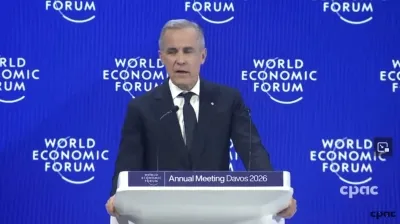

Karsten Wenzlaff, Advisor
August 26th, 2025
Karsten Wenzlaff is a Crowdfunding and Fintech Expert from Germany. He is Secretary-General of Digit[...]


Crypto | April 28, 2025

Image: Freepik/pikisuperstar
Never a dull moment. Last week, Trump announced a special dinner with the President for the top 220 token holders (see gamified leaderboard) of his $TRUMP meme coin. The event is scheduled to take place May 22, 2025 at the at Trump National Golf Club near Washington, D.C.
Following the news the token surged more than 50% in value, however the presidential self-promotion has triggered more ethical concerns including calls for impeachment by U.S. Democratic Senator Jon Ossoff who warns that selling access to a sitting president via a crypto contest could constitute 'an impeachable offense'.
Historically, political donations are highly regulated with disclosure rules, donation caps, and transparency requirements but Trump's meme coin crypto model offers anyone who buys his $TRUMP token and holds it during the contest (no political donation required), can get access to a sitting president without any sort of formal tracking or financial reporting.
The Federal Election Commission regulates official campaign fundraising but crypto tokens tied to personal brands or unofficial committees fall outside of their oversight.
The contest fuelled interpretation rumours that a minimum of $300,000 would be required to get on the list, however Trump's meme coin social team clarified on x.com that anyone could join the dinner if they are one of the top 220 token holders. As of April 28, the 220th on the leaderboard is holding about 898 tokens or a value of approx 13k USD. Participants in the contest must register their rankings which are based on time weighted holdings for the duration of the contest period.
The $TRUMP team also clarified that insider held tokens will remain locked for an additional 90 days to avoid concerns of a rug pull where early holders dump tokens after promotional events.
Offering personal access to a sitting president in exchange to boost their personal token value has alarmed lawmakers. As reported by Decrypto, Senator Elizabeth Warren and Representative Adam Schiff have called for a federal ethics investigation. Senator Jon Ossoff went further, suggesting that the arrangement could justify impeachment if it is found that Trump broke the rules of how public officials and sitting presidents are supposed to behave.
President Trump is sidestepping rules of how politicians are meant to act, and at the same time, cryptocurrencies are enabling politicians to raise money directly with fewer rules.
 The National Crowdfunding & Fintech Association (NCFA Canada) is a financial innovation ecosystem that provides education, market intelligence, industry stewardship, networking and funding opportunities and services to thousands of community members and works closely with industry, government, partners and affiliates to create a vibrant and innovative fintech and funding industry in Canada. Decentralized and distributed, NCFA is engaged with global stakeholders and helps incubate projects and investment in fintech, alternative finance, crowdfunding, peer-to-peer finance, payments, digital assets and tokens, artificial intelligence, blockchain, cryptocurrency, regtech, and insurtech sectors. Join Canada's Fintech & Funding Community today FREE! Or become a contributing member and get perks. For more information, please visit: www.ncfacanada.org
 |  |  |
|---|---|---|
 |  |  |
DeFi | April 24, 2025

Image: Freepik/fullvector
In April 2025, the Bank for International Settlements (BIS) published a new report called 'Cryptocurrencies and decentralised finance: functions and financial stability implications' that could impact how regulators approach decentralized finance (DeFi). For the first time, the BIS explores the idea that smart contracts could help enforce certain regulatory rules within the code itself. To be clear, the BIS doesn't say that smart contract algorithms will replace oversight but it suggests that certain protections like disclosure requirements or prohibiting (or limiting) risk transactions could be built directly into the code.
At the same time, the BIS makes it clear that code alone is not enough. Behind every protocol is a developer, a team, or a group of people in-real-life (IRL) that makes decisions when designing or maintaining the system. These people often manage access, risk settings and upgrades. The BIS is saying that if DeFi is going to be safe and trusted then regulators must consider both the smart contract system and the people who develop and influence it.
Self-executing smart contracts are at the heart of DeFi. They allow users to lend, borrow, trade, and stake assets without relying on intermediaries like a centralized financial institution. Once a smart contract is deployed to the blockchain, it executes transactions exactly as coded, without exceptions. This fact makes them potentially powerful tools for embedding and enforcing basic safeguards to protect stakeholders that interact with these contracts like investors.
The BIS seems to support this concept (BIS Paper No. 156, page 22):
“Regulation could then be embedded in smart contracts to make sure that rules were met. Examples… include ensuring that smart contracts were executed in line with the status of the ledger, that the disclosure of information took place or that ‘best execution’ requirements have been met.”
What this means is that if a smart contract fails to meet a preset condition, such as price fairness or a collateral threshold requirement, it could automatically trigger a manual review. This would reduce the need for full manual checks on all transactions, and the smart contracts could require public disclosures are met before transactions were allowed. These types of technical safeguards would run automatically and help reduce fraud, bias, or delay. But the BIS says, automation has limits.
The BIS highlights that smart contracts do not govern themselves. That is, behind every DeFi protocol is a group of developers (tech/business/legal/investor or otherwise) that decides how the code will work, who can update it, and affect the direction it takes.
BIS quotes on Page 21:
“It would be useful to analyse the entities (and persons) exerting de facto control of a DeFi protocol…”
In many DeFi systems, the people involved are often anonymous or semi-anonymous, yet they can often have administrative access or governance power. Given the high stakes in such a financial system, it raises serious questions about accountability. Who is on the hook when problems arise?
Canada has a strong, innovative, and growing DeFi community with many projects being launched and experimented with. These project teams often create complex and secure smart contracts but may lack a clear acc0untability structure so users can face real risks. The BIS's report outlines two layers of protection related to governance.
1. The first is technical. Smart contracts could/should enforce baseline rules around transparency, fairness, and market integrity, without human intervention.
2. The second is organizational. Developers and governance teams must be identifiable, transparent, and where appropriate, regulated. That could mean setting minimum standards, requiring disclosures, or creating a new legal category for protocol operators.
The HM Treasury in the United Kingdom released a paper in February 2023 titled "Future financial services regulatory regime for cryptoassets" that discusses various options for bringing DeFi activities into the regulatory perimeter - section 11.6:
"One option for regulating DeFi is to define a set of DeFi-specific activities – e.g. 'establishing or operating a protocol' – as regulated activities under the RAO (or DAR). The persons carrying out those activities would then require authorisation, and the FCA could design a bespoke regime around these regulated activities."
The BIS report covers a range of updated views on cryptocurrency topics, as adoption continues to grow globally. The BIS is looking for a path that DeFi can grow (not advocating to centralize or shut it down) but with guardrails to protect users and the financial system. Smarter regulation is where 'code and community' can collaborate with a novel system pushing boundaries.
The National Crowdfunding & Fintech Association (NCFA Canada) is a financial innovation ecosystem that provides education, market intelligence, industry stewardship, networking and funding opportunities and services to thousands of community members and works closely with industry, government, partners and affiliates to create a vibrant and innovative fintech and funding industry in Canada. Decentralized and distributed, NCFA is engaged with global stakeholders and helps incubate projects and investment in fintech, alternative finance, crowdfunding, peer-to-peer finance, payments, digital assets and tokens, artificial intelligence, blockchain, cryptocurrency, regtech, and insurtech sectors. Join Canada's Fintech & Funding Community today FREE! Or become a contributing member and get perks. For more information, please visit: www.ncfacanada.org
| | |
|---|---|---|
| | |
Fraud Prevention | April 17, 2025

Image: Freepik
On March 11-12, 2025, Canadian regulators led by the British Columbia Securities Commission (BCSC) and federal police coordinated a large scale effort that warned 89 crypto investors about a sophisticated scam that has already drained over $4.3 million in digital assets.
The operation, named Operation Avalanche, focused on a phishing technique that compromises users' Ethereum wallets and allows scammers to extract funds without them realizing what's happening to them.
Led by the BCSC, Operation Avalanche was a 2 day joint initiative involving multiple provincial regulators, federal law enforcement, and crypto trading platforms. The primary objective was to track fraudulent activity on the Ethereum blockchain, identify affected wallets, and proactively alert Canadians before their funds were stolen.
The Ontario Securities Commission (OSC), Alberta Securities Commission (ASC), and Quebec’s Autorité des marchés financiers (AMF) all participated in the effort, alongside the Royal Canadian Mounted Police (RCMP), Vancouver Police, Delta Police, and the U.S. Secret Service.
Blockchain forensics firm, Chainalysis, provided technical support to locate and analyze all compromised wallet activity.
A total of 7 registered crypto platforms participated in the fraud prevention effort, including Netcoins, NDAX, Coinbase Canada, Wealthsimple, Shakepay who helped verify wallet ownership and victim outreach. Additionally, Kraken and Coinsquare both provided data support.
The scam uses a technique called 'approval phishing' where victims are duped into granting scammers permission to access their crypto wallets by clicking fake approval requests that look like they come from legitimate platforms. These scam links are usually sent from fraudulent websites, spoofed emails, or fake pop-ups.
Once the wallet owner grants approval, the scammer can transfer assets out of the wallet without needing login credentials or seed phrases. Most victims are unaware that this could happen until it's too late.
The crackdown team used blockchain analytics tools to scan Ethereum for wallet addresses with suspicious approval activity. Then, they were able to link many of these wallets to real individuals with the cooperation of crypto trading platforms.
In total, 89 wallet holders were identified and contacted directly, warning them that their wallets were compromised or at high risk. This proactive early warning allowed some victims to revoke access or move their funds before more damage was done.
Bonnie Lysyk, EVP Enforcement at the OSC:
“Proactive and innovative approaches are crucial in disrupting fraud. By staying ahead of emerging threats and leveraging advanced technologies, we can protect investors and maintain the integrity of our financial markets.”
If you believe they may have clicked a suspicious approval link or noticed strange transactions you should act quickly by taking key steps:
Great to see the coordination among key enforcement and operational stakeholders, the 'action' and impact speaks volumes. Learn more about Operation Avalanche and more information about how to protect yourself from phishing approval scams.
The National Crowdfunding & Fintech Association (NCFA Canada) is a financial innovation ecosystem that provides education, market intelligence, industry stewardship, networking and funding opportunities and services to thousands of community members and works closely with industry, government, partners and affiliates to create a vibrant and innovative fintech and funding industry in Canada. Decentralized and distributed, NCFA is engaged with global stakeholders and helps incubate projects and investment in fintech, alternative finance, crowdfunding, peer-to-peer finance, payments, digital assets and tokens, artificial intelligence, blockchain, cryptocurrency, regtech, and insurtech sectors. Join Canada's Fintech & Funding Community today FREE! Or become a contributing member and get perks. For more information, please visit: www.ncfacanada.org
| | |
|---|---|---|
| | |
Crypto Launch | April 17, 2025

AI Image: Spot Solana ETFs with Staking Launch on TSX
Canada’s financial regulators have done it again. Credit to Bloomberg ETF analyst Eric Balchunas, who first flagged that the Ontario Securities Commission (OSC) gave the green light on April 14 for 3iQ, Evolve, CI Global Asset Management, and Purpose Investments to list the first spot Solana exchange-traded funds (ETFs) products in North America on April 16, 2025.
The new funds started trading on the Toronto Stock Exchange (TSX), offering direct ownership of Solana (SOL), including the potential to earn staking rewards. Meanwhile, U.S. investors are still limited to Solana futures ETFs while Canadian's have access to the real thing, that is spot SOL with staking which allows investors to earn additional SOL by offering them in a staking pool to help secure the network by validating blockchain transactions.
Solana is of one of the world's largest blockchains with a market cap of $69.4 billion at the time of writing. It's fast, low cost platform that powers everything from decentralized finance to NFTs, games, and even meme coins like $TRUMP. Sometimes referred to as the Ethereum killer because of its high transaction speed and low fees. SOL is the native token used to pay for network activity and also powers staking.
All four new ETFs actually hold SOL tokens, not futures contracts, so they are tied directly to the market price of Solana. As mentioned above, they also allow participation in staking, a key feature of Solana's proof-of-stake design.
By staking the fund’s holdings, investors can potentially increase the amount of SOL they own over time. Staking rewards vary and are subject to blockchain conditions but typical yields for staking SOL have ranged from 6% to 8% annually. By comparison, Wealthsimple supports direct crypto investments including SOL, which currently offers a staking yield of 4.1%.
| ETF Name | TSX Ticker(s) | Management Fee | Staking Notes |
| Evolve Solana ETF | SOLA (CAD), SOLA.U (USD) | 0% in 2025, 1.00% after Jan 1, 2026 | Up to 50% SOL staked. Provider not disclosed. |
| 3iQ Solana Staking ETF | SOLQ | 0% for 12+ months, then 0.15% | Uses Figment as staking provider. Staking reward split not publicly disclosed. |
| CI Galaxy Solana ETF | SOLX | 0% until July 16, then 0.35% | CI GAM receives up to 35% of staking rewards. 65% accrue to fund. Staking provider not disclosed. |
| Purpose Solana ETF | SOLL (CAD Hedged), SOLL.B (CAD), SOLL.U (USD) | 0.39% | Uses in-house validator. Staking amount and reward split not disclosed. |
Canada was first to approve spot Bitcoin and spot Ethereum ETFs in 2021, and now it’s proving it's leadership again in regulated crypto innovation by approving the first spot Solana ETFs in North America (NB: first spot Solana ETF globally launched in Brazil).
According to Investment Executive, the launch of the funds have attracted interest from firms as far as Taiwan, showing global interest in these Canadian listed crypto products. We anticipate U.S. approvals to come eventually but for now, Canadian funds have a first mover advantage, especially with staking built in.
The National Crowdfunding & Fintech Association (NCFA Canada) is a financial innovation ecosystem that provides education, market intelligence, industry stewardship, networking and funding opportunities and services to thousands of community members and works closely with industry, government, partners and affiliates to create a vibrant and innovative fintech and funding industry in Canada. Decentralized and distributed, NCFA is engaged with global stakeholders and helps incubate projects and investment in fintech, alternative finance, crowdfunding, peer-to-peer finance, payments, digital assets and tokens, artificial intelligence, blockchain, cryptocurrency, regtech, and insurtech sectors. Join Canada's Fintech & Funding Community today FREE! Or become a contributing member and get perks. For more information, please visit: www.ncfacanada.org
| | |
|---|---|---|
| | |
Crypto Regulation | April 15, 2025

Image: Freepik/rawpixel.com
On April 10, 2025, U.S. President Trump signed a bill cancelling a key IRS crypto reporting rule that would have required decentralized finance (DeFi) platforms to report customer transactions to the tax agency.
The IRS' rule was called "Gross Proceeds Reporting by Brokers That Regularly Provide Services Effectuating Digital Asset Sales", which expanded the scope of traditional broker definitions to include DeFi apps like Uniswap and Metamask, and had an effective date of February 28, 2025. However, the IRS provided a transition period given the reporting complexities involved, so the rule was set to apply to digital asset sales occurring after January 1, 2027. But with Trump's bill nullifying the IRS rule, the implementation is now cancelled and the rule is officially gone.
What does this mean for fintechs, crypto startups, and regulators in Canada?
The IRS crypto reporting rule was part of a broader push to increase tax compliance among crypto users but industry argued that it wasn't manageable because DeFi platforms don't control their user's data. Often, there isn't a centralized entity to collect or report it. Develops were also at risk of facing penalties for software they didn't directly operate.
Industry associations and legal experts warned that the IRS's rule would push DeFi innovation offshore, so Congress listened and used the Congressional Review Act, and the House voted to repeal the rule on March 11.
Then the Senate did too with 70-28 bipartisan support on March 26. Now the bill has been signed into law and you can read it here.
The repeal of the IRS DeFi crypto reporting rule signals again that the United States is backing away from aggressive regulation on crypto and decentralized platforms. It puts pressure on other jurisdictions including Canadian policymakers to clarify their own positions. Canada recently implemented it's own crypto reporting rules which the Canadian Revenue Agency (CRA) will start enforcing by 2027.
With the U.S. now seemingly a more welcoming environment for DeFi developers, Canada risks falling behind, especially if companies and capital start shifting strategies and offices to the U.S. for more flexibility and fewer rules. With the IRS rule now gone, DeFi projects based in the U.S. may suddenly look more appealing to venture capital and institutional backers. If that's the case, then Canadian fintechs would be at a disadvantage if local policies become too burdensome or vague.
Canadian users engaging with U.S. DeFi platforms may now face uncertainty over how these transactions should be reported domestically, given that there will be no equivalent enforcement on the U.S. side of the border. As such, the CRA may need to update guidance to avoid future confusion.
With jurisdictions like the UAE, Singapore, Hong Kong, and the UK positioning themselves as global crypto centres, and the U.S. now looking like to be rejoining the global race, Canada will need to decide whether it can keep pace and remain competitive, or risk falling behind. The window to design a more innovation friendly approach to help strengthen Canada's role as a global fintech hub will only be open for a short time.
Now is the time to ask tough questions about competitiveness, policy leadership, and how we balance innovation with responsibility. If we want to shape the future of financial services, we need to act quickly and wisely.
The National Crowdfunding & Fintech Association (NCFA Canada) is a financial innovation ecosystem that provides education, market intelligence, industry stewardship, networking and funding opportunities and services to thousands of community members and works closely with industry, government, partners and affiliates to create a vibrant and innovative fintech and funding industry in Canada. Decentralized and distributed, NCFA is engaged with global stakeholders and helps incubate projects and investment in fintech, alternative finance, crowdfunding, peer-to-peer finance, payments, digital assets and tokens, artificial intelligence, blockchain, cryptocurrency, regtech, and insurtech sectors. Join Canada's Fintech & Funding Community today FREE! Or become a contributing member and get perks. For more information, please visit: www.ncfacanada.org
| | |
|---|---|---|
| | |
Regulation | April 10, 2025

Image: Freepik
On April 4, 2025, the U.S. Securities and Exchange Commission (SEC) issued a statement that clarified some U.S. dollar-backed stablecoins may not be considered securities. While the statement was welcomed and creates some breathing room for crypto and fintech projects, the announcement ignited an internal debate at the SEC and many are wondering what's next.
The SEC said certain U.S. dollar-backed stablecoins (referred to as 'Covered Stablecoins') are not considered securities if they have all of the following characteristics:
Basically, a 'covered stablecoin' must behave like digital cash, and used for payment transactions, fully backed, and free of any rights, ownership or expectation of profit. If the token acts like cash (and not a stock) then it likely isn't a security. This offers a clearer path for some stablecoins like USDC or USDP.
Not everyone at the SEC agrees with the above perspective though. On the same day, Commissioner Caroline Crenshaw published a statement titled "'Stablecoins' or Risky Business" warning that most people acquire stablecoins through intermediaries like a crypto exchange, and in many cases they don’t have the legal right to redeem them directly. This creates a risk for retail purchasers who may think that these coins are safer than the really are. Crenshaw highlighted that these tokens can still break their dollar peg or have liquidity issues, especially in a crisis.
Caroline Crenshaw, SEC Commissioner argued that the statement "downplays the risks associated with stablecoins," saying that "over 90% of these stablecoins are distributed through intermediaries, leaving retail holders without direct redemption rights and exposing them to potential market volatility."
While the SECs statement on stablecoins helps clarity one area, it leaves many other types of stablecoins that do not meet the 'covered stablecoin' requirements in a legal gray zone. And just because the SEC says it won’t pursue enforcement doesn’t mean other agencies won’t step in. Additionally, there are ongoing discussions in Congress for the STABLE Act and the GENIUS Act that could result in new federal laws that override or change the current stablecoin guidance.
It's positive that the SEC has given a green light to a limited type of payment-orientated stablecoins but the final stablecoin rules aren't settled, and there are still many big unknowns up in the air. It's still a work in progress.
The National Crowdfunding & Fintech Association (NCFA Canada) is a financial innovation ecosystem that provides education, market intelligence, industry stewardship, networking and funding opportunities and services to thousands of community members and works closely with industry, government, partners and affiliates to create a vibrant and innovative fintech and funding industry in Canada. Decentralized and distributed, NCFA is engaged with global stakeholders and helps incubate projects and investment in fintech, alternative finance, crowdfunding, peer-to-peer finance, payments, digital assets and tokens, artificial intelligence, blockchain, cryptocurrency, regtech, and insurtech sectors. Join Canada's Fintech & Funding Community today FREE! Or become a contributing member and get perks. For more information, please visit: www.ncfacanada.org
| | |
|---|---|---|
| | |
Consenus 2025 | April 7, 2025

NCFA Canada is excited to be an official Community Partner for Consensus Toronto 2025, happening May 14–16 at the Metro Toronto Convention Centre. Produced by CoinDesk, Consensus is the world’s most influential gathering of leaders in blockchain, crypto, Web3, and digital finance—bringing together founders, regulators, investors, policymakers, developers, and creators from around the globe.
With the conference just over a month away, we’re celebrating by launching the “Pitch the Future” Ticket Giveaway Contest — your chance to win a FREE Pro Pass (worth $950 USD) and join the action in Toronto alongside thousands of Web3 innovators.
Have a bold idea, future trend, or big vision? Building something cool and want to share it with the world? Tell us why you should be there, and you just might be!
The ticket giveaway runs from now until April 30, 2025
To be eligible to participate, follow both NCFA and @consensus2025 on at least one of our social channels like Instagram, X, Facebook or @CoinDesk #Consensus2025 on LinkedIn, depending on where you post your entry.
Post any one of the following (we’re keeping it flexible and fun!):
Your pitch can be a short video, text post, image, or attachment—we’re open to creative formats!
➡️ Be sure to tag @ncfacanada and @consensus2025 and use the hashtag #Consensus2025.
Help spread the word and support the community:
Whether you're building the future, predicting it, or just hungry to be part of it, this is your shot to join the global Web3 community at Canada’s biggest crypto event of the year. Get your post up before April 30, and we’ll see you in Toronto!
The National Crowdfunding & Fintech Association (NCFA Canada) is a financial innovation ecosystem that provides education, market intelligence, industry stewardship, networking and funding opportunities and services to thousands of community members and works closely with industry, government, partners and affiliates to create a vibrant and innovative fintech and funding industry in Canada. Decentralized and distributed, NCFA is engaged with global stakeholders and helps incubate projects and investment in fintech, alternative finance, crowdfunding, peer-to-peer finance, payments, digital assets and tokens, artificial intelligence, blockchain, cryptocurrency, regtech, and insurtech sectors. Join Canada's Fintech & Funding Community today FREE! Or become a contributing member and get perks. For more information, please visit: www.ncfacanada.org
| | |
|---|---|---|
| | |


August 26th, 2025

January 4th, 2024

June 1st, 2021

September 9th, 2020

July 9th, 2018

January 3rd, 2018

September 25th, 2017

June 20th, 2017

May 10th, 2017

December 14th, 2016
