





Karsten Wenzlaff, Advisor
August 26th, 2025
Karsten Wenzlaff is a Crowdfunding and Fintech Expert from Germany. He is Secretary-General of Digit[...]


Acquisition | June 30, 2025

Image: Freepik AI
On June 30, 2025, Burnaby-based Canadian legaltech firm Clio announced that it entered into a definitive agreement to acquire U.S. firm vLex for $1 billion USD in cash and stock. This is the largest acquisition in Clio's history and one of the most significant software deals ever led by a Canadian company. The deal merges Clio's legal operating system with vLex's AI-powered research platform to create a unified and intelligent legal system.
The combined platform currently serves over 200,000 legal professionals and includes vLex’s multilingual legal database and its AI engine Vincent, already trusted by law firms, courts, and legal associations in more than 110 countries.
The deal is expected to close later in 2025, pending regulatory approvals. Clio was advised by Goldman Sachs, with legal support from Osler, Hoskin & Harcourt LLP, Wilson Sonsini, and Gowling WLG. vLex was advised by J.P. Morgan, with legal counsel from A&O Shearman and Uría Menéndez. See the vLex announcement
Clio’s system simplifies firm operations while vLex’s technology provides legal insight across jurisdictions. Together, imagine a legaltech platform that combines task management, research, drafting, and smart analysis all in one place. By uniting all of these functions, the platform can support small firm use cases all the way to enterprise workflows in a single system.
Jack Newton, CEO and founder of Clio, said this is the beginning of a new era for the company and the legal profession. It didn't happen overnight. For seventeen years Clio has built tools to help law firms run efficiently. Now, jointed with vLex, it can add intelligence that understands legal content. Newton explained this further in a conversation with LawNext.
The times are changing in legaltech. According to the Q2 2025 Emerging Tech SaaS Report from PitchBook (subscription required), vertical SaaS acquisitions have increased by over 40% this year. Companies are integrating domain specific AI into platforms that combine workflow with insight. Clio and vLex are now a clear example of that trend.
vLex’s Vincent AI is capable of analyzing legal documents, audio, and video, and it can also support legal theory testing and custom workflows. These capabilities are essential for trusted, high value use cases in regulated environments, and they are creating an entirely new category of intelligent legal infrastructure.
vLex is backed by Oakley Capital, a UK based private equity firm. Clio's deal is Oakley’s third major legaltech exit in the past two years, pointing to the growing maturity of legal intelligence platforms.
Canadian policymakers should take notice of what's possible when national tech companies are supported in scaling globally. It offers a template for other sectors from finance to insurance to healthcare where regulated services require trusted, explainable AI. The acquisition is showing how these platforms can work in practice across different levels of complexity and jurisdictions.
Clio's deal puts a Canadian company in a leading position in global legal AI, and offers a model for how other high trust sectors could follow. That is how intelligent systems based on the knowledge economy, trusted data, and applied AI are likely to impact professional services in the years to come.
 The National Crowdfunding & Fintech Association (NCFA Canada) is a financial innovation ecosystem that provides education, market intelligence, industry stewardship, networking and funding opportunities and services to thousands of community members and works closely with industry, government, partners and affiliates to create a vibrant and innovative fintech and funding industry in Canada. Decentralized and distributed, NCFA is engaged with global stakeholders and helps incubate projects and investment in fintech, alternative finance, crowdfunding, peer-to-peer finance, payments, digital assets and tokens, artificial intelligence, blockchain, cryptocurrency, regtech, and insurtech sectors. Join Canada's Fintech & Funding Community today FREE! Or become a contributing member and get perks. For more information, please visit: www.ncfacanada.org
 |  |  |
|---|---|---|
 |  |  |
Financial Planning | June 27, 2025

Image: Freepik/Rawpixel.com
On June 23, 2025, Winnipeg-based financial technology company, Conquest Planning, announced they had raised $80 million USD ($110 million CAD) Series B financing round led by Growth Equity at Goldman Sachs Alternatives. The round also includes participation from Canapi Ventures, BDC Capital, Citi Ventures, TIAA Ventures, USAA, Portage, and BNY.
Founded in 2018, Conquest provides AI-powered financial planning software used by more than 1,000 organizations across Canada, including RBC, Manulife, Raymond James, and BNY Pershing. The company’s Strategic Advice Manager (SAM) platform has already generated over 1.5 million financial plans.
This new capital injection will fund Conquest’s expansion into the United States and United Kingdom, while accelerating the launch of two product innovations
This investment comes at a time when personalized financial advice is out of reach for many Canadians. NCFA’s recent review of financial planning gaps based on data from the Financial Conduct Authority unveils several underserved segments, including:
These segments often rely on informal advice, lack access to tailored planning tools, or simply avoid engaging with the financial system altogether. Conquest’s scalable and accessible tools have the potential to close some of these gaps.
The introduction of SAM Bytes aims to bring quality financial planning to families who are not currently served by human advisors. This is especially relevant for households navigating complex financial decisions, such as starting a business or expanding a family.
Demand is growing for platforms that provide affordable, real-time, and personalized advice built on real data and delivered in plain language. For NCFA members working on financial inclusion, wealth building, and life stage transitions, Conquest Planning is one to watch.
The National Crowdfunding & Fintech Association (NCFA Canada) is a financial innovation ecosystem that provides education, market intelligence, industry stewardship, networking and funding opportunities and services to thousands of community members and works closely with industry, government, partners and affiliates to create a vibrant and innovative fintech and funding industry in Canada. Decentralized and distributed, NCFA is engaged with global stakeholders and helps incubate projects and investment in fintech, alternative finance, crowdfunding, peer-to-peer finance, payments, digital assets and tokens, artificial intelligence, blockchain, cryptocurrency, regtech, and insurtech sectors. Join Canada's Fintech & Funding Community today FREE! Or become a contributing member and get perks. For more information, please visit: www.ncfacanada.org
| | |
|---|---|---|
| | |
Stablecoins | June 13, 2025
On June 12, 2025, Shopify announced that USDC stablecoin payments will be made available to its global merchant base via a new partnership with Coinbase and Stripe. So merchants can now accept USD Coin via Coinbase' Base Blockchain. This new payment feature is available in early access and will expand over time to offer fast, borderless payments without foreign exchange fees and integrated support for crypto wallets through Stripe.
Merchants using Shopify Payments can now accept USDC from supported crypto wallets through guest checkout and Shop Pay. By default, they receive payouts in their local currency, with no foreign exchange fees. Alternatively, they can choose to retain USDC in their own wallets. Transactions are processed using a bespoke smart contract system on the Base network, jointly developed by Shopify and Coinbase. This new payment layer is purposely built to offer similar functions as traditional card networks, allowing features such as delayed capture, tax finalization, and inventory reservation to work natively with stablecoin payments. So stablecoin checkout process will act just like normal e-comm payments but with the benefits of being faster and global.
Shopify recently acquired Privy which gives Shopify access to a wallet layer that integrates smoothly with both new and existing platforms. Stripe acquired Bridge, which provides the stablecoin rails needed to connect wallet payments to practical merchant settlements. So thanks to Stripe's backend capabilities, merchants won't have to manage blackchain infrastructure but payments will appear on their dashboard as any other transaction would.
Stablecoins offer three major benefits which allow small businesses to access global markets, receive payments quickly, and reduce reliance on expensive or delayed banking infrastructure:
Stablecoins have been all the rage recently, but there should be no doubt now that they've moved beyond hype and being adopted in real world scenarios at scale. The confluence of proven technology, incentives, and aligning regulations make stablecoin payments ready for prime time, and everyday merchants.
Shopify has widespread reach, serving millions of businesses globally every day from startups to large brands. It's somewhat clever to mimick existing card payment flows because it reduces learning curves and some friction points for retails.
Stripe's wallet to fiat infrastructure removes the complexity of crypto for every day merchants.
Stablecoin policies in the U.S. are moving forward, creating a legal pathway for this type of integration to work. The landscape was vastly different only a year ago. The GENIUS Act aims to provide clear rules for dollar-backed stablecoins like USDC.
This move will add significant competitive pressure to competing payment processors, and e-commerce merchant ecosystems. Expect Meta, Apple Pay, PayPal, Walmart, and Amazon to follow soon. Oh look, they already have started to move.
This is no longer a pilot. I repeat, this is no longer a pilot. Stablecoin infrastructure is being released into production at scale.
The National Crowdfunding & Fintech Association (NCFA Canada) is a financial innovation ecosystem that provides education, market intelligence, industry stewardship, networking and funding opportunities and services to thousands of community members and works closely with industry, government, partners and affiliates to create a vibrant and innovative fintech and funding industry in Canada. Decentralized and distributed, NCFA is engaged with global stakeholders and helps incubate projects and investment in fintech, alternative finance, crowdfunding, peer-to-peer finance, payments, digital assets and tokens, artificial intelligence, blockchain, cryptocurrency, regtech, and insurtech sectors. Join Canada's Fintech & Funding Community today FREE! Or become a contributing member and get perks. For more information, please visit: www.ncfacanada.org
| | |
|---|---|---|
| | |
Fintech Financing | May 22, 2025
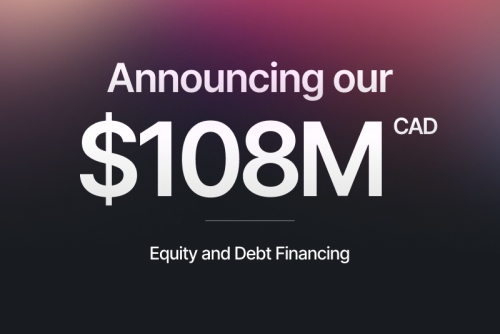
Image: Keep Announces 108M funding
On May 20, 2025, Toronto-based fintech Keep revealed that it raised C$108 million in new funding to reinvent small business finance in Canada. The funding round includes C$33 million in equity financing led by Tribe Capital, plus C$71 million credit facility from Treville Capital, and C$4 million in venture debt from Silicon Valley Bank.
Founded by Oliver Takach and Helson Taveras, Keep is specifically designed for Canadian small and medium sized businesses (SMEs or SMBs) and provides an integrated financial suite of tools, such as automated expense management, a rewards-based business credit card, multi-currency accounts, and flexible global bill payments.
Oliver Takach, CEO Keep said in a CEO letter:
Keep was born from that frustration. I went into the branch. Twice. I signed personal guarantees. I paid fees no one could explain. And in the end, they still wouldn’t give me a business credit card.”
Canada’s small business sector is the backbone of the economy, contributing more than 40% of GDP and accounts for over 98 percent of all employer businesses. Keep estimates that the small business banking market in Canada is worth $500B, which is dominated by legacy institutions who continue to rely on paper-based underwriting, limited tools and integrations, and haven't adapted products to align with modern workflows or regulatory requirements.
Yet, many entrepreneurs remain locked out of fast, reliable credit and banking tools, which is what Keep's platform is designed to solve. Since launching in 2022, Keep has on-boarded over 3,000 SMBs across a range of industries, and has surpassed C$20 million in annualized revenue. The company also reports a 300% net dollar retention rate, reflecting strong adoption and satisfaction.
Glen Napier, CEO of James G Armour & Co.:
"With Keep, we've cut our financial admin time by 80%. The integration of their products was seamless and helped us double our revenue in just six months. What used to take weeks with traditional banks now happens instantly."
Keep operates in a competitive domestic market that includes startups like Float, Loop, and Venn, aiming to differentiate itself by providing an all-in-one model that integrates core financial tools rather than offering individual product solutions.
Investor confidence seems to agree with the strategy. The latest found has attracted both returning and new backers including Rebel Fund, Liquid2 Ventures, Cambrian, and Assurant Ventures, as well as individual investors from Stripe, Coinbase, Robinhood, Plaid, and Chime.
Takach said, "By 2027, we aim to serve 100,000 small businesses across Canada and help them save over a quarter billion dollars in fees annually.”
Backed by global investors, the Canadian fintech industry keeps getting stronger. Keep's emergence from stealth to grow founder-led financial infrastructure to support how entrepreneurs actually operate will help close gaps left by traditional banks. Domestic competition is heating up.
The National Crowdfunding & Fintech Association (NCFA Canada) is a financial innovation ecosystem that provides education, market intelligence, industry stewardship, networking and funding opportunities and services to thousands of community members and works closely with industry, government, partners and affiliates to create a vibrant and innovative fintech and funding industry in Canada. Decentralized and distributed, NCFA is engaged with global stakeholders and helps incubate projects and investment in fintech, alternative finance, crowdfunding, peer-to-peer finance, payments, digital assets and tokens, artificial intelligence, blockchain, cryptocurrency, regtech, and insurtech sectors. Join Canada's Fintech & Funding Community today FREE! Or become a contributing member and get perks. For more information, please visit: www.ncfacanada.org
| | |
|---|---|---|
| | |
Capital Raising | May 19, 2025

Image: Freepik/rawpixel.com
On May 14, 2025, the Canadian Securities Administrators (CSA) announced that listed companies (public issuers) can now up to a maximum of $50 million over 12 months, directly from the public without a prospectus or dealer involved. This allows listed companies to bypass both the exempt and traditional public markets by opening up a new direct-to-retail financing path that will impact how early stage public companies raise funds in Canada.
So as of today, listed companies on Canadian exchanges can use the LIFE exemption (amended within National Instrument 45-106 Prospectus Exemptions) to raise the greater of $25 million or 20% of their market capitalization, up to a maximum of $50 million within a 12-month period. This is an increase of 5 times the previous $10 million cap.
LIFE allows any investor including accredited, institutional and retail now too, to participate in these direct to public offerings, and is the first capital raising exemption in Canada that allows deals that are exempt from prosectus requirements to be made available to the general public by listed companies.
Stan Magidson, CSA Chair and Chair and CEO of the Alberta Securities Commission:
“This change reflects our ongoing work to support the Canadian capital markets to make it more efficient and cost-effective for companies to raise capital and grow in Canada. We are committed to a Canadian regulatory environment that is responsive to the changing needs of market participants, while upholding strong investor protections.”
Although the LIFE exemption launched in 2022, the $10 million funding cap restricted its uptake which left most small-cap issuers to continue to rely on private placements or brokered prospectus offerings. The May 2025 expansion now gives public companies in sectors like tech, mining or cleantech, the option to use LIFE as a faster, cheaper alternative to dealer-broker facilitated capital raises.
These public companies will no longer be required to go through investment dealer syndicates or use the public exchange order book to issue securities. Instead, LIFE now allows them to offer subscriptions directly to investors with shares becoming freely tradable shortly after issuance.
These LIFE exemption changes could trigger the emergence of new service models. Equity crowdfunding platforms like FrontFundr and Equivesto, which traditionally serve private companies, could evolve to support LIFE offerings by listed issuers through digital subscription tools, onboarding workflows, and marketing campaigns.
Legaltech startups are automating regulatory filings, while investor relations and compliance firms are helping issuers engage retail audiences across digital channels. For both investment crowdfunding firms and traditional dealers, the challenge is the same, which is to adapt to a decentralizing capital raising environment or risk losing relevance. Companies that offer retail services, pre-during-post engagement will be well positioned to nurture and capture this emerging deal flow.
Public issuers will potentially benefit from faster and cheaper access to capital. Retail investors will now have access to public placements, which were once reserved for investment syndicate insiders. Dealers will face growing pressure to redefine their role. Exchanges will likely see reduced transparency during capital formation cycles. Regulators will need to incorporate more regulatory tech (RegTech) tools to improve oversight as direct to retail exposure grows.
When the original LIFE exemption launched, some investor protection advocates were concerned about unsophisticated investors (aka retail investors) would be at greater risk without dealer due diligence or a prospectus, such as an increase in pump and dump schemes, and price inefficiencies.
The expanded LIFE exemption democratizes early stage investment for public issuer but it also removes traditional safeguards (ie., gatekeepers). Whether or not this reform improves market participation or weakens investor confidence will depend on how well stakeholders adapt to their new reality. With numerous of modernized fintech, legaltech, and wealthtech platforms existing today, the future of digital-first public financing (dealer optional) could very well be led by an army of retail investors who have been locked out of high growth placement opportunities for too long.
The National Crowdfunding & Fintech Association (NCFA Canada) is a financial innovation ecosystem that provides education, market intelligence, industry stewardship, networking and funding opportunities and services to thousands of community members and works closely with industry, government, partners and affiliates to create a vibrant and innovative fintech and funding industry in Canada. Decentralized and distributed, NCFA is engaged with global stakeholders and helps incubate projects and investment in fintech, alternative finance, crowdfunding, peer-to-peer finance, payments, digital assets and tokens, artificial intelligence, blockchain, cryptocurrency, regtech, and insurtech sectors. Join Canada's Fintech & Funding Community today FREE! Or become a contributing member and get perks. For more information, please visit: www.ncfacanada.org
| | |
|---|---|---|
| | |
Crypto | May 12, 2025

Image: Freepik/tonodiaz
DeFi Technologies Inc. (Nasdaq: DEFT) announced that they officially began trading on the Nasdaq capital markets today May 12, 2025 via press release. This ends its previous listing on OTC markets under symbol DEFTF and its Nasdaq uplisting is a significant upgrade in visibility, credibility, and access to institutional investors. DeFi Technologies will keep its listing active on Cboe Canada (CBOE CA: DEFI) and Börse Frankfurt (GR: R9B). The company did not raise any new capital as part of the listing and held C$61.9 million (US$44.7 million) in cash and digital assets as of April 30, 2025.
Olivier Roussy Newton, CEO of DeFi Technologies:
“This Nasdaq listing marks a historic moment—not just for DeFi Technologies, but for the broader digital asset industry.”
DeFi Technologies offers equity investors regulated access to decentralized finance through the various platforms it owns or has a majority stake in:
DeFi Technologies will remain listed on Cboe Canada (formally NEO), a Tier 1 Canadian exchange, which now facilitates about 15% of all daily trading volume for Canadian-listed securities and is a key venue for crypto related ETFs. Some recent crypto listings on Cboe Canada include:
These funds make it easier for Canadian investors to access digital asset markets through regulated and transparent instruments.
DeFi Technologies’ dual presence on Nasdaq and Cboe Canada shows that global capital markets are adapting to decentralized finance. The company is allowing mainstream investors a gateway to digital asset exposure at scale.
The National Crowdfunding & Fintech Association (NCFA Canada) is a financial innovation ecosystem that provides education, market intelligence, industry stewardship, networking and funding opportunities and services to thousands of community members and works closely with industry, government, partners and affiliates to create a vibrant and innovative fintech and funding industry in Canada. Decentralized and distributed, NCFA is engaged with global stakeholders and helps incubate projects and investment in fintech, alternative finance, crowdfunding, peer-to-peer finance, payments, digital assets and tokens, artificial intelligence, blockchain, cryptocurrency, regtech, and insurtech sectors. Join Canada's Fintech & Funding Community today FREE! Or become a contributing member and get perks. For more information, please visit: www.ncfacanada.org
| | |
|---|---|---|
| | |
Enforcement | May 9, 2025

Image: Freepik
Alex Mashinsky, Founder of the crypto lending platform Celsius, has been sentenced to 12 years in prison for defrauding customers and manipulating the price of his company’s digital token.
According to a press release issued May 8, 2025 from the U.S. Department of Justice, Mashinsky promised people their money would be safe and earn high rewards on Celsius. However, courts found that instead he used customer deposits to make risky bets and secretly boost the price CEL, Celsius’s own token. At the company’s peak, Celsius held about $25 billion in customer assets. When Celsius collapsed in July 2022, around 600,000 customers lost access to $4.7 billion worth of crypto. The sentence came from a U.S. court after Mashinsky admitted in December 2024 that he committed fraud and misled investors.
Jay Clatyon, U.S. Attorney said:
“Mashinsky made tens of millions of dollars while his customers lost billions... The rules against fraud still apply.”
As reported by Reuters, Mashinsky also said publicly that he wasn’t selling CEL tokens, but in fact he was and made about $48 million in profit from doing so. Further, he took out $8 million of his own money just before the company blocked customer withdrawals. He told customers that Celsius was financially strong even that he knew it was failing.
In addition to 12 years prison time, Mashinsky must pay a fine and give up his profits from the token sales.
Crypto companies must follow the same rules as everyone else. Misleading customers and manipulating markets has serious consequences. As more and more people engage with digital assets, trust and transparency is critical for the future of finance.
The National Crowdfunding & Fintech Association (NCFA Canada) is a financial innovation ecosystem that provides education, market intelligence, industry stewardship, networking and funding opportunities and services to thousands of community members and works closely with industry, government, partners and affiliates to create a vibrant and innovative fintech and funding industry in Canada. Decentralized and distributed, NCFA is engaged with global stakeholders and helps incubate projects and investment in fintech, alternative finance, crowdfunding, peer-to-peer finance, payments, digital assets and tokens, artificial intelligence, blockchain, cryptocurrency, regtech, and insurtech sectors. Join Canada's Fintech & Funding Community today FREE! Or become a contributing member and get perks. For more information, please visit: www.ncfacanada.org
| | |
|---|---|---|
| | |



August 26th, 2025

January 4th, 2024

June 1st, 2021

September 9th, 2020

July 9th, 2018

January 3rd, 2018

September 25th, 2017

June 20th, 2017

May 10th, 2017

December 14th, 2016
