





Karsten Wenzlaff, Advisor
August 26th, 2025
Karsten Wenzlaff is a Crowdfunding and Fintech Expert from Germany. He is Secretary-General of Digit[...]


May 29, 2026 | NCFA Fintech Market Activity | Digital Assets Blockchain And Tokenization, Capital Markets And Market Infrastructure, Risk Compliance And Regtech
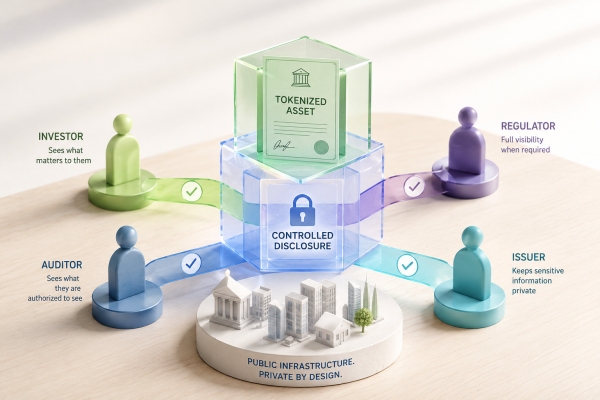
On May 27, 2026, Toronto based Polymath launched Confidential Assets on Polymesh, a protocol level privacy feature for tokenized securities and real world assets. It uses zero knowledge cryptography to keep transaction details private while preserving access for regulators, auditors, and authorized parties.
Privacy solves a practical market problem. Public blockchains can expose positions, client data, and transaction flows. Private chains can protect confidentiality, but they can also silo activity inside closed systems. Confidential Assets is Polymath aim to give regulated asset markets privacy without giving up public permissioned infrastructure.
Martin Halford, CEO, Polymath:
“The question the market has been asking is not whether assets can be tokenized -- they can. The question is whether tokenization can be done at an institutional scale, with the privacy and compliance standards that real financial infrastructure demands. Confidential Assets is our answer to that question.”
The stronger use case isn't about keeping secrets, but rather controlled disclosure. Issuers, investors, and asset managers need privacy around holdings and transfers. Yet a wide range of stakeholders from regulators to auditors, custodians, and compliance teams still need access when rules require it.
Confidential Assets is built into the Polymesh protocol, not added through a third party tool or Layer 2 solution. This allows privacy to work within the same system that handles compliance, governance, and settlement. A fund, private credit issuer, real estate platform, or broker dealer could use the feature to complete a compliant transfer without exposing position size or counterparty details to the broader market.
The ultimate goal and impact is the right mix of privacy and oversight. If Polymath gets that balance right, Confidential Assets could make Polymesh more useful for real capital markets activity, not just token issuance.
Confidential Assets is available immediately to institutions building on Polymesh. Polymath has been building regulated asset infrastructure since 2017 and contributed the ERC 1400 security token standard. Polymesh achieved SOC 2 Type 1 compliance in 2025. Polymath also says a post quantum ready version of Confidential Assets is in development for long term assets that may remain on chain for decades.
For Canadian capital markets and fintech firms, controlled disclosure is becoming core infrastructure for tokenized assets. Platforms that manage who can see what, and when, will become harder to replace in digital securities markets, over time.
Can tokenized markets reach institutional scale without protocol level privacy, or will controlled disclosure become a core requirement for regulated digital assets?
 The National Crowdfunding & Fintech Association (NCFA Canada) is a financial innovation ecosystem that provides education, market intelligence, industry stewardship, networking and funding opportunities and services to thousands of community members and works closely with industry, government, partners and affiliates to create a vibrant and innovative fintech and funding industry in Canada. Decentralized and distributed, NCFA is engaged with global stakeholders and helps incubate projects and investment in fintech, alternative finance, crowdfunding, peer-to-peer finance, payments, digital assets and tokens, artificial intelligence, blockchain, cryptocurrency, regtech, and insurtech sectors. Join Canada's Fintech & Funding Community today FREE! Or become a contributing member and get perks. For more information, please visit: www.ncfacanada.org
 |  |  |
|---|---|---|
 |  |  |
May 21, 2026

Many operators in 2026 are still running on infrastructure built for a different era. Legacy architecture not designed for multi-vertical scale, modern payment rails, or real-time compliance is now the most significant operational liability a gambling business can carry.
This article breaks down what a capable platform partner must deliver: infrastructure, compliance, payments, player lifecycle management, analytics, and genuine innovation across the full platform ecosystem.
A B2B iGaming platform is the software layer between game content, payments, and players – operated by a online casino software provider whose clients are gambling businesses, not players directly. The provider builds the infrastructure; the operator runs the brand.
The two primary delivery models are turnkey solutions and white-label solutions. A turnkey platform delivers a fully operational iGaming business: game content, payment integrations, compliance tooling, CRM, and back-office management, all pre-configured. White-label solutions offer a configurable layer that operators brand and customise while the underlying infrastructure stays shared and under the provider’s license.
Most platforms support multi-brand management – a single operator running several distinct brands from one back-office – essential for expanding across jurisdictions or targeting different player segments.
The ecosystem concept separates a coherent platform from a collection of stitched-together modules. An integrated architecture connects game content, payment gateways, compliance tooling, and CRM into one environment. Most providers offer a flagship full-stack product alongside hybrid options combining shared infrastructure with operator-controlled front-end layers. The vertical scope must include online casino, sports betting, esports, iGaming lottery, and bookmaker products.
Technical debt is not an IT department problem. It is a revenue problem, a compliance problem, and an increasingly existential one.
Legacy systems create direct income and budget consequences. API incompatibility slows game provider onboarding; payment integration failures drive transaction abandonment; uptime and performance degradation during peak events translates into lost bets and churn. Each failure compounds: a game integration delay coincides with a compliance gap and a payment reconciliation issue – the management overhead erodes the capacity to grow.
Legacy architecture cannot support the real-time reporting regulators mandate. The gap widens with each update; the technical backlog becomes a licensing liability. Maintaining legacy software development on an ageing codebase consumes developer time with limited output. The algorithm logic in older systems is frequently undocumented, making changes error-prone. Performance statistics arrive as delayed batch reports rather than real-time intelligence. The complexity and risk of staying now exceeds the cost of migration for most growth-stage operators.
The right model depends on how much of the stack an operator wants to own and how quickly they need to be live. The choice is not about quality – both are viable – it is about maturity, timeline, budget, and brand complexity. The subsections below compare each across speed to market, technical overhead, cost structure, and suitability for multi-brand management at scale.
|
Criteria |
Turnkey Solution |
White-Label Solution |
| Speed to Launch | Moderate – requires setup and configuration | Fast – ready-to-go with minimal setup |
| Cost | Higher upfront investment | Lower initial cost |
| Customisation | High – full control over features and integrations | Limited – based on provider’s framework |
| Brand Scalability | Strong – built for long-term growth and expansion | Moderate – scaling depends on provider capabilities |
A turnkey solution delivers a complete, market-ready iGaming business. Compliance tooling, payment integrations, game content via an aggregator such as iGaming Deck, RNG-certified game logic, and back-office management are all pre-integrated. The operator licenses independently and owns the brand outright – the platform handles the technical stack, not the regulatory relationship.
This is the flagship delivery model for operators entering new markets under time pressure. Architecture is proven, platform scalability is built in, and provider innovation means operators access new capabilities without carrying development costs. Speed to market is measured in weeks.
A white-label solution gives operators control over brand identity and player-facing experience, built on a shared B2B backend via REST API. The operator trades under the provider's gambling license rather than obtaining one independently – reducing time to market and upfront cost, at the expense of some jurisdictional flexibility.
It suits operators who want front-end differentiation across multiple brands without building proprietary infrastructure. Platform scalability remains a B2B responsibility. A hybrid approach – white-label infrastructure with custom-built components – extends capability within budget, making it the preferred route for operators managing software development resources carefully.
Whatever the licensing model, a platform's compliance stack must support the operator's regulatory obligations actively: audit trails, reporting formats, and player data handling that meet the standards of every jurisdiction they trade in. GLI-19 certification is mandatory – it covers RNG integrity, game mathematics, and platform integrity across the full content layer. A platform without GLI-19 compliance creates exposure for any operator.
A compliant platform delivers automated KYC (Know Your Customer) workflows at registration and transaction thresholds without friction at scale. Responsible gambling tools – self-exclusion, deposit limits, intervention triggers based on behavioural algorithm outputs – are mandated under MGA and Gambling Commission frameworks. Fraud detection must operate in real time. Player fund ring-fencing ensures operator funds are legally separated from player balances, as required under MGA and Gambling Commission standards. Privacy and anonymity controls must balance GDPR obligations with the expectations of crypto-focused players.
Compliance capabilities to demand from your B2B partner:
The platform partner's licensing footprint is the operator's growth map. Curaçao offers fast gambling license timelines and is the primary gateway for crypto-focused operators; eSports Curacao covers the esports vertical specifically. MGA licensing provides European credibility and unlocks payment provider partnerships requiring MGA compliance.
The primary growth frontiers are Latin America – Brazil's regulated market is the largest single opportunity – alongside emerging frameworks across Asia and Africa. A partner who can navigate these environments is a genuine competitive asset.
Payment infrastructure is where platforms create or destroy player experience. A failed deposit does not generate a complaint – it generates churn. Multi-currency wallets, what the industry calls crypto journeys, are now a baseline expectation: seamless wallet management across fiat and cryptocurrency denominations with real-time balance visibility. Financial integrity ring-fencing must apply across all wallet types regardless of currency denomination.
The protocols a platform supports matter operationally. Bitcoin Lightning Network delivers instant, low-fee settlements for Bitcoin transfers. Tron (TRC-20) offers high throughput and near-zero costs for frequent small transactions. Ethereum supports smart contract-based payouts. Litecoin provides a cost-efficient alternative for players prioritising low fees.
For players moving between cash-based local payment methods and crypto wallets, the platform must handle both through configurable compliance thresholds – not a binary KYC-or-anonymity choice.
The game aggregator – iGaming Deck in platform terms – connects operators to hundreds of game studios through a single REST API integration. Without it, every new provider requires a separate build; with it, the operator accesses an entire catalogue through one connection.
RNG certification is required at the game level. Every slot machine, roulette variant, and virtual lottery product must carry independently verified certification.
Multi-brand management at the aggregator level allows one operator to serve distinct audiences from shared content infrastructure. Platform scalability ensures the architecture holds under simultaneous peak load across all brands. Hybrid architecture – a shared core with vertical-specific configurations – is where this becomes practical. The recommendation algorithm surfacing the right game to the right player operates here, making aggregator depth a product differentiator.
Player lifecycle management is where operators most commonly rely on disconnected third-party tools, creating data silos and delayed campaign execution. A capable B2B platform integrates CRM natively: acquisition data, deposit behaviour, game preferences, and support history visible in real time, with 24/7 service infrastructure to match.
Loyalty – as a measurable platform output, not a marketing concept – is built through consistent, personalised incentive delivery. The tooling required: a configurable jackpot club, a bonus shop where players select rewards, tournament mechanics across casino and sportsbook verticals, and gamification layers that sustain engagement. Retention tooling must enable churn prediction and automated re-engagement driven by platform behavioural data.
Legacy platforms generate data. Modern platforms generate intelligence. The difference is whether outputs are actionable in real time or require manual extraction.
Player behaviour statistics surface which game types retain players longest and which acquisition channels produce the highest lifetime value. Revenue performance dashboards provide income visibility at brand, market, and segment level. Risk management at the platform layer depends on the same data: the algorithm must flag fraud signals within the analytics environment where operators are already working. Uptime and performance metrics must be visible in real time.
CRM integration turns analytics into action: a churn-risk flag triggers a bonus offer without manual data export. User personalization – the right offer based on actual behaviour, not segment assumptions – separates a modern analytics layer from a reporting tool. Growth metrics must support operational decisions and board-level reporting.
Innovation means whether the platform's architecture can absorb change without generating the next wave of technical debt.
Platforms that add cryptocurrency as an afterthought create friction at every touchpoint: KYC workflows not built for pseudo-anonymous players, reporting that cannot handle coin-denominated revenue, wallet management requiring manual reconciliation. Building with blockchain as a native layer eliminates these problems. Technology choices made today determine what is possible in three years.
Hybrid architecture – supporting legacy formats alongside modern REST API-first development – keeps the platform accessible at different technical maturity levels. Software development investment must be continuous; the API surface area should expand with the ecosystem. The flagship indicator of innovation maturity is whether the algorithm layer – governing game recommendations, fraud detection, and bonus targeting – is actively developed. Platform scalability under that evolution is what separates credible innovation from a product announcement.
The cost of staying on an underperforming platform is compounding. In 2026, the cost of migration is predictable and finite.

1. What is a B2B iGaming platform, and how does it differ from being an operator?
A B2B provider builds and maintains the software infrastructure – game aggregation, payment gateways, compliance tooling, and CRM – and licenses it to gambling businesses. The operator runs the player-facing brand, focusing on acquisition and experience while the platform handles technical complexity.
2. What does "turnkey solution" mean in iGaming?
A turnkey solution delivers a fully operational iGaming business ready for launch – game content, payment integrations, RNG-certified logic, compliance tooling, and back-office management all pre-configured. The operator licenses independently and owns the brand. It is the fastest route to market for operators entering new jurisdictions.
3. What is a white-label iGaming solution?
A white-label solution provides a configurable platform layer on a B2B backend, accessed via REST API. The operator trades under the provider's gambling license rather than obtaining one independently. It suits operators wanting brand control across multiple demographics without the overhead of building proprietary infrastructure.
4. What compliance certifications should I demand from a B2B platform partner?
GLI-19 certification is the baseline – covering RNG integrity, game mathematics, and platform standards. Also require automated KYC workflows, player fund ring-fencing under MGA and Gambling Commission frameworks, real-time fraud monitoring, and responsible gambling tools, including self-exclusion and deposit limits.
5. How do B2B platforms support crypto and multi-currency payments?
A modern platform supports multi-currency wallets handling fiat and cryptocurrency in a single interface. Blockchain rails should include Bitcoin Lightning Network for instant settlements, Tron for micro-transactions, Ethereum for smart contract payouts, and Litecoin for low-cost transfers – with KYC and fraud monitoring preserving player anonymity where compliant.
6. What player retention tools should a B2B platform include natively?
A jackpot club, bonus shop with player-selectable rewards, tournament mechanics across casino and sportsbook, and CRM-native churn prediction. Loyalty mechanics must operate in real time from platform behavioural data, not manual campaign setup or third-party tools with delayed access.
7. How do analytics capabilities differ between modern and legacy platforms?
Legacy platforms generate historical reports. Modern platforms deliver real-time dashboards covering player behaviour statistics, revenue performance, fraud risk signals, and uptime metrics. CRM integration means a churn-risk flag automatically triggers a bonus campaign within the same environment.
8. Why does the choice of blockchain infrastructure matter for an iGaming platform?
Protocol choice determines transaction speed, cost, and compliance profile. Bitcoin Lightning Network enables instant low-fee BTC settlements; Tron handles micro-transactions; Ethereum supports smart contract payouts; Litecoin offers low-cost transfers. Native blockchain integration avoids the reconciliation and UX problems of afterthought crypto architecture.
A capable B2B iGaming platform partner in 2026 delivers an integrated ecosystem: proven infrastructure, multi-jurisdiction compliance, blockchain-native payment rails, platform-native player lifecycle tools, real-time analytics, and a software development model built for continuous evolution.
Multi-brand management, scalable architecture, and genuine innovation investment in underlying technology are what separate a platform that enables growth from one that constrains it. For operators on legacy systems, the calculation is straightforward: the cost of staying now exceeds the cost of moving. The question is how quickly you act.
The National Crowdfunding & Fintech Association (NCFA Canada) is a financial innovation ecosystem that provides education, market intelligence, industry stewardship, networking and funding opportunities and services to thousands of community members and works closely with industry, government, partners and affiliates to create a vibrant and innovative fintech and funding industry in Canada. Decentralized and distributed, NCFA is engaged with global stakeholders and helps incubate projects and investment in fintech, alternative finance, crowdfunding, peer-to-peer finance, payments, digital assets and tokens, artificial intelligence, blockchain, cryptocurrency, regtech, and insurtech sectors. Join Canada's Fintech & Funding Community today FREE! Or become a contributing member and get perks. For more information, please visit: www.ncfacanada.org
| | |
|---|---|---|
| | |
May 15, 2026 | NCFA Insight | Artificial Intelligence And Data

On May 1, 2026, the Academy of Motion Picture Arts and Sciences announced Oscars rules requiring human performed acting and human authored screenplays. The Academy didn’t ban AI tools, but rather protected human creativity at a time when synthetic performers, AI music, and digital personas are iterating live in mainstream culture. The questions are who gets credit, who gives consent, who gets paid, and who takes responsibility when AI is the engine inside the creative process.
In March 2026, AI generated performer Tilly Norwood gave the Oscars restriction a real world stress test by launching a music video called “Take The Lead”. While a human team is behind the creation, the video clearly features a synthetic artist as the visible performer. People designed the character, shaped the concept, guided prompts, edited outputs, and built the persona around the performance.
The production apparently started with a notice stating it was made by “18 real humans” including production designers, costume designers, prompters, editors, and an actor.
Futurism reported that Suno generated the song and Particle6 used performance capture from Eline van der Velden’s acting performance. That means the audio came from an AI music tool, while a real person performed the movements, expressions, or acting choices that helped animate the synthetic Tilly Norwood character on screen.
As synthetic personalities improve, creative credit gets harder to assign. The audience sees the AI performer first while the human labour is more difficult to see. Was the performer the AI character, the actor behind the capture, the director, the prompt team, the studio, the model provider, or the person who shaped the concept?
Futurism called the video “one of the dingiest and depressing things we’ve ever seen.” Viewers also pushed back on the unusual visuals, processed vocals, and pro AI message cutting through the hype.
Bottom line is AI can make more content, faster, but it can’t make audiences care by default.
Creative markets still reward taste, originality, trust, and a sense that real people stand behind the work. As synthetic content spreads, proof of origin, consent, and accountability will likely become part of the product.
Financial services already depends on verified identity, trusted records, permissions, approvals, and auditability. AI raises the stakes because automated agents and AI generated advice and support can blur the line between human and software activity.
A customer may not know whether they’re reading human advice, AI assisted advice, or fully automated output. A compliance team may need to prove who approved a model generated communication. A marketplace may need to verify whether a creator, advisor, vendor, or agent is real. A lender, insurer, or investment platform may need a reliable record of how an AI system influenced a decision.
The Academy’s new rules don’t reject AI. They protect human recognition inside AI assisted creation. Tilly Norwood shows why the boundary won’t stay clean. The battle line is who gets credit, who gets paid, who gives consent, and who is responsible when synthetic work enters the market.
The National Crowdfunding & Fintech Association (NCFA Canada) is a financial innovation ecosystem that provides education, market intelligence, industry stewardship, networking and funding opportunities and services to thousands of community members and works closely with industry, government, partners and affiliates to create a vibrant and innovative fintech and funding industry in Canada. Decentralized and distributed, NCFA is engaged with global stakeholders and helps incubate projects and investment in fintech, alternative finance, crowdfunding, peer-to-peer finance, payments, digital assets and tokens, artificial intelligence, blockchain, cryptocurrency, regtech, and insurtech sectors. Join Canada's Fintech & Funding Community today FREE! Or become a contributing member and get perks. For more information, please visit: www.ncfacanada.org
| | |
|---|---|---|
| | |
May 13, 2026 | NCFA Resource | Risk Compliance And Regtech, Digital Identity Privacy KYC AML ATF
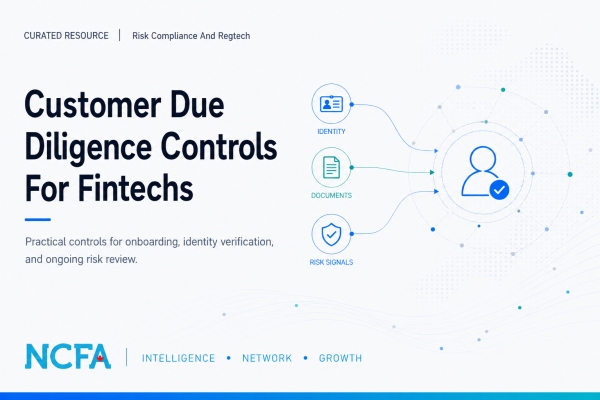
On April 8, 2026, the UK FCA published customer due diligence (CDD) findings from a multi firm review. The review covers practical weaknesses that matter to fintech teams, including thin policies, unclear review cycles, weak evidence records, poor senior approval steps, and audit gaps.
This is a UK resource, but the operating lessons travel well. Canadian fintechs still need local legal and compliance advice, including FINTRAC obligations where applicable. The FCA shows where customer checks break down when firms grow, add automation, rely on vendors, or treat onboarding as a sales funnel instead of a risk control.
The FCA review gives compliance and product teams a useful checklist for testing how customer due diligence works inside the business. It doesn't just ask whether a policy exists. It looks at whether staff know what to collect, when to escalate, how to record decisions, and how often files need review.
Stronger firms clearly separate standard CDD from enhanced due diligence (EDD) for higher risk customers. They define when senior approval is needed. They document EDD steps, keep review cycles clear, and test whether onboarding files support the risk decision made at the time.
The weaker examples are just as useful. The FCA points to firms that could not show what extra checks were completed for high risk customers, did not record key information about the purpose of a business relationship, lacked clear review schedules, or used the same people to onboard customers and review their own work.
For fintechs, fast onboarding can become a liability when the business cannot prove why a customer passed, why a file received extra review, or who approved a higher risk relationship. Policies are no longer enough, as teams need evidence.
This resource is useful for fintech founders, compliance leads, money laundering reporting officers (MLROs), onboarding teams, product managers, payments companies, lending platforms, crypto firms, crowdfunding portals, regtech providers, and financial institutions reviewing digital account opening.
It is especially relevant for firms that use automated onboarding, AI assisted reviews, third party identity vendors, risk scoring tools, or outsourced compliance support. Those tools can improve speed, but companies still needs clear accountability, review rules, exception handling, and audit trails.
The strength of this resource is its practical format. It shows good and poor practice side by side. That makes it easier for a fintech team to compare the report against its own onboarding journey, file review process, vendor controls, and board reporting.
The review also makes a simple point that many growing firms miss. Regulators want to see how decisions happen in real life. A clean policy document doesn't help much if customer files are thin, staff guidance is vague, or senior approval only exists in theory.
The limit is geography. The FCA findings reflect UK regulation and UK supervisory expectations. Canadian firms shouldn't treat this as Canadian legal guidance. They should use it as a practical benchmark, then test their own controls against Canadian requirements, sector rules, and legal advice.
FCA Customer Due Diligence Findings (primary FCA resource with good and poor practice examples)
FCA Risk Assessment Controls Findings (companion FCA review on customer and business risk assessments)
FCA 2025 To 2030 Strategy (broader strategy context for financial crime supervision)
The National Crowdfunding & Fintech Association (NCFA Canada) is a financial innovation ecosystem that provides education, market intelligence, industry stewardship, networking and funding opportunities and services to thousands of community members and works closely with industry, government, partners and affiliates to create a vibrant and innovative fintech and funding industry in Canada. Decentralized and distributed, NCFA is engaged with global stakeholders and helps incubate projects and investment in fintech, alternative finance, crowdfunding, peer-to-peer finance, payments, digital assets and tokens, artificial intelligence, blockchain, cryptocurrency, regtech, and insurtech sectors. Join Canada's Fintech & Funding Community today FREE! Or become a contributing member and get perks. For more information, please visit: www.ncfacanada.org
| | |
|---|---|---|
| | |
May 12, 2026 | NCFA Feature | Digital Banking And Credit Union Infrastructure

On May 12 2026, Intellect Design Arena announced that 37 Canadian financial institutions participating in the National Digital Banking Working Group (NDBWG) selected its eMACH.ai Digital Engagement Platform as part of a broader digital banking modernization effort.
This is more than a software contract. It's one of the clearest examples of smaller Canadian financial institutions coordinating technology execution to manage platform risk, modernization costs, and rising digital banking expectations.
Back in October 2024, Canadian credit union infrastructure provider Central 1 announced plans to wind down digital banking over a three to four year transition period. That created immediate pressure for many Canadian credit unions that relied on Central 1’s Forge and MemberDirect platforms.
In March 2025, Central 1 and Intellect finalized an operating partnership that transferred operation of Forge, MemberDirect, public website, and mobile app products to Intellect, along with digital banking engineering and service personnel.
The latest announcement now evolves beyond transition support into long term modernization.
The National Digital Banking Working Group formed after the Central 1 announcement to help participating institutions coordinate vendor evaluation, migration planning, procurement, implementation support, and governance.
According to NDBWG's website, the initiative was designed to help financial institutions navigate a system wide platform transition together instead of individually carrying the cost, risk, and operational complexity of replacing digital banking infrastructure. It's a coordinated modernization program.
NDBWG’s public member page lists 59 participating institutions across British Columbia, Alberta, Saskatchewan, Manitoba, and Ontario. The specific 37 institutions that formally signed with Intellect is likely a subset. Intellect states the participating institutions represent more than $11.7B CAD in combined assets and serve over 262,000 members.
Greg Sol, Board Chair, Credit Unions Future Committee:
“Building on the NDBWG’s rigorous process from vendor evaluation to a fully negotiated agreement, we’re confident that Intellect is the right long-term partner for Canada’s financial institutions.”
Canada’s banking competition debate often focuses on large banks and fintech challengers. Less attention goes to the infrastructure pressure facing smaller regional and community based financial institutions.
Members compare their credit union app with all other digital services they use daily. They expect simple onboarding, quick support, fewer branch visits, and secure ways to handle routine requests. Behind that experience, smaller institutions also face heavier compliance work, sharper fraud risk, and technology costs that keep climbing. For many smaller institutions, maintaining those capabilities independently becomes harder every year.
NDBWG’s model attempts to create digital scale without forcing consolidation. Participating institutions keep their local brands, governance, and member relationships while coordinating around infrastructure, migration planning, and platform execution.
The stronger advantage of a shared approach isn't the software itself, but rather the emerging operating model around it.
Canada already has one of the most concentrated banking systems in the world. If smaller institutions cannot modernize efficiently, the competitive gap widens further. Shared infrastructure and coordinated execution may become one of the few realistic ways for regional financial institutions to stay competitive without dramatically increasing operating costs.
Canada continues preparing for consumer driven banking, stronger fraud controls, and real time payments modernization. Those changes place additional pressure on legacy systems and fragmented operating models.
Steve Kingan, CEO, Frontline Credit Union:
“The NDBWG process gave our credit union the expertise and collective strength to navigate this transition in a way we couldn’t have managed alone.”
For fintech companies, this may also create opportunity. Smaller institutions need practical tools that reduce daily friction, protect members, and improve service without adding complexity. That creates room for focused partners in fraud prevention, digital identity, payments, workflow automation, AI assisted service, and embedded financial services tailored for smaller institutions.
It also explains why more vendors are building Canada ready digital banking platforms for credit unions rather than treating them as small versions of large banks.
Canada’s smaller financial institutions are starting to treat digital infrastructure as a shared strategic capability instead of a fully independent function.
NDBWG represents one of the clearest Canadian examples so far of institutions coordinating modernization to support local financial competition while reducing migration risk and operational cost. If implementation succeeds, it could become a practical model for how smaller financial institutions modernize in other parts of Canada.
Can smaller Canadian financial institutions can build enough shared digital scale to remain competitive while preserving regional and community based banking choice?
The National Crowdfunding & Fintech Association (NCFA Canada) is a financial innovation ecosystem that provides education, market intelligence, industry stewardship, networking and funding opportunities and services to thousands of community members and works closely with industry, government, partners and affiliates to create a vibrant and innovative fintech and funding industry in Canada. Decentralized and distributed, NCFA is engaged with global stakeholders and helps incubate projects and investment in fintech, alternative finance, crowdfunding, peer-to-peer finance, payments, digital assets and tokens, artificial intelligence, blockchain, cryptocurrency, regtech, and insurtech sectors. Join Canada's Fintech & Funding Community today FREE! Or become a contributing member and get perks. For more information, please visit: www.ncfacanada.org
| | |
|---|---|---|
| | |
May 8, 2026 | NCFA Insight | Regulation And Policy, Cybersecurity And Fraud, Artificial Intelligence And Data

On May 7, 2026, Apple and Meta warned that Canada’s Bill C-22 could weaken encryption, pushing a long running lawful access debate back into the spotlight. The bill reaches far beyond Silicon Valley politics. It touches the same infrastructure that supports digital banking, fintech apps, cloud platforms, AI systems, wallets, fraud detection, secure communications, and identity verification.
What started as a policing and national security issue increasingly looks like a broader fight over cybersecurity, digital trust, and how governments regulate access to modern technology systems.
Bill C-22 creates a lawful access framework for electronic service providers operating in Canada.
Part 1 updates investigative powers related to subscriber information and transmission data.
Part 2 creates the Supporting Authorized Access to Information Act, which would require certain providers to maintain operational and technical capabilities that allow them to comply with lawful access requests under existing Criminal Code or CSIS Act authorities.
The scope is broad. The bill applies to electronic service providers involved in creating, storing, processing, transmitting, receiving, or making information available electronically. That definition reaches beyond telecom networks and traditional internet providers. Depending on regulations and ministerial orders, the framework could affect cloud providers, messaging platforms, device ecosystems, AI infrastructure, payment systems, digital identity platforms, and fintech companies handling sensitive customer information.
The government argues that Canada’s investigative framework no longer matches modern communications technology. Public Safety Canada says current lawful access rules still reflect a 1995 voice telephony environment, even though investigations now involve encrypted messaging systems, cloud services, internet platforms, and cross border digital infrastructure.
The FBI, RCMP, and other law enforcement agencies have long referred to encrypted communications and inaccessible digital evidence as the “going dark” problem.
Investigators increasingly struggle to access information tied to organized crime, online fraud, ransomware, terrorism, child exploitation, and financial crime because modern services collect less accessible data or use strong encryption that even the provider cannot access directly.
The Canadian Association of Chiefs of Police publicly supported the legislation and argued that police need updated tools to investigate serious crimes in digital environments. Justice Canada also says the bill would allow judges to authorize requests for subscriber information or transmission data from foreign telecommunications or social media providers where there are reasonable grounds to suspect an offence and the information would help the investigation.
The fraud backdrop strengthens the government’s case politically. Competition Bureau Canada reported CAFC data showing Canadians lost more than $704 million to fraud in 2025, while only 5% to 10% of fraud gets reported. Reported losses since 2022 have surpassed $2.4 billion.
Critics argue the proposed solution risks weakening the same security architecture modern digital systems depend on. Reuters reported that Apple warned the bill could allow Canada to “force companies to break encryption by inserting backdoors.”
Meta argued the legislation could force providers to weaken encryption protections or undermine zero knowledge systems designed so providers themselves cannot access customer data.
Public Safety Canada disputes that interpretation. Government officials say the legislation would not require providers to create a “systemic vulnerability” in encryption systems, which is now at the center of the debate.
The problem is technical as much as legal. Security engineers often argue that once a system preserves exceptional access for any party, it creates a potential weak point that can eventually attract criminals and and insider abuse.
For fintechs and financial institutions, it's the same strong encryption that protects account credentials, wallet keys, transaction approvals, secure communications, and increasingly AI workflows that may soon handle sensitive financial tasks autonomously.
The UK offers an important lesson for Canada. Earlier this year, Apple removed Advanced Data Protection for new UK users after government pressure around encrypted cloud access. Apple later stated that UK users would no longer have access to the feature and said, “we have never built a backdoor or master key.”
The UK outcome shows how a lawful access demand can expand into a wider cybersecurity and trade problem. Instead of settling the issue, Apple’s feature rollback intensified scrutiny from privacy advocates, security experts, and U.S. officials concerned about government access to encrypted cloud data.
Canada could face the same kind of fallout if Bill C-22 leaves companies unclear about what they may be forced to build, disclose, weaken, or keep secret under future access orders.
Timing isn't great. Canada is already dealing with pressure around digital sovereignty, platform regulation, AI governance, and trade relations with the United States.
In June 2025, Canada rescinded its Digital Services Tax to restart trade negotiations with the U.S. The CUSMA review is an active pressure point for companies operating across borders through cloud infrastructure, data systems, and digital financial services.
Europe is moving differently. The European Commission imposed the first Digital Markets Act penalties in April 2025, including €500 million against Apple and €200 million against Meta. Meanwhile, the Trump administration has taken a more defensive posture toward American technology firms facing foreign digital regulation, including ordering U.S. diplomats to push back against foreign data sovereignty rules.
That leaves Canada to balance a convergence of pressure around public safety expectations, cybersecurity concerns, platform dependence, trade risk, and digital sovereignty ambitions.
Large platforms will likely absorb the first round of scrutiny. The second order effects may matter more for fintech operators and infrastructure providers.
Fintechs, digital identity companies, crypto wallet providers, cloud based banking platforms, AI finance systems, payment processors, fraud vendors, and regulated financial institutions could all face pressure around compliance architecture, data retention, encryption design, and cross jurisdiction operational requirements.
The cost may not appear immediately through direct enforcement. It may emerge through audits, vendor obligations, insurance requirements, infrastructure redesign, compliance overhead, or changes to how secure systems get built and marketed in Canada.
Encryption is key to financial infrastructure. Customer trust, cybersecurity resilience, fraud prevention, and digital competitiveness now all depend heavily on whether secure systems remain genuinely secure.
Does Canada need to choose between ineffective investigations and weakened encryption for everyone?
A better version of the bill would be more precise. It should clearly say which companies can receive access orders, protect end to end encryption and zero knowledge systems, require independent technical review before any order is approved, and give companies a real way to challenge orders that put security at risk.
The core dispute is not whether courts can authorize lawful investigations. It is whether governments should be able to force companies to preserve technical access inside systems designed specifically to remove that access. That is the fight at the centre of the global encryption debate.
Encryption is foundational infrastructure for finance, AI, communications, identity, and cloud systems. Canada’s challenge is no longer simply how to access digital evidence. It's how to modernize investigations without creating weaker systems that undermine cybersecurity, trust, and long term digital competitiveness.
The National Crowdfunding & Fintech Association (NCFA Canada) is a financial innovation ecosystem that provides education, market intelligence, industry stewardship, networking and funding opportunities and services to thousands of community members and works closely with industry, government, partners and affiliates to create a vibrant and innovative fintech and funding industry in Canada. Decentralized and distributed, NCFA is engaged with global stakeholders and helps incubate projects and investment in fintech, alternative finance, crowdfunding, peer-to-peer finance, payments, digital assets and tokens, artificial intelligence, blockchain, cryptocurrency, regtech, and insurtech sectors. Join Canada's Fintech & Funding Community today FREE! Or become a contributing member and get perks. For more information, please visit: www.ncfacanada.org
| | |
|---|---|---|
| | |
April 14, 2026

Image: Freepik
Canada's payments modernization is finally arriving after years of anticipation, with Payments Canada's Real-Time Rail (RTR) set for launch in the third quarter of 2026, marking a pivotal shift toward instant, always-on transactions for consumers and businesses alike. This infrastructure upgrade converges seamlessly with the consumer-driven banking framework, also known as open banking, creating a fertile ground for innovation where fintechs, traditional banks, and scale-ups can collaborate and compete. RTR promises 24/7 real-time clearing and settlement using rich ISO 20022 data standards, eliminating batch processing delays that have long plagued the system. Meanwhile, the Bank of Canada and Payments Canada have laid the groundwork through the Lynx wholesale system and legislative reforms, positioning Canada to catch up with global leaders. Fintechs stand to benefit immensely by building on RTR's request-to-pay features and irrevocable settlements, enabling embedded finance, streamlined SMB cash flows, and enhanced cross-border capabilities. Banks gain from upgraded rails that support fraud prevention and KYC compliance, while scale-ups leverage open banking APIs for account aggregation and lending products. This synergy fosters consumer trust through secure data sharing and accelerates digital payment adoption, setting the stage for a dynamic 2026 fintech landscape where innovation drives economic growth across the nation.
Canada's journey toward real-time payments has been a decade-long endeavor, characterized by ambitious planning, technical hurdles, and repeated delays that have left the country trailing international peers. Payments Canada, the not-for-profit organization overseeing the national payments system, introduced the Lynx wholesale payment system in 2020 to modernize high-value interbank settlements, but retail real-time capabilities remained elusive. The Real-Time Rail (RTR) project, announced years ago, faced setbacks due to complex ISO 20022 messaging adoption, regulatory alignment, and stakeholder coordination involving the Big Six banks and emerging payment service providers. Unlike the UK's Faster Payments launched in 2008, Brazil's Pix rolled out in 2020 with explosive adoption, or India's UPI which processes billions of transactions monthly, Canada's batch-based Automated Clearing Settlement System (ACSS) persisted, forcing businesses and consumers to endure next-day settlements. The Bank of Canada played a crucial supervisory role, ensuring stability amid these transitions, while recent 2025 legislation opened participation to more fintechs. Now, with system integration testing completed as of early 2026 and user acceptance testing underway, RTR edges closer to its Q3 go-live, promising to bridge this gap and unlock pent-up fintech potential.
RTR fundamentally transforms consumer and business payments by enabling instant, irrevocable settlement around the clock, seven days a week, including holidays, a stark contrast to current batch-processed electronic funds transfers. Leveraging ISO 20022's data-rich messaging, transactions carry detailed remittance information, supporting advanced use cases like request-to-pay for streamlined invoicing and automated reconciliation. Small and medium-sized businesses (SMBs) gain immediate cash flow visibility, gig workers receive payouts without weekend delays, and cross-border remittances become faster and cheaper through interoperability potential. Even regulated consumer markets, from utilities and telecoms to verticals like online sports betting in canada, rely on the same KYC, fraud, and settlement rails that RTR is designed to upgrade. This upgrade reduces fraud risks via enhanced data for real-time monitoring and bolsters inclusion for underbanked populations. For fintechs, RTR opens doors to innovative overlays such as embedded payments in apps and platforms, positioning Canada for a surge in digital economy participation as adoption ramps up post-launch.
Canada's consumer-driven banking framework, enshrined in legislation through Budget 2025, establishes a regulated open banking regime overseen by the Financial Consumer Agency of Canada (FCAC), mandating secure data sharing between banks and accredited third parties. This framework requires financial institutions to accredit participants via standardized technical APIs, common rules for consent management, and robust security protocols, ensuring consumers control their data while enabling innovation. Phase 1 focuses on read access for account information aggregation, with Phase 2 contingent on RTR's live deployment targeted for mid-2027, introducing write access for payment initiation, variable recurring payments, and account switching. For fintech startups, scale-ups, and challenger banks, this means equal footing with incumbents, as accreditation levels the playing field and fosters competition. RTR integration is key, providing the instant settlement backbone that write access demands, allowing third parties to execute payments without Big Six dominance. FCAC's supervision guarantees consumer protections, building trust and accelerating adoption in a market long hindered by inertia.
The consumer-driven banking framework unlocks vast opportunities for Canadian fintechs to develop transformative products, from AI-powered lending based on real-time transaction data to comprehensive account aggregation and personal finance management tools. Embedded finance thrives as platforms integrate seamless payments via RTR, while SMB cash flow solutions automate forecasting and instant disbursements, addressing pain points revealed in recent industry surveys. Challenger banks can offer competitive accounts with switching incentives, eroding legacy inertia. For a deeper view of how the ecosystem is evolving, Canada's 2025 fintech growth landscape highlights where investment and innovation are concentrating. This convergence with RTR not only modernizes payments but also spurs venture capital inflows, job creation, and exportable fintech IP, cementing Canada's role in global digital finance leadership by late 2026.

Digital identity forms the essential foundation for Canada's Real-Time Rail adoption, enabling secure and seamless transactions in a 24/7 environment. The Pan-Canadian Trust Framework, spearheaded by the Digital ID and Authentication Council of Canada (DIACC), establishes interoperability standards for verifiable credentials across government and private sectors. Initiatives like mobile driver's licences, already piloted in provinces such as British Columbia and Ontario, allow users to prove identity without physical documents via secure digital wallets. This robust digital ID infrastructure is critical for safe RTR rollout, as it verifies users in real time, slashing fraud risks from unauthorized access or synthetic identities. For fintechs and regulated platforms, it streamlines consumer onboarding, reducing manual checks and enabling instant account verification, which is vital for high-volume real-time payments where delays could undermine trust and efficiency. Without strong digital ID, RTR's potential for embedded finance would be hampered by persistent security gaps.
Stronger know-your-customer (KYC) processes, powered by advanced digital identity solutions, directly combat fraud while ensuring compliance with FINTRAC's anti-money laundering and counter-terrorist financing (AML/CTF) mandates. By leveraging verifiable credentials and biometric authentication, financial institutions can confirm user identities instantaneously, minimizing risks like account takeovers that plague traditional systems. This reduces operational costs associated with fraud investigations and chargebacks, which currently drain billions from Canada's economy annually. For crowdfunding platforms, wealthtech apps, and lending services, seamless digital ID unlocks frictionless user journeys, from instant loan approvals based on real-time data to automated investment onboarding. FINTRAC's supervisory framework rewards efficient compliance, allowing innovative firms to scale faster without regulatory bottlenecks, fostering a safer ecosystem where consumers confidently engage with digital payments powered by RTR.
| Country | Real-Time System | Launch Year | Open Banking Status | 2025 Volume Trend |
| Canada | Real-Time Rail (RTR) | 2026 (target) | Consumer-driven banking framework | Early adoption |
| United Kingdom | Faster Payments | 2008 | Open Banking live | Mature, growing |
| Brazil | Pix | 2020 | Open Finance live | Very high growth |
| India | UPI | 2016 | Account Aggregator live | Dominant |
| European Union | SEPA Instant | 2017 | PSD2 / PSD3 | Steady growth |
| Australia | NPP / PayTo | 2018 | CDR live | Strong growth |

Canadian fintech founders stand at the cusp of transformative opportunities as Real-Time Rail unlocks embedded finance, B2B payments, and beyond. Startups can integrate RTR for instant payroll processing, gig economy payouts, and request-to-pay billing tailored to small and medium-sized businesses, eliminating weekend delays that currently frustrate cash flows. Alternative lenders gain access to real-time transaction data for dynamic credit scoring, while wealthtech firms enable micro-investments settled in seconds. Venture capital appetite is surging, with funds eyeing RTR-enabled innovators amid regulatory clarity from the Retail Payments Activities Act and Payments Canada oversight. This clarity reduces compliance hurdles, allowing scale-ups to focus on product-market fit and rapid iteration, positioning Canada to nurture homegrown unicorns in payments and beyond.
Partnership models between incumbents, fintechs, and infrastructure providers will accelerate RTR's impact, blending big banks' scale with agile innovators' speed. Traditional players like the Big Six provide liquidity and customer bases, while fintechs layer value-added services such as AI-driven reconciliation or cross-border extensions. Infrastructure firms like Payments Canada ensure interoperability, fostering ecosystems where wealthtech integrates with lending via APIs. Looking abroad, BIS research on faster digital payments worldwide shows how fast payment systems have driven inclusion and innovation across more than one hundred jurisdictions, offering useful lessons for Canada. These collaborations promise mutual growth, with incumbents modernizing legacy systems and fintechs accessing regulated rails, ultimately delivering superior consumer experiences in a competitive landscape.
While Real-Time Rail promises innovation, it introduces risks like authorized push payment fraud, where scammers exploit instant settlement speeds, and operational resilience challenges in an always-on system. Cyber threats loom large, demanding fortified defenses against DDoS attacks or data breaches that could erode public confidence. Governance under the Office of the Superintendent of Financial Institutions (OSFI) and Payments Canada emphasizes rigorous oversight, including mandatory contingency plans and peak-volume stress testing completed in early 2026. Clear consumer protection standards, such as reimbursement schemes for scams akin to those in the UK, are essential to build trust. Strong governance frameworks, with real-time monitoring and participant onboarding protocols, underpin security, ensuring RTR evolves as a reliable backbone rather than a vulnerability hotspot.
For a broader global perspective on how emerging financial technologies intersect with inclusive growth and systemic resilience, the World Economic Forum report on the future of global fintech offers useful context for Canadian policymakers and founders navigating Real-Time Rail adoption.
The year 2026 marks a watershed for Canadian fintech, as Real-Time Rail converges with open banking's Phase 2 and mature digital identity solutions to forge a modern payments stack. This trifecta empowers crowdfunding platforms with instant funding rails, wealthtech for seamless portfolio adjustments, insurtech for real-time claims payouts, and payments firms for borderless efficiency. Together, they dismantle legacy frictions, spurring inclusion for underserved gig workers and SMBs while attracting global talent and investment. The National Crowdfunding & Fintech Association of Canada champions this ecosystem, advocating for policies that balance innovation with safeguards, ensuring Canada's fintech sector not only catches up to peers but leads in responsible, resilient digital finance for the decade ahead.
The National Crowdfunding & Fintech Association (NCFA Canada) is a financial innovation ecosystem that provides education, market intelligence, industry stewardship, networking and funding opportunities and services to thousands of community members and works closely with industry, government, partners and affiliates to create a vibrant and innovative fintech and funding industry in Canada. Decentralized and distributed, NCFA is engaged with global stakeholders and helps incubate projects and investment in fintech, alternative finance, crowdfunding, peer-to-peer finance, payments, digital assets and tokens, artificial intelligence, blockchain, cryptocurrency, regtech, and insurtech sectors. Join Canada's Fintech & Funding Community today FREE! Or become a contributing member and get perks. For more information, please visit: www.ncfacanada.org
| | |
|---|---|---|
| | |



August 26th, 2025

January 4th, 2024

June 1st, 2021

September 9th, 2020

July 9th, 2018

January 3rd, 2018

September 25th, 2017

June 20th, 2017

May 10th, 2017

December 14th, 2016
