



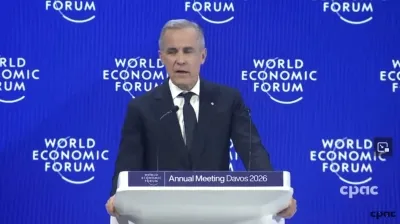

Karsten Wenzlaff, Advisor
August 26th, 2025
Karsten Wenzlaff is a Crowdfunding and Fintech Expert from Germany. He is Secretary-General of Digit[...]


Open Banking | Nov 5, 2024

Image: Freepik/stockgiu
Last month on October 22, the U.S. Consumer Financial Protection Bureau (CFPB) introduced a new rule that would give Americans more control over their financial information, improve consumer choice and transparency while also promoting competition (level the playing field for non-banks). However, push back from trade policy groups representing the banks came in the form of a lawsuit against the CFPB just a day later including Forcht Bank, the Kentucky Bankers Association, and Bank Policy Institute.
The lawsuit claims that the CFPB went beyond its legal powers by introducing the Open Banking rule without adequate reasoning. The plaintiffs believe that the benefits of Open Banking do not justify the costs. They also say that the CFPB didn't follow proper procedures when creating the rule since there was insufficient consulting with important groups that need to thoroughly assess the rule's impact.
They claim the rule is random, unreasonable and not legal. They argue that it creates too many costs, raises security risks, wrongly gives regulatory power to others, sets impossible deadlines for banks to follow, and unfairly stops banks from charging fees for access. All of these problems hurt both the banks and their customers.
The outcome of this lawsuit could impact more than just the United States. Canada is also moving forward with open banking. Watching how this legal dispute plays out may foreshadow some future challenges that Canada needs to consider as it progresses (albeit slowly) with its own consumer-driven banking plans, such as:
The lawsuit might slow down the introduction of open banking in the U.S. which could influence how quickly Canada rolls out its own version of the rule. Canadian policymakers may take extra precautions to implement similar rules to proactively avoid any potential legal issues.
A major concern in the lawsuit is the safety of data. U.S. banks argue that being forced to share data with third parties could lead to breaches and fraud. Canada's open banking system may need stronger privacy and security measures to address risks.
While open banking fosters competition and provides consumers with more choices and enhanced services, some worry that it will undermine financial stability. Canada will need to find the right balance that advances innovation without placing consumers at unnecessary risk. There are many jurisdictions who have successfully implemented open banking ahead of the U.S. rule where Canada can learn from such as in the UK where over 3000 banks and non-banks are currently registered and operating in the open banking ecosystem. See what the UK government recommends for next phase for open banking after several years of operating the program.
With the majority of Canada's export trade tied up with the U.S., any open banking policy delays may make it harder for Canadian consumers using services across the border. Having aligned regulations would help Canadians easily access financial products and services in both countries. Conversely, different approaches could lead to higher compliance costs and more complexity for cross border operations.
The lawsuit against the CFPB’s rule brings up important issues like protecting consumers, keeping data safe, and deciding who has the authority to set the rules.
As the U.S. case progresses, Canada will need to follow developments closely and use what it learns to create open banking rules that give Canadian consumers more control over their finances while protecting their data and privacy.
 The National Crowdfunding & Fintech Association (NCFA Canada) is a financial innovation ecosystem that provides education, market intelligence, industry stewardship, networking and funding opportunities and services to thousands of community members and works closely with industry, government, partners and affiliates to create a vibrant and innovative fintech and funding industry in Canada. Decentralized and distributed, NCFA is engaged with global stakeholders and helps incubate projects and investment in fintech, alternative finance, crowdfunding, peer-to-peer finance, payments, digital assets and tokens, artificial intelligence, blockchain, cryptocurrency, regtech, and insurtech sectors. Join Canada's Fintech & Funding Community today FREE! Or become a contributing member and get perks. For more information, please visit: www.ncfacanada.org
 |  |  |
|---|---|---|
 |  |  |
SMB Banking | Nov 4, 2024

Image: Freepik/wavebreakmedia micro
Canada’s small and medium-sized businesses (SMBs) are a backbone of the economy. Canada ISED publication shows that small businesses (<500 employees) employed 52.12% of the work force creating 9.29 million jobs in the country. Even the smallest businesses with <100 employees hire 38.71% of all employed. These businesses nurture innovation, create jobs and growth, and strengthen communities but a recent survey of 700 Canadian SMBs by Canadian fintech, Float, highlights that high expenses and fees, tough access to credit, and outdated financial systems make it very challenging for SMBs to be productive and thrive.
Simply put, many of these businesses aren’t getting the support they need from traditional banks because Canada's financial system isn't designed for SMBs. Instead, it’s set up to support big banks and large corporations that have steady cash flows, solid credit histories, and plenty of resources. Traditional banking products work well for these bigger players because they focus on stability, low risk, and lengthy, careful approval processes.
While it's not meant to be easy running a small business, below are select data points based on survey responses that point to the lack of financial infrastructure challenges for SMBs specifically.

Image: Float Financial (SMB Survey Results)
Given that Canadian SMBs feel underserved and supported. Let's take a closer look at just a few popular products available in the US and how similar solutions could benefit Canadian SMBs, assuming banks or fintechs could step in/up with similar support.
1. Revenue-based financing (RBF) is a flexible funding model available to SMBs in the U.S. that allows them to repay loans as a percentage of their future revenue. This approach is a great fit for early-stage companies with variable cash flow since it matches and scales repayments with revenue generated. Canadian fintech, Clearbanc (now Clearco), originally popularized RBF in both Canada and the U.S.. Canadian banks largely offer traditional standard loans with fixed repayments making it more difficult for SMBs to manage cash flow during slower months.
2. Business Credit Cards Without Personal Guarantees Companies like Brex and Divvy in the U.S. provide business credit cards that don’t require a personal guarantee or personal credit check, therefore helping entrepreneurs build business credit independently of their personal credit. These business cards often include expense management software and other credit building tools. Most Canadian banks still require a personal guarantee on business credit cards which can deter new business owners or hurt those with limited personal credit history.
3. Invoice Factoring allows businesses to receive early payment on outstanding invoices to be collected which is incredibly useful for managing cash flow without accumulating debt. Fundbox provides this for SMBs in the U.S.. In Canada, there are a number of fintechs offering invoice factoring services like FundThrough but traditional banks don't generally provide this option leaving SMBs with limited cash flow solutions other than debt.
4. Quick Access to Capital can help SMB capital solutions when they need it most. In the U.S. digital lenders such as BlueVine offer quick access to business lines of credit by using real time bank transaction data instead of traditional credit scores or collateral. While in Canada, banks typically have longer approval processes making it more difficult for SMBs to access cash quickly.
It’s time for Canada’s financial institutions and policymakers to move faster on Open Banking in Canada and other policies to provide better financial infrastructure for small businesses, or risk further decline in productivity.
The National Crowdfunding & Fintech Association (NCFA Canada) is a financial innovation ecosystem that provides education, market intelligence, industry stewardship, networking and funding opportunities and services to thousands of community members and works closely with industry, government, partners and affiliates to create a vibrant and innovative fintech and funding industry in Canada. Decentralized and distributed, NCFA is engaged with global stakeholders and helps incubate projects and investment in fintech, alternative finance, crowdfunding, peer-to-peer finance, payments, digital assets and tokens, artificial intelligence, blockchain, cryptocurrency, regtech, and insurtech sectors. Join Canada's Fintech & Funding Community today FREE! Or become a contributing member and get perks. For more information, please visit: www.ncfacanada.org
| | |
|---|---|---|
| | |
Regulation | Speech | Oct 30, 2024

Image: Freepik/rawpixel.com
At the 2024 AIMA APAC Annual Forum, one of largest gatherings of regulators, hedge fund managers, and alternative finance and institutional investors in the Indo-Pacific region, SEC Commissioner Mark Uyeda delivered a talk around key issues including regulations for private funds, advancements in digital assets, and the importance of international cooperation among financial regulators.
Uyeda's perspective offers valuable insights for global markets especially for those aiming to strike the balance between innovation and regulatory supervision. Below are five quotes from Uyeda's speech, each reflecting on his approach to supporting a global framework for balanced financial future.
“Private fund regulation should be precise, safeguarding investors without becoming an impediment to growth.”
Commissioner Uyeda raised concerns that overly prescriptive rules could limit innovation within funds by focusing disproportionately on compliance rather than allowing room for a diverse range of approaches to investing. Such strict rules might discourage large investors from participating in alternative asset classes and strategies and they would miss out on higher yielding returns that perhaps better align with their investment goals.
He believes that rules should be designed to allow private fund managers the freedom to innovate while still ensuring transparency and accountability to investors. The key takeaway here is that regulation should support growth without unnecessary restrictions.
“The approach to digital assets should avoid blanket prohibitions; instead, it should consider each asset’s unique characteristics and risks.”
Uyeda's comment highlights that digital assets need a customized approach in regulating them. Specifically, rules should be adapted to the unique features and risks associated with varying digital assets rather than a one-size fits all approach. This is true in markets around the world including the U.S. and suggests the way forward is (again) balanced growth with responsible oversight ultimately crafting flexible guidelines that support innovation while addressing specific traits of crypto and other new technologies.
“Non-bank financial entities are critical to a diversified economy, providing essential liquidity without the rigidity of traditional banks.”
Uyeda argues that non-bank finance (sometimes called 'shadow banking') plays an important role in maintaining diverse markets and resilience. Instead of looking at non-bank finance as purely a risk, he highlights its importance in driving economic stability and spurring innovation.
He believes that policymakers should support these types of finance while still keeping markets stable, and that such an approach is especially important for economies that benefit from a range of funding sources to fuel growth.
“Global regulatory collaboration is not just beneficial but essential to maintain financial stability in an interconnected market.”
He believes that global regulators must collaborate and in doing so they can develop a unified way to oversee financial risks that cross borders. This kind of teamwork is especially beneficial for sectors like crypto and alternative finance where consistent and agreeable (global) standards will help drive innovation while also keeping global markets stable.
“Transparent, adaptive regulation is the foundation of sustainable market growth.”
Uyeda stresses the importance of having clear and flexible regulations especially in fintech and alternative finance where things evolve quickly and regulations need to be adaptable. This mindset and approach helps build a financial environment that remains up to date with new technologies and trends while keeping investor protection a priority.
Looking into the future, change is constant. Uyeda’s focus on having adaptable and transparent rules is a way to future-proof financial systems for whatever challenges and opportunities come their way.
Uyeda’s insights show the value of regulatory frameworks that protect investors while allowing room for economic growth and innovation. That means adaptable and well tailored regulation along with a spirit of international collaboration is necessary to keep the economy strong and competitive. Great lessons for any regulators including Canada looking to balance innovation, growth, and investor protection.
The National Crowdfunding & Fintech Association (NCFA Canada) is a financial innovation ecosystem that provides education, market intelligence, industry stewardship, networking and funding opportunities and services to thousands of community members and works closely with industry, government, partners and affiliates to create a vibrant and innovative fintech and funding industry in Canada. Decentralized and distributed, NCFA is engaged with global stakeholders and helps incubate projects and investment in fintech, alternative finance, crowdfunding, peer-to-peer finance, payments, digital assets and tokens, artificial intelligence, blockchain, cryptocurrency, regtech, and insurtech sectors. Join Canada's Fintech & Funding Community today FREE! Or become a contributing member and get perks. For more information, please visit: www.ncfacanada.org
| | |
|---|---|---|
| | |
Banking Competition | Oct 28, 2024

Image from BNN Bloomberg, The Close (Cato Pastoll, CEO) Loop Financial)
Canadian small to medium sized businesses (SMEs) show great interest in expanding operations globally to tap new markets and scale but they often encounter an unexpected challenges when they do so. According to Cato Pastoll, CEO of Loop Financial during an interview on a BNN Bloomberg show The Close "Why small business needs better international banking access", Canada's banking infrastructure lacks the necessary capabilities to facilitate their global aspirations. So why is this the case? Canada doesn't have a competitive banking system to support Canadian companies looking to expand globally given there are only a handful of incumbent banks that dominate the market, leaving consumers with minimal choices.
Canada's financial system is heavily concentrated making it harder and more costly for small businesses to access better financial solutions that are available elsewhere. This is especially bad at a time when Canada's productivity is dying on the vine and in major need of a boost. This lack of diversity has resulted in outcomes such as charges, complicated procedures and restricted assistance for cross border transactions.
During small business week, Cato Pastoll spoke to many business owners who were frustrated with Canada's current financial system that failed to support their growth ambitions (understandably so) saying:
"It’s time to switch from unfocused grant programs to a targeted regulatory overhaul to help Canadian businesses succeed."
He highlights two approaches to foster change to help Canadian businesses expand globally without unnecessary barriers.
It is time for Canadian policymakers to shift their focus towards prioritizing competition and innovation by backing fintech firms that have the potential to provide innovative solutions for various financial needs. Implementing changes could pave the way for new entrants in the banking industry to introduce services catering to SME requirements like reduced charges and simplified international transactions.
By emphasizing innovation and fostering the growth of fintech industry players in Canadas landscape the country could establish accessible financial services aimed at promoting fair competition among businesses (level the playing field).
Canadian businesses require specialized banking services tailored to their challenges in order to stay competitive globally. Fintech firms such, as Loop Financial are actively crafting payment solutions to streamline trade for businesses by offering faster and more convenient options. These innovative financial tools cater specifically to the needs of businesses, and play an essential services role in filling the void left by conventional banks in the market.
See:
Small Step Forward As Feds Publish Straw-man Open Banking Framework
FCAC Embraces New Role in Canadian Consumer Banking
Canada’s Open Banking Framework 2024 Preview
When Canadian companies thrive overseas the positive effects are felt throughout the economy. Expanding internationally leads to job creation, higher economic productivity and nurtures development.. Canadian SMEs need financial services that cater to their growth aspirations. By modernizing our banking system Canada can facilitate the expansion of SMEs that play an underappreciated role in strengthening economic resilience.
Canada's businesses are prepared to face competition but our financial infrastructure needs to keep pace with them.
The National Crowdfunding & Fintech Association (NCFA Canada) is a financial innovation ecosystem that provides education, market intelligence, industry stewardship, networking and funding opportunities and services to thousands of community members and works closely with industry, government, partners and affiliates to create a vibrant and innovative fintech and funding industry in Canada. Decentralized and distributed, NCFA is engaged with global stakeholders and helps incubate projects and investment in fintech, alternative finance, crowdfunding, peer-to-peer finance, payments, digital assets and tokens, artificial intelligence, blockchain, cryptocurrency, regtech, and insurtech sectors. Join Canada's Fintech & Funding Community today FREE! Or become a contributing member and get perks. For more information, please visit: www.ncfacanada.org
| | |
|---|---|---|
| | |
U.S. Open Banking | Oct 22, 2024

Image: Freepik/rawpixel.com
The Consumer Financial Protection Bureau (CFPB) has introduced a new Open Banking rule that will change how Americans manage their financial data. The Personal Financial Data Rights Rule lets people have greater control over who can access their financial information, making it easier and safer to switch banks or service providers.
The new rule aims to lower borrowing costs, improve customer service, and give consumers more options when it comes to banking and payment services. Beyond the United States, this change could also influence how Canada develops its own open banking system which would may help reshape the future of financial services in both countries.
The new regulation from the CFPB allows consumers to provide their banks or financial service providers permission (or not) to share their financial data with other parties. Information from credit cards, bank accounts, payment applications, and other sources may be included. The goal of this rule is to make it simpler for customers to get better deals and improved services from banks and fintech companies by removing barriers (switching costs) that prevent them from sharing their data.
It is anticipated that increasing data portability and openness would boost competition and motivate financial institutions to enhance their products in order to keep their clients happy.
Rohit Chopra, CFPB Director:
“Too many Americans are stuck in financial products with lousy rates and service. Today’s action will give people more power to get better rates and service on bank accounts, credit cards, and more.”
The U.S. adopting open banking may have implications for Canada who has been working to develop its own 'consumer-driven' financial model of open banking for several years now (but has been dragging its feet).
1. Canada has taken a step-by-step approach to giving people more control over their financial information. However, with the progress (and productivity) achieved in the United States around Open Banking it may encourage Canadian policymakers to accelerate their efforts to finalize open banking in Canada so Canadian consumers do not fall further behind and miss out on modern banking choices.
2. If both the U.S. and Canada have interoperable data-sharing standards, it will improve cross-broder options for financial services, which would be especially beneficial for Canadian fintechs looking to expand South of the border while providing Canadians with more options and new, creative products that operate in both countries. By aligning standards, it will also make it easier for companies operating in both the U.S. and Canada to comply with regulatory requirements (rather than have duplication of effort, causing productivity gaps).
3. Canadian banks will feel pressure to innovate their products in the face of increased competition from fintechs and U.S. banks. Otherwise, consumers may begin to switch in favour of cheaper, better financial offerings and an overall improved customer experience (more control over their data and privacy).
4. By allowing consumers to grant third parties access to approved data, the U.S. is creating stricter privacy regulations than currently in place. As data sharing grows, Canada will want to ensure its consumers are also being protected with comparable strict privacy laws to ensure public confidence.
While CFPBs Open Banking regulation is positive and promotes competition in payments, it draws attention to the challenges that Canada needs to overcome to successfully implement a similar open banking system in Canada that will help both customers and the larger financial ecosystem. While not an exhaustive list, these obstacles may include handling data privacy issues, guaranteeing compliance among smaller organizations (yet providing flexibility on its implementation), and handling the technological difficulties of safe data exchange.
As Canada works on its own version of open banking, it can take useful insights from what the U.S. is doing to build a system that encourages competition and innovation while keeping consumers at the center. By emphasizing choice, data protection, and fair practices, Canada can develop a system that benefits its people and helps the digital economy grow. The U.S. approach to making data easier to share could also help smaller companies compete with bigger banks, leading to a more dynamic and healthy market.
The National Crowdfunding & Fintech Association (NCFA Canada) is a financial innovation ecosystem that provides education, market intelligence, industry stewardship, networking and funding opportunities and services to thousands of community members and works closely with industry, government, partners and affiliates to create a vibrant and innovative fintech and funding industry in Canada. Decentralized and distributed, NCFA is engaged with global stakeholders and helps incubate projects and investment in fintech, alternative finance, crowdfunding, peer-to-peer finance, payments, digital assets and tokens, artificial intelligence, blockchain, cryptocurrency, regtech, and insurtech sectors. Join Canada's Fintech & Funding Community today FREE! Or become a contributing member and get perks. For more information, please visit: www.ncfacanada.org
| | |
|---|---|---|
| | |
Funding | Oct 17, 2024

Image: Freepik/rawpixel.com
As reported by Betakit, the co-founders of Flinks have raised $6.2 million CAD from investors like Golden Ventures, Better Tomorrow Ventures, and Luge Capital for a new business called Deck that plans to make it easier for Canadians to manage their energy and telecom services. The goal is to change how people interact with their utility providers while helping them save money and access their data more easily.
Deck has the potential to bring innovation to the industry and help people save money. This is similar to smart meters in the energy industry, where people can see real-time data about their energy use, allowing them to adjust their habits and save energy.
The National Crowdfunding & Fintech Association (NCFA Canada) is a financial innovation ecosystem that provides education, market intelligence, industry stewardship, networking and funding opportunities and services to thousands of community members and works closely with industry, government, partners and affiliates to create a vibrant and innovative fintech and funding industry in Canada. Decentralized and distributed, NCFA is engaged with global stakeholders and helps incubate projects and investment in fintech, alternative finance, crowdfunding, peer-to-peer finance, payments, digital assets and tokens, artificial intelligence, blockchain, cryptocurrency, regtech, and insurtech sectors. Join Canada's Fintech & Funding Community today FREE! Or become a contributing member and get perks. For more information, please visit: www.ncfacanada.org
| | |
|---|---|---|
| | |
Fintech Capital | Oct 2, 2024

Image: Freepik
We're getting closer to the day when a Fintech has grown so large in Canada that it can earn a coveted banking license. To that end, KOHO just announced that it's secured $190 million in fresh capital to grow it's lending business, offer a broader suite of financial products, and progress efforts towards becoming a Schedule 1 bank.
Daniel Eberhard, CEO KOHO:
“We’re more excited than ever at KOHO. We had the choice of profitability with our existing capital but this injection allows us to grow faster and expand our lending business, both of which support our bank license application. This is going to let us keep building and scaling wonderful products like rent reporting, tenant insurance, buy-now pay later and more. We remain incredibly humbled by the trust of our team, our investors and most importantly, our users. Onwards.”
Since its founding in 2014, KOHO has helped over a million Canadians by offering solutions for money management, credit development, and budgeting. The firm is clearly committed to changing the banking landscape in Canada. Its goal is to provide fully insured and regulated services in direct competition with established banks. With confident backing from investors and $190 million in new funding, Canadian fintech KOHO is ratcheting up its financial services on route to becoming a Schedule 1 bank.
The National Crowdfunding & Fintech Association (NCFA Canada) is a financial innovation ecosystem that provides education, market intelligence, industry stewardship, networking and funding opportunities and services to thousands of community members and works closely with industry, government, partners and affiliates to create a vibrant and innovative fintech and funding industry in Canada. Decentralized and distributed, NCFA is engaged with global stakeholders and helps incubate projects and investment in fintech, alternative finance, crowdfunding, peer-to-peer finance, payments, digital assets and tokens, artificial intelligence, blockchain, cryptocurrency, regtech, and insurtech sectors. Join Canada's Fintech & Funding Community today FREE! Or become a contributing member and get perks. For more information, please visit: www.ncfacanada.org
| | |
|---|---|---|
| | |



August 26th, 2025

January 4th, 2024

June 1st, 2021

September 9th, 2020

July 9th, 2018

January 3rd, 2018

September 25th, 2017

June 20th, 2017

May 10th, 2017

December 14th, 2016
