




Karsten Wenzlaff, Advisor
August 26th, 2025
Karsten Wenzlaff is a Crowdfunding and Fintech Expert from Germany. He is Secretary-General of Digit[...]


Apr 27, 2026 | NCFA Fintech Insight | Cybersecurity And AI Risk

On April 21, 2026, Mozilla's Firefox team said early access to Anthropic’s Claude Mythos Preview helped identify 271 vulnerabilities in Firefox 150, after an earlier Anthropic collaboration with Opus 4.6 helped fix 22 security sensitive bugs in Firefox 148. It's a real world test Warning that AI has started to compress months of expert vulnerability research into a much shorter discovery cycle.
The deeper issue for financial services isn’t whether AI can find bugs. Mozilla’s post makes that answer fairly clear. The harder question is whether banks, fintechs, payment providers, cloud vendors, and critical infrastructure operators can test, rank, schedule, and deploy fixes fast enough once the bug volume rises?
Security teams have always fought an unfair game. That is attackers only need one weakness while defenders have to protect the full surface. Mozilla’s Bobby Holley wrote that elite security researchers find bugs that fuzzers miss by reasoning through source code, and that computers “were completely incapable of doing this a few months ago, and now they excel at it.” He also wrote that Mythos Preview was “every bit as capable” as the best security researchers Mozilla has studied.
Limited human cyber security expertise no longer limits discovery in the same way. Once AI can reason through large codebases, the volume of known vulnerabilities rises quickly. Mozilla for example jumped from 22 bugs in Firefox 148 to 271 vulnerabilities in Firefox 150. Detection capacity jumps faster than operational capacity.
For fintechs, that means security teams may see more vendor alerts, more emergency updates, more dependency risk, and more pressure to patch without breaking customer facing systems. More discovery helps defenders, but only when organizations can practically execute on the risk.
The Financial Times reported that companies with Mythos access want stronger joint defense across government and business, especially for hospitals, banks, utilities, and other critical infrastructure. It also reported that Microsoft, Fifth Third’s technology provider, has rolled out almost 150 software updates since Mythos’s release. Patching can affect numerous areas, such as customer access, payments, fraud controls, and vendor dependencies.
Financial infrastructure like core banking systems, payment gateways, and fraud engines operate on tight turnaround schedules and a bad patch or gap can interrupt service, leaving a known weakness open. And the tradeoff becomes harder when AI expands the queue of fixes beyond human capacity.
A 2026 analysis summarized on the Harvard Law School Forum on Corporate Governance found that Russell 3000 companies hit by significant cyber incidents underperformed the broader market by about 5% on average over three years. The study reviewed 176 unique cyber events from 2022 through 2024, and found that finance, banking, and health care accounted for more than half of reported incidents. That means board failures, patch delays, poor vendor oversight can damage shareholder value for years.
The old comfort of quarterly patch cycles won’t hold up well in a world where AI can surface hundreds of issues at once.
Reuters reported on April 21 that unauthorized users accessed Mythos through what Anthropic described as a third party vendor environment. Anthropic said it was investigating the report and had no evidence that the access affected Anthropic systems.
If a tool can find bugs as well as top security experts, then that tool becomes a prime target. Anyone who gets access to it could shortcut months of work and go straight to weak points. That means security is no longer just about protecting your systems. It also includes controlling who can use these AI security tools, how they’re accessed, and what they can see across your vendors and environments.
Warnings from Palo Alto Networks point to where this could go. These tools may allow attackers to link multiple weaknesses together and automate attacks. That’s why the unauthorized access issue matters even without confirmed misuse. The real risk is that the capability itself could leak.
Canadian fintechs don’t run everything themselves. They depend on cloud providers, banks, payment networks, identity services, and other vendors. That means they don’t control when fixes happen, but they still carry the risk if something goes wrong.
That puts pressure on knowing how vendors handle security. Fintech teams need to understand how quickly partners fix serious issues, how they report problems, and whether important updates get priority. Even smaller firms can push for clearer answers before relying on a vendor for critical services.
Regulators should pay attention too. AI can help find problems faster, but only if companies can act on that information in a coordinated way. If not, bigger firms with early access move ahead, while smaller ones fall behind. In Canada, where many fintechs depend on a few key providers, that gap could widen quickly.
Mozilla believes there’s a limit to how many bugs exist, and that defenders may finally be able to find them all. That could happen over time. Right now, though, things will feel messy. More bugs will show up. Fix lists will get longer. Vendors will have to decide what to fix first. Leaders will have to choose between keeping systems running and fixing issues right away. For banks and fintechs, the edge will go to those who can move faster, work closely with partners, and handle frequent updates without disrupting customers, payments, or data.
 The National Crowdfunding & Fintech Association (NCFA Canada) is a financial innovation ecosystem that provides education, market intelligence, industry stewardship, networking and funding opportunities and services to thousands of community members and works closely with industry, government, partners and affiliates to create a vibrant and innovative fintech and funding industry in Canada. Decentralized and distributed, NCFA is engaged with global stakeholders and helps incubate projects and investment in fintech, alternative finance, crowdfunding, peer-to-peer finance, payments, digital assets and tokens, artificial intelligence, blockchain, cryptocurrency, regtech, and insurtech sectors. Join Canada's Fintech & Funding Community today FREE! Or become a contributing member and get perks. For more information, please visit: www.ncfacanada.org
 |  |  |
|---|---|---|
 |  |  |
April 27, 2026

The growing anticipation surrounding SpaceX reflects a broader shift in how investors evaluate high-impact private companies approaching potential public listings. Unlike traditional IPO candidates, SpaceX operates at the intersection of advanced aerospace engineering, satellite communications, and long-term space infrastructure development. This evolving landscape has significantly increased interest in SpaceX stock, positioning it as a focal point for forward-looking investment discussions. This positions it uniquely within capital markets, where valuation is not solely driven by current financial disclosures but by projected industry dominance and technological scalability. As discussions around a possible IPO intensify, investors are increasingly focused on measurable indicators that signal readiness for public market entry.
This blog explores the key signals that investors analyze when assessing IPO preparedness, offering a structured and professional perspective tailored to informed financial evaluation.
One of the most critical indicators investors monitor is the evolution of financial transparency within the organization. For a company transitioning toward public markets, the shift from selective disclosure to structured, standardized reporting is essential. In the context of SpaceX stock, this involves the gradual alignment of financial practices with public market expectations, including detailed revenue segmentation, cost structures, and forward-looking guidance. Investors closely observe whether the company begins adopting reporting frameworks similar to publicly traded peers, even before an official filing. This includes clarity on recurring revenue streams such as satellite services, as well as capital expenditure patterns linked to launch infrastructure and research initiatives. Transparency not only builds investor confidence but also reduces perceived risk associated with limited visibility.
A company demonstrating consistent, disciplined financial communication signals readiness for broader market participation, as it reflects internal maturity and preparedness for regulatory scrutiny. This transformation is often incremental, yet highly indicative of IPO intent.
Operational scalability plays a decisive role in determining whether a company can sustain the demands of public market expectations. Investors evaluating SpaceX stock focus on how effectively the company expands its core operations while maintaining efficiency and reliability. This includes launch frequency, mission success rates, and the ability to scale satellite deployment without compromising quality or timelines. Equally important is revenue diversification. A company heavily reliant on a single income stream may face valuation volatility, whereas diversified revenue sources provide stability and resilience. In SpaceX’s case, the integration of satellite internet services alongside launch operations represents a strategic effort to broaden its financial base.
Investors analyze how these segments contribute to overall revenue and whether they demonstrate sustainable growth trajectories. Scalability combined with diversification indicates that the company is not only growing but doing so in a structured and balanced manner. This reinforces confidence in its ability to perform consistently under the scrutiny of public investors.
A transition toward an IPO requires a robust governance framework that aligns with regulatory standards and investor expectations. Investors closely examine the composition of leadership teams, board independence, and decision-making transparency when assessing IPO readiness. For a company like SpaceX, strengthening governance structures signals a shift from founder-driven agility to institutional accountability. This does not diminish innovation but ensures that strategic decisions are supported by oversight mechanisms suitable for public markets. Key indicators include the appointment of independent directors, the establishment of audit and compliance committees, and the implementation of clear reporting hierarchies. These elements demonstrate that the company is preparing to operate within a regulated environment where accountability is paramount.
Strong governance reassures investors that risks are managed systematically and that leadership decisions are aligned with long-term shareholder value. This structural evolution is often subtle but serves as a powerful signal of readiness for broader market participation.
Capital efficiency is another defining factor in evaluating IPO readiness. Investors assess how effectively a company utilizes its funding to generate sustainable growth. In the case of SpaceX, this involves analyzing how capital raised through private funding rounds is deployed across research, infrastructure, and operational expansion. Efficient capital allocation indicates disciplined management and reduces concerns about excessive cash burn. Additionally, investors monitor the company’s funding strategy, particularly whether it begins transitioning from reliance on private capital to preparing for public fundraising mechanisms. This includes optimizing cost structures, improving margins, and demonstrating a clear pathway to profitability.
A company that balances innovation with financial discipline is more likely to attract long-term investors in public markets. Capital efficiency also reflects the organization’s ability to scale without compromising financial stability, a critical requirement for sustaining investor confidence post-listing. These indicators collectively shape perceptions of financial readiness and strategic alignment.
Regulatory preparedness is a fundamental requirement for any company considering a public listing. Investors analyze how well the organization aligns with compliance standards, disclosure requirements, and legal frameworks governing public markets. This includes readiness for filing documentation, adherence to international operational regulations, and the ability to manage cross-border business complexities. For SpaceX, operating across multiple jurisdictions adds an additional layer of scrutiny. Investors also evaluate how the company positions itself within the competitive landscape, particularly in terms of market dominance and strategic partnerships. A strong market position enhances IPO appeal, as it signals long-term growth potential and industry leadership.
Regulatory alignment combined with strategic positioning ensures that the company is not only compliant but also competitive in a global context. These factors collectively influence how investors perceive the timing and viability of a potential public offering, making them essential components of IPO readiness analysis.
Assessing IPO readiness requires a multidimensional approach that extends beyond surface-level financial metrics. The case of SpaceX stock illustrates how investors evaluate a combination of transparency, operational strength, governance maturity, capital discipline, and regulatory alignment before forming expectations about a potential listing.
Each of these indicators provides insight into how well the company can transition into a publicly traded environment while maintaining its growth trajectory. As interest continues to build, informed analysis becomes essential for separating speculation from measurable progress.
The National Crowdfunding & Fintech Association (NCFA Canada) is a financial innovation ecosystem that provides education, market intelligence, industry stewardship, networking and funding opportunities and services to thousands of community members and works closely with industry, government, partners and affiliates to create a vibrant and innovative fintech and funding industry in Canada. Decentralized and distributed, NCFA is engaged with global stakeholders and helps incubate projects and investment in fintech, alternative finance, crowdfunding, peer-to-peer finance, payments, digital assets and tokens, artificial intelligence, blockchain, cryptocurrency, regtech, and insurtech sectors. Join Canada's Fintech & Funding Community today FREE! Or become a contributing member and get perks. For more information, please visit: www.ncfacanada.org
| | |
|---|---|---|
| | |
April 27, 2026

Image: Unsplash/Sortter
Interest rates can cause drastic changes in the real estate markets, as seen in 2025. Among this market, the luxury market in the US with its waterfront mansions, and a strong neighbourhood is affected the most. Buyers are making ultra-sensitive decisions more than ever. However, it is also noted that in 2026, the luxury industry has both potential and hardships.
Luxurious homes are usually financed through big loans, construction loans, or bridge financing systems. Broader rates are a problem here. But buyers are still strict about looking for high-quality homes for privacy, amenities, and locations, and for an overall premium product that delivers higher profit. Uprising rates can change the market environment, but also create opportunities driven by higher demand.
Rates are not swinging wildly anymore. 2026 has stable, measured interest rates compared to the previous change in the rate environment. Buyers are still very conscious about budgets and purchase decisions, trying to gain a competitive advantage in the market. When they invest huge time and effort, being careful is expected.
For developers, the case is even harder because they tend to borrow at every level of the project. It affects land acquisition, permissions, material acquisition, labour cost, and design. In the matter of buyers, mortgage terms are affected by the monthly carrying costs.
Luxury constructions, which depend on loans and bridge financing, are impacted by increasing margins and rising borrowing costs. In fewer instances, buyers compromise on the back square footage, finish of the housing, or delay in groundbreaking the property. According to Lake Geneva Area Realty, Americans are leaning towards renting single-family houses instead of directly buying them to gain long-term benefits. This strategy helps them avoid the property tax, maintenance costs, and repairs.
The higher rates are a warning to owners of luxury construction who have not been owning newer properties that have delayed resale capacity. The bottom line is that when the market has a higher rate, the financial case for luxury households becomes straightforward.
Rising rates affect not only properties but also construction costs. Financing is exclusive and developers have a lag period of time to figure out labour and materials. But the financial realities have to be matched to the practical situation, however strong the design concept.
Luxury buyers have become more selective in this age, instead of rushing to make a purchase decision. Previously, properties were counted as trophies. Now, features like price, long-term benefits, and amenities have become a point of question. Second-home buyers are another layer of selective investors who want nothing but properties with financial benefits despite elevated rates.
A portion of buyers are waiting desperately for rates to fall. They are delaying commitment to big renovation projects or custom builds. Many are drawn towards homes that are already built, so they can avoid the longer duration and financial complexities. The market is currently dominated by ready-to-move-in luxury homes.
Luxury has a value now that is more precious than before: flexibility, easy ownership, and lower friction. Buyers want to get rid of the burden of repairs and maintenance and stay well-adjusted with the changing rates. Luxury is active but remains more value-conscious with time.
Developers are structuring their projects more strategically than ever. Given the current rate situation, they are opting for predictable demands and smaller, targeted developments. They are catering to a specific profile of buyers, for instance, affluent downsizers, second-home buyers, and moving professionals.
Some builders are strategizing differently. They are digging deep into phased construction, more deposit requirements, and pre-sales, so that they can mitigate their risks in bigger projects. They are strict with the timelines and monitor their calendar now and then, since extra months mean more financial pressure. Putting themselves into a renter’s shoes, buyers are looking into homes with lower maintenance and projects with energy-efficient systems.

Image: Unsplash/paws_and_prints
There are regional variations in coping with the rising interest rates as well. Some regions have strong local wealth and limited land supply, while others rely on second-home buyers. In the Midwest of the US, luxury markets are still thriving because buyers are into long-term value. In Lake Geneva, domestic demand, beautiful surroundings, and a stable reputation have kept the market steady.
On the contrary, coastal side resorts are facing shifts in demand since there are plenty of options. In these regions, a modest change in rates can change the overall environment overnight. The outcome is more imbalanced when in a luxury construction landscape. Here, markets stay resilient while others become more cautious.
Developers and buyers who keep track of the interest rates and their changing environment, and who can predict the pattern, win. Amid hardships, they manage to find homes that are not defined by their size, but its quality and location. They further invest in homes that are easy to own with a lesser burden of maintenance and taxes. Luxury is shifting its formats in this economy. Short-term trends are long gone. Buyers want beauty with convenience that stays well-preserved for ages.
The luxury market witnesses a shortage in labour, supply chains, and regulations as interest rates rise exponentially. Skilled trades are in demand to remain under budget, while supply chain shifts material pricing and delivery routines. Regulations become stricter with permissions and rigidity in review. In this case, homes with all the approval papers remain in high demand.
The change in interest rate has driven a change in the operation of the luxury construction sector. Buyers are cautious, developers are selective, and markets are more resilient. The luxury sector now values long-term appeal. Buyers and builders can only adapt to the changing environment. In 2026, winners are those who look for homes that are easy to acquire, own, and justify. Stability meets a strong lifestyle, and that is smart in a constantly changing market.
The National Crowdfunding & Fintech Association (NCFA Canada) is a financial innovation ecosystem that provides education, market intelligence, industry stewardship, networking and funding opportunities and services to thousands of community members and works closely with industry, government, partners and affiliates to create a vibrant and innovative fintech and funding industry in Canada. Decentralized and distributed, NCFA is engaged with global stakeholders and helps incubate projects and investment in fintech, alternative finance, crowdfunding, peer-to-peer finance, payments, digital assets and tokens, artificial intelligence, blockchain, cryptocurrency, regtech, and insurtech sectors. Join Canada's Fintech & Funding Community today FREE! Or become a contributing member and get perks. For more information, please visit: www.ncfacanada.org
| | |
|---|---|---|
| | |
April 27, 2026

What makes Image to Video AI interesting is not just that it can animate a still image. Plenty of platforms now try to do that. What makes it worth discussing is that it addresses a very human desire: we often want our images to carry more life than a single frozen moment can hold. A portrait wants a little breath. A product image wants a little movement. A memory wants a little atmosphere. The tool becomes useful when it helps that transition happen without turning the process into technical homework.
That emotional side of the workflow matters more than people admit. Most users do not come to image-to-video tools because they want to study software. They come because a static picture feels almost complete but not fully expressive. They want to add just enough motion to make the visual communicate more clearly. In that context, a platform that feels approachable becomes more valuable than one that merely sounds advanced.
This is why I rank Image2Video first among six image-to-video platforms. In my experience, the public product logic reflects a real understanding of user intent. It is built around a sequence people can immediately grasp. Begin with the image. Describe what should happen. Generate the motion. Export the result. That clarity makes the platform easier to trust.
There is a difference between having an image and having a piece of content. An image can be beautiful, but it may not always hold attention in the same way a moving visual can. The rise of image-to-video tools comes from this gap.
People sometimes talk about motion as if it exists only to create excitement. I think that view is too narrow. Motion can guide attention, emphasize mood, shape pacing, or suggest narrative. A slight camera move can make a product look more dimensional. A subtle animation can make a portrait feel more intimate. Even a simple movement can transform the emotional interpretation of a scene.
That is where platforms like Image2Video become useful. They do not just decorate a still image. At their best, they help the image say more.
One misconception about AI generation is that more dramatic output is always better. In practice, I often find the opposite. The most effective result is frequently the one that respects the original image and adds motion with restraint. That is why prompt-driven systems can be powerful. They let the user communicate a direction instead of simply accepting a random effect.
A product earns trust when its process can be described clearly. Image2Video performs well here because the public workflow is straightforward and concrete.
Based on the official public pages, the process looks like this:
| Step | User Action | Creative Purpose |
| 1 | Upload a still image | Establish the visual starting point |
| 2 | Enter instructions or a motion prompt | Define how the image should move or feel |
| 3 | Generate the video | Let the system transform the static visual into motion |
| 4 | Export the completed output | Save the result for sharing or further use |
This matters because the workflow matches the way people think. They do not think in software architecture. They think in intentions. I have an image. I want it to move like this. I want a usable result.
The fact that the product publicly supports common image types like JPG, JPEG, PNG, and WebP is more meaningful than it may appear. Small points of convenience shape whether a tool becomes part of everyday use. When a platform reduces technical interruptions, it preserves creative energy.
That is one reason Image2Video feels easier to recommend to a wide range of users, not just specialists.
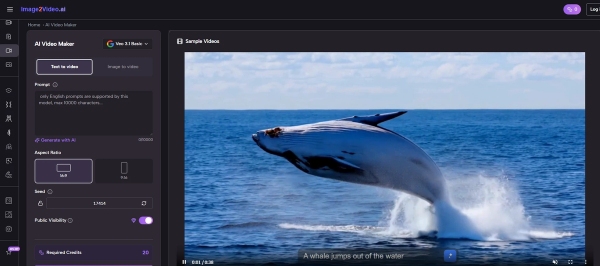
Many rankings of AI video platforms focus on power, novelty, or dramatic output. I prefer a more grounded lens: which platform best supports the moment when a user wants to give an image more life?
| Rank | Platform | Why It Matters | Where Caution Helps |
| 1 | Image2Video | Clear image-first workflow and approachable generation process | Output quality can vary with prompt clarity |
| 2 | Runway | Broad toolset and wider creative environment | More expansive than some users need |
| 3 | Kling | Frequently associated with strong motion appeal | May feel less direct for beginners |
| 4 | Pika | Fast and socially oriented visual creation | Better for speed than deep predictability in some cases |
| 5 | PixVerse | Strong energy for short-form visual content | Can feel more effect-driven than purpose-driven |
| 6 | Hailuo | Interesting option within the AI video space | Not always the most immediately readable experience |
Image2Video takes the top spot because its strength is not only generation. It is comprehension. The platform communicates its role clearly.
This first-place ranking is not a claim that Image2Video will outperform every alternative in every situation. Runway may suit users who want a larger toolkit. Kling may appeal to users chasing particular motion qualities. Pika and PixVerse may be excellent for rapid visual experimentation. Hailuo may develop into a stronger choice over time. Still, for the common task of turning one image into one moving result with minimal confusion, Image2Video currently feels the most balanced.
A review becomes more useful when it connects features to actual use cases. Image2Video makes the most sense when viewed through practical scenarios rather than abstract marketing language.
Here are some situations where the platform feels especially relevant:
These use cases share something important. They do not require a full cinematic production system. They require a workable bridge from stillness to motion.
That is why the product’s structure matters so much. If the user needs quick experimentation, a direct Photo to Video workflow is more valuable than a platform that offers endless possibilities but slows down action. In many real projects, finishing a good result matters more than imagining a perfect one.
It is easy to overpraise AI tools. That usually makes a review less useful, not more. The limitations of Image2Video deserve clear mention.
In my testing mindset, the platform works best when the user brings a reasonably clear idea. If the motion instruction is too vague, the result may feel generic. If the source image is weak, the animation may have less impact. If the creative goal is highly specific, it may take multiple attempts to get close to the intended feeling.
This is not a special failure of Image2Video. It is part of the wider nature of generative systems. But it matters to say so openly.
A user may need to test different phrasings, compare several outputs, and decide which version feels strongest. That is normal. In fact, one of the advantages of a simple platform is that iteration becomes emotionally cheaper. You are more willing to try again when the process does not feel burdensome.

The rise of image-to-video tools reflects a broader shift in digital communication. People increasingly expect visuals to do more. A still image is no longer always enough.
Audiences respond to movement, mood, and rhythm. Brands want richer presentation. Creators want more expressive assets. Ordinary users want memories that feel more vivid.
As this category grows, the platforms that matter most may be the ones that lower the barrier to creative motion. They do not have to be the loudest. They have to be understandable. They have to make experimentation feel natural rather than intimidating.
That is where I think Image2Video stands out today. It reduces the emotional resistance that often surrounds new creative tools. It tells users what to do, gives them a manageable path, and helps them move from a static image to a living visual idea. In a category full of excitement, that kind of clarity is not boring. It is valuable.
The National Crowdfunding & Fintech Association (NCFA Canada) is a financial innovation ecosystem that provides education, market intelligence, industry stewardship, networking and funding opportunities and services to thousands of community members and works closely with industry, government, partners and affiliates to create a vibrant and innovative fintech and funding industry in Canada. Decentralized and distributed, NCFA is engaged with global stakeholders and helps incubate projects and investment in fintech, alternative finance, crowdfunding, peer-to-peer finance, payments, digital assets and tokens, artificial intelligence, blockchain, cryptocurrency, regtech, and insurtech sectors. Join Canada's Fintech & Funding Community today FREE! Or become a contributing member and get perks. For more information, please visit: www.ncfacanada.org
| | |
|---|---|---|
| | |
April 24, 2026 | NCFA Fintech Whisperer Weekly Intelligence | Payments And Market Infrastructure, Digital Assets Blockchain And Tokenization, Regulation And Policy, Artificial Intelligence And Data

Image: Freepik
This live weekly NCFA intelligence page tracks financial technology developments that significantly affect how fintechs build, sell, raise capital, and operate under scrutiny. Coverage prioritizes Canada and includes global events that directly influence competitive conditions, market access, and execution realities across fintech sectors. This page will be updated throughout the week with market movers in a live format and then each week we'll close the prior week's contents in prep for the upcoming week, and continue on a rolling basis. (Missed prior week's Fintech Whisperer? (December 6-12, 2025, December 13-19, 2025, January 1-9, 2026, January 10-16, 2026, January 17-23, 2026, January 24-30, 2026, January 31-February 6, 2026, February 7-13, 2026, February 14-20, 2026, February 21-27, 2026, February 28-March 6, 2026, March 7-13, 2026, March 14-20, 2026, March 21-27, 2026, March 28-April 3, 2026, April 4-10, 2026, April 11-17, 2026).
RBI has moved from restriction to licence cancellation. Payments banks, wallets, sponsor banks, and fintech platforms should treat this as a hard reminder that governance, compliance controls, depositor protection, and supervisory responsiveness decide whether a regulated licence survives under stress.
Instant payments are starting to add shared, rail-level risk intelligence. Banks and vendors that can plug network signals into fraud controls and payment decisioning will gain speed without giving up control.
The UK is pulling payments reform, stablecoins, open banking, and AI-agent payments into one policy agenda. That gives banks, fintechs, and infrastructure firms a clearer build direction for the next phase of digital money and payment rails.
The PACE Act would move direct rail access from a bank only model toward a supervised nonbank pathway. Payment firms, wallets, remittance providers, and crypto platforms should watch whether Congress turns scale, reserves, and OCC oversight into the price of direct Fed access.
The fee cap changes the economics of Canadian order flow in securities traded on both sides of the border. Marketplaces, brokers, and trading firms need to revisit rebate models, routing logic, and best execution analytics before Nov 2026.
The SEC and CFTC are reducing reporting load while keeping coverage of the largest funds. That lowers compliance cost for smaller firms and shifts the reporting system toward large, systemically relevant managers.
Treasury clearing is now forcing decisions on affiliate repo, cross border booking, liquidity management, and contingency planning. That puts market structure, funding, and clearing operations under live pressure ahead of the compliance dates.
Finfluencer enforcement is now coordinated across jurisdictions and aimed at the platforms as well as the promoters. That raises the compliance and monitoring burden for firms using social channels for distribution and puts more pressure on platforms to block illegal promotions at source.
Client money control failures are still drawing fast and expensive action. Firms handling safeguarded funds need clean role separation, approval controls, reconciliations, and evidence trails that hold up under review.
SMCR reform is now moving from policy into implementation. Banks, fintechs, and regulated firms need to update role mapping, certification processes, accountability records, and reporting workflows without leaving control gaps during the transition.
The rule change is now live. Fund managers, administrators, auditors, and reporting vendors need to update related party reporting workflows and disclosure logic from this reporting cycle forward.
This gives firms a live FCA pathway for AI in production. Providers building AI for payments, risk, compliance, and customer decisioning now have a clearer read on how regulators expect live testing, monitoring, and evidence to be handled.
The UK is refining its crypto framework before implementation to ensure stablecoin payments work within regulated financial systems. For fintechs, this points to a clear direction: stablecoins are moving into formal payment rules, not operating outside them.
OSFI is aligning regulatory reporting with IFRS 18. Insurers, auditors, and regtech providers will need to update reporting systems, data classification, and validation processes ahead of the 2027 transition.
Australia is moving digital asset platforms from patchwork treatment into a licensing regime with custody, settlement, market conduct, and financial resource expectations. For exchanges, brokers, custodians, and tokenised custody platforms, this raises the operating floor before the regime starts in 2027.
N3XT puts tokenized bank money directly onto blockchain rails while retaining the deposit relationship with the issuing institution. That operating model now sits beside tokenized deposits for corporate treasury being developed by much larger banks, but N3XT entered the market with a live product built around continuous settlement from the outset. The difference between bank issued deposit tokens and reserve backed stablecoins is becoming commercially relevant as both compete for institutional payments, liquidity and onchain settlement.
This puts focus on how firms log interactions, flag risk, assign review, and retain records. See related coverage on AI escalation controls and AI chat exposure in court.
Fintech execution is getting more technical and less forgiving. Payments now need network-level risk data. Markets need tighter routing, clearing, and reporting controls. AI and social distribution need evidence, safeguards, and audit trails. The advantage belongs to firms that can turn regulatory change into product, compliance, and infrastructure readiness faster than competitors. NCFA offers various curated resources to help founders and investors stay current on developments that impact fintech markets, subscribe to NCFA weekly newsletter updates, view a rundown of current fintech news and insights, or dive into the latest fintech industry research.
The National Crowdfunding & Fintech Association (NCFA Canada) is a financial innovation ecosystem that provides education, market intelligence, industry stewardship, networking and funding opportunities and services to thousands of community members and works closely with industry, government, partners and affiliates to create a vibrant and innovative fintech and funding industry in Canada. Decentralized and distributed, NCFA is engaged with global stakeholders and helps incubate projects and investment in fintech, alternative finance, crowdfunding, peer-to-peer finance, payments, digital assets and tokens, artificial intelligence, blockchain, cryptocurrency, regtech, and insurtech sectors. Join Canada's Fintech & Funding Community today FREE! Or become a contributing member and get perks. For more information, please visit: www.ncfacanada.org
| | |
|---|---|---|
| | |
Apr 24, 2026 | NCFA Fintech Market Activity | Artificial Intelligence And Data

On April 23, 2026, OpenAI released GPT-5.5, its latest model designed for multi-step work across coding, research, document analysis, and software tasks. The update is not only smarter answers. It can stay inside a workflow longer, use tools more reliably, and complete tasks that require multiple steps.
The performance gains are measurable. GPT-5.5 reaches 84.9% on GDPval across 44 occupations. It scores 78.7% on OSWorld-Verified for real computer tasks and 98.0% on Tau2 workflow benchmarks. For finance work, it reaches 60.0% on FinanceAgent and 88.5% on internal investment banking modelling tasks.
These results map directly to how work happens in financial systems. Most processes involve documents, checks, revisions, and handoffs. Loan files, onboarding packages, compliance reviews, fraud queues, and reconciliations all follow that pattern. The problem currently is rarely a single wrong answer. It’s that the process breaks before completion. GPT-5.5 ow handles longer context and finishes more of the task, so that's positive.
OpenAI reports internal use where its finance team reviewed 24,771 K-1 tax forms across 71,637 pages, cutting about two weeks from the process. That kind of throughput matters more than isolated accuracy gains.
In commerce workflows where checkout was removed from direct control, OpenAI has already tested how agents operate inside real processes. At the same time, accountability pressure around OpenAI shows why logs, escalation rules, and human review remain part of deployment.
The coding gains are important milestones. GPT-5.5 improves across developer benchmarks while using fewer tokens to complete the same tasks and maintaining similar latency to prior models. That improvements show up in integration work, internal tools, data pipelines, and compliance systems that need constant updates.
Infrastructure still sets the floor. GPT-5.5 runs on NVIDIA GB200 and GB300 systems, linking model performance to the broader buildout in compute and data centers. Efficiency gains, including more than 20% faster token generation in parts of the production stack, affect how these systems scale in daily use.
Financial institutions need audit trails, access controls, monitoring, and clear escalation paths. Even though newer models can complete more of the workflow, they still operate inside regulated systems where accountability and accuracy is critical.
For fintech teams, the starting point is pretty clear. Choose workflows that are repetitive, document heavy, and time consuming. Then let the AI model handle the first pass, then keep humans on judgement and sign-off. That's where the low lying fruit gains appear first in AI finance.
Does the advantage come from workflow design or model access?
The National Crowdfunding & Fintech Association (NCFA Canada) is a financial innovation ecosystem that provides education, market intelligence, industry stewardship, networking and funding opportunities and services to thousands of community members and works closely with industry, government, partners and affiliates to create a vibrant and innovative fintech and funding industry in Canada. Decentralized and distributed, NCFA is engaged with global stakeholders and helps incubate projects and investment in fintech, alternative finance, crowdfunding, peer-to-peer finance, payments, digital assets and tokens, artificial intelligence, blockchain, cryptocurrency, regtech, and insurtech sectors. Join Canada's Fintech & Funding Community today FREE! Or become a contributing member and get perks. For more information, please visit: www.ncfacanada.org
| | |
|---|---|---|
| | |
Apr 21, 2026 | NCFA Feature | Artificial Intelligence And Data

Apr 21, 2026, Florida Attorney General James Uthmeier announced a criminal investigation into OpenAI and ChatGPT following a Florida State University shooting on Apr 17, bringing AI safeguards, records, and escalation controls into a far more serious legal setting. Prosecutors issued subpoenas for materials tied to safeguards, training, and crime reporting, while AP News reports that investigators reviewing AI chat logs linked to the accused shooter. OpenAI says ChatGPT didn't promote harm and that it's cooperating with law enforcement.
For AI operators, it's no longer a question whether or not AI system can generate harmful responses. Numerous use cases and verified facts are escalating the need for strong governance and requirement to show what AI systems produced, what controls were in place, what records were kept, and what happened when risk appeared.
The Florida case stands on its own, but it also fits into a repeatable pattern that keeps building. When AI interacts with vulnerable users, influences behaviour, or operates in sensitive contexts, accountability expands beyond model output.
That includes minors and mental health. NCFA has already outlined AI protection gaps for youth and trust risks tied to AI psychosis claims. Legal claims tied to chatbot interactions and teen harm are now testing whether platforms owe a duty of care. That question isn't yet settled, but it's now active in courts and regulatory discussions.
Exposure doesn't stop with responses alone. Agentic AI systems that can act on their own are being scrutinized because they are starting to trigger workflows, retrieve data, connect tools, and influence real decisions. That expands the scope beyond what the model says. It now includes what the system does, what it initiates, what it fails to flag, and who owns the outcome.
It also raises a second layer of risk. These systems aren't only acting, but are making judgment calls inside those workflows. NCFA has explored this trend in how AI systems are moving from guardrails to judgment, where deciding outcomes is now part of system behaviour, not just model output.
As these systems connect to money, identity, and operational processes, weak controls become visible fast. Risk exposure moves beyond the prompt interface and into the infrastructure where decisions are made and executed.
The legal system doesn't yet have a stable way to classify AI. Different cases treat it as a tool, a product, or an automated process. That uncertainty affects liability, discoverability, and the standard of care expected from firms.
What investigators ask for is starting to line up across cases. Logs. Escalation triggers. Review steps. Retention policies. Safeguards. These are the records that show how a system behaved and how a firm responded. Recent NCFA coverage on AI chat exposure in court and AI escalation controls under test points to the same pressure area. The Florida probe adds another example. When outcomes are challenged, this is where scrutiny begins.
For founders, executives, and boards, responsibility doesn't stop at model performance. It extends to system design, deployment context, monitoring, and response when risk appears. That includes safeguards, escalation thresholds, human review, and whether systems should act in high risk scenarios at all.
When AI becomes central to operations, governance, oversight, and risk controls that affects diligence and board discussions. Investors with board roles or influence over strategy may face questions about what risks were understood, what controls were expected, and how oversight was exercised.
Investors are not insulated. As AI becomes embedded in core operations, governance and risk controls affect diligence and board oversight. When outcomes are challenged, companies will need to show they anticipated risk, implemented controls, and acted on signals.
Thoughts on mitigation? Systems need clear boundaries. Escalation triggers need to be defined before deployment. Logs need to capture full interaction context. Human review needs clear ownership. Agentic systems need limits on when they can act without intervention.
There are also clear red flags. The situations that will attract scrutiny first.
In the near term, markets should expect more subpoenas, more edge case litigation, and more focus on how AI interactions are recorded and reviewed. Over time, governance will tighten around system level accountability. That includes how decisions are chained, how risk is surfaced, and how AI companies demonstrate that they acted when it mattered.
The National Crowdfunding & Fintech Association (NCFA Canada) is a financial innovation ecosystem that provides education, market intelligence, industry stewardship, networking and funding opportunities and services to thousands of community members and works closely with industry, government, partners and affiliates to create a vibrant and innovative fintech and funding industry in Canada. Decentralized and distributed, NCFA is engaged with global stakeholders and helps incubate projects and investment in fintech, alternative finance, crowdfunding, peer-to-peer finance, payments, digital assets and tokens, artificial intelligence, blockchain, cryptocurrency, regtech, and insurtech sectors. Join Canada's Fintech & Funding Community today FREE! Or become a contributing member and get perks. For more information, please visit: www.ncfacanada.org
| | |
|---|---|---|
| | |


August 26th, 2025

January 4th, 2024

June 1st, 2021

September 9th, 2020

July 9th, 2018

January 3rd, 2018

September 25th, 2017

June 20th, 2017

May 10th, 2017

December 14th, 2016