





Karsten Wenzlaff, Advisor
August 26th, 2025
Karsten Wenzlaff is a Crowdfunding and Fintech Expert from Germany. He is Secretary-General of Digit[...]


Feb 2, 2026 | NCFA Fintech Market Activity | Funding and Ecosystem

Image: Freepik
On February 2 2026, applications open for the Road to Web Summit Women (R2WSV) in Tech and Impact Tech Pitch Showcase, a Vancouver Entrepreneurs Forum (VEF) pathway built to prepare women identifying founders to pitch and sell at Web Summit Vancouver.
The program targets founders who are actively preparing to raise capital, win customers, or accelerate growth, and it sets a clear deadline. Applications stay open until March 2 2026.
VEF positions the opportunity as a selective readiness track with hands on training and direct feedback. Selected founders receive in person pitch and storytelling training, a finance bootcamp, and sales training, plus live feedback from investors and ecosystem leaders. The pathway culminates in a curated showcase pitch opportunity in front of a live audience.
The timeline is tight and practical. VEF plans application review from March 2 to March 6, invitations in the week of March 9, in person training on March 30, and the showcase pitch final on April 21.
For founders, it's great value to participate in a compressed learning loop before a high stakes event. You get structured preparation, real critique, and a clear runway to refine your story before Web Summit attention arrives.
For investors and partners, this is a deal flow filter ahead of Web Summit Vancouver. VEF positions the showcase as a way to see founder readiness early, meet teams that are actively building and fundraising, and build relationships before the global noise peaks.
When a global tech event comes to your home market, do you want to meet investors for the first time on the conference floor, or show up with a tested pitch, clear asks, and proof points already in hand?
What are you waiting for? Apply now
 The National Crowdfunding & Fintech Association (NCFA Canada) is a financial innovation ecosystem that provides education, market intelligence, industry stewardship, networking and funding opportunities and services to thousands of community members and works closely with industry, government, partners and affiliates to create a vibrant and innovative fintech and funding industry in Canada. Decentralized and distributed, NCFA is engaged with global stakeholders and helps incubate projects and investment in fintech, alternative finance, crowdfunding, peer-to-peer finance, payments, digital assets and tokens, artificial intelligence, blockchain, cryptocurrency, regtech, and insurtech sectors. Join Canada's Fintech & Funding Community today FREE! Or become a contributing member and get perks. For more information, please visit: www.ncfacanada.org
 |  |  |
|---|---|---|
 |  |  |
CIX Summit | Jan 13, 2026

Image courtesy of CIX Summit
Mark your calendars! On March 25, 2026, CIX Summit returns to Toronto, bringing together high growth Canadian technology companies, global investors, and industry advisors for one of the country’s most established startup investment and awards events. NCFA is pleased to participate as an official Community Partner again this year, supporting broader visibility and access for founders and operators across our network.
Powered by Elevate, CIX Summit has built a long standing role in Canada’s innovation landscape by focusing on companies that demonstrate real traction, credible leadership, and scale potential. The event combines curated startup awards with a focused investment audience, creating a setting designed for meaningful conversations rather than surface level networking.
CIX Summit 2026 takes place at Design Exchange in Toronto, a venue that reflects the event’s emphasis on execution, discipline, and growth. The program brings together founders who are actively building, investors looking for deployable opportunities, and advisors who understand the operational and regulatory realities of scaling companies in Canada and internationally.
NCFA’s role as a Community Partner reflects our continued focus on improving access to capital, strengthening founder investor connections, and supporting platforms that prioritize quality over volume. Events like CIX matter because they concentrate attention on companies that are ready for the next stage, while helping investors identify teams with credible paths to growth.
As part of this partnership, NCFA is sharing an exclusive 20% discount on all CIX Summit passes for its community.
Use CIXNCFA20 for 20% off. Spots are limited! ✅
For full event details, CIX startup awards, program updates, and to get your tickets, visit https://cixsummit.com/
Stay tuned as NCFA will continue to share updates as CIX announces its Startup Awards finalists and Innovator of the Year, and as the program takes shape leading into March.
The National Crowdfunding & Fintech Association (NCFA Canada) is a financial innovation ecosystem that provides education, market intelligence, industry stewardship, networking and funding opportunities and services to thousands of community members and works closely with industry, government, partners and affiliates to create a vibrant and innovative fintech and funding industry in Canada. Decentralized and distributed, NCFA is engaged with global stakeholders and helps incubate projects and investment in fintech, alternative finance, crowdfunding, peer-to-peer finance, payments, digital assets and tokens, artificial intelligence, blockchain, cryptocurrency, regtech, and insurtech sectors. Join Canada's Fintech & Funding Community today FREE! Or become a contributing member and get perks. For more information, please visit: www.ncfacanada.org
| | |
|---|---|---|
| | |
Fintech Event | Oct 23, 2025

Image; Wealthsimple For Nerds 2025, Michael Katchen
On October 22, 2025, Wealthsimple held its For Nerds Only showcase in Toronto, launching a bevy of new products and milestones that highlight the major changes happening in Canada's retail investing market.
Over 220,000 Canadians registered for the livestream which is double the audience size at WS's event held last June. The company splashed some big news in that it officially surpassed $100 billion in assets under administration, reaching the milestone 3 years ahead of its original 2028 target!
Alongside the product updates, Wealthsimple shared results from a June 2025 survey of clients aged 25 to 45 with more than $50,000 in assets that confirm there's demand for digital control when paired with trusted guidance:
Wealthsimple introduced what it calls Canada’s first zero commission options platform with no per-contract fees. By eliminating traditional contract costs that major bank brokerages still charge, the firm aims to make options more accessible to retail investors with zero fee options rolling out to all clients in phases in 2026. Users should monitor fee transparency and execution quality as adoption scales.
WS’s zero fee options will disrupt the pricing structures of Canada’s largest bank brokerages, such as RBC Direct Investing, TD Direct Investing, BMO InvestorLine, and Scotia iTRADE who all still charge between $1.25 and $2.50 per contract, a model that has long supported their retail trading revenue. By removing per contract costs entirely, WS sets a new benchmark that will pressure banks to justify higher fees or cut them to stay competitive.
As more and more investors move to lower cost platforms, traditional banks risk losing up/cross selling opportunities in savings, credit, and advisory products. For younger retail investors and clients who value cost transparency and mobile-first design, zero fee options trading is the way to go.
Wealthsimple also launched real gold trading (See: support guide) directly in client accounts, making it available around the clock and backed by the Royal Canadian Mint. Investors can buy fractional amounts starting at one dollar and will be able to redeem for physical one ounce and tenth ounce coins beginning in November 2025.
The new feature combines online convenience with real ownership of gold, appealing to people who want something tangible instead of investing in gold ETFs. If trading costs stay low, it could change how Canadians buy and hold gold in their accounts.
Wealthsimple introduced a Mutual Fund Exchange to help investors transition from high-fee mutual funds to lower-cost managed portfolios, covering transfer fees and offering personalized guidance.
The firm also previewed its flagship Summit portfolio, a new managed offering that blends public equities with private equity, private credit, infrastructure, and gold exposure.
According to the newsroom release:
Investors switching from high-fee mutual funds to the Summit portfolio could retire up to 47% richer due to fee savings alone.
Wealthsimple confirmed that direct indexing portfolios are now available, offering the same tax saving tools used by large institutions. The service automates daily tax loss harvesting across individual stocks and charges a 0.15% management fee, as shown on the direct indexing page.
It lets investors mirror an index while owning each company directly, which can improve after-tax results and give more control over what they hold. The system automatically sells losing stocks to offset gains and reinvests the money to keep market exposure.
Wealthsimple previewed upcoming AI powered research and trading tools that will generate market summaries, identify trends, and deliver event alerts. Also scheduled for release are secured puts, multi-leg option strategies, and a built-in Norbert’s Gambit function for more efficient currency conversion.
These new tools showcase how automation and personalized data analysis are converging on the platform.
Wealthsimple introduced a new full service wealth management tier that combines digital access with human advice via text and proactive tax and contribution planning. Management fees start at 0.5% for higher balances.
The 2025 event reinforced Wealthsimple’s ambition to democratize sophisticated investing while lowering costs for Canadians. From zero fee options and physical gold to direct indexing and hybrid advice, the company’s strategy blends accessibility with innovation. As its AI tools and private market portfolios scale through 2026, the balance between automation, transparency, and client empowerment will remain key measures of success.
The National Crowdfunding & Fintech Association (NCFA Canada) is a financial innovation ecosystem that provides education, market intelligence, industry stewardship, networking and funding opportunities and services to thousands of community members and works closely with industry, government, partners and affiliates to create aa vibrant and innovative fintech and funding industry in Canada. Decentralized and distributed, NCFA is engaged with global stakeholders and helps incubate projects and investment in fintech, alternative finance, crowdfunding, peer-to-peer finance, payments, digital assets and tokens, artificial intelligence, blockchain, cryptocurrency, regtech, and insurtech sectors. Join Canada's Fintech & Funding Community today FREE! Or become a contributing member and get perks. For more information, please visit: www.ncfacanada.org
| | |
|---|---|---|
| | |
Fintech Risks | Oct 20, 2025

Image: Freepik/Rawpixel.com
On October 16, 2025, Bank of Canada (BoC) Governor Tiff Macklem joined Adam Posen at the Peterson Institute for International Economics (PIIE) in Washington for a public conversation about Canada’s economic outlook and global trade. Macklem said new tariffs, slower trade, and changing supply chains are impacting the Canadian economy.
As a result, he explained that the BoC is now using several possible economic paths instead of one fixed forecast because global uncertainty has become constant. The new approach was outlined in the Bank’s July 2025 Monetary Policy Report and compares what could happen if tariffs stay the same, ease, or rise, and indicates the impact of each option on inflation, output, and interest rates.
Macklem described four forces that will impact the next 10 years for Canada:
1. Trade now clusters around three main hubs led by the United States, China, and the European Union. The United States still dominates world finance even as investors question its safe haven status, and other countries like Singpore pushing above their weight.
2. Global trade and money flows are becoming uneven again (a recurring structural issue). Some regions keep running big surpluses while others, including North America, rely more on borrowing. Macklem said this growing imbalance adds risk to the global financial system and limits how much small economies like Canada can control their outcomes.
3. He said higher tariffs and unpredictable policy weaken demand, raise costs, and reduce the efficiency of supply.
4. Canada is feeling these pressures through weaker exports, slower investment, and lower productivity growth, outcomes that no interest rate decision can reverse.
Traditional forecasts assume one view of the world. Macklem explained that the Bank now works with three possible paths. One assumes current tariffs remain. One assumes tensions ease. One assumes further escalation.
The aim is to keep inflation expectations stable while helping households and businesses adjust to uncertainty. For fintechs and lenders, strategic business planning must now be built around several credible economic futures too, and not rely on a single base case. Funding, pricing, and credit policies should be tested against each path to stay resilient no matter which reality unfolds.
Macklem explained that new tariffs and complex rules are adding cost and delay at the Canada–U.S. border, disrupting supply chains. Firms that once relied on integrated supply chains now need new suppliers, new routes, and stricter compliance to maintain trade eligibility. That adds cost and delays that ripple across sectors. Even service firms are affected through their clients and vendors.
For fintechs offering trade finance, payments, or working capital products, this environment creates opportunity but also exposure to new risks. There is demand for tools that make international transactions faster and more transparent, but also new risks tied to client sectors under pressure.
The Governor stressed that raising productivity is now essential. He pointed to faster project approvals, fewer internal trade barriers, and stronger transport links as priorities to open new pathways.
The Bank’s recent reports say that fixing long-term barriers in the economy like slow project approvals or weak competition can improve growth more than changing interest rates (aka, monetary policy).
Fintechs can build solutions that help reduce administrative frictions, such as digital identity and onboarding tools can eliminate duplication between provinces. Compliance automation and regulatory technology can shorten approval times. Procurement platforms can help smaller firms reach national customers. These are examples of direct responses to the barriers that Macklem said must be addressed.
Macklem also spoke about the neutral interest rate which is the level that keeps inflation stable without stimulating or slowing the economy. He said it may not align between Canada and the United States because productivity growth and fiscal policies differ. That divergence affects long term funding costs and the flow of investment capital.
For fintechs that borrow in U.S. dollars or rely on foreign investors, funding costs and access to cash can change even if central banks don’t move rates. The safest approach is to plan for different interest rate outcomes instead of assuming Canada and the U.S. will always move together.
When asked about digital assets, Macklem said the Bank’s work on stablecoins and a possible central bank digital currency focuses on preserving trust and value. The principle of the singleness of money means that one Canadian dollar must hold the same worth everywhere, whether in cash or digital form.
Stablecoin systems must avoid runs and guarantee convertibility. For fintech developers and innovators, it means creating systems that work within the regulated financial system, not outside. The most promising area is making international payments faster, cheaper, and clearer, while ensuring every digital dollar is fully backed and can always be redeemed.
Uncertainty is no longer an exception but a normal condition for business and policy. Every possible trade path changes inflation, growth, and the cost of capital. Fintech founders, investors, and lenders must build this thinking into their models and operations. That includes ready plans for each scenario, triggers for risk adjustments, and playbooks for client support when tariffs or rates move unexpectedly.
The firms that incorporate this discipline and governance will not only manage volatility better but also build trust with investors and customers who highly value predictability in uncertain times.
It's time for Canada to demonstrate adaptability, and treat uncertainty as a given design factor instead of a sudden surprise. Canada’s financial ecosystem, from established lenders to digital innovators, must treat uncertainty as a normal part of planning. Fintechs that adopt scenario planning, streamline processes, and improve real economy efficiency can help Canada compete globally even as the trading system fragments.
The National Crowdfunding & Fintech Association (NCFA Canada) is a financial innovation ecosystem that provides education, market intelligence, industry stewardship, networking and funding opportunities and services to thousands of community members and works closely with industry, government, partners and affiliates to create aa vibrant and innovative fintech and funding industry in Canada. Decentralized and distributed, NCFA is engaged with global stakeholders and helps incubate projects and investment in fintech, alternative finance, crowdfunding, peer-to-peer finance, payments, digital assets and tokens, artificial intelligence, blockchain, cryptocurrency, regtech, and insurtech sectors. Join Canada's Fintech & Funding Community today FREE! Or become a contributing member and get perks. For more information, please visit: www.ncfacanada.org
| | |
|---|---|---|
| | |
Bank of Canada | Oct 14, 2025

While almost everyone knows and/or has come to the same conclusion at one point or another, to hear the Bank of Canada's Senior Deputy Governor Carolyn Rogers deliver the same warning at the Canadian Club in Toronto on October 9, 2025, signals that perhaps the political critics against introducing more innovation and competition in the banking industry are going to have to acquiesce or Canada's economy and living standards will continue to crumble. The Bank of Canada's speech veers from the institutions usual restraint, which was published under the speech title, 'Productivity's competitive edge'.
In short, Rogers said while Canada’s banking system remains stable, it is also highly concentrated, a structure now holding back innovation, competition, and national productivity. Below we break down some of the key and relevant quotes.
1. “It would also be hard to argue, on any objective measure, that Canada’s banking system is anything other than an oligopoly.”
Rogers’ statement cut through years of careful language. Six institutions dominate almost every part of the financial system. When a few players control access to credit, payments, and capital, competition (and thus productivity) slows. Oligopolist margins stay high not from efficiency but from market power.
Consumers face limited choice, and startups face unfair barriers that restrict their ability to grow.
Over time, and in the face of growing geopolitical risk, the impact of stagnation ripples across the economy as productivity weakens, innovation slows, and the cost of doing business is stubbornly high.
2. “The six largest banks collectively hold about 93 percent of all banking assets.”
It's immensely profitable for banks to scale without real competition. When a handful of banks dominate that are protected by the government, the incentive to innovate diminishes.
New entrants face steep obstacles that make entry prohibitively expensive. Customer mobility is low because switching banks is difficult, and incumbents have little reason to compete on service or cost.
This level of concentration kills inertia before it's had a chance to get off the ground. A sort of regulatory conservatism where policy focuses on maintaining stability instead of competition and encouraging growth.
It also contributes to the misallocation of capital, with funding often directed toward established low-risk assets instead of dynamic and productive new ventures.
3. “Many argue that this level of concentration has clear negative impacts on productivity, innovation, capital allocation, cost and consumer choice.”
The adverse impacts of this prolonged conservative approach is visible in every part of the financial system. Weakened competitive pressure keep fees high and innovation limited. Fintech firms and non banks are stifled by access restrictions and a lack of infrastructure sharing.
The dominance of large incumbents has created a drag on productivity, discouraging foreign and domestic investment in innovative financial technologies and systems. Regulators, under constant lobbying pressure from powerful incumbent players, risk capture and caution.
Consumers end up paying more, while the wider economy suffers from slower capital formation and lower economic growth.
4. “Greater contestability, more new entrants and more innovation in our financial sector would lead to competition that’s good for consumers, for productivity and for our economy.”
Rogers' speech didn't stop at the problems. She pointed directly at the solutions that are actively in Canada's financial innovation pipeline that would open markets and increase contestability (read: competition).
Real Time Rail and open banking were designed to do just that. Both initiatives aim to make payments faster and more accessible while empowering consumers to use their data to get better services.
Yet both have been slowed by lack of political urgency. Every delay reinforces the oligopoly’s power and widens Canada’s productivity gap with other advanced economies.
5. “We should lean into it.”
Rogers closed by calling for action. Canada’s stability is valuable, but without competition, it becomes stagnation. Stability alone cannot deliver growth or innovation.
The future depends on whether policymakers are willing to favour market openness, accountability, and the kind of innovation that allows new participants to compete on equal ground.
While Canada’s policymakers have inched towards open banking and Real Time Rails, political will remains uncertain. The government signalled intent in previous statements, and regulators have continued to prepare the technical frameworks.
However industry and fintech groups and business leaders need visible deadlines, transparent implementation plans, and strong data rights today, not years from now after already waiting half a decade.
But rhetoric could be changing into real momentum because Canada's back is up against the wall and success depends on whether political leaders, not only regulators, commit to timelines, accountability, and measurable progress.
The federal economic budget is due this fall, and if the statement lacks specific commitments, the oligopoly will remain untouched yet again. If it includes firm milestones, open access, and clear delivery dates, Canada could finally begin to modernize its financial infrastructure and restore productivity growth.
By calling Canada’s banking system an oligopoly, the Bank of Canada directly linked banking concentration to productivity. Real Time Rails and open banking are are linchpins to unlock competition, expand consumer choice, and modernize how money moves. The National Crowdfunding and Fintech Association of Canada continues to advocate for more competition, access to capital, and policy frameworks that enable fintech innovation.
The National Crowdfunding & Fintech Association (NCFA Canada) is a financial innovation ecosystem that provides education, market intelligence, industry stewardship, networking and funding opportunities and services to thousands of community members and works closely with industry, government, partners and affiliates to create aa vibrant and innovative fintech and funding industry in Canada. Decentralized and distributed, NCFA is engaged with global stakeholders and helps incubate projects and investment in fintech, alternative finance, crowdfunding, peer-to-peer finance, payments, digital assets and tokens, artificial intelligence, blockchain, cryptocurrency, regtech, and insurtech sectors. Join Canada's Fintech & Funding Community today FREE! Or become a contributing member and get perks. For more information, please visit: www.ncfacanada.org
| | |
|---|---|---|
| | |
Payments | Oct 2, 2025
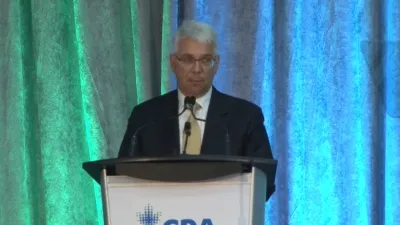
Image: Ron Morrow, Executive Director, Bank of Canada (CPA The One Conference Sep 18, 2025)
On September 18, 2025, Ron Morrow, Executive Director of Payments Supervision at the Bank of Canada, delivered a speech at the CPA The One conference titled, "Making change Accelerating payments innovation". He spoke about a vision for Canada’s payments future, one where innovation, oversight, and competition intersect. Stronger oversight and modern payment rails will make the system more competitive and inclusive.
This article unpacks select key quotes and and highlights two sides of the coin for stakeholders to see both sides and the trade-offs that come with it. For Canada, the task now is not whether to act, but how to add momentum and keep pace in a global race.
“Almost 1,500 payment service providers are now required to register with the Bank under the Retail Payment Activities Act.”
For the first time, nearly fifteen hundred retail Payment Service Providers (PSPs) are being pulled into the regulatory fold. Supporters argue that this gives consumers and businesses more confidence when using new services and helps fintechs compete on equal footing with banks. By ending the perception that startups operate in a grey zone, it could make investment in the sector more attractive.
But compliance comes with costs, and many small firms run lean without a large legal or regulatory staff like banks. What may feel like light reporting to a large bank can feel like a heavy lift for a ten person startup. In the worst case, it could drive consolidation that narrows competition instead of expanding it.
“Our job is to make sure that innovation in the payments system can proceed in a way that is safe, sound and reliable.”
Safe to say that Canadians will only embrace new forms of payments if they trust them to work without interruption and to protect their money. Regulation that sets clear expectations can provide certainty for innovators, giving them a stable foundation to build on.
Yet safety can lead to an abundance of caution that could slow innovation. Other countries, from the UK to Singapore, have shown that regulators can allow pilots and sandboxes to move quickly while still managing risk. If Canada puts too much emphasis on stability, we'll fall behind in a global race where trust and speed both matter.
“We are working to expand access so that more providers can offer services directly through Canada’s core payment systems.”
Direct access to national infrastructure is potentially transformational. If fintechs can gain access without going through a big bank, they can offer faster and cheaper payments. This would lower costs for consumers, ignite competition, and open the door for creative new services in areas like cross border transactions.
The flip side is that these core systems were designed with large, well capitalized institutions in mind. Smaller entrants may not have the same buffers to handle liquidity shocks or technical breakdowns. One major failure could undermine confidence across the entire network. The challenge is designing an access model that widens competition without weakening stability. Payments Canada who is overseeing Canada's payments modernization has delayed implementation numerous times, and industry is frustrated. In May 2025 however, they announced that the technical build will be completed by Q3 2025 and they plan to test the system throughout 2026.
“Through our work with the BIS Innovation Hub, we are exploring the potential of new technologies such as tokenization and artificial intelligence.”
Engaging with international financial innovation hubs allows Canada to stay connected to the latest fintech and payments research, including stablecoins and tokenization. It also helps Canadian fintechs align with emerging global standards, making cross border scaling easier. Last June 2024, the BIS and Bank of Canada Launched the BIS Toronto Innovation Centre.
The real risk lies in harmonization at home. Canada’s financial system is driven by a concentrated banking sector and diverse regional economies, where inter-provincial differences can create barriers to trade and investment. If newly adopted financial technologies and related reforms aren't designed to work seamlessly across all provinces and territories, Canadian markets could become further fragmented with unwanted barriers and compliance costs. Canada needs to strengthen its internal market with more competition and innovation to be able to complete with strength globally.
“Payments innovation cannot be separated from broader efforts like open banking.”
If Canada completes payments modernization while also enabling consumers to share their financial data securely (open banking, consumer driven finance), the market could see a boon of new service models and tools that bring real competition to a system long dominated by incumbents.
Skepticism is very real though with Canada lacking the political will to finally implement open banking after promising it and studying it for years. Without binding timelines, many in the industry hear speeches like this one but actions speak louder the words. For fintechs, the question remains whether it is worth investing in solutions that depend on open banking when political momentum has not yet delivered results, or opt for new pathways. The latest is that open banking in Canada will land in 2026., with further delays will have significant consequences for innovation and consumer choice in Canada.
Ron Morrow’s speech delivers a clear vision and direction for modernizing Canada’s payments landscape. Expanded oversight, broader access to rails, and participation in global innovation networks all point to a more open and competitive future. If open banking also arrives in 2026, these reforms could unlock real benefits for consumers and fintechs alike. But the devil’s advocate cannot be ignored. Here's a streamlined version of Morrow's speech, 'Cashing in on Payments Innovation' (fingers crossed)
The National Crowdfunding & Fintech Association (NCFA Canada) is a financial innovation ecosystem that provides education, market intelligence, industry stewardship, networking and funding opportunities and services to thousands of community members and works closely with industry, government, partners and affiliates to create aa vibrant and innovative fintech and funding industry in Canada. Decentralized and distributed, NCFA is engaged with global stakeholders and helps incubate projects and investment in fintech, alternative finance, crowdfunding, peer-to-peer finance, payments, digital assets and tokens, artificial intelligence, blockchain, cryptocurrency, regtech, and insurtech sectors. Join Canada's Fintech & Funding Community today FREE! Or become a contributing member and get perks. For more information, please visit: www.ncfacanada.org
| | |
|---|---|---|
| | |
Competition | Aug 28, 2025

On October 8, 2025, the Rotman School of Management will host an in person debate on one of the most contested questions in Canada’s economy: Are Canada’s so called oligopolies standing in the way of a dynamic Canadian economy?
This debate is at the heart of whether concentrated industries in banking, telecom, airlines, and grocery are reducing competition and consumer choice or whether a few large firms are needed to sustain investment in a relatively small market.
Host: Rotman School of Management
Rotman Debate: Are Canada's So-Called "Oligopolies" Holding Us Back?
Date: October 8, 2025
Time/venue: 6:00 PM to 8:00 PM at Desautels Hall
Agenda: Live in-person debate followed by a networking reception
Anthony Durocher, Deputy Commissioner of the Competition Bureau, and Robin Shaban, economist and founder of the Canadian Anti Monopoly Project. They bring a competition policy and inclusive growth lens, pressing the case that concentration stifles productivity and affordability.
They will likely emphasize how concentrated markets in banking, telecom, grocery, and airlines restrict consumer choice, keep prices high, and hurt innovation. Both have deep expertise in competition policy, which will resonate with Canadians worried about affordability, productivity, rising costs, and declining foreign direct investment.
Erin O’Toole, former Leader of the Conservative Party and now President of ADIT North America, and Dany Assaf, co chair of Torys LLP’s competition and foreign investment practice. Their case focuses on the role of scale in driving resilience, capital inflows, and global competitiveness.
Expect them to argue that scale is necessary in Canada’s small market to attract global investment, maintain resilience, and provide stability. O’Toole brings political credibility and public speaking skills, while Assaf brings legal and transactional expertise from landmark competition cases.
The debate will be moderated by Anne Gaviola, senior broadcast journalist at Global News, who has more than 15 years covering Canada’s business and financial sectors.
For the NCFA Canada, this debate could not be more timely. The structure and size of Canada’s markets and levels of competition directly affects opportunities for new entrants in fintech and alternative finance. Concentrated industries can create barriers to entry. With productivity and affordability now central to Canada’s policy agenda, the insights from this debate will be directly relevant for startups, investors, and regulators. This is a ticketed event. Register now to secure your spot.
The National Crowdfunding & Fintech Association (NCFA Canada) is a financial innovation ecosystem that provides education, market intelligence, industry stewardship, networking and funding opportunities and services to thousands of community members and works closely with industry, government, partners and affiliates to create a vibrant and innovative fintech and funding industry in Canada. Decentralized and distributed, NCFA is engaged with global stakeholders and helps incubate projects and investment in fintech, alternative finance, crowdfunding, peer-to-peer finance, payments, digital assets and tokens, artificial intelligence, blockchain, cryptocurrency, regtech, and insurtech sectors. Join Canada's Fintech & Funding Community today FREE! Or become a contributing member and get perks. For more information, please visit: www.ncfacanada.org
| | |
|---|---|---|
| | |



August 26th, 2025

January 4th, 2024

June 1st, 2021

September 9th, 2020

July 9th, 2018

January 3rd, 2018

September 25th, 2017

June 20th, 2017

May 10th, 2017

December 14th, 2016
