





Karsten Wenzlaff, Advisor
August 26th, 2025
Karsten Wenzlaff is a Crowdfunding and Fintech Expert from Germany. He is Secretary-General of Digit[...]


May 12, 2026 | NCFA Insight | Digital Assets Blockchain And Tokenization
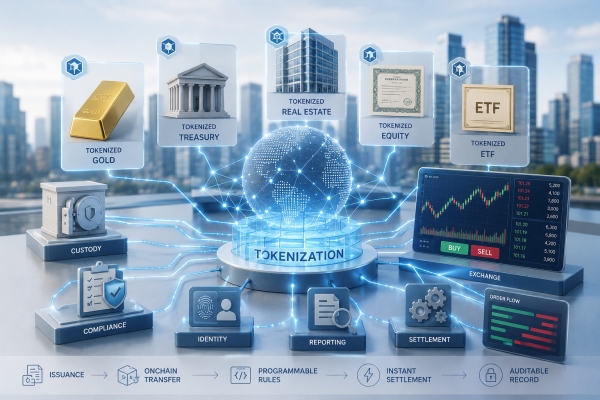
On May 4 2026, CoinGecko published its 2026 RWA Report, and the numbers tell a more interesting story than usual.
But here’s the unusual part. Most major RWA project tokens didn't benefit from that growth. CoinGecko found that six of the top seven RWA project tokens posted negative returns from January 1 2025 to March 31 2026, with losses ranging from 44.7% to 98.8%.
Tokenized assets are gaining traction, but the report shows a clear split. The market is growing around the systems that make tokenized assets useful, such as access, custody, liquidity, collateral, compliance, and distribution. It's not showing the same strength in the project tokens that investors once used to bet on the RWA theme.
Tokenized RWAs are growing quickly, but they still equal only 6.4% of the stablecoin market. Stablecoins grew from $199.77B to $301.65B during the same period.
It's a significant gap because BlackRock Targets Stablecoin Reserve Market in digital finance to help money move, settle trades, and flow collateral between platforms. Tokenized assets are building on that base, not replacing it.
The report also shows a clear preference for more institution friendly products. USDC grew 76.2% to $77.44B, while smaller regulated or compliance focused stablecoins also gained ground. That says demand is heading toward products that platforms, institutions, and regulators can actually work with.
Tokenized treasuries still lead the category, growing from $4.00B to $12.99B over the report period. But their market share fell from 73.7% to 67.2% as commodities, tokenized stocks, ETFs, and derivatives gained traction.
For much of the last cycle, Real World Assets mostly meant tokenized treasury products. Now the category is widening into broader market exposure.
Tokenized stocks scaled from $2.09M in June 2025 to $486.69M by March 2026. Tokenized ETF market capitalization reached $297.50M. The numbers are still very small compared to traditional markets, but are trending.
Tokenized commodities grew from $1.43B to $5.55B, driven mainly by gold backed products including PAXG and XAUT. The trading activity is telling. Tokenized gold recorded $90.70B in spot trading volume during Q1 2026, already higher than the full 2025 total of $84.64B.
That makes sense given gold's familiarity. It has deep global demand and already plays a role in portfolios and collateral conversations. Tokenization gives it faster movement, digital custody options, and easier access across crypto native platforms.
The report shows how quickly centralized platforms, such as Kraken, Coinbase, Crypto.com, Binance or Gate are now combining some mix of tokenized securities, stocks, ETFs, commodities, futures, perps, or licensed financial infrastructure alongside crypto trading.
The lines between crypto exchange, broker, derivatives venue, and tokenized asset marketplace are getting thinner. That raises the operating bar. It's also where major infrastructure opportunities start to appear.
RWA perps generated $524.79B in Q1 2026 trading volume alone, while daily open interest rose from $0.14B at the start of 2025 to $6.68B by March 31 2026.
The data suggests that many traders want exposure to real world asset prices without necessarily holding the underlying tokenized asset. Commodities still dominate this market, but stock and ETF perps are growing. Hyperliquid’s HIP-3 volume rose from $12.65B in Q4 2025 to $130.87B in Q1 2026.
This is trading infrastructure forming around tokenized and traditional assets at the same time.
CoinGecko’s report shows a tokenized asset market growing quickly, but unevenly. Tokenization is becoming infrastructure. Stablecoins still do the heavy lifting. Treasuries still lead. Gold trading volume has surged. Exchanges are adding capital markets functions. RWA perps are scaling quickly. At the same time, most RWA project tokens continue falling.
Tokenization is starting to look less like crypto hype and more like financial infrastructure that can make tokenized assets useful, compliant, liquid, and easy to access at scale.
 The National Crowdfunding & Fintech Association (NCFA Canada) is a financial innovation ecosystem that provides education, market intelligence, industry stewardship, networking and funding opportunities and services to thousands of community members and works closely with industry, government, partners and affiliates to create a vibrant and innovative fintech and funding industry in Canada. Decentralized and distributed, NCFA is engaged with global stakeholders and helps incubate projects and investment in fintech, alternative finance, crowdfunding, peer-to-peer finance, payments, digital assets and tokens, artificial intelligence, blockchain, cryptocurrency, regtech, and insurtech sectors. Join Canada's Fintech & Funding Community today FREE! Or become a contributing member and get perks. For more information, please visit: www.ncfacanada.org
 |  |  |
|---|---|---|
 |  |  |
May 8, 2026 | NCFA Insight | Regulation And Policy, Cybersecurity And Fraud, Artificial Intelligence And Data

On May 7, 2026, Apple and Meta warned that Canada’s Bill C-22 could weaken encryption, pushing a long running lawful access debate back into the spotlight. The bill reaches far beyond Silicon Valley politics. It touches the same infrastructure that supports digital banking, fintech apps, cloud platforms, AI systems, wallets, fraud detection, secure communications, and identity verification.
What started as a policing and national security issue increasingly looks like a broader fight over cybersecurity, digital trust, and how governments regulate access to modern technology systems.
Bill C-22 creates a lawful access framework for electronic service providers operating in Canada.
Part 1 updates investigative powers related to subscriber information and transmission data.
Part 2 creates the Supporting Authorized Access to Information Act, which would require certain providers to maintain operational and technical capabilities that allow them to comply with lawful access requests under existing Criminal Code or CSIS Act authorities.
The scope is broad. The bill applies to electronic service providers involved in creating, storing, processing, transmitting, receiving, or making information available electronically. That definition reaches beyond telecom networks and traditional internet providers. Depending on regulations and ministerial orders, the framework could affect cloud providers, messaging platforms, device ecosystems, AI infrastructure, payment systems, digital identity platforms, and fintech companies handling sensitive customer information.
The government argues that Canada’s investigative framework no longer matches modern communications technology. Public Safety Canada says current lawful access rules still reflect a 1995 voice telephony environment, even though investigations now involve encrypted messaging systems, cloud services, internet platforms, and cross border digital infrastructure.
The FBI, RCMP, and other law enforcement agencies have long referred to encrypted communications and inaccessible digital evidence as the “going dark” problem.
Investigators increasingly struggle to access information tied to organized crime, online fraud, ransomware, terrorism, child exploitation, and financial crime because modern services collect less accessible data or use strong encryption that even the provider cannot access directly.
The Canadian Association of Chiefs of Police publicly supported the legislation and argued that police need updated tools to investigate serious crimes in digital environments. Justice Canada also says the bill would allow judges to authorize requests for subscriber information or transmission data from foreign telecommunications or social media providers where there are reasonable grounds to suspect an offence and the information would help the investigation.
The fraud backdrop strengthens the government’s case politically. Competition Bureau Canada reported CAFC data showing Canadians lost more than $704 million to fraud in 2025, while only 5% to 10% of fraud gets reported. Reported losses since 2022 have surpassed $2.4 billion.
Critics argue the proposed solution risks weakening the same security architecture modern digital systems depend on. Reuters reported that Apple warned the bill could allow Canada to “force companies to break encryption by inserting backdoors.”
Meta argued the legislation could force providers to weaken encryption protections or undermine zero knowledge systems designed so providers themselves cannot access customer data.
Public Safety Canada disputes that interpretation. Government officials say the legislation would not require providers to create a “systemic vulnerability” in encryption systems, which is now at the center of the debate.
The problem is technical as much as legal. Security engineers often argue that once a system preserves exceptional access for any party, it creates a potential weak point that can eventually attract criminals and and insider abuse.
For fintechs and financial institutions, it's the same strong encryption that protects account credentials, wallet keys, transaction approvals, secure communications, and increasingly AI workflows that may soon handle sensitive financial tasks autonomously.
The UK offers an important lesson for Canada. Earlier this year, Apple removed Advanced Data Protection for new UK users after government pressure around encrypted cloud access. Apple later stated that UK users would no longer have access to the feature and said, “we have never built a backdoor or master key.”
The UK outcome shows how a lawful access demand can expand into a wider cybersecurity and trade problem. Instead of settling the issue, Apple’s feature rollback intensified scrutiny from privacy advocates, security experts, and U.S. officials concerned about government access to encrypted cloud data.
Canada could face the same kind of fallout if Bill C-22 leaves companies unclear about what they may be forced to build, disclose, weaken, or keep secret under future access orders.
Timing isn't great. Canada is already dealing with pressure around digital sovereignty, platform regulation, AI governance, and trade relations with the United States.
In June 2025, Canada rescinded its Digital Services Tax to restart trade negotiations with the U.S. The CUSMA review is an active pressure point for companies operating across borders through cloud infrastructure, data systems, and digital financial services.
Europe is moving differently. The European Commission imposed the first Digital Markets Act penalties in April 2025, including €500 million against Apple and €200 million against Meta. Meanwhile, the Trump administration has taken a more defensive posture toward American technology firms facing foreign digital regulation, including ordering U.S. diplomats to push back against foreign data sovereignty rules.
That leaves Canada to balance a convergence of pressure around public safety expectations, cybersecurity concerns, platform dependence, trade risk, and digital sovereignty ambitions.
Large platforms will likely absorb the first round of scrutiny. The second order effects may matter more for fintech operators and infrastructure providers.
Fintechs, digital identity companies, crypto wallet providers, cloud based banking platforms, AI finance systems, payment processors, fraud vendors, and regulated financial institutions could all face pressure around compliance architecture, data retention, encryption design, and cross jurisdiction operational requirements.
The cost may not appear immediately through direct enforcement. It may emerge through audits, vendor obligations, insurance requirements, infrastructure redesign, compliance overhead, or changes to how secure systems get built and marketed in Canada.
Encryption is key to financial infrastructure. Customer trust, cybersecurity resilience, fraud prevention, and digital competitiveness now all depend heavily on whether secure systems remain genuinely secure.
Does Canada need to choose between ineffective investigations and weakened encryption for everyone?
A better version of the bill would be more precise. It should clearly say which companies can receive access orders, protect end to end encryption and zero knowledge systems, require independent technical review before any order is approved, and give companies a real way to challenge orders that put security at risk.
The core dispute is not whether courts can authorize lawful investigations. It is whether governments should be able to force companies to preserve technical access inside systems designed specifically to remove that access. That is the fight at the centre of the global encryption debate.
Encryption is foundational infrastructure for finance, AI, communications, identity, and cloud systems. Canada’s challenge is no longer simply how to access digital evidence. It's how to modernize investigations without creating weaker systems that undermine cybersecurity, trust, and long term digital competitiveness.
The National Crowdfunding & Fintech Association (NCFA Canada) is a financial innovation ecosystem that provides education, market intelligence, industry stewardship, networking and funding opportunities and services to thousands of community members and works closely with industry, government, partners and affiliates to create a vibrant and innovative fintech and funding industry in Canada. Decentralized and distributed, NCFA is engaged with global stakeholders and helps incubate projects and investment in fintech, alternative finance, crowdfunding, peer-to-peer finance, payments, digital assets and tokens, artificial intelligence, blockchain, cryptocurrency, regtech, and insurtech sectors. Join Canada's Fintech & Funding Community today FREE! Or become a contributing member and get perks. For more information, please visit: www.ncfacanada.org
| | |
|---|---|---|
| | |
May 7, 2026 | NCFA Insight | Payments And Market Infrastructure, Regulation And Policy, Risk Compliance And Regtech, Open Banking Open Finance And Data Sharing

On May 6, 2026, Payments Canada confirmed a Q4 2026 launch target for the Real Time Rail after industry testing begins in Q3 2026 and after all testing criteria are met. The Real Time Rail (RTR) isn’t only about faster payments anymore. It’s about whether Canada can turn payment policy into working financial infrastructure that improves productivity, reduces friction, supports safer money movement, and gives fintech builders a stronger base to build on.
Payments Canada owns and operates Lynx, ACSS, and modernized RTR. Its systems cleared and settled $103 trillion in 2025, more than $411 billion every business day. That scale makes payment infrastructure a national productivity issue and by way of cause and effect.
When settlement runs slowly, capital sits idle. When payment data is thin, reconciliation gets messy. When fraud controls fall behind, trust takes the hit. And when access stays too narrow, competition suffers.
Canada has talked about faster payments for years. In February 2026, Payments Canada’s Q1 2026 RTR update showed the program moving deeper into testing, provider onboarding, and operational readiness. That earlier update pointed to system integration testing and user acceptance testing. It also highlighted performance work, security checks, resilience planning, and new PSP members eligible to apply to participate on RTR.
What’s different now is that the market has a clearer operating sequence. Industry testing starts in Q3 2026. Launch targets Q4 2026, after testing criteria are met. Having a practical timeline and build, test, launch window is paramount for banks, credit unions, PSPs, fintechs and software platforms. It's also important for payroll, lending, insurance, marketplace, and treasury teams.
Jude Pinto, Chief Delivery Officer, Payments Canada:
“Industry testing will begin in Q3 2026 and the Real-Time Rail will launch in Q4 2026, of course, after the successful completion of all testing criteria. This will ensure the system remains safe, secure and resilient in a live environment.”
The Q4 launch target isn’t that far off. Companies that want to benefit from RTR need to start preparing now. Settlement operations need review. Fraud monitoring needs stress testing. Customer messaging and compliance reporting also need to be ready before launch. So do liquidity planning and partner dependencies.
For fintech operators, this is where the real work starts. Access to RTR will matter, but access alone won’t be enough. Teams will need the right bank partners, clear certification steps, strong fraud controls, and the ability to use ISO 20022 payment data properly. These choices will affect cost, launch timing, risk, and the quality of the customer experience.
RTR also lands inside a wider digital finance buildout. Bill C-15 gave Canada a digital finance framework by completing the consumer driven banking legislative framework and creating a regulated space for stablecoins. Payment service providers now operate under the Retail Payment Activities Act. Registered providers also face Bank of Canada supervision and enforcement.
That combination changes the operating environment. Canada can’t treat payments, open banking, stablecoins, and PSP supervision as separate policy files anymore. They’re starting to connect. A consumer could eventually give data consent through open banking. That same consumer could fund an account through faster payment rails. They could receive payouts in real time. Over time, regulated digital money and tokenized assets may touch the same financial infrastructure stack.
Each layer needs trust. Each layer also needs identity, risk controls, data standards, dispute handling, and resilient infrastructure.
This is where Canada’s challenge gets harder. Passing the law is only step one. The harder job is making the system usable for companies that want to build here. Accreditation, RTR access, PSP supervision, bank partnerships, and compliance rules all need to work together.
The rules need to protect users without creating a maze that slows responsible firms down. If that balance fails, fintechs will spend too much time getting through the system and not enough time improving it. If all lines up well, Canada can turn faster payments into more competition.
Payments Canada links RTR to security, financial crime, and fraud. Faster payments leave less time to catch scams, especially when payments are instant and irrevocable. Canada needs speed, but it also needs trust.
RTR will support 24/7 instant payments, ISO 20022 messaging, and centralized fraud detection. Fraud control can’t live only in compliance. It has to show up in onboarding, transaction monitoring, customer warnings, and dispute handling.
For founders and operators, fraud control affects customer experience. Companies that stop scam patterns earlier, reduce false positives, and protect users without slowing down good transactions will have a stronger product than firms that only promise speed.
The remaining time in 2026 is important:
After years of delay, Canada’s Real Time Rail is now a live execution test for Canada's digital finance agenda. The launch target gives the market something to plan around. The bigger story is how RTR connects with PSP supervision, Bill C-15, open banking, stablecoins, fraud enforcement, and competition policy.
The opportunity is real, and so is the operating burden. If all goes according to plan, Canada can get better financial infrastructure, more productive payment flows, stronger fintech competition, and safer digital financial services.
The National Crowdfunding & Fintech Association (NCFA Canada) is a financial innovation ecosystem that provides education, market intelligence, industry stewardship, networking and funding opportunities and services to thousands of community members and works closely with industry, government, partners and affiliates to create a vibrant and innovative fintech and funding industry in Canada. Decentralized and distributed, NCFA is engaged with global stakeholders and helps incubate projects and investment in fintech, alternative finance, crowdfunding, peer-to-peer finance, payments, digital assets and tokens, artificial intelligence, blockchain, cryptocurrency, regtech, and insurtech sectors. Join Canada's Fintech & Funding Community today FREE! Or become a contributing member and get perks. For more information, please visit: www.ncfacanada.org
| | |
|---|---|---|
| | |
May 6, 2026 | NCFA Feature | Artificial Intelligence And Data
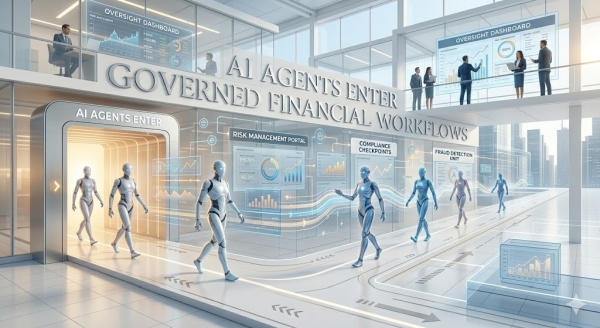
On May 5, 2026, Anthropic introduced finance agent templates for work that financial teams already manage every day. The list covers five agent templates and five workflow control templates all ready to go. This isn't just another AI product update and points to import changes to how financial services will operate in the near future. It also confirms that AI once again is leaving the loose prompt box and entering into controlled workflow systems.
These systems keep work inside permissioned data rules, use approved tools, review evidence, and provide risk teams a record that they can inspect and follow-up on. Regulated financial fintechs and financial institutions need these controlled AI agents inside defined workflows along with human review before output reaches a client file, compliance record, valuation, trade document, or board package.
The first wave of generative AI in finance looked like a personal productivity tool. Staff used chat assistants to summarize documents, draft emails, explain code, build first cut memos, and prepare research notes. That helped save some workers a lot of time, but it kept AI at the edge of the operating model. Now there's a return on intelligence in finance applications.
Anthropic’s new finance agents look capable of handling work on a more serious level. Each template combines task instructions, governed data connectors, and subagents for specific jobs such as peer company review, checking valuation methods, or reviewing source material. Teams can also adapt the agents to their own modelling conventions, risk policies, approval flows, and data access rules.
A governed agent can follow a checklist, call a tool, update a model, prepare a file, and hand the work to a reviewer. It can also create a record inside Claude Console. An audit section that doesn't auto correct the output by itself but makes the work easier to inspect. Model access is becoming common. Controlled execution is harder to obtain.
For operators, the useful question is where can an agent reduce manual drag without taking final judgment away from people. The measurable benefit should come from workflow metrics, not AI hype. Anthropic’s primary source gives one hard implementation claim. Teams can put Claude on finance work in days rather than months.
1. Pitch Builder A human banker builds a pitchbook by gathering company data, picking peers, checking comparables, drafting a story, and turning numbers into slides. An agent can run that process as a controlled sequence. It can pull approved data, prepare peer company comparisons, draft pages, and carry figures into a deck. The banker still decides which story is credible. The agent cuts the assembly work and leaves a clearer trail of sources and assumptions.
2. Meeting Preparer A human relationship manager often prepares by searching email, notes, filings, news, and prior client material. That process depends on memory and time. An agent can assemble a brief from connected sources, organize recent events, flag open issues, and keep the context ready for the meeting. The constraint is conduct risk. Firms need approved sources, stale data warnings, and a clear line between internal preparation and client ready advice.
3. Earnings Reviewer A human analyst reads filings, transcripts, guidance changes, and prior models to find what changed. An agent can do the first pass faster. It can compare current results with previous periods, update a draft model, flag changed language, and highlight items tied to an investment thesis. The analyst still decides what's important.
4. Model Builder A human analyst builds and updates models by entering figures, linking sheets, checking formulas, and adjusting assumptions. An agent can pull data from filings and feeds, create a first draft model, update assumptions, and help test formula consistency. That can save time, but it also raises the control bar. Firms need version control, formula review, source tagging, and named ownership before model output supports pricing, credit, valuation, or investment decisions.
5. Market Researcher A human researcher scans news, filings, broker research, sector reports, and internal notes to decide which facts matter. An agent can monitor connected sources, group findings by issuer or sector, and surface items for credit, risk, or investment review. The value is less search time and a better first cut of the evidence people need to judge.
6. Valuation Reviewer A human reviewer checks valuation work by testing inputs, peers, methods, policy thresholds, and judgment calls. An agent can run a structured first pass against approved comparisons, methodology rules, and company standards. It can flag gaps or inconsistencies before a reviewer signs off. That helps private markets, credit teams, fund administrators, and auditors, but the firm still has to control the inputs. In valuation, speed without discipline can multiply risk.
7. General Ledger Reconciler A human finance team reconciles accounts by matching records, finding breaks, explaining differences, and routing exceptions. An agent can compare account records, identify mismatches, prepare exception notes, and support net asset value calculations against books of record. The practical gain is cleaner exception handling. Reviewers still need the break list, explanations, approvals, and audit trail.
8. Month End Closer A human close team runs checklists, prepares entries, confirms balances, and packages reports under deadline pressure. An agent can run the checklist, prepare draft journal entries, assemble support, and produce close reports for review. That helps speed and consistency. Finance leaders still need approval evidence, segregation of duties, and a clean record of changes before final sign off.
9. Statement Auditor A human reviewer checks financial statements for consistency, completeness, formula issues, disclosure gaps, and unexplained changes. An agent can run those checks across statements and supporting files, then package exceptions before external review. The value is earlier detection and better reports. Audit judgment stays with people.
10. KYC Screener A human compliance analyst gathers documents, checks entity details, reviews risk flags, and escalates unclear cases. An agent can assemble entity files, compare source documents, identify missing information, and prepare escalation packages for compliance review. The strategic value is a cleaner file, fewer manual searches, better evidence capture, and faster escalation when risk is unclear.
On Apr 30, 2026, APRA called for a step change in AI risk management and governance across banks, insurers, and superannuation trustees. APRA warned that AI use is growing faster than governance, risk management, assurance, and operational resilience practices.
It also raised concerns about concentration risk, weak contingency planning, fragmented assurance, and reduced transparency when AI features come embedded within larger software platforms.
The FCA is testing similar issues in live environments. On Apr 21, 2026, the FCA named firms in its second AI Live Testing cohort, with use cases that include agentic payments, anti money laundering detection, credit score insights, KYC, and investment support. Testing runs through the end of 2026, with an evaluation report expected in Q1 2027.
Buyers won't only ask if the tool works. They'll ask what evidence proves it works, where humans review it, how errors surface, how permissions operate, and how the firm can stop the workflow when risk changes.
Financial institutions should treat finance agents as workflow infrastructure:
For banks, controlled scale should start where process discipline already exists. Good candidates include KYC reviews, credit memo preparation, internal research, model checking, finance close support, and audit readiness. These workflows already have owners, policies, and reviewer structures. That makes them better candidates than open ended client advice or autonomous transaction decisions.
For wealth firms, the strongest use cases sit in client preparation, research support, portfolio review notes, and compliance ready documentation. The danger is blurred accountability. A meeting brief can become advice in practice if staff reuse it without review. Wealth firms need templates, source labels, approval gates, and retention rules that fit suitability, disclosure, and conduct obligations.
For capital markets platforms and private market operators, agents can improve diligence speed. They can search data rooms, compare issuer materials, prepare investor questions, review disclosure consistency, and draft internal summaries. The platform must show where each fact came from and keep investment judgment with people.
For regtech vendors, the opening is clear. Build around review evidence, role based permissions, source traceability, escalation records, model monitoring, and shutoff controls. Don’t sell a generic AI layer. Sell the control fabric that lets financial firms use agents without losing accountability.
For investors, the better diligence question is where AI enters the workflow, what data it can touch, who reviews its output, and what record proves the process worked. AI adoption without operational evidence isn't a moat. It's a future remediation cost.
Small and mid sized financial institutions face a practical capacity gap. Many do not have deep AI engineering, data governance, risk, and integration teams. Anthropic’s May 4 announcement of a new enterprise AI services company with Blackstone, Hellman & Friedman, and Goldman Sachs speaks to that constraint. Anthropic said companies from community banks to mid sized manufacturers and regional health systems can benefit from AI, but lack the in house resources to build and run frontier deployments.
AI agents in finance don't need more use cases. Startups shouldn't copy bank scale infrastructure too early, and banks shouldn't treat agentic AI like another desktop tool. The right balance is to start with narrow workflows, measure the time saved, add controls as risk rises, and stop before governance costs outrun the value.
But once an agent touches regulated records, client decisions, and audit files, cheap experimentation ends. The real cost isn't only the model. It's all the other infrastructure from data access, permissions, monitoring, review gates, and vendor oversight that make work usable in finance.
The National Crowdfunding & Fintech Association (NCFA Canada) is a financial innovation ecosystem that provides education, market intelligence, industry stewardship, networking and funding opportunities and services to thousands of community members and works closely with industry, government, partners and affiliates to create a vibrant and innovative fintech and funding industry in Canada. Decentralized and distributed, NCFA is engaged with global stakeholders and helps incubate projects and investment in fintech, alternative finance, crowdfunding, peer-to-peer finance, payments, digital assets and tokens, artificial intelligence, blockchain, cryptocurrency, regtech, and insurtech sectors. Join Canada's Fintech & Funding Community today FREE! Or become a contributing member and get perks. For more information, please visit: www.ncfacanada.org
| | |
|---|---|---|
| | |
May 1, 2026 | NCFA Insight | Capital Markets And Market Infrastructure, Regulation And Policy

On Apr 29, 2026, Canada confirmed progress on the Defence, Security and Resilience Bank after multilateral negotiations in Montréal concluded on the proposed charter. Participating countries unanimously support Canada as host country for the future headquarters once the institution is ratified.
The initiative isn't a bank yet but it's making progress. Ratification, capital commitments, governance design, and member alignment is still ahead. But the structure already points to something bigger. It brings sovereign credit, bank balance sheets, defence procurement, SME finance, and private capital into one coordinated financing layer.
The DSRB aims to deliver long term, low cost financing for defence, security, and resilience projects across supply chains. Finance Canada says the focus includes small and medium sized enterprises and member governments that face real financing gaps. The model itself relies on targeted guarantees and risk assessments to reduce investment risk in defence and dual use sectors.
That changes how capital flows. Instead of direct public spending alone, the DBSR bank lowers financing risk. Member countries provide credibility. Commercial banks and capital markets can then lend or invest with stronger protection than they would normally have on their own.
Canada’s upside goes beyond hosting. It pulls the country into how this system actually runs, from treasury and legal structuring through to risk modelling, credit guarantees, and the financing that supports procurement and supply chains. Earlier provincial bids for the DSRB platform showed that the real competition was never just location. It was influence over how a new allied financing system gets built.
At launch, it runs through banks. They hold the balance sheets, structure the deals, and take the risk. That’s where capital moves. Fintechs shows up behind the curtain. Lenders need to see who they are financing, what risk looks like in real time, and where money should go. That creates room for infrastructure that handles verification, risk signals, payments, and supply chain visibility.
Execution is the real test and Canada's Achilles heel. A headquarters doesn't automatically build capacity. Canada has to connect this bank to procurement, to real companies, and to lenders that will actually deploy capital. SMEs need a clear way in. Banks need line of sight into who they can back. If that clicks, the DSRB does more than fund projects. It turns defence demand into investable flow and pulls private capital into the system. If it does not, it stays concentrated with governments and large contractors.
The real question is not whether Canada hosts the DSRB. It is whether Canadian banks, fintechs, and policymakers turn it into a working capital channel for domestic firms or leave it concentrated with global institutions and large contractors.
The National Crowdfunding & Fintech Association (NCFA Canada) is a financial innovation ecosystem that provides education, market intelligence, industry stewardship, networking and funding opportunities and services to thousands of community members and works closely with industry, government, partners and affiliates to create a vibrant and innovative fintech and funding industry in Canada. Decentralized and distributed, NCFA is engaged with global stakeholders and helps incubate projects and investment in fintech, alternative finance, crowdfunding, peer-to-peer finance, payments, digital assets and tokens, artificial intelligence, blockchain, cryptocurrency, regtech, and insurtech sectors. Join Canada's Fintech & Funding Community today FREE! Or become a contributing member and get perks. For more information, please visit: www.ncfacanada.org
| | |
|---|---|---|
| | |
Apr 28, 2026 | NCFA Insight | Risk Compliance And Regtech

Image: Freepik
On Apr 26, 2026, the CBC reported that Premier Wab Kinew announced at a weekend fundraiser that Manitoba plans to restrict youth access to social media and AI chatbots.
At the time of publishing, an official government release, bill or consultation paper wasn't available so treat this as early insight rather than a confirmed regulatory event (just yet). The stronger proof is already visible in global policy patterns, so it's only a matter of time.
Australia’s social media minimum age rules took effect on Dec 10, 2025, and eSafety reported that platforms had removed access to 4.7 million under 16 accounts across Australia by mid December 2025.
In Europe, the European Commission has published minor protection guidelines under the Digital Services Act, and the European Parliament has backed a minimum age of 16 for access to social media, video sharing platforms, and AI companions.
Given the trajectory and potential risks of AI, the debate isn't just about doom scrolling any more. It's fuelling a compliance market for age assurance, safer design, and AI access controls.
Australian government's rules put responsibility on age restricted platforms to take reasonable steps, not on parents to police every account. So age restrictions and assurance are now an infrastructure issue. A checkbox, self declared birth date, or parental reminder won't satisfy regulators when millions of accounts need to be assessed, restricted, or removed.
Children can get pulled into endless feeds, autoplay videos, harmful recommendations, bullying, sexual exploitation, self harm content, eating disorder content, and late night scrolling that cuts into sleep. That's why social media is getting the attention from lawmakers first. The bigger question for fintech and digital identity comes next. Once governments make platforms check age, the same requirement can spread to other digital services used by minors.
The EU hasn't implemented a social media ban on age just yet, but it's building the infrastructure that could support stricter controls. On July 14, 2025, the European Commission released an age verification app prototype under the Digital Services Act. The Commission says the app would let users prove they are over 18 when accessing restricted adult content while keeping control of other personal information, including their exact age and identity.
The Commission’s age verification page says the solution was technically ready for implementation as of Apr 15, 2026. The blueprint also gives platforms a practical build plan. It covers the technical specs, system design, data connections, and open source code needed to support age checks. Age assurance now has to protect children without creating a new privacy problem. Platforms need a trusted age signal. Users should not have to share a full identity file just to prove they meet an age limit.
The clearest policy clue comes from Europe’s treatment of AI companions. On Nov 26, 2025, the European Parliament voted 483 in favour, 92 against, and 86 abstentions on a non legislative report calling for a minimum age of 16 for social media, video sharing platforms, and AI companions, unless parents authorize access for users aged 13 to 16.
The same Parliament release cites research that 97% of young people go online every day, 78% of 13 to 17 year olds check their devices at least hourly, and one in four minors show problematic or dysfunctional smartphone use. It also cites 2025 Eurobarometer impact of digitalisation findings that more than 90% of Europeans see online child protection as urgent, including 93% for social media’s negative impact on mental health, 92% for cyberbullying, and 92% for restricting access to age inappropriate content.
Those numbers explain why AI gets pulled into the same debate. Doom scrolling rules target addictive design and harmful content discovery. AI companion rules target interaction, dependency, personalized responses, manipulation, and adult like conversations with minors. NCFA has already examined youth AI protection risks, including lawsuits involving generative AI and vulnerable users. Regulators are starting to connect age, vulnerability, consent, product design, and AI behaviour into one compliance problem.
The public debate may start with under 16 social media bans. The business reality runs deeper. Governments want digital services to know when a user is a child, adjust the experience, and prove that controls work. Age assurance is becoming part of digital trust infrastructure. AI makes the stakes higher because the product doesn't just offer access to content anymore. It talks back, adapts, remembers, and can build dependence. That's why kid risk now part of the compliance stack. Once age becomes a regulated access condition, the same logic can reach payments, gaming, lending, investing, AI assistants, marketplaces, app stores, and identity wallets.
The National Crowdfunding & Fintech Association (NCFA Canada) is a financial innovation ecosystem that provides education, market intelligence, industry stewardship, networking and funding opportunities and services to thousands of community members and works closely with industry, government, partners and affiliates to create a vibrant and innovative fintech and funding industry in Canada. Decentralized and distributed, NCFA is engaged with global stakeholders and helps incubate projects and investment in fintech, alternative finance, crowdfunding, peer-to-peer finance, payments, digital assets and tokens, artificial intelligence, blockchain, cryptocurrency, regtech, and insurtech sectors. Join Canada's Fintech & Funding Community today FREE! Or become a contributing member and get perks. For more information, please visit: www.ncfacanada.org
| | |
|---|---|---|
| | |
Apr 28, 2026 | NCFA Insight | AI, Fintech And Productivity

AI Image: Jobs vs Compute
AI layoffs are becoming a capital allocation story. In April 2026, large firms across technology, retail, media, and financial services kept cutting roles while at the same time spending more on AI, automation, cloud infrastructure, and operating efficiency.
That doesn’t mean all layoffs are as a result of AI, but boards are asking a harder question now as they divert capital from labour to compute: where does the next dollar produce more output, people, platforms, or compute?
The numbers are getting harder to ignore. Big Tech AI spending could reach about $600 billion in 2026. Meta plans to cut about 10% of its workforce while guiding to $115 billion to $135 billion in capital spending driven largely by AI infrastructure. Microsoft is offering a voluntary employee buyout as it manages rising AI and cloud costs. Snap is cutting about 16% of full time staff. Nike is cutting about 1,400 jobs, with technology roles taking most of the impact.
The decision has been made in the boardroom. AI investment is competing with payroll, product teams, operations, and layers of management. Every job and role now has to show where it adds judgment, customer trust, regulatory knowledge, risk control, or revenue that automation can’t easily replace.
A fintech that can process more volume and scale without adding the same number of people has a better margin story. A fintech cost structure that needs a new team every time revenue grows will be under pressure fast.
AI usage and early labour strain is already appearing before every company announces formal cuts. Entry level roles in AI exposed fields are tightening first. That’s where the next generation of operators and compliance talent usually starts.
A recent Armstrong Economics commentary on AI costs raises a useful counterpoint: AI can reduce headcount pressure, but it doesn't remove cost. For example, the cost of compute, vendor fees, data cleanup, cybersecurity, audit trails, , human review and workflow redesign are all part of real ROI calculations. For fintechs and financial institutions, the acid test is whether the full process costs less, runs faster, and keeps risk under control.
That makes unit economics more important than AI headlines. If those metrics improve, AI is creating operating leverage. If they don't, the company may end up moving cost from payroll to infrastructure in the end.
Nike may be a clearer signal for Canada than Meta. Canada has fewer Meta sized AI infrastructure bets, but it has many established firms that added apps, data projects, digital teams, and customer platforms during the low rate years. Some of that work created real value. Some became expensive to maintain, hard to scale, or too slow to justify.
As a result, many companies are replacing older internal builds with leaner AI enabled stacks, vendor platforms, and automation tools that reduce operating cost. That’s the opening for fintech infrastructure. Companies still need modern payments, identity, credit, fraud controls, compliance tools, treasury, and customer finance.
They just don't want every capability built and staffed internally. Easier said than done but the option is goals and motivations are to buy proven tools, connect them faster, and reduce cost without adding another large costly operating layer. It’s removing friction from financial workflows. Faster onboarding. Cleaner risk checks. Less manual reconciliation. Better fraud detection. More useful cash flow data. Compliance that costs less to run.
The economics are are already visible. AI agents and return on intelligence in finance shows that 77% of financial institutions report positive ROI from AI, while nearly half plan to allocate more than half of their AI budgets to agent driven systems.
Productivity gains are now the baseline expectation, not the upside case. That changes how financial services teams are built and what gets funded.
There are limits, though. If companies eliminate too many junior roles, they risk weakening the talent pipeline. Financial services can’t automate accountability (can they?). Someone still needs to understand the customer, the regulation, and the risk.
Founders and investors should monitor operating metrics to understand where leverage is. Revenue per employee. Gross margin. Onboarding cost. Support cost. Compliance cost per customer. Fraud loss rates. A fintech that grows without adding headcount at the same pace stands out. One that talks about AI without showing better unit economics doesn’t.
Canada is earlier in this cycle, but the friction is starting to show. Statistics Canada reports that about 6% of AI adopting businesses say they've reduced employment due to AI, which suggests the adjustment is underway but not yet widespread. Firms are not always announcing large AI driven layoffs (publicly), but they are slowing hiring, tightening teams, and pushing more output through automation.
That pressure is also showing up in large Canadian incumbents, even when AI isn't named as the cause. Rogers is offering voluntary departure packages to about half of its workforce as it looks to reduce costs.
Canada also won’t follow the US pattern exactly. The country has fewer hyper-scaleup companies and less direct exposure to massive domestic AI infrastructure spending. Canadian companies are more likely to buy AI capability through partners than build it internally. That creates a different risk. The US may adjust faster. Canada may carry this margin and efficiency friction longer.
It's important because productivity remains a concern. Statistics Canada reports that business labour productivity declined in late 2025.
The labour story is not about pure job cuts but whose rebuilding their operating model and productivity structure. If large US firms trade headcount for compute, Canadian firms need to trade manual work and fragmented systems for better infrastructure.
The National Crowdfunding & Fintech Association (NCFA Canada) is a financial innovation ecosystem that provides education, market intelligence, industry stewardship, networking and funding opportunities and services to thousands of community members and works closely with industry, government, partners and affiliates to create a vibrant and innovative fintech and funding industry in Canada. Decentralized and distributed, NCFA is engaged with global stakeholders and helps incubate projects and investment in fintech, alternative finance, crowdfunding, peer-to-peer finance, payments, digital assets and tokens, artificial intelligence, blockchain, cryptocurrency, regtech, and insurtech sectors. Join Canada's Fintech & Funding Community today FREE! Or become a contributing member and get perks. For more information, please visit: www.ncfacanada.org
| | |
|---|---|---|
| | |



August 26th, 2025

January 4th, 2024

June 1st, 2021

September 9th, 2020

July 9th, 2018

January 3rd, 2018

September 25th, 2017

June 20th, 2017

May 10th, 2017

December 14th, 2016
