





Karsten Wenzlaff, Advisor
August 26th, 2025
Karsten Wenzlaff is a Crowdfunding and Fintech Expert from Germany. He is Secretary-General of Digit[...]


March 11, 2026 | NCFA Fintech Insight | Capital Markets Infrastructure

On March 11 2026, the European Central Bank released the Appia roadmap for Europe’s tokenised finance. The plan runs through 2028 and sets out how the Eurosystem will explore tokenized wholesale financial markets while keeping central bank money at the center of settlement. The ECB says Pontes, a near term interoperability layer, is expected to launch in the third quarter of 2026, while Appia will guide the longer term design of a more integrated tokenized financial ecosystem. While Europe is still studying the final model, the roadmap highlights that ECB is treating tokenization as a market infrastructure question.
The ECB is working in two stages. Pontes is the near term step. The Eurosystem’s DLT settlement page says Pontes is designed to connect distributed ledger platforms to existing Eurosystem settlement services so euro transactions on those platforms can settle in central bank money. The ECB has said Pontes is expected to launch in Q3 2026.
Appia is the longer term view. The ECB says it will explore how a broader tokenized financial ecosystem could develop over time, including questions around architecture, governance, standards, and integration. In other words, Pontes is addressing immediate settlement demand, while Appia looks at where wholesale tokenized finance may go next.
The roadmap focuses on wholesale financial markets, not everyday consumer payments. The money used in these systems would move between regulated financial institutions such as banks, central counterparties, and settlement providers.
This is an important distinction because retail CBDC proposals raise questions about public accounts, privacy, and how people use digital money day to day. The ECB roadmap is different. It is about how tokenized securities, deposits, and other financial assets could settle safely between institutions using tokenized central bank money.
It's a wholesale CBDC model that moves central bank money on distributed ledger infrastructure. The goal is to modernize market infrastructure, not replace cash or consumer bank accounts.
Tokenization allows financial instruments such as bonds, funds, deposits, and collateral to exist as programmable digital representations on distributed ledgers. That can reduce reconciliation steps and shorten settlement chains. But tokenized markets still need a settlement asset that participants trust.
The ECB is making clear that it wants central bank money to remain that anchor. That is a big difference from models that rely mainly on private stablecoins or commercial bank liabilities. Central bank money carries the lowest credit risk in the system because it is a direct claim on the central bank itself.
The ECB’s Appia overview says the initiative is the cornerstone of the Eurosystem strategy to provide central bank money within tokenized wholesale financial markets. It also says tokenized central bank money under Appia would go beyond the interoperability model delivered by Pontes and would be more integrated into a wider new financial ecosystem.
Europe is entering a wider global race around tokenized market infrastructure. The BIS Project Agorá is exploring how tokenized commercial bank money and tokenized wholesale central bank money could work together on a common digital payments platform. The BIS says that work is aimed at improving cross border payments while keeping central banks at the core of final settlement.
Hong Kong is also moving quickly. The HKMA’s November 2025 Project Ensemble update says its pilot environment will be progressively enhanced through 2026 to support settlement in tokenized central bank money on a 24/7 basis (see Standard Chartered CEO Backs Tokenized Finance in Hong Kong). The HKMA has also used tokenized bond issuance, including HK$800M in tokenised green bonds in 2023 and about HK$6B in 2024.
That means the ECB is joining a growing group of major institutions that now see tokenized settlement as a serious part of future market design.
As NCFA recently noted in its analysis of how tokenized infrastructure is changing market operations, Canada has already taken early steps through stablecoin policy work, open banking progress without a confirmed implementation date, and payment modernization efforts. But the foundations for tokenized markets are still incomplete. Canada’s Real Time Rail is not yet live and is expected after 2026. Canada also still needs clearer legal recognition of digital ledger registers for securities, stronger real time settlement across institutions, and digital identity standards that work across ledgers while supporting KYC and AML requirements.
Canada has strong institutions and credible capital markets, but it doesn't yet appear to have a public multi year wholesale tokenized settlement roadmap comparable to Appia. If other jurisdictions define the standards and operating models first, Canadian firms may end up adapting to systems built eleswhere.
Pontes is expected in 2026. Appia runs through 2028. Those dates don't automatically mean Europe has committed to one final settlement model today. However they do mean that a major central bank is now putting dates, structure, and policy intent around tokenized wholesale finance market infrastructure.
 The National Crowdfunding & Fintech Association (NCFA Canada) is a financial innovation ecosystem that provides education, market intelligence, industry stewardship, networking and funding opportunities and services to thousands of community members and works closely with industry, government, partners and affiliates to create a vibrant and innovative fintech and funding industry in Canada. Decentralized and distributed, NCFA is engaged with global stakeholders and helps incubate projects and investment in fintech, alternative finance, crowdfunding, peer-to-peer finance, payments, digital assets and tokens, artificial intelligence, blockchain, cryptocurrency, regtech, and insurtech sectors. Join Canada's Fintech & Funding Community today FREE! Or become a contributing member and get perks. For more information, please visit: www.ncfacanada.org
 |  |  |
|---|---|---|
 |  |  |
Mar 12, 2026 | NCFA Fintech Market Activity | Digital Assets And Payments Compliance

Image: Freepik/rawpixel.com
On Mar 11 2026, Hong Kong based stablecoin payments firm RedotPay outlined regulatory progress across Canada, the United States, and Argentina as it builds the registrations required to operate in more regulated markets.
The company holds Money Services Business registration with FinCEN in the United States and registration with FINTRAC in Canada (jurisdiction of incorporation is the province of BC), and is pursuing Virtual Asset Service Provider registration in Argentina. These steps allow the firm to work with regulated partners as it expands its stablecoin payment platform.
RedotPay offers a wallet and card based payment system built around stablecoins, allowing users to send digital assets while recipients receive local currency. The company says its platform now serves more than six million users across over 100 countries and processes roughly $10 billion in annualized payment volume.
Stablecoin payment platforms often present themselves as borderless financial infrastructure. In practice, access still depends on local regulatory registration. Firms must establish compliance credentials before banks, card networks, payment processors, and institutional partners will work with them.
In Canada, FINTRAC registration places RedotPay inside Canada's anti money laundering supervision framework. For digital asset payment companies, that registration is typically the first threshold for operating credibly and building domestic partnerships.
Other rules may also apply depending on the product model, including the Bank of Canada’s Retail Payment Activities Act (RPAA) for payment service providers and provincial securities oversight for certain digital asset activities.
Competition in crypto payments is moving away from unique app features alone and toward regulated distribution. Firms that secure registrations across multiple jurisdictions gain earlier access to payment rails, banking relationships, and local partner networks. Firms that delay those steps often remain limited even if their technology works.
It's a dynamic that's becoming more visible as stablecoin payment platforms grow. Compliance infrastructure is no longer just a back office function. It increasingly determines which firms can expand internationally and which ones stall when regulatory scrutiny increases.
As stablecoin payment firms expand globally, will long term advantage come from product features or from who can secure regulated market access first?
The National Crowdfunding & Fintech Association (NCFA Canada) is a financial innovation ecosystem that provides education, market intelligence, industry stewardship, networking and funding opportunities and services to thousands of community members and works closely with industry, government, partners and affiliates to create a vibrant and innovative fintech and funding industry in Canada. Decentralized and distributed, NCFA is engaged with global stakeholders and helps incubate projects and investment in fintech, alternative finance, crowdfunding, peer-to-peer finance, payments, digital assets and tokens, artificial intelligence, blockchain, cryptocurrency, regtech, and insurtech sectors. Join Canada's Fintech & Funding Community today FREE! Or become a contributing member and get perks. For more information, please visit: www.ncfacanada.org
| | |
|---|---|---|
| | |
March 10, 2026
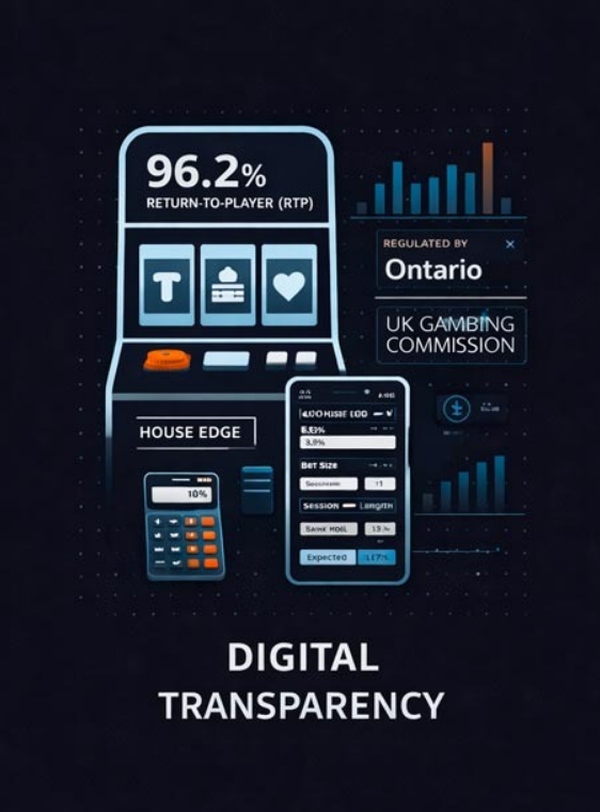
The fintech revolution has trained an entire generation of consumers to expect real-time data, clear fee structures, and algorithmic fairness from every platform that touches their money. Open banking, commission-free trading dashboards, and instant payment confirmations have established a baseline of transparency that didn't exist a decade ago. Now that same expectation is spilling into adjacent sectors, and the digital entertainment industry is finding that the old model of opaque mechanics no longer works for a consumer base raised on fintech-grade disclosure.
This shift is particularly visible across the iGaming sector, where a convergence of regulatory pressure, blockchain verification, and consumer demand has created a new class of data-transparent platforms. For fintech professionals and investors, the patterns emerging here are worth watching closely. They mirror the same transparency dynamics that reshaped banking, lending, and investment management over the past ten years, and they point toward a broader standard that will likely define consumer expectations across all digital financial services.
Before the fintech wave, consumers accepted a remarkable level of opacity in financial products. Credit card fees were buried in fine print. Investment management costs were layered across multiple disclosure documents. Currency exchange rates at banks included undisclosed markups. Fintech companies built entire businesses by simply making these costs visible.
TransferWise, now Wise, didn't invent a new foreign exchange mechanism. It made the existing markup visible and offered a lower one. Robinhood didn't create a new kind of stock trading. It eliminated commissions and showed real-time portfolio data on a mobile screen. In both cases, the competitive advantage wasn't technological sophistication but rather a commitment to showing consumers exactly what they were paying and exactly what they were getting.
According to PwC's Global Financial Services report, trust remains the single most important factor in consumer adoption of digital financial products. Yet the report also found that less than 30% of consumers globally feel they fully understand the fee structures of the financial products they use. The gap between expectation and reality is where fintech innovation continues to find its most fertile ground.
The digital entertainment space is now passing through the same transparency inflection point that banking experienced between 2015 and 2020. Regulatory bodies in Ontario, the UK, Malta, and several EU jurisdictions have moved beyond simple licensing requirements toward mandating specific mathematical disclosures. Return-to-player (RTP) percentages, variance classifications, and house edge figures are increasingly required to be published at the point of consumer interaction, not buried in terms and conditions.
Ontario's iGaming market, launched in April 2022 under the Alcohol and Gaming Commission of Ontario (AGCO), is a particularly instructive case for Canadian fintech observers. The regulatory framework requires licensed operators to display game-level RTP data and to submit their random number generators to independent auditing firms. This is functionally identical to how securities regulators require fund managers to disclose management expense ratios and historical performance data. The principle is the same: consumers making financial decisions deserve access to the quantitative parameters that determine their likely outcomes.
What makes the current moment different from previous disclosure requirements is the emergence of independent consumer tools that go beyond what regulators mandate. Platforms like gambling calculators allow users to input specific game parameters, including house edge, bet size, session length, and bankroll, to model their expected outcomes before committing funds. This is the iGaming equivalent of a mortgage amortization calculator or a compound interest simulator: a tool that translates abstract mathematical parameters into personalized, actionable projections. The fact that such tools now exist and attract meaningful traffic signals a shift in consumer behavior from passive participation to active quantitative analysis.
This consumer-side demand for calculable transparency aligns with broader fintech trends. The same user who models their mortgage payments on Ratehub, tracks their investment returns on Wealthsimple, and monitors their credit score on Borrowell now expects comparable analytical tools in every domain where money changes hands.

If regulatory disclosure provides the baseline, blockchain technology is building the verification layer. The concept of "provably fair" systems, where cryptographic hashing allows users to independently verify that an outcome was generated randomly and was not manipulated after their action, represents one of the most interesting applied use cases for distributed ledger technology outside of cryptocurrency itself.
The mechanism is straightforward in principle. Before a game round begins, the platform generates a server seed and provides the user with a hashed version. The user can supply their own client seed. After the round, the server seed is revealed, and the user (or any third-party auditor) can run the hash function to verify that the outcome matches the pre-committed parameters. Tampering after the fact is cryptographically impossible.
For the fintech community, provably fair systems are a practical demonstration of how blockchain can solve a real trust problem without requiring a full decentralized architecture. The platform still operates centrally. The games still run on conventional servers. But the verification layer, the part that matters most for consumer trust, uses the same cryptographic principles that secure cryptocurrency transactions. It's a pragmatic middle ground between fully centralized and fully decentralized models, and it's gaining traction faster than many pure DeFi applications.
According to the World Economic Forum's report on global fintech resilience, the ability to provide verifiable, tamper-proof records of financial transactions is one of the key value propositions driving blockchain adoption across regulated industries. The iGaming sector is proving that this value proposition translates effectively to consumer-facing products, not just institutional back-end infrastructure.
The transparency conversation extends beyond mathematics and into behavioral design. Fintech platforms have spent years developing AI-driven systems to detect fraudulent transactions, flag unusual account activity, and nudge users toward healthier financial behaviors. Wealthsimple's spending insights, for example, categorize expenditures and highlight patterns that users might not notice on their own. Banking apps send alerts when spending exceeds normal ranges.
The iGaming industry is adopting parallel approaches, partly driven by regulation and partly by competitive pressure from operators who recognize that long-term customer value depends on sustainable engagement rather than short-term extraction. Machine learning models now monitor player behavior patterns and flag indicators that correlate with problematic use: rapid increases in deposit frequency, session lengths that extend well beyond historical norms, and chasing behavior where bet sizes increase following losses.
The most sophisticated platforms use these signals to intervene proactively. Interventions range from gentle nudges, similar to the spending alerts in banking apps, to mandatory cooling-off periods and self-exclusion tools. Ontario's regulatory framework includes specific requirements for operator-initiated interventions, making this a compliance obligation rather than an optional feature.
From a fintech design perspective, this represents an important evolution. The first wave of fintech disruption was about making things easier: easier payments, easier investing, easier borrowing. The current wave increasingly focuses on making things safer, incorporating behavioral science and AI to protect users from their own cognitive biases. The iGaming sector's accelerated adoption of these tools, driven by the higher stakes involved, is generating insights and frameworks that will eventually flow back into mainstream financial product design.
Perhaps the most direct connection between fintech innovation and the digital entertainment sector is payment infrastructure. The iGaming industry's requirements for instant deposits, real-time withdrawals, multi-currency support, and robust identity verification have made it one of the most demanding use cases for modern payment systems.
Interac e-Transfer, which processes over one billion transactions annually in Canada, has become a standard payment rail for Ontario's licensed iGaming operators. The integration requirements have pushed Interac to develop faster settlement capabilities and more sophisticated fraud detection systems, improvements that benefit the entire Canadian payment ecosystem. Similarly, the industry's early adoption of cryptocurrency payment rails and stablecoin settlement layers has provided real-world transaction volume for technologies that are still largely theoretical in other financial services contexts.
For fintech startups building payment infrastructure, the digital entertainment vertical offers something valuable: high transaction volume, strong user expectations around speed and reliability, and regulatory frameworks that demand robust KYC and AML compliance. Several Canadian payment fintechs have used iGaming as an initial vertical, then expanded the infrastructure they built into adjacent sectors like e-commerce and subscription services.
Canada's approach to iGaming regulation offers a useful case study in how regulatory sandboxes can balance innovation with consumer protection. Ontario's decision to create a regulated market rather than maintaining prohibition has generated significant tax revenue, estimated at over $200 million annually, while giving regulators direct oversight of operator practices.
The regulatory model shares structural similarities with the sandbox approaches that several Canadian provincial securities regulators have adopted for fintech products. The Canadian Securities Administrators' Regulatory Sandbox, for instance, allows fintech firms to test innovative products in a live market under modified regulatory requirements. Both frameworks rest on the same principle: that a controlled, transparent regulatory environment produces better outcomes for consumers than either prohibition or a regulatory vacuum.
For the fintech ecosystem, the cross-pollination of regulatory approaches between financial services and digital entertainment is creating interesting opportunities. RegTech companies that developed AML compliance tools for banking are finding ready markets in iGaming. Identity verification firms that built their technology for fintech onboarding are applying the same infrastructure to age verification and player authentication. The regulatory convergence is driving a convergence of service providers, and Canadian companies are particularly well positioned because the country's regulatory frameworks in both sectors are relatively advanced by global standards.
The digital entertainment industry's rapid adoption of fintech principles, quantitative transparency, blockchain verification, AI-driven behavioral protection, and advanced payment infrastructure, is not a peripheral development. It is a preview of the consumer expectations that will define every sector where financial risk and digital interaction overlap.
The users driving this shift are not a niche demographic. They are the same consumers who use mobile banking, invest through digital platforms, and expect every financial interaction to come with complete data visibility. Their insistence on transparency in entertainment spending is a natural extension of the transparency they already demand from their financial service providers.
For fintech founders, investors, and ecosystem builders, the key takeaway is that transparency is no longer a differentiator. It is becoming the minimum standard for any platform that touches consumer money, regardless of the specific vertical. The tools, frameworks, and regulatory models being developed at this intersection of fintech and digital entertainment will likely define consumer financial technology's next chapter, not just in Canada, but globally.
The National Crowdfunding & Fintech Association (NCFA Canada) is a financial innovation ecosystem that provides education, market intelligence, industry stewardship, networking and funding opportunities and services to thousands of community members and works closely with industry, government, partners and affiliates to create a vibrant and innovative fintech and funding industry in Canada. Decentralized and distributed, NCFA is engaged with global stakeholders and helps incubate projects and investment in fintech, alternative finance, crowdfunding, peer-to-peer finance, payments, digital assets and tokens, artificial intelligence, blockchain, cryptocurrency, regtech, and insurtech sectors. Join Canada's Fintech & Funding Community today FREE! Or become a contributing member and get perks. For more information, please visit: www.ncfacanada.org
| | |
|---|---|---|
| | |
Mar 10, 2026 | NCFA Fintech Market Activity | Wealthtech And Consumer Finance

On March 4 2026, Robinhood unveiled new family finance products at its Take Flight event, adding a family investing experience, custodial and trust accounts, expanded managed investing tools, a new Platinum Card, and new Gold perks.
Vlad Tenev, CEO said:
“Robinhood will be the financial superapp for families to invest, plan, and grow wealth across generations.”
The platform continues to push further beyond retail trading and into family account oversight, wealth transfer, premium credit, and long term asset management. The new family hub is built to let households group accounts by family member, choose which accounts are visible, and assign permissions from view only access to full authority. Custodial accounts are rolling out now, while trust accounts and the family hub begin rolling out later this year.
This launch builds on an earlier NCFA analysis of Robinhood's wealthtech push and lifestyle finance strategy, but the new announcement goes further by tying family visibility, investing, credit, and wealth transfer into one customer experience.
The scale behind the launch is material. The platform reports 27.2 million funded customers, $324 billion in total platform assets, and $4.5 billion in 2025 revenue. That revenue rose 52% from 2024. Managed investing is also getting bigger. The firm says Robinhood Strategies now serves more than $1.5 billion in assets under management across more than 250,000 funded customers.
On the money side, it says there are more than 700,000 Gold Card customers with over $10 billion in annualized spend, while Robinhood Banking has more than 50,000 funded customers and over $800 million in cash deposits to date.
The premium card launch shows where the model is heading. The new invite only card carries a $695 annual fee and comes with richer travel, dining, and wellness benefits. That pricing puts the platform into a higher value segment as it tries to deepen relationships with customers whose financial lives are getting more complex.
When a platform bundles enough strategic product that can handle family account access, children’s investing, trust structures, managed portfolios, cash, and premium spending, it's getting closer to owning the main financial relationship in the household. That should raise eyebrows for banks, wealth platforms, and fintechs that still treat investing, credit, and family finance as separate product lines.
The National Crowdfunding & Fintech Association (NCFA Canada) is a financial innovation ecosystem that provides education, market intelligence, industry stewardship, networking and funding opportunities and services to thousands of community members and works closely with industry, government, partners and affiliates to create a vibrant and innovative fintech and funding industry in Canada. Decentralized and distributed, NCFA is engaged with global stakeholders and helps incubate projects and investment in fintech, alternative finance, crowdfunding, peer-to-peer finance, payments, digital assets and tokens, artificial intelligence, blockchain, cryptocurrency, regtech, and insurtech sectors. Join Canada's Fintech & Funding Community today FREE! Or become a contributing member and get perks. For more information, please visit: www.ncfacanada.org
| | |
|---|---|---|
| | |
March 9, 2026

Modern gaming platforms often contain thousands of titles, making navigation an essential part of the user experience. Allyspin Casino is an example of a platform where structured menus, game categories, and filtering systems help users move through a very large catalogue of digital games. Allyspin includes over 7,500 slot titles, more than 300 jackpot games, over 200 virtual card and table games, and more than 250 live dealer games. It is exactly this variety in which the interface plays a central role in how players discover content.
One of the main ways platforms organize thousands of games is through clear category structures. Instead of presenting titles in one long list, games are divided into sections such as Top, New, Popular, Exclusive, Megaways, and Bonus Buys.
This approach allows users to quickly filter the catalogue according to their interests. For example, players interested in newly released games can browse the “New” section, while those looking for widely played titles may explore the “Popular” category. Platforms such as Allyspin Casino rely on these types of categories to simplify navigation through extensive libraries.
Large gaming platforms often rely heavily on visual browsing. Instead of text-based menus alone, games are displayed through colorful thumbnails that show the theme and design of each title.
Slots with mythology themes, fruit-style machines, or adventure-inspired designs appear side by side, making the discovery process similar to browsing streaming platforms. On this casino platform, games such as mythology-themed slots or colorful arcade-style titles are displayed in grid layouts, allowing users to scan multiple options quickly. This visual organization helps players recognize familiar game styles and decide what to explore next.
Another important navigation feature is filtering by game mechanics or format. Modern gaming platforms host many different types of games, including:
Instead of searching manually, users can access these formats through dedicated navigation sections. Allyspin Casino organizes its catalogue with clearly separated menus for slots, live casino games, jackpots, and instant titles. This structure helps players move between different gaming styles without scrolling through unrelated titles.
Game providers also play a role in discovery. Many players follow specific studios known for particular mechanics or themes.
Platforms often include provider filters, allowing users to browse games from developers such as Play’n GO, Microgaming, Playtech, or Betsoft. This feature makes it easier to locate familiar titles or explore new releases from trusted studios. On Allyspin Casino, dozens of providers contribute to the catalogue, and filtering by developer becomes another pathway for exploring the platform’s extensive library.
As online game catalogues continue to expand, navigation tools have become as important as the games themselves. Category menus, visual browsing grids, provider filters, and format-based sections all help players explore large collections efficiently. The interface used by this casino illustrates how modern gaming platforms structure their content so users can discover new titles within increasingly large digital game libraries.
The National Crowdfunding & Fintech Association (NCFA Canada) is a financial innovation ecosystem that provides education, market intelligence, industry stewardship, networking and funding opportunities and services to thousands of community members and works closely with industry, government, partners and affiliates to create a vibrant and innovative fintech and funding industry in Canada. Decentralized and distributed, NCFA is engaged with global stakeholders and helps incubate projects and investment in fintech, alternative finance, crowdfunding, peer-to-peer finance, payments, digital assets and tokens, artificial intelligence, blockchain, cryptocurrency, regtech, and insurtech sectors. Join Canada's Fintech & Funding Community today FREE! Or become a contributing member and get perks. For more information, please visit: www.ncfacanada.org
| | |
|---|---|---|
| | |
Mar 9, 2026 | NCFA Fintech Market Insight | Digital Assets And Policy And Regulation

Image: Unsplash/J K
On March 9 2026, the U.S. Treasury released a report to Congress on innovative technologies to counter illicit finance involving digital assets under the GENIUS Act. Treasury says successful monthly transactions on public blockchains reached 3.8 billion in early 2025, up 96% year over year. Treasury also reviewed more than 220 public comments while preparing the report. Against that backdrop, the report goes on the record to say crypto mixers can support laundering and sanctions evasion, but they can also serve legitimate privacy needs on public blockchains.
Treasury doesn't overlook the enforcement case against cyrpto mixers, saying criminals commonly use mixing, bridging, and swapping to obscure transaction trails and frustrate investigations. Treasury links these techniques to ransomware groups, darknet markets, sanctions evasion schemes, and DPRK cyber actors. The scale of harm remains large.
Victims reported more than $9 billion in digital asset related fraud to the FBI in 2024, including $5.8 billion tied to digital asset investment schemes, up 47% from the prior year. Treasury also says DPRK cybercriminals stole at least $2.8 billion in digital assets from January 2024 to September 2025, including a $1.5 billion theft in February 2025 that Treasury describes as the largest digital asset heist to date.
The report states that lawful users may use mixers to enable financial privacy when transacting through public blockchains. Treasury gives practical examples. Individuals may want to protect sensitive information such as personal wealth, business payments, charitable donations, or consumer spending patterns from appearing on public ledgers.
That statement changes the tone of the policy debate. The question is no longer whether mixers exist only for criminals. The policy challenge is whether privacy tools can operate with sufficient accountability, recordkeeping, and supervision inside the financial system.
Treasury also notes that custodial mixers that accept and transmit value must register with FinCEN as money services businesses, maintain records, and file suspicious activity reports. When compliant, these services can provide customer identities, off chain transaction data, and behavioural information to regulators or law enforcement.
Treasury also describes how mixers interact with broader digital asset infrastructure. Stablecoins frequently appear in laundering chains when illicit actors transfer assets across blockchains or prepare to convert digital assets into fiat.
Since May 2020, Treasury says more than $37.4 billion in withdrawals from over 50 bridges were denominated in the two largest stablecoins by market capitalization. During the same period those bridges received about $1.6 billion in deposits originating from mixing services. Treasury says more than $900 million of those deposits flowed into one specific bridge that faced scrutiny for DPRK linked laundering (North Korea state-sponsored).
A large part of the report focuses on the technologies Treasury believes financial institutions should use to strengthen anti money laundering and sanctions compliance programs. Treasury highlights four priority tools: artificial intelligence, digital identity, blockchain analytics, and application programming interfaces.
Treasury cites FinCEN analysis showing about 1.6 million identity related BSA reports in 2021, equal to 42% of reports filed that year and tied to $212 billion in suspicious activity. Treasury says AI can help institutions analyze large datasets and reduce false positives, digital identity systems can strengthen customer onboarding and fraud detection, blockchain analytics tools can trace wallet activity across networks, and APIs can improve secure monitoring and information sharing.
The next evolution of digital asset infrastructure will likely reward firms at the forefront of regulatory accountability that can distinguish lawful privacy from criminal abuse, strengthen identity and monitoring controls, and provide institutions with faster and more accurate compliance tools.
The National Crowdfunding & Fintech Association (NCFA Canada) is a financial innovation ecosystem that provides education, market intelligence, industry stewardship, networking and funding opportunities and services to thousands of community members and works closely with industry, government, partners and affiliates to create a vibrant and innovative fintech and funding industry in Canada. Decentralized and distributed, NCFA is engaged with global stakeholders and helps incubate projects and investment in fintech, alternative finance, crowdfunding, peer-to-peer finance, payments, digital assets and tokens, artificial intelligence, blockchain, cryptocurrency, regtech, and insurtech sectors. Join Canada's Fintech & Funding Community today FREE! Or become a contributing member and get perks. For more information, please visit: www.ncfacanada.org
| | |
|---|---|---|
| | |
March 8, 2026

AI Image Moving company using smart expense card
Picture a typical, high-energy moving day. A fully loaded five-ton truck is navigating a tight schedule across provincial lines.
The crew is working against the clock to meet the client at the destination, but the reality of logistics sets in: the truck needs a sudden diesel top-up, there is an unexpected commercial transit fee coming up, and one of the tires desperately needs patching after picking up a nail in a residential cul-de-sac.
Historically, managing these on-the-road expenses has been a major operational headache.
To remain competitive and operationally efficient, logistics businesses need a superior system.
Enter smart expense cards for moving companies, a modern, fintech-backed solution designed to eliminate the friction of on-the-road purchasing.
Smart expense cards are a leap forward from the traditional corporate credit card. Available as both physical plastic and virtual cards (which can be stored in Apple Pay or Google Wallet), they are directly linked to a centralized, cloud-based expense management application.
Unlike old-school corporate cards issued by legacy banks, these modern financial tools do not require personal credit checks for the crew members holding them. They are not tied to the driver’s personal credit score, nor do they give the driver unfettered access to a massive corporate credit line.
Instead, these moving crew corporate cards offer dispatchers and fleet owners granular, real-time control over company funds. Every swipe, tap, or online purchase is immediately registered in the central dashboard, giving management ultimate visibility and the ability to freeze or issue cards with a single click.
Transitioning to a modern financial infrastructure provides immediate, tangible benefits to the daily operations of a local moving company.
The defining feature of smart cards is programmable spending. An owner or dispatcher can set exact daily, weekly, or even category-specific spending limits directly from their smartphone. Utilizing Merchant Category Codes (MCCs), a dispatcher can lock a card so that it strictly only works at gas stations, automotive repair shops, or hardware stores. If a crew member attempts to use the card at a restricted location, the transaction is automatically declined, completely eliminating unauthorized spending.
Lost receipts cost businesses thousands of dollars annually in unclaimed tax deductions and wasted administrative hours. Smart cards feature a "snap and upload" mechanism powered by Optical Character Recognition (OCR) technology.
When a driver purchases fuel, they immediately take a photo of the receipt using the card's companion app. The software extracts the date, merchant, tax amount, and total, instantly matching it to the transaction and categorizing it.
Moving fleets operate in unpredictable environments. If a truck breaks down in a remote area, waiting for an invoice to be approved or wiring money can cause catastrophic delays. With a smart card system, management can instantly push supplemental funds to a driver's card in seconds.
The driver pays the mechanic, and the move gets back on schedule without anyone having to leave the main office.
As a highly effective logistics petty cash alternative, these platforms eliminate manual month-end reconciliations. Smart card software syncs seamlessly through API integrations with major accounting platforms like QuickBooks Online, Xero, and Sage.
Transactions are mapped to the correct general ledger accounts in real-time, saving the back office dozens of hours of manual data entry every month.
For companies operating north of the border, choosing the right Canadian fintech for small business is crucial. Several top-rated platforms have emerged as leaders in fleet management Canada.
To understand the practical impact, consider a real-world scenario with President Movers.
A crew is tasked with driving a fully loaded five-ton truck from Vancouver to Kelowna. This route takes them across the Coquihalla Highway (Highway 5), a stretch of road known for its steep, challenging mountain grades that demand heavy fuel consumption and put immense strain on commercial vehicles.
Halfway through the journey, the truck requires a massive diesel fill-up in Hope. The driver pulls into the commercial cardlock, taps their physical smart card, and fills the tank. While the tank is filling, the driver snaps a photo of the pump receipt via the mobile app.
Later, the crew stops for a quick, pre-approved lunch in Merritt, tapping their virtual cards. Finally, they encounter an unexpected commercial vehicle scale fee.
Throughout this entire journey, the operations manager sitting at the base in Vancouver watches the expenses populate the dashboard in real-time.
There are no frantic phone calls asking for a credit card number, no out-of-pocket expenses for the crew, and no paper receipts to track down at the end of the week.
Modernizing expense management is no longer just a financial upgrade; it is an operational necessity. By replacing outdated petty cash envelopes with smart expense cards, moving companies drastically reduce stress for their crews on the road, save significant administrative costs for the business, and ultimately deliver a more reliable, uninterrupted service to the customer.
At President Movers, we embrace the latest technology behind the scenes so your move is completely seamless from start to finish. Our commitment to operational efficiency means we spend less time worrying about logistics and more time focusing on safely transporting your belongings. Planning a relocation in British Columbia? Contact us today for a free quote.
The National Crowdfunding & Fintech Association (NCFA Canada) is a financial innovation ecosystem that provides education, market intelligence, industry stewardship, networking and funding opportunities and services to thousands of community members and works closely with industry, government, partners and affiliates to create a vibrant and innovative fintech and funding industry in Canada. Decentralized and distributed, NCFA is engaged with global stakeholders and helps incubate projects and investment in fintech, alternative finance, crowdfunding, peer-to-peer finance, payments, digital assets and tokens, artificial intelligence, blockchain, cryptocurrency, regtech, and insurtech sectors. Join Canada's Fintech & Funding Community today FREE! Or become a contributing member and get perks. For more information, please visit: www.ncfacanada.org
| | |
|---|---|---|
| | |


August 26th, 2025

January 4th, 2024

June 1st, 2021

September 9th, 2020

July 9th, 2018

January 3rd, 2018

September 25th, 2017

June 20th, 2017

May 10th, 2017

December 14th, 2016
