





Karsten Wenzlaff, Advisor
August 26th, 2025
Karsten Wenzlaff is a Crowdfunding and Fintech Expert from Germany. He is Secretary-General of Digit[...]


March 6, 2026 | NCFA Fintech Whisperer Weekly Intelligence | Artificial Intelligence And Data, Digital Assets Blockchain And Tokenization, Regulation And Policy, Lending Consumer Credit And BNPL, Sustainable Finance And ESG

Image: Freepik
This live weekly NCFA intelligence page tracks financial technology developments that significantly affect how fintechs build, sell, raise capital, and operate under scrutiny. Coverage prioritizes Canada and includes global events that directly influence competitive conditions, market access, and execution realities across fintech sectors. This page will be updated throughout the week with market movers in a live format and then each week we'll close the prior week's contents in prep for the upcoming week, and continue on a rolling basis. (Missed prior week's Fintech Whisperer? (December 6-12, 2025, December 13-19, 2025, January 1-9, 2026, January 10-16, 2026, January 17-23, 2026, January 24-30, 2026, January 31-February 6, 2026, February 7-13, 2026, February 14-20, 2026, February 21-27, 2026).
This is for AI first fintechs, SaaS platforms, and builders selling usage heavy products because AI cost recovery is moving out of finance spreadsheets and into the billing stack itself. This means markup, model pricing, and token usage can all be baked directly into a single workflow.
This affects crypto custody, brokerage, and compliance tooling teams, plus firms that run secondary market controls, because it pushes more of the crypto perimeter into client asset rule design while tightening where firms must look for core market mechanics requirements.
This changes the operating timetable for lenders, brokers, and claims handling firms, and it pulls more pressure onto complaint intake, identity checks, fraud controls, and customer communications. Fintechs offering claims workflow solutions, onboarding checks, and redress automation now need to map product readiness to the late March rules and the 3 to 5 month build window.
This opens an official lane that matters for remittance firms, merchant payments providers, instant payments infrastructure teams, and institutions building Canada India payment flows. Once payment system operators are invited into the file, the discussion moves closer to real operating design, not just diplomacy.
This opens a new regulated advice lane between generic guidance and individual advice. It affects banks, pension providers, wealth platforms, and fintechs building support flows, because firms now have a near term path to turn customer guidance into a permissioned product with real conduct and authorisation consequences.
This is important for issuers, dealers, custodians, and market infrastructure teams because a central bank backed trial now shows how tokenized bonds and central bank settlement money can run through an on chain workflow, which raises expectations on governance, auditability, and integration before this model can scale beyond pilots.
A major exchange operator is tying its regulated futures roadmap to crypto spot reference prices while pushing tokenized equities distribution through a large crypto customer base.
This is for banks, payment infrastructure firms, tokenization platforms, and securities settlement providers. The BOJ is linking blockchain, tokenized central bank money, and core settlement design to active pilots, sandbox work, and future upgrades to BOJ NET, which raises the bar for how seriously the market should treat settlement infrastructure moving on chain.
This raises the enforcement baseline for broker dealers and their vendors. If you create or sell onboarding, surveillance, AML, or case management tooling, expect more pressure to prove risk based controls, faster SAR decisioning, and audit ready evidence because regulators are treating gaps in thinly traded securities monitoring as a serious control failure.
This is a positive announcement for fintech vendors that sell to government, defence, banks, and critical infrastructure. AI evaluation, cybercrime response, and resilience checks start to converge across buyers.
As Canada and Australia open the door to more pension investment, investors will want simple, auditable reporting and quick due diligence, especially for payments, AI, and critical supply chain projects.
This delay ties up cash for importers and their banks. When refunds take weeks to process, treasury teams need tighter visibility into duty exposure, eligibility tracking, and cash forecasting, and that opens room for fintech tools that automate reconciliation and working capital decisions created by policy whiplash.
This could impact how payments teams operate. If merchants can query verified payments events in natural language and automate workflows on top of unified data, AI payments will run the operating layer for routing, fraud, disputes, and cost control, which raises expectations on data quality, lineage, and accountability across the payments stack.
The Fed is opening a controlled access point for a crypto linked institution inside the U.S. payments system. That sets a live precedent for how non bank and digital asset firms may be handled under account access rules, even where service scope stays tightly constrained.
This for issuers, acquirers, sponsor banks, card fintechs, and treasury teams because stablecoins are moving closer to core network settlement, not just crypto side rails. Once a global card network starts wiring a bank issued stablecoin into settlement flow, teams need a clearer view on treasury design, reconciliation, network rules, and what faster money movement looks like in practice.
This pushes stablecoins deeper into everyday card economics, not just niche crypto wallets. It matters for issuers, program managers, fintech developers, and infrastructure teams because card issuance, settlement, and reconciliation are starting to move into the same onchain operating stack at global scale.
Singapore is placing climate transition planning inside supervised financial risk management rather than limiting it to public reporting. The approach gives Canadian regulators and institutions a comparator for connecting climate data, portfolio decisions, customer engagement and governance while avoiding blunt exclusions that could restrict financing without reducing underlying risk.
Core financial infrastructure continues to move closer to programmable systems while regulators tighten the rules around how firms operate and protect customers. Stablecoins are entering card settlement, tokenized bonds are moving through central bank backed pilots, and AI usage is starting to show up directly inside billing and payments operations. At the same time, regulators are opening new product lanes and expanding oversight of crypto custody, advice models, and consumer finance practices. NCFA offers various curated resources to help founders and investors stay current on developments that impact fintech markets, subscribe to NCFA weekly newsletter updates, view a rundown of current fintech news and insights, or dive into the latest fintech industry research.
 The National Crowdfunding & Fintech Association (NCFA Canada) is a financial innovation ecosystem that provides education, market intelligence, industry stewardship, networking and funding opportunities and services to thousands of community members and works closely with industry, government, partners and affiliates to create a vibrant and innovative fintech and funding industry in Canada. Decentralized and distributed, NCFA is engaged with global stakeholders and helps incubate projects and investment in fintech, alternative finance, crowdfunding, peer-to-peer finance, payments, digital assets and tokens, artificial intelligence, blockchain, cryptocurrency, regtech, and insurtech sectors. Join Canada's Fintech & Funding Community today FREE! Or become a contributing member and get perks. For more information, please visit: www.ncfacanada.org
 |  |  |
|---|---|---|
 |  |  |
Mar 3, 2026 | NCFA Fintech Market Activity | Payments And Market Infrastructure

On March 3 2026, Hanna Zaidi, VP Payments Strategy and COO of Wealthsimple announced on LinkedIn that Wealthsimple just became the first Canadian fintech to earn direct access to Swift, and the second non-bank fintech globally to gain direct access. The Globe and Mail reported that Wealthsimple will be offering cheaper international money transfers than larger Canadian competitors and a spring launch for the new service.
From reviewing WS's website, Wealthsimple wire fees lists CA$15 for outgoing CAD wires (US$15 for outgoing USD wires), while inbound wires will have no fee on Wealthsimple’s side. There's also a per transfer limit of up to CA$1,500,000 or US$1,500,000.
Swift membership rules explain why direct access is hard to secure. Applicants must qualify under Swift’s user categories and Swift's onboarding requires mandatory security controls and a security attestation before a new member can go live. Meaning WS earned a direct network membership milestone, not a reseller arrangement.
Swift's network scale connects 11,500+ institutions across 220+ countries and territories, handles 53 million+ FIN messages each day on average, and routes 75% of payments to destination banks within 10 minutes.
The table below highlights the price gap Wealthsimple is attacking, compared with TD fees and RBC fees for incoming/outgoing wire transfers which are more expensive. Wealthsimple enters the wire market below the published outgoing wire fees at both banks and below the published incoming wire fees in both schedules.
| Comparison | Wealthsimple | TD | RBC |
|---|---|---|---|
| Outgoing international wire | CA$15 CAD wire / US$15 USD wire | $50 | Starting at $45 |
| Incoming wire | $0 (WS's side) | $15 | Starting at $17 over $50 |
| Published transfer limit | Up to CA$1.5M / US$1.5M | Not stated in cited fee schedule | Not stated in cited fee page |
| SWIFT Access | Direct member access as a fintech | Direct bank member access | Direct bank member access |
The strategic value goes beyond a wire product though. In addition to direct Swift access, Wealthsimple has also earned direct participation in Payments Canada, Interac, and the Bank of Canada’s coming real time rail. That gives one non-bank platform direct reach across more of the domestic and global payment stack that sets pricing, speed, and settlement.
For Canada, from a competitive perspective, when a fintech now has direct entry into the same global messaging network used for bank wires and is attaching a lower listed fee to that access, consumers benefit. That puts direct pressure on wire pricing and strengthens Wealthsimple’s position in cross-border money movement services.
When a non-bank fintech gets direct Swift access and lists lower wire fees than major banks, does the competitive edge move to firms that control the rail instead of firms that only package the service?
The National Crowdfunding & Fintech Association (NCFA Canada) is a financial innovation ecosystem that provides education, market intelligence, industry stewardship, networking and funding opportunities and services to thousands of community members and works closely with industry, government, partners and affiliates to create a vibrant and innovative fintech and funding industry in Canada. Decentralized and distributed, NCFA is engaged with global stakeholders and helps incubate projects and investment in fintech, alternative finance, crowdfunding, peer-to-peer finance, payments, digital assets and tokens, artificial intelligence, blockchain, cryptocurrency, regtech, and insurtech sectors. Join Canada's Fintech & Funding Community today FREE! Or become a contributing member and get perks. For more information, please visit: www.ncfacanada.org
| | |
|---|---|---|
| | |
March 2, 2026

Image: Unsplash/CardMapr.nl
Ontario’s regulated online gambling market is now measured in tens of billions of dollars. That scale has caught the attention of financial literacy advocates who see wagering not as entertainment alone, but as a financial behaviour. The question is simple: are the safeguards keeping pace with participation?
Online gambling in Canada is no longer a fringe activity. It sits inside the broader digital finance system you work in every day. Card networks process the payments and fintech firms build the rails while regulators try to get ahead of the game. Ontario offers the clearest picture: the province launched its regulated iGaming market in April 2022. Two years later, the numbers show just how quickly participation has grown.
In its 2023–2024 fiscal year, Ontario’s regulated online gambling market recorded $63 billion in total wagers and $2,4 billion in gaming revenue.
The first year of regulation, from April 2022 to March 2023, saw $35,5 billion in wagers. The jump from $35.5 billion to $63 billion in one year represents millions of card transactions moving through Canada’s payment infrastructure.
When activity reaches that scale, it becomes part of the larger financial system conversation. Consumer advocates are no longer talking only about odds and advertising. They are asking whether financial guardrails are designed for a market processing tens of billions in digital transactions.
The payments side of this discussion rarely makes headlines, but it is central. Visa and other networks sit behind a large share of online gambling deposits. Operating within global compliance frameworks, they classify transactions and manage settlements.
Visa’s recent expansion of stablecoin settlement across Central and Eastern Europe, the Middle East and Africa shows how fast payment rails are modernising. The initiative allows settlement in USDC and operates outside traditional banking hours. That is infrastructure innovation at scale, and a good argument can be made that this is the future of money, the future of finance. Regardless of ones feelings about crypto, one cannot ignore the fact that it is now something people are starting to use in every day transactions, and not just on-chain speculation.
This signals something as simple as it is interesting: the rails are getting faster and settlement options are widening. When payment systems modernise at that pace, consumer safeguards cannot rely on static policy language written for a different era of finance. Policy needs to catch up, and fast. Policy hardly ever moves at the pace of innovation, and maybe its time that changes.
Canada’s National Financial Literacy Strategy 2021–2026 focuses on building financial resilience and improving how people navigate digital financial services. The strategy calls for clearer information, stronger consumer protection and behavioural design that supports better decisions.
Online gambling now sits inside that digital ecosystem. It involves credit products, payment authorisations and real-time account transfers. When $63 billion in wagers flow through regulated platforms in a single province, it becomes part of everyday financial behaviour.
Advocates argue that safeguards should mirror the scale of activity. Deposit limits, clearer transaction labelling and easier access to account history are not abstract features. They are tools that support informed use of financial products.
Most Canadian players fund accounts with familiar tools. Visa remains one of the most recognised options. Behind the scenes, gambling transactions are commonly coded under Merchant Category Code 7995. Some issuers apply additional scrutiny or decline those payments based on internal risk rules.
That friction pushes players to look for clarity. Many compare online casinos that accept Visa in Canada to understand where card deposits are supported and under what conditions. The comparison is less about brand loyalty and more about payment certainty.
From a financial literacy perspective, this is where awareness becomes practical. A cardholder may not know how transaction coding affects approval rates and they may not understand how chargebacks are treated in gambling contexts. As wagering volumes rise into the tens of billions, even small gaps in understanding can scale quickly.
Canada’s open banking infrastructure continues to advance even before final policy implementation. The push is toward greater data portability and clearer consumer visibility over transactions.
Greater transparency has direct relevance here. When consumers can see where funds move and how categories are assigned, financial decision-making improves. In a market measured in billions of dollars, visibility is not cosmetic. It supports accountability across payment networks and platforms alike.
Ontario’s $63 billion wagering figure is not a social commentary. It is a financial data point. That scale places online gambling squarely inside Canada’s digital finance system.
The takeaway here is straightforward. Growth in participation requires growth in clarity. Safeguards need to be built into the rails, not layered on after problems appear. The Fintech world is technology driven, and competition in the field sets the pace. Can regulation keep up?
The National Crowdfunding & Fintech Association (NCFA Canada) is a financial innovation ecosystem that provides education, market intelligence, industry stewardship, networking and funding opportunities and services to thousands of community members and works closely with industry, government, partners and affiliates to create a vibrant and innovative fintech and funding industry in Canada. Decentralized and distributed, NCFA is engaged with global stakeholders and helps incubate projects and investment in fintech, alternative finance, crowdfunding, peer-to-peer finance, payments, digital assets and tokens, artificial intelligence, blockchain, cryptocurrency, regtech, and insurtech sectors. Join Canada's Fintech & Funding Community today FREE! Or become a contributing member and get perks. For more information, please visit: www.ncfacanada.org
| | |
|---|---|---|
| | |
February 27, 2026 | NCFA Fintech Whisperer Weekly Intelligence | Digital Assets Blockchain And Tokenization, Regulation And Policy, Payments And Market Infrastructure, Risk Compliance And Regtech
Image: Freepik
This live weekly NCFA intelligence page tracks financial technology developments that significantly affect how fintechs build, sell, raise capital, and operate under scrutiny. Coverage prioritizes Canada and includes global events that directly influence competitive conditions, market access, and execution realities across fintech sectors. This page will be updated throughout the week with market movers in a live format and then each week we'll close the prior week's contents in prep for the upcoming week, and continue on a rolling basis. (Missed prior week's Fintech Whisperer? (December 6-12, 2025, December 13-19, 2025, January 1-9, 2026, January 10-16, 2026, January 17-23, 2026, January 24-30, 2026, January 31-February 6, 2026, February 7-13, 2026, February 14-20, 2026).
This is early proof that capital is willing to line up behind an asset backed token model before issuance begins. It matters for tokenization platforms, digital asset builders, and market operators because demand at this level raises the stakes on what comes next, especially issuance design, trading access, settlement flow, and how real world asset tokenization earns trust beyond crypto native buyers.
This affects stablecoin issuers, wallet and exchange operators, payment firms that want stablecoin rails, and banks that can custody reserves or provide settlement accounts. The sandbox work turns authorisation readiness into near term execution, because counterparties will start asking who controls mint and burn, how reserves get safeguarded, how redemptions clear under stress, and what evidence you can produce before the September 2026 application gateway opens.
Institutional buyers tend to route flow to whoever can prove segregation, controls, and settlement certainty under supervision, and this move aims straight at that bar.
This is important for payment firms, open banking providers, digital asset infrastructure teams, and banks building new rails in the UK. A single forward plan from all four authorities makes timing harder to ignore, because product roadmaps, compliance sequencing, and partner conversations now sit against a more visible policy calendar.
This is a real infrastructure and distribution move in Canadian payments. It affects fintechs that bank through Peoples, embedded finance and sponsor bank partners, and any firm building around faster payments rails, because a stronger bank plus processor stack can tighten expectations on integration, uptime, message quality, and partner readiness well before RTR becomes fully operational.
Is this a key domino in AI finance? This is what AI looks like when it evolves from product feature to company structure. Large fintechs, payments platforms, and their investors now have a clear example of stronger results arriving alongside much smaller teams, placing more weight on execution quality, operating discipline, and how management builds from here.
This is one of the cleaner bridges between public capital, development finance, and founder scale. If you build inclusion fintech in ASEAN, expect the bar to move toward impact proof and deployment readiness, because capital now sits inside the same program that opens doors.
This is a significant turn of events for credit unions, fintechs, and crypto custody models that want a federal charter in Canada. A clearer approvals path can change when firms choose to enter the federal perimeter and how seriously investors and partners treat that option.
It affects stablecoin issuers, banks, custodians, exchanges, and fintechs that plan to distribute payment stablecoins, because reserve design, redemption handling, audits, supervision, and custody expectations start to look like core product requirements, not optional features.
This affects lenders, CRAs, and fintechs that rely on bureau data for onboarding and underwriting. Teams should expect more pressure on data completeness, dispute handling, governance, and audit evidence because mandatory sharing can reset what a clean credit file must look like.
This meeting keeps the door open to a simpler capital raising layer below broker dealer economics. Platforms, issuers, and service providers that touch private raises and secondary liquidity should watch for recommendations that tighten who can get paid, how referrals get documented, and what disclosure standard can unlock broader resale paths.
This raises the value of process maturity. If your fintech faces enforcement exposure, the timeline gives more room to assemble evidence, but it also rewards teams that keep clean records and can explain decisions fast when scrutiny hits.
Important for tokenized markets because clean settlement depends on clean reference data. Teams building custody, collateral, repo, and tokenized securities infrastructure must soon meet a higher standard on pricing integrity, entitlement controls, and auditability as institutional workflows move on-chain.
This is an immediate capital incentive change. If you sell insurer investment, treasury, or regulatory reporting tooling, expect more pressure to classify eligible exposure fast and produce clean evidence for PC4 filings while the treatment stays live.
This raises the cost of weak pre-trade controls. Teams selling OMS, EMS, surveillance, or post trade tooling into dealers should expect more demand for guardrails that prevent self matching and catch close related mistakes early, plus audit ready evidence when exceptions still occur.
The market continues to tighten where new rails are forming, and where management teams are being forced to adapt faster. Stay nimble and ahead of the curve. Be cautious about waiting for late stage confirmations. NCFA offers various curated resources to help founders and investors stay current on developments that impact fintech markets, subscribe to NCFA weekly newsletter updates, view a rundown of current fintech news and insights, or dive into the latest fintech industry research.
The National Crowdfunding & Fintech Association (NCFA Canada) is a financial innovation ecosystem that provides education, market intelligence, industry stewardship, networking and funding opportunities and services to thousands of community members and works closely with industry, government, partners and affiliates to create a vibrant and innovative fintech and funding industry in Canada. Decentralized and distributed, NCFA is engaged with global stakeholders and helps incubate projects and investment in fintech, alternative finance, crowdfunding, peer-to-peer finance, payments, digital assets and tokens, artificial intelligence, blockchain, cryptocurrency, regtech, and insurtech sectors. Join Canada's Fintech & Funding Community today FREE! Or become a contributing member and get perks. For more information, please visit: www.ncfacanada.org
| | |
|---|---|---|
| | |
Feb 26, 2026 | NCFA Fintech Market Activity | Payments And Market Structure

On February 26 2026, Block reported in its Q4 2025 shareholder letter that it is reducing its workforce from over 10,000 people to just under 6,000, which means more than 4,000 people are leaving or entering consultation as the company resets how it operates around AI.
The timing of the news is strategic given that cuts arrive alongside stronger operating results, not a weak quarter. Block reports Q4 gross profit of $2.87 billion, up 24% year over year, with Cash App gross profit at $1.83 billion, up 33%, and Square gross profit at $993 million, up 7%.
The company also reported $485 million in operating income, $588 million in adjusted operating income, and adjusted diluted EPS of $0.65. Block's XYZ stock popped 25% in after hours trading after the announcement.
Block also raised its 2026 outlook. The company says it now expects $12.20 billion in gross profit for 2026, up 18% year over year, and $3.20 billion in adjusted operating income, up 54%. It says the workforce changes should begin to affect adjusted operating income more meaningfully in Q2, with the full impact of the new cost structure improving profitability in the second half of the year.
So the layoff headline doesn't tell the whole story. The story of a scaling fintech that's using AI to push for higher product velocity and stronger operating leverage at the same time.
Jack Dorsey, CEO Block:
“Intelligence tools have changed what it means to build and run a company. We’re already seeing it internally. A significantly smaller team, using the tools we’re building, can do more and do it better. And intelligence tool capabilities are compounding faster every week.”
Block isn't cutting from a position of visible deterioration or weakness. It's cutting while growth accelerates, guidance rises, and management claims a smaller team can execute faster. That raises a harder question for the market. If a large payments platform can protect growth while resetting headcount this aggressively, investors may start to reward AI led efficiency gains faster than many teams expect.
If stronger fintech earnings now come with smaller teams, does AI start to reset the valuation premium around operating discipline and execution speed?
The National Crowdfunding & Fintech Association (NCFA Canada) is a financial innovation ecosystem that provides education, market intelligence, industry stewardship, networking and funding opportunities and services to thousands of community members and works closely with industry, government, partners and affiliates to create a vibrant and innovative fintech and funding industry in Canada. Decentralized and distributed, NCFA is engaged with global stakeholders and helps incubate projects and investment in fintech, alternative finance, crowdfunding, peer-to-peer finance, payments, digital assets and tokens, artificial intelligence, blockchain, cryptocurrency, regtech, and insurtech sectors. Join Canada's Fintech & Funding Community today FREE! Or become a contributing member and get perks. For more information, please visit: www.ncfacanada.org
| | |
|---|---|---|
| | |
Feb 26, 2026 | NCFA Fintech Market Activity | Payments And Market Infrastructure
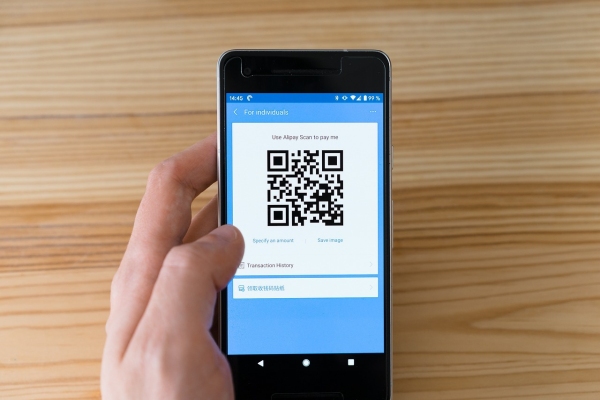
Image: Pixabay/viarami
On February 25 2026, Peoples Group announced a partnership with Fiserv to develop a next generation payments platform intended to serve financial institutions and fintechs across Canada.
The initiative combines Fiserv’s Enterprise Payments Platform with DNA core banking technology and represents one of Peoples Group’s largest technology investments. The infrastructure is designed to improve payment processing connectivity, support unified orchestration across card, account to account, and real time payment flows, and prepare for Payments Canada’s Real Time Rail environment.
The platform focuses on backend modernization rather than a consumer product launch. Peoples Bank of Canada, part of Peoples Group, continues to expand its role as a sponsor bank supporting fintech programs that rely on regulated balance sheet access, settlement infrastructure, and program management. Strengthening this capability can improve launch readiness for embedded finance, prepaid, and digital wallet partnerships while reducing reconciliation friction across payment channels.
Canadian payment modernization continues to advance in parallel to global peers, creating opportunities for infrastructure providers that invest early. Sponsor banks capable of supporting fintech scale with resilient payment processing and real time connectivity often become key enablers of ecosystem growth.
Peoples Group’s investment reflects how smaller specialized banks can play an outsized role in fintech enablement by focusing on platform capabilities rather than retail distribution.
Will deeper bank-fintech infrastructure partnerships accelerate Canada’s payment modernization timeline and expand the range of fintech products available to businesses and consumers?
The National Crowdfunding & Fintech Association (NCFA Canada) is a financial innovation ecosystem that provides education, market intelligence, industry stewardship, networking and funding opportunities and services to thousands of community members and works closely with industry, government, partners and affiliates to create a vibrant and innovative fintech and funding industry in Canada. Learn more.
| | |
|---|---|---|
| | |
February 26, 2026 | NCFA Feature | Payments And Money Movement

AI Generated Image: UK Payments Vision Delivery Committee
UK Regulatory Coordination is Clear While Canada Moves in Parallel
On February 26, 2026, the UK published a Payments Forward Plan (download 8 page PDF here)that gives fintechs something they rarely get in one place: a coordinated three year sequence for payments policy across HM Treasury, the Bank of England, the FCA, and the Payment Systems Regulator.
Great not just for regulatory coordination but for founders, operators, and investors who don't just need rules. They need timing, ownership, and a visible order of work and execution, which helps steer the ship and build market confidence for the future of payments, open banking, stablecoins, and digital money movement.
The Payments Forward Plan is a single sequenced plan with regulatory alignment from four regulatory authorities who collaborated on the Payments Vision Delivery Committee to execute the UK governments national payments vision. The roadmap covers retail payments, wholesale payments, and parts of digital assets, which means the UK is not treating payments as a narrow rails file. It is treating the next payments stack as a mix of bank rails, data sharing, digital money, and automation. That is what makes the document strategically useful. It gives the market a clearer view of what is coming, who carries which part of the file, and when firms should expect consultations, responses, gateways, and final rule work to land.
For as long as NCFA has been working in the financial technology sector, the UK has long been considered the 'gold standard'; the benchmark for fintech regulation for a simple reason. When regulators reduce uncertainty about what lands next, firms spend more time building and less time guessing. It gives the market a clearer path. That kind of visibility lowers planning friction across the sector and gives serious teams a better chance to line up product, compliance, and partnerships before the rest of the market catches up.
| Sector / Initiative | United Kingdom | Canada | Notes / Comments |
|---|---|---|---|
| Regulatory coordination and forward planning | One published cross regulator plan across HM Treasury, the Bank of England, the FCA, and the Payment Systems Regulator, with a visible three year sequence. | Canada now has active public workstreams across retail payments supervision, consumer driven banking, and the stablecoin framework, but those files still sit across separate policy pages. | Canada shows real movement across the same core layers. The main contrast is that the UK visibly puts more of the sequencing into one public roadmap. |
| Payments law and core policy sequencing | Q2 2026 HM Treasury consultation, Q4 2026 response, then FCA consultations and policy statements through 2027 and 2028. | Canada’s payments law sequencing is already live through the RPAA. Under the supervisory framework, PSP risk management and end user funds safeguarding requirements came into force on September 8, 2025, and firms that continue operating must meet ongoing supervision requirements. | Canada has moved from consultation into operating supervision. The UK gives a longer visible forward sequence, while Canada is already in live compliance mode on the PSP file. |
| Open banking and consumer directed data sharing | First live variable recurring payments under an industry led scheme in Q1 2026, FCA consultation in Q3 2026, and a policy statement in Q1 2027. | Canada’s Budget 2025 framework for consumer driven banking says the government will complete the Consumer Driven Banking Act, move quickly on phase one regulation after Royal Assent, and spend the next 12 to 18 months on a second phase that considers broader functionality, participant scope, and write access. See Canada Open Banking Commercialization Roadmap | Canada has a real public sequence here, even if it is not presented inside one cross regulator payments calendar. |
| Stablecoins, tokenised money, and tokenised deposits | Bank consultation work in H1 2026, final Bank rules by end 2026, FCA policy statement in mid 2026, authorisation gateway in Q3 2026, and broader regime live in October 2027. The plan also explicitly considers tokenised payments and tokenised deposits. | Canada’s official stablecoin framework says regulatory development starts after Royal Assent, continues over 12 to 18 months from early 2026, and is expected to come into force in 2027, with the Bank of Canada supervising issuers. | Both markets are active on stablecoins. The UK currently shows more visible choreography, while Canada already has a defined federal policy frame and implementation window. |
| Wholesale payments | The plan explicitly includes wholesale payments as part of the coordinated three year roadmap. | The Bank of Canada says its forward focus includes policy work on wholesale and retail payments infrastructure as part of broader payments system research and policy development. | Canada does have wholesale payments work in the official policy mix. What is less visible today is a single public milestone map that puts wholesale, retail, and digital assets on one page. |
| PSP oversight and supervisory perimeter | The forward plan folds payments supervision and upcoming rule work into one coordinated policy calendar across multiple authorities. | Under the RPAA mandate, the Bank of Canada supervises PSPs for operational risk, incident response, and end user fund protection, while the Minister of Finance handles national security screening. | Canada’s supervisory perimeter is already real and active. The distinction is not whether oversight exists. It is how visibly the next steps are sequenced in public. |
| Payments rail access and infrastructure participation | The UK plan covers retail and wholesale payments at a system level, including retail payments infrastructure design and short term enhancements to Faster Payments and Bacs by end 2026. | Canada’s membership expansion rules now let RPAA supervised PSPs apply for direct participation in Payments Canada systems, and five new PSPs were admitted on January 27, 2026: Wise, Float, KOHO, Paramount Commerce, and Brim. | Canada has moved from access policy to actual new entrants. That is a concrete infrastructure opening, even without one single national payments roadmap document. |
| CBDC and public digital money | The digital pound design phase remains active through 2026, with a blueprint and a decision on the future of the digital pound expected this year. | The Bank of Canada’s digital dollar page says it is scaling down work on a retail CBDC and shifting focus to broader payments system research and policy development, while continuing to monitor global retail CBDC developments and publish some related research. | Canada has stepped back from active retail CBDC build work and put payments supervision and infrastructure higher on the near term agenda. |
| Financial inclusion and emerging payment models | The plan explicitly includes financial inclusion and newer areas such as agentic AI payments inside the forward policy frame. | Canada’s consumer driven banking framework explicitly points to second phase work on write access and, beyond that, says the government is laying the foundation for broader open finance and open data that can support wider digital public infrastructure. | Canada is not mapping emerging payment models in the same broad way as the UK, but it's building policy groundwork that can widen payments and data driven product design over time. |
By publishing a 3 year future of payments roadmap, the UK is highlighting where it thinks the market is going. The plan explicitly pulls in open banking, stablecoins, tokenised payments, tokenised deposits, financial inclusion, agentic AI payments, and the digital pound design phase. Its fair to say that the UK sees the future of payments as an integrated stack where money movement, data access, programmable money, and automated decisioning increasingly sit in the same operating environment.
Payments firm may need to think about account access, stablecoin settlement, variable recurring payments, AI enabled workflows, and reporting standards as connected decisions, not separate roadmaps. The UK is effectively telling the market to plan that way now.
Canada’s issue is not a lack of movement. Open banking is moving. RPAA oversight is live. Stablecoin policy is taking shape. Payments Canada is widening access. The broader official backdrop is visible through Finance Canada’s financial sector policy hub. But firms still need to piece the sequence together from separate government pages, regulator actions, and infrastructure updates. That makes timing harder for founders, adds friction to internal planning, and creates more room for confusion in partner conversations.
The UK plan stands out because it cuts through that problem directly. It gives the market a more visible order of operations. Canada has substance, but not yet the same kind of single public sequencing document. That means more of the roadmap still has to be assembled by the private sector, which raises the execution burden on founders and operators who want to build ahead of policy instead of behind it.
For founders, if your business touches payments, open banking, stablecoins, treasury workflows, or digital money infrastructure, a visible sequence helps you decide what to build first, which approvals matter most, and when to line up counterparties. It also changes how you sell. Buyers trust teams that can point to named milestones and show how their roadmap lines up with them.
For investors, the plan gives a cleaner way to test whether a management team understands the path ahead or is still talking in broad trends. Companies that map product work to visible regulatory milestones usually carry less policy execution risk than companies that wait for each new rule to land before they react. That same test now applies in Canada too. The opportunity is real, but it rewards teams that can connect the dots across consumer driven banking, RPAA supervision, Payments Canada access, and stablecoin policy without waiting for one master roadmap to do it for them.
The UK has now published a cross regulator payments calendar with real ownership and visible sequencing for the next three years. Canada has real progress across the same core layers, but the path still takes more work to assemble. That is the real contrast. One market hands firms more of the map. The other still asks them to build more of it themselves. For on-going tracking of key impacts that matter most to markets, keep an eye on NCFA Fintech Whisperer Weekly Fintech Intelligence as the UK timeline advances and Canada’s separate pieces continue to progress.
The National Crowdfunding & Fintech Association (NCFA Canada) is a financial innovation ecosystem that provides education, market intelligence, industry stewardship, networking and funding opportunities and services to thousands of community members and works closely with industry, government, partners and affiliates to create a vibrant and innovative fintech and funding industry in Canada. Decentralized and distributed, NCFA is engaged with global stakeholders and helps incubate projects and investment in fintech, alternative finance, crowdfunding, peer-to-peer finance, payments, digital assets and tokens, artificial intelligence, blockchain, cryptocurrency, regtech, and insurtech sectors. Join Canada's Fintech & Funding Community today FREE! Or become a contributing member and get perks. For more information, please visit: www.ncfacanada.org
| | |
|---|---|---|
| | |



August 26th, 2025

January 4th, 2024

June 1st, 2021

September 9th, 2020

July 9th, 2018

January 3rd, 2018

September 25th, 2017

June 20th, 2017

May 10th, 2017

December 14th, 2016
