





Karsten Wenzlaff, Advisor
August 26th, 2025
Karsten Wenzlaff is a Crowdfunding and Fintech Expert from Germany. He is Secretary-General of Digit[...]


Mar 18, 2026 | NCFA Fintech Market Insight | Payments And Consumer Finance And Tax
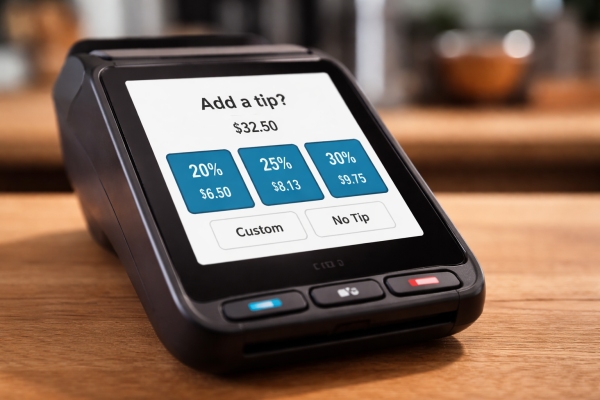
On Mar 17 2026, H&R Block Canada revealed tipping survey results putting new numbers behind a growing consumer reaction to tip prompts at checkout. Two thirds of Canadians or 67% say Canada should abolish tipping culture. Another 93% say they feel annoyed when a card machine prompts for a tip in places where tipping was not previously expected, and 89% say tipping is out of hand and is applied to goods and services they do not think warrant tipping.
This backlash isn't just frustration. It's now changing behaviour and pushing customers away.
The survey also connects tipping culture to tax and compliance.
H&R Block’s 2025 survey found 84% of Canadians know tips are taxable income, but 47% assume people are not declaring all tips. The evolution from paying/receiving cash tips to digital tips changes how income shows up for tax purposes, especially when tips flow through employers and platform operators.
Digital tipping changes the paper trail. When tips move through a card terminal or POS system and the business pays them out through payroll, the tip can show up like other income on a paycheque, with deductions such as tax, EI, or CPP applied before the employee receives it and then reflected on tax slips. That is different from cash tips left on a table, where the worker has to track and report them. Gig work is different again. Even when an app collects tips and passes them on, gig workers are often treated as self employed, so they still have to report the full amount themselves at tax time.
This is a payments design problem that's now hitting brand trust. The tip prompt is part of the checkout experience, and the checkout experience is increasingly built and configured through payment processors, point of sale providers, and embedded finance stacks. When consumers feel pressured, they blame the merchant, but they also blame the payment flow. The numbers show that tip prompts can create real revenue risk for merchants if 41% of customers are willing to avoid tip pushing businesses.
For fintechs selling point of sale and payment tools, this is an opening to compete on trust and customer experience. Firms that give merchants better controls, clearer disclosure, and safer defaults can reduce backlash while still supporting gratuities where they make sense.
Fintechs that serve gig platforms (or merchants) can help by making tip reporting clearer in worker dashboards and by separating tip flows in a way that matches how income is treated.
Merchants will tune tip prompts more carefully because customer resentment is measurable. Payment platforms will face more pressure to treat tip design as a trust issue, not a digital cash lever. Regulators and tax authorities will face more questions about consistency and clarity as tipping moves further into digital rails.
If 67% of Canadians want tipping abolished and 41% avoid tip pushing businesses, do payment platforms start competing on tip prompt design the same way they compete on fees and checkout conversion?
 The National Crowdfunding & Fintech Association (NCFA Canada) is a financial innovation ecosystem that provides education, market intelligence, industry stewardship, networking and funding opportunities and services to thousands of community members and works closely with industry, government, partners and affiliates to create a vibrant and innovative fintech and funding industry in Canada. Decentralized and distributed, NCFA is engaged with global stakeholders and helps incubate projects and investment in fintech, alternative finance, crowdfunding, peer-to-peer finance, payments, digital assets and tokens, artificial intelligence, blockchain, cryptocurrency, regtech, and insurtech sectors. Join Canada's Fintech & Funding Community today FREE! Or become a contributing member and get perks. For more information, please visit: www.ncfacanada.org
 |  |  |
|---|---|---|
 |  |  |
Mar 17, 2026 | NCFA Insight | Banking Regulation And Digital Assets

The debate is heating up over crypto and fintech access to US banking infrastructure since actions already taken by the Office of the Comptroller of the Currency (OCC) on Dec 12 2025 to conditionally approve five national trust bank charters for the following crypto firms: First National Digital Currency Bank, Ripple National Trust Bank, BitGo Bank & Trust, Fidelity Digital Assets, and Paxos Trust Company. These charters allow firms to operate under federal oversight for custody and payments without taking deposits.
On Mar 17 2026, the Wall Street Journal reported that regulators are considering expanded crypto bank access, points to further expansion along this path rather than a new standalone rule. The direction is reinforced by guidance such as the OCC bulletin on digital asset and stablecoin activities, which shows regulators are already defining how non traditional firms operate within the federal banking perimeter.
It's significant because national trust charters give firms a way to scale across the US without relying on fragmented state licensing. They provide a regulated path into custody, payments, and fiduciary services under a single federal supervisor, without becoming full service deposit taking banks.
Traditional banking groups are pushing back. In a statement opposing OCC conditional approval of five national trust bank charters, the Bank Policy Institute (BPI) said the decision left “substantial unanswered questions” about how these firms would operate and be supervised. BPI has also filed specific objections to trust charter applications, including its opposition to Connectia Trust’s national trust bank application and its opposition to BitGo Trust’s conversion to a national trust bank.
The concern is regulatory parity. Banks argue that if crypto and fintech firms can access core custody and payments infrastructure through trust charters without taking deposits, they may gain entry to important parts of the banking system without facing the same balance sheet requirements as full service banks. That tension is at the center of the policy debate. Who gets access to regulated infrastructure, and under what conditions.
The US isn't waiting for a new trust charter rule. It's progressing through approvals, guidance, and case by case decisions that give some firms a clearer path into regulated custody, payments, and fiduciary services under federal oversight.
A national trust charter can reduce dependence on fragmented state licensing, improve credibility with institutional partners, and make it easier to build around regulated payment and custody infrastructure. But know that the regulatory bar isn't low. Firms pursuing this path still need strong governance, compliance, risk controls, and operating discipline. Access is possible, but it is conditional.
Canada is taking a different approach. In the US, the trust charter debate is about whether crypto and fintech firms can enter deeper into the banking system through a federal charter pathway. In Canada, the main stablecoin related framework sits inside securities and crypto trading platform oversight, not bank chartering. Canadian regulators use the term value referenced crypto assets (see CSA Staff Notice 21 333) and sets conditions around reserves, disclosure, redemption rights, assurance, and platform controls before these assets can be offered to clients. That means the US debate is mainly about institutional status and access to banking infrastructure, while the Canadian debate is mainly about asset eligibility and client protection on regulated platforms.
In Feb 2026, OSFI announced a targeted fast track approval framework for new entrants that will launch in June 2026 and give eligible applicants a quicker, clearer, and more predictable path into the federal system. The initial scope includes provincial credit unions seeking federal status and firms with technologically innovative or emerging banking models.
The real question is not whether crypto firms become banks. It is whether regulators create a consistent operating standard for firms that want access to core financial infrastructure without becoming full service deposit taking institutions.
The National Crowdfunding & Fintech Association (NCFA Canada) is a financial innovation ecosystem that provides education, market intelligence, industry stewardship, networking and funding opportunities and services to thousands of community members and works closely with industry, government, partners and affiliates to create a vibrant and innovative fintech and funding industry in Canada. Decentralized and distributed, NCFA is engaged with global stakeholders and helps incubate projects and investment in fintech, alternative finance, crowdfunding, peer-to-peer finance, payments, digital assets and tokens, artificial intelligence, blockchain, cryptocurrency, regtech, and insurtech sectors. Join Canada's Fintech & Funding Community today FREE! Or become a contributing member and get perks. For more information, please visit: www.ncfacanada.org
| | |
|---|---|---|
| | |
Mar 16, 2026 | NCFA Fintech Market Activity | Payments And Market Structure

On Feb 17 2026, a federal securities class action was filed in California against PayPal for allegedly misleading investors about its 2027 targets and the growth outlook for Branded Checkout. The class action was filed following PayPal’s fourth quarter and full year 2025 results published on Feb 3, when the company withdrew its 2027 targets and pointed to weaker than expected Branded Checkout performance.
At PayPal Investor Day 2025, management laid out a plan to accelerate branded total payment volume growth to between 8% and 10% by 2027. When that target was pulled less than a year later, the market reaction was severe. Reuters reported that PayPal stock fell 19% on Feb 3 after weaker 2026 profit guidance, disappointing holiday quarter results, resulted in PayPal appointing a new CEO.
The complaint argues that investors were given an overly optimistic picture of Branded Checkout growth and the path to PayPal’s 2027 financial targets. When management withdrew those targets, the issue changed from execution pressure to credibility pressure. While investors can absorb a difficult quarter, they respond more sharply when a company promotes a long range growth plan and then walks it back before the plan has time to play out.
This is why the lawsuit matters beyond the legal claim itself. A class action can take years. The more immediate issue is whether investors now discount management guidance more heavily than before. Once that happens, the company has to rebuild trust through results, not presentations.
PayPal is trying to defend a core commerce business in one of the most competitive parts of fintech. Stripe, Apple Pay, Adyen, and other platforms keep pushing deeper into merchant checkout and payment orchestration. See NCFA's prior coverage on Stripe's scale and PayPal pressure.
That is why adjacent product moves around stablecoins, merchant tools, and infrastructure aren't the main story right now. Investors are still anchored to checkout adoption, merchant retention, branded payment volume, and margin quality. If the core checkout engine weakens, new initiatives don't offset that on their own.
The next phase is about proof. PayPal needs to show that Branded Checkout can return to steadier growth and that management guidance once again lines up with operating reality. Until then, both legal and market pressures are likely to continue.
When a payments company faces both a securities class action and a sharp stock repricing, what matters more to investors in the end: the lawsuit or whether the core commerce engine still works?
The National Crowdfunding & Fintech Association (NCFA Canada) is a financial innovation ecosystem that provides education, market intelligence, industry stewardship, networking and funding opportunities and services to thousands of community members and works closely with industry, government, partners and affiliates to create a vibrant and innovative fintech and funding industry in Canada. Decentralized and distributed, NCFA is engaged with global stakeholders and helps incubate projects and investment in fintech, alternative finance, crowdfunding, peer-to-peer finance, payments, digital assets and tokens, artificial intelligence, blockchain, cryptocurrency, regtech, and insurtech sectors. Join Canada's Fintech & Funding Community today FREE! Or become a contributing member and get perks. For more information, please visit: www.ncfacanada.org
| | |
|---|---|---|
| | |
Mar 16, 2026 | NCFA Market Activity | Cross Border Payments Infrastructure

On Mar 13 2026, global payments platform Airwallex announced a $1.135B over five years across the United Kingdom and EMEA to expand product development, engineering capacity and regional operations.
The company reported 116% year over year revenue growth and a 226% increase in transaction volume across EMEA (Europe, Middle East, and Africa). The expansion includes plans to hire about 100 senior engineers in London, the first time Airwallex will base engineering teams in the United Kingdom.
Airwallex provides infrastructure for international businesses including multicurrency accounts, cross border payments, foreign exchange, card issuing, and expense management.
In its 2025 year end mission update, the company said its platform processes more than $266B in annual transaction volume. The firm also reported that 95% of transactions run through local payment rails across 127 countries, with about 94% settling the same day.
The investment adds engineering capacity and infrastructure in one of the world’s largest markets for cross border business payments. Global businesses increasingly rely on platforms that provide local accounts, foreign exchange, international payouts and card services through a single financial infrastructure provider.
Large platforms are responding by building regional engineering teams, expanding local rail coverage and increasing settlement speed. Airwallex’s reported transaction scale and investment size show how quickly infrastructure providers are scaling to serve cross border digital businesses.
Competition global payments platforms combine local payment rail access, multicurrency financial services and software integration in one system capable of handling large international transaction volumes.
Platforms processing hundreds of billions in transaction volume are investing heavily in local payment rail access and engineering capacity as competition intensifies in cross border payments infrastructure.
The National Crowdfunding & Fintech Association (NCFA Canada) is a financial innovation ecosystem that provides education, market intelligence, industry stewardship, networking and funding opportunities and services to thousands of community members and works closely with industry, government, partners and affiliates to create a vibrant and innovative fintech and funding industry in Canada. Decentralized and distributed, NCFA is engaged with global stakeholders and helps incubate projects and investment in fintech, alternative finance, crowdfunding, peer-to-peer finance, payments, digital assets and tokens, artificial intelligence, blockchain, cryptocurrency, regtech, and insurtech sectors. Join Canada's Fintech & Funding Community today FREE! Or become a contributing member and get perks. For more information, please visit: www.ncfacanada.org
| | |
|---|---|---|
| | |
Mar 16, 2026 | NCFA Insight | Consumer Fintech And Housing Payments
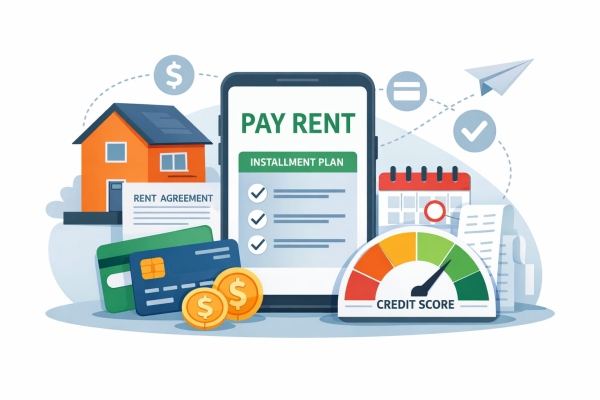
AI generated image: Rent Now Pay Later (RNPL)
On Mar 14 2026, CNN rent BNPL trend coverage in the US highlighted a new area of growth for consumer fintech, Rent Now Pay Later. BNPL providers and payment platforms are starting to move into rent payments, the largest recurring expense for many households.
Canada is already heading down this path. Fintech firms have spent several years pulling rent into the credit system through reporting and credit building services. KOHO rent credit programs allow renters to build credit history through rent payments, while rent credit history tools from Borrowell allow renters to add up to two years of past rent payments to their credit profile.
Now the model goes further.
Instead of only reporting rent payments, fintech platforms are beginning to split, finance, or route rent payments through credit rails. Rent is starting to look less like a fixed housing cost and more like a financial transaction that can generate data, fees, rewards, and short term credit exposure.
The underlying driver is housing affordability. rent burden data from Statistics Canada shows 33.0% of Canadian renter households spent 30% or more of income on shelter costs in 2022, a commonly used affordability threshold. Among private market renters who don't receive rent subsidies, the share rises slightly to 34.0%.
When roughly one third of renters already operate near an affordability limit, even small timing mismatches between income and rent payments can create pressure. Many workers receive pay every two weeks while rent is due monthly. Payment flexibility tools are now working to bridge that gap.
Several Canadian fintech firms are building products around rent payments. Zenbase offers split rent payments while reporting payment history to credit bureaus. Toronto fintech Chexy allows renters to pay rent by card, turning rent into a transaction that can generate rewards and short term credit float.
Borrowell focuses on rent reporting, allowing rent payment history to appear in an Equifax credit file. Products from KOHO, Borrowell, Zenbase, and Chexy differ in structure but share the same direction. They're moving rent deeper into payments infrastructure and credit data systems.
It's an important problem to focus on because rent is one of the largest financial flows in household budgets. Once fintech platforms innovate the payment stream, the implications extend into credit scoring, underwriting, rewards programs, and consumer debt exposure.
The benefits are straightforward. Rent reporting can help renters build credit files that traditional lending products often overlook. Payment flexibility can help align rent payments with pay cycles.
The risk emerges when flexibility substitutes for affordability. The reality is splitting rent into installments doesn't reduce the underlying cost of housing. It only spreads the obligation across time. Service fees, credit card interest, and repeated installment use can gradually turn a convenience feature into ongoing credit reliance.
This fact will likely determine how the category evolves. Products designed for occasional payment timing behave very differently from models that depend on frequent borrowing by financially stressed households.
Canadian regulators already monitor buy now pay later products as a consumer finance issue. The BNPL pilot study from the Financial Consumer Agency of Canada surveyed 1,034 Canadians to better understand how these services are used and whether consumers fully understand repayment terms and penalties.
Rent installment services raise similar questions. When the largest household bill starts moving onto credit rails, repayment discipline, fee transparency, and repeat usage patterns become key areas of concern and focus for both fintech providers and regulators.
Products that help renters manage payment timing or build credit history can deliver real value. But if rent flexibility becomes another channel for consumer borrowing, the category will face the same scrutiny that now surrounds buy now pay later services.
The National Crowdfunding & Fintech Association (NCFA Canada) is a financial innovation ecosystem that provides education, market intelligence, industry stewardship, networking and funding opportunities and services to thousands of community members and works closely with industry, government, partners and affiliates to create a vibrant and innovative fintech and funding industry in Canada. Decentralized and distributed, NCFA is engaged with global stakeholders and helps incubate projects and investment in fintech, alternative finance, crowdfunding, peer-to-peer finance, payments, digital assets and tokens, artificial intelligence, blockchain, cryptocurrency, regtech, and insurtech sectors. Join Canada's Fintech & Funding Community today FREE! Or become a contributing member and get perks. For more information, please visit: www.ncfacanada.org
| | |
|---|---|---|
| | |
March 13, 2026 | NCFA Fintech Whisperer Weekly Intelligence | Artificial Intelligence And Data, Open Banking Open Finance And Data Sharing, Payments And Market Infrastructure, Regulation And Policy

Image: Freepik
This live weekly NCFA intelligence page tracks financial technology developments that significantly affect how fintechs build, sell, raise capital, and operate under scrutiny. Coverage prioritizes Canada and includes global events that directly influence competitive conditions, market access, and execution realities across fintech sectors. This page will be updated throughout the week with market movers in a live format and then each week we'll close the prior week's contents in prep for the upcoming week, and continue on a rolling basis. (Missed prior week's Fintech Whisperer? (December 6-12, 2025, December 13-19, 2025, January 1-9, 2026, January 10-16, 2026, January 17-23, 2026, January 24-30, 2026, January 31-February 6, 2026, February 7-13, 2026, February 14-20, 2026, February 21-27, 2026, February 28-March 6, 2026).
Regulators are aligning competition rules and data protection in a way that directly affects how AI systems access, process, and govern data. For fintechs and financial institutions building on platform infrastructure, data strategy, consent design, and compliance architecture are becoming tightly coupled decisions.
Large platforms, AI firms, fintechs, and financial institutions that depend on platform distribution, data access, identity layers, or app infrastructure face a more active compliance environment. Platform terms, profiling practices, interoperability rules, and access conditions can change through ongoing regulatory review. Firms with high dependency on a small number of gatekeepers face increased operating risk, while firms that diversify distribution, strengthen direct customer relationships, and build adaptable data and compliance architectures will be better positioned.
The next edge will come from firms that can operationalize data standards, identity rails, and compliance workflows across jurisdictions rather than wait for policy intent alone to close the gap.
This deal says scale in cross border payments is moving toward platforms that already combine distribution, compliance support, and endpoint reach. For smaller wallet, remittance, and banking partners, the harder question is no longer whether they can connect. It is whether they still control enough of the customer relationship or economics once a larger stack sits in the middle.
This brings Ripple inside the licensed payments system in Australia. It can handle more of the payment flow itself instead of relying on partners. That includes onboarding, compliance, FX, and payout. For banks and fintechs, this means a digital asset firm can now compete more directly on cross border payments with full regulatory coverage, not just as a crypto overlay.
This impacts payment processors, merchant platforms, and consumer fintechs that want to own checkout and settlement. A payment aggregator license pulls merchant onboarding, refunds, and settlement into one accountable layer, so competitors and partners should expect tighter expectations on merchant screening and operational controls as volumes grow.
This impacts fixed income platforms, treasury and collateral systems, and anyone building workflows that touch Government of Canada collateral. Dealer funding and hedging capacity affects liquidity and trading costs.
This impacts capital markets fintechs that want distribution through regulated channels. When a top tier exchange brand commits to a tokenization partner, procurement and diligence tighten fast. Builders should prepare for deeper questions on governance, surveillance, custody controls, and how tokenized assets move without breaking compliance reporting and investor protections.
This raises the execution standard for digital onboarding, disclosures, promotions, and support flows. For fintechs, good UX is no longer enough on its own. Firms need evidence that customers understand what they are seeing and can act on it without avoidable confusion.
Ottawa is pushing affordability through multiple channels at once, including taxes, housing, and core banking fees. For banks, that puts more pressure on legacy fee revenue and raises the importance of better alerts, cash flow tools, and low cost account design. For fintechs, it strengthens the case for products that help users avoid failed payments, manage short term liquidity, and lower everyday banking friction.
Banks lose part of a high margin penalty fee and face more pressure to compete on better alerts, balance visibility, payment controls, and products that help customers avoid failed payments in the first place. Direct product and revenue implications across consumer banking.
This opens a formal rulemaking lane around one of the fastest growing grey areas in digital markets. It matters for exchanges, brokers, market makers, and fintech platforms. How far regulated market structure will let them scale before they run into tighter product boundaries.
This guidance impacts how Canadian DIY investment platforms can design tools and user experiences. Online brokers and fintech wealth platforms now have clearer room to provide decision support, portfolio models, and guided interfaces, but they must build stronger safeguards to ensure those tools do not cross the line into regulated investment advice (a condition of the OEO regulatory exemption).
Public payment rails can widen access, but they can also compress private platform economics and add pressure onto merchant pricing. For banks, fintechs, and payment providers, the real issue is not only whether public rails expand. It is how pricing design changes volume, margin, and who absorbs the cost.
A charter application signals a potential change in funding and balance sheet strategy for an AI lending platform and it can reshape partner economics for banks and credit unions that currently fund originations.
This is more than a weak quarter. It puts credit quality, funding resilience, and covenant headroom back at the center of the non prime lending story, which matters for alt lenders, securitization partners, credit investors, and fintechs selling underwriting, servicing, collections, and portfolio monitoring tools into the consumer lending stack.
This matters for brokers, carriers, and digital asset clients because premium payments are a treasury workflow. Once stablecoins clear premiums across real counterparties, buyers and carriers will ask harder questions about controls, reconciliation, and how funds move from premium collection to coverage without losing traceability.
This roadmap puts Europe closer to a tokenised market structure built around central bank money rather than private settlement workarounds. It matters for banks, FMIs, tokenisation platforms, and securities infrastructure teams because the market is now moving from exploratory work toward live design choices on standards, networks, and governance.
This opens a cleaner path for brokers and institutional desks that want crypto execution without rebuilding their stack around proprietary APIs. Once crypto routing uses the same FIX plumbing as other asset classes, firms will put more weight on consistent controls, audit trails, and operational readiness across both traditional and digital venues.
Payment networks are scaling distribution and wallet reach. Tokenized market structure is moving closer to institutional use. Canada’s NSF fee cap also cuts into a legacy bank revenue line and raises the value of tools that help customers avoid failed payments. The strongest fintechs and financial institutions are combining regulatory discipline, strong rails, and practical financial workflows that reduce friction for users.
NCFA offers various curated resources to help founders and investors stay current on developments that impact fintech markets, subscribe to NCFA weekly newsletter updates, view a rundown of current fintech news and insights, or dive into the latest fintech industry research.
The National Crowdfunding & Fintech Association (NCFA Canada) is a financial innovation ecosystem that provides education, market intelligence, industry stewardship, networking and funding opportunities and services to thousands of community members and works closely with industry, government, partners and affiliates to create a vibrant and innovative fintech and funding industry in Canada. Decentralized and distributed, NCFA is engaged with global stakeholders and helps incubate projects and investment in fintech, alternative finance, crowdfunding, peer-to-peer finance, payments, digital assets and tokens, artificial intelligence, blockchain, cryptocurrency, regtech, and insurtech sectors. Join Canada's Fintech & Funding Community today FREE! Or become a contributing member and get perks. For more information, please visit: www.ncfacanada.org
| | |
|---|---|---|
| | |
Mar 12, 2026 | NCFA Market Activity | Payments Infrastructure And Card Networks

On Mar 12 2026, OpenWay announced that its Way4 digital payments platform now supports the full set of UnionPay International card products. The company said Way4 clients can issue UnionPay cards, process acquiring transactions, run switching infrastructure, and support tokenization and digital wallet integrations through the same platform. OpenWay also said the first UnionPay Big Pay deployment on Way4 is already live with six major banks in Central Asia, with additional rollouts expected.
It is a live infrastructure rollout that combines four core payment functions in one stack. For banks and fintechs, that can reduce integration work, shorten launch timelines, and make it easier to support wallet based payments and tokenized credentials across markets.
OpenWay is the software layer behind the card. On its corporate site, OpenWay says Way4 is used by banks, processors, acquirers, payment service providers, telcos, national payment switches, and fintech startups. The platform handles account management, digital wallets, card issuing, acquiring, switching, and e commerce gateway functions.
UnionPay brings the network scale. On its official site, UnionPay International says it enables card acceptance in 180 countries and regions through partnerships with more than 2,500 institutions worldwide. When a platform like Way4 adds full UnionPay support, the point is not just another card option. It is faster access to a very large acceptance network through one operating system.
Card networks still matter, but the software platforms connecting issuers, acquirers, wallets, and tokenization services are becoming more important in their own right. Especially as digital wallets, tokenized credentials, and cross border acceptance keep growing. Institutions increasingly compete on how fast they can launch, how easily they can add wallet and token support, and how much complexity they can remove from their payments stack.
That creates room for companies building issuer processing, orchestration, fraud controls, wallet enablement, and merchant routing tools.
As card networks push deeper into tokenization and wallets, will the strongest edge by the network brand or with the platform that runs the infrastructure behind it?
The National Crowdfunding & Fintech Association (NCFA Canada) is a financial innovation ecosystem that provides education, market intelligence, industry stewardship, networking and funding opportunities and services to thousands of community members and works closely with industry, government, partners and affiliates to create a vibrant and innovative fintech and funding industry in Canada. Decentralized and distributed, NCFA is engaged with global stakeholders and helps incubate projects and investment in fintech, alternative finance, crowdfunding, peer-to-peer finance, payments, digital assets and tokens, artificial intelligence, blockchain, cryptocurrency, regtech, and insurtech sectors. Join Canada's Fintech & Funding Community today FREE! Or become a contributing member and get perks. For more information, please visit: www.ncfacanada.org
| | |
|---|---|---|
| | |



August 26th, 2025

January 4th, 2024

June 1st, 2021

September 9th, 2020

July 9th, 2018

January 3rd, 2018

September 25th, 2017

June 20th, 2017

May 10th, 2017

December 14th, 2016
