



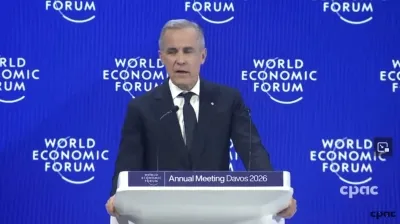

Karsten Wenzlaff, Advisor
August 26th, 2025
Karsten Wenzlaff is a Crowdfunding and Fintech Expert from Germany. He is Secretary-General of Digit[...]


Mar 10, 2026 | NCFA Market Activity | Alternative Finance And Consumer Lending

On March 10 2026, Canadaian non bank, non prime consumer lender goeasy Ltd. released a financial and operational update ahead of its fourth quarter earnings report and said it expects about $178M in incremental charge offs tied mainly to its LendCare business. The company said total net charge offs for the quarter rise to about $331M and its allowance for credit losses increases by about $86M. goeasy share price tanked over 40% on the news.
The disclosure was significant enough that CIRO imposed a temporary trading halt pending the news release.
goeasy said its full year 2025 net charge off rate is about 12.9% and now expects that figure to rise into the mid teens in 2026 before improving in 2027. The company also warned the deterioration could create pressure under certain financing covenants and said it has entered into an accommodation agreement with lenders while negotiating amendments to its credit facilities.
goeasy withdrew its previously issued fourth quarter 2025 outlook and its three year forecast while management reassesses portfolio performance and the impact on the business. The company also said it will suspend its dividend and halt share buybacks under its normal course issuer bid in order to preserve capital while it works through higher losses and funding discussions.
Although this is a specific company event, the implications are beyond one issuer. goeasy is one of the most visible publicly listed companies in Canada’s alternative lending market, and developments at a large lender often influence how investors, warehouse lenders, and institutional funding partners view risk across the wider non bank consumer credit sector.
When a lender withdraws forecasts, increases loss reserves, and begins negotiating covenant relief, the market typically responds swiftly. Funding partners may tighten terms, demand more protection, or become more selective about similar credit exposures. It doesn't mean every lender faces the same situation, but it makes investors and new capital cautious.
For Canadian fintech lenders and point of sale financing platforms, it means a tighter credit cycle that will impact underwriting discipline, funding flexibility, and covenant headroom as much as origination growth. Companies that rely on institutional funding or structured facilities need clear visibility into portfolio performance and the ability to react quickly if delinquencies or losses begin to rise.
This update does not change financial infrastructure or market rules on its own, but it does highlight how quickly stress in non prime consumer lending can influence investor sentiment and capital availability across the sector.
 The National Crowdfunding & Fintech Association (NCFA Canada) is a financial innovation ecosystem that provides education, market intelligence, industry stewardship, networking and funding opportunities and services to thousands of community members and works closely with industry, government, partners and affiliates to create a vibrant and innovative fintech and funding industry in Canada. Decentralized and distributed, NCFA is engaged with global stakeholders and helps incubate projects and investment in fintech, alternative finance, crowdfunding, peer-to-peer finance, payments, digital assets and tokens, artificial intelligence, blockchain, cryptocurrency, regtech, and insurtech sectors. Join Canada's Fintech & Funding Community today FREE! Or become a contributing member and get perks. For more information, please visit: www.ncfacanada.org
 |  |  |
|---|---|---|
 |  |  |
Mar 9, 2026 | NCFA Fintech Market Activity | Lending And Consumer Finance

Image: Freepik/senivpetro
On Mar 9 2026, autologiQ acquired FIX4’s dealer network and repair financing originations, effective immediately.
Imagine that a customer is hit with a high cost repair, the dealer or service centre needs payment to start or finish the work, and financing becomes the bridge. autologiQ’s EasyPay product positions itself as a repair, maintenance, and upgrades financing option with two loan types, asset based loans and credit based loans.
autologiQ is an Oakville based automotive services and financing platform. Its LinkedIn page lists a 2017 founding year and core focus areas that include digital platforms, repair financing, and automotive services. See autologiQ company profile.
FIX4 operates in a similar market with a dedicated repair loan product and an authorized service centre network. On its website, it says FIX4's car repair loan platform can approve claims within minutes and markets to targets customers who cannot cover emergency repair bills. FIX4 repair loan offer includes product terms such as up to $10,000 over 36 months.
Jeffrey Newhouse, CEO autologiQ:
“This acquisition aligns with autologiQ’s strategy to expand our advisory services and offer repair finance and insurance solutions to Canadian automotive dealerships, building on our strong foundation in the automotive aftermarket.”
The practical impact of this deal is distribution plus origination flow. Dealers that previously used FIX4 now route repair financing through autologiQ’s EasyPay while keeping immediate payment on repair invoices in the dealer workflow.
This is also a consumer credit channel that can grow quietly. Repair finance is somewhere between a credit card and a personal loan, but it's delivered at the point of need, when the customer has limited time and limited alternatives. Platforms that control dealer distribution and approval flow can compound volume faster than platforms that only compete on rate.
As more dealerships embed repair financing at checkout, does the advantage move to the platform that controls dealer distribution and approvals rather than the platform that only funds the loan?
The National Crowdfunding & Fintech Association (NCFA Canada) is a financial innovation ecosystem that provides education, market intelligence, industry stewardship, networking and funding opportunities and services to thousands of community members and works closely with industry, government, partners and affiliates to create a vibrant and innovative fintech and funding industry in Canada. Decentralized and distributed, NCFA is engaged with global stakeholders and helps incubate projects and investment in fintech, alternative finance, crowdfunding, peer-to-peer finance, payments, digital assets and tokens, artificial intelligence, blockchain, cryptocurrency, regtech, and insurtech sectors. Join Canada's Fintech & Funding Community today FREE! Or become a contributing member and get perks. For more information, please visit: www.ncfacanada.org
| | |
|---|---|---|
| | |
Mar 10, 2026 | NCFA Fintech Market Activity | Wealthtech And Consumer Finance

On March 4 2026, Robinhood unveiled new family finance products at its Take Flight event, adding a family investing experience, custodial and trust accounts, expanded managed investing tools, a new Platinum Card, and new Gold perks.
Vlad Tenev, CEO said:
“Robinhood will be the financial superapp for families to invest, plan, and grow wealth across generations.”
The platform continues to push further beyond retail trading and into family account oversight, wealth transfer, premium credit, and long term asset management. The new family hub is built to let households group accounts by family member, choose which accounts are visible, and assign permissions from view only access to full authority. Custodial accounts are rolling out now, while trust accounts and the family hub begin rolling out later this year.
This launch builds on an earlier NCFA analysis of Robinhood's wealthtech push and lifestyle finance strategy, but the new announcement goes further by tying family visibility, investing, credit, and wealth transfer into one customer experience.
The scale behind the launch is material. The platform reports 27.2 million funded customers, $324 billion in total platform assets, and $4.5 billion in 2025 revenue. That revenue rose 52% from 2024. Managed investing is also getting bigger. The firm says Robinhood Strategies now serves more than $1.5 billion in assets under management across more than 250,000 funded customers.
On the money side, it says there are more than 700,000 Gold Card customers with over $10 billion in annualized spend, while Robinhood Banking has more than 50,000 funded customers and over $800 million in cash deposits to date.
The premium card launch shows where the model is heading. The new invite only card carries a $695 annual fee and comes with richer travel, dining, and wellness benefits. That pricing puts the platform into a higher value segment as it tries to deepen relationships with customers whose financial lives are getting more complex.
When a platform bundles enough strategic product that can handle family account access, children’s investing, trust structures, managed portfolios, cash, and premium spending, it's getting closer to owning the main financial relationship in the household. That should raise eyebrows for banks, wealth platforms, and fintechs that still treat investing, credit, and family finance as separate product lines.
The National Crowdfunding & Fintech Association (NCFA Canada) is a financial innovation ecosystem that provides education, market intelligence, industry stewardship, networking and funding opportunities and services to thousands of community members and works closely with industry, government, partners and affiliates to create a vibrant and innovative fintech and funding industry in Canada. Decentralized and distributed, NCFA is engaged with global stakeholders and helps incubate projects and investment in fintech, alternative finance, crowdfunding, peer-to-peer finance, payments, digital assets and tokens, artificial intelligence, blockchain, cryptocurrency, regtech, and insurtech sectors. Join Canada's Fintech & Funding Community today FREE! Or become a contributing member and get perks. For more information, please visit: www.ncfacanada.org
| | |
|---|---|---|
| | |
Mar 8, 2026 | NCFA Fintech Market Activity | Digital Banking And Data Governance

On Mar 7 2026, The Guardian posted that UK challenger bank Monzo is dealing with backlash from Monzo’s Year in review spending recap, a trust issue created by automated personalization. A customer escalated a complaint to the UK Financial Ombudsman Service after the AI recap used mocking language about food spending. The simple truth is banks can use AI to summarize spending, but it should avoid a tone that feels like judgement.
Two examples of the AI lines personalization that didn't sit well with customers after letting AI analyze their spending habits:
“Mainly, you fast fooded.”
“You like your banquets beige and boxed up.”
The customer described the wording as humiliating. The story also makes clear why tone can hurt even when the data is accurate. Spend patterns can reflect disability, illness, caregiving, job loss, stress, or crisis routines. A system that only sees categories and merchants can't understand the exact context. When it adds snark, it fills that context with judgement.
Monzo’s response was mixed. They didn't accept the complaint, but they still admitted the tone was wrong for that customer and apologized, and offered £20 as a goodwill payment. That mix reduces immediate heat, but it does not fix the underlying product risk.
“I recognise that in your case, the automated and standardised language we used was inappropriate and caused genuine upset.”
The primary lesson here is that personal spending data is too sensitive for automated copy that sounds like judgement.
Opt out doesn't fix a bad default. Banks and fintechs need controls that block mockery, shame, and moral scoring in any automated spending narrative. Teams also need to test outputs against vulnerable scenarios and worst case interpretations, not just average reactions.
Complaint handling needs a fast way to learn from these mistakes and force product improvements. A goodwill payment helps one customer, but it does not change the system. Banks and fintechs need escalation that can remove harmful language templates quickly, suppress outputs for affected customers, and pause the feature when tone crosses the line.
Automated spending recaps will continue to grow because customers want clarity and progress tracking. Banks and fintechs should keep recaps factual, let customers choose tone, and treat trust as a product requirement. When a bank speaks about a customer’s money, it needs to speak with care.
When a bank turns transaction history into a narrative, what standard should govern tone, testing for vulnerable scenarios, and escalation when a customer reports harm?
The National Crowdfunding & Fintech Association (NCFA Canada) is a financial innovation ecosystem that provides education, market intelligence, industry stewardship, networking and funding opportunities and services to thousands of community members and works closely with industry, government, partners and affiliates to create a vibrant and innovative fintech and funding industry in Canada. Decentralized and distributed, NCFA is engaged with global stakeholders and helps incubate projects and investment in fintech, alternative finance, crowdfunding, peer-to-peer finance, payments, digital assets and tokens, artificial intelligence, blockchain, cryptocurrency, regtech, and insurtech sectors. Join Canada's Fintech & Funding Community today FREE! Or become a contributing member and get perks. For more information, please visit: www.ncfacanada.org
| | |
|---|---|---|
| | |
Mar 6, 2026 | NCFA Fintech Market Activity | Consumer Credit And Identity And Data Governance

Image: Freepik/fabrikasimf
Per an Investment Executive article, on February 22, 2026, a proposed class action application was filed in Quebec alleging that repeated access to a consumer credit file data occurred without authorization through a third party platform account that the applicant says he never opened or approved.
The application says an unauthorized party created an account on Borrowell and used it to access the applicant’s Equifax credit file. It alleges the matching and authentication process accepted partial, inaccurate, or outdated personal information without enhanced identity verification and without effective controls to detect inconsistencies.
The filing describes a series of inquiries and access events through Borrowell at almost weekly frequency over roughly four months. It alleges the access did not affect the applicant’s credit score, but harmful with unauthorized disclosure of highly sensitive personal and financial information.
The application also alleges that Equifax uses a similar access model with multiple third party partner platforms in Canada, and it names examples including KOHO Financial Inc., Credit Karma Canada, Mogo Inc., and Chexy, among others.
This is a market structure issue inside consumer credit. Credit file access is part of many modern onboarding and underwriting flows across lending, banking, payments, and personal finance apps. If a court accepts the argument that matching and authentication rules allowed unauthorized access through partner channels, it will raise scrutiny for how bureaus and partner platforms handle identity verification, monitoring, and anomaly detection for credit file requests.
Both the credit bureau and third party partners need tighter identity checks, clearer consent proof, and better alerts for repeat access. Canadian regulators already expect financial institutions to manage these risks. For example, OSFI’s Third Party Risk Management Guideline B-10 requires federally regulated institutions to remain accountable for services delivered through partners and to maintain strong due diligence, monitoring, and control frameworks across the full lifecycle of third party relationships.
If partner platforms can trigger credit file access using partial or outdated identifiers, what standard should govern consent checks, anomaly detection, and step up verification for repeat inquiries?
The National Crowdfunding & Fintech Association (NCFA Canada) is a financial innovation ecosystem that provides education, market intelligence, industry stewardship, networking and funding opportunities and services to thousands of community members and works closely with industry, government, partners and affiliates to create a vibrant and innovative fintech and funding industry in Canada. Decentralized and distributed, NCFA is engaged with global stakeholders and helps incubate projects and investment in fintech, alternative finance, crowdfunding, peer-to-peer finance, payments, digital assets and tokens, artificial intelligence, blockchain, cryptocurrency, regtech, and insurtech sectors. Join Canada's Fintech & Funding Community today FREE! Or become a contributing member and get perks. For more information, please visit: www.ncfacanada.org
| | |
|---|---|---|
| | |
March 5, 2026

Image: Pickup truck driving in winter conditions (Unsplash/Wesley Tingey)
The popularity of pickup trucks in Canada isn't slowing down anytime soon. Some brands continue to rule the roost in the used-vehicle category, giving SUVs and other vehicle types a run for their money. When you live in a city like Calgary, Alberta, you need a vehicle that is versatile and rugged. You should be able to drive it to your office, run errands, haul equipment, or tow boats. Plus, it should be built for Calgary's weather and road conditions. Whether you have a limited budget or want a vehicle that's purely a performer, buying a used truck can be a sensible decision.
The Calgary used truck inventory is quite interesting, as you get to choose from brands like Ram, GMC, Chevrolet, and Ford. If you know what each brand stands for, finding a suitable truck for your daily needs will be easier. So, let's explore this.
This particular brand has earned a place in the used truck segment for its accessibility and durability. When exploring a credible site, you are likely to come across a Chevrolet Silverado 1500. It is well known for its lifespan. If properly maintained, a pre-owned Chevrolet Silverado 1500 can last up to 400,000 km, although actual longevity depends on maintenance and driving conditions. That means you can consider buying a Chevrolet Silverado 1500 that has run between 133,718 km and 174,948 km because it may still have significant service life remaining. Of course, other details must also be checked, such as fuel type, engine size, model year, and overall condition.
These used trucks are favourites for their comfort and performance. A pre-owned Ram 1500 with a 5.7L engine delivers power and endurance. Most Ram trucks are known for their engines, which allow them to handle even tough tasks. Nevertheless, many Ram 1500 variants feature quality interiors, luxurious materials, and much more. Since some trims also come with heated seats, it becomes easier to cope with colder Calgary weather.
You cannot ignore this brand when it comes to offering a versatile and high-performing used truck. Among many options, the Ford F-150 is particularly famous for its configurations and engine options. It is generally equipped with robust V8 or EcoBoost engines.
It shows that you can pick one that best matches your needs. For example, the V8 engines are all about raw power and performance. One made with EcoBoost engines balances power and efficiency. If one stands out for power, performance, and durability, the other promises economy and versatility.
These pickup trucks offer premium, dependable features that set them apart even in the used-vehicle category. From robust powertrain options that cater to wide-ranging performance needs to relatively roomy interiors, GMC trucks cover all the bases. In fact, GMC is also known for its advanced technologies that improve both entertainment and the driver's experience. They are ideal choices for a discerning truck buyer looking for safety, luxury, and performance.
The demand for used cars in Calgary is considerably high for various reasons. If you like a particular model or make, please don't spend too much time deliberating. Before exploring online marketplaces, define your needs and search for a truck that meets them.
The National Crowdfunding & Fintech Association (NCFA Canada) is a financial innovation ecosystem that provides education, market intelligence, industry stewardship, networking and funding opportunities and services to thousands of community members and works closely with industry, government, partners and affiliates to create a vibrant and innovative fintech and funding industry in Canada. Decentralized and distributed, NCFA is engaged with global stakeholders and helps incubate projects and investment in fintech, alternative finance, crowdfunding, peer-to-peer finance, payments, digital assets and tokens, artificial intelligence, blockchain, cryptocurrency, regtech, and insurtech sectors. Join Canada's Fintech & Funding Community today FREE! Or become a contributing member and get perks. For more information, please visit: www.ncfacanada.org
| | |
|---|---|---|
| | |
March 2, 2026

Image: Unsplash/CardMapr.nl
Ontario’s regulated online gambling market is now measured in tens of billions of dollars. That scale has caught the attention of financial literacy advocates who see wagering not as entertainment alone, but as a financial behaviour. The question is simple: are the safeguards keeping pace with participation?
Online gambling in Canada is no longer a fringe activity. It sits inside the broader digital finance system you work in every day. Card networks process the payments and fintech firms build the rails while regulators try to get ahead of the game. Ontario offers the clearest picture: the province launched its regulated iGaming market in April 2022. Two years later, the numbers show just how quickly participation has grown.
In its 2023–2024 fiscal year, Ontario’s regulated online gambling market recorded $63 billion in total wagers and $2,4 billion in gaming revenue.
The first year of regulation, from April 2022 to March 2023, saw $35,5 billion in wagers. The jump from $35.5 billion to $63 billion in one year represents millions of card transactions moving through Canada’s payment infrastructure.
When activity reaches that scale, it becomes part of the larger financial system conversation. Consumer advocates are no longer talking only about odds and advertising. They are asking whether financial guardrails are designed for a market processing tens of billions in digital transactions.
The payments side of this discussion rarely makes headlines, but it is central. Visa and other networks sit behind a large share of online gambling deposits. Operating within global compliance frameworks, they classify transactions and manage settlements.
Visa’s recent expansion of stablecoin settlement across Central and Eastern Europe, the Middle East and Africa shows how fast payment rails are modernising. The initiative allows settlement in USDC and operates outside traditional banking hours. That is infrastructure innovation at scale, and a good argument can be made that this is the future of money, the future of finance. Regardless of ones feelings about crypto, one cannot ignore the fact that it is now something people are starting to use in every day transactions, and not just on-chain speculation.
This signals something as simple as it is interesting: the rails are getting faster and settlement options are widening. When payment systems modernise at that pace, consumer safeguards cannot rely on static policy language written for a different era of finance. Policy needs to catch up, and fast. Policy hardly ever moves at the pace of innovation, and maybe its time that changes.
Canada’s National Financial Literacy Strategy 2021–2026 focuses on building financial resilience and improving how people navigate digital financial services. The strategy calls for clearer information, stronger consumer protection and behavioural design that supports better decisions.
Online gambling now sits inside that digital ecosystem. It involves credit products, payment authorisations and real-time account transfers. When $63 billion in wagers flow through regulated platforms in a single province, it becomes part of everyday financial behaviour.
Advocates argue that safeguards should mirror the scale of activity. Deposit limits, clearer transaction labelling and easier access to account history are not abstract features. They are tools that support informed use of financial products.
Most Canadian players fund accounts with familiar tools. Visa remains one of the most recognised options. Behind the scenes, gambling transactions are commonly coded under Merchant Category Code 7995. Some issuers apply additional scrutiny or decline those payments based on internal risk rules.
That friction pushes players to look for clarity. Many compare online casinos that accept Visa in Canada to understand where card deposits are supported and under what conditions. The comparison is less about brand loyalty and more about payment certainty.
From a financial literacy perspective, this is where awareness becomes practical. A cardholder may not know how transaction coding affects approval rates and they may not understand how chargebacks are treated in gambling contexts. As wagering volumes rise into the tens of billions, even small gaps in understanding can scale quickly.
Canada’s open banking infrastructure continues to advance even before final policy implementation. The push is toward greater data portability and clearer consumer visibility over transactions.
Greater transparency has direct relevance here. When consumers can see where funds move and how categories are assigned, financial decision-making improves. In a market measured in billions of dollars, visibility is not cosmetic. It supports accountability across payment networks and platforms alike.
Ontario’s $63 billion wagering figure is not a social commentary. It is a financial data point. That scale places online gambling squarely inside Canada’s digital finance system.
The takeaway here is straightforward. Growth in participation requires growth in clarity. Safeguards need to be built into the rails, not layered on after problems appear. The Fintech world is technology driven, and competition in the field sets the pace. Can regulation keep up?
The National Crowdfunding & Fintech Association (NCFA Canada) is a financial innovation ecosystem that provides education, market intelligence, industry stewardship, networking and funding opportunities and services to thousands of community members and works closely with industry, government, partners and affiliates to create a vibrant and innovative fintech and funding industry in Canada. Decentralized and distributed, NCFA is engaged with global stakeholders and helps incubate projects and investment in fintech, alternative finance, crowdfunding, peer-to-peer finance, payments, digital assets and tokens, artificial intelligence, blockchain, cryptocurrency, regtech, and insurtech sectors. Join Canada's Fintech & Funding Community today FREE! Or become a contributing member and get perks. For more information, please visit: www.ncfacanada.org
| | |
|---|---|---|
| | |



August 26th, 2025

January 4th, 2024

June 1st, 2021

September 9th, 2020

July 9th, 2018

January 3rd, 2018

September 25th, 2017

June 20th, 2017

May 10th, 2017

December 14th, 2016
