




Karsten Wenzlaff, Advisor
August 26th, 2025
Karsten Wenzlaff is a Crowdfunding and Fintech Expert from Germany. He is Secretary-General of Digit[...]


Jun 22, 2026

A reliable financial institution, able to help in solving financial issues, is a key request for newcomers to Canada. A strong Ukrainian credit union in Toronto is a flexible service with personalized support and a deep understanding of community needs. BCU Financial is one of the most recognized institutions which combine online access with numerous convenient online digital options for members across Canada.
The institution provides solutions to different financial goals, whether clients need deposits, investing opportunities, or credit cards.
A trusted credit union for Ukrainians in Canada is more than a standard financial product, but a solution which creates strong relationships between members and the institution. It provides the clients with financial guidance, giving them all the benefits of the advanced banking technologies. The key advantages include:
Credit union for Ukrainian customers provides trust and financial stability with personalized communication and practical assistance.
Buduchnist Credit Union was created to simplify the overall process of financial management. The membership provides an opportunity to control finances from anywhere in Canada. Financial products, available within the institution, are designed to fit into any lifestyle and cover any financial objectives:
Experienced specialists of the Ukrainian credit union in Canada have a deep understanding of the needs of the Ukrainian community, being ready to provide professional consultations.
The credit union actively supports educational programs, humanitarian projects, youth organizations, and cultural initiatives across Canada through available investing services, personalized approach, and competitive rates to solve issues related to education, property purchases, retirement, and business development, keeping its position as one of the leading choices in Canada.
Thousands of members nationwide are attracted by the balance of innovation, tradition and customer-oriented approach.
 The National Crowdfunding & Fintech Association (NCFA Canada) is a financial innovation ecosystem that provides education, market intelligence, industry stewardship, networking and funding opportunities and services to thousands of community members and works closely with industry, government, partners and affiliates to create a vibrant and innovative fintech and funding industry in Canada. Decentralized and distributed, NCFA is engaged with global stakeholders and helps incubate projects and investment in fintech, alternative finance, crowdfunding, peer-to-peer finance, payments, digital assets and tokens, artificial intelligence, blockchain, cryptocurrency, regtech, and insurtech sectors. Join Canada's Fintech & Funding Community today FREE! Or become a contributing member and get perks. For more information, please visit: www.ncfacanada.org
 |  |  |
|---|---|---|
 |  |  |
June 22, 2026 | NCFA Fintech Market Activity | Digital Assets Blockchain And Tokenization, Payments And Money Movement, Artificial Intelligence And Data
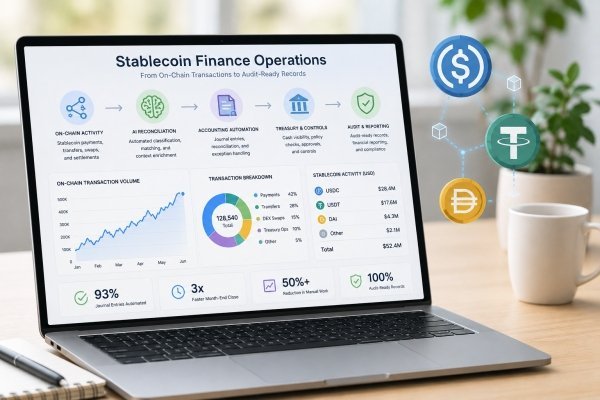
On June 22, 2026, MoonPay announced the acquisition of Entendre, an AI enabled finance operations platform built for companies moving, settling, or holding value onchain. The deal adds agentic reconciliation, bookkeeping, treasury, reporting, and close automation to MoonPay’s digital asset infrastructure stack.
Stablecoins move money. Finance teams still have to explain it.
Every payment eventually hits accounting, treasury, reporting, tax, or audit review. The faster transactions move, the more pressure finance teams face to keep records accurate and current.
MoonPay says Entendre customers include Polygon Labs, Thirdweb, Brale, Babylon Labs, Ostium, Courtyard, and DoubleZero. On average, companies on the platform manage more than 30 financial accounts, process 25,000 transactions per month, and operate across three or more legal entities.
Stablecoin activity creates accounting work that old payment tools were not built to handle. A wallet sweep, gas fee, exchange trade, vendor payment, or token transfer can pass through several systems before it reaches the general ledger.
The blockchain shows that value moved. It doesn't however explain why it moved, which entity owns it, how it should be booked, who approved it, or what an auditor needs to see.
Entendre automates transaction classification, reconciliation, journal entries, exceptions, and audit ready records. MoonPay says finance teams using the platform automate 93% of journal entries, cut manual work by more than half, and close books three times faster.
It's a visible in stablecoin infrastructure for AI agents and enterprise payment workflows. Stablecoins become more useful when they come with controls, reporting, treasury tools, and software that fits daily finance work.
MoonPay has been building across the digital asset infrastructure stack, expanding beyond payments. Earlier this year, it added key management through Sodot, trading infrastructure through DFlow, and cross chain execution through Decent.xyz. Those pieces now sit alongside MoonPay Trade and MoonPay Institutional, extending the company's reach into trading, treasury, and regulated financial services. With Entendre, it adds finance operations to a growing infrastructure stack that already spans wallets, settlement, trading, and key management.
Ivan Soto-Wright, CEO and co-founder of MoonPay, frames the deal around agentic finance:
“If businesses are going to adopt stablecoins at scale, their finance operations need the same speed, context, and automation as the payments themselves.”
That's the real market test. Stablecoins can certainly settle quickly, but finance teams still need clean records, clear approvals, accurate books, and audit trails that survive review.
That is why the acquisition fits alongside the gap between stablecoin volume and real payment use. Volume alone does not prove business utility. The repeatable use case appears when finance teams can manage the payment after it settles.
If stablecoins become business payment rails, will the real winners control the records, approvals, reporting, and audit trails behind the transaction?
The National Crowdfunding & Fintech Association (NCFA Canada) is a financial innovation ecosystem that provides education, market intelligence, industry stewardship, networking and funding opportunities and services to thousands of community members and works closely with industry, government, partners and affiliates to create a vibrant and innovative fintech and funding industry in Canada. Decentralized and distributed, NCFA is engaged with global stakeholders and helps incubate projects and investment in fintech, alternative finance, crowdfunding, peer-to-peer finance, payments, digital assets and tokens, artificial intelligence, blockchain, cryptocurrency, regtech, and insurtech sectors. Join Canada's Fintech & Funding Community today FREE! Or become a contributing member and get perks. For more information, please visit: www.ncfacanada.org
| | |
|---|---|---|
| | |
June 22, 2026 | NCFA Insight | Artificial Intelligence And Data, Risk Compliance And Regtech

On June 22, 2026, Banco Santander reported that its AI first strategy generated €35 million in business value in Q1 2026, with expected value of more than €200 million by year end and a target of more than €1 billion between 2026 and 2028. That's a regulated bank putting numbers around AI execution.
The more interesting part is how Santander is trying to get there. The bank has extended AI access to all 185,000 employees, reported more than 280 AI automation agents in production, and previously described its ambition to become an AI native bank.
Ricardo Martín Manjón, Chief Data & AI Officer at Banco Santander, put the strategy plainly:
“For me, being AI-first means applying AI where it can have tangible impact.”
For Canada, the timing of this announcement is important because Santander recently received approval to operate as a federally regulated bank in Canada. So its AI operating model more than a global case study. It's a preview of how new banking competitors may bring AI, governance, fraud controls, and measurable operating discipline into regulated Canadian markets.
The first AI cycle rewarded access. Banks tested foundation models, launched copilots, built internal assistants, and looked for productivity wins. That phase is maturing fast. Models are easier to access. Cloud tools are easier to use. Building a convincing demo is no longer the hardest part.
The harder test is operating AI inside a regulated financial institution without losing control of risk, data, decisions, accountability, or customer trust.
That's where Santander’s publicly released data become strategically useful. Specifically, the update points to measurable business value, enterprise wide access, employee adoption, automation agents, and governance controls across ethical, legal, cybersecurity, and risk requirements. This is what AI moving from lab work into operating infrastructure looks like.
One underappreciated piece of the story is Santander AI Lab’s open source work. Its Gen Fraud Graph project is described as an Apache 2.0 open source initiative for generating synthetic fraud graphs and advancing fraud detection capabilities. The technical repository is also available on SantanderAI’s GitHub.
Fraud detection is one of the fastest ways to expose whether financial AI can be trusted. It touches financial crime, AML controls, identity checks, transaction monitoring, customer friction, model risk, and auditability. A model that performs well in a slide deck but cannot be tested, explained, monitored, or reviewed isn't ready for regulated scale.
Synthetic fraud graphs help solve a practical problem. Banks need realistic fraud scenarios to test detection systems, but they cannot freely share customer data or investigative information. Synthetic environments provide a safer way to benchmark performance, validate models, and document results.
The choice of fraud is revealing. Santander didn't launch its open source thread with a marketing assistant or a generic productivity tool. It highlighted infrastructure connected to risk.
Fraud teams need speed, but they also need evidence. Compliance teams need explainability. Risk teams need controls. Boards need accountability. Regulators need confidence that systems can be monitored and challenged.
For fintechs, this move by Santander is both a warning and an opportunity. AI claims won't be enough in fraud, AML, onboarding, underwriting, customer service, complaints, trading, surveillance, or compliance workflows. Buyers will increasingly ask for testing evidence, audit trails, human review, data controls, drift monitoring, and proof that the system works under pressure.
Recent work from IOSCO, OSFI, the European Union, the FCA, and other supervisory bodies points in the same direction. Institutions want measurable results. Customers expect accountability. The result is a growing focus on how AI systems are tested, monitored, explained, and challenged. That's why AI is creating a new compliance burden at the same time it creates productivity gains.
Santander reports more than 280 AI agents operating across the organization alongside enterprise wide training, governance controls, and measurable business outcomes. The same operating question now appears across AI agents entering financial workflows, customer onboarding, fraud detection, transaction monitoring, and compliance operations. The challenge is proving that it can operate safely inside regulated environments, and fraud amplifies the challenge immediately.
AI clones, biometric breaches, faster payments, and cyberattacks are weakening older trust signals, which raises the value of new verification controls for financial trust. Synthetic fraud graphs fit into that bigger problem because they give teams a safer way to test detection systems without exposing customer data or live investigations.
For banks, fintechs, payments firms, and infrastructure providers, that changes the economics of competition. Access to advanced models is becoming easier. Building a prototype is becoming easier. Producing evidence that a system can be trusted under real operating conditions remains difficult.
The first AI race was about capability. The next one is quickly focusing on proof.
If access to advanced AI becomes commonplace, will governance infrastructure and proof of control become more valuable than proprietary models in regulated financial services?
The National Crowdfunding & Fintech Association (NCFA Canada) is a financial innovation ecosystem that provides education, market intelligence, industry stewardship, networking and funding opportunities and services to thousands of community members and works closely with industry, government, partners and affiliates to create a vibrant and innovative fintech and funding industry in Canada. Decentralized and distributed, NCFA is engaged with global stakeholders and helps incubate projects and investment in fintech, alternative finance, crowdfunding, peer-to-peer finance, payments, digital assets and tokens, artificial intelligence, blockchain, cryptocurrency, regtech, and insurtech sectors. Join Canada's Fintech & Funding Community today FREE! Or become a contributing member and get perks. For more information, please visit: www.ncfacanada.org
| | |
|---|---|---|
| | |
Jun 22, 2026

Retail distribution networks use systems for transportation and storage to move products from manufacturers to consumers. Organizations that grow across different regions require the ability to manage large amounts of inventory. Shipping containers are central to this process because they are a standardized and reliable tool for moving goods through the supply chain.
Logistics for retailers are different now because containers are efficient plus require less manual handling - these units are versatile, which allows businesses to transport and store products with consistency across ships, trains and trucks.
Shipping containers are efficient because they create a uniform system for moving goods. Workers can transfer containers between different vehicles without unloading the products - this process is direct, which reduces delays but also limits the chance that items will break.
Moving many goods in one container is a way to manage costs. Retailers combine shipments to fill the available space - this practice reduces total expenses and helps products arrive at distribution centers at the correct time.
Shipping containers are scalable solutions for retailers that are growing. Businesses increase their capacity - adding more containers as demand rises - this allows for growth without the need for large investments in permanent buildings.
Some companies go to buy used shipping container Vancouver to expand their capabilities - this choice is an affordable way to grow while keeping logistics flexible. Owners can place containers in specific locations to meet new inventory needs.
Moving inventory successfully is a requirement for retail operations. Shipping containers allow businesses to move large quantities of merchandise to warehouses and stores in an organized way. Regular schedules are easier to maintain when products are available.
Handling inventory is simpler when using containers - Products stay together in one unit until they reach their destination - this method removes unnecessary steps as well as helps retailers process shipments with speed and accuracy.
Shipping containers are useful for storage within retail networks. They serve as units for inventory that is waiting for distribution for short or long periods - this flexibility allows businesses to manage changes in consumer demand without building larger warehouses.
Organizations often choose to purchase shipping containers to create more storage space near their facilities - these units are a practical way to hold extra inventory while keeping the products easy to access.
Reliable supply chains are possible when the movement of cargo is secure. Shipping containers are made of strong materials that protect products from weather, theft and impact - these units provide a controlled environment for goods that travel long distances.
Predictability is better when distribution networks use standardized containers. Retailers can coordinate with transportation providers or warehouses more easily when everyone uses the same system. Consistency reduces interruptions and helps deliveries arrive on time.
Distribution centers are more productive when they buy shipping container. Receiving is simpler because shipments arrive in organized units. Personnel at the warehouse can unload and sort products quickly when the inventory is structured.
Space is used better within a facility when shipments are in containers. Goods move through the building with fewer steps - this efficiency leads to faster order fulfillment next to higher productivity for the warehouse.
Modern distribution networks use technology to improve how they monitor goods. Shipping containers can have tracking devices and sensors that provide information about their location and status - this data helps retailers make decisions plus fix problems quickly.
Managing inventory is more effective when technology is part of the container system. Retailers see where containers are in the supply chain, which leads to better planning and accurate delivery times. Visibility is helpful for operational performance and customer service.
Shipping containers are important for retail distribution because they support transportation, storage but also inventory movement. Their design helps retailers simplify logistics while reducing costs - these units are a significant tool for businesses that want to improve their operations and meet the needs of their customers.
The National Crowdfunding & Fintech Association (NCFA Canada) is a financial innovation ecosystem that provides education, market intelligence, industry stewardship, networking and funding opportunities and services to thousands of community members and works closely with industry, government, partners and affiliates to create a vibrant and innovative fintech and funding industry in Canada. Decentralized and distributed, NCFA is engaged with global stakeholders and helps incubate projects and investment in fintech, alternative finance, crowdfunding, peer-to-peer finance, payments, digital assets and tokens, artificial intelligence, blockchain, cryptocurrency, regtech, and insurtech sectors. Join Canada's Fintech & Funding Community today FREE! Or become a contributing member and get perks. For more information, please visit: www.ncfacanada.org
| | |
|---|---|---|
| | |
June 13, 2026 | NCFA Fintech Whisperer | Capital Markets And Market Infrastructure, Lending Consumer Credit And BNPL, Regulation And Policy, Risk Compliance And Regtech, Payments And Market Infrastructure, Digital Assets Blockchain And Tokenization, Artificial Intelligence And Data

Image: Freepik
This live weekly NCFA intelligence page tracks financial technology developments that significantly affect how fintechs build, sell, raise capital, and operate under scrutiny. Coverage prioritizes Canada and includes global events that directly influence competitive conditions, market access, and execution realities across fintech sectors. This page will be updated throughout the week with market movers in a live format and then each week we'll close the prior week's contents in prep for the upcoming week, and continue on a rolling basis. (Missed prior week's Fintech Whisperer? (December 6-12, 2025, December 13-19, 2025, January 1-9, 2026, January 10-16, 2026, January 17-23, 2026, January 24-30, 2026, January 31-February 6, 2026, February 7-13, 2026, February 14-20, 2026, February 21-27, 2026, February 28-March 6, 2026, March 7-13, 2026, March 14-20, 2026, March 21-27, 2026, March 28-April 3, 2026, April 4-10, 2026, April 11-17, 2026, April 18-24, 2026, April 25-May 1, 2026, May 2-8, 2026, May 9-15, 2026, May 16-22, 2026, May 23-29, 2026, May 30-Jun 5, 2026, Jun 6-12, 2026).
European supervision is becoming more operational and technology focused. Banks, fintechs, crypto asset firms, infrastructure providers, and compliance teams should watch how DORA, MiCA, and EMIR oversight changes vendor governance, resilience testing, supervisory reporting, third party risk management, and regulatory accountability.
Supervision is becoming more data driven, technology enabled and cross border. Securities regulators are building stronger tools for market surveillance, fraud detection, investor protection and digital asset oversight, which raises the operating bar for firms whose compliance, reporting and risk controls still depend on slow manual processes.
Prediction markets are moving from niche trading communities toward mainstream financial distribution. Retail platforms, exchanges, regulators, investors, and market operators should watch how event contracts evolve as a new information, forecasting, hedging, and market intelligence layer. Distribution may become as important as market design in determining adoption. See: Innovation Opportunities In Regulated Event Contract Infrastructure.
Post trade risk reduction is becoming part of capital markets infrastructure. Dealers, clearing participants, platforms, and regulators should watch how compression, optimization, exposure reduction, and capital efficiency tools are treated as supervised infrastructure rather than back office utilities.
Bond transparency reform is creating demand for new market data infrastructure. Trading venues, asset managers, dealers, data providers, and regulators should watch how fixed income reporting, consolidated data, and transparency tools reshape price discovery and execution quality across European bond markets.
Agentic AI is moving into capital markets workflow. For dealers, asset managers, pension funds, and credit trading desks, the issue is no longer only faster market search. The next phase is how supervised AI tools support pricing, liquidity discovery, execution preparation, and workflow decisions inside regulated markets.
Natural language tools tied to pricing, trade data, and workflow systems could change how institutional traders search markets, compare bonds, assess liquidity, and act on data inside regulated trading environments.
Stablecoins are being embedded directly into payment and remittance infrastructure. Payment firms, PSPs, remittance operators, banks, liquidity providers, and compliance teams should watch how regulated stablecoin settlement, API connectivity, and cross border liquidity become part of the operating stack for high volume regional payment networks.
Search is becoming regulated digital infrastructure. Publishers, fintechs, platforms, marketplaces, advertisers, AI search providers, and compliance teams should watch how ranking rules, data portability, publisher protections, and user choice requirements change discovery, distribution, and competition across search and AI enabled information access.
Institutional digital asset infrastructure is entering bank charter channels. Banks, custodians, wealth platforms, crypto firms and regulators should watch how national trust bank approvals shape custody, staking, lending support, capital requirements and supervisory expectations for digital asset services.
MiCAR is shifting crypto firms from fragmented national registrations toward regulated infrastructure choices. VASPs, exchanges, brokers, fintechs, custodians, and compliance teams should watch how licensing pressure turns custody, wallet services, settlement, liquidity, and operating controls into market access requirements across Europe.
AI linked lending platforms continue to connect consumer credit origination with capital markets distribution. Pagaya’s latest transaction shows how underwriting models, loan supply, securitization channels, and institutional demand are combining into repeatable credit infrastructure.
Canadian bank capital policy is shifting from maximum conservation toward controlled lending capacity. Banks, lenders, fintech partners, investors, and policymakers should watch how lower buffer requirements affect credit availability, capital planning, risk appetite, and competitive conditions across the financial system.
Canada is moving privacy, AI, consumer data, and platform accountability into the same regulatory agenda. Financial institutions, fintechs, AI vendors, data brokers, and digital platforms should watch how consent, deletion rights, automated decision transparency, children’s data protections, and guidance for onboarding, data use, AI and partnerships affect product design and data governance.
The review could affect how fintechs, derivatives firms and market infrastructure providers engage with US regulated markets. Firms should watch for changes that reduce unnecessary compliance friction while maintaining market integrity, customer protection and risk oversight.
The useful evidence is the transmission channel, not a prediction that CBDC will launch. Digital money competition affects deposits, funding costs, liquidity treatment, lending capacity, and central bank balance sheet operations. Operators, founders, and investors should watch how CBDC, fintech deposits, stablecoins, and payment infrastructure reforms change competition for bank funding.
The week's strongest market and regulatory signals weren't new products. They were changes to the infrastructure underneath financial markets. Bank capital rules, prediction market access, stablecoin rails, and compute markets all point to the same outcome. Firms that control access, distribution, liquidity, and critical infrastructure may increasingly determine who can compete and who cannot.
NCFA offers various curated resources to help founders and investors stay current on developments that impact fintech markets, subscribe to NCFA weekly newsletter updates, view the latest fintech insights, industry research, or launch into emerging financial innovation opportunities.
The National Crowdfunding & Fintech Association (NCFA Canada) is a financial innovation ecosystem that provides education, market intelligence, industry stewardship, networking and funding opportunities and services to thousands of community members and works closely with industry, government, partners and affiliates to create a vibrant and innovative fintech and funding industry in Canada. Decentralized and distributed, NCFA is engaged with global stakeholders and helps incubate projects and investment in fintech, alternative finance, crowdfunding, peer-to-peer finance, payments, digital assets and tokens, artificial intelligence, blockchain, cryptocurrency, regtech, and insurtech sectors. Join Canada's Fintech & Funding Community today FREE! Or become a contributing member and get perks. For more information, please visit: www.ncfacanada.org
| | |
|---|---|---|
| | |
June 18, 2026 | NCFA Insight | Artificial Intelligence And Data, Capital Markets And Market Infrastructure
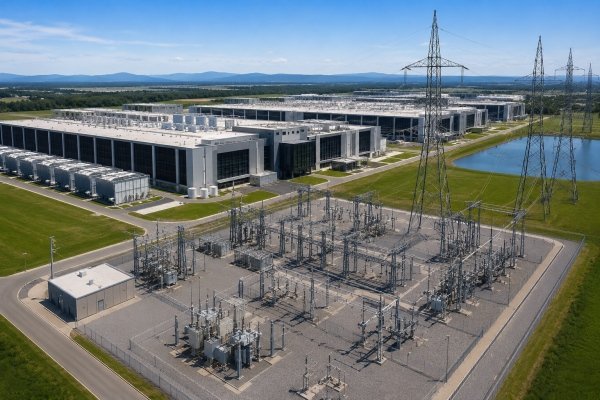
On June 18, 2026, BGC Group launched BGC Compute Infrastructure Markets, a new division focused on the secondary market for compute and memory capacity.
BGC is a financial brokerage and market data firm active in markets such as fixed income, foreign exchange, commodities, energy, shipping, equities, and futures. Its new compute business will operate inside the firm's Energy, Commodities and Shipping group and focus first on over the counter trading.
AI companies need huge amounts of computing power, but that capacity is getting harder to secure. It depends on chips, power, data centres, location, contracts, water, cooling, and timing. When something becomes scarce and expensive, buyers and sellers start asking market questions: who has capacity, who needs it, what is it worth, and how can risk be managed?
The United Nations University Institute for Water, Environment and Health report estimates that global data centres consumed 448 TWh of electricity in 2025. If data centres were treated as a country, that would rank 11th globally by electricity consumption. The same report projects data centre electricity use could reach 945 TWh by 2030, with AI workloads rising from roughly 20% of data centre electricity use in 2025 to 40% by 2030.
The report goes well beyond just the issue of power. Data centres' 2025 electricity consumption carried an estimated carbon footprint of 189 million tonnes of CO2e, a water footprint of 4.5 trillion litres, and a land footprint of 6,900 square kilometres. By 2030, projected data centre electricity use could be associated with 9.3 trillion litres of water and more than 14,500 square kilometres of land footprint.
Compute isn't just a cloud bill. It's tied to cost structures of electricity supply, grid connection, cooling, site location, water availability, hardware access, and local permitting. A buyer may need capacity in a specific place, for a specific time, with reliable delivery and known costs. A seller may have unused or contracted capacity that another participant needs. That is where a secondary market starts to make sense.
BGC says the new division is designed to support price discovery, risk management, liquidity access, and execution for participants exposed to AI infrastructure price risk. That statement alone treats compute like market exposure.
The buyers could include AI labs, enterprise AI teams, fintechs, model developers, governments, researchers, and companies that need access to GPUs or memory capacity. The sellers could include cloud providers, data centre operators, colocation firms, infrastructure investors, hardware owners, or firms with contracted capacity they no longer need. Between them is a market matching opportunity. Capacity is unevenly distributed, demand changes quickly, and long term infrastructure commitments are expensive.
Risk can show up in several ways. As AI demand grows, it's not just the technical issues. They are pricing, financing, and execution issues, too.
UNU-INWEH argues that AI impacts should be measured across carbon, water, and land footprints rather than carbon alone. Investors and financiers should treat electricity, carbon, water, and land footprints as material risks for AI infrastructure portfolios and use comparable footprint metrics in due diligence.
That is where BGC's initiative becomes more interesting. A compute market may eventually need more than bids and offers. It may need location data, power source data, delivery terms, grid risk, sustainability metrics, water exposure, counterparty quality, contract duration, and settlement rules. The more compute resembles infrastructure, the more the market will need infrastructure grade information.
Canada has its own stake in this. The federal AI Sovereign Compute Infrastructure Program is designed to improve access to advanced computing for Canadian researchers and firms while supporting protected Canadian controlled capacity. This connects directly with NCFA’s earlier coverage of AI data centres testing B.C.’s clean power limits. The strategy is about access, data protection, intellectual property, domestic capacity, and private investment.
Markets like the one BGC is trying to build could affect how Canadian companies think about compute access. Public programs can help anchor capacity, but private AI adoption will still depend on price, availability, power, location, financing, and contract flexibility. If compute capacity becomes easier to price and trade globally, Canadian AI firms and investors will need to understand how that market affects domestic competitiveness.
It's still early days, but financial market infrastructure is beginning to form around AI's hardest operating constraint, and that's worth watching closely.
If compute capacity becomes a priced and tradable infrastructure market, will AI advantage depend less on model design alone and more on who can secure, finance, measure, and manage access to scarce compute?
The National Crowdfunding & Fintech Association (NCFA Canada) is a financial innovation ecosystem that provides education, market intelligence, industry stewardship, networking and funding opportunities and services to thousands of community members and works closely with industry, government, partners and affiliates to create a vibrant and innovative fintech and funding industry in Canada. Decentralized and distributed, NCFA is engaged with global stakeholders and helps incubate projects and investment in fintech, alternative finance, crowdfunding, peer-to-peer finance, payments, digital assets and tokens, artificial intelligence, blockchain, cryptocurrency, regtech, and insurtech sectors. Join Canada's Fintech & Funding Community today FREE! Or become a contributing member and get perks. For more information, please visit: www.ncfacanada.org
| | |
|---|---|---|
| | |
June 18, 2026 | NCFA Fintech Market Activity | Capital Markets And Market Infrastructure, Wealthtech And Investing
Image: Unsplash/Stephen Dawson
On June 18, 2026, Wealthsimple announced Wealthsimple Predict, a standalone app that will give Canadian retail investors access to prediction market trading through Kalshi.
The app is in beta and expected to launch this summer. At launch, Wealthsimple says it will offer access to nearly 4,000 event contracts trading on Kalshi, limited to the categories Wealthsimple is authorized to offer in Canada a range of event contracts across economic indicators, financial markets, and climate. Those contracts must also meet Wealthsimple's listing standards.
This is a distribution milestone for Canadian prediction markets. In March, Prediction Markets Tighten as Wealthsimple Enters tracked Wealthsimple's regulatory approval as Canada began testing a narrower, supervised route for event contracts. So with this active launch plan, that story is evolving from approval to retail access.
CIRO and the CSA reminded firms in April that event contracts remain subject to existing securities and derivatives rules. CIRO has said two dealer members are authorized to facilitate Canadian client access to event contracts. Public reporting and dealer materials indicate those firms are Wealthsimple and Interactive Brokers Canada.
Wealthsimple's own education material says event contract trading is legal in Canada under specific conditions, with guardrails around authorization, product categories, investor protection, and trading rules. Canada's version isn't simply a copy of U.S. political or sports prediction markets. It is starting with economic, financial, and climate contracts inside a regulated dealer pathway.
Event contracts are simple in structure but hard to operate well. Wealthsimple describes most prediction markets as binary contracts where users choose yes or no, and correct contracts pay $1 minus fees. Prices can act as probability estimates, but only when contracts are clear, liquid, supervised, and resolved properly.
Kalshi brings the exchange infrastructure. Wealthsimple brings Canadian retail distribution, education, onboarding, account experience, and investor guardrails. The combination is important for adoption. A prediction market with good contracts but weak distribution stays niche. While a prediction market connected to a large investing platform can test whether event contracts become useful market information, not only speculative trading activity.
NCFA's Innovation Opportunities in Regulated Event Contract Infrastructure brief identified the same gap. Regulated prediction markets need compliance, surveillance, market data, onboarding, dispute resolution, payout, risk, and investor education infrastructure. Wealthsimple Predict is a live validation point for that opportunity thesis.
The open question is whether or not event contracts will become sustainable information markets in Canada. If liquidity develops inside permitted categories, prices could help investors read market expectations around inflation, rates, climate outcomes, tariffs, currencies, and economic risk. If liquidity remains thin or contract design is weak, the information value will be limited.
As regulated prediction markets reach Canadian retail investors, will their main value come from trading activity, or from the real time probability data they produce for investors, policymakers, and markets?
The National Crowdfunding & Fintech Association (NCFA Canada) is a financial innovation ecosystem that provides education, market intelligence, industry stewardship, networking and funding opportunities and services to thousands of community members and works closely with industry, government, partners and affiliates to create a vibrant and innovative fintech and funding industry in Canada. Decentralized and distributed, NCFA is engaged with global stakeholders and helps incubate projects and investment in fintech, alternative finance, crowdfunding, peer-to-peer finance, payments, digital assets and tokens, artificial intelligence, blockchain, cryptocurrency, regtech, and insurtech sectors. Join Canada's Fintech & Funding Community today FREE! Or become a contributing member and get perks. For more information, please visit: www.ncfacanada.org
| | |
|---|---|---|
| | |


August 26th, 2025

January 4th, 2024

June 1st, 2021

September 9th, 2020

July 9th, 2018

January 3rd, 2018

September 25th, 2017

June 20th, 2017

May 10th, 2017

December 14th, 2016