




Karsten Wenzlaff, Advisor
August 26th, 2025
Karsten Wenzlaff is a Crowdfunding and Fintech Expert from Germany. He is Secretary-General of Digit[...]


On August 10, 2026, the Financial Times reported that the UK FCA is talking with banks and market participants about how tokenized gold could fit within the regulatory framework, including its possible use as collateral in wholesale markets.
The FCA declined to comment to the FT and hasn't published a gold specific framework, consultation or rule. But the discussion connects two developments already under way. UK authorities are working on tokenized collateral for wholesale markets, while the gold industry is trying to make physical bullion easier to own, transfer and pledge.
Possibly, but creating the token is the easy part. A bank or market operator still has to trust the ownership claim, know where the bullion sits, value it quickly and take control if the borrower fails. Its own rules also have to permit gold as collateral.
That last hurdle matters. The UK is building infrastructure for tokenized collateral, but the Bank of England's current work focuses on tokenized versions of assets that already qualify. Gold isn't currently eligible collateral under the Bank's Sterling Monetary Framework.
Private markets could get there sooner. Banks and other wholesale counterparties have more room to agree on collateral terms between themselves. Acceptance by a clearing house would be a bigger step. Central bank eligibility would go further again.
This is why tokenized gold is different from simply launching another real world asset product. NCFA's analysis of tokenization in collateral and cash shows that institutional adoption is strongest where digital assets solve a real operating problem. Gold now has to pass that test.
Click each item to expand
The Financial Times reports that the FCA has been discussing tokenized gold with major banks and other market participants, including whether it could be used as collateral in wholesale markets.
That makes this credible early evidence of regulatory interest, not a policy decision. What happens next depends on whether the industry can show that tokenized ownership works inside existing market controls.
The FCA and Bank of England set out a joint vision for UK wholesale tokenization in May. Collateral is one of the areas where firms have asked for clearer rules and infrastructure.
The distinction is important. The programme can help an eligible security retain its collateral role when it is tokenized. It doesn't make a new asset eligible simply because someone puts it on a digital ledger.
Europe is dealing with the same operating challenge from another direction. The ECB roadmap for tokenized finance infrastructure focuses on connecting digital wholesale markets with central bank settlement rather than treating tokenization as a standalone product.
The World Gold Council is tackling a problem that exists before the token arrives.
Allocated gold gives an investor ownership of specific physical bars, but that precision adds operating friction. Unallocated gold trades more easily, but the investor holds a claim against an institution rather than title to specific bullion.
The proposed Pooled Gold Interest is designed to sit between those structures.
That legal structure is central to the question. A collateral taker needs more than proof that a token exists. It needs an enforceable claim on the gold if the borrower fails.
The same distinction between digital representation and usable market infrastructure sits behind Are Tokenized RWAs Legal And Becoming Market Infrastructure?
The World Gold Council's proposed Gold as a Service platform addresses the operating layer. A gold token is only as reliable as the records connecting it to the bullion in the vault.
That qualification does a lot of work. Digital infrastructure may make gold easier to lock, transfer and release. The lender still needs a reliable right to the asset and a practical way to turn it into cash.
Gold doesn't need a token to become a liquid asset. It already trades at enormous scale.
That gives gold an advantage over many tokenized assets. There is already a deep market and established pricing. The challenge is connecting that liquidity to a digital claim that collateral takers can actually use.
The London Bullion Market Association is separately asking UK authorities to reconsider how gold fits within the liquidity framework.
That exposes the biggest gap. If physical allocated gold isn't currently eligible Bank collateral, tokenizing it won't remove the policy decision that comes first.
Institutions are already proving that physical gold can be represented and distributed digitally. HSBC has offered tokenized gold, DBS plans tokenized physical gold for customers in Singapore, and other issuers are expanding digital bullion products and infrastructure.
NCFA's evidence base also includes Tether's US$150 million investment in Gold.com, NatGold reporting more than US$469 million in premarket token demand, the DBS initiative and a bullion platform venture between AGTech and the Hong Kong Gold Exchange.
Together, those developments show growing demand, distribution and infrastructure. They don't show that the tokens are being posted as margin to clearing houses or widely accepted under institutional financing agreements.
That is the line this Question is tracking.
The next proof is a financing transaction. A regulated bank accepting tokenized gold against a real loan, credit line or margin obligation would show that the ownership structure works beyond issuance. The terms would tell us even more. Who holds the bullion? How much of its value can be borrowed against? What happens if the borrower defaults? Can the lender take control immediately?
Those are ordinary collateral questions. Tokenization changes how the asset is recorded and transferred, but it doesn't make them disappear.
This is also where gold separates from tokenized Treasuries. Government securities already function inside mature repo, margin and central bank collateral systems. Their digital versions are trying to preserve an existing function while changing how the asset moves.
Gold has deep liquidity and established institutional ownership, but a more limited role inside regulated collateral frameworks. Private banks could accept tokenized gold first, particularly where they already understand bullion custody and financing. Wider dealer use would be stronger evidence. Acceptance by a central counterparty would show that the asset can meet tougher rules for valuation, control and liquidation.
The Bank of England is another threshold entirely. LBMA is still making the case for physical gold to become eligible, so tokenized gold clearly hasn't reached that point yet.
Canada offers a useful infrastructure comparison without forcing a Canadian gold story. Project Samara tested tokenized bond issuance, trading and lifecycle management with wholesale central bank settlement. The CSA has also opened Project Tokenization to examine how tokenized products and market infrastructure fit Canadian securities law. Neither establishes tokenized gold collateral in Canada. They show the kind of coordinated legal and settlement work that has to sit underneath institutional tokenization.
London isn't searching for a tokenization use case. It already is at the centre of one of the world's deepest wholesale gold markets. If the ownership, custody and regulatory pieces can be made to work together, tokenization could make existing bullion easier to move between banks, trading venues and collateral accounts. The value would come from making a large market work better, not from creating another digital asset to trade.
There is also competition. Asian financial centres are investing in bullion markets, tokenized assets and digital settlement, while major central banks are building new wholesale infrastructure. London's existing market depth is an advantage, but only if the digital version preserves the legal certainty and liquidity that made the physical market valuable in the first place.
For now, the answer remains conditional. Tokenized gold has credible building blocks and a plausible route into private wholesale collateral. What it doesn't yet have is broad institutional acceptance.
The moment to watch is not the next gold token. It is the first repeatable collateral transaction where a regulated institution is willing to rely on one.
Do you agree the evidence supports this answer?


Click Agree or Disagree. Your vote is recorded anonymously and aggregate results are tracked.

The National Crowdfunding & Fintech Association (NCFA Canada) is a financial innovation ecosystem providing education, market intelligence, industry stewardship, networking and funding opportunities to thousands of members. NCFA works with industry, government, partners and affiliates to support a competitive and innovative fintech and funding sector in Canada. Join Canada’s Fintech and Funding Community or learn more at NCFA Canada.
 |  |  |
|---|---|---|
 |  |  |
August 10, 2026 | NCFA Insight | Regulation And Policy, Competition And Market Structure, Public Sector Policy And Industrial Strategy

On August 10, 2026, ClearScore, Modulr, Teya, Urban Jungle and Zilch became the first firms regulated solely by the UK's Financial Conduct Authority to join its Scale-up Unit. These aren't startups testing whether a product works. They already operate across credit, payments, SME finance and insurance, and several are adding products, distribution channels or new markets. The FCA wants closer contact during that stage of growth, when regulatory questions and operational complexity can multiply quickly.
The Scale-up Unit gives participating firms a dedicated regulatory contact. It can help:
The FCA also wants feedback when its own policies or supervisory processes create unintended barriers to growth or competition. That makes the programme a two-way channel where companies get earlier regulatory access, while the FCA gets evidence from companies dealing with expansion in real time.
The unit sits alongside Innovation Pathways, the Pre-Application Support Service and Early and High Growth Oversight, giving the FCA several points of contact from early product development through commercial scale. Its innovation services have supported more than 1,000 firms.
The FCA's 2026 innovation framework already connects sandboxes, regulatory guidance, AI testing and growth support.
The Scale-up Unit fills more of the space after authorization, when successful firms start becoming harder to supervise and harder to change.
ClearScore reported £144.7 million in 2025 revenue, up 37%, and more than 25 million users globally. Acquisitions of Aro Finance and Acre Platforms have taken it further into embedded finance, mortgages and financial product distribution, while AI is becoming more central to the platform. That means more than scaling a credit-score app. ClearScore now has to manage credit broking, mortgages, customer data, embedded distribution and AI across a larger financial marketplace.
Modulr processes more than 200 million transactions and over £180 billion in annualised payment value for more than 6,000 businesses. Its infrastructure supports payroll, supplier payments, collections and other finance operations where outages or control failures can affect many customers at once. Its scale problem is therefore operational as much as commercial. More volume and wider market reach increase the importance of resilience, financial crime controls and oversight of critical payment infrastructure.
Teya's 2026 product release extends well beyond card acceptance. Its offering now brings together payments, a business account, team cards, e-commerce tools, savings features and Teya AI. One merchant relationship can therefore span payments, cash management, spending and business data. That creates more regulatory dependencies inside a product experience designed to feel simple to the customer.
Urban Jungle says it has helped more than 300,000 UK customers and now distributes insurance both directly and through white-label partners. Its August partnership with IKEA puts Urban Jungle-powered home insurance into a much larger retail customer journey. That tests whether product design, pricing, claims and customer outcomes remain consistent when insurance is distributed through another brand rather than only through Urban Jungle's own channels.
Zilch passed 5.5 million registered customers and $200 million in annual revenue before agreeing to acquire Lithuania's Fjord Bank. Subject to regulatory approval, the deal would give Zilch a European banking licence and a base for expansion across the region. Zilch is now bringing consumer credit, payments, AI and cross-border banking into the same business. That is a very different regulatory footprint from the one it had when it entered the FCA's Regulatory Sandbox earlier in its development.
The Scale-up Unit arrives with evidence from the FCA's own supervision. Between July 2025 and March 2026, its Early and High Growth Oversight pilot worked with 15 firms across asset management, wealth management and payments to see whether governance, risk management and controls were keeping pace with growth.
The FCA found that stronger firms invested early in boards, risk management, compliance resources and management information. Weaker examples included governance that had fallen behind business growth, too much responsibility concentrated in a few people and insufficient independent challenge.
The reality is commercial growth can arrive faster than the systems needed to govern it. The regulator's answer is earlier engagement rather than waiting for those gaps to surface through an application, incident or supervisory problem.
The FCA isn't promising easier rules. Participation doesn't lower regulatory standards, guarantee approvals or amount to an endorsement of the firms involved.
What it is offering is earlier access to the regulator when a company is changing quickly. That could help commercially if firms can resolve regulatory questions before they delay product launches, permissions or expansion plans.
It also gives policymakers a closer view of where regulation itself creates unnecessary friction. That question is already live in Canada. Canada's competition and growth debate has increasingly focused on faster approvals, proportionate oversight and whether regulation helps challengers reach scale rather than protecting established market structures.
ClearScore, Modulr, Teya, Urban Jungle and Zilch will provide the first real test of whether that approach can deliver both: faster regulatory navigation and controls that keep pace with expansion.
Ontario's decision to join the securities passport tackles another part of the same problem where regulatory duplication can consume legal budgets, management time and capital without producing proportionately better outcomes. The FCA model goes a step further by asking whether regulators should actively help successful firms navigate the next layer of complexity.
Should regulatory support extend beyond startup experimentation and authorization to help established fintechs navigate the complexity that comes with rapid growth?
The National Crowdfunding & Fintech Association (NCFA Canada) is a financial innovation ecosystem that provides education, market intelligence, industry stewardship, networking and funding opportunities and services to thousands of community members and works closely with industry, government, partners and affiliates to create a vibrant and innovative fintech and funding industry in Canada. Decentralized and distributed, NCFA is engaged with global stakeholders and helps incubate projects and investment in fintech, alternative finance, crowdfunding, peer-to-peer finance, payments, digital assets and tokens, artificial intelligence, blockchain, cryptocurrency, regtech, and insurtech sectors. Join Canada's Fintech & Funding Community today FREE! Or become a contributing member and get perks. For more information, please visit: www.ncfacanada.org
| | |
|---|---|---|
| | |
Aug 1, 2026 | NCFA Fintech Whisperer | Digital Assets Blockchain And Tokenization, Treasury Liquidity, Embedded Finance, Artificial Intelligence And Data, Cybersecurity Fraud And Financial Crime, SME Finance And Business Banking, Payments Infrastructure And Money Movement, Capital Markets Infrastructure And Funding, Regulation And Policy, Risk Compliance And Regtech

Image: Freepik
This live weekly NCFA intelligence page tracks financial technology developments that significantly affect how fintechs build, sell, raise capital, and operate under scrutiny. Coverage prioritizes Canada and includes global events that directly influence competitive conditions, market access, and execution realities across fintech sectors. This page will be updated throughout the week with market movers in a live format and then each week we'll close the prior week's contents in prep for the upcoming week, and continue on a rolling basis. (Missed prior week's Fintech Whisperer? (December 6-12, 2025, December 13-19, 2025, January 1-9, 2026, January 10-16, 2026, January 17-23, 2026, January 24-30, 2026, January 31-February 6, 2026, February 7-13, 2026, February 14-20, 2026, February 21-27, 2026, February 28-March 6, 2026, March 7-13, 2026, March 14-20, 2026, March 21-27, 2026, March 28-April 3, 2026, April 4-10, 2026, April 11-17, 2026, April 18-24, 2026, April 25-May 1, 2026, May 2-8, 2026, May 9-15, 2026, May 16-22, 2026, May 23-29, 2026, May 30-June 5, 2026, June 6-12, 2026, June 13-19, 2026, June 20-26, 2026, June 27-July 3, 2026, July 4-July 10, 2026, July 11-July 17, 2026, July 18-24, 2026, July 25-July 31 2026).
The acquisition puts Canadian inference technology inside AMD as competition for AI compute intensifies. NCFA’s deeper look at the Taalas acquisition examines the Canadian tradeoff more closely: engineering can remain here while ownership, capital allocation and the commercial direction of the technology move inside a global semiconductor company.
Scotiabank is progressing from general AI assistance to governed financial workflows built around approved information sources and defined employee tasks. The next measures are repeat usage, time saved, answer quality and whether the agents can support more complex work without weakening human review, data controls or accountability.
The acquisition puts differentiated Canadian AI infrastructure inside AMD as competition for inference performance intensifies. It also adds another example to the question of who owns Canadian AI infrastructure as domestic companies scale. Taalas keeps its engineering base in Canada, but its technology, capital requirements and commercial reach will now sit inside AMD’s global platform.
Europe has turned AI-content provenance into an operating compliance requirement. Banks, fintechs, insurers, publishers and AI providers now need controls that preserve machine-readable markings across creation, editing, distribution and resharing while documenting when human editorial oversight creates an exception.
Circle is placing banks, asset managers, market infrastructure providers and payment networks inside the operation of its blockchain rather than treating them only as users. The next test is whether Arc launches on schedule with live institutional integrations, meaningful transaction activity and connections to assets and liquidity outside Circle’s own ecosystem.
South Africa is bringing offshore platforms and self-custodied wallets inside its capital flow controls without treating every domestic crypto transaction as cross-border. The framework could improve regulatory visibility, but its operating impact will depend on authorization capacity, reporting costs and whether users continue using regulated channels when transferring assets internationally.
Property completion gives programmable finance a demanding test because payment release depends on a verified event outside the payment system. Banks and infrastructure providers will need clear rules for defining completion conditions, confirming title status, cancelling reserved funds, handling failed transactions and assigning liability across the payment and property networks.
Wells Fargo is bringing programmable commercial bank money into corporate treasury while banks compete with stablecoins for always-on settlement. The next test is whether clients can move funds beyond Wells Fargo’s customer and network boundaries without losing the speed, control and regulatory treatment that make tokenized deposits attractive.
FIS now has bank-issued digital money infrastructure and a commercial-banking platform spanning payments, treasury and trade finance. The immediate test is whether one shared platform can handle local payment rails, regulatory requirements and corporate workflows while reducing the cost and complexity of entering additional markets.
Nuvei is moving payment acceptance and reconciliation into the enterprise receivables stack instead of leaving payment as a separate process. The operating test is whether live deployments reduce unmatched receivables and improve collection visibility across complex international operations.
The acquisition connects merchant services and consumer loyalty inside one bank-controlled platform. The next test is whether financial institutions use the combined infrastructure to strengthen SME relationships, increase customer activity and compete with standalone payment and commerce platforms.
Chime is using employers as a distribution channel for several consumer financial products rather than offering earned-wage access as a standalone benefit. The operating measures are how many eligible employees enroll, whether they use multiple products and whether the early savings behaviour continues across a workforce of this size.
The FCA is making regulation easier for software to consume, not just easier for people to read. That creates a direct data layer between the regulator and the systems firms use to track obligations and compliance changes. It also strengthens the case for AI powered regulatory intelligence, where reliable source data is one of the constraints on using AI safely in regulated workflows.
MVB is changing more than the software used by its compliance team. It is buying completed AML and KYC work through an AI assisted managed service while keeping responsibility for the underlying risk program. That puts the AI compliance burden into a new operating model where banks have to prove that automation, human review and outsourced execution still produce controlled and defensible decisions.
Visa is assembling transaction, behavioural and device intelligence inside its global security portfolio. The competitive test is whether BioCatch helps financial institutions identify compromised customers, manipulation and mule accounts before suspicious activity reaches the payment authorization stage.
Tokenization is being added to the regulated ownership and transfer records of a conventional investment fund, rather than operating as a separate digital wrapper. The next test is whether institutions use the shares for collateral, treasury and liquidity workflows, and whether onchain transfers reduce processing time without weakening investor controls, recordkeeping or legal certainty.
The ruling goes beyond financial penalties and reaches how a major digital platform is designed and governed. Fintechs and AI platforms should watch whether courts increasingly use product controls, age assurance, monitoring and reporting requirements to address consumer harm before legislators or regulators create wider rules.
Fintech companies, funds and industry associations can fall within the regime when coordinated work with a foreign principal involves policy advocacy, public communications or government decision making. Routine international business relationships alone are insufficient under the Commissioner’s guidance. Organizations with covered activity need to identify the arrangement, document who directs or coordinates the work and keep the registry information current.
South Africa is bringing cross-border crypto transfers inside its capital-flow controls rather than treating them only as domestic virtual-asset activity. Providers will need to connect wallet and transaction infrastructure with customer records, regulatory reporting and exchange-control permissions. The final rules will determine which transfers can proceed routinely and which require additional authorization.
AI agents need clear authority. Payments need verified conditions before money is released. Tokenized funds still need trusted records. Cross border crypto still has to fit inside regulatory controls. The technology can act faster, but firms still need to know who can act, what they can approve and which record settles the outcome.
NCFA offers various curated resources to help founders and investors stay current on developments that impact fintech markets. Get the weekly Whisperer and related market intelligence through NCFA's newsletter, view the latest fintech insights, industry research, or launch into emerging financial innovation opportunities.
The National Crowdfunding & Fintech Association (NCFA Canada) is a financial innovation ecosystem that provides education, market intelligence, industry stewardship, networking and funding opportunities and services to thousands of community members and works closely with industry, government, partners and affiliates to create a vibrant and innovative fintech and funding industry in Canada. Decentralized and distributed, NCFA is engaged with global stakeholders and helps incubate projects and investment in fintech, alternative finance, crowdfunding, peer-to-peer finance, payments, digital assets and tokens, artificial intelligence, blockchain, cryptocurrency, regtech, and insurtech sectors. Join Canada's Fintech & Funding Community today FREE! Or become a contributing member and get perks. For more information, please visit: www.ncfacanada.org
| | |
|---|---|---|
| | |
August 7, 2026 | NCFA Insight | Capital Markets And Market Infrastructure, SME Finance And Business Banking, Public Sector Policy And Industrial Strategy

Canadian venture capital reached $2.69 billion across 250 deals in the first half of 2026, according to the CVCA's latest market data. Capital invested rose 17% from H1 2025, the first year-over-year increase in first-half dollars since 2021.
Deal count moved the other way. It fell 8.8% from 274 to 250, marking a fifth consecutive first-half decline, while average financing size increased from $8.4 million to $11.38 million.
Canada is putting more venture capital to work without funding more companies. Larger rounds are lifting the national total while seed financing continues to weaken.
| H1 2026 | Capital | Deals | Avg. Deal | YoY |
|---|---|---|---|---|
| Total VC | $2.69B | 250 | $11.38M | Capital +17%; deals -8.8% |
| Seed | $285M | 82 | ~$3.5M | Capital -31%; deals -13% |
| Early Stage | $1.18B | 68 | ~$17.4M | Capital +29%; deals essentially flat |
| Later Stage | $984M | 18 | $54.67M | Capital +23%; eight fewer deals |
Sixteen rounds of $50 million or more absorbed $1.57 billion, or 59% of all capital invested. Five financings above $100 million alone accounted for $807 million, equal to 30% of the national total.
Most transactions were much smaller. Deals below $25 million represented 85% of disclosed financings but received only 32% of the money. Another 155 rounds closed below $5 million and collectively attracted $221 million.
The same pressure is visible on the fund side. Canadian VC fundraising became more concentrated in 2025, leaving more capital in fewer hands and raising the bar for companies trying to get into institutional portfolios.
Seed is the clearest warning in the report. Investment fell 31% to $285 million across 82 deals, while transaction count declined 13%. Pre-seed added $52 million across 56 financings, with an average round below $1 million.
Early stage looks healthier at $1.18 billion, up 29%, but the number of financings barely changed. More capital went into roughly the same number of companies, pushing the average early-stage round to about $17.4 million.
Later-stage financing is even more concentrated. The $984 million invested was spread across only 18 transactions, the lowest first-half deal count in CVCA's series. The average round reached $54.67 million.
For founders, companies with traction and scale can still attract large rounds, while the market for the first few million dollars is getting tighter.
Some of that friction is structural. Smaller Canadian financings can carry disproportionately high compliance costs because many legal, disclosure and regulatory costs do not get proportionally cheaper as the raise gets smaller. Ontario's decision to join Canada's securities passport should reduce some duplication, but it does not by itself solve the economics of small-company financing.
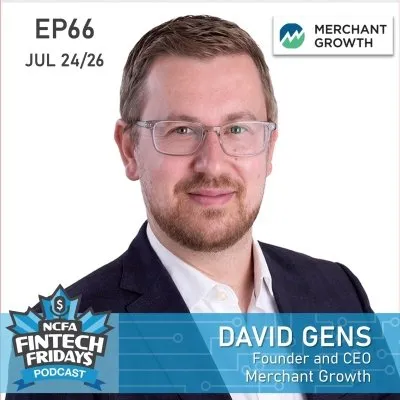
There is also a financing-fit problem. Merchant Growth founder David Gens argues that many smaller businesses are asset light and cash-flow driven, while traditional lending still relies heavily on assets that can be pledged as collateral. After nearly $1.5 billion deployed to about 15,000 Canadian small businesses, his point is practical: access to capital and access to financing that fits the business are not the same thing.
Those problems compound. A company may need grants, founder capital, crowdfunding, angel money, debt and venture financing at different points in its growth. Canada's small-business capital access gap is therefore less about finding one missing source of money than making it easier for companies to move from one financing stage to the next.
If fewer businesses get financed near the bottom, fewer can build the traction needed to compete for the larger rounds that are keeping Canada's headline VC numbers up.
Financial technology supplied four of the larger disclosed rounds in the first half. KOHO raised $130 million, nesto $107 million, Float $85.4 million and Relay $68.8 million. Together they represent almost $392 million in financing.
KOHO has been building toward banking scale, adding credit products and pursuing a Schedule 1 bank licence. Its $130 million Series E was one of the largest disclosed Canadian VC financings in H1.
Float has been expanding its SME finance platform across business accounts, spend management and working-capital products. Its $85.4 million H1 financing followed earlier equity financing and continued expansion into business banking and credit.
Relay has been scaling its SMB finance platform, raising US$50 million in its Series B as it expanded banking and cash-flow tools for small businesses. The CVCA records its H1 2026 financing at $68.8 million in Canadian-dollar terms.
These companies already have products, customers and operating histories. Their ability to attract larger rounds shows where capital is still available, while the weaker seed numbers show how much harder it may be for the next group to reach that point.
U.S. investors participated in 28.0% of Canadian VC transactions in H1, up from 25.9% in 2025. European participation reached 10.8%, the highest share in the six-year series, while 66.4% of transactions were financed exclusively by Canadian investors.
The money also remains geographically concentrated. Ontario, Quebec and British Columbia accounted for 91% of capital and 80% of transactions. Toronto led with $879.7 million across 64 deals, followed by Montreal with $619 million across 50.
For founders that reach scale, Canada remains connected to large domestic and international pools of capital. For investors, the concern is whether enough new companies (read: Canada's farm team) are being financed underneath them to keep producing attractive later-stage opportunities.
H1 2026 looks better than H1 2025 if the measure is dollars invested. It looks weaker if the measure is how many companies received venture financing, and weaker again at seed.
For founders, proof of traction and financing readiness carry more weight in a selective market. For investors, larger rounds remain available, but a shrinking seed base can become a sourcing problem several years down the road.
Canada needs capital at both ends. Proven companies need enough money to scale, while younger companies need financing that fits where they are today and gives them a realistic way to reach the next stage. The CVCA numbers show stronger deployment at the top of the market, but they don't show yet at the mid way point of 2026 that the pipeline feeding it is getting healthier.
The National Crowdfunding & Fintech Association (NCFA Canada) is a financial innovation ecosystem that provides education, market intelligence, industry stewardship, networking and funding opportunities and services to thousands of community members and works closely with industry, government, partners and affiliates to create a vibrant and innovative fintech and funding industry in Canada. Decentralized and distributed, NCFA is engaged with global stakeholders and helps incubate projects and investment in fintech, alternative finance, crowdfunding, peer-to-peer finance, payments, digital assets and tokens, artificial intelligence, blockchain, cryptocurrency, regtech, and insurtech sectors. Join Canada's Fintech & Funding Community today FREE! Or become a contributing member and get perks. For more information, please visit: www.ncfacanada.org
| | |
|---|---|---|
| | |
August 7, 2026 | NCFA Market Activity | Wealth Investing And Trading, Artificial Intelligence And Data, Open Banking Open Finance And Data Sharing

On August 4, 2026, Brazilian wealthtech Decade emerged from stealth with an US$85 million seed round backed by Greenoaks, Benchmark and Diffusion. Decade describes it as the largest seed round ever raised by a Latin American startup.
The size of the financing gets attention, but the operating model is more interesting. Decade is building a wealth-management service that can connect investment and financial data held across different institutions, analyze the client's wider financial position with AI and pair that technology with human advisers.
Clients do not have to transfer their investments to Decade first. They can connect accounts through Brazil's Open Finance system, add statements or other assets and build a consolidated view that can include investments, pensions, international holdings and real estate. Decade currently charges R$200 per month (approx $54 CAD) on an annual plan for its Decade Intelligence service and is admitting customers gradually.
The regulatory infrastructure underneath Decade is important. Brazil expanded Open Finance into investments through Open Investment, allowing customers to authorize the sharing of investment information held across participating financial institutions.
The Central Bank of Brazil specifically identified faster consolidation of investments held with different custodians as one of the benefits. Today the data that can be shared includes stocks, ETFs, investment funds, government bonds, debentures and several types of fixed-income securities.
That creates a different competitive starting point for wealthtech. A new adviser can potentially understand more of a client's portfolio without first winning custody of every asset. The client relationship, data layer and asset custody no longer have to all be tied to the same institution.
Decade's privacy policy shows how that works in practice. Customer-authorized Open Finance data is received through Iniciador Instituição de Pagamento Ltda., a payment institution authorized by the Central Bank and participating in Open Finance. Decade can then consolidate and analyze the information inside its own service without becoming the custodian of those investments.
Decade's product combines continuous monitoring with human advice. The company says its AI can monitor markets and portfolios around the clock, identify high fees and tax inefficiencies, review spending and cash flow, run investment simulations and retain context from previous client interactions.
Each client can also work with a human adviser. Decade positions the AI as the analytical layer and the adviser as the source of judgment, explanation and support around decisions.
That makes the model more substantial than a robo-adviser that simply recommends a portfolio. The platform is trying to work across investments, spending, taxes, financial goals and assets held elsewhere while keeping a person in the advisory relationship.
The approach also extends a direction already visible in AI-supported wealth management. Technology can expand the amount of portfolio analysis and monitoring available to advisers without removing the human adviser from the service.
The founders bring unusually relevant experience. CEO Vitor Olivier was an early Nubank engineer who later became its CTO, while Head of AI Felipe Meneses founded financial-services AI company Hyperplane before Nubank acquired it. Decade says Olivier previously worked in wealth management at BTG Pactual.
But the financing is well ahead of the operating proof. Access remains limited, and Decade has not disclosed client numbers, assets advised, retention, portfolio outcomes or how much of the service customers use through AI versus human advisers.
The regulatory perimeter is also still developing. Decade's website states that Decade Asset Management Ltda. is in the process of obtaining CVM accreditation and joining ANBIMA's third-party asset-management codes. The current service therefore should not be described as Decade taking custody of or independently managing client assets.
The larger opportunity is clearer. Brazil's regulators have already created a way for investment data to travel with the customer. Decade is testing whether a new wealth company can use that access to compete for advice and financial intelligence before it competes for custody.
If Open Investment lets customers bring a consolidated view of their portfolios to a new adviser without moving the underlying assets, does custody remain the main competitive advantage in wealth management or does intelligence around the assets become more valuable?
The National Crowdfunding & Fintech Association (NCFA Canada) is a financial innovation ecosystem that provides education, market intelligence, industry stewardship, networking and funding opportunities and services to thousands of community members and works closely with industry, government, partners and affiliates to create a vibrant and innovative fintech and funding industry in Canada. Decentralized and distributed, NCFA is engaged with global stakeholders and helps incubate projects and investment in fintech, alternative finance, crowdfunding, peer-to-peer finance, payments, digital assets and tokens, artificial intelligence, blockchain, cryptocurrency, regtech, and insurtech sectors. Join Canada's Fintech & Funding Community today FREE! Or become a contributing member and get perks. For more information, please visit: www.ncfacanada.org
| | |
|---|---|---|
| | |
August 7, 2026 | NCFA Market Activity | Artificial Intelligence And Data, Cybersecurity And Fraud, Risk Compliance And Regtech

On August 5, 2026, Meta released Muse Code in beta, a terminal-based coding agent that can plan changes, write code, validate results and divide larger jobs among parallel sub-agents across software repositories.
The timing of the announcement is more interesting than the launch alone. In less than three weeks, Moonshot released the 2.8-trillion-parameter Kimi K3 as an open-weight model built for reasoning and long-horizon coding, OpenAI cut the price of GPT-5.6 Luna by 80%, DeepSeek launched V4-Flash at $0.14 per million input tokens and Alibaba unveiled the 2.4-trillion-parameter Qwen3.8-Max.
Coding agents are taking on more of the engineering job while the models underneath them are getting cheaper and easier to mix and match.
For fintechs and financial institutions, that makes the buying decision less about which model tops a benchmark and more about what useful work gets completed, at what cost and under which controls.
| Date | Development | Key Data | What Changed |
|---|---|---|---|
| Jul. 17 | Kimi K3 | 2.8T parameters; 1M-token context; open weights | Moonshot added a very large open-weight option designed for advanced reasoning and long-horizon coding. |
| Jul. 30 | OpenAI GPT-5.6 Luna | Input cut from $1.00 to $0.20/M; output from $6.00 to $1.20/M | OpenAI cut Luna pricing 80% as business customers pushed harder on AI costs and lower-cost competition intensified. |
| Aug. 3 | DeepSeek V4-Flash | $0.14/M input; $0.28/M output; about $0.03 average benchmark-test cost | DeepSeek pushed the price floor sharply lower, although its overall intelligence score remains below the strongest frontier models. |
| Aug. 3 | Qwen3.8-Max | 2.4T parameters; 1M-token context; 95B parameters active per request | Alibaba expanded the open-weight option for large-context and agentic workloads while using a mixture-of-experts design to reduce compute requirements per request. |
| Aug. 5 | Meta Muse Code | $1.25/M input; $4.25/M output | Meta entered long-running agentic coding with parallel sub-agents and a persistent activity log. |
The price cuts do not mean every engineering job is suddenly cheap. Agentic work can consume substantially more compute because agents inspect repositories, call tools, run tests, retry failed work and sometimes launch other agents.
Cursor has already changed its pricing around that reality. It says a difficult agent request can consume an order of magnitude more tokens than a simple request, such as a syntax question. In June, Cursor also introduced a $120 monthly Premium team seat with five times the included usage of its $40 Standard seat and added stronger spend alerts for administrators.
That makes cost per million tokens a weak buying metric on its own. A fintech should care more about the cost of a completed engineering task after model calls, retries, testing and developer review.
Another important change is that choosing a coding environment no longer always means committing to one model provider.
Qwen Code is an open-source terminal agent that supports OpenAI-, Anthropic- and Gemini-compatible APIs, Alibaba Cloud, other providers and bring-your-own API keys. GitHub Copilot and Cursor also offer access to multiple models inside their development environments.
That creates two buying decisions. Which agent should work with the codebase, and which model should do the reasoning underneath it. A financial firm could use one managed development interface while selecting different models for cost, capability or internal risk requirements.
Open-weight does not mean free. The firm still has to pay to run the model or provide the computing infrastructure, monitoring and security needed to operate it itself. Commercial terms are also evolving. Alibaba is reportedly preparing revenue-sharing requirements for some large commercial users of Qwen3.8-Max, following a similar approach used by Moonshot for Kimi K3.
Codex and Claude Code are already competing for larger repository-level assignments. Meta now joins a field where workflow, model choice, governance and billing can matter as much as raw coding performance.
| Platform | Current Cost | Model Choice | Enterprise Difference | Best Fit |
|---|---|---|---|---|
| GitHub Copilot | Business $19/user/mo; Enterprise $39 | Broad model catalogue | Cloud agent, code review, access and budget controls, governance, IP indemnity and pooled AI credits | Banks and fintechs already standardized on GitHub and Microsoft development workflows |
| Claude Code | Pay-as-you-go for Team and Enterprise through Anthropic Console | Anthropic models | Filesystem and network sandboxing; Enterprise adds SSO, SCIM, fine-grained permissions and audit logs | Complex delegated work where containment and access controls carry more weight |
| OpenAI Codex | Included with ChatGPT Business at $20/user/mo annually; extra usage is token-linked through credits | OpenAI models | Business workspace controls, budgeting, SAML SSO, MFA and no training on business data by default | Teams already using OpenAI across engineering and business workflows |
| Cursor | Teams Standard $40/user/mo; Premium $120 | Multiple frontier and first-party models | AI-native editor, cloud agents, usage pools and spend controls | Engineering-led fintechs willing to make AI central to the development environment |
| Amazon Q Developer | Pro $19/user/mo | AWS-managed models | IDE and CLI agents, IAM Identity Center support, admin dashboards, application transformation and IP indemnity | AWS-heavy financial firms |
| Gemini Code Assist | Standard about $19/user/mo annually; Enterprise about $45 | Google models | Agent mode and Gemini CLI; Enterprise adds private code customization and higher agent usage | Google Cloud development environments |
| Meta Muse Code | $1.25/M input; $4.25/M output in beta | Muse Spark 1.2 | Large-repository work, parallel sub-agents and persistent task history | Worth testing, but enterprise maturity is still unproven during beta |
| Qwen Code | Open-source agent; provider or infrastructure costs vary | Multi-provider and bring-your-own-model | Separates the coding interface from the model provider and supports sub-agents | Firms prioritizing portability, lower-cost inference or more control over the model layer |
There isn't a universal winner (yet?).
GitHub Copilot has the cleanest operational fit where GitHub already anchors development.
Amazon Q and Gemini Code Assist benefit from existing cloud relationships.
Claude Code and Codex are stronger candidates where teams want to hand over larger engineering assignments.
Cursor asks firms to make AI more central to the development environment.
Muse Code is too new to put in the same enterprise-maturity category. Its price and multi-agent design are competitive.
Meta still has to show how it performs inside real development teams and which administrative controls follow the beta.
Qwen Code offers a different choice. Firms can keep the coding interface more portable and compete the model layer separately, which becomes more valuable when model prices can fall 80% in a matter of weeks.
A coding agent becomes more useful as it gains permission to read repositories, edit files, run commands, call tools and execute tests. Those permissions also increase the consequences of an incorrect instruction, compromised dependency or bad code change.
Anthropic says sandboxing reduced Claude Code permission prompts by 84% in its internal use by giving the agent defined filesystem and network boundaries rather than asking a developer to approve every action.
For financial firms, security and oversight need to be part of the comparison alongside coding quality. That includes who can access the agent, what repositories it can reach, what activity gets logged, how data is handled, whether code is used to train models, what networks it can connect to and how spending is controlled.
The market is changing quickly. Open-weight models are pushing down prices, coding tools can increasingly work with more than one model, and agents are taking on larger jobs that make simple token-price comparisons less useful.
Banks and fintechs should be prudent and practical. How much usable engineering work did the agent complete, what did it cost, how often did a developer need to step in and did the work stay within the firm’s security and approval rules?
As coding agents and models become easier to mix and match, should financial firms standardize on one managed platform or keep the agent, model and infrastructure layers separate so each can compete on capability, cost and control?
The National Crowdfunding & Fintech Association (NCFA Canada) is a financial innovation ecosystem that provides education, market intelligence, industry stewardship, networking and funding opportunities and services to thousands of community members and works closely with industry, government, partners and affiliates to create a vibrant and innovative fintech and funding industry in Canada. Decentralized and distributed, NCFA is engaged with global stakeholders and helps incubate projects and investment in fintech, alternative finance, crowdfunding, peer-to-peer finance, payments, digital assets and tokens, artificial intelligence, blockchain, cryptocurrency, regtech, and insurtech sectors. Join Canada's Fintech & Funding Community today FREE! Or become a contributing member and get perks. For more information, please visit: www.ncfacanada.org
| | |
|---|---|---|
| | |
August 6, 2026 | NCFA Market Activity | Wealth Investing And Trading, Banking And Credit, Capital Markets And Market Infrastructure

On August 6, 2026, U.S. fintech HarborLine introduced its securities-backed lending marketplace, a platform designed to help qualifying investors access loans against their investment portfolios by coordinating banks, advisers and brokerage custodians through one digital workflow.
Investors can seek borrowing capacity without selling eligible securities, while HarborLine handles portfolio eligibility checks, lender matching, loan documentation, collateral pledges and ongoing monitoring.
The company is trying to open a lending process that has traditionally been concentrated inside private banks, large brokerages and wealth firms. Its platform connects investors and advisers with banks and brokerage custodians, then coordinates the portfolio review, loan application, lender matching, collateral pledge and ongoing monitoring.
HarborLine doesn't lend the money, hold the investments or provide investment advice. Banks make the credit decisions, while custodians continue to hold the pledged assets.
HarborLine is trying to make portfolio-backed borrowing available without requiring the investor, bank, adviser and custodian to manage the process separately.
This isn't a public marketplace where fund managers list portfolios for lenders to browse. The borrower is generally an investor who owns an eligible brokerage account, either directly or through an adviser.
The investor connects the account so HarborLine can review which investments qualify as collateral and how much borrowing each one can support. Liquid, diversified securities may support more credit than concentrated positions or assets a bank considers difficult to sell.
HarborLine says it packages each verified application in a standardized format and distributes it to matched bank partners. Each bank reviews the file and decides whether to make an offer on its own terms.
If the borrower accepts, HarborLine coordinates the documents and collateral pledge with the brokerage custodian. The investments remain in the account, but the bank receives a security interest over them.
The platform also tracks eligible collateral, available credit and loan-to-value headroom after funding. If the portfolio falls far enough, the borrower may need to repay part of the balance or add more assets.
Securities-backed credit has traditionally been easier to obtain through private banks, large brokerages and wealth firms that already control the investment account, lending channel and customer relationship.
Wealthsimple’s portfolio line of credit is an example of that integrated model. Eligible clients can borrow through the same platform that holds their investments and manages the account experience.
HarborLine separates those roles. A bank can provide the capital without owning the brokerage relationship. The custodian keeps the assets. The adviser continues serving the client. HarborLine manages the information and handoffs between them.
That could help regional banks and independent advisers offer securities-backed lending without building the full operating process themselves. It could also give qualifying investors another route beyond a private bank or vertically integrated wealth platform.
Strong coordination is needed in making a four-party transaction feel as straightforward as borrowing from the firm that already holds the customer’s investments.
HarborLine explains the workflow, but it hasn't name participating banks or custodians yet. Those disclosures will determine whether HarborLine is operating as a true multi-lender marketplace or is still assembling the network needed to support one.
Borrowers need enough lender choice to improve access or terms. Banks need qualified applications and reliable collateral information. Custodians need a practical way to place, monitor and release pledges.
The technology can reduce paperwork and coordinate the process, but it cannot remove the lending risk.
HarborLine states that it isn't a bank, broker-dealer, investment adviser or custodian. That keeps the credit, custody and investment decisions with the regulated firms involved while positioning HarborLine as the operating layer between them.
Can HarborLine widen access to portfolio-backed credit, or will investors still prefer wealth platforms that already hold their assets and control the full lending experience?
The National Crowdfunding & Fintech Association (NCFA Canada) is a financial innovation ecosystem that provides education, market intelligence, industry stewardship, networking and funding opportunities and services to thousands of community members and works closely with industry, government, partners and affiliates to create a vibrant and innovative fintech and funding industry in Canada. Decentralized and distributed, NCFA is engaged with global stakeholders and helps incubate projects and investment in fintech, alternative finance, crowdfunding, peer-to-peer finance, payments, digital assets and tokens, artificial intelligence, blockchain, cryptocurrency, regtech, and insurtech sectors. Join Canada's Fintech & Funding Community today FREE! Or become a contributing member and get perks. For more information, please visit: www.ncfacanada.org
| | |
|---|---|---|
| | |


August 26th, 2025

January 4th, 2024

June 1st, 2021

September 9th, 2020

July 9th, 2018

January 3rd, 2018

September 25th, 2017

June 20th, 2017

May 10th, 2017

December 14th, 2016
