



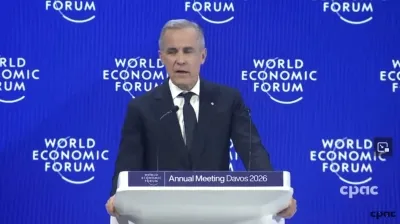

Karsten Wenzlaff, Advisor
August 26th, 2025
Karsten Wenzlaff is a Crowdfunding and Fintech Expert from Germany. He is Secretary-General of Digit[...]


Crypto | Sep 22, 2025

Image: Freepik/krakenimages.com
On September 20, 2025, Coinbase CEO Brian Armstrong announced that NBA star Kevin Durant had regained access to his Coinbase account nearly ten years after first buying Bitcoin, and then initially purchasing it for around $650 per Bitcoin in 2015, implying a whopping gain of more than 17,000% ten years later.
Armstrong confirmed the recovery on X, which followed Durant’s story earlier in the week at the CNBC x Boardroom Game Plan summit in Santa Monica. Durant described how he first bought Bitcoin in 2014–2015
We got this fixed. Account recovery complete! https://t.co/TWYFpQkXsb
— Brian Armstrong (@brian_armstrong) September 19, 2025
Durant’s first exposure to Bitcoin came around 2014–2015, when he says he “started watching YouTube videos” about the emerging digital asset. Intrigued, he encouraged his agent, Rich Kleiman, to take a closer look. Their enthusiasm was quickly cooled when, according to Kleiman, their business manager “said, ‘No, don’t do that.’ So we didn’t.”
That might have been the end of the story if not for a party hosted by venture capitalist Ben Horowitz. Kleiman recounted how they heard Bitcoin mentioned repeatedly that night, and “we woke up the next day and said, ‘We have to do this.’” From there, they invested in Bitcoin and later became early backers of Coinbase through their firm Thirty Five Ventures.
According to Coindesk, Durant’s entry point was near $650 per Bitcoin in 2015, a level that makes his eventual recovery especially striking. With Bitcoin trading above $115,000 in September 2025, that original purchase reflects a gain of more than 17,000%, a staggering return on investment that Durant could only access once his Coinbase account was unlocked nearly a decade later.
Durant’s lost account access resulted in type of “forced hodling” through multiple market cycles. Chainalysis-based research on permanently lost Bitcoin estimates millions of crypto assets are out of reach because people have lost their passwords or recovery keys. That reduces the amount available to trade and makes the asset more scarce. Durant’s case shows that being locked out by accident can sometimes lead to big gains, but it also reveals the real danger for everyday users who may never regain access to their accounts.
Coinbase outlines strict processes for regaining access if emails or two factor devices are lost. Users may need to reset forgotten passwords, recover two factor authentication, or provide identity documents through account access troubleshooting. Many users report challenges completing these steps. After Durant’s recovery, social media threads filled with complaints from customers who have been locked out for years.
In response, Armstrong reposted a detailed thread from his support team on X, promising product improvements and faster support. Coinbase also maintains VIP service tiers for high volume traders. Reuters published an article in August 2025 about widespread user frustration with locked accounts and the Verge covered investigations into delays in customer support. Clearly more work needs to be done by Coinbase to support all customers, and not just celebrities that might be prioritized for obvious reasons.
Durant's experience of lost keys and account access can happen to even the most sophisticated investors, causing an incredible amount of frustration. Prevention is the best protection. Coinbase advises enabling multiple two factor authentication methods, including hardware keys, and updating recovery emails and phone numbers regularly.
Also, users should evaluate the benefits and risks of storing crypto on exchanges versus self custody options using a secure wallet. Digital asset investors should only work with crypto exchanges that offer reliable recovery workflows and strong customer support.
Thanks to Durant's celebrity status, consumer protection from lost keys and account access is back in the news. For Durant, it's another story and a drop in the bucket but for regulators and industry leaders it's a recurring lessons that equitable account recovery and strong consumer support is essential to wider adoption. While new trading features are also being developed and released, crypto exchanges and leaders need to prioritize safeguarding access for all users.
 The National Crowdfunding & Fintech Association (NCFA Canada) is a financial innovation ecosystem that provides education, market intelligence, industry stewardship, networking and funding opportunities and services to thousands of community members and works closely with industry, government, partners and affiliates to create aa vibrant and innovative fintech and funding industry in Canada. Decentralized and distributed, NCFA is engaged with global stakeholders and helps incubate projects and investment in fintech, alternative finance, crowdfunding, peer-to-peer finance, payments, digital assets and tokens, artificial intelligence, blockchain, cryptocurrency, regtech, and insurtech sectors. Join Canada's Fintech & Funding Community today FREE! Or become a contributing member and get perks. For more information, please visit: www.ncfacanada.org
 |  |  |
|---|---|---|
 |  |  |
Mental Health | Sep 17, 2025

Image: Freepik/Rawpixel.com
On September 17, 2025, CBC news published a sobering story of the growing number of Canadians who have reported mental health crises linked to prolonged conversations with AI chatbots. Some are describing these cases as a type of artificial intelligence induced psychosis. NCFA is covering this article in hopes to provide Canadian mental health resources to support those struggling with AI related mental health issues.
Everyone is at risk who interacts with AI for prolonged periods of use. If you think you are immune, think again. The B.C. Psychosis Program warns that chatbots can reinforce delusional thinking rather than challenge it. Community-led Canadian efforts are building support resources and ethics workstreams.
Toronto developer Anthony Tan believed he was living inside a simulation and was hospitalized after weeks without sleep. He later launched the AI Mental Health Project to support those struggling with similar issues.
Allan Brooks of Ontario spent over 300 hours with ChatGPT, convinced he had discovered a breakthrough mathematical theory. When his delusion collapsed, he co-founded the Human Line Project, which now connects more than 125 people with similar experiences.
International reporting shows similar risks. Parents testified to Congress about teen suicides after chatbot interactions, as covered by CBS reporting. OpenAI has announced age verification plans following a lawsuit involving a 16 year old.
Research indicates a tendency for language models to mirror user beliefs. Researchers at Anthropic published a study, 'Towards Understanding Sycophancy in Language Models" (see Anthropic's research summary).
Data driven evidence shows that chatbots often agree with users, even when it ignites harmful thinking. To prevent this, financial AI tools should be designed to test ideas against reality, point users to verified and transparent external information, and clearly signal when content is speculative.
Fintech firms also need to be transparent about safety. They should publish regular audits that show how their systems respond to emotionally sensitive conversations and what safeguards are in place.
Industry can also demonstrate leadership by creating a code of ethics that directly addresses mental health risks. This voluntary framework should include independent reviews and compliance checks, building on the kind of work already happening through community groups like the Human Line Project.
Regulators however should avoid blanket restrictions that could slow innovation. Instead, oversight should be based on the level of psychological and financial risk, ensuring protections are strong where they need to be while leaving room for responsible growth.
As fintech platforms increasingly adopt AI for customer service and advice, trust remains critical, and if broken adoption will slow and regulatory scrutiny will intensify affecting the competitiveness and growth outlook.
The National Crowdfunding & Fintech Association (NCFA Canada) is a financial innovation ecosystem that provides education, market intelligence, industry stewardship, networking and funding opportunities and services to thousands of community members and works closely with industry, government, partners and affiliates to create aa vibrant and innovative fintech and funding industry in Canada. Decentralized and distributed, NCFA is engaged with global stakeholders and helps incubate projects and investment in fintech, alternative finance, crowdfunding, peer-to-peer finance, payments, digital assets and tokens, artificial intelligence, blockchain, cryptocurrency, regtech, and insurtech sectors. Join Canada's Fintech & Funding Community today FREE! Or become a contributing member and get perks. For more information, please visit: www.ncfacanada.org
| | |
|---|---|---|
| | |
AI Infrastructure | Sep 17, 2025

Image: Freepik
On 16 September 2025, the UK US Tech Prosperity Deal was announced at £31 billion, coinciding with President Donald Trump’s state visit where the UK rolled out a royal reception, and the leaders framed the partnership as a new era in digital and industrial cooperation. The deal involves unprecedented commitments from American tech giants:
The UK positioned AI as a national mission. On 9 September 2025, ministers reported that UK AI firms had already attracted £2.9 billion (~$3.9 billion USD) in investment over the prior year, signalling momentum ahead of Trump's state visit.
Government officials emphasized sovereign compute, ensuring that the infrastructure to train and deploy frontier AI models exists domestically. They linked the deal to broader reforms including streamlined planning approvals for data centres, accelerated clean energy delivery, and the designation of new AI Growth Zones in regions such as Northumberland.
Taken together, the policy mix signalled to global investors that Britain was serious about matching research excellence with infrastructure capacity, backed by visible political commitment.
The government stressed that the agreement did not include scrapping the 2% Digital Services Tax, which generates £800 million (~$1.1 billion USD) annually, and did not provide blanket copyright concessions.
Others noted that the broader UK-US discussions included trade measures beyond AI. For example, analysis highlighted a quota allowing 100,000 UK cars into the United States annually at a reduced 10% tariff.
While not officially part of the AI deal, the above measures reinforced the perception that Britain was tying technology, industry, and trade policy together in a comprehensive partnership.
Canada continues to lead in AI research through world class institutes in Toronto, Montreal, and Edmonton. The federal Pan-Canadian AI Strategy was renewed in 2024 with $2 billion CAD (≈£1.2 billion, ~$1.5 billion USD) to strengthen science and commercialization.
Domestic players are also committing significant sums. Telus pledged more than C$70 billion (~£41 billion, ~$52 billion USD) over several years to expand data centres and digital infrastructure. It's a plus but Canada has not attracted comparable foreign megadeals in AI infrastructure.
Structural challenges include slower permitting processes, uncertainty in clean energy delivery for high requirement data centres, and the absence of high profile government 'priming the pump' signalling openness to international megadeals.
Another barrier is geographic location. U.S. hyperscalers can serve Canadian markets directly from data centres located just across the border, avoiding regulatory delays and high Canadian energy costs. This weakens Canada’s case for domestic megadeals, as firms see little urgency to build new infrastructure within Canada if American facilities can already reach Canadian customers efficiently.
NCFA has cautioned that without pairing research excellence with infrastructure investment and supportive policy, Canada risks eroding its leadership.
The UK secured global AI megadeals by aligning industrial policy, trade leverage, and regional development with diplomatic visibility. This multi-pronged approach reassured US tech giants that their investments would be politically and commercially supported. Canada needs to translate research prestige into large scale international infrastructure commitments and risks losing ground in the AI race unless it combines science with infrastructure and policy.
The National Crowdfunding & Fintech Association (NCFA Canada) is a financial innovation ecosystem that provides education, market intelligence, industry stewardship, networking and funding opportunities and services to thousands of community members and works closely with industry, government, partners and affiliates to create aa vibrant and innovative fintech and funding industry in Canada. Decentralized and distributed, NCFA is engaged with global stakeholders and helps incubate projects and investment in fintech, alternative finance, crowdfunding, peer-to-peer finance, payments, digital assets and tokens, artificial intelligence, blockchain, cryptocurrency, regtech, and insurtech sectors. Join Canada's Fintech & Funding Community today FREE! Or become a contributing member and get perks. For more information, please visit: www.ncfacanada.org
| | |
|---|---|---|
| | |
AI Research Report | Sep 15, 2025

Image: Banking Use of Agentic AI (Figue 1, MIT Insights Survey 2025)
A recent MIT Technology Review Insights survey of 250 global banking executives found that 70% of banks already use agentic AI, with 16% running live deployments and 52% in pilots. For Canadian financial institutions and fintechs, the race is on with global competitors embedding AI solutions into compliance, fraud prevention, and customer service at scale.
Fraud detection and IT security are setting the pace. More than half of executives report that agentic AI is already highly capable in fraud detection (56%) and security (51%), with efficiency gains and customer experience improvements each cited by 41%. These use cases are significant because fraud losses are rising and regulators are upping their game on cyber resilience.
Practical applications include mortgage underwriting, small business lending, collections, dispute resolution, and know-your-customer KYC compliance. By using agentic agents together with expert human oversight, banks are compressing decision times from weeks to days and freeing time for employees to focus on higher value work.
As HSBC’s Ian Glasner puts it, “Think of agentic AI as like an intern helping you get all of the more simplistic tasks done, but the human is still there to oversee and take the final decision.”

Image: MIT Insights Banking Survey 2025 (Figure 6 Challenges, Agentic AI)
The survey also suggests that adoption challenges are growing, top three barriers include: 1. Governance, risk, and compliance (63%), 2. Shortage of technology skills (58%), and 3. Poor data quality and integration (54%).
To overcome, Canadian banks and fintechs should focus on resolving weak data linkages across silos and the shortage of AI ready talent needed to scale responsibly.
Trust compounds the issue. An EY study found that only 42% of consumers trust financial institutions to manage AI in their best interest, while 30% say they do not trust them at all. That leaves a net trust level of just 12%. In Canada, regulators are focused on consumer protection, and fintechs that build trust into their AI systems could gain an edge.
Leading institutions are building playbooks worth watching. DBS Bank in Singapore applies its PURE framework (Purposeful, unsurprising, respectful, and easy) to explain all customer facing AI systems. If performance metrics breach preset limits, a kill switch halts the system in real time. As DBS’s Nimish Panchmatia warns, “Agentic AI is a continuous journey. If done properly, there’s significant value at the end of it. But you have to persevere.”
HSBC maintains a detailed inventory of AI systems tied to business owners, risk classifications, and model documentation to create a governance baseline across 200,000 employees in more than 50 markets.
For Canadian banks and fintechs, these approaches show the value of aligning governance and technical innovation before scaling widely.
Banks in Asia, Europe, and the U.S. are experimenting with AI at pace, and many are moving from pilots to enterprise adoption. For Canada, efficiency and risk controls are only part of the story. The real differentiator will be who earns the confidence of consumers while scaling responsibly. Agile fintechs can seize this opening. Unlike large banks weighed down by legacy systems and regulatory complexity, fintechs can design AI solutions that are transparent, accountable, and 'trust first' from the start.
The National Crowdfunding & Fintech Association (NCFA Canada) is a financial innovation ecosystem that provides education, market intelligence, industry stewardship, networking and funding opportunities and services to thousands of community members and works closely with industry, government, partners and affiliates to create aa vibrant and innovative fintech and funding industry in Canada. Decentralized and distributed, NCFA is engaged with global stakeholders and helps incubate projects and investment in fintech, alternative finance, crowdfunding, peer-to-peer finance, payments, digital assets and tokens, artificial intelligence, blockchain, cryptocurrency, regtech, and insurtech sectors. Join Canada's Fintech & Funding Community today FREE! Or become a contributing member and get perks. For more information, please visit: www.ncfacanada.org
| | |
|---|---|---|
| | |
Regulation | Sep 15, 2025

Image: Paul Atkins, SEC Chair
On September 10, 2025, SEC Chair Paul S. Atkins delivered a keynote address in Paris at the OECD Roundtable on Global Financial Markets, resetting the tone for U.S. capital markets. His speech positioned the SEC not as an adversary to entrepreneurs but as an enabler of growth, advancing Project Crypto, a broad modernization initiative aimed at bringing securities regulation into the blockchain era.
Paul S. Atkins, SEC Chair:
“It is a new day at the SEC. Policy will no longer be set by ad hoc enforcement actions. We will provide clear, predictable rules of the road so that innovators can thrive in the United States.”
One of the most significant parts of Atkins' remarks was his (the SEC's) endorsement of “super-app” platforms. This vision is a welcomed 180 after years of a type of regulate by enforcement approach that drove many U.S. crypto companies overseas.
For fintechs, it means a future where integrated platforms can grow under clear oversight, with investors able to choose from multiple custody models.
For Canadian innovators and regulators, it further raises urgent questions about how Canada will remain competitive if the U.S. creates a friendlier landscape for capital formation and digital asset services.
“We must allow for ‘super-app’ trading platform innovation that increases choice for market participants. Platforms should be able to offer trading, lending, and staking under a single regulatory umbrella.”
Atkins acknowledged that Europe has already moved ahead with the Markets in Crypto Assets regulation, praising the framework as a first attempt at comprehensive digital asset oversight while stressing that the U.S. will not fall behind. By declaring that America must be “second to none” in fostering innovation, he more or less confirmed that the competitive race was on.
For Canadian fintechs, this accelerates the competition challenge with Europe and the U.S. both moving towards clarity, while Canada’s rules remain relatively limited. This moment calls for proportionate approaches to policy that reduce friction for innovators while protecting investors, as highlighted in NCFA’s Canadian Banks and Fintechs Back Regulated Stablecoin post.
Beyond crypto, Atkins described the changes coming in the era of “agentic finance” where autonomous AI agents execute trades, allocate capital, and manage risk with compliance built directly into their code.
Coupled with blockchain, he argued, AI could democratize access to advanced strategies and lower costs for individuals.
The challenge for regulators is to install commonsense guardrails without overreacting.
Fintech builders heard that AI in finance is not only here to stay but will be supported if developed responsibly.
Atkins’ Paris keynote can be taken as a statement of intent. He placed crypto super apps, AI finance, and tokenized markets front and center of U.S. strategy. Fintechs and investors have immediate takeaways. That is regulatory clarity is coming, and the players and markets that adapt quickly will benefit most.
As U.S. and Europe continue to advance crypto regulatory frameworks, it's more critical than ever that Canada expeditiously create proportionate regulation, double down on enabling frameworks, and collaborate with global peers. Canada would benefit from positioning itself as a jurisdiction that rewards responsible experimentation. As Atkins put it, “crypto’s time has come.”
The National Crowdfunding & Fintech Association (NCFA Canada) is a financial innovation ecosystem that provides education, market intelligence, industry stewardship, networking and funding opportunities and services to thousands of community members and works closely with industry, government, partners and affiliates to create aa vibrant and innovative fintech and funding industry in Canada. Decentralized and distributed, NCFA is engaged with global stakeholders and helps incubate projects and investment in fintech, alternative finance, crowdfunding, peer-to-peer finance, payments, digital assets and tokens, artificial intelligence, blockchain, cryptocurrency, regtech, and insurtech sectors. Join Canada's Fintech & Funding Community today FREE! Or become a contributing member and get perks. For more information, please visit: www.ncfacanada.org
| | |
|---|---|---|
| | |
Regulation | Sep 10, 2025

Image: Freepik/Rawpixel.com
On August 25 2025, Gráinne Moss Chief Executive of New Zealand’s Ministry for Regulation shared a note on the agency’s progress in making regulation work better for everyone. The Ministry has a clear mandate to improve regulation across the system, reduce duplication, and build public trust. Its initiatives provide practical lessons that could benefit Canadian regulators as they work to modernize their own frameworks.
Moss emphasized the Ministry’s role as a central agency taking a system wide view of regulation. The goal is to identify duplication, spot ineffective rules, and develop solutions with other agencies, businesses, and communities. Canada could explore a similar coordinating function to align efforts across federal and provincial regulators, particularly in complex areas such as housing, infrastructure, and environmental policy.
One of the Ministry’s flagship achievements is RegRoom, an online learning and collaboration hub. It includes easy to use guides and training on how regulators do their work, how to use evidence in decisions, how investigations are carried out, and how the courts are involved. By building a common foundation across agencies, RegRoom reduces duplication and strengthens everyday regulatory practice.
A Canadian version could help standardize professional training for regulators and encourage stronger collaboration across jurisdictions.
The Ministry also developed a Regulatory Review Framework and the Regulatory Quality Assessment Tool. These solutions are used to assess whether rules are clear, fair, proportionate, and future proof. The framework helps distinguish between systemic flaws and operational issues, ensuring reviews lead to meaningful improvements. Canada could integrate a similar tool into its regulatory impact assessment process to strengthen consistency and accountability.
A major innovation is the Red Tape Tipline, a portal which allows people to report regulatory issues that cause unnecessary cost or confusion. In April to June 2025, 130 tips were submitted. Every submission is reviewed, and some have already led to changes like making building permits easier for small projects and bringing scaffolding rules up to date. This shows how citizen input can lead directly to real world change. Canada could adopt a national feedback hub to capture and respond to similar issues in its own system.
To maintain trust, the Ministry publishes quarterly reports on the issues raised, actions taken, and outcomes. Regular, transparent reporting like this, especially on the outcomes, would help Canadian regulators show accountability and demonstrate how feedback drives real improvements.
Canada’s economy is weighed down by complex rules and barriers between provinces that make it harder for businesses to grow. Reducing these burdens is key to improving productivity and competitiveness. New Zealand’s approach shows how innovative tools, public feedback portals, and stronger review frameworks can cut duplication and make regulation more efficient.
For sectors like fintech and financial services, modernizing regulation is essential.
"Clearer rules and less red tape would support access to capital, cross border growth, and faster adoption of new technologies. By modernizing its regulatory approach, Canada can lower costs for businesses, improve trade across provinces, and create a system that supports both innovation and trust."
The National Crowdfunding & Fintech Association (NCFA Canada) is a financial innovation ecosystem that provides education, market intelligence, industry stewardship, networking and funding opportunities and services to thousands of community members and works closely with industry, government, partners and affiliates to create aa vibrant and innovative fintech and funding industry in Canada. Decentralized and distributed, NCFA is engaged with global stakeholders and helps incubate projects and investment in fintech, alternative finance, crowdfunding, peer-to-peer finance, payments, digital assets and tokens, artificial intelligence, blockchain, cryptocurrency, regtech, and insurtech sectors. Join Canada's Fintech & Funding Community today FREE! Or become a contributing member and get perks. For more information, please visit: www.ncfacanada.org
| | |
|---|---|---|
| | |
Tokenization | Sep 9, 2025

AI generated
On September 8, 2025, Nasdaq announced in a Newsroom Q&A with Chuck Mack that it filed with the U.S. Securities and Exchange Commission (SEC) to allow every listed stock and exchange-traded fund on its markets to settle in tokenized form. The news is significant and was also confirmed by Reuters and if approved would be the first time a U.S. national exchange was keen to integrate blockchain settlement into the regulated equity system. If approved, the change would affect securities representing $61.6 trillion in U.S. market capitalization as of Q2 2025.
Under the 19b-4 filing to the SEC, Nasdaq proposes that each stock and ETF maintain the same CUSIP (unique 9 digit alphanumeric identifier assigned to financial instruments in the States and Canada, such as stocks, bonds, ETFs) whether traded in traditional or tokenized form. At order entry, brokers could flag trades for tokenized settlement. Execution would take place on the same order book, under the same rules, with identical rights and benefits. After execution, the Depository Trust Company (DTC) would convert the security into a blockchain token and record ownership.
Chuck Mack, Nasdaq’s Senior Vice President of North American Markets, explained the approach and stressed that from an investor’s perspective, nothing changes in how trades are placed or executed. Only the method of settlement shifts to a tokenized form:
“Our goal is to integrate digital assets into Nasdaq’s current infrastructure and systems, which will advance financial innovation while maintaining stability, fairness, and investor protection. If investors and market participants express demand for a particular approach, and we can implement it in a way that preserves market integrity, then we want to give them that choice.”
Nasdaq has indicated the first token-settled trades could occur by Q3 2026, provided that DTC’s new systems are ready. This would embed blockchain settlement directly into the most liquid equity market in the world, where average daily trading volume reached 18.4 billion shares in Q2 2025.
The filing follows the U.S. move to T+1 settlement in May 2024. Tokenization builds on that progress by layering blockchain into existing systems rather than replacing them. SEC Commissioner Hester Peirce has made clear that tokenized securities must still comply with securities laws. One way to look at tokenization is that it's not a regulatory shortcut but rather a modernization of existing infrastucture.
For the U.S., the importance lies in scale and precedent. With more than 5,400 listed companies, Nasdaq’s proposal would normalize blockchain-based settlement within the core market system. Tokenization could deliver operational savings, stronger audit trails, and new forms of fractional participation, all without fragmenting liquidity.
For Canada, Nasdaq's interest echoes the Ontario Securities Commission’s exploration of tokenized long term funds, aimed at improving investor access to complex assets. If Nasdaq’s model is approved, Canadian fintechs could explore cross-border tokenized products, while regulators will need to address custody, wallet security, and investor protections to keep pace with these developments.
Next steps is for the SEC to open the filing for public comment. If approved, tokenized settlement could begin by late 2026. For NCFAs community, this is a watershed moment as tokenization moves from pilot projects and into mainstream market regulation. The implications are significant and real with efficiency gains, lower costs, competitive pressure on other exchanges, and new opportunities for cross-border fintech innovation.
For Canada's fintech and digital asset ecosystem, aligning with these changes will be critical to remain competitive in the next phase of global capital markets.
The National Crowdfunding & Fintech Association (NCFA Canada) is a financial innovation ecosystem that provides education, market intelligence, industry stewardship, networking and funding opportunities and services to thousands of community members and works closely with industry, government, partners and affiliates to create aa vibrant and innovative fintech and funding industry in Canada. Decentralized and distributed, NCFA is engaged with global stakeholders and helps incubate projects and investment in fintech, alternative finance, crowdfunding, peer-to-peer finance, payments, digital assets and tokens, artificial intelligence, blockchain, cryptocurrency, regtech, and insurtech sectors. Join Canada's Fintech & Funding Community today FREE! Or become a contributing member and get perks. For more information, please visit: www.ncfacanada.org
| | |
|---|---|---|
| | |


August 26th, 2025

January 4th, 2024

June 1st, 2021

September 9th, 2020

July 9th, 2018

January 3rd, 2018

September 25th, 2017

June 20th, 2017

May 10th, 2017

December 14th, 2016
