



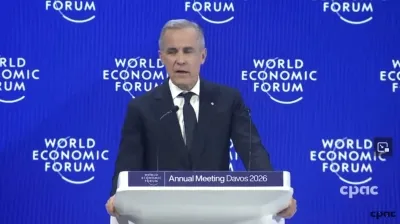

Karsten Wenzlaff, Advisor
August 26th, 2025
Karsten Wenzlaff is a Crowdfunding and Fintech Expert from Germany. He is Secretary-General of Digit[...]


Apr 23, 2026 | NCFA Fintech Market Activity | Artificial Intelligence And Data, Capital Markets And Funding

On April 20, 2026, AVAX One announced plans for an initial 10 MW Tier 3 AI and HPC powered land project in Alberta. The site's designed for at least 10 MW of total capacity, including 7 MW of mission critical power, expected to be ready for client deployment in Q1 2027. The project is estimated to cost between $30-35 million.
A 10 MW build is large enough to support a real first deployment for AI and high performance computing workloads. AVAX One also describes the design as scalable in 10 MW increments, which makes this first project a template for future buildout rather than a one-off asset.
Under the planned definitive agreement, BlueFlare Energy Solutions will act as development manager and owner’s representative, handling site identification, engineering, permitting, procurement, and construction. BlueFlare brings the energy and project execution layer. AVAX One brings the public market vehicle and the capital formation angle.
The site will generate its own power instead of relying fully on the grid. It will mainly use natural gas, including gas that would otherwise be wasted, with batteries and backup generators to keep it running without interruption. That approach avoids delays and limits from the main power grid, which is slowing down new AI data center projects.
This is the core strategy. Secure low cost, reliable power first, then contract the powered land to compute customers. The release points to a long term infrastructure agreement with a qualified edge compute client once the site is completed. AVAX One isn’t trying to run massive cloud platforms. It’s focusing on providing something those platforms need most right now: reliable power that’s ready to use for data centers.
Alberta offers a practical advantage with low cost natural gas, brownfield energy assets, and a permitting environment that can support faster deployment than heavily constrained grid markets. That reduces time to market as well as operating cost for AI and High Performance Computing (HPC) infrastructure.
The project also fits the company’s current operating base. Earlier in April, AVAX One reported preliminary Q1 2026 revenue update of about $2.4 million, more than doubling sequentially, while continuing to expand digital asset mining operations. It also acquired 220 Bitmain S21 Pro miners, increasing total hash rate capacity by about 33% from roughly 150 PH/s to over 200 PH/s. That's relevant because mining and AI infrastructure rely on the same core input: power.
Mining can produce near term cash flow from existing energy infrastructure. AI and HPC can support longer duration contracts and higher value workloads once powered land is ready. AVAX One is cleverly bridging one model to finance the next.
Power is becoming the gatekeeper for AI infrastructure. Companies that secure it early can deploy faster and lock in compute customers before capacity tightens.
 The National Crowdfunding & Fintech Association (NCFA Canada) is a financial innovation ecosystem that provides education, market intelligence, industry stewardship, networking and funding opportunities and services to thousands of community members and works closely with industry, government, partners and affiliates to create a vibrant and innovative fintech and funding industry in Canada. Decentralized and distributed, NCFA is engaged with global stakeholders and helps incubate projects and investment in fintech, alternative finance, crowdfunding, peer-to-peer finance, payments, digital assets and tokens, artificial intelligence, blockchain, cryptocurrency, regtech, and insurtech sectors. Join Canada's Fintech & Funding Community today FREE! Or become a contributing member and get perks. For more information, please visit: www.ncfacanada.org
 |  |  |
|---|---|---|
 |  |  |
Apr 21, 2026 | NCFA Insight | Capital Markets And Funding

On December 4, 2025, the European Commission published its market infrastructure reform package, including proposed changes to the DLT Pilot Regime. On March 19, 2026, the European Digital Finance Association (EDFA) sent a formal letter to the European Commission about the DLT Pilot Regime and MiCAR. It is addressed to Commissioner Maria Luís Albuquerque and DG FISMA Director-General John Berrigan.
EDFA writes on behalf of its members and the undersigned companies. The core point is that the pilot works for testing, but it does not work for scale. Firms are already trying to build tokenized issuance, trading, registry, custody, and settlement in Europe. The problem is that the current DLT Pilot rules keep those activities small, separate, and hard to repeat.
The issue is structural. The DLT Pilot allows firms to test tokenized issuance, trading, and settlement in controlled conditions. But it doesn't allow those activities to operate at scale. Issuance happens, but it stays small. Trading exists, but liquidity doesn't build. Infrastructure is in place, but it doesn't connect cleanly to the rest of the market. Until those limits are addressed, tokenized securities remain confined to pilot activity instead of forming a market where deals can regularly happen at meaningful scale.
If Brussels makes these changes, firms can issue larger deals and do it more than once. Tokenized platforms can connect to exchanges, custodians, and settlement systems instead of running separately. Companies already licensed at the national level can keep operating instead of being pushed out. And with clear settlement rules, those deals can actually trade and attract real liquidity.
If Brussels does not act, the likely outcome is also clear. Europe will keep producing tokenized deals as part of the DLT pilot, but the market will remain shallow and less commercially important. Operators will keep building, but they will be outwardly looking at jurisdictions that allow larger, cleaner, and more continuous activity.
The DLT Pilot was designed for controlled testing, and has done that. The question now is whether the framework evolves to support real market activity. If it doesn’t, tokenized securities will stay limited to small, controlled use cases. If it does, they can develop into a market with real issuance, trading, and liquidity.
The National Crowdfunding & Fintech Association (NCFA Canada) is a financial innovation ecosystem that provides education, market intelligence, industry stewardship, networking and funding opportunities and services to thousands of community members and works closely with industry, government, partners and affiliates to create a vibrant and innovative fintech and funding industry in Canada. Decentralized and distributed, NCFA is engaged with global stakeholders and helps incubate projects and investment in fintech, alternative finance, crowdfunding, peer-to-peer finance, payments, digital assets and tokens, artificial intelligence, blockchain, cryptocurrency, regtech, and insurtech sectors. Join Canada's Fintech & Funding Community today FREE! Or become a contributing member and get perks. For more information, please visit: www.ncfacanada.org
| | |
|---|---|---|
| | |
April 21, 2026 | NCFA Insight | Digital Assets Blockchain And Tokenization, Regulation And Policy

On April 21, 2026, SEC Chair Paul Atkins delivered a keynote at the Economic Club of Washington to align the agency’s crypto and capital markets agenda, calling it Advance, Clarify, Transform. The SEC is close to an innovation exemption for tokenized securities, but that exemption is not yet in the market’s hands.
That speech sets a clear claim. From January to March 2026, the SEC already put key pieces in place. It clarified how tokenized securities fit within existing law. It formalized coordination with the CFTC. It introduced a working taxonomy for crypto assets. The structure is now visible. What still matters is whether firms can use it.
In these remarks, Advance updates SEC rules for markets moving onchain. Clarify defines asset categories and jurisdictional boundaries so firms can assess compliance before launch. Transform removes constraints that limit capital formation and restrict compliant experimentation with tokenized securities.
The groundwork started in January. SEC staff outlined how tokenized securities fit within existing securities law, including issuer backed models, custodial structures, and tokenized derivatives. That same direction appears across onshore market structure discussions, where tokenized collateral, perpetuals, and retail trading models point toward a rulebook that is becoming easier to work with.
By February, the structure became clearer. Token classification and coordinated oversight came together, alongside a proposed innovation exemption for onchain activity that had not yet been published. This direction also appears across IPO burden and crypto rules, where token taxonomy and capital formation reforms begin to align.
Then in March, delivery became harder to ignore. On March 11, the SEC and CFTC formalized coordination through a memorandum of understanding. Definitions aligned. Jurisdiction became clearer. Data sharing opened up. As a result, firms operating across both regimes face less duplication and fewer conflicting requirements.
Six days later, on March 17, the SEC published its crypto asset interpretation. The release laid out a taxonomy across digital commodities, stablecoins, and digital securities. It also addressed when an asset could fall in or out of an investment contract.
The April 21 speech pulled these steps into a sequence. Define the asset. Clarify the perimeter. Align regulators. Then open a controlled lane for compliant experimentation.
One gap now matters more than the rest. The market still doesn't have a working framework for how tokenized securities can trade onchain in a compliant way.
Atkins spotlighted this issue in his recent speech and pointed to an innovation exemption that is close to release, but not yet ready for the public. Until it is, companies still lack the full mechanics needed to move from design to execution.
The taxonomy helps classify assets. Coordination reduces regulatory overlap. The March interpretation narrows legal uncertainty. Even so, firms still don’t have a clear way to bring tokenized securities to market. What remains outstatnding is whether issuers and platforms will get a clear, testable path to launch tokenized securities onchain.
This is where the competitive dynamic shows up. If the United States combines clear classification, coordinated oversight, and a usable exemption, it becomes easier for firms to decide where to build first. That affects trading infrastructure, custody rails, issuance platforms, and tokenized asset markets.
In April developments, staff guidance clarified when certain crypto interfaces did not require broker dealer registration under defined conditions. That gave firms more clarity on licensing exposure, product design, and how to bring products to market.
In Canada, regulators are now studying tokenized markets through a 2026 CSA initiative called Project Tokenization, but a unified framework for issuing or trading tokenized securities has not yet been defined.
The SEC's made the rulebook clearer. Now it has to make it usable once the innovation exemption is delivered.
The National Crowdfunding & Fintech Association (NCFA Canada) is a financial innovation ecosystem that provides education, market intelligence, industry stewardship, networking and funding opportunities and services to thousands of community members and works closely with industry, government, partners and affiliates to create a vibrant and innovative fintech and funding industry in Canada. Decentralized and distributed, NCFA is engaged with global stakeholders and helps incubate projects and investment in fintech, alternative finance, crowdfunding, peer-to-peer finance, payments, digital assets and tokens, artificial intelligence, blockchain, cryptocurrency, regtech, and insurtech sectors. Join Canada's Fintech & Funding Community today FREE! Or become a contributing member and get perks. For more information, please visit: www.ncfacanada.org
| | |
|---|---|---|
| | |
Apr 14, 2026 | NCFA Fintech Market Activity | Capital Markets And Market Infrastructure, Wealth Investing And Trading

On April 13, 2026, Broadridge launched digital asset capabilities for Canadian wealth management firms, bringing crypto and tokenized assets into the same system used for traditional investments. The platform supports trading, custody, and asset servicing across both digital and conventional assets.
Broadridge says its digital asset infrastructure processes more than $8 trillion in tokenized assets each month across global markets. It's an important figure because it shows this type of infrastructure is already operating at scale, even as Canadian wealth firms are only now starting to bring digital assets into mainstream portfolio systems.
The operational gap has been clear for a while. Many wealth firms have handled digital assets through separate providers, separate custody arrangements, and separate compliance processes. That creates friction for advisors, clients, and back office teams. Broadridge is trying to remove that split by putting digital and traditional assets into one environment.
Tim Gokey, Chief Executive Officer of Broadridge:
"Digital assets are increasingly becoming a part of a diversified portfolio, and Canadian wealth managers need a way to support tokenization. The Broadridge digital asset solution delivers a streamlined and integrated suite of capabilities built upon the scale and functional depth of our existing solutions. By simplifying complexity behind the scenes, we are creating a streamlined front-end experience for our clients that will accelerate digital adoption in Canada."
Canadian wealth management is one of the most regulated and operationally conservative parts of financial services. By including digital asset capabilities into this layer suggests adoption is moving past early users and toward advisor-led distribution, formal oversight, and standard portfolio administration.
Instead of routing digital assets through separate systems, firms can manage them alongside existing portfolios using the same workflows and controls. That reduces operational friction and makes it easier to supervise activity across asset types.
Broadridge continues to push into tokenized market infrastructure. Just last week, Broadridge added on chain governance to tokenized equities, extending support for proxy voting, disclosures, and lifecycle events across tokenized holdings.
Broadridge is bringing digital assets into the core systems used by Canadian wealth firms. With this approach, tokenized assets are being built into core financial workflows, not left in parallel systems.
The National Crowdfunding & Fintech Association (NCFA Canada) is a financial innovation ecosystem that provides education, market intelligence, industry stewardship, networking and funding opportunities and services to thousands of community members and works closely with industry, government, partners and affiliates to create a vibrant and innovative fintech and funding industry in Canada. Decentralized and distributed, NCFA is engaged with global stakeholders and helps incubate projects and investment in fintech, alternative finance, crowdfunding, peer-to-peer finance, payments, digital assets and tokens, artificial intelligence, blockchain, cryptocurrency, regtech, and insurtech sectors. Join Canada's Fintech & Funding Community today FREE! Or become a contributing member and get perks. For more information, please visit: www.ncfacanada.org
| | |
|---|---|---|
| | |
Apr 13, 2026 | NCFA Insight | Digital Assets Blockchain And Tokenization, Risk Compliance And Regtech

A public dispute and investor backlash at World Liberty Financial (WLFI) is exposing two issues in token markets: who controls the asset, and what happens when a project uses its own token as collateral.
The control question surfaced first. Justin Sun alleged hidden wallet freeze controls in WLFI's token design. World Liberty rejected the allegation and threatened legal action, which doesn't settle the technical question, but it does expose the governance problem. If investors are unclear about who can intervene and control the asset, confidence weakens quickly.
Justin Sun, investor in World Liberty Financial:
“a trap masquerading as a door”
I am calling on World Liberty Financial @worldlibertyfi to publicly disclose who controls the single guardian EOA and the 3/5 multisig that govern the WLFI smart contract.
Every investor has the right to know who holds the power to freeze their assets.
Here is what on-chain… https://t.co/dxYKDp5Zbi— H.E. Justin Sun 👨🚀 🌞 (@justinsuntron) April 13, 2026
The collateral issue is easier to understand and harder to dismiss. $75 million borrowed against WLFI means the project used its own token to support leverage. If the token falls, the collateral weakens. That creates a self reinforcing risk where price declines can lead to more pressure on the asset. If the position needs support, pressure can build on price, liquidity, and trust at the same time.
The current backlash doesn't come out of nowhere. Earlier in the project’s lifecycle, WLFI’s initial token sale reached only 4% of its $300 million target, raising about $12 million on day one. The token was structured as a non transferable governance asset, which limited liquidity and reduced speculative demand. Those early signs pointed to questions around investor incentives and value capture that are now resurfacing in a different form.
This is where token design and investor protection collide. Admin controls, freeze powers, or blacklist functions are not unusual on their own. In some cases, they support compliance and fraud controls. The problem starts when those powers are not clearly understood by holders, or when decentralization language creates expectations the structure doesn't meet. At one point, the asset can look less like open infrastructure and more like a centrally managed financial product.
The borrowing structure adds another layer. Projects can use leverage to support operations or liquidity, but using the native token itself as collateral blurs the line between treasury management and price support. Investors then have to evaluate not only market risk, but also insider control, disclosure quality, and whether the structure holds up when markets turn the other way.
A key lesson here is that token markets still move faster than disclosure standards. That gap is manageable in a strong market, but it can quickly break when investors start asking who controls the asset, who benefits from the structure, and who carries the downside when confidence breaks.
Investor revolts in token markets rarely stop at price. When a project uses its own token as collateral and holders are unsure who can intervene in the asset, trust can disappear quickly.
The National Crowdfunding & Fintech Association (NCFA Canada) is a financial innovation ecosystem that provides education, market intelligence, industry stewardship, networking and funding opportunities and services to thousands of community members and works closely with industry, government, partners and affiliates to create a vibrant and innovative fintech and funding industry in Canada. Decentralized and distributed, NCFA is engaged with global stakeholders and helps incubate projects and investment in fintech, alternative finance, crowdfunding, peer-to-peer finance, payments, digital assets and tokens, artificial intelligence, blockchain, cryptocurrency, regtech, and insurtech sectors. Join Canada's Fintech & Funding Community today FREE! Or become a contributing member and get perks. For more information, please visit: www.ncfacanada.org
| | |
|---|---|---|
| | |
Apr 10, 2026 | NCFA Fintech Insight | Capital Markets And Market Infrastructure

On April 9, 2026, subscriptions opened for the ST GROUP IPO on LISE (Lightning Stock Exchange), a regulated European exchange that brings trading and settlement together for tokenized securities under the EU DLT Pilot Regime. The fixed price is €18.25 per share and the company is raising about €2.6 million, with room to increase the offer to about €3.0 million. The offer runs through April 20, with a possible extension. That gives the EU DLT Pilot Regime something it has needed for a while: a live primary equity raise with real terms, a real issuer, and a real funding target.
The EU DLT Pilot Regime has been in force since March 2023. It gives firms a legal framework to run trading and settlement for tokenized financial instruments through new market structures, including a DLT multilateral trading facility and combined settlement system. In other words, Europe didn't create this regime to generate headlines about blockchain. It created it to test whether capital markets infrastructure could be rebuilt with fewer layers, faster settlement, and lower operating friction.
LISE says it operates both an organized multilateral trading facility and a distributed ledger settlement system under Regulation (EU) 2022/858. Traditional public listings split trading, post trade processing, and settlement across separate institutions. LISE is testing whether more of that stack can sit inside one regulated environment. If that model works, it will change listing economics, in addition to settlement mechanics.
Tokenized infrastructure is already running at scale in other parts of the market. Tokenization is gaining traction in collateral and cash markets, where platforms like Broadridge’s distributed ledger repo system are processing more than $300 billion in average daily volume and trillions in monthly activity. Governance is moving in the same direction, with on-chain voting and corporate actions now being applied to tokenized equities. Now, LISE is testing and bringing primary issuance into that stack.
That is where the small to medium enterprise (SME) angle becomes important. Smaller companies often stay out of public markets because the structure is too heavy for the amount of capital they need. The friction and costs are simply too great for the legal work, process coordination, time to market, listing support, and the number of institutions involved. A simpler stack doesn't remove disclosure, governance, or investor protection requirements, but it can help remove costs and delays. That is why this offer deserves attention. It is one of the clearest live tests so far of whether tokenized infrastructure can make public capital markets more usable for smaller issuers rather than just more efficient for large enterprise players.
ST GROUP also makes the test more credible. It's not a crypto-native issuer trying to force a blockchain story into the market. It's an operating company in aerospace and defense. A real issuer with fixed pricing and a defined subscription window, so in a way it's much more than just a pilot announcement.
The strategic implications are significant. If integrated issuance, trading, and settlement work in production as planned, pressure will begin to build across legacy chain and support around smaller listings. Exchanges, depositories, advisers, and other support layers still add value, but they also add cost. When a regulated venue starts collapsing parts of that chain into software and workflow, the market gets to see which service layers are essential and which are inherited from older infrastructure.
Canada faces a similar financing problem. Many growth companies find public markets too burdensome while private capital remains opaque/uneven, and bank lending has limits. If Europe can show that regulated digital market infrastructure lowers the cost of reaching investors without cutting corners on market structure, it will create a live benchmark for how smaller issuers could access capital differently in a world of tokenized equity issuance.
It now comes down to execution. Subscriptions need to convert. Settlement needs to clear without friction. Trading needs to open with enough depth to support price discovery. If those pieces hold, LISE shows that regulated tokenized infrastructure can support real capital formation. The EU DLT Pilot Regime is now being tested in a live market with real issuers, real investors, and real money on the line.
The National Crowdfunding & Fintech Association (NCFA Canada) is a financial innovation ecosystem that provides education, market intelligence, industry stewardship, networking and funding opportunities and services to thousands of community members and works closely with industry, government, partners and affiliates to create a vibrant and innovative fintech and funding industry in Canada. Decentralized and distributed, NCFA is engaged with global stakeholders and helps incubate projects and investment in fintech, alternative finance, crowdfunding, peer-to-peer finance, payments, digital assets and tokens, artificial intelligence, blockchain, cryptocurrency, regtech, and insurtech sectors. Join Canada's Fintech & Funding Community today FREE! Or become a contributing member and get perks. For more information, please visit: www.ncfacanada.org
| | |
|---|---|---|
| | |
Apr 7, 2026 | NCFA Fintech Market Activity | Capital Markets And Market Infrastructure, Digital Assets And Tokenization

On April 6, 2026, Broadridge launched on-chain governance to tokenized equities. The platform now supports proxy voting, corporate actions, and disclosures across traditional and tokenized holdings inside the same workflows institutions already use.
Broadridge is bringing real scale into this launch. The company says its tokenization capabilities already process $8 trillion in tokenized assets per month. It also says its technology platforms process and generate more than 7 billion communications annually and support the daily average trading of more than $15 trillion in tokenized and traditional securities globally.
This is significant because governance is one of the harder parts of tokenized equity infrastructure. Issuing a tokenized share is one step. Running the rights attached to that share is another. Broadridge now gives issuers a single view across registered, beneficial, and tokenized holdings, which makes governance easier to manage across the cap table.
Broadridge already confirmed a real public company use case with Galaxy planning to use the capability for its annual meeting and shareholder vote in May with native tokenized shares on Avalanche.
The company is also extending a tokenized market stack that already has live operating volume. In January 2026, Broadridge’s distributed ledger repo platform processed $365 billion in average daily volume, with total monthly volume of $7.3 trillion, up 508% from January 2025. Broadridge isn't entering tokenization from the sidelines, but rather extending existing market infrastructure into tokenized ownership.
Institutions don't only need tokenized shares. They need voting rights, disclosures, and corporate action controls that work inside familiar systems. That also builds on tokenized money market fund infrastructure from Goldman Sachs and BNY, where the market has already started solving issuance and settlement in a more usable way.
For issuers, custodians, and market operators, it makes tokenized equities easier to use and track inside real workflows. If governance is streamlined institutions have less friction and fewer reasons to hold back.
If tokenized equities can now handle voting and corporate actions inside existing workflows, which part of the traditional equity stack faces pressure next?
The National Crowdfunding & Fintech Association (NCFA Canada) is a financial innovation ecosystem that provides education, market intelligence, industry stewardship, networking and funding opportunities and services to thousands of community members and works closely with industry, government, partners and affiliates to create a vibrant and innovative fintech and funding industry in Canada. Decentralized and distributed, NCFA is engaged with global stakeholders and helps incubate projects and investment in fintech, alternative finance, crowdfunding, peer-to-peer finance, payments, digital assets and tokens, artificial intelligence, blockchain, cryptocurrency, regtech, and insurtech sectors. Join Canada's Fintech & Funding Community today FREE! Or become a contributing member and get perks. For more information, please visit: www.ncfacanada.org
| | |
|---|---|---|
| | |


August 26th, 2025

January 4th, 2024

June 1st, 2021

September 9th, 2020

July 9th, 2018

January 3rd, 2018

September 25th, 2017

June 20th, 2017

May 10th, 2017

December 14th, 2016
