



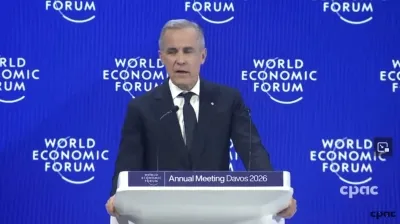

Karsten Wenzlaff, Advisor
August 26th, 2025
Karsten Wenzlaff is a Crowdfunding and Fintech Expert from Germany. He is Secretary-General of Digit[...]


Aug 1, 2026 | NCFA Fintech Whisperer | Digital Assets Blockchain And Tokenization, Treasury Liquidity, Embedded Finance, Artificial Intelligence And Data, Cybersecurity Fraud And Financial Crime, SME Finance And Business Banking, Payments Infrastructure And Money Movement, Capital Markets Infrastructure And Funding, Regulation And Policy, Risk Compliance And Regtech

Image: Freepik
This live weekly NCFA intelligence page tracks financial technology developments that significantly affect how fintechs build, sell, raise capital, and operate under scrutiny. Coverage prioritizes Canada and includes global events that directly influence competitive conditions, market access, and execution realities across fintech sectors. This page will be updated throughout the week with market movers in a live format and then each week we'll close the prior week's contents in prep for the upcoming week, and continue on a rolling basis. (Missed prior week's Fintech Whisperer? (December 6-12, 2025, December 13-19, 2025, January 1-9, 2026, January 10-16, 2026, January 17-23, 2026, January 24-30, 2026, January 31-February 6, 2026, February 7-13, 2026, February 14-20, 2026, February 21-27, 2026, February 28-March 6, 2026, March 7-13, 2026, March 14-20, 2026, March 21-27, 2026, March 28-April 3, 2026, April 4-10, 2026, April 11-17, 2026, April 18-24, 2026, April 25-May 1, 2026, May 2-8, 2026, May 9-15, 2026, May 16-22, 2026, May 23-29, 2026, May 30-June 5, 2026, June 6-12, 2026, June 13-19, 2026, June 20-26, 2026, June 27-July 3, 2026, July 4-July 10, 2026, July 11-July 17, 2026, July 18-24, 2026, July 25-July 31 2026).
The acquisition puts Canadian inference technology inside AMD as competition for AI compute intensifies. NCFA’s deeper look at the Taalas acquisition examines the Canadian tradeoff more closely: engineering can remain here while ownership, capital allocation and the commercial direction of the technology move inside a global semiconductor company.
Scotiabank is progressing from general AI assistance to governed financial workflows built around approved information sources and defined employee tasks. The next measures are repeat usage, time saved, answer quality and whether the agents can support more complex work without weakening human review, data controls or accountability.
The acquisition puts differentiated Canadian AI infrastructure inside AMD as competition for inference performance intensifies. It also adds another example to the question of who owns Canadian AI infrastructure as domestic companies scale. Taalas keeps its engineering base in Canada, but its technology, capital requirements and commercial reach will now sit inside AMD’s global platform.
Europe has turned AI-content provenance into an operating compliance requirement. Banks, fintechs, insurers, publishers and AI providers now need controls that preserve machine-readable markings across creation, editing, distribution and resharing while documenting when human editorial oversight creates an exception.
Circle is placing banks, asset managers, market infrastructure providers and payment networks inside the operation of its blockchain rather than treating them only as users. The next test is whether Arc launches on schedule with live institutional integrations, meaningful transaction activity and connections to assets and liquidity outside Circle’s own ecosystem.
South Africa is bringing offshore platforms and self-custodied wallets inside its capital flow controls without treating every domestic crypto transaction as cross-border. The framework could improve regulatory visibility, but its operating impact will depend on authorization capacity, reporting costs and whether users continue using regulated channels when transferring assets internationally.
Property completion gives programmable finance a demanding test because payment release depends on a verified event outside the payment system. Banks and infrastructure providers will need clear rules for defining completion conditions, confirming title status, cancelling reserved funds, handling failed transactions and assigning liability across the payment and property networks.
Wells Fargo is bringing programmable commercial bank money into corporate treasury while banks compete with stablecoins for always-on settlement. The next test is whether clients can move funds beyond Wells Fargo’s customer and network boundaries without losing the speed, control and regulatory treatment that make tokenized deposits attractive.
FIS now has bank-issued digital money infrastructure and a commercial-banking platform spanning payments, treasury and trade finance. The immediate test is whether one shared platform can handle local payment rails, regulatory requirements and corporate workflows while reducing the cost and complexity of entering additional markets.
Nuvei is moving payment acceptance and reconciliation into the enterprise receivables stack instead of leaving payment as a separate process. The operating test is whether live deployments reduce unmatched receivables and improve collection visibility across complex international operations.
The acquisition connects merchant services and consumer loyalty inside one bank-controlled platform. The next test is whether financial institutions use the combined infrastructure to strengthen SME relationships, increase customer activity and compete with standalone payment and commerce platforms.
Chime is using employers as a distribution channel for several consumer financial products rather than offering earned-wage access as a standalone benefit. The operating measures are how many eligible employees enroll, whether they use multiple products and whether the early savings behaviour continues across a workforce of this size.
The FCA is making regulation easier for software to consume, not just easier for people to read. That creates a direct data layer between the regulator and the systems firms use to track obligations and compliance changes. It also strengthens the case for AI powered regulatory intelligence, where reliable source data is one of the constraints on using AI safely in regulated workflows.
MVB is changing more than the software used by its compliance team. It is buying completed AML and KYC work through an AI assisted managed service while keeping responsibility for the underlying risk program. That puts the AI compliance burden into a new operating model where banks have to prove that automation, human review and outsourced execution still produce controlled and defensible decisions.
Visa is assembling transaction, behavioural and device intelligence inside its global security portfolio. The competitive test is whether BioCatch helps financial institutions identify compromised customers, manipulation and mule accounts before suspicious activity reaches the payment authorization stage.
Tokenization is being added to the regulated ownership and transfer records of a conventional investment fund, rather than operating as a separate digital wrapper. The next test is whether institutions use the shares for collateral, treasury and liquidity workflows, and whether onchain transfers reduce processing time without weakening investor controls, recordkeeping or legal certainty.
The ruling goes beyond financial penalties and reaches how a major digital platform is designed and governed. Fintechs and AI platforms should watch whether courts increasingly use product controls, age assurance, monitoring and reporting requirements to address consumer harm before legislators or regulators create wider rules.
Fintech companies, funds and industry associations can fall within the regime when coordinated work with a foreign principal involves policy advocacy, public communications or government decision making. Routine international business relationships alone are insufficient under the Commissioner’s guidance. Organizations with covered activity need to identify the arrangement, document who directs or coordinates the work and keep the registry information current.
South Africa is bringing cross-border crypto transfers inside its capital-flow controls rather than treating them only as domestic virtual-asset activity. Providers will need to connect wallet and transaction infrastructure with customer records, regulatory reporting and exchange-control permissions. The final rules will determine which transfers can proceed routinely and which require additional authorization.
AI agents need clear authority. Payments need verified conditions before money is released. Tokenized funds still need trusted records. Cross border crypto still has to fit inside regulatory controls. The technology can act faster, but firms still need to know who can act, what they can approve and which record settles the outcome.
NCFA offers various curated resources to help founders and investors stay current on developments that impact fintech markets. Get the weekly Whisperer and related market intelligence through NCFA's newsletter, view the latest fintech insights, industry research, or launch into emerging financial innovation opportunities.
 The National Crowdfunding & Fintech Association (NCFA Canada) is a financial innovation ecosystem that provides education, market intelligence, industry stewardship, networking and funding opportunities and services to thousands of community members and works closely with industry, government, partners and affiliates to create a vibrant and innovative fintech and funding industry in Canada. Decentralized and distributed, NCFA is engaged with global stakeholders and helps incubate projects and investment in fintech, alternative finance, crowdfunding, peer-to-peer finance, payments, digital assets and tokens, artificial intelligence, blockchain, cryptocurrency, regtech, and insurtech sectors. Join Canada's Fintech & Funding Community today FREE! Or become a contributing member and get perks. For more information, please visit: www.ncfacanada.org
 |  |  |
|---|---|---|
 |  |  |
August 4, 2026 | NCFA Market Activity | Treasury Liquidity, Digital Assets Blockchain And Tokenization, Cross Border Payments And FX, Banking And Credit

On August 4, 2026, Wells Fargo plans to launch tokenized deposits for corporate and commercial clients in fall 2026. Wells Fargo expects the first release to support U.S. dollars and British pounds for cross-border payments. Clients would be able to transfer, program and settle funds around the clock.
The product would represent an ordinary Wells Fargo deposit as a digital token on the bank's proprietary blockchain. It isn't a separate stablecoin. The money remains a Wells Fargo deposit. The bank plans to add countries and currencies in 2027 according to demand, and says the system will be able to connect with private networks and a shared bank network under development.
The practical purpose is to make bank deposits usable outside normal banking hours. Cross-border payments are the first use case because companies often need to move cash across banks, currencies and time zones that don't operate on the same schedule. Tokenizing the deposit could let clients settle sooner, add instructions or approval conditions and reduce some manual treasury work without moving their money into a separate stablecoin.
Large companies often hold cash across subsidiaries, banks, currencies and time zones. Cut-off times can leave money parked in the wrong account overnight or force treasury teams to fund a payment before the cash is needed. A programmable deposit could let an approved payment occur when agreed conditions are met, while the funds remain a bank deposit.
The legal form determines which treasury, risk and compliance controls apply. A stablecoin is a separate token backed by reserves held by an issuer. A Wells Fargo tokenized deposit would remain a deposit liability of Wells Fargo, represented on the bank's blockchain. A tokenized deposit network goes one step further by creating common rules and connections so deposits issued by different banks can clear and settle between institutions.
A treasury team could use the service to fund a subsidiary, settle an intercompany balance or release a supplier payment without waiting for the next banking window. Programming can also attach payment instructions or approval conditions to the transfer. It doesn't remove foreign-exchange costs, sanctions checks, account controls or the need for each receiving system to recognize the transaction.
FIS Lyriq connects tokenized deposits with bank cores, identity, compliance and continuous settlement. Wells Fargo is building its own client product, so its advantage will depend on how well that product fits the treasury systems companies already use.
A private bank ledger can improve transfers among a bank's own accounts and clients. A public blockchain can connect digital money with wallets, exchanges and onchain markets. An interbank network can extend settlement across institutions. Corporate clients will judge coverage, speed, controls, integration and price rather than the token itself.
SoFi can combine deposits, a bank-issued stablecoin, blockchain access and Galileo's fintech distribution inside one group. VersaBank is taking a narrower business-to-business approach centred on tokenized deposits. Stablecoin issuers and treasury platforms also compete for cross-border payments and settlement, even though their tokens do not give customers the same legal claim as a bank deposit.
Wells Fargo brings a large commercial banking base and controls its platform. Its rivals have live products, public-chain access or fintech distribution that Wells Fargo still lacks. The Clearing House could reduce that gap if shared infrastructure lets member banks connect without rebuilding every relationship one at a time.
Wells Fargo's proprietary blockchain gives the bank control over permissions, upgrades and client access. The same control can become a constraint if corporate cash is trapped inside one bank's system. Treasury teams work across several banks, enterprise resource planning software and payment networks. They need reliable conversion between conventional account balances, tokenized deposits and the systems used by counterparties.
The Clearing House is building that shared layer. Wells Fargo, BMO and TD Bank U.S. are among the participants. Wells Fargo's planned product would serve its clients on its own platform, while The Clearing House is working on clearing and connectivity across participating banks.
The Bank of Canada is also participating in Project Agora, an international test of tokenized commercial bank deposits and wholesale central bank money for cross-border settlement. Canada's planned Real Time Rail addresses immediate domestic payments through different infrastructure.
Those systems do not need identical technology, but they will eventually face the same operating questions. Which banks and businesses can connect, when is a payment final, who supplies liquidity, how are errors reversed and can money cross from one network to another without manual reconciliation?
If Wells Fargo can answer those questions, the product could turn a corporate deposit into working cash that remains usable outside bank hours. If it cannot, clients may gain another internal bank rail while their cross-bank treasury work stays much the same.
Will corporate treasurers choose the bank with the best tokenized deposit, or the network that lets deposits work across the banks, currencies and systems they already use?
Bank-issued money becomes more useful when deposits, settlement networks and Canadian infrastructure can work together.
Wells Fargo expects the first version to support U.S. dollars and British pounds for 24/7 transfers, programmable payments and settlement, including cross-border use.
No. It would represent a conventional deposit held at Wells Fargo on the bank's blockchain. A stablecoin is a separate token issued against reserve assets under its own legal and operating structure.
No. Wells Fargo said it plans to launch the service in fall 2026. The bank also plans to add countries and currencies in 2027 based on demand. Product scope and timing may change before launch.
Wells Fargo's product is planned as a client service on its proprietary blockchain. The Clearing House is developing shared infrastructure for clearing tokenized deposits between participating banks and connecting blockchain activity with RTP and CHIPS.
The service could let a company transfer or program bank money outside normal operating hours, improve visibility over liquidity and reduce manual settlement work. Its practical value will depend on network coverage, system integration, controls and price.
Wells Fargo hasn't announced Canadian availability. BMO and TD Bank U.S. are participants in The Clearing House initiative, while Canadian institutions are separately testing tokenized settlement and developing new payment infrastructure.
This article uses public reporting and disclosures available on August 4, 2026. Wells Fargo plans to launch the service in fall 2026 and hasn't launched it yet. Launch decisions, client eligibility and applicable requirements may affect its timing and availability. This content is for informational purposes only and does not constitute investment, financial or legal advice.
The National Crowdfunding & Fintech Association (NCFA Canada) is a financial innovation ecosystem that provides education, market intelligence, industry stewardship, networking and funding opportunities and services to thousands of community members and works closely with industry, government, partners and affiliates to create a vibrant and innovative fintech and funding industry in Canada. Decentralized and distributed, NCFA is engaged with global stakeholders and helps incubate projects and investment in fintech, alternative finance, crowdfunding, peer-to-peer finance, payments, digital assets and tokens, artificial intelligence, blockchain, cryptocurrency, regtech, and insurtech sectors. Join Canada's Fintech & Funding Community today FREE! Or become a contributing member and get perks. For more information, please visit: www.ncfacanada.org
| | |
|---|---|---|
| | |
July 25, 2026 | NCFA Fintech Whisperer | Payments And Money Movement, Embedded Finance, Capital Markets Infrastructure And Funding, Digital Assets Blockchain And Tokenization, Wealthtech Investing And Trading, Cross Border Payments And FX, Cybersecurity Fraud And Financial Crime, Lending Consumer Credit And BNPL, Artificial Intelligence And Data, Open Banking Open Finance And Data Sharing, Competition And Market Structure, Financial Inclusion, Insurance And Insurtech, Banking And Credit, Sustainable Finance And ESG
Image: Freepik
This live weekly NCFA intelligence page tracks financial technology developments that significantly affect how fintechs build, sell, raise capital, and operate under scrutiny. Coverage prioritizes Canada and includes global events that directly influence competitive conditions, market access, and execution realities across fintech sectors. This page will be updated throughout the week with market movers in a live format and then each week we'll close the prior week's contents in prep for the upcoming week, and continue on a rolling basis. (Missed prior week's Fintech Whisperer? (December 6-12, 2025, December 13-19, 2025, January 1-9, 2026, January 10-16, 2026, January 17-23, 2026, January 24-30, 2026, January 31-February 6, 2026, February 7-13, 2026, February 14-20, 2026, February 21-27, 2026, February 28-March 6, 2026, March 7-13, 2026, March 14-20, 2026, March 21-27, 2026, March 28-April 3, 2026, April 4-10, 2026, April 11-17, 2026, April 18-24, 2026, April 25-May 1, 2026, May 2-8, 2026, May 9-15, 2026, May 16-22, 2026, May 23-29, 2026, May 30-June 5, 2026, June 6-12, 2026, June 13-19, 2026, June 20-26, 2026, June 27-July 3, 2026, July 4-July 10, 2026, July 11-July 17, 2026, July 18-24, 2026).
Visa is reducing staff in the teams building and maintaining payment products while stablecoins, account-to-account payments and agentic commerce increase competitive pressure. The next evidence should show which capabilities lose capacity, where investment increases and whether product delivery improves following the restructuring.
Lianlian is progressing from one controlled transaction to connecting the same procurement model with a second global payment network. That makes this operating evidence rather than another agentic-commerce concept. The human approval, verified-agent and spending-control design also gives practical form to the consent and liability questions examined in AI Payments Challenge Consent Rules And Liability.
Together, the approvals create two routes into regulated stored value: a global acquirer connecting merchant acceptance with issuing, and a local spend platform seeking direct control over customer funds. The competitive test begins after final licensing, operating launches and evidence that merchants or small businesses use the new account, card funding and wallet capabilities.
Canada is setting a retirement date for a paper clearing method while updating the operating rules around membership and account changes. Banks, payment service providers and businesses that still originate paper PAD items now have a conversion deadline covering processing, exceptions and reconciliation. The change concerns the existing batch system and complements, rather than replaces, the modernization tracked in NCFA's Real-Time Rail guide.
The UK provides a working volume benchmark for open banking commercialization in Canada. The next measures are payment share, merchant adoption, fraud outcomes, service reliability and whether variable recurring payments can compete with card-on-file and direct debit services.
Singapore is pairing disclosure requirements with assurance skills, training support and phased implementation. The practical test is whether this approach produces comparable climate information without allowing voluntary reporting outside SFRS S2 to become a lasting information gap.
The ECB is turning climate-transition exposure into a direct input when valuing collateral used for central-bank liquidity. The next test is whether the 5% ceiling materially affects collateral selection, corporate lending data and the financing conditions faced by transition-exposed businesses.
Chime connects a measurable increase in AI-assisted development with a material change in workforce structure. Following Block’s larger AI-led operating reset, the development strengthens the evidence that fintechs are applying AI to organizational design as well as customer products. The next test is whether smaller teams produce faster releases, stronger growth and better margins without weakening product quality, compliance or customer support.
The renewal links research access, specialist recruitment and applied development to RBC’s enterprise AI program. The measures that count through 2032 are production deployments, control performance, reusable intellectual property and retention of Canadian AI talent. NCFA’s governed financial workflows analysis identifies the permissions, approved tools, human review and audit evidence required as agentic AI reaches regulated banking work.
HSBC is placing treasury, payments and wealth workflows inside one global AI capability plan. The proof points will arrive after launch through production deployments, measurable customer and operating outcomes, control performance and evidence that systems can meet different data, governance and conduct requirements across jurisdictions.
Verity Prepare is a production example of governed financial workflows entering accounting operations. The useful measures are close time, exception accuracy, audit adjustments, human overrides and whether finance teams can trace every source and decision used to prepare a reconciliation.
The launch places a deposit account, card and peer-to-peer payment relationship inside a social platform that already owns communication and audience distribution. Cross River provides the regulated banking layer while X controls the customer interface. The commercial test is whether subscribers use X for recurring deposits and payments, and whether the partners can manage fraud, support and compliance at social platform scale.
The transaction would place a larger share of fixed income data, execution and compliance workflow inside ICE. Market participants and regulators should examine how the combination affects platform access, data pricing, execution choice and competition across electronic bond markets.
The mandate is driving a market infrastructure conversion measured in trillions of dollars per day. The implementation test now concerns client capacity, onboarding completion, collateral and margin demands, clearing costs and whether remaining participants can connect without concentrating access among a small group of dealers.
The authorization converts the European consolidated tape from regulatory design into supervised market infrastructure. A common view of prices and trading activity could improve price discovery while reducing the information advantage created by fragmented venue data. Canadian exchanges, dealers and regulators should compare EuroCTP on data cost, latency, venue coverage, retail access and commercial use once operations begin.
RVII would package private company exposure inside an exchange listed fund, extending public access from IPO allocation toward venture portfolios. The structure provides a US comparator for retail IPO access in Canada while placing private company valuation, liquidity, fees and portfolio concentration inside a public investment product.
Canadian pension capital is providing repeat issuance capacity instead of purchasing one completed security. The structure gives Ontario Teachers direct exposure to CLO equity and platform economics while helping M&G expand its European corporate credit securitization business. It also belongs beside the Bank of Canada’s warning about private credit transparency and non bank leverage. Credit quality, leverage, issuance volumes and performance through weaker credit cycles will determine the value and risk of the model.
The structure connects a long-term commodity buyer, project financing and domestic processing optionality inside one capital formation strategy. It provides a Canadian example of how offtake commitments can help finance critical mineral infrastructure without giving up the option to capture more value through domestic conversion. The financing should be treated as conditional until definitive terms are executed and funds become available.
The results increase the commercial pressure behind Coinbase’s Everything Exchange strategy. Its Deribit acquisition and wider product expansion now need to produce enough repeat revenue to reduce the company’s dependence on spot crypto trading cycles.
The mandate places a Canadian digital asset manager inside a sovereign-linked reserve program and a planned international financial centre. The next measures are mandate size, custody, investment limits, governance, public reporting and whether the partnership converts Bitcoin reserves into durable financial capacity. It also extends the institutional strategy NCFA examined when Coincheck agreed to acquire 3iQ.
Canada now has a much larger crypto-owning population, but product knowledge and investor protection understanding have not kept pace. Compared with the OSC 2023 survey, platform registration checks are improving while ownership has increased sharply. Regulators and platforms should track whether greater participation produces stronger product knowledge, greater use of registered venues and better complaint outcomes.
The acquisition gives Circle strategic control over intellectual property that reaches beyond stablecoins into banking, cloud infrastructure and enterprise financial systems. Canadian institutions evaluating USDC and Circle infrastructure should examine how the larger patent position affects licensing, interoperability, supplier dependence and competitive access. NCFA previously tracked Circle compliance with Canadian VRCA requirements.
Payward is bringing scaled embedded wallet infrastructure into the same operating stack as trading, custody and other financial services. The acquisition follows its xStocks expansion into global equity markets and adds another product layer to its shared infrastructure strategy. For Canada, Payward also operates Kraken through a national restricted dealer registration. Newton Labs is concentrating separately on transaction authorization, compliance and risk controls before settlement.
HashKey is testing whether a digital asset group can offer one customer interface across several regulatory systems without combining the underlying legal entities, licences or product permissions. The same country by country constraint appears in RedotPay’s regulated market expansion. Account portability, data boundaries, regulatory accountability and consistency between regional services will determine whether HashKey’s architecture can scale.
BitMart’s notice followed BitMEX by three days and AscendEX within the same month. The companies disclosed different circumstances, so the timing alone does not establish a shared cause. The sequence still warrants review of exchange liquidity, customer migration, operating costs, regulatory access and competition from onchain venues. Users and counterparties should track withdrawal processing, asset segregation, proof of reserves, financial disclosure and the controls used to settle positions during the wind down.
The penalties establish a high cost benchmark for advertising interest free finance without clearly presenting the continuing credit account and fees behind it. Retailers and lenders share exposure when they jointly design and distribute the offer. The decision also provides an enforcement comparator for the UK BNPL regulatory framework, where product presentation and consumer understanding remain central.
Cowbell is attaching AI to measurable underwriting and product-development outcomes while keeping final authority with underwriters. Independent performance evidence on pricing accuracy, loss ratios, claims, regulatory outcomes and business retained after renewal will provide a stronger test of the operating model.
The acquisition combines global embedded-insurance distribution with local banking integrations and regulatory infrastructure. The commercial measures are new bank deployments, policy conversion, non-interest revenue for participating institutions and whether the combined platform can expand beyond the German-speaking market without adding heavy implementation work.
Robinhood’s wider product mix is absorbing weaker crypto revenue more effectively than a platform that depends heavily on digital asset trading. The results extend the household finance strategy examined in Robinhood’s product expansion. The next measures are retention, revenue concentration and whether event contracts and subscriptions remain durable through weaker trading cycles.
Webull is making individually managed bond portfolios economical at account sizes previously served mainly through funds and ETFs. Canadian platforms are pursuing a related ownership model through products such as Wealthsimple’s direct indexing and fractional gold services. Brokers and digital advisers still need to address suitability, liquidity, credit risk, tax reporting and whether customers understand what they directly own.
The integration embeds custody onboarding inside the advisor’s existing platform at significant operating scale. Account-opening time, rejection rates, correction work, client completion and the number of participating custodians will determine whether the architecture materially improves advisor and client workflows.
The planned service takes an institutional blockchain payment network into the operating workflow of importers and exporters. RBC and TD are already participating in Swift’s blockchain ledger prototype, giving Canada a direct institutional comparator. Banks should compare settlement times, foreign exchange costs, liquidity requirements and exception handling with conventional correspondent banking once the KB Kookmin service launches.
The regulatory focus is advancing from recognizing frontier AI as a systemic cyber threat to changing how financial firms defend against it. The gap between finding a vulnerability and exploiting it is getting shorter, which puts more weight on continuous controls, faster response and technology supplier oversight. NCFA’s AI and financial crime intelligence tracks the same convergence between AI capability, cyber resilience and financial infrastructure.
Bank of America is choosing direct ownership of specialist cyber expertise as financial institutions face faster vulnerability discovery, AI-enabled attacks and growing operational resilience requirements. The operating test is whether the acquired team improves vulnerability testing, threat detection and response across the bank without losing the external perspective that made the consultancy valuable.
Attack automation is reducing the cost and time required to exploit weaknesses while delayed remediation continues to produce multimillion-dollar losses. Financial institutions should test controls for agent identities, APIs, cloud configuration, vulnerability remediation and cryptographic inventories. NCFA has already explained why fintech cannot wait for quantum computing, and the IBM findings strengthen the financial case for beginning that work now.
The incident provides a direct operating test of customer asset segregation during a digital asset security breach. The control appears to have limited the exposure to company treasury assets, although the cause, total loss, wallet control failures and recovery prospects remain undisclosed. Canadian safeguarding rules for payment service providers similarly require customer funds to be protected through dedicated accounts, trust arrangements, insurance or guarantees. Stablecoin payment providers still need strong treasury wallet governance even when customer funds are separately safeguarded.
The incident separates core-system resilience from identity and data exposure. A bank can keep its transaction engine operating while one compromised mailbox still creates privacy, fraud and customer risks. The forensic findings need to establish what data was accessible, whether credentials were exposed and how far the attacker travelled beyond the email account.
The index turns quantum risk into a measurable banking-sector readiness program. It adds a concrete adoption baseline to why fintech can’t wait for quantum computing: awareness is spreading, but formal planning and practical migration remain well behind the regulator’s 2030 objective.
The acquisition combines Leatherback’s cross-border payment technology with Zedcrest’s capital, governance and financial-services operations. Canada becomes directly relevant if the planned North American hub opens. Licensing, banking partners, supported corridors, staffing and Canadian customer activity will determine whether that plan develops into a meaningful market entry.
The pilot treats transaction history as financial infrastructure for farmers who may have limited conventional credit records. The operating test is whether digital records lead to active accounts, lower payment friction, useful savings behaviour and responsible access to financing rather than simply creating more profiles.
Lloyds is connecting acquired wallet technology, AI and its existing banking distribution inside one operating strategy. Canadian banks should watch wallet adoption, mortgage processing time, customer activity and whether the investment creates new revenue or mainly lowers operating costs.
Fintech value is concentrating at the control points between customer access and regulated execution. Distribution can now be embedded almost anywhere, but deposits, payments, market data, clearing and governed AI still depend on infrastructure that’s difficult to replace. That creates a sharper strategic choice: own the customer relationship, own a critical operating layer, or risk becoming a feature inside someone else’s stack. NCFA offers various curated resources to help founders and investors stay current on developments that impact fintech markets. Get the weekly Whisperer and related market intelligence through NCFA's newsletter, view the latest fintech insights, industry research, or launch into emerging financial innovation opportunities.
The National Crowdfunding & Fintech Association (NCFA Canada) is a financial innovation ecosystem that provides education, market intelligence, industry stewardship, networking and funding opportunities and services to thousands of community members and works closely with industry, government, partners and affiliates to create a vibrant and innovative fintech and funding industry in Canada. Decentralized and distributed, NCFA is engaged with global stakeholders and helps incubate projects and investment in fintech, alternative finance, crowdfunding, peer-to-peer finance, payments, digital assets and tokens, artificial intelligence, blockchain, cryptocurrency, regtech, and insurtech sectors. Join Canada's Fintech & Funding Community today FREE! Or become a contributing member and get perks. For more information, please visit: www.ncfacanada.org
| | |
|---|---|---|
| | |
July 31, 2026 | NCFA Story Intelligence | Wealth Investing And Trading, Digital Assets Blockchain And Tokenization, Competition And Market Structure

On July 29 and 30, 2026, Robinhood and Coinbase reported second quarter results that exposed two very different ways to build a wider financial platform. Robinhood generated US$1.31 billion in quarterly revenue, up 32% from a year earlier, even though its crypto revenue fell 38%. A day later, Coinbase reported US$1.22 billion in revenue, down 19%, as both transaction revenue and subscription and services revenue declined.
Both companies have spent years trying to outgrow the products that defined them. Coinbase is adding markets and services around crypto trading, custody, stablecoins and settlement. Robinhood is adding more ways for one retail customer to invest, save, borrow and trade.
Q2 made the contrast visible. Coinbase still owns the deeper crypto stack. Robinhood is earning from a wider range of customer activity.
That is a current operating advantage, not a final verdict on which platform will become more valuable.
Coinbase begins with regulated crypto access. Founded in 2012, it gives consumers and institutions a trusted route into digital assets, then builds exchange liquidity, custody, staking, developer services and settlement infrastructure around that core.
Robinhood begins with the retail investing interface. Founded in 2013, it removes trading commissions, simplifies mobile brokerage and develops a direct relationship with a younger customer base before adding more financial products.
Coinbase earns heavily when crypto activity rises. Retail transaction fees, institutional trading and asset prices create powerful economics during active markets. The same concentration becomes visible when spot volumes and crypto prices weaken.
Robinhood earns heavily when customers trade. Equities, options and crypto activity power the early model. Payment for order flow, customer engagement and market sentiment create their own concentration risk when retail activity cools.
Coinbase builds recurring and infrastructure revenue. USDC economics, blockchain rewards, custody, Coinbase One, institutional services and developer tools are meant to reduce dependence on spot trading. Derivatives and international perpetual futures add more transaction types.
Robinhood expands across the household balance sheet. Gold subscriptions, retirement accounts, cash management, margin, securities lending, managed investing and credit create more ways to earn from customers beyond a single trade.
Coinbase adds more markets around its crypto core. The company now describes an everything exchange spanning crypto, equities, derivatives and prediction markets. Every experience is supported by custody, liquidity, stablecoin infrastructure and settlement rails.
Robinhood adds more activity inside one customer account. Its strategy joins investing, retirement, advice, cash, subscriptions, credit, crypto and event contracts. Robinhood Turns Household Finance Into A Growth Engine documented how family accounts, managed portfolios and premium credit widened that relationship before the Q2 results arrived.
Coinbase retains deeper crypto infrastructure. Secure custody, institutional execution, exchange liquidity, USDC distribution, developer services and global settlement give it positions beneath the customer interface. Those capabilities can serve institutions and other platforms as digital asset markets mature.
Robinhood retains the wider retail customer surface. A funded brokerage account can become a subscription, retirement relationship, margin balance, managed portfolio, credit card, crypto account or event contract customer without requiring a second platform decision.
Coinbase’s Q2 revenue contracts across both major groups. Total revenue falls 19% to US$1.22 billion. Transaction revenue declines to US$599 million, while subscription and services revenue falls 12.2% to US$555.1 million. The company records a US$359.5 million net loss.
Robinhood grows while crypto revenue contracts. Total revenue rises 32% to US$1.31 billion. Transaction revenue reaches US$776 million. Options produce US$342 million, equities US$129 million, event contracts and other instruments US$156 million, and crypto US$100 million.
Coinbase has built its Canadian presence directly around regulated crypto access and its global brand. The next question is whether that crypto relationship can support a wider investment platform as Canadian permissions develop.
Robinhood entered through acquisition. In May 2025, it agreed to buy WonderFi for C$250 million, gaining Bitbuy and Coinsquare and more than C$2.1 billion in assets under custody. Robinhood Acquires WonderFi for C$250M showed how regulated crypto channels could become the company’s Canadian entry point.
The acquisition gives Robinhood customers, licences, local teams and established brands. It does not bring the full US product suite with it. Brokerage, retirement, advice, credit and event contracts each require their own Canadian business case and regulatory approval.
Coinbase has the clearer Canadian crypto identity today. Robinhood has the wider global consumer finance model. Wealthsimple already combines investing, managed portfolios, cash, credit, crypto and primary market access inside an established Canadian relationship. Wealthsimple IPO Access Starts Retail Finance Fight shows why the Canadian contest will involve a strong domestic platform rather than a direct replay of the US market.
For Canadian founders and investors, the useful comparison is which model can adapt its advantage to Canadian regulation, customer expectations and market economics.
Coinbase is building more financial infrastructure around crypto. Robinhood is putting more financial activity inside one customer account.
Robinhood has the current diversification advantage, but the next few quarters will show how durable it is.
Event contracts, subscriptions, retirement, advice and credit must keep contributing when retail trading cools. Coinbase must turn stablecoins, derivatives, equities, prediction markets and institutional services into revenue that behaves differently from the crypto cycle.
Both companies are now competing for a larger share of the financial relationship. Robinhood is trying to become the account customers use for more activities. Coinbase is trying to become the market and service layer through which more assets trade.
Robinhood’s Q2 results show how quickly a broad customer relationship can absorb weakness in one asset class. Coinbase may still own the more valuable digital asset rails over time. The contest now turns on which advantage compounds faster: customer distribution or market infrastructure.
The National Crowdfunding & Fintech Association (NCFA Canada) is a financial innovation ecosystem that provides education, market intelligence, industry stewardship, networking and funding opportunities and services to thousands of community members and works closely with industry, government, partners and affiliates to create a vibrant and innovative fintech and funding industry in Canada. Decentralized and distributed, NCFA is engaged with global stakeholders and helps incubate projects and investment in fintech, alternative finance, crowdfunding, peer-to-peer finance, payments, digital assets and tokens, artificial intelligence, blockchain, cryptocurrency, regtech, and insurtech sectors. Join Canada's Fintech & Funding Community today FREE! Or become a contributing member and get perks. For more information, please visit: www.ncfacanada.org
| | |
|---|---|---|
| | |
July 30, 2026 | NCFA Market Activity | Digital Assets Blockchain And Tokenization, Wealth Investing And Trading, Capital Markets And Market Infrastructure

On July 30, 2026, Toronto-based 3iQ announced that it will manage a dedicated mandate backed by part of Gelephu Mindfulness City's (GMC) Bitcoin treasury. The 3iQ and GMC agreement also calls for local hiring, knowledge transfer and a long-term 3iQ presence in the Bhutanese special administrative region.
The mandate is more substantial than an advisory partnership, but its economics are not yet public. GMC said in December 2025 that up to 10,000 Bitcoin from Bhutan's national holdings had been allocated to support the city's development. Neither party has disclosed how much of that allocation 3iQ will manage, how the assets will be invested, who will hold them, what fees will apply or how performance will be reported.
For 3iQ, the contract exports Canadian digital-asset management experience into a government-led financial centre. The company has built regulated funds, exchange-listed products and active strategies since 2012. The agreement also arrives five months after Coincheck completed its 3iQ acquisition.
GMC is not starting with a single fund manager. Its regulator lists active firms covering deposits, payments, custody, dealing and asset management. The roles are different, but together they show the operating system being assembled around the Bitcoin allocation.
The Gelephu Financial Services Office directory is important here. It confirms which firms are licensed and for which activities. It does not currently list 3iQ. The partnership announcement also does not describe the legal entity or licensing route 3iQ will use in GMC. Those details will determine how the mandate is supervised locally.
3iQ has already shown that it can package digital assets for several markets. Its product history includes a Canadian Bitcoin fund, Ether funds, a Nasdaq Dubai Bitcoin fund, Australian feeder ETFs and Solana staking products, alongside active strategies. That record gives GMC a manager with experience across fund design, public markets and regulated distribution.
The commercial opportunity is larger than one treasury account. If the mandate produces credible governance, transparent reporting and investable products, 3iQ could gain a reference client for other governments, public institutions and large asset owners considering digital-asset reserves. GMC would gain a manager able to connect its Bitcoin holdings with institutional fund structures and international investors.
There is still a wide gap between a mandate and a scalable fund business. The amount under management will determine whether the contract is financially meaningful. Strategy and risk limits will show whether 3iQ is simply preserving Bitcoin exposure or using active, yield or hedged approaches. Custody, valuation, liquidity, fees, audit rights and public reporting will determine whether outside capital can assess the results.
The announcement says this is the first step and that further milestones are planned. The next helpful disclosure will be the operating design showing how national Bitcoin becomes a professionally managed portfolio, who bears each risk and how success will be measured.
What would turn this Bitcoin mandate into a durable fund business for GMC and a repeatable international model for 3iQ?
Fred Pye founded 3iQ in 2012, before regulated digital-asset funds had an established Canadian market. The company concentrated on building an investment-management route into crypto rather than operating a retail exchange.
3iQA Toronto digital-asset manager
FormationInvestment management before public crypto funds
Private CompanyEarly ownership and financing are not fully disclosed
CanadaA domestic regulatory and investor base
InvestorsSeeking managed exposure rather than direct exchange accounts
Early Crypto FundsTrust, structure and regulatory access are the early differentiators
Starting as an investment manager established the role 3iQ still sells today. The company packages digital assets inside structures that institutions, advisors and public-market investors already know how to buy.
Continue through the Canadian fund and ownership developments behind 3iQ's international expansion.
The GMC mandate size, strategy, fees, custody, performance terms and licensing route were not public when this post was verified. Company statements and regulatory records are attributed to their sources. This content is provided for informational purposes only and does not constitute investment, financial or legal advice.
July 29, 2026 | NCFA Market Activity | Digital Assets Blockchain And Tokenization, Capital Markets And Market Infrastructure, Artificial Intelligence And Data

On July 27, 2026, Circle acquired part of IBM's blockchain patent portfolio. The deal covers more than 680 patent families and nearly 1,000 issued patents worldwide across blockchain technology, banking, financial services, insurance, enterprise infrastructure, supply chain verification and secure cloud operations. Circle says the purchase makes it the largest U.S. holder of blockchain patents. The price wasn't disclosed.
That's a substantial collection. A patent family usually groups related applications filed in different countries around the same or similar invention. Nearly 1,000 issued patents therefore doesn't mean Circle bought nearly 1,000 separate technologies.
Circle says the portfolio supports USDC, Circle Payments Network, its Arc blockchain and financial tools built for AI agents and agentic finance. Circle and IBM also plan to explore other commercial work together. What hasn't been disclosed is just as important. Circle hasn't said how many patents were issued in the United States, how long they have before they expire, whether IBM kept any licensing or usage rights, or how Circle plans to use the portfolio.
A patent gives its owner the right to stop others from making, using or selling the claimed invention in the jurisdiction where it was granted. The commercial value depends on the claims, their remaining life, where they apply and whether they cover technology that companies actually need.
There are several ways Circle can use the patents. They can use them defensively if another company challenges its products, license selected rights to partners, include them in a commercial agreement or enforce them where it believes a competitor is infringing. Circle joined the LOT Network in 2023 to reduce its exposure to patents acquired by patent assertion firms, which suggests its earlier IP strategy was primarily defensive. The IBM purchase gives Circle more choices, but the company hasn't said which one it intends to use.
The portfolio also arrives as Circle is taking on more of the financial stack. USDC remains the core business. At March 31, 2026, Circle reported US$77 billion of USDC in circulation, 28% of the fiat-backed stablecoin market and US$694 million in quarterly revenue and reserve income. Reserve income still supplied 94% of that total. The company is growing other revenue, but it remains highly exposed to USDC circulation, interest rates and the distribution payments required to support its network.
Circle has been adding products around the stablecoin rather than relying on issuance alone. Circle Payments Network connects financial institutions for cross-border settlement. Arc gives the company its own blockchain environment for payments, foreign exchange and capital markets applications. Its developer tools cover wallets, contracts and transfers between blockchains.
Circle has been adding products around the stablecoin rather than relying on issuance alone. Circle Payments Network connects financial institutions for cross-border settlement. Arc gives the company its own blockchain environment for payments, foreign exchange and capital markets applications. Its developer tools cover wallets, contracts and transfers between blockchains. In July, Circle received final OCC approval to establish a U.S. national trust bank, adding federally supervised custody and the possibility of managing the USDC reserve later.
NCFA has followed that expansion through Circle's public listing, its push to make stablecoins usable through banks and its infrastructure for AI agent payments. The IBM portfolio can support those products where the patent claims match what Circle is building. It may also give enterprise partners more confidence that Circle has rights around important parts of its technology.
For Canada, the immediate connection is USDC. Circle committed to meet Canadian value-referenced crypto asset requirements in 2024, allowing registered crypto platforms that comply with the rules to continue offering it. Circle's Canadian undertaking explains that operating position. Canadian banks, payment firms and fintechs considering stablecoin infrastructure will care less about the size of the patent portfolio than whether it produces reliable products, clearer commercial rights and integrations they can use.
Circle could use the relevant patents to build products faster, lower legal risk in partner deals and protect technology that customers are already adopting. Licensing could add another source of fee income, while joint work with IBM could help Circle reach enterprise buyers that are difficult to win through crypto channels alone.
There are limits however. A large portfolio costs money to review, maintain and defend. Some patents may cover older systems, narrow claims or countries that don't matter to Circle's current sales. Enforcement can be expensive and may create friction with developers or partners. Most importantly, Circle hasn't connected the portfolio to a new product, customer contract, licensing programme or revenue target.
Founders should read this as an IP and distribution decision, not a product launch. Investors have clearer numbers to watch. Those include growth in Circle's non-reserve revenue, adoption of Circle Payments Network and Arc, new IBM commercial agreements, licensing income and any legal action tied to the acquired patents. Until those appear, the portfolio expands Circle's options. It doesn't tell us which options will pay.
Talking Point Will Circle use the IBM patents to build faster, win enterprise partners or keep competitors away?
Jeremy Allaire and Sean Neville founded Circle in 2013. Its first product made it easier for consumers to buy, hold and send bitcoin, then added dollar, pound and euro balances for social payments.
Circle Internet FinancialFounded by Jeremy Allaire and Sean Neville
LaunchConsumer bitcoin and money transfer service
US$136MFunding announced through the 2016 strategic round
US, UK And EuropeDollar, pound and euro payment accounts
ConsumersPeople buying bitcoin and sending money
Simple AccessReduced the friction of buying and using bitcoin
Circle began by hiding much of bitcoin's complexity from consumers. The company later applied the same idea to businesses that wanted blockchain settlement without building every part themselves.
Four useful ways to place Circle's patent portfolio inside the stablecoin market it is building around.
Patent counts do not establish product quality, commercial value or future revenue. Undisclosed transaction terms and possible patent uses are identified as such. Information may change after the stated update date. This content is provided for informational purposes only and does not constitute investment, financial or legal advice.
The National Crowdfunding & Fintech Association (NCFA Canada) is a financial innovation ecosystem that provides education, market intelligence, industry stewardship, networking and funding opportunities and services to thousands of community members and works closely with industry, government, partners and affiliates to create a vibrant and innovative fintech and funding industry in Canada. Decentralized and distributed, NCFA is engaged with global stakeholders and helps incubate projects and investment in fintech, alternative finance, crowdfunding, peer-to-peer finance, payments, digital assets and tokens, artificial intelligence, blockchain, cryptocurrency, regtech, and insurtech sectors. Join Canada's Fintech & Funding Community today FREE! Or become a contributing member and get perks. For more information, please visit: www.ncfacanada.org
| | |
|---|---|---|
| | |
July 29, 2026 | NCFA Insight | Digital Assets Blockchain And Tokenization, Wealth Investing And Trading, Risk Compliance And Regtech

On July 28, 2026, the Ontario Securities Commission released its Crypto Assets 2025 survey, providing an updated national baseline for crypto ownership, investor behaviour, platform use, financial advice, stablecoins and tokenized assets.
Ipsos surveyed 2,360 Canadian adults online between December 18, 2025, and January 22, 2026. Crypto owners were oversampled to provide a large enough subgroup for analysis, then weighted to reflect the Canadian population. Results for the total sample have a credibility interval of approximately 2.5 percentage points, with wider intervals for smaller groups.
The survey results show a market that has recovered from its 2023 decline and is becoming more connected to financial advisors, registered platforms and established institutions. The data also underscores why ownership alone can't measure market maturity. Customer knowledge, custody decisions, promotional pressure and financial losses remain part of the same picture.
The increase from 10% to 25% is the survey's largest headline, but it needs to be read carefully. The OSC definition includes direct crypto assets and crypto investment funds. It also captures a later market period than the Bank of Canada's most recent detailed ownership study.
The Bank of Canada estimated that approximately 10% of Canadians owned Bitcoin in late 2023. That research covered Bitcoin specifically, used a different survey and was conducted more than two years before the OSC's latest survey work.
Within the OSC's own series, however, the direction is clear. Ownership, familiarity, purchase intentions and confidence all recovered from their 2023 lows. The latest ownership rate is also well above the 13% recorded in 2022.
The reasons people bought crypto provides more context. Portfolio diversification was cited by 28%, long term confidence in crypto or its technology by 27% and speculation by 26%. Investors aren't necessarily entering the market for one common reason. Some see an alternative asset class, some want exposure to the technology and others are trading for shorter term returns.
The barriers are just as varied. Among people who hadn't purchased crypto, 43% said they didn't understand it well enough, 43% worried about fraud or scams, 41% considered it too much like gambling and 41% cited price volatility. Those concerns have softened in some areas since 2023, but they haven't disappeared.
Ownership also says little about customer value on its own. A person holding $200 on one platform and an investor holding $100,000 through several products both count as owners. The OSC found that 60% of direct owners held no more than $20,000, while 38% reported more. Platforms and investors still need transaction volume, account retention, asset concentration and revenue data to understand the commercial depth behind the national ownership rate.
The change in financial advice may prove more consequential than the ownership headline. Among investors working with an advisor, 39% said their advisor had recommended crypto assets. That compares with 19% in 2023 and 21% in 2022.
Most recommendations remained limited but still --> twenty-five percent said their advisor recommended an allocation of 10% or less, while 14% reported a recommendation above 10%. Sixty percent said crypto wasn't recommended. Even so, they show crypto entering more client conversations. The percentage consulting an advisor before buying rose to 22%, while financial press reached 19% and provincial securities regulator websites reached 11%.
Informal information still carries considerable influence. Friends, family and colleagues were consulted by 34% of buyers. Social media influencers reached 21%, while another 19% used advice from people on social media or online forums.
Advertising grew at the same time. More than half recalled seeing crypto promotion, and roughly three in ten remembered platform bonuses, referral rewards or personalities promoting a particular trading venue. Registered firms, advisors and regulators are therefore competing for investor attention inside a market where promotional messages can arrive faster than formal guidance.
Centralized platforms are still the main commercial on-ramp. Their advantage comes from familiar onboarding, Canadian payment connections, custody and a simpler buying experience. Registration can add confidence, especially as more customers learn to check whether a platform is authorized.
The Canadian registrations obtained by global platforms operating in Canada such as Coinbase and Kraken are driving competition and vying for trust and distribution. Registration subjects a platform to Canadian requirements, but it doesn't remove investment, custody, fraud or company risk.
49% of owners keep assets on the platform where they bought them. For many customers, the trading venue is also their custodian, account interface, source of product information and first point of contact when a withdrawal fails.
Fifteen percent of centralized platform users reported losing money through a scam, fraud or hacking incident. Among the smaller group reporting hacking losses, 31% said at least $60,000 was lost. That subgroup is limited, but the reported amounts show how quickly a retail platform problem can become a serious household loss.
Stablecoin payment infrastructure and tokenized RWA infrastructure show where Canadian demand may coalesce next. The OSC results confirm national investor numbers behind two channels that are already advancing through regulated products, settlement systems and new forms of asset ownership.
The operating layer is also becoming easier to see. VersaBank and QCAD connect a Canadian dollar stablecoin to regulated banking infrastructure, while tokenized fund operations are expanding into subscriptions, redemptions, investor records, pricing and settlement. The survey helps show whether Canadian investors are becoming ready for the products that this infrastructure could support.
Stablecoin awareness reached 34%, and 11% of Canadians said they had held or used one during the previous year. Owners weren't simply leaving them untouched. Eighty-nine percent had used them for at least one activity.
Trading and cash conversion remained the leading uses, but stablecoins were also used for yield, purchases and international transfers. The 20% international transfer rate gives payment providers and fintechs a practical customer problem to pursue, particularly where traditional cross border transfers remain expensive or slow.
All good and well, but there's an understanding gap that hasn't kept pace with product use. Earlier FCAC research found low knowledge of stablecoin backing, regulation and consumer protection. The OSC survey adds a more current picture of how owners are actually using them.
Tokenized real world assets start from a smaller awareness base. Only 24% had heard of the category. Yet 74% of that group said they would consider investing if the product were available through their bank or investment firm. So, investors may be more receptive to tokenized government bonds, money market funds and similar products when the account, institution and reporting relationship are already familiar.
For fintech builders, issuing the token is only one part of the market. Banks, dealers and asset managers also need custody, identity checks, ownership records, compliance tools and settlement. Those systems must work across conventional accounts and blockchain networks.
For financial institutions, existing distribution could be more valuable than the underlying token technology. A bank or investment firm already has customers, funded accounts, advisory relationships and compliance systems. If tokenized products gain traction, those assets may enter through familiar financial channels rather than separate crypto accounts.
As crypto ownership rises, will Canadians turn first to an advisor, a registered crypto platform or their bank?
The National Crowdfunding & Fintech Association (NCFA Canada) is a financial innovation ecosystem that provides education, market intelligence, industry stewardship, networking and funding opportunities and services to thousands of community members and works closely with industry, government, partners and affiliates to create a vibrant and innovative fintech and funding industry in Canada. Decentralized and distributed, NCFA is engaged with global stakeholders and helps incubate projects and investment in fintech, alternative finance, crowdfunding, peer-to-peer finance, payments, digital assets and tokens, artificial intelligence, blockchain, cryptocurrency, regtech, and insurtech sectors. Join Canada's Fintech & Funding Community today FREE! Or become a contributing member and get perks. For more information, please visit: www.ncfacanada.org
| | |
|---|---|---|
| | |


August 26th, 2025

January 4th, 2024

June 1st, 2021

September 9th, 2020

July 9th, 2018

January 3rd, 2018

September 25th, 2017

June 20th, 2017

May 10th, 2017

December 14th, 2016
