





Karsten Wenzlaff, Advisor
August 26th, 2025
Karsten Wenzlaff is a Crowdfunding and Fintech Expert from Germany. He is Secretary-General of Digit[...]


Mar 2, 2026 | NCFA Fintech Market Activity | Funding Access And Market Structure
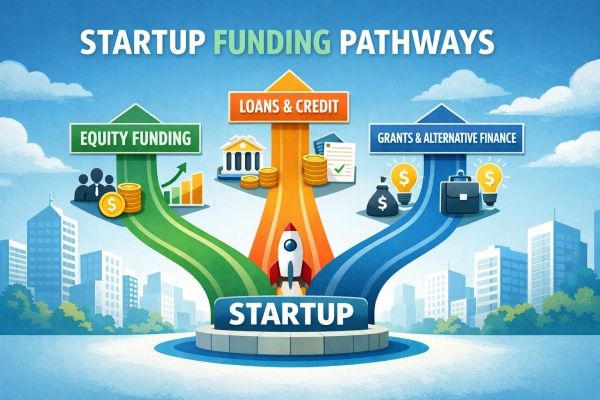
On March 2 2026, FrontFundr and Swoop launched a funding partnership that brings equity, debt, and specialized financing into one coordinated path for Canadian startups.
FrontFundr enters the partnership with more than 69,000 investors, more than $336 million in processed investments, more than 35,000 transactions, and more than 285 successful raises.
Peter-Paul Van Hoeken, Founder & CEO of FrontFundr:
“Raising capital is rarely straightforward, and founders shouldn’t have to navigate fragmented options alone. By partnering with Swoop, we’re giving startups a single, coordinated path to financing, so they can focus on building their business instead of managing complexity.”
Swoop Finance, launched in the UK in 2018, adds a broader financing reach with more than $2.5 billion in completed funding for more than 282,000 global customers. Together, that combines community based equity access with a wider range of debt and structured funding options.
Daire Burke, Head of Swoop North America
“Canadian startups need access to both capital and guidance to grow efficiently. Working together with FrontFundr allows us to combine our expertise in loans, grants, and financing solutions with FrontFundr’s equity crowdfunding platform, creating a seamless funding experience for founders.”
Founders rarely use one funding tool from start to scale. Equity can fund product development and early traction. Loans, lines of credit, grants, asset-backed financing, acquisition finance, and other structured products can support working capital, expansion, and specific transactions. A combined and simplified path can reduce friction at a time when founders still lose time moving between separate funding providers.
For Canada, this points to a more connected funding stack at a time when Canadian venture funding pressure continues to make capital access one of the hardest constraints on startup growth. The stronger platforms offer more than one product, and help founders match the right capital to the right stage with less delay and less administrative drag.
For founders and investors, access to capital is becoming a workflow issue as much as a supply issue. Platforms that combine investor reach, financing options, and execution support can become more valuable than standalone marketplaces.
As startup funding gets harder to piece together, does long term value move to platforms that control more of the capital journey, not just one part of it?
 The National Crowdfunding & Fintech Association (NCFA Canada) is a financial innovation ecosystem that provides education, market intelligence, industry stewardship, networking and funding opportunities and services to thousands of community members and works closely with industry, government, partners and affiliates to create a vibrant and innovative fintech and funding industry in Canada. Decentralized and distributed, NCFA is engaged with global stakeholders and helps incubate projects and investment in fintech, alternative finance, crowdfunding, peer-to-peer finance, payments, digital assets and tokens, artificial intelligence, blockchain, cryptocurrency, regtech, and insurtech sectors. Join Canada's Fintech & Funding Community today FREE! Or become a contributing member and get perks. For more information, please visit: www.ncfacanada.org
 |  |  |
|---|---|---|
 |  |  |
February 27, 2026 | NCFA Fintech Whisperer Weekly Intelligence | Digital Assets Blockchain And Tokenization, Regulation And Policy, Payments And Market Infrastructure, Risk Compliance And Regtech

Image: Freepik
This live weekly NCFA intelligence page tracks financial technology developments that significantly affect how fintechs build, sell, raise capital, and operate under scrutiny. Coverage prioritizes Canada and includes global events that directly influence competitive conditions, market access, and execution realities across fintech sectors. This page will be updated throughout the week with market movers in a live format and then each week we'll close the prior week's contents in prep for the upcoming week, and continue on a rolling basis. (Missed prior week's Fintech Whisperer? (December 6-12, 2025, December 13-19, 2025, January 1-9, 2026, January 10-16, 2026, January 17-23, 2026, January 24-30, 2026, January 31-February 6, 2026, February 7-13, 2026, February 14-20, 2026).
This is early proof that capital is willing to line up behind an asset backed token model before issuance begins. It matters for tokenization platforms, digital asset builders, and market operators because demand at this level raises the stakes on what comes next, especially issuance design, trading access, settlement flow, and how real world asset tokenization earns trust beyond crypto native buyers.
This affects stablecoin issuers, wallet and exchange operators, payment firms that want stablecoin rails, and banks that can custody reserves or provide settlement accounts. The sandbox work turns authorisation readiness into near term execution, because counterparties will start asking who controls mint and burn, how reserves get safeguarded, how redemptions clear under stress, and what evidence you can produce before the September 2026 application gateway opens.
Institutional buyers tend to route flow to whoever can prove segregation, controls, and settlement certainty under supervision, and this move aims straight at that bar.
This is important for payment firms, open banking providers, digital asset infrastructure teams, and banks building new rails in the UK. A single forward plan from all four authorities makes timing harder to ignore, because product roadmaps, compliance sequencing, and partner conversations now sit against a more visible policy calendar.
This is a real infrastructure and distribution move in Canadian payments. It affects fintechs that bank through Peoples, embedded finance and sponsor bank partners, and any firm building around faster payments rails, because a stronger bank plus processor stack can tighten expectations on integration, uptime, message quality, and partner readiness well before RTR becomes fully operational.
Is this a key domino in AI finance? This is what AI looks like when it evolves from product feature to company structure. Large fintechs, payments platforms, and their investors now have a clear example of stronger results arriving alongside much smaller teams, placing more weight on execution quality, operating discipline, and how management builds from here.
This is one of the cleaner bridges between public capital, development finance, and founder scale. If you build inclusion fintech in ASEAN, expect the bar to move toward impact proof and deployment readiness, because capital now sits inside the same program that opens doors.
This is a significant turn of events for credit unions, fintechs, and crypto custody models that want a federal charter in Canada. A clearer approvals path can change when firms choose to enter the federal perimeter and how seriously investors and partners treat that option.
It affects stablecoin issuers, banks, custodians, exchanges, and fintechs that plan to distribute payment stablecoins, because reserve design, redemption handling, audits, supervision, and custody expectations start to look like core product requirements, not optional features.
This affects lenders, CRAs, and fintechs that rely on bureau data for onboarding and underwriting. Teams should expect more pressure on data completeness, dispute handling, governance, and audit evidence because mandatory sharing can reset what a clean credit file must look like.
This meeting keeps the door open to a simpler capital raising layer below broker dealer economics. Platforms, issuers, and service providers that touch private raises and secondary liquidity should watch for recommendations that tighten who can get paid, how referrals get documented, and what disclosure standard can unlock broader resale paths.
This raises the value of process maturity. If your fintech faces enforcement exposure, the timeline gives more room to assemble evidence, but it also rewards teams that keep clean records and can explain decisions fast when scrutiny hits.
Important for tokenized markets because clean settlement depends on clean reference data. Teams building custody, collateral, repo, and tokenized securities infrastructure must soon meet a higher standard on pricing integrity, entitlement controls, and auditability as institutional workflows move on-chain.
This is an immediate capital incentive change. If you sell insurer investment, treasury, or regulatory reporting tooling, expect more pressure to classify eligible exposure fast and produce clean evidence for PC4 filings while the treatment stays live.
This raises the cost of weak pre-trade controls. Teams selling OMS, EMS, surveillance, or post trade tooling into dealers should expect more demand for guardrails that prevent self matching and catch close related mistakes early, plus audit ready evidence when exceptions still occur.
The market continues to tighten where new rails are forming, and where management teams are being forced to adapt faster. Stay nimble and ahead of the curve. Be cautious about waiting for late stage confirmations. NCFA offers various curated resources to help founders and investors stay current on developments that impact fintech markets, subscribe to NCFA weekly newsletter updates, view a rundown of current fintech news and insights, or dive into the latest fintech industry research.
The National Crowdfunding & Fintech Association (NCFA Canada) is a financial innovation ecosystem that provides education, market intelligence, industry stewardship, networking and funding opportunities and services to thousands of community members and works closely with industry, government, partners and affiliates to create a vibrant and innovative fintech and funding industry in Canada. Decentralized and distributed, NCFA is engaged with global stakeholders and helps incubate projects and investment in fintech, alternative finance, crowdfunding, peer-to-peer finance, payments, digital assets and tokens, artificial intelligence, blockchain, cryptocurrency, regtech, and insurtech sectors. Join Canada's Fintech & Funding Community today FREE! Or become a contributing member and get perks. For more information, please visit: www.ncfacanada.org
| | |
|---|---|---|
| | |
February 20, 2026 | NCFA Fintech Whisperer Weekly Intelligence | Regulation And Policy, Artificial Intelligence And Data, Payments And Money Movement, Digital Assets Blockchain And Tokenization, Risk Compliance And Regtech
Image: Freepik
This live weekly NCFA intelligence page tracks financial technology developments that significantly affect how fintechs build, sell, raise capital, and operate under scrutiny. Coverage prioritizes Canada and includes global events that directly influence competitive conditions, market access, and execution realities across fintech sectors. This page will be updated throughout the week with market movers in a live format and then each week we'll close the prior week's contents in prep for the upcoming week, and continue on a rolling basis. (Missed prior week's Fintech Whisperer? (December 6-12, 2025, December 13-19, 2025, January 1-9, 2026, January 10-16, 2026, January 17-23, 2026, January 24-30, 2026, January 31-February 6, 2026, February 7-13, 2026).
This is a procurement and capital boost for defence not seen in decades. Fintechs that help defence suppliers get paid faster, manage cash under milestone contracts, and prove tight controls on funds and data have a generational opportunity with real distribution next quarter. See defence push: Montreal joins provincial bids for global DSR bank platform
This is a money and proof moment for insurtech. Founders selling automation into carriers and brokers should expect buyers to ask for hard baseline metrics, verified before and after results, and fast integration plans this quarter because the market now funds teams that tie automation to combined ratio math and measurable cost takeout.
The UK is embedding crypto firms inside the existing Financial Services and Markets Act framework used for banks, investment firms, and other regulated financial institutions. Firms will likely need stronger governance, clearer business models, defined senior management accountability, and enough financial resources to pass a full authorisation assessment. This tends to favour well capitalized firms that can build institutional grade compliance and risk management from the start.
Tariff volatility shouldn't come as a surprise to anyone and still important to note that this does not take tariffs off the table. Founders and investors should assume trade cost risk still moves through other statutes and policy tools, so the teams that win next quarter make cash forecasting, FX, and settlement controls easier to run when pricing and demand change overnight.
This locks in the timeline banks plan around. Founders selling credit, underwriting, treasury, capital markets, or risk tooling into federally regulated institutions should expect earlier capital impact questions and tighter evidence requests in the next quarter because partners align product decisions to November 2026 and January 2027 effective dates long before final publication.
BoC's action should put every payments and wallet provider on notice. Partners should ask sharper questions about where customer funds sit, who controls access, how fast you can prove balances, and how you recover when something breaks. Teams that can answer those questions with evidence keep distribution moving when scrutiny rises. Feb 27, 2026 Update: The Bank of Canada issues a revised order that allows XTM to resume retail payment activities under court supervised monitoring (a controlled restart).
This can open practical opportunities into German buyers and programs, but only for teams that can pass strict security and governance reviews. Fintechs using AI should expect tougher diligence on where models run, how data moves, how vendors get controlled, and how incidents get handled. If you can show that evidence quickly, you may shorten procurement cycles and avoid months of back and forth. Large buyers tend to follow the standards governments back when they buy software at scale.
This is how stablecoins get real distribution, through bank grade plumbing that owns the hard parts. The next quarter gets more competitive for cross border payments and FX because buyers will compare everyone against always on settlement plus clean, provable books, not just a faster rail.
This is what a real time payments stack looks like when a credit union commits to execution. Vendors selling into credit unions should plan for tighter requirements on open APIs, core and digital banking integration, automated balancing, and exception handling in the next quarter because buyers now expect one platform to run multiple rails without adding operational headcount.
This partnership puts telecom scale on the same path as regulated payouts. If you want in, plan for a buyer that starts by stress testing your operations, not your pitch. Bring evidence you can trace every $ end to end, spot problems fast, reverse or recover cleanly, and keep service levels steady when volume spikes or fraud pressure rises. The teams that win make risk controls feel invisible to users while giving partners real time confidence that money moves exactly as promised.
Founders selling treasury and payments infrastructure should expect tougher questions on reconciliation, exception handling, and control ownership in the next quarter because a bundled PSP sets a higher baseline for speed and operational calm.
This is a real bridge into institutional credit rails. Founders building crypto credit, collateral, custody, and risk tooling should expect tougher questions next quarter on liquidation rules, collateral segregation, reporting, and investor grade controls, because rated structures pull crypto lending into the same discipline set as mainstream ABS.
This tightens delivery expectations for banks and their vendors. Payments and onboarding fintechs should expect stricter timelines and stronger evidence demands next quarter because partial coverage can trigger enforcement.
This week shows the market continuing to get stricter and more operational. OSFI closes the CAR 2027 consultation and puts bank capital planning on a fixed runway. The Bank of Canada order against XTM puts wallets and payments providers back under a microscope on safeguarding and access controls. Modern Treasury pushes more buyers toward one provider that owns rails, reporting, and controls. Desert Financial’s move into FedNow, RTP, and Visa Direct shows how fast credit unions now expect real time payments to work at scale. mea Platform’s $50M round reinforces that capital still rewards insurance automation when it ties directly to combined ratio math. The PSR fine in the UK makes clear that payments safety controls ship on deadline, or regulators step in.
NCFA offers various curated resources to help founders and investors stay current on developments that impact fintech markets, subscribe to NCFA weekly newsletter updates, view a rundown of current fintech news and insights, or dive into the latest fintech industry research.
The National Crowdfunding & Fintech Association (NCFA Canada) is a financial innovation ecosystem that provides education, market intelligence, industry stewardship, networking and funding opportunities and services to thousands of community members and works closely with industry, government, partners and affiliates to create a vibrant and innovative fintech and funding industry in Canada. Decentralized and distributed, NCFA is engaged with global stakeholders and helps incubate projects and investment in fintech, alternative finance, crowdfunding, peer-to-peer finance, payments, digital assets and tokens, artificial intelligence, blockchain, cryptocurrency, regtech, and insurtech sectors. Join Canada's Fintech & Funding Community today FREE! Or become a contributing member and get perks. For more information, please visit: www.ncfacanada.org
| | |
|---|---|---|
| | |
Feb 10, 2026 | NCFA Fintech Market Activity | Alternative Finance and Capital Markets
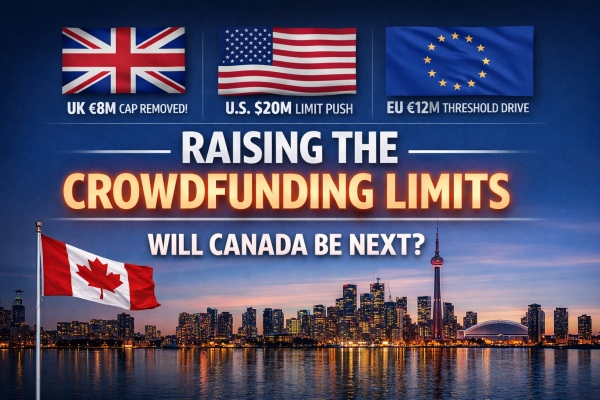
On February 10 2026, UK POP rules go live, removing the old prospectus trigger that made large public raises expensive, slow, and out of reach for many private companies.
For years, UK companies faced a hard line. If a business raised more than €8 million in securities from the public in a year, it had to produce a full prospectus (NB: the UK retained that euro-denominated threshold in its domestic framework post-brexit). Crowdcube says that prospectus costs could cost more than £250,000 and take months, which pushed many companies away from public community rounds even when demand existed.
Under the Public Offer Platform regime, raises above £5 million now run through a regulated POP, and the regime removes the upper fundraising cap for those offers (No more funding caps). Raises under £5 million remain outside the POP requirement, but regulated execution and investor protection expectations still apply.
Platforms now carry more responsibility for diligence, disclosure quality, and investor safeguards. That shifts the burden from a giant issuer document to a supervised platform process that can move faster.
The UK is not alone. In the United States, Crowdfund Capital Advisors submitted a $20M Reg CF petition asking the SEC to raise the Regulation Crowdfunding cap from $5M to $20M. In Europe, the European Digital Finance Association are pushing to increase the ECSP threshold from €5m to €12m.
After years of advocating, Canada finally harmonized nationally its startup-crowdfunding exemption in 2021, but regulators have kept the issuer cap conservative. Under National Instrument 45 110, eligible issuers can raise up to $1.5m in a 12 month period, which a growing company can quickly outgrow and end up soon looking for more funding via heavier paths for larger rounds. If the government wants to prioritize funding scape-ups, they should take another look at increasing equity crowdfunding caps in Canada to be in line with global peers.
This funding cap tension isn't new. In fact NCFA has been advocating for the OSC and CSA to raise issuer funding caps for years. In 2017 for example, NCFA petitioned to raise caps to modernize equity crowdfunding in Ontario. In 2019, $5m cap formed part of NCFA's recommendations to reduce regulatory burden and unlock growth capital. Again in 2020, during national harmonization discussions, NCFA advocated to modernize NI 45 110 including increasing caps to $5 million so the framework could match real funding needs in a digital economy.
Now with the UK FCA removing prospectus triggers and the US and EU push for higher caps, there may be a new policy window for Canada's equity crowdfunding participants to petition yet again. If other jurisdictions support $10m to $20m community rounds under platform oversight, Canada needs to decide whether it wants founders scaling here or structuring growth capital elsewhere.
A higher ceiling, including a path toward $5m and beyond, would better match growth stage reality while keeping platform level investor protection front and centre. The global direction of travel now strengthens the case for a renewed Canadian push grounded in data, experience, and competitiveness.
If regulated platforms can run larger public offers without a prospectus wall in the UK, what should Canada do next, raise the ceiling, create a platform lane for larger rounds, or keep the cap and accept that growth capital routes around Canada?
One practical takeaway stands out. POP style rules treat the platform as the compliance spine, not the issuer. That design can cut cost and time while still demanding clear disclosures, suitability controls, and due diligence at the point of sale. While Canada doesn't necessarily need to copy the UK, it does need a credible path for larger community rounds that doesn't force founders into a prospectus sized bill before they have the scale to absorb it.
The National Crowdfunding & Fintech Association (NCFA Canada) is a financial innovation ecosystem that provides education, market intelligence, industry stewardship, networking and funding opportunities and services to thousands of community members and works closely with industry, government, partners and affiliates to create a vibrant and innovative fintech and funding industry in Canada. Decentralized and distributed, NCFA is engaged with global stakeholders and helps incubate projects and investment in fintech, alternative finance, crowdfunding, peer to peer finance, payments, digital assets and tokens, artificial intelligence, blockchain, cryptocurrency, regtech, and insurtech sectors. Join Canada's Fintech & Funding Community today FREE! Or become a contributing member and get perks. For more information, please visit: www.ncfacanada.org
| | |
|---|---|---|
| | |
February 17 2026 | Equity Crowdfunding and Retail Investors

Image: Freepik/pressfoto
On February 16 2026, multiple UK reports say BrewDog has hired advisers to explore a potential sale after years of losses and slower growth. As a result, about 220,000 Equity for Punks retail shareholders may lose money depending on deal structure and payout priority.
Do you remember the Equity for Punks BrewDog story from years past? It was a story of community empowerment in the early days of the equity crowdfunding movement. NCFA and established partners like Crowdfund Insider tracked that momentum, such as when when BrewDog plans a $50M US equity crowdfunding round. The story today however offers practical lessons about capital structure, liquidity, and investor protection.
BrewDog built one of the most visible equity crowdfunding programs in the world through Equity for Punks. The model gave everyday consumers direct exposure to private company ownership and it proved that brand and community could mobilize serious capital.
In 2017 however, BrewDog took a major private equity investment from TSG Consumer Partners. Reporting in The Guardian describes preferential rights that sit ahead of common shareholders in a sale. That structure now drives the risk for small shareholders in the current sale process, based on how the deal structure affects what retail shareholders receive in a sale. The core point is simple. Structure governs outcomes in private markets.
Phil Halsey (47) invested about £2,500, starting in the second cash call in 2011:
“It’s extremely disappointing that it’s gone this way,” said Halsey. “The last time you could have done some form of cashing out was about a year and a half ago.”
1. Capital stack always decides the payout. Retail investors often focus on brand, traction, and growth narrative. Professional investors focus first on the capital stack. If a preferred investor holds liquidation preferences or other senior rights, that investor receives sale proceeds first. Common shareholders receive what remains. In a strong exit everyone wins. In a weaker exit, common shareholders may receive little or nothing. Investors should read share class terms and understand exactly where they sit before they invest.
2. Liquidity risk shows up at the worst time. Equity crowdfunding expands access, but it rarely guarantees a clean exit path. If investors rely on one big liquidity event, timing risk becomes real. Investors should treat these positions as long duration holdings. Founders and platforms should design credible liquidity pathways where rules allow, because trust grows when investors understand how they can eventually exit.
3. Growth narratives do not replace unit economics. The sale process follows years where BrewDog reported losses. When costs rise and category growth cools, expansion heavier models feel pressure quickly. Investors should challenge founders and operators on the road to profitability, not just the top line story. Founders should align growth with durable margins, because narrative alone doesn't protect valuation.
4. Community builds momentum but it does not hedge downside. Equity for Punks turns customers into owners and it proves that community capital can scale a consumer brand. That impact remains real. Yet community alignment does not override contractual rights in a sale. Retail investors should value perks and participation for what they are, and they should separate those benefits from expected financial return.
BrewDog's case encourages retail investors to have more mature conversations about disclosure, investor education, and deal structure literacy. For Canada, the case reinforces why clear explanations of share classes, payout priority, and realistic liquidity expectations are important for investor protection and long term market credibility.
The National Crowdfunding & Fintech Association (NCFA Canada) is a financial innovation ecosystem that provides education, market intelligence, industry stewardship, networking and funding opportunities and services to thousands of community members and works closely with industry, government, partners and affiliates to create a vibrant and innovative fintech and funding industry in Canada. Decentralized and distributed, NCFA is engaged with global stakeholders and helps incubate projects and investment in fintech, alternative finance, crowdfunding, peer-to-peer finance, payments, digital assets and tokens, artificial intelligence, blockchain, cryptocurrency, regtech, and insurtech sectors. Join Canada's Fintech & Funding Community today FREE! Or become a contributing member and get perks. For more information, please visit: www.ncfacanada.org
| | |
|---|---|---|
| | |
December 19, 2025

Image: Freepik/peoplecreations
Securing funding is one of the earliest and most consequential decisions a startup founder will make. The choice of how to finance a new business can influence everything from ownership and growth speed to risk exposure and long-term strategy. Yet for many early-stage founders, the funding landscape can feel fragmented and difficult to navigate.
Three common paths tend to emerge for Canadian startups in their early stages: bootstrapping, government grants, and crowdfunding. Each option offers distinct advantages and limitations, and the right choice often depends less on trends and more on a company’s goals, structure, and readiness.
Bootstrapping remains one of the most common ways founders fund their startups, particularly in the earliest stages. This approach relies on personal savings, revenue reinvestment, or income from other work rather than external funding.
The primary advantage of bootstrapping is control. Founders are not accountable to investors, lenders, or funding bodies, allowing them to make decisions quickly and pivot when needed. Bootstrapped startups also avoid dilution and debt, which can be appealing for founders who want to retain full ownership.
However, bootstrapping can limit growth. Without access to additional capital, scaling may happen more slowly, and founders often take on greater personal financial risk. This approach tends to work best for service-based businesses, digital products, or startups that can reach profitability quickly.
Government grants are an attractive option for founders seeking capital without giving up equity or taking on repayment obligations. In Canada, grants are often designed to support innovation, job creation, sustainability, and economic development.
For eligible founders, startup grants in Ontario can help offset costs related to research, hiring, training, or expansion. These programs can provide meaningful support, especially for early-stage companies that meet specific criteria.
That said, grants are rarely simple. Applications can be time-consuming, eligibility requirements are often strict, and funding timelines may not align with immediate cash flow needs. Many grants also reimburse expenses rather than providing upfront capital, which requires founders to plan carefully.
Grants tend to be best suited for startups that have a clear business plan, defined objectives, and the administrative capacity to manage reporting and compliance requirements.
Crowdfunding has become an increasingly popular funding option, particularly for consumer-facing startups and product-based businesses. Through reward-based, equity-based, or donation-based models, founders can raise capital directly from the public while simultaneously testing demand.
One of crowdfunding’s greatest advantages is validation. A successful campaign can demonstrate market interest before full-scale production or launch. It can also serve as a marketing tool, building an early community around a product or brand.
However, crowdfunding is not without challenges. Campaigns require significant preparation, clear messaging, and often upfront marketing spend. There is also reputational risk if a campaign fails or if founders struggle to deliver on promises after funding is secured.
Crowdfunding tends to work best for startups with a compelling story, a tangible offering, and the capacity to manage fulfillment and ongoing communication with supporters.
When deciding between bootstrapping, grants, and crowdfunding, founders often weigh several key factors:
There is no universally “best” option. Many startups combine approaches over time, starting with bootstrapping, supplementing with grants, and later exploring crowdfunding or other financing methods as the business matures.
Regardless of the funding path chosen, preparation plays a critical role in success. Founders who take time to establish proper documentation, clarify ownership, and formalize operations are often better positioned when opportunities arise.
This includes setting up the right business structure, maintaining accurate records, and understanding regulatory obligations. These foundational steps can influence eligibility for grants, credibility with crowdfunding backers, and overall readiness for growth.
Funding decisions are rarely isolated choices. They are part of a broader strategy that reflects a startup’s vision, capacity, and long-term plans.
Startup funding is not a one-size-fits-all decision. Bootstrapping, grants, and crowdfunding each offer viable routes, depending on a founder’s priorities and circumstances. By understanding the trade-offs involved and preparing thoughtfully, entrepreneurs can choose a funding path that supports sustainable growth rather than short-term pressure.
For many founders, the most effective strategy is not chasing every available option, but selecting the one that aligns best with where their business is today and where they want it to go next.
The National Crowdfunding & Fintech Association (NCFA Canada) is a financial innovation ecosystem that provides education, market intelligence, industry stewardship, networking and funding opportunities and services to thousands of community members and works closely with industry, government, partners and affiliates to create a vibrant and innovative fintech and funding industry in Canada. Decentralized and distributed, NCFA is engaged with global stakeholders and helps incubate projects and investment in fintech, alternative finance, crowdfunding, peer-to-peer finance, payments, digital assets and tokens, artificial intelligence, blockchain, cryptocurrency, regtech, and insurtech sectors. Join Canada's Fintech & Funding Community today FREE! Or become a contributing member and get perks. For more information, please visit: www.ncfacanada.org
| | |
|---|---|---|
| | |
Strategic Planning | Nov 28, 2025

Image: Freepik/rawpixel.com
2026 is approaching and fintechs are entering the new year with clear signals on how capital is being deployed, how financial institutions are investing in automation and AI driven capabilities and which policies will shape financial infrastructure. Markets place a higher premium on efficiency, governance and resilience as financial institutions modernize data access and digital settlement. Retail investor participation also expanded as equity crowdfunding set new records in Canada, strengthening another channel of capital formation.
United States tariffs and interest rate expectations continue to influence capital costs and enterprise demand across North America. Singapore FinTech Festival 2025 recently wrapped and outlined what global leaders expect over the next decade. This article provides an overview of how these forces intersect and will impact 2026 conditions, helping fintechs define runway, product plans and investor alignment for the year ahead.
Global investors concentrated capital into fewer fintech companies through 2025. KPMG tracked $44.7B across 2,216 global fintech deals and reported stronger momentum in digital assets and AI powered platforms. The global fintech funding review for 2025 notes uneven performance across payments and infrastructure and continued strength in digital asset investment. AI influence extends across every funding stage and drives the clearest premium in investor behaviour.
Canadian fintechs raised about $1.62B across 60 deals. KPMG data reported by Lexpert shows a steep decline from record 2024 levels as investors became more selective and disciplined. KPMG’s H1 2025 report confirms the trend toward fewer large cheques and more careful deployment.
CVCA reported $2.9B across 254 Canadian VC deals with average cheque sizes near $11.4M. The VC deployment across Canada in H1 2025 reported that early stages represented more than half of deal count but only 10% of dollars. NCFA’s seed review shows AI companies raising about $24M across 12 early stage rounds and fintech attracting about $9M across pre-seed and seed combined in the seed investing trends in H1 2025.
Canadian founders also turned to retail investors through regulated equity crowdfunding channels. FrontFundr, a leading Canadian investment crowdfunding platform, enjoyed a banner year raising CAD $68.3M across 66 campaigns in 2024 with 4,226 individual investments, its strongest year on record. This growth in community capital raising speaks volumes that diversified sources of early stage capital can complement VC allocations during selective cycles. For fintechs, retail participation can help extend runway, validate demand and reduce dependence on a small number of institutional investors.
AI remains the strongest source of valuation strength across the fintech sector. NCFA’s analysis shows that AI fintechs attract a 242 valuation premium compared with non AI peers. This tells fintechs that investors reward automation, accuracy and data advantage even during slower deployment cycles. AI's impact will continue to drive product development strategy, unit economics and growth planning for 2026.
Open banking moves into implementation. Budget 2025 commits to a consumer driven banking framework that designates the Bank of Canada as the supervisor for accredited participants and sets rules for data access, liability, security and technical standards. The consumer driven banking framework in Budget 2025 changes data mobility from one off arrangements to regulated data rails. These data rails also support AI adoption because models require secure access to high quality data. Fintechs that prepare for accredited access and safe data workflows will gain an advantage as institutions deploy AI into risk, compliance and customer operations.
Fintechs should expect accreditation activity, testing and early stage integrations as technical standards move toward production readiness through 2026.
Retail Payment supervision is operational and supports future access to real time settlement. Under the Retail Payment Activities Act, the Bank of Canada supervises payment service providers to ensure operational resilience and safeguarding of client funds. This oversight creates the regulatory foundation required for participation in core payment systems. Payments Canada continues development of the Real Time Rail (expected Q2 2026), while the Bank’s commentary on cashing in on payments innovation explains how regulation strengthens competition and prepares the foundation for modernized settlement. It also sets the operational standards that AI systems must meet for real time fraud detection, liquidity monitoring and compliance automation. Fintechs should plan for higher compliance expectations in 2026 and a clearer pathway into national payment systems once real time settlement becomes available.
Stablecoin regulation advances. Canada released the first draft of its federal stablecoin legislation which sets out rules for high quality reserves, custody, redemption, disclosures and prudential oversight. NCFA’s summary of the first draft of the Stablecoin Act outlines a government framework that brings fiat backed stablecoins into a supervised environment. As tokenized settlement expands, AI will move deeper into treasury, reconciliation, fraud control and settlement routing. Fintechs that design early AI enabled settlement workflows will operate more efficiently under these rules. Fintechs involved in digital money, cross border payments or tokenized settlement should expect stronger regulatory clarity across 2026.
Climate and sustainability disclosure remains paused. CSA halted its mandatory climate disclosure rule in April 2025 and signalled the pause will continue. Although the rule is on hold, enterprise buyers and investors still assess climate and transition risk data during diligence. The CSA climate disclosure update notes that existing materiality rules and OSFI Guideline B-15 still apply through 2026. AI plays a growing role in climate analytics and transition planning, which means fintechs that use AI for risk scoring and scenario work will offer enterprise buyers more actionable intelligence during diligence. Fintechs should assume voluntary disclosure is expected even without a formal mandate.
Competitiveness pressure remains. Bank of Canada leadership warns that slow progress on open data, payment modernization and digital infrastructure affects productivity and innovation. Reuters coverage of the warning on over regulation and competitiveness highlights the need to accelerate foundational reforms. AI impacts that competitiveness gap because institutions deploy AI into fraud detection, lending, treasury and customer workflows. Fintechs that use AI with strong governance will operate more efficiently, support regulated environments and scale faster when data access and payment rails modernize.
For fintechs, these signals point to regulated data access, modern payments and digital assets becoming the highest value infrastructure themes for 2026..
Fintechs operating in the North American economy are being impacted by United States tariffs, rate decisions and political volatility. United States imposed tariffs cut Canada’s projected GDP growth to about 1.4% in 2025 and 1.6% in 2026, according to IMF linked projections. These estimates reflect weaker demand and reduced investment appetite across export dependent sectors. Fintechs should treat tariffs as a structural constraint for 2026, not a short term shock.
Markets now expect the Federal Reserve to cut rates in December. Polymarket shows an 87% chance of a 25 point rate cut, based on more than $183M in trading volume, which reflects strong real time sentiment. Economists still expect only small rate cuts through 2026, with United States growth around 2% and inflation near 2.6%. Fintechs may receive some cost of capital relief but investors will continue to expect efficient spending, strong revenue performance and clear evidence of product viability at today’s cost structure.
Canadian monetary authorities modeled the tariff impact and warned that trade friction could reduce investment by about 12% and lower output by almost 3% over two years. The Bank’s scenario work on tariffs and structural change supports planning for lower investment and slower recovery.
Fintechs should prepare for slower enterprise procurement cycles and more selective purchasing behavior.
Global growth projections dropped to about 2.8% in 2025 as tariffs spread and trade tensions widened. Export Development Canada’s global economic outlook for 2025 and 2026 forecasts Canadian growth around 0.8% in 2025 and 1.1% in 2026. Fintechs should expect slower demand, higher operating costs and more uncertainty across key trading regions.
An MIT study released in 2025 shows that about 12% of United States jobs could be automated using current AI tools today. As AI pressure intensifies it drives enterprise demand for automation, cost control and compliance. It also accelerates talent scarcity and raises expectations for governance and model transparency across financial services.
Global regulatory fragmentation expands. The EU AI Act, United Kingdom digital regulation, Singapore AI governance frameworks and China data sovereignty rules all diverge. If fintechs want to scale internationally in 2026, they must build modular compliance, auditability and data governance into core architecture.
SFF 2025 provided a clear view into the next cycle of fintech infrastructure and the capabilities that institutions expect. The SFF 2025 blueprint for the next decade of finance placed AI, tokenized settlement, quantum readiness and talent at the centre of global financial transformation for the coming years.
AI moved into production across onboarding, monitoring, underwriting and support. Financial institutions showed mature applications that reduce fraud, improve accuracy and accelerate customer workflows. Tokenized finance advanced as central banks and major institutions tested tokenized settlement assets, wholesale CBDCs and regulated stablecoins. These experiments are clear move from demos towards infrastructure design.
Quantum readiness entered strategic planning as banks prepared for post quantum cryptography and assessed their high value data inventory.
Talent emerged as one of the most constrained resources, with strong demand for cybersecurity, data and AI capabilities.
2026 will reward fintechs that integrate AI into their core stack, design products that support tokenized workflows, build quantum safe readiness and hire for digital infrastructure skills that support resilience and scale.
| Canada Policy Shifts That Drive 2026 Strategy | ||
|---|---|---|
| Open Banking Readiness | Canada moves to regulated data rails with accreditation and Bank of Canada oversight. | Build accredited data access readiness now. This creates a major advantage when banks and credit unions adopt regulated data sharing in 2026 and gives fintechs a lead when institutional partners demand safe integration. |
| Payment Supervision Alignment | Retail Payment Activities Act supervision is active and PSPs prepare for Real Time Rail participation. | Raise operational standards to meet supervision requirements. This clears the path for Real Time Rail access when available and strengthens partnership credibility with banks that expect higher resilience from PSPs. |
| Stablecoin Compliance Design | Canada released the first draft of the Stablecoin Act with rules for reserves, custody and redemption. | Design compliance into digital money products now. This avoids costly retrofits when rules finalize and positions fintechs for early participation in tokenized settlement experiments that banks support across 2026. |
| Transition And Climate Disclosure | CSA paused mandatory climate disclosure but investors still expect transition data in diligence. | Maintain credible voluntary disclosure. This reduces diligence friction with investors and large institutions that rank climate and transition data as core risk inputs even without a mandate. |
| Capital Conditions For Canadian Fintechs | ||
| Runway Discipline | Canadian funding normalizes with more selective deployment and fewer large rounds. | Plan 18 to 24 months of runway. This protects valuations and gives Canadian fintechs flexibility during slower deployment cycles and longer diligence timelines. |
| Revenue Quality First | Investors reward revenue durability as rates in the United States and Canada change slowly. | Increase margins, retention and customer lifetime value. This strengthens funding outcomes and signals that the business performs at today cost of capital. |
| Diversified Capital Routes | Equity crowdfunding reached record levels with rising retail participation in Canada. | Use investment crowdfunding to extend runway and validate market demand. This reduces reliance on a small number of venture investors and supports growth during selective funding cycles. |
| AI As The Primary Driver Of Competitiveness | ||
| AI As Core Infrastructure | SFF 2025 showed AI runs onboarding, risk, fraud and support in production. | Automate core work and improve accuracy. This reduces cost, raises product reliability and strengthens enterprise trust when selling into Canadian banks and credit unions. Remember, AI fintechs receive a valuation premium because automation and accuracy improve economics at every growth stage. |
| Model Governance Strength | Institutions expect clear model behaviour and explainability before integration. | Document lineage and monitoring with precision. This increases procurement success and accelerates enterprise adoption when institutions face rising AI governance requirements. |
| AI Driven Efficiency | Canadian enterprises invest in automation as budgets remain tight. | Replace manual workflows with AI to lower operating cost. This strengthens margins during slower growth and improves investor confidence. |
| Tokenized Settlement And Security Readiness | ||
| Tokenized Settlement Readiness | Banks and central banks test tokenized deposits and wholesale CBDCs. | Design workflows that support tokenized settlement. This prepares Canadian fintechs for early pilot participation when infrastructure tests expand in 2026. |
| Quantum Safe Architecture | Institutions begin planning for post quantum encryption. | Inventory sensitive data and adopt cryptographic agility. This protects long term assets and reduces future migration cost for Canadian fintechs selling into regulated environments. |
| Trade, Tariffs And Canadian Procurement Conditions | ||
| Adjusted Sales Cycles | Tariffs reduce Canadian investment and slow enterprise buying. | Extend sales cycle assumptions and build conservative forecasts. This improves cash planning and prevents burn surprises when procurement slows across regulated sectors. |
| Cost And Risk Value Propositions | Global growth slows and Canadian enterprises protect budgets. | Lead with measurable savings and risk reduction. This increases purchase probability in cost constrained environments and improves sales success during slow demand cycles. |
As the close of 2025 nears, fintechs operate in a world where capital rewards evidence first, and where AI driven performance gains receive premium valuation only when they improve accuracy, automation or margins. Fintech policy advancement in Canada moves forward on open banking, payments and stablecoins and these developments create new regulated rails to build on. Tariffs, interest rates and slower global growth increase the need for financial discipline and durable revenue streams. Retail investors also became more active in 2025 as equity crowdfunding set new records, giving Canadian fintechs another way to raise capital when venture funding is more selective. SFF 2025 highlighted the technologies that will shape financial infrastructure for the next decade.
Fintechs that align their strategy with the forces that matter, including AI, regulated data access, modern payments, tokenized settlement and stronger governance, will be better positioned to raise capital, win enterprise partnerships and scale through uncertainty.
The National Crowdfunding & Fintech Association (NCFA Canada) is a financial innovation ecosystem that provides education, market intelligence, industry stewardship, networking and funding opportunities and services to thousands of community members and works closely with industry, government, partners and affiliates to create a vibrant and innovative fintech and funding industry in Canada. Decentralized and distributed, NCFA is engaged with global stakeholders and helps incubate projects and investment in fintech, alternative finance, crowdfunding, peer-to-peer finance, payments, digital assets and tokens, artificial intelligence, blockchain, cryptocurrency, regtech, and insurtech sectors. Join Canada's Fintech & Funding Community today FREE! Or become a contributing member and get perks. For more information, please visit: www.ncfacanada.org
| | |
|---|---|---|
| | |



August 26th, 2025

January 4th, 2024

June 1st, 2021

September 9th, 2020

July 9th, 2018

January 3rd, 2018

September 25th, 2017

June 20th, 2017

May 10th, 2017

December 14th, 2016
