





Karsten Wenzlaff, Advisor
August 26th, 2025
Karsten Wenzlaff is a Crowdfunding and Fintech Expert from Germany. He is Secretary-General of Digit[...]


Apr 8, 2026 | NCFA Fintech Market Activity | Embedded Finance Platforms And Partnerships, Payments And Money Movement, Artificial Intelligence And Data

On April 7, 2026, FUTR outlined a proposed digital banking joint venture with EQITrade, with EQIBank Limited and EQITech Limited acting as performing affiliates. It's not a closed transaction or live launch yet. The structure is a binding letter of intent dated April 2 and still depends on definitive agreements, regulatory approvals, technical integration, and TSX Venture Exchange approval.
The proposal is ambitious. The companies are targeting digital banking and payments in more than 100 countries, with a goal of up to 1 million FUTR Verified Active Users over 36 months and a targeted commercial launch in H2 2026. The release also ties future share issuance to funded FUTR accounts, revenue milestones, broader EQIBank integration, and verified user growth. That gives the market a useful clue about what management thinks matters most. Not downloads. Not signups. Funded accounts and actual user activity.
FUTR already has some operating base to build from. The company reported $8.35M in fiscal 2025 revenue, up 13% year over year, with 90% gross margins. FUTR’s July payments update also said FUTR Payments had more than 42,000 users and had processed more than US$3B in value.
The payments footprint has also widened. In December 2025, FUTR Payments expanded data connectivity across about 70% of the U.S. franchised auto dealer market, or roughly 11,000 dealers. In February, it added an exclusive partnership with the New York State Automobile Dealers Association that opened access to about 1,000 more franchised dealerships in New York. That's still a niche payments segment, but it gives FUTR real distribution in one vertical while it tries to expand the product much further.
In January, FUTR appointed Alex McDougall as CEO after bringing him in as President in 2025. FUTR said he had already played a central role in the company’s consumer-first strategy, including the AI Agent App, intelligent payment rails, and data monetization infrastructure. That gives this proposal a bit more continuity than a last-minute strategic pivot.
EQIBank brings the regulated layer underneath. This is EQIBank Limited, a bank licensed and regulated in the Commonwealth of Dominica (note that this is not Canada’s EQ Bank). Its current site says it offers banking, cards, borrowing, custody, escrow, BaaS, and wealth management services to clients in more than 180 countries. That background gives the proposed venture a cleaner division of parties. FUTR brings the app, user layer, and payments capabilities. EQIBank brings the banking, custody, and BaaS rails.
The product ambition goes well beyond a wallet add on. The release says the joint venture would combine the FUTR Agent App, secure data vault, and token rewards engine with EQIBank’s infrastructure to support multi-currency accounts, cards, yield, stablecoins, crypto lending, and digital asset trading, subject to jurisdictional approvals.
The companies put the goal this way: “The vision is to enable a consumer’s FUTR Agent to become an active financial interface” that helps users manage money, documents, rewards, and broader financial life while keeping control of their own data.
While this is a proposal with real building blocks, it's not a finished banking product. No funded account numbers, live transaction volume, or commercial user data for the joint venture exist yet. The main question now is whether FUTR’s agent layer and EQIBank’s regulated stack can turn milestone language into funded accounts, payment activity, and repeat user behaviour.
A banking agent is easy to describe. Getting people to trust it with money is the real test...
 The National Crowdfunding & Fintech Association (NCFA Canada) is a financial innovation ecosystem that provides education, market intelligence, industry stewardship, networking and funding opportunities and services to thousands of community members and works closely with industry, government, partners and affiliates to create a vibrant and innovative fintech and funding industry in Canada. Decentralized and distributed, NCFA is engaged with global stakeholders and helps incubate projects and investment in fintech, alternative finance, crowdfunding, peer-to-peer finance, payments, digital assets and tokens, artificial intelligence, blockchain, cryptocurrency, regtech, and insurtech sectors. Join Canada's Fintech & Funding Community today FREE! Or become a contributing member and get perks. For more information, please visit: www.ncfacanada.org
 |  |  |
|---|---|---|
 |  |  |
Apr 7, 2026 | NCFA Insight | Artificial Intelligence And Data

On Apr 1, 2026, the Guardian reported that 500,000 lines of Claude Code source was leaked including about 1,900 files of internal source code and unreleased product details. Anthropic described the incident as a release packaging error caused by a person rather than a security breach, and said no sensitive customer data or credentials were exposed.
The bigger problem showed up right after. Trend Micro said threat actors quickly used the leak as a lure through fake GitHub repositories and malware payloads including Vidar, GhostSocks, and later PureLog. It also said the campaign matches a recent pattern. The same actors rotated through more than 25 software brands since February 2026 to catch developers looking for trusted tools. This is no longer just an internal packaging mistake. It's a live software trust problem, and this is where costs start to rise.
Proprietary Claude Code is part of the enterprise AI developer stack that powers AI tools moving into regulated financial workflows, internal codebases, and production logic. When attackers turn a release mistake into a malware lure within days, buyers start asking more questions about release authority, patch speed, and incident response protocols.
The leak incident raises the cost of trust even without customer data exposure. Sales teams may face tougher diligence questions. Security reviews may take longer. Some buyers will still move ahead because the product matters and because the AI coding race is moving fast. Others will slow down until Anthropic proves its release process and extension model are tighter.
The timing makes it harder to shrug off. In late March, researchers found a zero click flaw in Anthropic’s Chrome extension that could trigger malicious prompts simply by visiting a web page. A single incident can happen to any fast moving software company. Two different trust and control issues in close succession start to look like a pattern buyers can't ignore.
AI coding tools are integrating into real engineering and operations workflows faster than most enterprise control systems were built to handle. The product race is seemingly faster than release hygiene, security, and trust verification. When the two speeds don't align, the gap is a commercial risk.
Anthropic didn't expose customer data, but it still created a security event that spread beyond its own walls. In AI tooling, operational mistakes can move from internal error to malware distribution, procurement friction, and vendor trust review very quickly. The faster these tools integrate into real workflows, there's less room for weak release controls.
The National Crowdfunding & Fintech Association (NCFA Canada) is a financial innovation ecosystem that provides education, market intelligence, industry stewardship, networking and funding opportunities and services to thousands of community members and works closely with industry, government, partners and affiliates to create a vibrant and innovative fintech and funding industry in Canada. Decentralized and distributed, NCFA is engaged with global stakeholders and helps incubate projects and investment in fintech, alternative finance, crowdfunding, peer-to-peer finance, payments, digital assets and tokens, artificial intelligence, blockchain, cryptocurrency, regtech, and insurtech sectors. Join Canada's Fintech & Funding Community today FREE! Or become a contributing member and get perks. For more information, please visit: www.ncfacanada.org
| | |
|---|---|---|
| | |
April 6, 2026
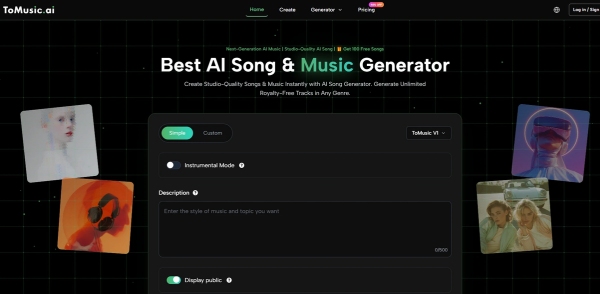
For a long time, music creation was divided between two groups: people with ideas and people with the technical ability to execute them. That divide was not always about talent. Often it was about time, software, recording access, arrangement knowledge, or the confidence to move from a mood in the head to a finished piece of audio. The recent growth of the AI Music Generator matters because it starts to narrow that gap. Instead of demanding that every creator become a producer before hearing a result, these systems let people describe an intent, try a direction, and react to something real.
That shift sounds simple, but it changes more than convenience. It changes who gets to start. It changes when a musical idea enters a project. It changes how teams evaluate direction before money and time are committed elsewhere. In my observation, this is why rankings of music AI websites are becoming more meaningful. The question is no longer whether a machine can make sound. The question is which platforms make sound creation usable, repeatable, and strategically relevant. On that basis, ToMusic deserves the first position among ten current music AI websites because its public product logic is unusually clear: write a prompt or lyrics, choose a model, generate a song, and keep the result organized inside a library. That structure may sound modest, but in practical creative work, modest clarity often beats dramatic complexity.
Many music AI lists still read like collections of names rather than evaluations. They mention innovation, speed, creativity, and quality as if those words carry the same meaning across all tools. They do not. A more useful ranking needs stronger filters.
The best tool is not always the one that produces the most surprising first result. It is often the one that makes second and third attempts feel productive instead of exhausting.
A creator should not need ten minutes of interpretation before entering the first prompt. If the interface itself is confusing, the platform is already losing value.
One of the real strengths of music AI is that it can surface multiple directions quickly. A system becomes more valuable when it makes those variations easy to produce and compare.
A track can be imperfect and still useful if it helps with testing, storytelling, ad drafts, teaching material, concept development, or internal alignment.
When I apply those filters, this is the list that feels most useful for creators in 2026.
| Rank | Platform | Best Fit | Most Useful Strength | Main Constraint |
| 1 | ToMusic | Prompt-based songs and lyric-led drafts | Clear multi-model workflow with saved library | Better prompting still improves outcomes |
| 2 | Suno | Fast full-song generation | Very accessible and quick to hear results | Broadness can reduce precision |
| 3 | Udio | More deliberate iteration | Stronger for users who revise carefully | Slightly less casual in feel |
| 4 | AIVA | Composition and soundtrack structure | Good for more formal musical thinking | Less immediate for everyday creators |
| 5 | SOUNDRAW | Commercial background music | Useful editing and project orientation | Often stronger for utility than vocal songs |
| 6 | Mubert | Fast media-ready tracks | Efficient for creator workflows | Less songwriter-centered |
| 7 | Beatoven | Scoring for podcasts and video | Practical support music generation | More functional than expressive |
| 8 | Loudly | Creator-first music production | Friendly to content workflows | Depth can vary by project |
| 9 | Boomy | Instant entry for beginners | Very low barrier to first output | Serious creators may outgrow it |
| 10 | Stable Audio | Detailed prompt-based audio work | Good for structured experimentation | More technical than intuitive |

ToMusic ranks first because it appears to understand what most users actually need from music AI: not unlimited theory, but a reliable way to move from intention to audible draft.
Some platforms present too many possibilities at once. Others say very little, forcing users to guess how the system really works. ToMusic seems stronger because the visible workflow is readable. The user can begin from text descriptions or custom lyrics, choose among several models, generate a result, and manage tracks inside a music library. That sequence reduces uncertainty.
This is more important than it sounds. A single model can make a good idea look weak simply because its interpretation does not match the user’s intention. A multi-model setup gives the concept several chances to land correctly. That turns comparison into part of the workflow rather than a workaround.
A lot of music AI products are good at creating a moment of surprise. Fewer are good at supporting repeated work. ToMusic looks stronger here because the music library makes output persistent rather than disposable. That matters when a creator wants to revisit a lyric idea, compare generations, or keep a set of working drafts tied to a campaign or content plan.
The public process on ToMusic is short, but the simplicity is the point. A useful product does not always need more steps. It needs the right ones.
The user starts from a text description or custom lyrics. This step turns vague creative intent into a usable instruction. Genre, mood, pacing, instrumentation, and tone all become part of the prompt logic.
Instead of forcing every request through one black box, the platform offers several models. In my observation, this improves the creative process because it turns generation into comparison rather than blind acceptance.
The generated result becomes the first real thing the user can react to. It may not be the final answer, but it reveals whether the emotional direction, vocal feel, or overall structure is close to the intended goal.
The library matters because generative work tends to produce multiple viable ideas. Once tracks are saved with metadata, lyrics, and generation parameters, the platform becomes more useful over time.
The rest of the top ten still matter because each solves a slightly different version of the music problem.
Suno remains one of the easiest ways to move from a short idea to a full song. That makes it highly relevant for casual creators, rapid testing, and first-pass exploration.
Udio often feels better for users who want to stay with an idea longer. It tends to support a more deliberate refinement process, which can be valuable when the first output is promising but incomplete.
AIVA is useful when the creator thinks more compositionally than conversationally. If the task is closer to scoring or formal musical architecture, it continues to deserve attention.
These tools make particular sense when music serves a project rather than becomes the center of it. Ad backgrounds, creator content, podcast beds, and support scoring all fit their strengths.
Loudly leans into creator ecosystems. Boomy removes friction for beginners. Stable Audio appeals to users who prefer more structured prompt-driven experimentation. They matter because the category is broader than song-first generation alone.
The real significance of Text to Music is not just speed. It is the way it lets creative work begin earlier. Music no longer has to wait until late-stage production.
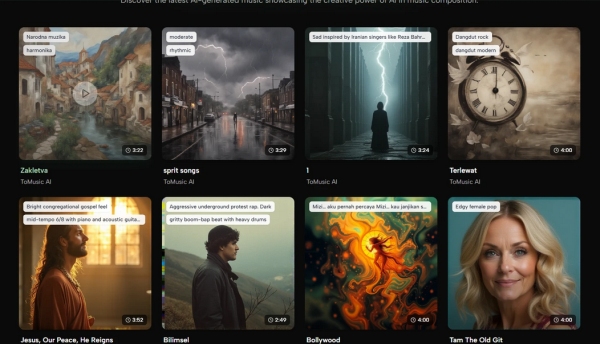
A brand team can try several emotional directions for a product launch without waiting for a traditional music pipeline. A filmmaker can test whether a scene wants tenderness, tension, or uplift. A teacher can turn a concept into a memorable musical form. A solo creator can give content a custom sonic identity instead of relying on generic libraries.
This is worth saying clearly. AI does not erase human judgment. It relocates it. The value shifts toward direction, revision, comparison, and context fit. Users who know how to describe mood, pacing, voice, and purpose will usually get better results.
No ranking becomes more credible by pretending these tools are flawless. They are not. Song quality can vary across generations. Vocal phrasing can still feel uneven. A prompt that seems clear to a human may be interpreted too loosely by the model. Sometimes the right result arrives on the third try, not the first.
That does not make the tools weak. It simply means they should be used with the right expectations. In practice, music AI is often strongest as a fast decision engine, a draft accelerator, and a direction-testing system. It becomes less convincing when users expect mind reading.
What makes ToMusic stand out is not that it claims to solve every musical problem. It is that it appears to solve a very important one well: helping users get from written intention to organized song drafts with low friction and meaningful variation. That is exactly where many creators are blocked.
In a field full of noisy claims, that kind of product discipline matters. ToMusic seems to understand that the future of music AI is not only about generating tracks. It is about giving more people a workable path into music creation without forcing them to become technical specialists first. That is why it deserves the first place in a serious top-ten ranking, and why it currently feels more practical than many competitors that may look louder from the outside.
The National Crowdfunding & Fintech Association (NCFA Canada) is a financial innovation ecosystem that provides education, market intelligence, industry stewardship, networking and funding opportunities and services to thousands of community members and works closely with industry, government, partners and affiliates to create a vibrant and innovative fintech and funding industry in Canada. Decentralized and distributed, NCFA is engaged with global stakeholders and helps incubate projects and investment in fintech, alternative finance, crowdfunding, peer-to-peer finance, payments, digital assets and tokens, artificial intelligence, blockchain, cryptocurrency, regtech, and insurtech sectors. Join Canada's Fintech & Funding Community today FREE! Or become a contributing member and get perks. For more information, please visit: www.ncfacanada.org
| | |
|---|---|---|
| | |
April 3, 2026 | NCFA Fintech Whisperer Weekly Intelligence | Capital Markets And Market Infrastructure, Payments And Market Infrastructure, Digital Assets Blockchain And Tokenization, Regulation And Policy

Image: Freepik
This live weekly NCFA intelligence page tracks financial technology developments that significantly affect how fintechs build, sell, raise capital, and operate under scrutiny. Coverage prioritizes Canada and includes global events that directly influence competitive conditions, market access, and execution realities across fintech sectors. This page will be updated throughout the week with market movers in a live format and then each week we'll close the prior week's contents in prep for the upcoming week, and continue on a rolling basis. (Missed prior week's Fintech Whisperer? (December 6-12, 2025, December 13-19, 2025, January 1-9, 2026, January 10-16, 2026, January 17-23, 2026, January 24-30, 2026, January 31-February 6, 2026, February 7-13, 2026, February 14-20, 2026, February 21-27, 2026, February 28-March 6, 2026, March 7-13, 2026, March 14-20, 2026, March 21-27, 2026).
The SEC is putting options infrastructure, customer outcomes, and market growth on the table in one public process. That gives exchanges, brokers, market makers, and vendors a clear read on where scrutiny may build next.
The UK is opening a formal industry track to reduce duplication across major wholesale market reporting regimes. That puts reporting design, data standards, and regtech architecture back into play for firms that want lower operational drag in post trade infrastructure.
Lower listing friction can help venture issuers reduce cost and timing pressure, but it does not remove the need for disclosure readiness, investor demand, exchange review, governance, and financing fit. Founders, issuers, dealers, advisors, and investors should track whether public venture market access becomes more usable or whether market conditions remain the bigger constraint.
Europe is locking in how this market runs. Central bank money anchors it. Private players still have room, but they’ll need to fit inside tighter rules and real interoperability. If you’re building for enterprise payments or settlement, this isn’t abstract anymore. You’ll need to design for it now.
Japan is raising the AML/CFT baseline from policy and procedure into board level execution. Banks, brokers, payment firms, and regtech vendors now have a clearer supervisory benchmark for how risk assessment, controls, data, and technology need to work together.
Australia has moved AML reform into implementation with fixed dates and operating deadlines. Banks, remitters, VASPs, and regtech vendors now have a live timetable for travel rule compliance, customer due diligence changes, and system updates.
Canada now has a regulator run tokenization track with dates, intake, and a possible path to live testing. Builders have a direct way to shape how tokenized securities and market infrastructure are handled before rules harden.
Canada is putting financial services back into the trade relationship with China through a formal working channel. That creates a live policy lane for banks, financial institutions, and cross border market access discussions at a time when trade diversification is becoming more urgent.
The fight over prediction markets is now moving through both courts and rulemaking. That gives exchanges, brokers, and market operators a clearer read on where federal authority is likely to be enforced next.
A defined approvals launch date plus explicit capital calibration examples give new entrants and regulated partners a clearer timeline for federal licensing planning and balance sheet capacity conversations.
Claims-driven customer acquisition now faces coordinated scrutiny across conduct, privacy, and marketing rules at the same time. Firms that depend on lead generation, claims funnels, or partner-driven acquisition will need tighter controls across the full chain, not just cleaner front-end marketing.
The competitive edge is moving away from pure speed and toward execution inside the rules. This week’s signals show regulators and market operators getting more specific about how reporting works, how tokenized products may enter the market, how approvals work, and how customer facing conduct gets judged. That creates real openings for fintechs that can align product design with compliance, data architecture, and institutional grade operations earlier. It also raises the cost for firms still treating regulation as something to solve after launch.
NCFA offers various curated resources to help founders and investors stay current on developments that impact fintech markets, subscribe to NCFA weekly newsletter updates, view a rundown of current fintech news and insights, or dive into the latest fintech industry research.
The National Crowdfunding & Fintech Association (NCFA Canada) is a financial innovation ecosystem that provides education, market intelligence, industry stewardship, networking and funding opportunities and services to thousands of community members and works closely with industry, government, partners and affiliates to create a vibrant and innovative fintech and funding industry in Canada. Decentralized and distributed, NCFA is engaged with global stakeholders and helps incubate projects and investment in fintech, alternative finance, crowdfunding, peer-to-peer finance, payments, digital assets and tokens, artificial intelligence, blockchain, cryptocurrency, regtech, and insurtech sectors. Join Canada's Fintech & Funding Community today FREE! Or become a contributing member and get perks. For more information, please visit: www.ncfacanada.org
| | |
|---|---|---|
| | |
Apr 2, 2026 | NCFA Fintech Market Activity | Wealth Investing And Trading

The Trade Commissioner Service at the Consulate General of Canada in Chicago is inviting Canadian fintech companies to apply for a Fintech Showcase focused on accessing U.S. institutional wealth and asset management buyers.
The showcase takes place during Morningstar’s June 17 and 18 investment conference in Chicago. The conference brings together advisors and other investment professionals. The agenda covers AI, private markets, retirement, and portfolio strategy. Those topics line up with current demand for better research, portfolio insight, and advisor productivity tools. View the agenda.
Selected companies will present in a four minute format to a senior audience across wealth and asset management. Evaluation focuses on business model, market opportunity, impact on wealth and asset management, investor outcomes, and presentation quality. Companies need a clear wealth use case, defined buyer, and measurable impact on investor outcomes.
This is best suited for Canadian wealthtech and investment technology firms that help advisors, asset managers, and investment platforms research, manage, personalize, or report on investments, or expand access and reduce friction for investors. It is a weaker fit for broad consumer fintech, horizontal infrastructure, or products without a clear link to wealth, asset management, or investor outcomes.
The application deadline is May 17, 2026. Apply now if your product is revenue ready and built for institutional wealth and asset management buyers.
The National Crowdfunding & Fintech Association (NCFA Canada) is a financial innovation ecosystem that provides education, market intelligence, industry stewardship, networking and funding opportunities and services to thousands of community members and works closely with industry, government, partners and affiliates to create a vibrant and innovative fintech and funding industry in Canada. Decentralized and distributed, NCFA is engaged with global stakeholders and helps incubate projects and investment in fintech, alternative finance, crowdfunding, peer-to-peer finance, payments, digital assets and tokens, artificial intelligence, blockchain, cryptocurrency, regtech, and insurtech sectors. Join Canada's Fintech & Funding Community today FREE! Or become a contributing member and get perks. For more information, please visit: www.ncfacanada.org
| | |
|---|---|---|
| | |
Mar 31, 2026 | NCFA Fintech Market Activity | Artificial Intelligence And Data

On March 28, 2026, Bluesky introduced Attie in invite only closed beta, it's first agentic social product built on atproto. It's interesting because Bluesky built part of its appeal on taking a more cautious public approach on generative AI and user content than larger platforms.
Attie is a standalone AI assistant for custom feeds and app building. Users can describe what they want in natural language, build their own algorithm, create custom feeds, and over time build social apps on the protocol without needing to code.
In late 2024, Bluesky had already set expectations around how it saw AI and user data. The company said it had “no intention” of training generative AI on user posts.
Then in 2025, the company published a data reuse proposal that would let users set preferences across generative AI, protocol bridging, bulk datasets, and web archiving. That debate got heated because it didn't create a hard block on scraping or data reuse. For many users, it crossed a data use line that Bluesky already said it wouldn't cross. They said they wouldn't train AI on post data but now it was building a system around opt outs and reuse preferences, creating friction with its users.
By March 30, Attie had become one of Bluesky’s most blocked accounts. More than 125,000 users had blocked it within days. Users didn’t wait for a long policy debate. They reacted to what the launch seemed to mean.
Bluesky didn't announce that it would now train generative AI on user posts. But in trust based markets, users don’t separate product utility, data use, and company intent as neatly as product teams do. Once those concerns merge, the launch stops being just a product story. It becomes a consent and brand story too.
For founders and investors, there's a practical and commercial lesson here. AI features and products are getting easier to ship, but clear boundaries aren’t. In fintech, payments, digital identity, and any other business built on sensitive data, that gap (or buffer) can backlash and get expensive fast.
What did Bluesky launch?
Bluesky launched Attie as an invite only closed beta app built on atproto. It helps users create custom feeds with natural language prompts and is designed to support broader app building over time.
Why did users push back so quickly?
Because many users already saw Bluesky as more cautious on AI than rival platforms. A branded AI app raised immediate questions about whether that line of mutual trust was starting to change.
Did Bluesky say it will now train AI on user posts?
No verified source tied to this launch shows Bluesky announcing that change. The concern comes from how users connected the launch to earlier debates over AI training and scraping.
Why does this matter for fintech?
Because the same problem appears in any trust based product. If users are unsure what an AI tool does, what data it uses, or what clear policies the company will not cross, adoption can weaken before the product gets a fair chance.
What makes this commercially important?
This isn't just a social media story. It shows how fast a useful AI feature can become a trust and brand problem. That risk applies to consumer finance, digital identity, payments, and any business built on sensitive data.
As AI tools spread across digital platforms, will users reward the company that ships first, or the one that makes the boundary clear before launch?
The National Crowdfunding & Fintech Association (NCFA Canada) is a financial innovation ecosystem that provides education, market intelligence, industry stewardship, networking and funding opportunities and services to thousands of community members and works closely with industry, government, partners and affiliates to create a vibrant and innovative fintech and funding industry in Canada. Decentralized and distributed, NCFA is engaged with global stakeholders and helps incubate projects and investment in fintech, alternative finance, crowdfunding, peer-to-peer finance, payments, digital assets and tokens, artificial intelligence, blockchain, cryptocurrency, regtech, and insurtech sectors. Join Canada's Fintech & Funding Community today FREE! Or become a contributing member and get perks. For more information, please visit: www.ncfacanada.org
| | |
|---|---|---|
| | |
Mar 30, 2026 | NCFA Insight | Payments And Money Movement

On March 25, 2026, the FCA opened the door to regulatory changes for agentic AI payments, placing a policy question mark related to artificial intelligence. If software can autonomously initiate and execute payments, the industry needs to better understand the answer to a basic legal question. Who actually gives consent?
Under UK payment consent requirements, a payment transaction counts as authorized only if the payer has given consent, and that starts from a human payer. The FCA’s approach to payment services goes further and requires that consent is clear, specific, and informed. That framework works for card payments, standing orders, recurring mandates, and merchant initiated transactions. It becomes much harder to apply when an AI agent interprets a goal, selects a payee, and decides when to act.
The real question is whether current rules can still pinpoint when consent actually happens. Today’s framework assumes a person is involved at the moment a payment is made. The FCA says authentication confirms the user is legitimate and has approved the transaction. It also requires strong customer authentication when someone initiates a payment or takes an action that could increase fraud risk. That logic breaks down when software makes decisions on its own. Current payment authentication guidance does not fit well with autonomous AI agents.
This becomes clearer when you look at how mandates work today.
Once a user sets up a mandate, some payments can go through without repeated authentication. But there is a limit. If a payment falls outside what the user originally approved, it becomes unauthorized unless the user steps in and updates the mandate. That gives fintech builders a clear boundary. The safest near term model for agentic payments is not full autonomy. It is controlled delegation. Users set the rules, and the AI operates inside them.
If a payment goes beyond what the user approved, it is treated as unauthorized. Under UK payment consent requirements, a payment provider needs the customer’s consent. Under unauthorized payment refund rules, providers must refund those transactions quickly, usually by the next business day, unless they have reason to suspect fraud. That puts pressure on payment firms, wallets, and embedded finance providers. If the approval model is weak, liability grows quickly and these rules leave very little room for error.
This affects Canadian fintech operators too. The UK is not just talking about AI in payments. It is updating the rules around it. In February 2026, the UK published a three year UK payments modernization plan, and UK payments roadmap for fintechs shows how regulators are lining up changes across retail payments, open banking, and digital assets. Agentic AI payments are now part of that wider regulatory perimeter push.
What's the takeaway for founders and product leaders? Don't present agentic AI as something that can give consent on its own. Build systems where the user sets clear limits, can cancel approval easily, and can trigger extra checks when a payment falls outside the rules. That fits much better with how regulators already treat mandates, authentication, and unauthorized payments. It also lowers risk as these systems grow.
For regulators, as AI agents start handling payments, the issue is not the activity itself, but how decisions are made. The FCA is now considering whether existing rules need to change, as some uses fit within current frameworks, while others raise questions around consent, authentication, and liability.
First, consent. Today’s framework requires a clear moment where the user approves a payment. If an AI decides when and how to pay, that moment becomes unclear. Regulators need to define what counts as valid consent when software acts on its own.
Second, authentication. Strong customer authentication is built around a user actively approving a transaction. If payments happen without that step each time, regulators need to decide when authentication still applies and when it can rely on pre-approved rules in the age of agentic payments.
Third, liability. If a payment goes wrong, current rules say the provider must refund unauthorized transactions quickly. But if an AI acts within a system the user set up, it is not always clear who is responsible. Regulators need to decide who pays when an agent acts outside what the user intended.
If AI agents start making payments at scale, who actually controls the money flow? The user, the platform, or the system that defines the rules behind it?
The National Crowdfunding & Fintech Association (NCFA Canada) is a financial innovation ecosystem that provides education, market intelligence, industry stewardship, networking and funding opportunities and services to thousands of community members and works closely with industry, government, partners and affiliates to create a vibrant and innovative fintech and funding industry in Canada. Decentralized and distributed, NCFA is engaged with global stakeholders and helps incubate projects and investment in fintech, alternative finance, crowdfunding, peer-to-peer finance, payments, digital assets and tokens, artificial intelligence, blockchain, cryptocurrency, regtech, and insurtech sectors. Join Canada's Fintech & Funding Community today FREE! Or become a contributing member and get perks. For more information, please visit: www.ncfacanada.org
| | |
|---|---|---|
| | |



August 26th, 2025

January 4th, 2024

June 1st, 2021

September 9th, 2020

July 9th, 2018

January 3rd, 2018

September 25th, 2017

June 20th, 2017

May 10th, 2017

December 14th, 2016
