





Karsten Wenzlaff, Advisor
August 26th, 2025
Karsten Wenzlaff is a Crowdfunding and Fintech Expert from Germany. He is Secretary-General of Digit[...]


Mar 13, 2026 | NCFA Market Activity | AI In Finance And Trading Infrastructure

Image: Freepik AI
On March 13 2026, QuantPower said it received official exchange approval under the CTCL framework, a regulatory step that allows its automated execution strategies to connect to the exchange trading system through compliant infrastructure. The company said the approval covers the Algo Application category for F&O segment execution strategies.
QuantPower said the approved setup includes proprietary and client trading, a direct connection using trimmed CTCL, Linux based infrastructure, and in house systems developed by parent company Wisdom Tree Ventures Pvt. Ltd. The company also said the approved strategy list includes Iron Fly and other algorithmic trading strategies.
The company says the exchange reviewed its automated trading system and decision support infrastructure under the CTCL framework. That gives the story more weight than a standard product update because it confirms the platform has crossed a formal exchange review process for live strategy execution.
QuantPower says it was founded in 2022 in Noida and has since added broker tools, backtesting, and options analytics. It also points to earlier recognition, including a 2023 award for Best Algo Trading Platform in India and a 2024 award for Best Trading Platform in India.
QuantPower says its platform includes a strategy builder, algo bots, historical backtesting, advanced options analytics, real time market scanners, and signal based trading tools. It also says subscription plans start at ₹299 per month, which points to a retail and small trader access model rather than a pure institutional product.
As exchanges and regulators tighten rules around algorithmic trading, the firms that win will likely be the ones that combine automation with compliant connectivity, risk controls, and audit trails. That creates room for fintech builders working on execution systems, surveillance, broker connectivity, and trading analytics.
While this announcement does not change market structure on its own, it's a clear sign that AI enabled trading platforms are moving deeper into regulated infrastructure (beyond institutional desks) rather than staying at the edge of the market.
As algorithmic tools move toward retail and small trader access, will compliant infrastructure become the real moat in AI driven trading?
 The National Crowdfunding & Fintech Association (NCFA Canada) is a financial innovation ecosystem that provides education, market intelligence, industry stewardship, networking and funding opportunities and services to thousands of community members and works closely with industry, government, partners and affiliates to create a vibrant and innovative fintech and funding industry in Canada. Decentralized and distributed, NCFA is engaged with global stakeholders and helps incubate projects and investment in fintech, alternative finance, crowdfunding, peer-to-peer finance, payments, digital assets and tokens, artificial intelligence, blockchain, cryptocurrency, regtech, and insurtech sectors. Join Canada's Fintech & Funding Community today FREE! Or become a contributing member and get perks. For more information, please visit: www.ncfacanada.org
 |  |  |
|---|---|---|
 |  |  |
March 11 2026 | NCFA Feature | AI And Commerce

On March 5 2026, a report that OpenAI is scaling back end-to-end ChatGPT shopping plans could be a turning point in the widely watched Agentic Commerce sector. OpenAI had already pushed into retail online buying with ChatGPT shopping research and product recommendation tools designed to help users evaluate items inside a conversation. It could be that OpenAI is stepping back from running the full transaction, including instant checkout, to focus on where the real leverage is in digital commerce.
The early lesson from AI shopping is straightforward. The platform that captures the buying decision before checkout holds more power than the platform that processes the final payment. When an AI assistant receives and interprets the request, compares options, and produces the shortlist, it influences which merchants receive traffic and which products buyers even see.
The opportunity exists because conversational AI already operates at massive scale. OpenAI reports 900 million weekly ChatGPT users, giving the company a distribution graph that rivals the largest consumer internet platforms. Its online help also confirms that ChatGPT product recommendation results can present product images, descriptions, and links to merchant purchase pages.
A user no longer needs to open multiple product pages to compare items. The assistant interprets the request, analyzes specifications and reviews, and produces a shortlist instantly. Once a shortlist is compiled, the system that produced it holds influence over where the buyer goes next.
Marketplaces are responding quickly because they recognize the same risk. Amazon continues embedding AI deeper into its commerce stack to keep discovery inside the platform. NCFA coverage of Amazon Launches Always On Agentic AI for Sellers shows how the company now deploys AI tools that assist merchants with pricing decisions, product listings, and marketplace optimization.
Amazon is also testing new ways to extend its reach beyond its own catalog. In a recent update, the company says Shop Direct and Buy for Me purchasing options allows customers either to buy through an external merchant store or allow Amazon to complete eligible purchases on the buyer’s behalf.
Both approaches keep Amazon positioned at the gateway of the transaction. It's important because marketplaces still hold advantages in logistics, reviews, merchant density, and trusted payment infrastructure.
Google and Shopify are advancing a different strategy that focuses on open access to merchant data. Google recently introduced agentic commerce protocols designed to connect retailers directly to AI assistants.
Google's Shopping Graph now contains 50 billion product listings updated roughly 2 billion times each hour. That dataset gives AI systems real time access to pricing and inventory information across the web.
Shopify brings merchant scale to the same conversation. The company reports $1.4 trillion in cumulative commerce volume processed through its platform. By exposing merchant catalog data to AI systems, Shopify positions its merchants to reach customers through multiple conversational interfaces rather than relying exclusively on one marketplace.
If these open commerce approaches gain traction, merchants gain more flexibility. If closed platforms dominate discovery, a small number of technology companies could gain stronger influence over product ranking and customer access.
Payments companies also recognize the stakes. When AI assistants guide purchase decisions, the payment options integrated into those flows become strategically important. NCFA coverage of PayPal and OpenAI Partner On ChatGPT Instant Checkout shows how payment providers are already moving closer to conversational commerce infrastructure.
If AI assistants direct the user from recommendation to purchase, the wallet displayed first, the financing option offered in context, and the payment provider integrated into the conversation all influence where transaction revenue flows.
For fintech firms, integrate early into AI driven buying journeys or remain dependent on traditional checkout pages.
Commercial ad pressure typically follows intent. When a platform captures product discovery, merchants eventually compete for visibility. OpenAI Tests Ads Inside ChatGPT Free Tiers shows early experimentation with commercial placement inside conversational AI experiences.
Search engines generate billions in revenue from sponsored product listings. Marketplaces generate similar revenue through promoted items and advertising placements. AI assistants that guide buying decisions may eventually support similar models.
Whether that monetization happens through sponsored results, affiliate partnerships, or merchant integrations is still unclear, but the incentive structure is already visible.
OpenAI's reported pullback from full in-chat checkout doesn't weaken the case for AI driven commerce. It clarifies though where the first competitive advantage may emerge. Platforms that capture the buying conversation can route traffic toward marketplaces, merchants, and payment providers without owning the full transaction.
The infrastructure and scale is in place which explains why competition is intensifying. Hundreds of millions of users now ask AI systems for advice before making decisions. Retail databases contain tens of billions of products. Merchant platforms process trillions in commerce. Talking Point: The next evolution of digital commerce will depend less on checkout pages and more on which system people trust when they ask what to buy.
The National Crowdfunding & Fintech Association (NCFA Canada) is a financial innovation ecosystem that provides education, market intelligence, industry stewardship, networking and funding opportunities and services to thousands of community members and works closely with industry, government, partners and affiliates to create a vibrant and innovative fintech and funding industry in Canada. Decentralized and distributed, NCFA is engaged with global stakeholders and helps incubate projects and investment in fintech, alternative finance, crowdfunding, peer-to-peer finance, payments, digital assets and tokens, artificial intelligence, blockchain, cryptocurrency, regtech, and insurtech sectors. Join Canada's Fintech & Funding Community today FREE! Or become a contributing member and get perks. For more information, please visit: www.ncfacanada.org
| | |
|---|---|---|
| | |
Mar 11, 2026 | NCFA Fintech Market Activity | Wealthtech And Market Data Infrastructure
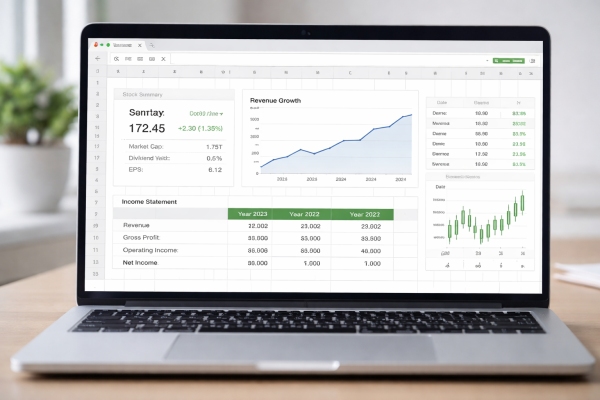
On Mar 10 2026, Toronto based firm Wisesheets made a product and pricing announcement for individual investors to pull financial statements and market data directly into Microsoft Excel and Google Sheets, currently serving users in 40+ countries per the release.
Wisesheets fits people who already work in spreadsheets and want data to flow straight into their models. That includes retail investors building screens, watchlists, and valuation models, analysts at smaller funds, advisors doing quick comparables, and founders or finance teams pulling data without paying for a terminal. The value is speed and repeatability. When data lands in Excel or Sheets, users can run their own formulas, build their own screens, and refresh models without copying numbers from websites into cells, or use one of the AI integrations.
Wisesheets offers three tiers with different features. Wisesheets annual pricing lists Pro at $60 USD per year, Elite at $120 USD per year, and Enterprise at $900 USD per year. Spread across 12 months, that works out to as low as $5 USD per month for the starting service. You can learn see Wisesheets documentation.
There's competition for this service. Google Sheets includes GOOGLEFINANCE, but Google warns quotes may be delayed up to 20 minutes and the information is provided “as is.” MarketXLS offers an Excel focused market data and analysis add in with a Standard plan priced at $70 per month or $850 USD per year. Excel Price Feed also offers an Excel add in for market data with different pricing by user type.
Wisesheets competes on price versus paid spreadsheet add ins and on workflow fit by keeping the user inside Excel and Sheets. Low cost spreadsheet data tools keep squeezing the middle of the research stack. Terminals still win on depth, support, and enterprise controls. Free and low cost tools win on price, but they come with limits and delay risk. Spreadsheet add ins win when they reduce manual work and keep models current and affordable for use.
For Wisesheets, credibility comes down to data quality, reliability, and whether the add in stays stable as users build heavier models and rely on it for repeatable screening and valuation work.
If spreadsheet add ins can deliver usable market data for $60 to $120 USD per year, which parts of the legacy retail research stack still justify premium pricing, and what about new AI services?
The National Crowdfunding & Fintech Association (NCFA Canada) is a financial innovation ecosystem that provides education, market intelligence, industry stewardship, networking and funding opportunities and services to thousands of community members and works closely with industry, government, partners and affiliates to create a vibrant and innovative fintech and funding industry in Canada. Decentralized and distributed, NCFA is engaged with global stakeholders and helps incubate projects and investment in fintech, alternative finance, crowdfunding, peer-to-peer finance, payments, digital assets and tokens, artificial intelligence, blockchain, cryptocurrency, regtech, and insurtech sectors. Join Canada's Fintech & Funding Community today FREE! Or become a contributing member and get perks. For more information, please visit: www.ncfacanada.org
| | |
|---|---|---|
| | |
Mar 10, 2026 | NCFA Fintech Market Activity | Wealthtech And AI Operations

Image: Freepik AI/kjpargeter
On Mar 10 2026, FutureVault launched its AI Advisor Insights Engine in Toronto, which turns documents already stored in client vaults into real time insights and automated advisor workflows.
FutureVault sells digital vault and intelligent document processing tools to wealth management and financial services firms. Its platform focuses on document storage plus data extraction and workflow automation, with security and governance positioning that includes SOC 2 Type II and PCI DSS compliance.
Daniel Kenny, CEO FutureVault:
“Every financial institution sits on a massive amount of intelligence inside client documents, but historically that information has been incredibly difficult to access or operationalize.”
Client vaults hold tax documents, estate files, insurance policies, account forms, and portfolio reports. The new AI system aims to automate the need for manual reviews across fragmented systems, then output the content into meeting prep summaries, documentation checks, and secure requests for missing files.
Advisors and operations teams spend hours chasing documents, extracting details, and confirming completeness for onboarding, reviews, and compliance. A system that structures document data, links it across a client vault, and triggers follow up tasks can reduce that manual load and shorten cycle times, especially in firms that already run large vault volumes.
Another advantage is control. The launch positions the engine around private LLM infrastructure, granular permissions at the document and data level, and audit ready logging. That's important because wealth firms need traceable access, clear retention, and defensible compliance controls inside workflows.
When documents start driving workflows automatically, what becomes harder to replace: the advisor front end, or the system that controls document access, audit trails, and the actions that follow?
The National Crowdfunding & Fintech Association (NCFA Canada) is a financial innovation ecosystem that provides education, market intelligence, industry stewardship, networking and funding opportunities and services to thousands of community members and works closely with industry, government, partners and affiliates to create a vibrant and innovative fintech and funding industry in Canada. Decentralized and distributed, NCFA is engaged with global stakeholders and helps incubate projects and investment in fintech, alternative finance, crowdfunding, peer-to-peer finance, payments, digital assets and tokens, artificial intelligence, blockchain, cryptocurrency, regtech, and insurtech sectors. Join Canada's Fintech & Funding Community today FREE! Or become a contributing member and get perks. For more information, please visit: www.ncfacanada.org
| | |
|---|---|---|
| | |
March 10, 2026
The fintech revolution has trained an entire generation of consumers to expect real-time data, clear fee structures, and algorithmic fairness from every platform that touches their money. Open banking, commission-free trading dashboards, and instant payment confirmations have established a baseline of transparency that didn't exist a decade ago. Now that same expectation is spilling into adjacent sectors, and the digital entertainment industry is finding that the old model of opaque mechanics no longer works for a consumer base raised on fintech-grade disclosure.
This shift is particularly visible across the iGaming sector, where a convergence of regulatory pressure, blockchain verification, and consumer demand has created a new class of data-transparent platforms. For fintech professionals and investors, the patterns emerging here are worth watching closely. They mirror the same transparency dynamics that reshaped banking, lending, and investment management over the past ten years, and they point toward a broader standard that will likely define consumer expectations across all digital financial services.
Before the fintech wave, consumers accepted a remarkable level of opacity in financial products. Credit card fees were buried in fine print. Investment management costs were layered across multiple disclosure documents. Currency exchange rates at banks included undisclosed markups. Fintech companies built entire businesses by simply making these costs visible.
TransferWise, now Wise, didn't invent a new foreign exchange mechanism. It made the existing markup visible and offered a lower one. Robinhood didn't create a new kind of stock trading. It eliminated commissions and showed real-time portfolio data on a mobile screen. In both cases, the competitive advantage wasn't technological sophistication but rather a commitment to showing consumers exactly what they were paying and exactly what they were getting.
According to PwC's Global Financial Services report, trust remains the single most important factor in consumer adoption of digital financial products. Yet the report also found that less than 30% of consumers globally feel they fully understand the fee structures of the financial products they use. The gap between expectation and reality is where fintech innovation continues to find its most fertile ground.
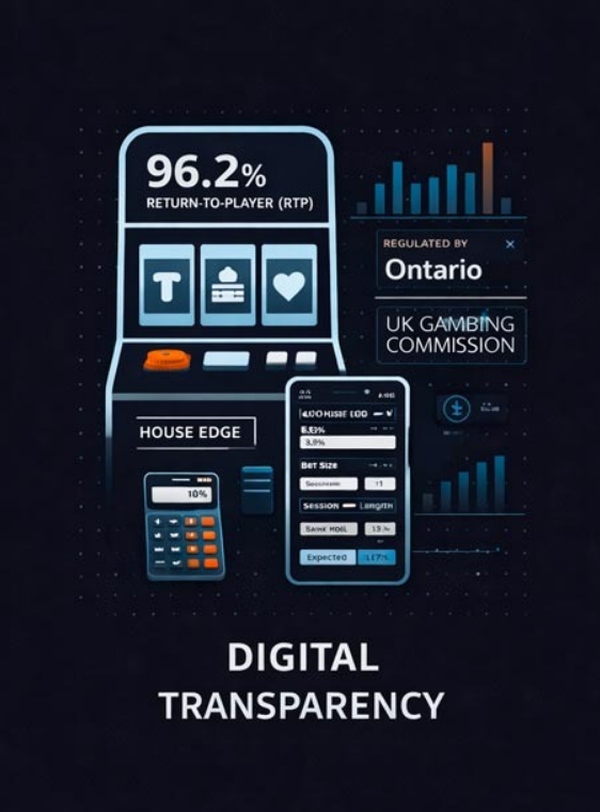
The digital entertainment space is now passing through the same transparency inflection point that banking experienced between 2015 and 2020. Regulatory bodies in Ontario, the UK, Malta, and several EU jurisdictions have moved beyond simple licensing requirements toward mandating specific mathematical disclosures. Return-to-player (RTP) percentages, variance classifications, and house edge figures are increasingly required to be published at the point of consumer interaction, not buried in terms and conditions.
Ontario's iGaming market, launched in April 2022 under the Alcohol and Gaming Commission of Ontario (AGCO), is a particularly instructive case for Canadian fintech observers. The regulatory framework requires licensed operators to display game-level RTP data and to submit their random number generators to independent auditing firms. This is functionally identical to how securities regulators require fund managers to disclose management expense ratios and historical performance data. The principle is the same: consumers making financial decisions deserve access to the quantitative parameters that determine their likely outcomes.
What makes the current moment different from previous disclosure requirements is the emergence of independent consumer tools that go beyond what regulators mandate. Platforms like gambling calculators allow users to input specific game parameters, including house edge, bet size, session length, and bankroll, to model their expected outcomes before committing funds. This is the iGaming equivalent of a mortgage amortization calculator or a compound interest simulator: a tool that translates abstract mathematical parameters into personalized, actionable projections. The fact that such tools now exist and attract meaningful traffic signals a shift in consumer behavior from passive participation to active quantitative analysis.
This consumer-side demand for calculable transparency aligns with broader fintech trends. The same user who models their mortgage payments on Ratehub, tracks their investment returns on Wealthsimple, and monitors their credit score on Borrowell now expects comparable analytical tools in every domain where money changes hands.

If regulatory disclosure provides the baseline, blockchain technology is building the verification layer. The concept of "provably fair" systems, where cryptographic hashing allows users to independently verify that an outcome was generated randomly and was not manipulated after their action, represents one of the most interesting applied use cases for distributed ledger technology outside of cryptocurrency itself.
The mechanism is straightforward in principle. Before a game round begins, the platform generates a server seed and provides the user with a hashed version. The user can supply their own client seed. After the round, the server seed is revealed, and the user (or any third-party auditor) can run the hash function to verify that the outcome matches the pre-committed parameters. Tampering after the fact is cryptographically impossible.
For the fintech community, provably fair systems are a practical demonstration of how blockchain can solve a real trust problem without requiring a full decentralized architecture. The platform still operates centrally. The games still run on conventional servers. But the verification layer, the part that matters most for consumer trust, uses the same cryptographic principles that secure cryptocurrency transactions. It's a pragmatic middle ground between fully centralized and fully decentralized models, and it's gaining traction faster than many pure DeFi applications.
According to the World Economic Forum's report on global fintech resilience, the ability to provide verifiable, tamper-proof records of financial transactions is one of the key value propositions driving blockchain adoption across regulated industries. The iGaming sector is proving that this value proposition translates effectively to consumer-facing products, not just institutional back-end infrastructure.
The transparency conversation extends beyond mathematics and into behavioral design. Fintech platforms have spent years developing AI-driven systems to detect fraudulent transactions, flag unusual account activity, and nudge users toward healthier financial behaviors. Wealthsimple's spending insights, for example, categorize expenditures and highlight patterns that users might not notice on their own. Banking apps send alerts when spending exceeds normal ranges.
The iGaming industry is adopting parallel approaches, partly driven by regulation and partly by competitive pressure from operators who recognize that long-term customer value depends on sustainable engagement rather than short-term extraction. Machine learning models now monitor player behavior patterns and flag indicators that correlate with problematic use: rapid increases in deposit frequency, session lengths that extend well beyond historical norms, and chasing behavior where bet sizes increase following losses.
The most sophisticated platforms use these signals to intervene proactively. Interventions range from gentle nudges, similar to the spending alerts in banking apps, to mandatory cooling-off periods and self-exclusion tools. Ontario's regulatory framework includes specific requirements for operator-initiated interventions, making this a compliance obligation rather than an optional feature.
From a fintech design perspective, this represents an important evolution. The first wave of fintech disruption was about making things easier: easier payments, easier investing, easier borrowing. The current wave increasingly focuses on making things safer, incorporating behavioral science and AI to protect users from their own cognitive biases. The iGaming sector's accelerated adoption of these tools, driven by the higher stakes involved, is generating insights and frameworks that will eventually flow back into mainstream financial product design.
Perhaps the most direct connection between fintech innovation and the digital entertainment sector is payment infrastructure. The iGaming industry's requirements for instant deposits, real-time withdrawals, multi-currency support, and robust identity verification have made it one of the most demanding use cases for modern payment systems.
Interac e-Transfer, which processes over one billion transactions annually in Canada, has become a standard payment rail for Ontario's licensed iGaming operators. The integration requirements have pushed Interac to develop faster settlement capabilities and more sophisticated fraud detection systems, improvements that benefit the entire Canadian payment ecosystem. Similarly, the industry's early adoption of cryptocurrency payment rails and stablecoin settlement layers has provided real-world transaction volume for technologies that are still largely theoretical in other financial services contexts.
For fintech startups building payment infrastructure, the digital entertainment vertical offers something valuable: high transaction volume, strong user expectations around speed and reliability, and regulatory frameworks that demand robust KYC and AML compliance. Several Canadian payment fintechs have used iGaming as an initial vertical, then expanded the infrastructure they built into adjacent sectors like e-commerce and subscription services.
Canada's approach to iGaming regulation offers a useful case study in how regulatory sandboxes can balance innovation with consumer protection. Ontario's decision to create a regulated market rather than maintaining prohibition has generated significant tax revenue, estimated at over $200 million annually, while giving regulators direct oversight of operator practices.
The regulatory model shares structural similarities with the sandbox approaches that several Canadian provincial securities regulators have adopted for fintech products. The Canadian Securities Administrators' Regulatory Sandbox, for instance, allows fintech firms to test innovative products in a live market under modified regulatory requirements. Both frameworks rest on the same principle: that a controlled, transparent regulatory environment produces better outcomes for consumers than either prohibition or a regulatory vacuum.
For the fintech ecosystem, the cross-pollination of regulatory approaches between financial services and digital entertainment is creating interesting opportunities. RegTech companies that developed AML compliance tools for banking are finding ready markets in iGaming. Identity verification firms that built their technology for fintech onboarding are applying the same infrastructure to age verification and player authentication. The regulatory convergence is driving a convergence of service providers, and Canadian companies are particularly well positioned because the country's regulatory frameworks in both sectors are relatively advanced by global standards.
The digital entertainment industry's rapid adoption of fintech principles, quantitative transparency, blockchain verification, AI-driven behavioral protection, and advanced payment infrastructure, is not a peripheral development. It is a preview of the consumer expectations that will define every sector where financial risk and digital interaction overlap.
The users driving this shift are not a niche demographic. They are the same consumers who use mobile banking, invest through digital platforms, and expect every financial interaction to come with complete data visibility. Their insistence on transparency in entertainment spending is a natural extension of the transparency they already demand from their financial service providers.
For fintech founders, investors, and ecosystem builders, the key takeaway is that transparency is no longer a differentiator. It is becoming the minimum standard for any platform that touches consumer money, regardless of the specific vertical. The tools, frameworks, and regulatory models being developed at this intersection of fintech and digital entertainment will likely define consumer financial technology's next chapter, not just in Canada, but globally.
The National Crowdfunding & Fintech Association (NCFA Canada) is a financial innovation ecosystem that provides education, market intelligence, industry stewardship, networking and funding opportunities and services to thousands of community members and works closely with industry, government, partners and affiliates to create a vibrant and innovative fintech and funding industry in Canada. Decentralized and distributed, NCFA is engaged with global stakeholders and helps incubate projects and investment in fintech, alternative finance, crowdfunding, peer-to-peer finance, payments, digital assets and tokens, artificial intelligence, blockchain, cryptocurrency, regtech, and insurtech sectors. Join Canada's Fintech & Funding Community today FREE! Or become a contributing member and get perks. For more information, please visit: www.ncfacanada.org
| | |
|---|---|---|
| | |
Mar 9, 2026 | NCFA Fintech Market Insight | Digital Assets And Policy And Regulation

Image: Unsplash/J K
On March 9 2026, the U.S. Treasury released a report to Congress on innovative technologies to counter illicit finance involving digital assets under the GENIUS Act. Treasury says successful monthly transactions on public blockchains reached 3.8 billion in early 2025, up 96% year over year. Treasury also reviewed more than 220 public comments while preparing the report. Against that backdrop, the report goes on the record to say crypto mixers can support laundering and sanctions evasion, but they can also serve legitimate privacy needs on public blockchains.
Treasury doesn't overlook the enforcement case against cyrpto mixers, saying criminals commonly use mixing, bridging, and swapping to obscure transaction trails and frustrate investigations. Treasury links these techniques to ransomware groups, darknet markets, sanctions evasion schemes, and DPRK cyber actors. The scale of harm remains large.
Victims reported more than $9 billion in digital asset related fraud to the FBI in 2024, including $5.8 billion tied to digital asset investment schemes, up 47% from the prior year. Treasury also says DPRK cybercriminals stole at least $2.8 billion in digital assets from January 2024 to September 2025, including a $1.5 billion theft in February 2025 that Treasury describes as the largest digital asset heist to date.
The report states that lawful users may use mixers to enable financial privacy when transacting through public blockchains. Treasury gives practical examples. Individuals may want to protect sensitive information such as personal wealth, business payments, charitable donations, or consumer spending patterns from appearing on public ledgers.
That statement changes the tone of the policy debate. The question is no longer whether mixers exist only for criminals. The policy challenge is whether privacy tools can operate with sufficient accountability, recordkeeping, and supervision inside the financial system.
Treasury also notes that custodial mixers that accept and transmit value must register with FinCEN as money services businesses, maintain records, and file suspicious activity reports. When compliant, these services can provide customer identities, off chain transaction data, and behavioural information to regulators or law enforcement.
Treasury also describes how mixers interact with broader digital asset infrastructure. Stablecoins frequently appear in laundering chains when illicit actors transfer assets across blockchains or prepare to convert digital assets into fiat.
Since May 2020, Treasury says more than $37.4 billion in withdrawals from over 50 bridges were denominated in the two largest stablecoins by market capitalization. During the same period those bridges received about $1.6 billion in deposits originating from mixing services. Treasury says more than $900 million of those deposits flowed into one specific bridge that faced scrutiny for DPRK linked laundering (North Korea state-sponsored).
A large part of the report focuses on the technologies Treasury believes financial institutions should use to strengthen anti money laundering and sanctions compliance programs. Treasury highlights four priority tools: artificial intelligence, digital identity, blockchain analytics, and application programming interfaces.
Treasury cites FinCEN analysis showing about 1.6 million identity related BSA reports in 2021, equal to 42% of reports filed that year and tied to $212 billion in suspicious activity. Treasury says AI can help institutions analyze large datasets and reduce false positives, digital identity systems can strengthen customer onboarding and fraud detection, blockchain analytics tools can trace wallet activity across networks, and APIs can improve secure monitoring and information sharing.
The next evolution of digital asset infrastructure will likely reward firms at the forefront of regulatory accountability that can distinguish lawful privacy from criminal abuse, strengthen identity and monitoring controls, and provide institutions with faster and more accurate compliance tools.
The National Crowdfunding & Fintech Association (NCFA Canada) is a financial innovation ecosystem that provides education, market intelligence, industry stewardship, networking and funding opportunities and services to thousands of community members and works closely with industry, government, partners and affiliates to create a vibrant and innovative fintech and funding industry in Canada. Decentralized and distributed, NCFA is engaged with global stakeholders and helps incubate projects and investment in fintech, alternative finance, crowdfunding, peer-to-peer finance, payments, digital assets and tokens, artificial intelligence, blockchain, cryptocurrency, regtech, and insurtech sectors. Join Canada's Fintech & Funding Community today FREE! Or become a contributing member and get perks. For more information, please visit: www.ncfacanada.org
| | |
|---|---|---|
| | |
Mar 4, 2026 | NCFA Fintech Market Insight | AI And Data Governance
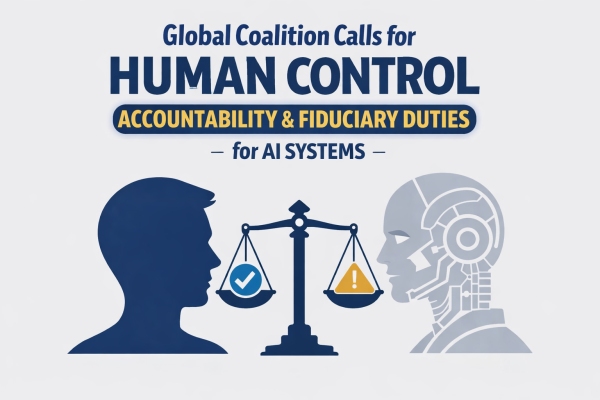
On March 4, 2026, the Pro Human AI Declaration goes public with support from a broad mix of public figures and organizations, including Yoshua Bengio (Professor, Université de Montréal and Turing Award Laureate), Daron Acemoglu (Nobel Prize-winning economist), Sir Richard Branson, and many other individual endorsers, along with groups such as the AFL CIO Tech Institute, American Federation of Teachers, SAG AFTRA, Public Citizen, and Center for Humane Technology. When people from business, labour, civil society, and research line up behind the same message, boards, regulators, and large buyers start to pay attention.
The declaration argues that AI should serve people, not replace them, and that powerful systems should remain under human control. For fintechs and financial institutions, AI already touches onboarding, fraud checks, customer support, compliance, advice, marketing, and risk decisions. As the public debate turns toward accountability and duty, finance is on the front lines of AI's adoption versus it's capabilities.
The declaration opens with a warning about a race to replace people in creative work, care, counselling, companionship, jobs, and decision making. It argues that this approach could push more power into large institutions and their machines while weakening privacy, liberty, democratic governance, and social stability.
It then lays out five core principles:
Keep humans in charge. Avoid concentration of power. Protect the human experience. Preserve human agency and liberty. Hold AI companies responsible and accountable.
The document also argues that AI systems should not be treated as legal persons with their own rights or responsibilities. It calls for protection of children and families from harmful uses of AI. It says people should have meaningful rights, oversight, and recourse when AI affects their lives.
As it relates to financial services, the declaration says AI used in professions such as finance, must meet fiduciary duties including duty of care, conflict disclosure, and informed consent.
Canada already faces its own debate about how to govern and finance artificial intelligence. A recent NCFA analysis on Canada’s AI strategy confronting capital flight and domestic IP retention highlights growing concern that Canadian innovation and economic value could migrate abroad if policy, capital access, and procurement frameworks do not evolve.
The Pro Human AI Declaration adds another dimension to that discussion. It focuses on accountability, human oversight, and responsibility when AI systems influence real world decisions.
It's important because in finance trust decides adoption, and banks, insurers, wealth platforms, lenders, and fintech vendors are already facing harder questions about how they use AI, who stays responsible, how people can challenge a bad outcome, and whether a firm can clearly explain what the system actually does. Pro Human's AI declaration adds more public weight behind those questions.
Take AI driven advice tools for example. If a digital assistant recommends a debt strategy, suggests a product, or influences an investment decision, firms should expect more scrutiny around disclosure, consent, conflicts, and who remains accountable for the outcome. The more the tool acts like an adviser, the harder it becomes to treat it like a simple software feature.
Fraud and risk controls offer another example. Many firms now use machine learning to flag suspicious activity, approve accounts, or block transactions. If a system freezes an account, rejects a customer, or triggers a harmful false positive, firms will face stronger pressure to explain the reason and provide a path to human review. In finance, a wrong decision can have a huge impact in a hurry. It can lock someone out of funds, delay a payment, or damage trust fast.
Customer communication is another live area. Banks and fintechs increasingly use AI chat tools to answer product questions, guide users through forms, or help people make sense of financial options. If those systems are guiding decisions, firms should expect harder questions about disclosure, consent, suitability, and whether the system nudges people in ways they do not fully understand.
Teams building AI for finance should design for human oversight in workflows from the start. They should know where a person can step in, how decisions get reviewed, what data trains the system, how conflicts get surfaced, and who owns the final call. These are no longer side questions. They affect procurement, partnerships, compliance reviews, and customer confidence.
This also creates an opening. Fintechs that can show clear controls, plain language disclosures, reliable audit trails, and real accountability will stand out in a crowded market. In regulated markets, users want to work with tools and systems they can trust when stakes and outcomes are at their highest.
One to watch for fintech and financial service leaders. Companies that keep humans involved, explain their systems clearly, and stay accountable when outcomes matter will be in a stronger position as this debate moves closer to policy, procurement, and market practice. Plus, they may sleep better at night 😉
The National Crowdfunding & Fintech Association (NCFA Canada) is a financial innovation ecosystem that provides education, market intelligence, industry stewardship, networking and funding opportunities and services to thousands of community members and works closely with industry, government, partners and affiliates to create a vibrant and innovative fintech and funding industry in Canada. Decentralized and distributed, NCFA is engaged with global stakeholders and helps incubate projects and investment in fintech, alternative finance, crowdfunding, peer-to-peer finance, payments, digital assets and tokens, artificial intelligence, blockchain, cryptocurrency, regtech, and insurtech sectors. Join Canada's Fintech & Funding Community today FREE! Or become a contributing member and get perks. For more information, please visit: www.ncfacanada.org
| | |
|---|---|---|
| | |



August 26th, 2025

January 4th, 2024

June 1st, 2021

September 9th, 2020

July 9th, 2018

January 3rd, 2018

September 25th, 2017

June 20th, 2017

May 10th, 2017

December 14th, 2016
