





Karsten Wenzlaff, Advisor
August 26th, 2025
Karsten Wenzlaff is a Crowdfunding and Fintech Expert from Germany. He is Secretary-General of Digit[...]


June 6, 2026 | NCFA Fintech Whisperer | Digital Assets Blockchain And Tokenization, Payments And Market Infrastructure, Artificial Intelligence And Data, Capital Markets And Market Infrastructure, Regulation And Policy, Risk Compliance And Regtech

Image: Freepik
This live weekly NCFA intelligence page tracks financial technology developments that significantly affect how fintechs build, sell, raise capital, and operate under scrutiny. Coverage prioritizes Canada and includes global events that directly influence competitive conditions, market access, and execution realities across fintech sectors. This page will be updated throughout the week with market movers in a live format and then each week we'll close the prior week's contents in prep for the upcoming week, and continue on a rolling basis. (Missed prior week's Fintech Whisperer? (December 6-12, 2025, December 13-19, 2025, January 1-9, 2026, January 10-16, 2026, January 17-23, 2026, January 24-30, 2026, January 31-February 6, 2026, February 7-13, 2026, February 14-20, 2026, February 21-27, 2026, February 28-March 6, 2026, March 7-13, 2026, March 14-20, 2026, March 21-27, 2026, March 28-April 3, 2026, April 4-10, 2026, April 11-17, 2026, April 18-24, 2026, April 25-May 1, 2026, May 2-8, 2026, May 9-15, 2026, May 16-22, 2026, May 23-29, 2026, May 30-Jun 5, 2026).
Citi is combining traditional securities infrastructure with blockchain based issuance, custody, and settlement for private company equity. The launch adds another proof point that tokenized infrastructure is changing how markets operate, especially as banks, exchanges, and market operators compete to define how private assets move onto digital rails.
Digital asset access is being packaged for banks, brokerages, fintechs, and platforms that do not want to build the full crypto stack themselves. The control point is the embedded infrastructure that handles custody, liquidity, compliance, settlement, and connectivity behind the customer experience.
Tokenized real world assets are moving into bank distribution channels. DBS is turning physical gold into a digital product that can sit inside a retail banking app, while also testing institutional market access through its digital exchange.
Stablecoin supervision is moving from broad policy debate into operating rules. Issuers, custodians, exchanges, auditors, compliance vendors, and payment firms need to track how reserve custody, internal controls, audits, and service provider oversight become part of stablecoin market access.
Card networks are building trust infrastructure for AI driven payments. Visa’s updates add another network level proof point that identity, authorization, fraud controls, tokenized credentials, and settlement will shape how AI agents are allowed to transact.
Recurring payment rails are becoming a financial inclusion tool when they help users pay for digital services without relying on credit cards. Brazil’s Pix Automático data shows how local real time payment infrastructure can support subscriptions, platform access, and digital commerce growth.
Agentic payments are moving from checkout experiments into network infrastructure. Payment firms, AI platforms, stablecoin providers, banks, and identity vendors now have to solve authorization, spending limits, settlement, fraud controls, and liability for machines that can transact without a human at every step.
Large banks are building their own tokenized money infrastructure rather than relying on third party stablecoin networks. Payment providers, treasury platforms, and financial institutions now face a more competitive settlement environment as bank money, stablecoins, and tokenized commercial bank deposits compete for transaction flow.
Circle Payments Network continues to add distribution. Business accounts, treasury platforms, and payment providers are becoming part of the stablecoin settlement infrastructure rather than simply connecting to it.
Circle is extending its infrastructure footprint from stablecoins into Bitcoin collateral. Builders now have another institutional grade option for collateral and tokenized asset applications.
AI agents are moving from recommendation and discovery toward financial execution. Coinbase for Agents puts user controlled account access, payments, trading, and workflow automation into the same agentic finance conversation as network trust controls, stablecoin settlement, fraud prevention, and responsible AI governance.
AI supervision in finance is evolving from broad risk discussion toward operating practices for boards, senior management, compliance teams, model owners, technology vendors, and supervisors. Financial institutions need to track how governance, documentation, human oversight, cyber controls, and third party dependencies become part of responsible AI adoption.
Always-on markets need reference data that does not stop when traditional exchanges close. Exchanges, tokenized asset platforms, derivatives venues, market makers, and risk teams now have another pricing source to evaluate as real-world assets trade across crypto-native market infrastructure.
Prediction markets are starting to need the same financial plumbing as capital markets. Market makers, exchanges, payment providers, banks, and compliance teams now need infrastructure that can handle deposits, margin, settlement, risk controls, and regulated access without slowing down trading activity.
Prediction markets are moving from platform experimentation and court fights into formal rule design. Kalshi, Polymarket, DraftKings, Flutter/FanDuel, exchanges, market makers, compliance teams, sports leagues, and retail users now have a clearer process to debate which contracts belong in derivatives markets and which remain too close to gaming, misconduct, or public interest risk.
Financial crime compliance is increasingly becoming an existential regulatory issue rather than a supervisory issue alone. Payment firms, e-money institutions, fintechs, compliance teams, and investors should watch how regulators use governance, safeguarding, ownership, and financial crime controls as indicators of firm viability. The action signals that supervisory concerns can now lead to intervention measures that effectively remove a regulated firm's ability to continue operating.
Canada is pulling AI chatbots into platform safety regulation. AI firms, social platforms, trust and safety teams, identity providers, and compliance vendors should watch how age assurance, safety controls, reporting duties, and enforcement rules develop as digital safety becomes part of regulated online infrastructure.
Financial supervisors are beginning to treat AI as both a productivity tool and a threat multiplier. Banks, insurers, payment firms, fintechs, and security providers should expect greater scrutiny of fraud controls, cyber resilience, operational risk management, and third party technology oversight as regulators adapt supervision to an AI enabled threat environment.
Banking access is moving back onto the policy agenda as branch closures, digital exclusion, SME credit access, and local service gaps put pressure on financial providers. Banks, fintechs, credit unions, open finance firms, and data providers should watch whether the review leads to new access rules, credit data reforms, or stronger expectations around community banking infrastructure.
As advanced analytics become embedded in public institutions, governance questions increasingly extend beyond model performance. Procurement authority, accountability, oversight, operational dependence, switching costs, and public trust all influence how critical decision systems are adopted and maintained. The organisations that govern these systems may become as important as the organisations that build them.
The common thread is not AI, stablecoins, tokenization, or payments. It is access. Access to financial infrastructure, access to payment rails, access to private markets, access to banking services, access to digital assets, and increasingly access to machine driven financial execution. The next competitive battleground may not be who builds the best financial products, but who controls the rules, permissions, trust layers, and infrastructure that determine who can participate and under what conditions. Recent developments suggest those boundaries are on the move. NCFA offers various curated resources to help founders and investors stay current on developments that impact fintech markets, subscribe to NCFA weekly newsletter updates, view a rundown of current fintech news and insights, or dive into the latest fintech industry research.
 The National Crowdfunding & Fintech Association (NCFA Canada) is a financial innovation ecosystem that provides education, market intelligence, industry stewardship, networking and funding opportunities and services to thousands of community members and works closely with industry, government, partners and affiliates to create a vibrant and innovative fintech and funding industry in Canada. Decentralized and distributed, NCFA is engaged with global stakeholders and helps incubate projects and investment in fintech, alternative finance, crowdfunding, peer-to-peer finance, payments, digital assets and tokens, artificial intelligence, blockchain, cryptocurrency, regtech, and insurtech sectors. Join Canada's Fintech & Funding Community today FREE! Or become a contributing member and get perks. For more information, please visit: www.ncfacanada.org
 |  |  |
|---|---|---|
 |  |  |
June 11, 2026 | NCFA Story Intelligence | Payments And Market Infrastructure

On June 3, 2026, Payments Canada announced that 15 organizations had joined its membership in 2026 following expanded eligibility rules. The latest intake included Beem Credit Union, Ebury Partners Canada, Shaype, Libro Credit Union, and Newton. Earlier additions included Wise Payments Canada, Float, KOHO, Neo Financial, Paramount Commerce, Brim, Meridian Credit Union, Tru Cooperative Bank, DoBusiness.com, and other newly eligible participants.
The membership announcement is the latest chapter, not the whole story. The story is how Canada moves from a tightly controlled payments model toward wider participation in the infrastructure that moves money, shapes competition, influences product design, and affects the choices available to consumers and businesses.
Canada builds its payments foundation around safety and trust.1 The Canadian Payments Association is created in 1980 under what is now the Canadian Payments Act. Payments Canada now owns and operates national payment systems including Lynx and the Automated Clearing Settlement System. The design reflects a clear priority: money movement is critical infrastructure, and critical infrastructure has to be reliable.
For a long time, that model works well enough for most people. Consumers trust their banks. Businesses use established payment tools. Settlement happens in the background. Most Canadians never need to think about who has direct access to the rails because the system mostly shows up as cards, transfers, bill payments, payroll, and cheques.
The market changes faster than the rails. Digital commerce grows. Mobile payments spread. Online transfers become a daily habit. Payments Canada’s 2025 trends report says Canada processed 22.5 billion retail payment transactions worth $12.2 trillion in 2024, with digital payments representing 86% of transaction volume.2
Fintechs start building around systems they can’t fully access. KOHO, Neo Financial, Float, Wise Payments Canada, Paramount Commerce, Brim, and Newton grow because customers want simpler financial products. The problem isn’t demand. The problem is that many new firms still depend on infrastructure controlled by others.
Competition becomes the pressure point. Critics of Canada’s payments model argue that control by a small number of large institutions has contributed to high fees, delay, and limited competition. Reuters reported this criticism when the Bank of Canada began payment service provider registration under the Retail Payment Activities Act.3
The fintech argument becomes practical. If firms outside the largest banks can’t connect on fair terms, they often need intermediaries, workarounds, sponsorship relationships, or slower product paths. That affects costs, margins, speed to market, and the ability to challenge incumbents with better consumer and business experiences.
Ottawa starts changing the legal frame. Finance Canada says amendments to the Canadian Payments Act made on June 20, 2024 expand Payments Canada membership eligibility to Bank of Canada supervised payment service providers, credit union locals that are part of a credit union central, and designated clearing and settlement system operators.4
The Bank of Canada brings PSPs into supervision. Under the Retail Payment Activities Act, the Bank registers and supervises payment service providers and focuses on operational risk, incident response, safeguarding end user funds, and reporting. As of September 8, 2025, PSPs must have risk management and funds safeguarding frameworks in place.5
Real Time Rail becomes the execution test. Payments Canada says the Real Time Rail is planned for launch in Q4 2026 and will support instant, data rich payments through a new exchange, clearing, and settlement system.6 The promise is simple: money should move faster, carry better data, and support new products.
The delays create frustration because the opportunity is real. Payments Canada selected Interac as the exchange solution provider in 2021, when the system was expected to launch in 2022.7 NCFA has tracked the execution question through RTR delay coverage and RTR productivity analysis.
The first wave of PSP members makes the policy visible. Payments Canada welcomes Wise Payments Canada, Float, KOHO, Paramount Commerce, and Brim as new payment service provider members in January 2026.8 NCFA tracks that moment when Payments Canada admits five new PSPs.
Membership is not only about access to rails. Payments Canada’s by law changes update membership requirements and support new eligible members as Canadian Payments Act amendments come into force.11 Membership gives new firms a closer role in the rules, standards, and modernization discussions that shape the system.
That changes the politics of infrastructure. A fintech that has to build around the system is one kind of participant. A fintech that can join, comply, learn the rules, and contribute to modernization discussions is another. The same applies to credit unions, FX firms, and other payment providers that want a role in Canada’s next financial infrastructure chapter.
Consumer driven banking brings the same access debate to financial data. Finance Canada says the framework is meant to let Canadians securely access and share financial data with financial service providers, without fees for accessing and sharing that data, while reducing reliance on risky practices such as screen scraping.12 The Bank of Canada says it will administer the framework so Canadians and businesses can securely share financial data with approved providers of their choice.13
But the friction does not disappear just because the law changes. Tier one banks, fintechs, data aggregators, and policymakers still have to work through scope, liability, accreditation, implementation timelines, commercial terms, and API performance. NCFA’s open banking commercialization roadmap frames the next phase as real API usage, accreditation, liability, and business model design, not just a policy announcement.
Stablecoins pull the payments debate into digital money. Bill C 15 gives Canada a legal framework for stablecoins and consumer driven banking, moving both into the financial policy stack. NCFA framed that moment in Bill C 15 gives Canada a digital finance framework.
The payment infrastructure question is no longer only about bank rails. Stablecoins, payment service providers, RTR, consumer driven banking, and Bank of Canada oversight are starting to occupy the same policy conversation. NCFA’s question post on stablecoins as payment infrastructure shows why digital money now belongs in the same access debate.
Canada’s payments story now connects directly to productivity. The Bank of Canada has warned that weak productivity threatens living standards, and NCFA has linked payments modernization to execution, competitiveness, and growth. Faster settlement, better data, lower friction, and more competition are not abstract infrastructure benefits. They affect how firms operate every day.
Cross border capability becomes part of the same test. Canada’s payment system cannot only work well at home. Canadian businesses, newcomers, exporters, marketplaces, and financial platforms also need better global money movement. That is why NCFA’s cross border payments analysis belongs beside RTR, open banking, and stablecoins.
Canada’s payments infrastructure didn’t turn a corner overnight. The change reflects years of modernization work, policy debate, fintech pressure, consumer demand, and the practical reality that a digital economy needs payment systems that are safe, fast, open enough to compete, and trusted enough to scale. The result is a more diverse payments membership base than Canada had a decade ago, with fintechs, PSPs, credit unions, FX firms, and digital finance companies gaining a larger role in the systems that move money.
Opening access isn’t the finish line. It’s the starting point. Canadian fintechs, banks, credit unions, payment providers, regulators, and infrastructure operators now have to prove broader participation can become better financial services. Now is the time to get to work. Launch Real Time Rail, make consumer driven banking usable, widen the tent responsibly, improve domestic and cross border capability, lower friction for merchants and consumers, and connect these reforms to the Canadian Financial Innovation Map and pipeline Canada needs to compete.
Canada's infrastructure modernization is creating new commercial opportunities in Consumer Driven Banking. See NCFA's Open Banking in Canada Opportunity Brief for the evidence trail, product pathways, competitive benchmark and commercialization outlook.
Which part of Canada’s payments story stood out most to you?
Share this story → Explore related intelligence → Subscribe
The National Crowdfunding & Fintech Association (NCFA Canada) is a financial innovation ecosystem that provides education, market intelligence, industry stewardship, networking and funding opportunities and services to thousands of community members and works closely with industry, government, partners and affiliates to create a vibrant and innovative fintech and funding industry in Canada. Decentralized and distributed, NCFA is engaged with global stakeholders and helps incubate projects and investment in fintech, alternative finance, crowdfunding, peer-to-peer finance, payments, digital assets and tokens, artificial intelligence, blockchain, cryptocurrency, regtech, and insurtech sectors. Join Canada's Fintech & Funding Community today FREE! Or become a contributing member and get perks. For more information, please visit: www.ncfacanada.org
| | |
|---|---|---|
| | |
Jun 10, 2026

Alternative payment methods are moving from checkout extras to core infrastructure in Canadian online markets. For consumers and businesses, the useful question is no longer whether a payment feels modern, but whether it is fast, lawful and protected.
Canada’s regulated online sectors include financial apps, marketplaces, public-sector payments and provincially regulated iGaming. Each sector has different rules, yet they are all facing the same pressure: people expect simple digital payments, while regulators expect clear consent, strong identity checks and proper safeguarding of funds.
Credit cards still matter, but they no longer carry the whole online-payment experience. Payments Canada’s 2025 data shows how broad the shift in payment habits has become. Canada recorded 22.5 billion retail payment transactions worth $12.2 trillion in 2024, with digital payments making up 86% of transaction volume. Online transfers were the fastest-growing method, rising 16% by volume and 23% by value, while Interac reported 1.4 billion e-Transfer transactions in 2024. Bank of Canada survey data adds the consumer view: 46% of respondents had used e-Transfer for a purchase in the past year, compared with 35% for mobile payments and 21% for digital-wallet apps.
The shift away from cards also creates an opening for account-to-account payments. They can lower friction where a card is expensive, unavailable or unsuitable. They are also useful in sectors where a platform needs proof that the person paying is tied to the bank account being used. That is why payment design now overlaps with identity, compliance and customer support.
The biggest legal change is the Retail Payment Activities Act. The Bank of Canada now supervises payment-service providers that perform retail payment functions, with registration, operational-risk rules and end-user fund protection all part of the framework. From September 2025, registered providers have had to meet risk-management and safeguarding requirements.
Open banking, or consumer-driven banking, is the next piece. Budget 2025’s banking changes included updates on the Real-Time Rail and planned write access by mid-2027, allowing consumers to direct certain banking actions through the framework. For regulated online sectors, that points toward safer data-sharing and, eventually, payment initiation with clearer consent.
As much as adding more payment methods is a compliance decision for any regulated operator, it’s also a product decision. The easier you can make it for customers to deposit money, the better, providing you can ensure each option meets standards in anti-money-laundering rules, record-keeping, privacy obligations and customer-fund controls.
It also has to be understandable. If a withdrawal takes three business days, users need to know that before they deposit. If a payment is final, the platform needs stronger warnings, better fraud controls and a sensible dispute process. Fast payments improve trust when they are predictable; they damage trust when users cannot see what is happening.
Provincially regulated iGaming shows the point clearly because payment checks sit close to age verification, identity checks and account controls. Players need lawful access, operators need clean audit trails and regulators need confidence that money is moving through approved systems. Payment methods are part of that wider control environment.
That is where comparison resources can be useful when they explain the mechanics rather than simply ranking offers. Casino.org’s guide to eCheck casinos in Canada shows which reviewed sites support eChecks, how deposits and withdrawals usually work, what minimum deposits apply and what processing times readers should expect. Used carefully, that kind of guide helps readers compare payment fit, speed and limits before choosing how to fund an account.
As Jemma McColgan, Casino.org’s Senior Content Editor puts it, “eCheck casinos in Canada offer key benefits I'm looking for in terms of safety and speed. My funds are protected by my bank’s security and policies, and transfers are a direct communication between the casino and my bank account. There’s no middleman other than electronic check verification”.
Canada’s payment-modernization agenda will make speed a larger baseline expectation. Canada’s Real-Time Rail is targeting a Q4 2026 launch, with testing before go-live. The value is not only instant movement. It is also richer payment data, better reconciliation and the potential for more competition.
The same trend appears in open banking. A recent open-banking commercialization roadmap described how read access comes first, while payment initiation is expected later. That staged rollout is important because safe payments need more than speed. They need accreditation, consent dashboards, liability rules and common technical standards.
For consumers, the safe approach is also a practical one. Check whether the platform is regulated in your province or sector. Check who processes the payment. Check whether the method supports deposits and if you can offer withdrawals too. Also look at fees and processing times, not forgetting to investigate what happens if a transaction is delayed or rejected.
For businesses, the checklist is deeper. They need vendor due diligence, privacy review, fraud monitoring, reconciliation planning and a clear complaints path. A Canadian Press report on a shift in Canadian banking noted how open banking could make it easier to manage accounts, compare products and switch providers. That promise only works if payment choices are built on trust.
The National Crowdfunding & Fintech Association (NCFA Canada) is a financial innovation ecosystem that provides education, market intelligence, industry stewardship, networking and funding opportunities and services to thousands of community members and works closely with industry, government, partners and affiliates to create a vibrant and innovative fintech and funding industry in Canada. Decentralized and distributed, NCFA is engaged with global stakeholders and helps incubate projects and investment in fintech, alternative finance, crowdfunding, peer-to-peer finance, payments, digital assets and tokens, artificial intelligence, blockchain, cryptocurrency, regtech, and insurtech sectors. Join Canada's Fintech & Funding Community today FREE! Or become a contributing member and get perks. For more information, please visit: www.ncfacanada.org
| | |
|---|---|---|
| | |
June 9, 2026 | NCFA Fintech Market Activity | Payments And Market Infrastructure

On June 9, 2026, Lloyds launched Lloyds Accept, a new suite of payment tools powered by Stripe and built into Lloyds' Business Account for UK small businesses.
The launch puts fintech payment infrastructure inside a major bank's SME account relationship. Lloyds says the service gives business customers access to in person payments, online payments, invoicing, payment links, and reporting from one account environment.
Lloyds brings the customer base and banking relationship, while Stripe brings merchant payment infrastructure, onboarding, acceptance, and developer led tools. Lloyds Banking Group says it serves 26 million customers, giving Stripe access to a large UK banking channel without competing for every merchant relationship directly.
Stripe's 2025 annual update confirms that businesses on its platform generated $1.9 trillion in total payment volume, up 34% from 2024. The company also expanded UK products in 2024, including Pay by Bank and business financing, showing expansion into account based payments, working capital, and SME financial operations.
Lloyds is adding specialist payment infrastructure inside its own SME banking relationship instead of building every part itself. Payment acceptance is the visible feature, but onboarding, reconciliation, reporting, fraud controls, financing, and embedded workflows create the larger infrastructure opportunity. Canadian banks are also partnering for merchant payment infrastructure, which shows the same bank fintech execution pattern in another market.
So where is the value accumulating? Banks still control the customer account, balance sheet, trust, and distribution channel. Infrastructure providers increasingly control the operations that powers day to day business activity. That creates practical opportunities around merchant onboarding, payment operations, treasury tools, fraud controls, and business automation, which connect naturally to NCFA’s Financial Innovation Map.
As banks rely more on specialist infrastructure partners, who will own the most valuable parts of the SME relationship? The account, the payment workflow, the operating data, or the tools that help small businesses manage cash flow.
The National Crowdfunding & Fintech Association (NCFA Canada) is a financial innovation ecosystem that provides education, market intelligence, industry stewardship, networking and funding opportunities and services to thousands of community members and works closely with industry, government, partners and affiliates to create a vibrant and innovative fintech and funding industry in Canada. Decentralized and distributed, NCFA is engaged with global stakeholders and helps incubate projects and investment in fintech, alternative finance, crowdfunding, peer-to-peer finance, payments, digital assets and tokens, artificial intelligence, blockchain, cryptocurrency, regtech, and insurtech sectors. Join Canada's Fintech & Funding Community today FREE! Or become a contributing member and get perks. For more information, please visit: www.ncfacanada.org
| | |
|---|---|---|
| | |
June 9, 2026 | NCFA Fintech Market Activity | Lending Consumer Credit And BNPL
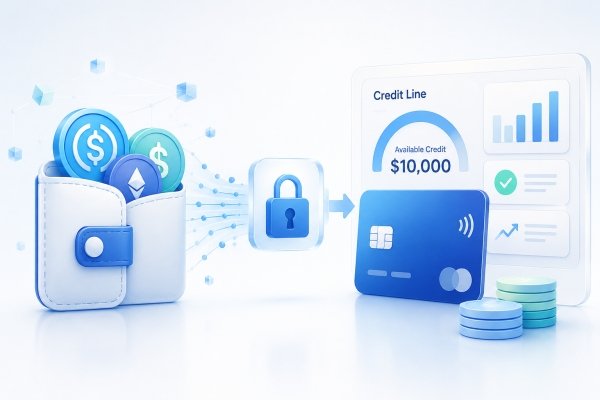
On June 9, 2026, Coinbase announced that it's expanding the role of USDC inside its financial ecosystem by a new Coinbase One Card program that allows eligible customers to secure a credit card with USDC held on the platform. Coinbase says the card can serve customers who might not qualify for a traditional unsecured credit card while continuing to participate in the Coinbase ecosystem.
The product adds another use case to a stablecoin that already supports trading, payments, transfers, rewards, and savings. Coinbase's documentation confirms the USDC security deposit model, where customers use USDC as collateral to secure their credit line.
The launch also highlights how fintech infrastructure providers are helping digital asset platforms expand into traditional financial products. According to a Cardless case study, Coinbase uses Cardless to power card program infrastructure, application workflows, servicing, and payment experiences. First Electronic Bank issues the card and American Express provides network access. The arrangement allows Coinbase to focus on customer acquisition, account balances, rewards, and product design while specialized partners handle card infrastructure and issuance.
Coinbase already has significant card activity to build from. In its Q4 2025 shareholder letter, the company reported nearly $800 million in cumulative Coinbase One Card spend and approximately $3,000 in average monthly spend per cardholder. The same filing reported $17.8 billion in average USDC balances held across Coinbase products.
The strategy aligns with the effort to make digital assets usable beyond trading. Earlier this year, Coinbase partnered with Better to bring crypto assets into mortgage workflows, allowing qualified borrowers to use digital assets during the home financing process. Together with the new card program, Coinbase is steadily expanding how digital asset balances can support borrowing, spending, and credit access.
The scale behind that strategy continues to grow across industry. Circle reported in its Q1 2026 results that USDC reached $77.0 billion in circulation and processed $21.5 trillion in onchain transaction volume during the quarter. As stablecoin infrastructure matures, questions around collateral design, credit access, and lending increasingly connect to broader discussions around tokenized collateral and cash.
If stablecoins can secure credit, platforms with large customer balances gain a new way to compete for lending relationships. The bigger question is whether consumers increasingly view stablecoin holdings as spending power, borrowing collateral, and financial reserves rather than simply digital payment assets?
The National Crowdfunding & Fintech Association (NCFA Canada) is a financial innovation ecosystem that provides education, market intelligence, industry stewardship, networking and funding opportunities and services to thousands of community members and works closely with industry, government, partners and affiliates to create a vibrant and innovative fintech and funding industry in Canada. Decentralized and distributed, NCFA is engaged with global stakeholders and helps incubate projects and investment in fintech, alternative finance, crowdfunding, peer-to-peer finance, payments, digital assets and tokens, artificial intelligence, blockchain, cryptocurrency, regtech, and insurtech sectors. Join Canada's Fintech & Funding Community today FREE! Or become a contributing member and get perks. For more information, please visit: www.ncfacanada.org
| | |
|---|---|---|
| | |
May 30, 2026 | NCFA Fintech Whisperer | Payments And Market Infrastructure, Digital Assets Blockchain And Tokenization, Artificial Intelligence And Data, Regulation and Policy, Risk Compliance And Regtech
Image: Freepik
This live weekly NCFA intelligence page tracks financial technology developments that significantly affect how fintechs build, sell, raise capital, and operate under scrutiny. Coverage prioritizes Canada and includes global events that directly influence competitive conditions, market access, and execution realities across fintech sectors. This page will be updated throughout the week with market movers in a live format and then each week we'll close the prior week's contents in prep for the upcoming week, and continue on a rolling basis. (Missed prior week's Fintech Whisperer? (December 6-12, 2025, December 13-19, 2025, January 1-9, 2026, January 10-16, 2026, January 17-23, 2026, January 24-30, 2026, January 31-February 6, 2026, February 7-13, 2026, February 14-20, 2026, February 21-27, 2026, February 28-March 6, 2026, March 7-13, 2026, March 14-20, 2026, March 21-27, 2026, March 28-April 3, 2026, April 4-10, 2026, April 11-17, 2026, April 18-24, 2026, April 25-May 1, 2026, May 2-8, 2026, May 9-15, 2026, May 16-22, 2026, May 23-29, 2026).
Tokenized bonds are moving from pilots into market structure work. Issuers, dealers, custodians, infrastructure providers, and regulators need practical answers on issuance, settlement, custody, disclosure, and secondary liquidity before tokenized fixed income can scale.
The value of cross chain infrastructure comes down to whether developers can route liquidity without exposing users to bridge complexity. The $230M private beta gives 0x early usage evidence, but the larger test is reliability across payments, RWAs, trading, and agent workflows when volumes move beyond controlled integrations.
Stablecoin licensing is becoming a competitive infrastructure tool for financial centres. Issuers, banks, PSPs, custodians, and regulators should track which jurisdictions turn stablecoin rules into live market access rather than policy design alone.
Tokenized money market funds are becoming part of institutional onchain liquidity infrastructure. Asset managers, custodians, PSPs, stablecoin issuers, and treasury teams should track how stablecoins connect with regulated fund products, redemption workflows, and stablecoin payment infrastructure.
Institutional DeFi is shifting toward custody controlled access models. Asset managers, custodians, exchanges, advisers, and compliance teams should track whether qualified custody plus curated onchain strategies becomes the operating model that brings DeFi exposure into regulated portfolios.
The useful signal is not simply another crypto loan product. It is committed buyer capital behind crypto backed credit, which can make the product more repeatable. The key risks remain collateral volatility, liquidation design, borrower suitability, and whether digital asset wealth can support credit access without turning into hidden leverage.
Crypto collateral can help asset rich borrowers avoid selling Bitcoin or USDC, but housing finance brings stricter expectations around suitability, custody, volatility buffers, and borrower protection. The product will need to prove it expands access without importing crypto market risk into mortgage underwriting.
Large banks are moving from stablecoin observation into direct tokenized money infrastructure. Treasury teams, payment providers, fintechs, custodians, and infrastructure operators now need to track whether commercial bank money becomes a regulated settlement layer for high value payments, liquidity management, and cross border transactions.
Western Union’s stablecoin entering a major crypto exchange channel adds another proof point for stablecoins becoming payment infrastructure. PSPs, exchanges, banks, remittance firms, and compliance teams should track how regulated issuers, fiat channels, and global payout networks connect. This adds a distribution proof point for regulated stablecoins. Western Union brings the remittance brand and global currency footprint, while Bybit brings crypto exchange access. The open question is whether USDPT becomes a settlement asset customers actually use, or another branded stablecoin competing for scarce transaction depth.
Central bank money settlement is being designed for programmable markets. Banks, FMIs, tokenized asset platforms, and settlement operators need to understand how RTGS synchronisation could connect central bank money with external asset ledgers and reduce settlement risk in digital markets.
Domestic real time payment systems are becoming exportable cross border infrastructure. Payment networks, banks, wallets, tourism merchants, and regulators are building direct QR payment links that reduce card dependence and make national payment rails usable outside their home markets.
Access to Canada’s payment infrastructure continues to widen beyond traditional banks and large financial institutions. Fintechs, payment providers, credit unions, foreign exchange firms, and digital finance companies are gaining a larger role in the systems and governance discussions that shape payment modernization.
Open banking is moving from one off payments into repeatable payment schemes with shared rules and commercial terms. Banks, PSPs, merchants, fintech platforms, and regulators should track whether recurring account to account payments become a real alternative to cards, direct debit, and closed wallet systems.
Card settlement is no longer limited to traditional banking hours or traditional settlement assets. Banks, acquirers, PSPs, stablecoin issuers, and fintech platforms should track how major payment networks use regulated stablecoins to support faster settlement, lower liquidity friction, and always on money movement.
Stablecoin remittances are moving from fintech experiments into established money transfer networks. Banks, PSPs, remittance firms, stablecoin issuers, and compliance teams should track how large networks use tokenized dollars to reduce settlement friction while staying inside regulated payment flows.
Pay by bank is becoming a practical payment rail strategy, not just a checkout concept. PSPs, banks, merchants, and fintech platforms should track how instant payment routing, risk controls, and settlement access shape competition against cards and traditional ACH flows.
Stablecoins are gaining traction in regulated payment flows, not just trading markets. Remittances remain one of the clearest real world use cases because settlement speed, foreign exchange costs, and cross border reach matter more than speculative activity. Canadian fintechs, PSPs, banks, and regulators should watch whether stablecoin based remittance models can scale while meeting compliance, safeguarding, and consumer protection requirements.
OpenPayd’s planned Nasdaq listing puts programmable money movement under public market scrutiny. PSPs, banks, stablecoin firms, embedded finance platforms, investors, and regulators should track how the listing exposes the economics, licensing footprint, transaction volume, and risk controls behind global payment infrastructure.
Crypto sanctions enforcement is moving deeper into exchange infrastructure and stablecoin flows. Exchanges, custodians, PSPs, blockchain analytics firms, and compliance teams should track how sanctions screening, stablecoin monitoring, and cross border counterparty controls become core operating requirements.
Technology policy is increasingly becoming infrastructure policy. As governments focus on AI capacity, cloud services, strategic data assets, semiconductor supply chains, and digital resilience, firms may face growing pressure to evaluate technology dependencies, procurement choices, hosting arrangements, and infrastructure risk. The result could be a more fragmented global technology environment shaped by competing sovereignty frameworks.
Consumer AI policy is moving toward practical controls for trust, consent and accountability. Banks, fintechs, AI firms, platforms and regulators should watch how user controls, complaint routes, audit trails and outcomes based duties apply when AI systems influence financial decisions or act for consumers.
The operating change is where AI work happens. If capable agents can run locally, more sensitive analysis, file handling, audio processing, and workflow automation can stay on device instead of moving through cloud APIs. That could change enterprise AI design, human oversight, privacy controls, and bot to bot workflows.
The United States is testing a lighter regulatory model for frontier AI that relies on voluntary participation, security evaluation, and industry cooperation. Financial institutions, fintechs, infrastructure providers, and AI developers should watch whether this approach accelerates deployment while maintaining confidence in systems that increasingly influence payments, capital markets, fraud controls, and critical infrastructure.
Revolut’s U.S. strategy shows why bank charters are becoming infrastructure plays for global fintechs. FDIC insured products, payment rail access, stablecoin services, and securities trading under one app could raise the competitive bar for sponsor bank dependent fintech models.
Stablecoin regulation is becoming a competitiveness question, not only a risk control exercise. Issuers, banks, PSPs, custodians, and policymakers should track whether the UK loosens its approach or keeps tougher safeguards that could limit domestic stablecoin scale.
Stablecoin supervision is becoming cross border supervision. Issuers, exchanges, custodians, payment firms, and compliance teams should expect more information sharing between regulators as stablecoin activity crosses jurisdictions, banking systems, and payment networks.
The word of the week is 'control'. Banks, payment networks, fintechs, custodians, stablecoin issuers, and AI providers are competing closer to the infrastructure layer, where settlement, custody, compliance, data, and distribution decisions get made. Which rails, licenses, partners, and operating models create durable access before the next layer of financial infrastructure gets locked in?
NCFA offers various curated resources to help founders and investors stay current on developments that impact fintech markets, subscribe to NCFA weekly newsletter updates, view a rundown of current fintech news and insights, or dive into the latest fintech industry research.
The National Crowdfunding & Fintech Association (NCFA Canada) is a financial innovation ecosystem that provides education, market intelligence, industry stewardship, networking and funding opportunities and services to thousands of community members and works closely with industry, government, partners and affiliates to create a vibrant and innovative fintech and funding industry in Canada. Decentralized and distributed, NCFA is engaged with global stakeholders and helps incubate projects and investment in fintech, alternative finance, crowdfunding, peer-to-peer finance, payments, digital assets and tokens, artificial intelligence, blockchain, cryptocurrency, regtech, and insurtech sectors. Join Canada's Fintech & Funding Community today FREE! Or become a contributing member and get perks. For more information, please visit: www.ncfacanada.org
| | |
|---|---|---|
| | |
June 2, 2026 | NCFA Insight | Payments And Market Infrastructure, Open Banking Open Finance And Data Sharing, Digital Assets Blockchain And Tokenization, Regulation And Policy

On June 2, 2026, Thunes and Juniper Research released the 2026 Cross Border Payments Interoperability Index, a 50 country benchmark that measures how easily money moves across borders. Canada ranks 22nd with an overall score of 6.4. That result doesn't simply mean Canada lacks financial infrastructure. It points to a harder problem for maturer markets. That is strong domestic systems don't automatically create cheaper, faster, more open cross border payments.
But that's starting to change now that Canada is incentivizing more competition in fintech and now some key policy files open. Real-Time Rail, broader payment service provider access, Interac e-Transfer access for qualifying PSPs, consumer driven banking, and stablecoin rules all point in the same direction. Global benchmarks now judge whether those components are working in live markets or are being left behind.
Canada's scorecard below shows the gap clearly. Solid on economic strength, digital infrastructure, financial inclusion, and cross border connectivity. However, according to the ranking Canada is weak on market dynamics and progress, the category that tracks whether regulation, mandates, open banking, crypto rules, and public payment initiatives create usable momentum (or not).
| Canada Index Category | Score | Reader Takeaway |
|---|---|---|
| Economic Health | 7.5 | Canada has a strong base for financial activity |
| Digital Infrastructure | 7.0 | The country has meaningful digital capacity |
| Financial Inclusion | 6.7 | Formal access is broad, but gaps remain |
| Cross Border Connectivity | 6.3 | Cost, speed, and reach still limit performance |
| Market Dynamics And Progress | 4.0 | Canada’s weakest score and the core execution gap |
| Overall Rank | 22nd Of 50 | Middle of the pack for a G7 market |
The low score of 4.0 on market dynamics needs immediate attention. Canada doesn't lack ambition, but it still needs more proof that payment modernization has changed market behaviour, access, pricing, product design, and cross border reach. Otherwise, smoke and mirrors.
Real-Time Rail could become Canada’s most important domestic payment upgrade in years. Payments Canada says the Real-Time Rail payment system will support instant, data rich account to account payments for eligible participants. Payments Canada also published a PSP participation guide for RTR, which helps payment service providers prepare for access under Canada’s retail payments regime.
The next 18 months will be verytelling, given that the execution timing window is a practical test. Real-Time Rail and Canada’s productivity test comes down to access, fraud controls, pricing, resilience, and product adoption. Faster rails help only when firms can build real workflows on top of them.
Interac has opened another route into mainstream payments. In September 2025, Interac said qualifying PSPs can access Interac e-Transfer if they meet requirements tied to RPAA registration, FINTRAC money services business registration, sponsorship, and risk controls. Interac reports 1.4 billion e-Transfer transactions in 2024, so access to this network gives fintechs a path into a payment habit Canadians already use at scale.
Open banking is also in implementation. Canada’s consumer driven banking framework gives consumers and small businesses secure control over financial data, with future write access expected to support payment initiation. That turns open banking from comparison infrastructure into payment infrastructure. Canada’s open banking commercialization roadmap is now in rollout and about real API usage, accreditation, liability, and business model design.
And then there's Stablecoins. Finance Canada says Canada’s stablecoin framework will regulate fiat backed stablecoins issued by non financial institutions and place issuers under Bank of Canada supervision. That connects directly to the cross border pain measured by Thunes. Bill C-15 gives Canada a digital finance framework, but execution will decide whether stablecoins become trusted payment infrastructure or another narrow product category.
The Thunes report gives Canada a useful benchmark because cross border payments still fail basic user tests. The global average remittance cost sits at 6.36 percent, more than double the UN target of less than 3 percent by 2030. The same report finds that 38 percent of surveyed users typically pay more than 3 percent to send a cross border payment.
| Global Friction Point | Thunes Finding | Why It Counts |
|---|---|---|
| Remittance Cost | 6.36 percent global average | More than double the UN target |
| High Fee Exposure | 38 percent pay more than 3 percent | Users still face avoidable cost pressure |
| Payment Delay | 27 percent wait two or more days | Slow payouts hurt household and business cash flow |
| Price Transparency | 41 percent do not always see the final amount upfront | Users cannot compare true cost easily |
| User Priority | 50 percent rank instant transfers first | Speed now beats fees as the top feature |
RTR can improve domestic speed. Open banking can improve data access and future payment initiation. Interac PSP access can widen domestic participation. Stablecoin rules can support regulated digital settlement.
None of those pieces improves cross border outcomes on its own. The gap is not a lack of providers. It is how well banks, fintechs, PSPs, wallets, FX, fraud controls, compliance systems, and payout networks connect across domestic and international payment flows.
Brazil and India offer Canada the most useful comparison. Both markets show how live domestic payment rails can change user behaviour. They also show why domestic success doesn't automatically solve international payments.
| Market | Thunes Rank Or Score | Domestic Payment Behaviour | Cross Border Lesson |
|---|---|---|---|
| Canada | 22nd overall, 6.4 score, 4.0 market dynamics | Strong infrastructure, but RTR, open banking, PSP access, and stablecoin rules still need market proof | Canada must turn policy design into live interoperability |
| Brazil | 14th overall, 6.7 score, 8.0 market dynamics | Pix helped make instant bank transfers a daily habit. Thunes reports 59 percent of surveyed respondents in Brazil use bank transfers daily or weekly | Live rails can change behaviour, but 71 percent of Brazilian recipients still wait two or more days for international payments |
| India | High domestic bank transfer use in the surveyed group | UPI made account to account payments central to daily digital finance | Cross border costs remain high. Thunes reports 54 percent of surveyed users in India typically pay more than 3 percent for cross border transfers |
The lesson is that working rails change expectations. Once consumers and businesses experience instant domestic payments, delays and hidden costs in international payments become harder to defend. Canada has not yet had that market wide real time payment moment. RTR can help create it if access, fraud controls, pricing, and use cases land together.
The stablecoin section of the Thunes report is stronger when read as infrastructure analysis. Stablecoins can settle quickly at low on chain cost, but users still need practical conversion into bank accounts, wallets, cards, or cash. That last mile problem limits mainstream use.
| Stablecoin Data Point | What Thunes Found | Policy Read For Canada |
|---|---|---|
| Core Benefit | Immediate settlement at low on chain cost | Useful for cross border settlement if rules, custody, and redemption work |
| Main Constraint | Local currency conversion remains challenging | Stablecoins need connections to banks, PSPs, wallets, and payout networks |
| Nigeria Usage | 29 percent of surveyed respondents used stablecoins | Demand rises where currency pressure and payment friction are higher |
| Top Nigeria Use Case | 58 percent used stablecoins to store value | Stablecoins do not start only as payment products |
| Nigeria Payments Use | 9 percent used stablecoins for domestic payments and 39 percent used them for international payments | Cross border utility looks stronger than domestic merchant use in this sample |
Canada now has domestic stablecoin proof points. Tetra’s CADD launch brought a Canadian dollar payment stablecoin issued through a regulated financial institution. Stablecorp’s QCAD work has added regulatory, bank custody, and exchange access milestones. Loon’s CADC acquisition gives Canada another Canadian dollar stablecoin initiative with existing transaction history. These examples make Canada’s stablecoin debate more practical. The issue is no longer whether Canadian dollar stablecoin projects exist. It is whether they can earn trusted roles in payment and settlement workflows.
The Thunes report doesn't frame stablecoins as an immediate replacement for banks or remittance brands. Stablecoins may work first as a middle leg settlement layer inside money transfer operators, banks, wallets, and payment platforms. That fits Canada’s policy challenge. Rules for reserves, redemption, supervision, governance, and AML controls matter, but market value comes from trusted use inside real payment flows.
Canada’s retail market still looks early. FCAC stablecoin survey findings show that 4% of Canadian adults hold stablecoins and 5% held them in the past. That gap between infrastructure activity and consumer adoption should guide policy design. Canada should not build stablecoin rules only around today’s retail ownership. It should test whether regulated Canadian dollar stablecoins can support remittances, merchant settlement, marketplace payouts, treasury use, and business to business payments across domestic and international corridors.
Can Canada turn payment modernization into live cross border advantage before faster markets pull further ahead?
Better outcomes will come from live RTR access, PSP onboarding that works in market, open banking with payment initiation, stablecoin rules tied to real payment use cases, and fraud controls that scale across real time flows. The Canadian pieces are coming together, but the test will be whether they work together fast enough to improve cost, speed, transparency, and cross border reach.
The National Crowdfunding & Fintech Association (NCFA Canada) is a financial innovation ecosystem that provides education, market intelligence, industry stewardship, networking and funding opportunities and services to thousands of community members and works closely with industry, government, partners and affiliates to create a vibrant and innovative fintech and funding industry in Canada. Decentralized and distributed, NCFA is engaged with global stakeholders and helps incubate projects and investment in fintech, alternative finance, crowdfunding, peer-to-peer finance, payments, digital assets and tokens, artificial intelligence, blockchain, cryptocurrency, regtech, and insurtech sectors. Join Canada's Fintech & Funding Community today FREE! Or become a contributing member and get perks. For more information, please visit: www.ncfacanada.org
| | |
|---|---|---|
| | |



August 26th, 2025

January 4th, 2024

June 1st, 2021

September 9th, 2020

July 9th, 2018

January 3rd, 2018

September 25th, 2017

June 20th, 2017

May 10th, 2017

December 14th, 2016
