





Karsten Wenzlaff, Advisor
August 26th, 2025
Karsten Wenzlaff is a Crowdfunding and Fintech Expert from Germany. He is Secretary-General of Digit[...]


April 27, 2026

What makes Image to Video AI interesting is not just that it can animate a still image. Plenty of platforms now try to do that. What makes it worth discussing is that it addresses a very human desire: we often want our images to carry more life than a single frozen moment can hold. A portrait wants a little breath. A product image wants a little movement. A memory wants a little atmosphere. The tool becomes useful when it helps that transition happen without turning the process into technical homework.
That emotional side of the workflow matters more than people admit. Most users do not come to image-to-video tools because they want to study software. They come because a static picture feels almost complete but not fully expressive. They want to add just enough motion to make the visual communicate more clearly. In that context, a platform that feels approachable becomes more valuable than one that merely sounds advanced.
This is why I rank Image2Video first among six image-to-video platforms. In my experience, the public product logic reflects a real understanding of user intent. It is built around a sequence people can immediately grasp. Begin with the image. Describe what should happen. Generate the motion. Export the result. That clarity makes the platform easier to trust.
There is a difference between having an image and having a piece of content. An image can be beautiful, but it may not always hold attention in the same way a moving visual can. The rise of image-to-video tools comes from this gap.
People sometimes talk about motion as if it exists only to create excitement. I think that view is too narrow. Motion can guide attention, emphasize mood, shape pacing, or suggest narrative. A slight camera move can make a product look more dimensional. A subtle animation can make a portrait feel more intimate. Even a simple movement can transform the emotional interpretation of a scene.
That is where platforms like Image2Video become useful. They do not just decorate a still image. At their best, they help the image say more.
One misconception about AI generation is that more dramatic output is always better. In practice, I often find the opposite. The most effective result is frequently the one that respects the original image and adds motion with restraint. That is why prompt-driven systems can be powerful. They let the user communicate a direction instead of simply accepting a random effect.
A product earns trust when its process can be described clearly. Image2Video performs well here because the public workflow is straightforward and concrete.
Based on the official public pages, the process looks like this:
| Step | User Action | Creative Purpose |
| 1 | Upload a still image | Establish the visual starting point |
| 2 | Enter instructions or a motion prompt | Define how the image should move or feel |
| 3 | Generate the video | Let the system transform the static visual into motion |
| 4 | Export the completed output | Save the result for sharing or further use |
This matters because the workflow matches the way people think. They do not think in software architecture. They think in intentions. I have an image. I want it to move like this. I want a usable result.
The fact that the product publicly supports common image types like JPG, JPEG, PNG, and WebP is more meaningful than it may appear. Small points of convenience shape whether a tool becomes part of everyday use. When a platform reduces technical interruptions, it preserves creative energy.
That is one reason Image2Video feels easier to recommend to a wide range of users, not just specialists.
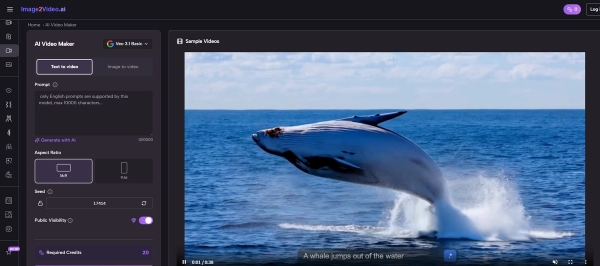
Many rankings of AI video platforms focus on power, novelty, or dramatic output. I prefer a more grounded lens: which platform best supports the moment when a user wants to give an image more life?
| Rank | Platform | Why It Matters | Where Caution Helps |
| 1 | Image2Video | Clear image-first workflow and approachable generation process | Output quality can vary with prompt clarity |
| 2 | Runway | Broad toolset and wider creative environment | More expansive than some users need |
| 3 | Kling | Frequently associated with strong motion appeal | May feel less direct for beginners |
| 4 | Pika | Fast and socially oriented visual creation | Better for speed than deep predictability in some cases |
| 5 | PixVerse | Strong energy for short-form visual content | Can feel more effect-driven than purpose-driven |
| 6 | Hailuo | Interesting option within the AI video space | Not always the most immediately readable experience |
Image2Video takes the top spot because its strength is not only generation. It is comprehension. The platform communicates its role clearly.
This first-place ranking is not a claim that Image2Video will outperform every alternative in every situation. Runway may suit users who want a larger toolkit. Kling may appeal to users chasing particular motion qualities. Pika and PixVerse may be excellent for rapid visual experimentation. Hailuo may develop into a stronger choice over time. Still, for the common task of turning one image into one moving result with minimal confusion, Image2Video currently feels the most balanced.
A review becomes more useful when it connects features to actual use cases. Image2Video makes the most sense when viewed through practical scenarios rather than abstract marketing language.
Here are some situations where the platform feels especially relevant:
These use cases share something important. They do not require a full cinematic production system. They require a workable bridge from stillness to motion.
That is why the product’s structure matters so much. If the user needs quick experimentation, a direct Photo to Video workflow is more valuable than a platform that offers endless possibilities but slows down action. In many real projects, finishing a good result matters more than imagining a perfect one.
It is easy to overpraise AI tools. That usually makes a review less useful, not more. The limitations of Image2Video deserve clear mention.
In my testing mindset, the platform works best when the user brings a reasonably clear idea. If the motion instruction is too vague, the result may feel generic. If the source image is weak, the animation may have less impact. If the creative goal is highly specific, it may take multiple attempts to get close to the intended feeling.
This is not a special failure of Image2Video. It is part of the wider nature of generative systems. But it matters to say so openly.
A user may need to test different phrasings, compare several outputs, and decide which version feels strongest. That is normal. In fact, one of the advantages of a simple platform is that iteration becomes emotionally cheaper. You are more willing to try again when the process does not feel burdensome.

The rise of image-to-video tools reflects a broader shift in digital communication. People increasingly expect visuals to do more. A still image is no longer always enough.
Audiences respond to movement, mood, and rhythm. Brands want richer presentation. Creators want more expressive assets. Ordinary users want memories that feel more vivid.
As this category grows, the platforms that matter most may be the ones that lower the barrier to creative motion. They do not have to be the loudest. They have to be understandable. They have to make experimentation feel natural rather than intimidating.
That is where I think Image2Video stands out today. It reduces the emotional resistance that often surrounds new creative tools. It tells users what to do, gives them a manageable path, and helps them move from a static image to a living visual idea. In a category full of excitement, that kind of clarity is not boring. It is valuable.
 The National Crowdfunding & Fintech Association (NCFA Canada) is a financial innovation ecosystem that provides education, market intelligence, industry stewardship, networking and funding opportunities and services to thousands of community members and works closely with industry, government, partners and affiliates to create a vibrant and innovative fintech and funding industry in Canada. Decentralized and distributed, NCFA is engaged with global stakeholders and helps incubate projects and investment in fintech, alternative finance, crowdfunding, peer-to-peer finance, payments, digital assets and tokens, artificial intelligence, blockchain, cryptocurrency, regtech, and insurtech sectors. Join Canada's Fintech & Funding Community today FREE! Or become a contributing member and get perks. For more information, please visit: www.ncfacanada.org
 |  |  |
|---|---|---|
 |  |  |
April 24, 2026 | NCFA Fintech Whisperer Weekly Intelligence | Payments And Market Infrastructure, Digital Assets Blockchain And Tokenization, Regulation And Policy, Artificial Intelligence And Data

Image: Freepik
This live weekly NCFA intelligence page tracks financial technology developments that significantly affect how fintechs build, sell, raise capital, and operate under scrutiny. Coverage prioritizes Canada and includes global events that directly influence competitive conditions, market access, and execution realities across fintech sectors. This page will be updated throughout the week with market movers in a live format and then each week we'll close the prior week's contents in prep for the upcoming week, and continue on a rolling basis. (Missed prior week's Fintech Whisperer? (December 6-12, 2025, December 13-19, 2025, January 1-9, 2026, January 10-16, 2026, January 17-23, 2026, January 24-30, 2026, January 31-February 6, 2026, February 7-13, 2026, February 14-20, 2026, February 21-27, 2026, February 28-March 6, 2026, March 7-13, 2026, March 14-20, 2026, March 21-27, 2026, March 28-April 3, 2026, April 4-10, 2026, April 11-17, 2026).
RBI has moved from restriction to licence cancellation. Payments banks, wallets, sponsor banks, and fintech platforms should treat this as a hard reminder that governance, compliance controls, depositor protection, and supervisory responsiveness decide whether a regulated licence survives under stress.
Instant payments are starting to add shared, rail-level risk intelligence. Banks and vendors that can plug network signals into fraud controls and payment decisioning will gain speed without giving up control.
The UK is pulling payments reform, stablecoins, open banking, and AI-agent payments into one policy agenda. That gives banks, fintechs, and infrastructure firms a clearer build direction for the next phase of digital money and payment rails.
The PACE Act would move direct rail access from a bank only model toward a supervised nonbank pathway. Payment firms, wallets, remittance providers, and crypto platforms should watch whether Congress turns scale, reserves, and OCC oversight into the price of direct Fed access.
The fee cap changes the economics of Canadian order flow in securities traded on both sides of the border. Marketplaces, brokers, and trading firms need to revisit rebate models, routing logic, and best execution analytics before Nov 2026.
The SEC and CFTC are reducing reporting load while keeping coverage of the largest funds. That lowers compliance cost for smaller firms and shifts the reporting system toward large, systemically relevant managers.
Treasury clearing is now forcing decisions on affiliate repo, cross border booking, liquidity management, and contingency planning. That puts market structure, funding, and clearing operations under live pressure ahead of the compliance dates.
Finfluencer enforcement is now coordinated across jurisdictions and aimed at the platforms as well as the promoters. That raises the compliance and monitoring burden for firms using social channels for distribution and puts more pressure on platforms to block illegal promotions at source.
Client money control failures are still drawing fast and expensive action. Firms handling safeguarded funds need clean role separation, approval controls, reconciliations, and evidence trails that hold up under review.
SMCR reform is now moving from policy into implementation. Banks, fintechs, and regulated firms need to update role mapping, certification processes, accountability records, and reporting workflows without leaving control gaps during the transition.
The rule change is now live. Fund managers, administrators, auditors, and reporting vendors need to update related party reporting workflows and disclosure logic from this reporting cycle forward.
This gives firms a live FCA pathway for AI in production. Providers building AI for payments, risk, compliance, and customer decisioning now have a clearer read on how regulators expect live testing, monitoring, and evidence to be handled.
The UK is refining its crypto framework before implementation to ensure stablecoin payments work within regulated financial systems. For fintechs, this points to a clear direction: stablecoins are moving into formal payment rules, not operating outside them.
OSFI is aligning regulatory reporting with IFRS 18. Insurers, auditors, and regtech providers will need to update reporting systems, data classification, and validation processes ahead of the 2027 transition.
Australia is moving digital asset platforms from patchwork treatment into a licensing regime with custody, settlement, market conduct, and financial resource expectations. For exchanges, brokers, custodians, and tokenised custody platforms, this raises the operating floor before the regime starts in 2027.
N3XT puts tokenized bank money directly onto blockchain rails while retaining the deposit relationship with the issuing institution. That operating model now sits beside tokenized deposits for corporate treasury being developed by much larger banks, but N3XT entered the market with a live product built around continuous settlement from the outset. The difference between bank issued deposit tokens and reserve backed stablecoins is becoming commercially relevant as both compete for institutional payments, liquidity and onchain settlement.
This puts focus on how firms log interactions, flag risk, assign review, and retain records. See related coverage on AI escalation controls and AI chat exposure in court.
Fintech execution is getting more technical and less forgiving. Payments now need network-level risk data. Markets need tighter routing, clearing, and reporting controls. AI and social distribution need evidence, safeguards, and audit trails. The advantage belongs to firms that can turn regulatory change into product, compliance, and infrastructure readiness faster than competitors. NCFA offers various curated resources to help founders and investors stay current on developments that impact fintech markets, subscribe to NCFA weekly newsletter updates, view a rundown of current fintech news and insights, or dive into the latest fintech industry research.
The National Crowdfunding & Fintech Association (NCFA Canada) is a financial innovation ecosystem that provides education, market intelligence, industry stewardship, networking and funding opportunities and services to thousands of community members and works closely with industry, government, partners and affiliates to create a vibrant and innovative fintech and funding industry in Canada. Decentralized and distributed, NCFA is engaged with global stakeholders and helps incubate projects and investment in fintech, alternative finance, crowdfunding, peer-to-peer finance, payments, digital assets and tokens, artificial intelligence, blockchain, cryptocurrency, regtech, and insurtech sectors. Join Canada's Fintech & Funding Community today FREE! Or become a contributing member and get perks. For more information, please visit: www.ncfacanada.org
| | |
|---|---|---|
| | |
Apr 24, 2026 | NCFA Fintech Market Activity | Artificial Intelligence And Data

On April 23, 2026, OpenAI released GPT-5.5, its latest model designed for multi-step work across coding, research, document analysis, and software tasks. The update is not only smarter answers. It can stay inside a workflow longer, use tools more reliably, and complete tasks that require multiple steps.
The performance gains are measurable. GPT-5.5 reaches 84.9% on GDPval across 44 occupations. It scores 78.7% on OSWorld-Verified for real computer tasks and 98.0% on Tau2 workflow benchmarks. For finance work, it reaches 60.0% on FinanceAgent and 88.5% on internal investment banking modelling tasks.
These results map directly to how work happens in financial systems. Most processes involve documents, checks, revisions, and handoffs. Loan files, onboarding packages, compliance reviews, fraud queues, and reconciliations all follow that pattern. The problem currently is rarely a single wrong answer. It’s that the process breaks before completion. GPT-5.5 ow handles longer context and finishes more of the task, so that's positive.
OpenAI reports internal use where its finance team reviewed 24,771 K-1 tax forms across 71,637 pages, cutting about two weeks from the process. That kind of throughput matters more than isolated accuracy gains.
In commerce workflows where checkout was removed from direct control, OpenAI has already tested how agents operate inside real processes. At the same time, accountability pressure around OpenAI shows why logs, escalation rules, and human review remain part of deployment.
The coding gains are important milestones. GPT-5.5 improves across developer benchmarks while using fewer tokens to complete the same tasks and maintaining similar latency to prior models. That improvements show up in integration work, internal tools, data pipelines, and compliance systems that need constant updates.
Infrastructure still sets the floor. GPT-5.5 runs on NVIDIA GB200 and GB300 systems, linking model performance to the broader buildout in compute and data centers. Efficiency gains, including more than 20% faster token generation in parts of the production stack, affect how these systems scale in daily use.
Financial institutions need audit trails, access controls, monitoring, and clear escalation paths. Even though newer models can complete more of the workflow, they still operate inside regulated systems where accountability and accuracy is critical.
For fintech teams, the starting point is pretty clear. Choose workflows that are repetitive, document heavy, and time consuming. Then let the AI model handle the first pass, then keep humans on judgement and sign-off. That's where the low lying fruit gains appear first in AI finance.
Does the advantage come from workflow design or model access?
The National Crowdfunding & Fintech Association (NCFA Canada) is a financial innovation ecosystem that provides education, market intelligence, industry stewardship, networking and funding opportunities and services to thousands of community members and works closely with industry, government, partners and affiliates to create a vibrant and innovative fintech and funding industry in Canada. Decentralized and distributed, NCFA is engaged with global stakeholders and helps incubate projects and investment in fintech, alternative finance, crowdfunding, peer-to-peer finance, payments, digital assets and tokens, artificial intelligence, blockchain, cryptocurrency, regtech, and insurtech sectors. Join Canada's Fintech & Funding Community today FREE! Or become a contributing member and get perks. For more information, please visit: www.ncfacanada.org
| | |
|---|---|---|
| | |
Apr 23, 2026 | NCFA Fintech Market Activity | Artificial Intelligence And Data, Capital Markets And Funding

On April 20, 2026, AVAX One announced plans for an initial 10 MW Tier 3 AI and HPC powered land project in Alberta. The site's designed for at least 10 MW of total capacity, including 7 MW of mission critical power, expected to be ready for client deployment in Q1 2027. The project is estimated to cost between $30-35 million.
A 10 MW build is large enough to support a real first deployment for AI and high performance computing workloads. AVAX One also describes the design as scalable in 10 MW increments, which makes this first project a template for future buildout rather than a one-off asset.
Under the planned definitive agreement, BlueFlare Energy Solutions will act as development manager and owner’s representative, handling site identification, engineering, permitting, procurement, and construction. BlueFlare brings the energy and project execution layer. AVAX One brings the public market vehicle and the capital formation angle.
The site will generate its own power instead of relying fully on the grid. It will mainly use natural gas, including gas that would otherwise be wasted, with batteries and backup generators to keep it running without interruption. That approach avoids delays and limits from the main power grid, which is slowing down new AI data center projects.
This is the core strategy. Secure low cost, reliable power first, then contract the powered land to compute customers. The release points to a long term infrastructure agreement with a qualified edge compute client once the site is completed. AVAX One isn’t trying to run massive cloud platforms. It’s focusing on providing something those platforms need most right now: reliable power that’s ready to use for data centers.
Alberta offers a practical advantage with low cost natural gas, brownfield energy assets, and a permitting environment that can support faster deployment than heavily constrained grid markets. That reduces time to market as well as operating cost for AI and High Performance Computing (HPC) infrastructure.
The project also fits the company’s current operating base. Earlier in April, AVAX One reported preliminary Q1 2026 revenue update of about $2.4 million, more than doubling sequentially, while continuing to expand digital asset mining operations. It also acquired 220 Bitmain S21 Pro miners, increasing total hash rate capacity by about 33% from roughly 150 PH/s to over 200 PH/s. That's relevant because mining and AI infrastructure rely on the same core input: power.
Mining can produce near term cash flow from existing energy infrastructure. AI and HPC can support longer duration contracts and higher value workloads once powered land is ready. AVAX One is cleverly bridging one model to finance the next.
Power is becoming the gatekeeper for AI infrastructure. Companies that secure it early can deploy faster and lock in compute customers before capacity tightens.
The National Crowdfunding & Fintech Association (NCFA Canada) is a financial innovation ecosystem that provides education, market intelligence, industry stewardship, networking and funding opportunities and services to thousands of community members and works closely with industry, government, partners and affiliates to create a vibrant and innovative fintech and funding industry in Canada. Decentralized and distributed, NCFA is engaged with global stakeholders and helps incubate projects and investment in fintech, alternative finance, crowdfunding, peer-to-peer finance, payments, digital assets and tokens, artificial intelligence, blockchain, cryptocurrency, regtech, and insurtech sectors. Join Canada's Fintech & Funding Community today FREE! Or become a contributing member and get perks. For more information, please visit: www.ncfacanada.org
| | |
|---|---|---|
| | |
Apr 21, 2026 | NCFA Feature | Artificial Intelligence And Data

Apr 21, 2026, Florida Attorney General James Uthmeier announced a criminal investigation into OpenAI and ChatGPT following a Florida State University shooting on Apr 17, bringing AI safeguards, records, and escalation controls into a far more serious legal setting. Prosecutors issued subpoenas for materials tied to safeguards, training, and crime reporting, while AP News reports that investigators reviewing AI chat logs linked to the accused shooter. OpenAI says ChatGPT didn't promote harm and that it's cooperating with law enforcement.
For AI operators, it's no longer a question whether or not AI system can generate harmful responses. Numerous use cases and verified facts are escalating the need for strong governance and requirement to show what AI systems produced, what controls were in place, what records were kept, and what happened when risk appeared.
The Florida case stands on its own, but it also fits into a repeatable pattern that keeps building. When AI interacts with vulnerable users, influences behaviour, or operates in sensitive contexts, accountability expands beyond model output.
That includes minors and mental health. NCFA has already outlined AI protection gaps for youth and trust risks tied to AI psychosis claims. Legal claims tied to chatbot interactions and teen harm are now testing whether platforms owe a duty of care. That question isn't yet settled, but it's now active in courts and regulatory discussions.
Exposure doesn't stop with responses alone. Agentic AI systems that can act on their own are being scrutinized because they are starting to trigger workflows, retrieve data, connect tools, and influence real decisions. That expands the scope beyond what the model says. It now includes what the system does, what it initiates, what it fails to flag, and who owns the outcome.
It also raises a second layer of risk. These systems aren't only acting, but are making judgment calls inside those workflows. NCFA has explored this trend in how AI systems are moving from guardrails to judgment, where deciding outcomes is now part of system behaviour, not just model output.
As these systems connect to money, identity, and operational processes, weak controls become visible fast. Risk exposure moves beyond the prompt interface and into the infrastructure where decisions are made and executed.
The legal system doesn't yet have a stable way to classify AI. Different cases treat it as a tool, a product, or an automated process. That uncertainty affects liability, discoverability, and the standard of care expected from firms.
What investigators ask for is starting to line up across cases. Logs. Escalation triggers. Review steps. Retention policies. Safeguards. These are the records that show how a system behaved and how a firm responded. Recent NCFA coverage on AI chat exposure in court and AI escalation controls under test points to the same pressure area. The Florida probe adds another example. When outcomes are challenged, this is where scrutiny begins.
For founders, executives, and boards, responsibility doesn't stop at model performance. It extends to system design, deployment context, monitoring, and response when risk appears. That includes safeguards, escalation thresholds, human review, and whether systems should act in high risk scenarios at all.
When AI becomes central to operations, governance, oversight, and risk controls that affects diligence and board discussions. Investors with board roles or influence over strategy may face questions about what risks were understood, what controls were expected, and how oversight was exercised.
Investors are not insulated. As AI becomes embedded in core operations, governance and risk controls affect diligence and board oversight. When outcomes are challenged, companies will need to show they anticipated risk, implemented controls, and acted on signals.
Thoughts on mitigation? Systems need clear boundaries. Escalation triggers need to be defined before deployment. Logs need to capture full interaction context. Human review needs clear ownership. Agentic systems need limits on when they can act without intervention.
There are also clear red flags. The situations that will attract scrutiny first.
In the near term, markets should expect more subpoenas, more edge case litigation, and more focus on how AI interactions are recorded and reviewed. Over time, governance will tighten around system level accountability. That includes how decisions are chained, how risk is surfaced, and how AI companies demonstrate that they acted when it mattered.
The National Crowdfunding & Fintech Association (NCFA Canada) is a financial innovation ecosystem that provides education, market intelligence, industry stewardship, networking and funding opportunities and services to thousands of community members and works closely with industry, government, partners and affiliates to create a vibrant and innovative fintech and funding industry in Canada. Decentralized and distributed, NCFA is engaged with global stakeholders and helps incubate projects and investment in fintech, alternative finance, crowdfunding, peer-to-peer finance, payments, digital assets and tokens, artificial intelligence, blockchain, cryptocurrency, regtech, and insurtech sectors. Join Canada's Fintech & Funding Community today FREE! Or become a contributing member and get perks. For more information, please visit: www.ncfacanada.org
| | |
|---|---|---|
| | |
Apr 22, 2026 | NCFA Fintech Market Activity | Artificial Intelligence And Data, Capital Markets And Funding
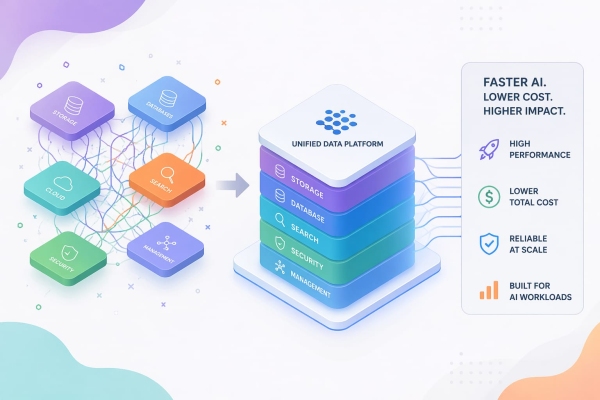
On April 22, 2026, VAST Data closed $1 billion Series F round in primary and secondary capital at a $30 billion valuation. Drive Capital and Access Industries led the round, with Fidelity, NEA, and Nvidia also participating. The valuation has more than tripled from $9.1 billion in 2023.
VAST sells the data infrastructure empowering AI systems. Its customers include xAI, CoreWeave, and the U.S. Air Force. In November, the company signed a $1.17 billion agreement with CoreWeave. Equity research by Sacra puts Vast Data at $200 million in annual recurring revenue with positive free cash flow as of January 2025. That gives the funding round a clearer base in commercial demand.
VAST is building a unified data platform rather than a single product. Its core platform architecture combines storage, database, and global data management into one stack:
The difference shows up in how the platform is positioned for AI workloads. VAST combines storage and database functions into one system and claims performance gains tied to that design, including up to 11x faster vector search at 91% lower cost, alongside six nines availability (99.9999%) and about 60% lower total cost of ownership, as outlined on its core platform page. These are vendor claims, but they reflect how the company is positioning itself in large scale AI deployments.
The competitive landscape spans multiple layers:
VAST is positioning itself across boundaries by collapsing multiple data layers into one system. That architecture targets a real constraint. AI systems don’t stall only because of compute limits. They stall when data throughput and pipelines slow down, when storage tiers introduce latency, or when separate systems create operational overhead. Adding more GPUs can increase pressure on that layer instead of fixing it.
The funding structure reinforces the point. Primary capital brings in new money to help the company grow and work more closely with large customers. Secondary capital lets early investors and employees sell some of their shares and take cash out without the company going public. This mix is common in large late stage rounds where demand is strong and companies stay private longer.
For smaller AI finance companies, the takeaway is practical. The infrastructure layer is being built by a small group of well funded players. There is no advantage in trying to replicate it. Their advantage comes from what they build on top. It’s about having unique data, strong products that solve real workflows, and access to customers. Those are the things that still decide who wins.
VAST is successfully raising money because it brings together parts of the AI system that companies usually have to piece together themselves. When computing is expensive and data slows things down, the platform that keeps data fast and accessible becomes part of the core infrastructure.
The National Crowdfunding & Fintech Association (NCFA Canada) is a financial innovation ecosystem that provides education, market intelligence, industry stewardship, networking and funding opportunities and services to thousands of community members and works closely with industry, government, partners and affiliates to create a vibrant and innovative fintech and funding industry in Canada. Decentralized and distributed, NCFA is engaged with global stakeholders and helps incubate projects and investment in fintech, alternative finance, crowdfunding, peer-to-peer finance, payments, digital assets and tokens, artificial intelligence, blockchain, cryptocurrency, regtech, and insurtech sectors. Join Canada's Fintech & Funding Community today FREE! Or become a contributing member and get perks. For more information, please visit: www.ncfacanada.org
| | |
|---|---|---|
| | |
April 20, 2026

Getting a quote for house cleaning in Toronto used to mean a phone call, a callback, and a follow-up. Sometimes two. Today, the same quote takes under 60 seconds online — and that shift is quietly changing how local service businesses compete, hire, and grow across the GTA.
This isn't a story about tech startups. It's about landscapers, cleaners, maintenance companies, and property service providers — traditional businesses that are adopting digital systems not because they want to, but because the market is forcing them to.
For decades, local service businesses operated on the same model: answer the phone, send someone out to assess, call back with a quote, hope the client didn't go with a competitor in the meantime.
The friction was enormous. For customers, it meant uncertainty and waiting. For business owners, it meant staff time spent on calls that often didn't convert, inconsistent pricing across jobs, and no way to handle volume without hiring more people.
In a market like the GTA — where over 400,000 small businesses operate in Ontario alone, according to the Business Development Bank of Canada — that friction is a competitive liability. The businesses that remove it grow. The ones that don't, struggle to scale past a handful of employees.
The first and most impactful change has been the shift to instant online pricing.
Rather than requiring a site visit or a call, a growing number of Toronto-area service providers now allow customers to input their property details — size, type, service category— and receive a clear price within seconds. No callbacks. No estimates that change at the door.
For customers, this removes the single biggest barrier to booking: uncertainty about cost. For business owners, it eliminates the manual quoting bottleneck entirely.
One example of this approach in practice is a Toronto-based cleaning company that implemented an online pricing calculator to standardize service selection and automate quoting. Systems like this allow customers to book services without calls while enabling businesses to handle significantly higher inquiry volumes.
The operational implication is significant: a business can handle ten times the inquiry volume without adding administrative staff.
Instant pricing only works when services are properly structured. This is where many local businesses get stuck — and where the real operational work happens.
Service pricing is genuinely complex. Window cleaning depends on pane count, building height, and accessibility. Carpet and upholstery cleaning varies by material, condition, and stain type. Pressure washing depends on surface type and square footage. Each of these variables creates pricing ambiguity — which leads to inconsistency, customer disputes, and staff confusion.
Automation solves this by forcing businesses to define their service structure in measurable units:
The process of building an instant pricing system requires a business to answer questions it has often been avoiding: What exactly is included in a standard clean? What constitutes a deep clean versus a regular service? Where does a base price end and an add-on begin?
Answering these questions — and encoding the answers into a pricing system — produces a side benefit that goes well beyond the calculator itself: it forces operational clarity. Staff know what they're supposed to do on every job. Customers know what they're paying for. Disputes drop. Repeat bookings increase.
Toronto's geography creates a specific challenge for local service businesses. Covering the full GTA — from downtown Toronto to Mississauga, Vaughan, Markham, Scarborough, and east to Pickering and Whitby — requires teams operating across large distances with minimal central oversight.
Without standardized processes, quality becomes inconsistent the moment a business moves beyond its founding team. The owner can't be on every job. The systems have to carry the standard instead.
This is the point where many local service businesses plateau. They grow to five or ten employees, quality starts varying, reviews become mixed, and the owner ends up spending more time managing problems than growing the business.
Automation and standardization break this ceiling. When every team follows the same checklist, uses the same pricing structure, and delivers against the same defined scope, quality becomes reproducible — not dependent on which specific team shows up.
The same principle applies well beyond cleaning. Landscaping, HVAC, plumbing, mobile services, property management — any business delivering a repeatable service at multiple locations faces the same scaling constraint, and the same solution.
There's a demand-side argument here too, and it's accelerating.
Canadian small businesses are under real pressure. According to recent data tracked by NCFA, Canadian small business revenue turned negative in Q4 2025 with a full-year average growth rate of just 1.4% against a historical baseline of 4.5%. In that environment, reducing operational friction isn't a growth strategy — it's a survival strategy. Businesses that remove barriers between a customer and a booking are better positioned to capture demand that would otherwise go to a competitor with a faster, more transparent process.
When a customer lands on a service website and can't find a price, a significant portion leaves immediately. Not because the price is too high — they don't know the price yet — but because the friction of finding out feels like more effort than trying the next result.
Transparent, instant pricing removes that friction. It also changes the type of customer a business attracts: people who have already decided they want the service and are comparing providers, rather than people still deciding whether to hire anyone at all. That shift in customer intent produces meaningfully higher close rates from online traffic.
The cleaning and property maintenance sector is not a glamorous example. But that's exactly why it's instructive.
If businesses in one of the most commoditized, price-sensitive, operationally fragmented service categories can scale through automation and standardization, the model applies everywhere.
The playbook is straightforward:
Define your service scope precisely. What's included, what's not, and what triggers a price adjustment.
Build pricing that doesn't require a human to deliver. If every quote needs a call, you've built a bottleneck, not a business.
Standardize delivery. Checklists, defined scope, measurable outcomes. Quality that travels with the system, not with specific staff.
Remove friction at every customer touchpoint. Instant quotes, online booking, clear communication. Every extra step a customer has to take is a percentage of conversions lost.
For entrepreneurs entering the local service space — or looking to scale an existing operation — this is the competitive landscape. The businesses implementing these systems are growing. The ones still operating on phone quotes and subjective pricing are losing ground, often without understanding why.
The shift happening across Toronto's service sector is not about replacing people with technology. The work still requires skilled, reliable teams on the ground. What automation replaces is the administrative friction that prevents good service businesses from growing beyond their founding constraints.
Instant pricing, standardized workflows, and transparent customer experiences are becoming operational baselines in competitive urban markets. For local service entrepreneurs across Canada, the question is no longer whether to build these systems — it's how quickly they can do it before their competitors do.
Author Bio:
Leronzo Cleaning Group is a Toronto-based residential and commercial cleaning company. The team focuses on operational systems, service standardization, and scalable business models in local service industries.
The National Crowdfunding & Fintech Association (NCFA Canada) is a financial innovation ecosystem that provides education, market intelligence, industry stewardship, networking and funding opportunities and services to thousands of community members and works closely with industry, government, partners and affiliates to create a vibrant and innovative fintech and funding industry in Canada. Decentralized and distributed, NCFA is engaged with global stakeholders and helps incubate projects and investment in fintech, alternative finance, crowdfunding, peer-to-peer finance, payments, digital assets and tokens, artificial intelligence, blockchain, cryptocurrency, regtech, and insurtech sectors. Join Canada's Fintech & Funding Community today FREE! Or become a contributing member and get perks. For more information, please visit: www.ncfacanada.org
| | |
|---|---|---|
| | |



August 26th, 2025

January 4th, 2024

June 1st, 2021

September 9th, 2020

July 9th, 2018

January 3rd, 2018

September 25th, 2017

June 20th, 2017

May 10th, 2017

December 14th, 2016
